Drain field repair: costs, signs, and when to replace
By the SepticMind Editorial Team

TL;DR
- Drain field repair runs from about $1,500 for a single lateral to $20,000 or more for a full new field.
- Watch for soggy ground over the field, sewage odors outside, and every drain in the house running slow at once.
- Common fixes include resting the field, hydro-jetting clogged pipes, or replacing crushed laterals.
- Widespread biomat or dead soil means replacement.
What is a drain field and why does it fail?
A drain field is the network of perforated pipes buried in gravel trenches that takes clarified wastewater from your septic tank and spreads it into the soil. The soil does the real work. It filters pathogens and nutrients before that water reaches groundwater [1]. When people ask what is a drain field, most don't picture the dirt itself as the treatment plant. It is.
Failure starts when the soil stops absorbing liquid. The usual culprit is biomat: a dense, gelatinous layer of anaerobic bacteria and organic solids that grows across the trench bottom over years of use. Mature biomat is close to waterproof. It's why a 20-year-old system backs up even when the pipes are perfectly intact.
Other ways a field dies:
- Hydraulic overload (too much water too fast, from leaky toilets, water softener backwash, or too many people)
- Soil compaction from vehicles or heavy equipment parked on the field
- Root intrusion from trees planted too close
- Pipe collapse from age, frost, or shifting ground
- High groundwater that saturates the trench seasonally and wipes out the unsaturated zone the soil needs to treat effluent [2]
The EPA's SepticSmart program says a properly maintained system can last 25 to 30 years, while neglected systems can fail in under 10 [1]. The gap between those numbers is almost entirely maintenance: regular pumping and going easy on the water.
What are the warning signs of drain field failure?
Catching failure early is the difference between a $3,000 repair and a $15,000 replacement. These are the signs worth acting on the day you see them.
Wet, spongy, or unusually green grass over the field is the most reliable early tell. The ground stays wet in dry weather because effluent is surfacing instead of soaking in. Those same nutrients feed the grass, so a bright green stripe over your leach field lines in August is a warning, not a lawn-care win.
Sewage smell outdoors. If you catch it near the field, effluent is surfacing or the soil is fully saturated. In most states that's a public health violation, not a nuisance.
Slow drains and gurgling all over the house. When the field can't take liquid fast enough, the whole system backs up. One slow drain is a plumbing clog. Every drain crawling at once points straight at the septic system.
Sewage backing up into the lowest fixture, usually a basement toilet or floor drain. That's late-stage failure. Don't let it get here.
High nitrate in a nearby well. If you test your drinking water yearly (most state health departments recommend it), a rising nitrate trend can mean your system is no longer treating effluent before it hits groundwater [2].
A septic tank inspection tells you whether the trouble is in the tank or truly in the field. That split matters. Tank problems are almost always the cheaper fix.
How much does drain field repair cost?
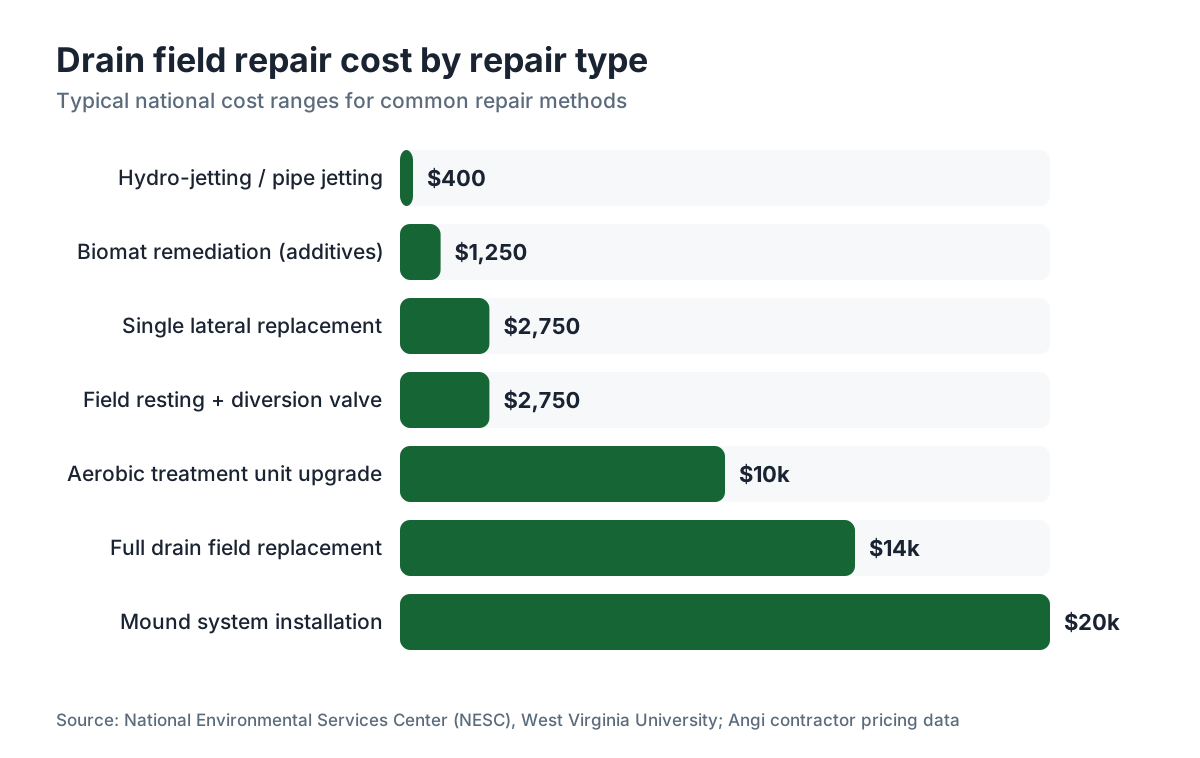
Drain field repair costs anywhere from $200 to jet a single clogged lateral to more than $20,000 for a brand-new field in a fresh location. "Repair" covers a huge spread. The ranges below come from contractor pricing data and state cost guidance, and your region, soil type, permit fees, and system size will move the real quote [3][4].
| Repair type | Typical cost range | When it applies |
|---|---|---|
| Pipe jetting / hydro-jetting | $200, $600 | Root intrusion or minor clogs in laterals |
| Aerobic treatment upgrade | $5,000, $15,000 | Failing soil that can't handle conventional effluent |
| Biomat remediation (bacteria/enzyme treatment) | $500, $2,000 | Early to moderate biomat; results vary |
| Resting / field rotation | $1,500, $4,000 (diversion valve + pumping) | Systems with a second field already installed |
| Lateral replacement (one trench) | $1,500, $4,000 | One collapsed or crushed lateral pipe |
| Full drain field replacement | $8,000, $20,000+ | Widespread failure or inadequate original design |
| Mound system installation | $10,000, $30,000+ | Poor native soil or high water table |
Septic leach field repair cost also carries permit fees, which run $150 to $1,000+ depending on the state. Virginia, for one, requires a permit for any repair that disturbs the field [5]. Many states make you use a licensed septic contractor to pull that permit, and some won't let a homeowner touch field work at all.
The cost to repair a septic leach field leans hard on whether the county wants a perc test or soil evaluation before it approves the repair design. That test by itself runs $300 to $1,500.
Comparing repair to the price of a whole new system? Our guide on cost to install a septic system gives you a realistic baseline.
What repair options actually work, and which are a waste of money?
Here's my honest read, because the internet is stuffed with products promising to "restore" a dead drain field for $39.99. Most of them do nothing.
Resting the field is the only hands-off approach with real evidence behind it. If you have a dual-field system, sending flow to the second field for 6 to 12 months lets biomat break down aerobically. University of Minnesota Extension research found resting can meaningfully restore infiltration in moderately biomat-affected systems, though severely failed soils never come back [6]. Catch: you need a second field to divert to, and most older single-family homes don't have one.
Hydro-jetting works on root intrusion and physical clogs. It does nothing for biomat or saturated soil. If a contractor quotes jetting for a system with visible surfacing and soft, wet ground, that's optimism, not a plan.
Bacterial and enzyme additives get sold hard and deliver little. The EPA's 2002 guide on septic additives says flatly that "biological additives do not appear to improve the performance of a healthy septic system," and the evidence for reviving failing systems is thin [1]. I wouldn't drop more than a couple hundred dollars testing one, and only on a field with early warning signs, never one that's actively surfacing.
Geomat or EZflow replacement (swapping gravel trenches for lightweight geotextile aggregate) is a real fix when the old gravel is compacted or silted but the surrounding soil still absorbs. Right situation, legitimate repair.
Aerobic treatment unit (ATU) upgrades are often the correct answer when native soil is marginal. An ATU treats effluent to a higher standard before it reaches the field, which slows biomat and stretches field life. They cost more to run (electricity, quarterly maintenance contracts), but they work [3].
Mound systems and drip irrigation are full redesigns, not repairs. They come into play when the original site conditions were bad and can't be fixed.
How do you repair a drain field step by step?
A legitimate repair follows the same order no matter which method you land on. Here's how it actually goes.
Step 1: Diagnose before you dig. A contractor should camera-inspect the distribution box and every lateral they can reach, then probe or excavate the box to see if flow reaches all the laterals evenly. Uneven distribution is a common cause of early failure, and it's fixable.
Step 2: Pull permits. In nearly every U.S. state, field work needs a permit from the local health department or environmental agency. Skipping it creates liability when you sell and can trigger fines. Non-negotiable.
Step 3: Pump the tank. You can't assess or repair a system with a full tank. Septic tank pumping comes before any field work, and a pumped tank also drops the hydraulic load on the field while it recovers.
Step 4: Do the repair. Depending on findings, that might mean swapping a crushed lateral, adding a diversion valve to rest a section, installing an ATU, or excavating and rebuilding the field lines.
Step 5: Rest and monitor. Even after the physical fix, the field needs 30 to 90 days of light loading to settle. Conservation matters here: shorter showers, no marathon laundry days, lay off the garbage disposal.
Step 6: Final inspection. Most counties require a final sign-off before you cover any open trench. Get the certificate. Keep a copy with your property records.
For [septic tank and leach field repair] that involves both, fix the tank first. A leaking tank or failed baffle can wreck a repaired field within months.
Can you repair a drain field yourself, or do you need a contractor?
Short answer: almost never fully DIY, and in most states, not legally.
Every state has onsite wastewater rules governing who can design, install, and repair a septic system. Most require a licensed installer or engineer for anything past basic maintenance. North Carolina requires a licensed contractor for any subsurface system construction or repair under its Sanitation Chapter 130A rules [7]. Texas requires county permits and a licensed on-site sewage facility (OSSF) installer for any field work [8].
What you can legally do yourself: maintain the tank access lids, keep records, conserve water, keep trees away from the field, and schedule a septic tank pump out every 3 to 5 years.
What needs a licensed contractor: excavating laterals, replacing pipe, installing distribution boxes or flow diverters, any change to the system design.
Does some rural homeowner with loose enforcement replace his own laterals? Sure. I won't pretend it never happens. But do it without permits and you're looking at fines, a possible order to tear it out and redo it, and disclosure obligations at sale time that turn unpermitted work into a real headache.
When does drain field repair make sense vs. full replacement?
This is the question every homeowner with a dying field actually needs answered. Here's the line I'd draw.
Repair makes sense when:
- Failure is isolated to one lateral or one section
- The surrounding soil still absorbs (proven by perc test or soil evaluation)
- The system is under 15 to 20 years old and was sized right
- The cause (roots, a crushed pipe, hydraulic overload) is correctable
- A resting protocol is viable and you have a second field or alternate loading site
Replacement is the smarter call when:
- Biomat has spread across the whole field and multiple laterals show no flow
- The soil evaluation shows the native soil is exhausted or was never adequate
- The original system was undersized for the home (common in older houses)
- The field now conflicts with setbacks for a new well, property line, or structure
- Repair quotes hit 50 to 60% of replacement cost
One practical test: rest the field for 6 months. If it rebounds, the soil has life left and repair is worth chasing. If surfacing comes back within weeks of normal use, the soil is done.
A full replacement means starting the septic tank installation and field process from scratch on a new patch of the lot, if you have one, with enough suitable land and soil. No viable alternate area, and you may get pushed toward a mound, drip, or aerobic system no matter the price.
Operators juggling multiple service accounts use platforms like SepticMind to track system age, repair history, and maintenance intervals, which makes the repair-versus-replace call much easier to document for a homeowner.
How long does a drain field repair take?
It depends almost entirely on the repair type and how backed up your county permit office is. Plan for the permit, more than the digging.
Permit approval alone takes 2 to 10 business days in most places, but stretches to 3 or 4 weeks in rural counties with thin staff. Starting work early to skip the wait is a mistake that costs more than waiting.
Hydro-jetting or a single lateral replacement wraps up in a day once permits are in hand. The field needs rest afterward, so plan on reduced water use for at least a few weeks.
Full field replacement takes 2 to 5 days of active construction, plus permit lead time before and a final inspection after. From first call to a signed-off system, expect 3 to 6 weeks in a normal market.
Mound or ATU installation is more involved: soil work, electrical for aerobic systems, and staged inspections push it to 6 to 10 weeks from first contact to a running system.
Biomat remediation (resting, plus additives if you try them) plays out over months. You're signing up to monitor across a full season, not a quick weekend fix.
Does homeowner's insurance cover drain field repair?
Usually not. Check your policy anyway, carefully, because a few clauses can surprise you.
Standard homeowner's policies treat the septic system as part of the home's mechanical systems and exclude gradual deterioration, which is how insurers classify most field failures. Their argument: biomat buildup and soil saturation develop over years, not in a single event.
Some policies do cover sudden and accidental damage: a pipe crushed by a vehicle, abrupt root damage (rare and hard to prove), or a sewage backup rider that covers cleanup after a backup.
Home warranty plans sometimes list septic systems, but most cap field repair coverage at $500 to $1,500, which doesn't stretch far. Read the fine print before you count on it.
Here's the practical reality: budget for drain field repair as a maintenance expense, not an insurance event. Any coverage you get is a bonus.
For taxes, septic repair on a primary residence generally isn't deductible. On a rental, it's a deductible repair expense. Talk to your tax advisor before you file.
How do you prevent drain field failure in the first place?
Prevention is dramatically cheaper than repair. A well-kept field lasts 25 to 30 years. A neglected one can fail in under 10 [1]. The difference is habits.
The single most effective move is to pump your septic tank on schedule. The EPA and state extension services recommend every 3 to 5 years for a typical household. When solids overflow from an under-pumped tank into the field, they speed up biomat and can clog the inlet ends of laterals in months [1][6]. Regular septic tank cleaning protects the field, more than the tank.
Water conservation is underrated. The field has a maximum daily hydraulic loading rate set by your soil type and trench area. Blow past it regularly, even with a tank you pump on time, and you overload the soil. Fix leaky toilets (a running toilet can dump 200+ gallons a day into a system designed for 50 to 100 gallons per person), spread laundry across days, and don't run the dishwasher and washing machine at the same time [10].
Keep vehicles and heavy equipment off the field. One pass of a full-size truck can crush the pore space in sandy soil, and that's essentially permanent without excavation.
Plant only grass over and around the field. No trees or shrubs within 30 feet, and 50+ feet for willows, poplars, and other aggressive-rooted species. Roots find the water and nutrients in field lines every time.
Go easy on the garbage disposal, or skip it. Disposals raise the solids load into the tank by 50% or more and shorten the interval before solids spill into the field.
Lay off large volumes of bleach and antibacterial soap. Routine cleaning is fine. Pouring a quart of bleach down the drain every week is not.
And get the system inspected when you buy a home. A septic tank inspection from a licensed inspector before closing costs $300 to $600 and tells you whether you're buying a healthy system or one that's 18 months from failure.
What do local regulations say about drain field repairs?
Onsite wastewater rules are set at the state level, run by state health or environmental agencies, and often enforced at the county level. There's no national standard for what a "repair" requires, which is exactly why you call your county health department early.
A few themes hold across most state codes.
Permits are required for nearly any field repair that involves excavation or system modification. Operating or selling a home with an unpermitted repair is a growing legal and real estate liability [5][7][8].
Setback distances don't bend. Field lines have to keep minimum distances from wells, property lines, surface water, and structures. These are codified and can't be waived by variance in most states. If your repair location misses a setback, you need a different design.
Soil evaluation before a new installation or field relocation is required in nearly every state. Some accept older evaluations for repair work; others demand a fresh one.
The EPA's SepticSmart resources point you to state-by-state regulatory contacts [1]. Your state department of health or environmental quality website has the actual code language.
One thing worth knowing: a full system replacement is treated like a new installation for permitting in most states. That means a site evaluation, an engineered design in some states, and full permit approval before any digging. It also means the system has to meet current code, not the code from when the original went in. Today's setbacks and sizing are often stricter than 30-year-old standards.
For operators running repair projects across many clients, keeping compliant documentation current is a real administrative load. SepticMind tracks permit status, inspection records, and service history across accounts so nothing slips.
How does drain field type affect repair options and costs?
Drain fields aren't interchangeable, and the type you have limits what you can do about a failure. Know your type before you dial for quotes.
Conventional gravity-fed trenches are the most common and the most repairable. You can replace laterals one at a time, fix distribution boxes, and rest sections.
Chamber systems (plastic arch chambers instead of gravel) are easier to inspect and jet but fail the same ways gravity systems do. Replacing individual chamber runs is doable.
Mound systems are engineered for bad native soil. They're expensive to build and expensive to repair, because the engineered fill has to come out and go back in if the mound itself fails. Partial mound repair typically runs $5,000 to $15,000.
Drip irrigation systems push highly treated effluent through small-diameter tubing across a wider area. They're less prone to biomat failure but need steady upkeep (filters, emitter cleaning, pump checks). Repairing dripper lines and controls runs $500 to $3,000 depending on the issue.
Aerobic treatment unit (ATU) systems have a mechanical treatment stage ahead of the field. The ATU itself may need work (pump replacement, diffuser cleaning, $500 to $2,000) separate from the field.
Knowing your system type before you call saves everyone time. Check your property records, the as-built drawings filed with the county, or just ask at your next septic tank pump out. Most licensed pumpers can identify the type from what they see at the tank.
Frequently asked questions
How much does it cost to repair a drain field?
Drain field repair runs from about $200 for simple hydro-jetting of a clogged lateral to $20,000 or more for a full new field. A single lateral replacement typically costs $1,500 to $4,000. Full field replacement averages $8,000 to $20,000 nationally, depending on soil, field size, system type, and local permit fees. Get at least two licensed contractor quotes before you commit.
Can a drain field be repaired, or does it always need to be replaced?
Many drain fields can be repaired rather than replaced, especially when failure is isolated to one or two laterals, caused by roots or a crushed pipe, or caught before biomat spreads across the whole field. Widespread biomat, exhausted soil, or a field that was never sized right for the home usually means replacement beats patching one failing section after another.
How long does drain field repair take?
A single lateral replacement takes about one day of work, plus 2 to 10 business days for permit approval first. Full field replacement runs 2 to 5 days of construction and 3 to 6 weeks total from first call to final inspection. Mound or aerobic installations take 6 to 10 weeks. Add time if your county permit office is backlogged, which is common in rural areas.
What are the signs that my drain field is failing?
The clearest signs are wet or spongy ground over the field, sewage odors nearby, an unusually green stripe of grass above the field lines, and slow drains or gurgling throughout the house. Sewage backing up into the lowest fixture means failure is already advanced. Rising nitrate in a nearby well can also mean the field is no longer treating effluent properly.
Will resting my drain field fix it?
Resting (diverting flow away from a failing field for 6 to 12 months) can meaningfully restore infiltration in a moderately biomat-affected field. University of Minnesota Extension research supports this for early to moderate biomat. It only works if you have a second field to divert to, and it won't help soil that's permanently compacted or saturated by high groundwater. Severely failed fields rarely recover through resting alone.
Do septic system additives really restore a drain field?
The evidence is weak. The EPA's guidance on septic additives states that biological additives do not appear to improve the performance of a healthy system, and evidence for reviving failing fields is limited. They're cheap enough to test on a field with early warning signs, but they're no substitute for pumping, water conservation, or physical repair once the field is surfacing or backing up the house.
Does homeowner's insurance cover drain field repair?
Standard policies almost always exclude gradual deterioration, which is how most field failures get classified. Some cover sudden and accidental physical damage, like a pipe crushed by a vehicle. Home warranties may cover part of the cost but typically cap field repair at $500 to $1,500. Budget for field repair as a maintenance expense and treat any insurance coverage as a bonus, not a plan.
Do I need a permit to repair my drain field?
Yes, in nearly every U.S. state. Any repair involving excavation, pipe replacement, or system modification requires a permit from the local health department or environmental agency. Most states also require a licensed septic contractor to do the work. Unpermitted work creates liability when you sell and can force you to tear out and redo the job at your own expense.
How long should a drain field last?
A properly designed and maintained drain field should last 25 to 30 years, per EPA SepticSmart guidance. Neglected systems, those never pumped, overloaded with water, or planted with trees nearby, can fail in under 10 years. The biggest single predictor of longevity is regular septic tank pumping every 3 to 5 years, which keeps solids from overflowing into the field and speeding up biomat buildup.
How do I find a reputable septic drain field repair contractor?
Start with your state's licensing board for septic or onsite wastewater contractors; most states run online lookup tools. Ask for proof of license and insurance before any work begins. Get at least two written quotes that spell out what's included (permit fees, soil work, pipe materials, landscape restoration). Check local reviews and ask whether the contractor pulls permits or expects you to.
Can tree roots destroy a drain field?
Yes. Tree and shrub roots chase the moisture and nutrients in leach field lines and slip into perforated pipes through the smallest joint gaps. Once inside, they grow fast and block flow. Hydro-jetting can clear roots from accessible laterals, but if roots have collapsed the pipe walls, you're replacing pipe. Prevention means keeping trees at least 30 feet from the field edge.
What is the difference between a drain field repair and a full septic system repair?
A drain field repair targets only the absorption field: the buried pipes, gravel trenches, and surrounding soil. A full septic system repair may also cover the tank, baffles, distribution box, and connecting pipes. The two get confused because symptoms overlap. A camera inspection and tank inspection should always come before field work to confirm where the failure actually is and avoid spending on the wrong part.
How do I know if my drain field problem is actually a tank problem?
A licensed inspector can pump the tank and check the baffles, inlet and outlet pipes, and distribution box in about an hour. If the tank is overfull, baffles are missing, or the outlet is partly blocked, those are tank-side problems that mimic field failure. Fix the tank issues first, then recheck performance. Treating the field when a deteriorated baffle is the real problem wastes thousands of dollars.
Sources
- U.S. EPA, SepticSmart: Protect Your Investment: A properly maintained septic system can last 25 to 30 years; biological additives do not appear to improve the performance of a healthy septic system.
- U.S. EPA, Septic Systems Overview: The soil in the drain field filters pathogens and nutrients before water re-enters groundwater; high groundwater can eliminate the unsaturated zone needed for treatment.
- National Environmental Services Center (NESC), West Virginia University: Aerobic treatment unit upgrades cost $5,000, $15,000 and treat effluent to a higher standard before it reaches the field.
- Angi, Septic Tank Repair Cost Guide: Full drain field replacement typically costs $8,000, $20,000 nationally depending on size, soil, and local labor rates.
- Virginia Department of Health, Environmental Health: Virginia requires a permit for any repair that involves disturbing the drain field.
- University of Minnesota Extension, Septic Systems: Resting a drain field for 6 to 12 months can meaningfully restore infiltration in moderately biomat-affected systems; severely failed soils do not recover.
- North Carolina Department of Health and Human Services, On-Site Water Protection: North Carolina requires a licensed contractor for subsurface system construction or repair under Sanitation Chapter 130A rules.
- Texas Commission on Environmental Quality (TCEQ), On-Site Sewage Facilities: Texas requires permits through the county and a licensed on-site sewage facility (OSSF) installer for any field work.
- U.S. EPA, Septic Systems: Neglected septic systems can fail in under 10 years; regular pumping every 3 to 5 years is the primary prevention measure.
- University of Florida IFAS Extension (EDIS): A running toilet can discharge 200 or more gallons per day into a septic system, overwhelming field hydraulic loading capacity.
Last updated 2026-07-09