Septic tank treatment powder: does it actually work?
By the SepticMind Editorial Team
TL;DR
- Septic tank treatment powders add bacteria or enzymes to your tank to help break down solids.
- The EPA and most state extension programs say a healthy tank already has enough bacteria, and no additive has been proven to reduce pump-out frequency.
- Some enzyme-only products can actually harm drain fields.
- Powders are low-risk when used as directed, but they're no substitute for pumping every 3 to 5 years.
What is septic tank treatment powder and what's in it?
Septic tank treatment powder is a dry additive you flush down the toilet or dissolve in water and pour into a drain. Most products land in one of three camps: bacterial inoculants, enzyme concentrates, or a mix of both.
Bacterial products contain dormant strains of naturally occurring anaerobic and facultative bacteria, usually Bacillus species, that are freeze-dried into a powder and reactivated by warm wastewater. The pitch is simple: more bacteria means faster digestion of fecal solids, grease, and paper. Enzyme-only products skip the living organisms and add cellulases, lipases, or proteases to speed up the chemical breakdown of specific waste types. Combination powders bundle both.
A typical single-dose packet weighs between 1 and 4 grams. The bacterial count on the label, often listed as colony-forming units (CFUs), can reach 10 billion CFU per dose. That sounds huge until you learn a healthy 1,000-gallon tank already holds hundreds of billions of resident bacteria doing the same job [1].
Some powders also carry surfactants or pH buffers, and that's where things get complicated. Surfactants that reach the drain field can disrupt the biomat layer that filters effluent before it enters groundwater, and state guidance has flagged them as a threat to drain-field performance [2].
Do septic tank treatment powders actually work?
The honest answer: the evidence is weak, and what exists is mixed.
The EPA's SepticSmart program states plainly that "the natural bacteria in a healthy septic system do not need to be supplemented with commercial additives" [1]. The University of Minnesota Extension, after reviewing the available research, concluded that no additive has been shown to reduce the need for routine pumping or to restore a failing system [3]. Those aren't fringe opinions. They're the two most-cited sources in the onsite wastewater field.
A few narrower studies do report modest benefits in specific circumstances. A 2016 paper in the Journal of Environmental Management looked at bacterial augmentation in systems stressed by antibiotic-laden wastewater and found that periodic re-inoculation with Bacillus strains could help re-establish populations after a microbial disruption [4]. Read the fine print: "after a disruption." A healthy system doesn't benefit. A system recovering from a heavy antibiotic load or a bleach spill might.
Enzyme-only products are more contested. Enzymes do speed up the liquefaction of solids, but liquefied solids flow more easily into the drain field. If pumping already manages your scum and sludge layers, that's fine. If it doesn't, enzyme products can push partially digested material into the leach field before the tank has done its job, which is one reason several state extension programs advise against enzyme additives specifically [2].
Here's my bottom line: powder additives are unlikely to hurt if they contain only natural bacterial strains and no surfactants, but they're also unlikely to save you money on pumping or prevent failures. Treat them as low-cost reassurance, not a maintenance strategy.
What does the EPA say about septic additives?
The EPA has addressed septic additives directly through its SepticSmart initiative. The agency's guidance on system care notes that "biological additives (bacteria and/or enzymes) seem harmless, but they have not been proven to improve the performance of a properly functioning system" [1]. That's a measured statement. Not a ban, not an endorsement.
Where the EPA draws a harder line is chemical additives: solvents, acids, and strong surfactants. Those corrode tank components, kill beneficial bacteria, and leach into groundwater. Several states go further with statutory bans. Vermont prohibits the sale of septic additives that contain "pathogenic organisms, toxic substances, or compounds that may adversely affect treatment" under its Wastewater System and Potable Water Supply Rules [5]. Wisconsin's NR 113 rules similarly restrict products that can harm system performance [7].
If you're a homeowner trying to stay compliant, check your state's onsite wastewater authority before buying any additive. Most state environmental agencies list approved or prohibited product categories on their websites. What's sold freely at a national retailer may still be restricted where you live.
Where can you buy septic tank treatment powder, including at Walmart?
Septic tank treatment powder sells at most big-box home improvement stores, hardware chains, and online retailers. Walmart stocks several brands in stores and on Walmart.com, including Rid-X Septic Tank Treatment powder, Green Gobbler Septic Saver, and store-brand equivalents. A 3-month supply of a bacterial powder at Walmart usually runs $8 to $15, making it one of the cheaper places to buy [prices observed at time of writing; check current listings].
Amazon, Home Depot, and Lowe's carry overlapping product lines. Specialty plumbing suppliers and septic service companies sometimes sell higher-CFU formulations aimed at contractors, though the bacterial science behind them isn't different from what you'd find on a Walmart shelf.
A few things to check on the label before you buy:
- Ingredients list: you want named bacterial strains (Bacillus subtilis, Bacillus licheniformis) and/or specific enzymes. Skip anything listing solvents, surfactants, or acids.
- CFU count: anything above 1 billion CFU per dose is a reasonable range for a consumer product.
- No "restores failing systems" claims: that language on a consumer product is a red flag. No additive can repair a crushed pipe, a saturated drain field, or a full tank.
You don't need to spend a lot. A midrange bacterial powder from any major retailer does the same narrow job as a premium version. The bacteria are the same species whether the box costs $9 or $29.
How do you use septic tank treatment powder correctly?
Most powders are built for monthly use, though some are marketed as quarterly. The standard routine looks like this:
- Pour the packet directly into the toilet bowl.
- Flush once, a normal flush.
- Avoid heavy water use for 6 to 8 hours afterward so the bacteria settle into the tank instead of getting pushed toward the drain field.
Timing matters more than people think. Flush a treatment right before running a full load of laundry and you push the bacteria out before they establish. Morning works well if the household is heading out for the day.
Don't double-dose expecting faster results. The limiting factor in a septic tank isn't bacterial count. It's the physical volume of solids piling up over time. More bacteria won't change that accumulation rate in a healthy system.
If your household runs a garbage disposal hard, a monthly treatment has a plausible case, because garbage disposals add far more solid organic matter than the EPA's standard design assumptions account for [1]. That's one of the few use cases where a small bump in bacterial activity has a real mechanism behind it.
Can septic treatment powder replace pumping?
No. This is the single most important thing to understand about any septic additive.
Pumping removes the physical buildup of sludge at the bottom of your tank and scum at the top. Bacteria break down organic matter, but they don't make solid waste disappear. Inorganic materials, hair, certain food particles, and the byproducts of bacterial digestion itself pile up as sludge no matter how healthy your bacterial population is.
The EPA recommends pumping every 3 to 5 years for a typical household [1]. The actual interval depends on tank size, household size, and what goes down the drain, which you can estimate more precisely using our guide to how often to pump septic tank. Once sludge and scum together fill more than about a third of the tank's liquid capacity, the tank can no longer settle solids well before effluent flows to the drain field.
A 1,000-gallon tank serving a family of four builds up roughly 50 to 80 gallons of sludge per year, based on extension service estimates from Minnesota and Wisconsin [3]. No bacterial additive changes that math. Product labels claiming to reduce pumping frequency have not been validated in peer-reviewed research.
Skipping pumps because you're using a treatment powder is exactly how people end up with failing drain fields. A septic tank pump out costs $300 to $600 on average. A drain-field replacement costs $5,000 to $20,000 [6]. The math on regular pumping isn't close.
Are there situations where a bacterial powder is actually useful?
Yes, a few. They're narrower than the marketing suggests, but they're real.
After a microbial disruption. If someone in your household finished a heavy course of antibiotics, or you've leaned on bleach cleaners and antibacterial soaps over a short stretch, the bacterial populations in your tank can take a hit. A bacterial powder dose in the weeks after has a plausible basis in biology, even if clinical studies on household systems are thin.
After a tank pump-out. Pumping removes most of the resident bacteria along with the sludge. A single treatment dose right after pumping helps re-seed the system faster. Some pumpers recommend it routinely. It's cheap and low-risk.
In vacation or seasonal homes. A tank that sits idle for months loses bacterial populations. Dosing a few weeks before you plan to use the property again makes practical sense.
In very cold climates. Bacterial activity slows hard below 50°F. Winter treatments marketed for cold climates sometimes carry cold-tolerant Bacillus strains that stay active at lower temperatures, which genuinely helps systems in Minnesota, Wisconsin, or northern New England where tank temperatures drop into the 40s.
Those are the defensible cases. For a normally functioning, regularly pumped system in a year-round home with typical water use, the product is doing very little.
What ingredients should you avoid in septic powders?
Not all powders are equal, and a few formulations can actively cause harm.
Stay away from products containing:
- Solvents (methylene chloride, trichloroethylene): these dissolve grease but also kill bacteria and can contaminate groundwater. Several states have banned them outright.
- Strong surfactants or detergent bases: these disrupt the biomat in your drain field and can move fats, oils, and grease into the leach field instead of breaking them down safely.
- High pH chemicals (lye, caustic soda): they kill the anaerobic bacteria that do most of the digestion in a septic tank.
- "Yeast-based" additives: baking yeast in a septic tank is a stubborn folk remedy with no scientific basis. It introduces the wrong organism for the job and adds to foaming in some systems.
The safest products list only bacterial strains by name (Bacillus species are standard), specific enzymes by type (lipase, cellulase, protease), and nothing else. Short ingredient lists are a good sign here.
If you manage a system for a client or a property you service, the EPA's SepticSmart resources give you a solid framework for judging product claims [1]. Operators using field management software, such as SepticMind, can flag additive use in service notes to track whether systems using products show different pumping intervals over time, which is the kind of data the industry genuinely lacks [8].
How do bacterial powders compare to liquid and tablet septic treatments?
The active ingredient, the bacterial strains and enzymes, is essentially the same across powder, liquid, and tablet formats. The differences come down to shelf life, convenience, and price per dose.
| Format | Typical shelf life | Cost per dose | Ease of use | Notes |
|---|---|---|---|---|
| Powder (packet) | 2-3 years | $2-5 | Flush or dissolve | Longer shelf life than liquid; good for infrequent use |
| Liquid | 1-2 years | $3-7 | Pour into toilet | Bacteria already active; shorter shelf life |
| Tablet/pod | 2-3 years | $3-6 | Drop in toilet | Convenient; efficacy similar to powder |
| Dissolvable bag | 2-3 years | $2-4 | Drop in toilet | Basically powder in a pre-measured bag |
Powder holds a slight shelf-life edge because the bacteria stay dormant in dry form and are protected from premature activation. Liquid formulations can lose potency faster, especially stored in heat. For a seasonal property where you might buy a year's supply and stash it, powder is the more practical format.
Cost differences between formats aren't large enough to drive the decision. If you're going to use a product, pick the format that fits your routine, because consistency matters more than format.
Does using a treatment powder affect your drain field?
In most cases, a pure bacterial powder won't harm your leach field. The bacteria you're introducing are naturally occurring strains that already live in the soil around a drain field. Flushing more of them in doesn't fundamentally change the field's microbiology.
The risk comes from enzyme-only or enzyme-heavy products. Enzymes can liquefy solids that would otherwise settle in the tank and stay put until the next pump-out. Liquefied material that escapes the tank early can clog the biomat, starve the soil's natural treatment capacity, or accelerate the kind of drain-field loading that leads to failures. That's why the University of Minnesota Extension specifically cautions against enzyme additives and recommends bacterial-only products for homeowners who want to use anything at all [3].
If your drain field already shows signs of stress (wet spots, slow drains, sewage odors in the yard), a treatment powder won't fix it. You need a professional inspection. See our overview of septic tank inspection to understand what that process involves and what a failing field looks like.
For a field that's running normally, the most protective thing you can do isn't adding any product. It's managing what goes in: no grease, no flushable wipes, no excessive water loading, and pumping on schedule.
What's the cost comparison between powder treatments and routine maintenance?
It helps to see the numbers side by side.
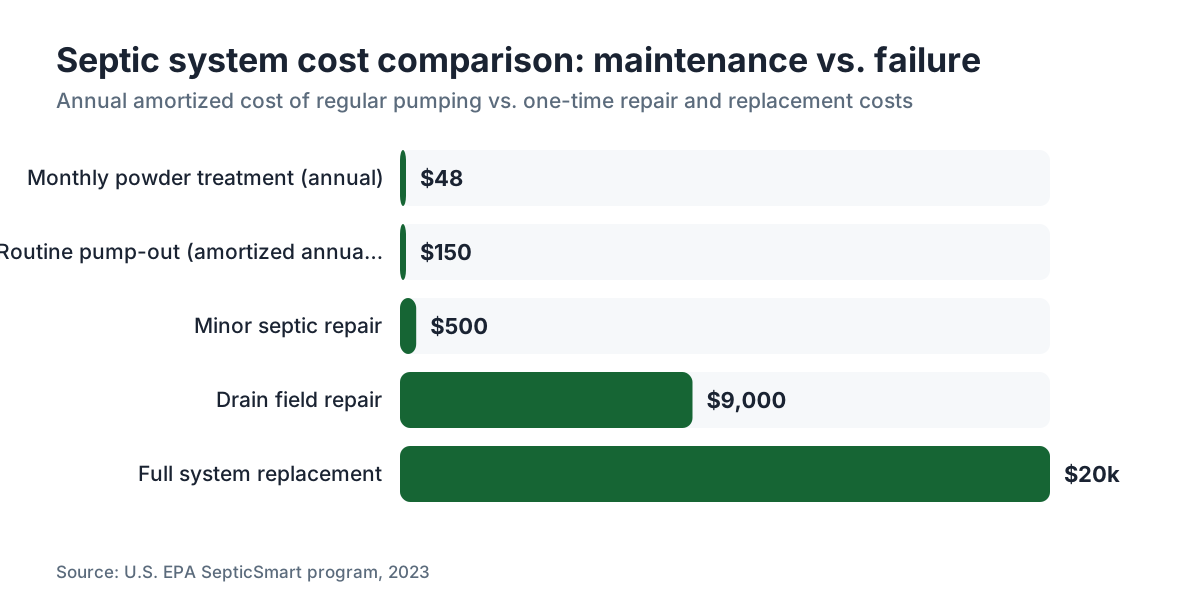
A monthly bacterial powder treatment at $4 per dose runs about $48 a year. A quarterly product runs $15 to $20 a year. That's a small number, and if it buys you peace of mind, it's not unreasonable.
The cost of skipping routine maintenance is where the math flips. A standard pump-out runs $300 to $600 in most U.S. markets, higher in rural areas or states with strict waste disposal rules [6]. A pump-out every 3 years on a 1,000-gallon tank serving a family of four amortizes to about $100 to $200 a year. That's your real maintenance cost.
A septic tank repair for a minor issue (cracked baffle, damaged lid, clogged outlet) runs $150 to $900 depending on complexity. A full septic system repair involving the drain field can cost $3,000 to $15,000. Full replacement, covered in our guide to cost to install septic system, averages $10,000 to $30,000 in most states.
The additive industry's implicit promise is that its product cuts pump-out frequency. No peer-reviewed study has demonstrated that. Spending $48 a year on powder while skipping a $400 pump-out isn't saving money. It's trading a small known expense for a much larger probabilistic one.
How do you know if your septic system actually needs help?
A treatment powder isn't a diagnostic tool. Before spending money on any additive, find out whether your system is actually under stress.
Warning signs that something is wrong:
- Slow drains in multiple fixtures (more than one, which points to a clog in that line)
- Gurgling sounds in toilets or drains
- Sewage odors indoors or near the tank or drain field
- Wet or spongy ground over the drain field, especially with a sewage smell
- Bright green grass directly over the drain field during dry weather
- Sewage backing up into the house
None of these respond to powder treatment. They call for a professional inspection and, depending on the cause, possibly septic tank cleaning, repair, or field remediation.
If your system is pumped on schedule, shows no unusual symptoms, and your household uses water and drains responsibly, you probably don't need a powder at all. A healthy system regulates itself. The EPA's SepticSmart campaign frames it simply: proper use and regular pumping are the two things that actually determine system longevity [1].
For homeowners managing a septic system over the long haul, keeping a simple maintenance log (dates of pump-outs, any repairs, additive use, observed symptoms) is worth more than any product you can buy. That record is also the first thing a buyer's inspector will ask for if you sell the property.
Frequently asked questions
How often should I use septic tank treatment powder?
Most manufacturers recommend monthly doses, though some products are built for quarterly use. More frequent isn't better. The limiting factor in a septic tank is physical sludge accumulation, not bacterial count, so there's no benefit to doubling up. If you use a powder, once a month flushed down the toilet is the standard protocol, and you should avoid heavy water use for a few hours after each dose.
Can I use septic tank treatment powder if I have a newer septic system?
Yes, but it's even less necessary. A new system has a clean environment where native bacterial populations establish quickly. The EPA's SepticSmart guidance says a healthy system doesn't need supplementation. If you want to use a powder anyway, stick to a pure bacterial formula with no solvents or surfactants. It won't help much, but it won't harm a properly functioning new system either.
Is Rid-X the same as other septic tank treatment powders?
Rid-X is among the most recognized brands and contains Bacillus bacterial strains plus cellulase, protease, and lipase enzymes. Its active ingredients are similar to most competitors. Strain types and CFU counts vary by product, but no independent peer-reviewed study has shown Rid-X or any comparable powder reduces pump-out frequency in a normally functioning system. Its wide availability, including at Walmart, makes it convenient, but efficacy matches generic equivalents.
What happens if I use too much septic treatment powder?
Overdosing is unlikely to cause serious harm if the product contains only bacterial strains and enzymes. You won't turbocharge your system by piling on extra. In enzyme-heavy products, overdosing can liquefy more solids than your tank's baffles are designed to manage, letting partially digested material reach the drain field earlier than it should. Follow the label dosing and don't double up, especially with enzyme-containing products.
Can septic treatment powder fix a smell coming from my drains?
Sometimes, for mild odors caused by a thin bacterial layer in a rarely used drain. A bacterial powder dose can re-establish that layer. But persistent sewer odors, especially from multiple drains or outdoors near the tank and drain field, usually mean a fuller tank, a failing baffle, or a drain field under stress. Those require professional inspection and pumping, not a powder treatment.
Are septic tank treatment powders safe for septic systems with aerobic treatment units?
Aerobic treatment units (ATUs) use oxygen-driven bacterial processes that differ from conventional anaerobic tanks. Adding Bacillus-based anaerobic bacteria to an ATU introduces organisms optimized for the wrong environment. Some ATU manufacturers explicitly advise against additives. Check your ATU's maintenance manual or ask your service provider before using any powder in an aerobic system.
Do any states ban septic tank treatment powders?
No state bans all septic additives, but several restrict specific types. Vermont prohibits additives containing toxic substances or compounds harmful to treatment performance under its Wastewater System and Potable Water Supply Rules. Wisconsin's NR 113 rules restrict products that can impair system function. The restrictions target chemical additives, solvents, and strong surfactants more than pure bacterial powders. Check your state environmental agency's onsite wastewater page for your specific regulations.
Is it worth buying septic tank treatment at Walmart versus specialty stores?
For consumer-grade bacterial powders, the source doesn't change the product meaningfully. Walmart septic tank treatment products, mainly Rid-X and similar brands, contain the same Bacillus strains and enzyme mixes you'd find at a hardware or plumbing supply store. Specialty suppliers sometimes sell higher-CFU commercial formulations, but the research doesn't support that higher CFU counts produce better outcomes in typical household systems. Buy based on ingredients, not the store.
Should I use septic treatment powder after my tank is pumped?
This is one of the more defensible uses. Pumping removes most of the resident bacteria along with the sludge. A single bacterial powder dose in the first flush after a pump-out can help re-seed the system. Many pumping companies recommend the practice. It's low-cost and has a reasonable biological basis, unlike monthly maintenance dosing in a healthy system that hasn't been recently disrupted.
Can septic powder treatment help a slow-draining system?
Rarely, and only for a very specific cause. If slow drains come from a thin biofilm blockage in a drain line and you add a powder with the right enzyme profile, there's a small chance it helps. But slow drains in a septic system most often mean the tank is full, a pipe is partially blocked, or the drain field is failing. None of those respond to powder. Get the tank inspected before assuming a product can solve a drainage issue.
How do I store septic tank treatment powder properly?
Store powder packets in a cool, dry place out of direct sunlight. Moisture is the main threat: it can activate the dormant bacteria early, killing them before they reach the tank. Most products carry a 2 to 3 year shelf life in proper storage. Don't leave open packets around or stash them in a humid basement bathroom cabinet. The original sealed packaging is fine as long as the storage spot stays dry.
What's the difference between bacterial and enzyme septic treatments?
Bacterial treatments introduce live (dormant) microorganisms, usually Bacillus strains, that activate in the tank and produce enzymes through their natural metabolism. Enzyme treatments skip the living organisms and deliver concentrated enzymes directly. Enzyme-only products work faster at first but leave no self-sustaining population. They also carry a slightly higher risk of liquefying solids before they should leave the tank. Most extension programs prefer bacterial-only or combination products over enzyme-only formulations.
Does septic treatment powder work in cold weather?
Standard Bacillus strains slow down hard below 50°F, which is a real limitation for systems in cold climates. Some manufacturers offer cold-weather formulations with strains selected for activity at lower temperatures. If you're in Minnesota, Wisconsin, or northern New England and your tank is in a shallow installation that gets cold in winter, a cold-climate formulation has a plausible edge over a standard product. Check the label for temperature range claims and verify they're based on actual strain testing.
Sources
- U.S. EPA SepticSmart program, "Protecting Your Investment" guidance: EPA states that natural bacteria in a healthy septic system do not need to be supplemented with commercial additives, and recommends pumping every 3 to 5 years.
- University of Minnesota Extension, "Septic System Owner's Guide": Extension guidance advises against enzyme-only additives, noting they can liquefy solids and push them into the drain field prematurely.
- University of Minnesota Extension, septic system research and outreach: No additive has been demonstrated to reduce the need for routine pumping or to restore a failing system; a 1,000-gallon tank serving a family of four accumulates roughly 50 to 80 gallons of sludge per year.
- Journal of Environmental Management, bacterial augmentation in septic systems (2016): Periodic re-inoculation with Bacillus strains can help re-establish bacterial populations after microbial disruption from antibiotic-laden wastewater.
- Vermont Agency of Natural Resources, Wastewater System and Potable Water Supply Rules: Vermont prohibits the sale of septic additives containing pathogenic organisms, toxic substances, or compounds that may adversely affect treatment.
- U.S. EPA, "How to Care for Your Septic System": Standard pump-out costs $300 to $600 in most U.S. markets; drain-field replacement can cost $5,000 to $20,000.
- Wisconsin DNR, NR 113 Administrative Code, Septage Servicing: Wisconsin's NR 113 rules restrict septic additives that can impair system function or treatment performance.
- National Environmental Services Center (NESC), West Virginia University, "Septic System Additives": Review of septic additive studies found no consistent evidence that biological or enzyme additives improve system performance or extend pump-out intervals.
- U.S. EPA Office of Water, "Onsite Wastewater Treatment Systems Manual" (EPA/625/R-00/008): EPA technical manual covers design assumptions for solid accumulation in conventional septic tanks and does not recommend routine additive use.
- North Carolina State University Cooperative Extension, "Septic System Maintenance": Extension guidance notes that inorganic materials, hair, and digestion byproducts accumulate as sludge regardless of bacterial additive use, reinforcing the need for routine pumping.
Last updated 2026-07-10