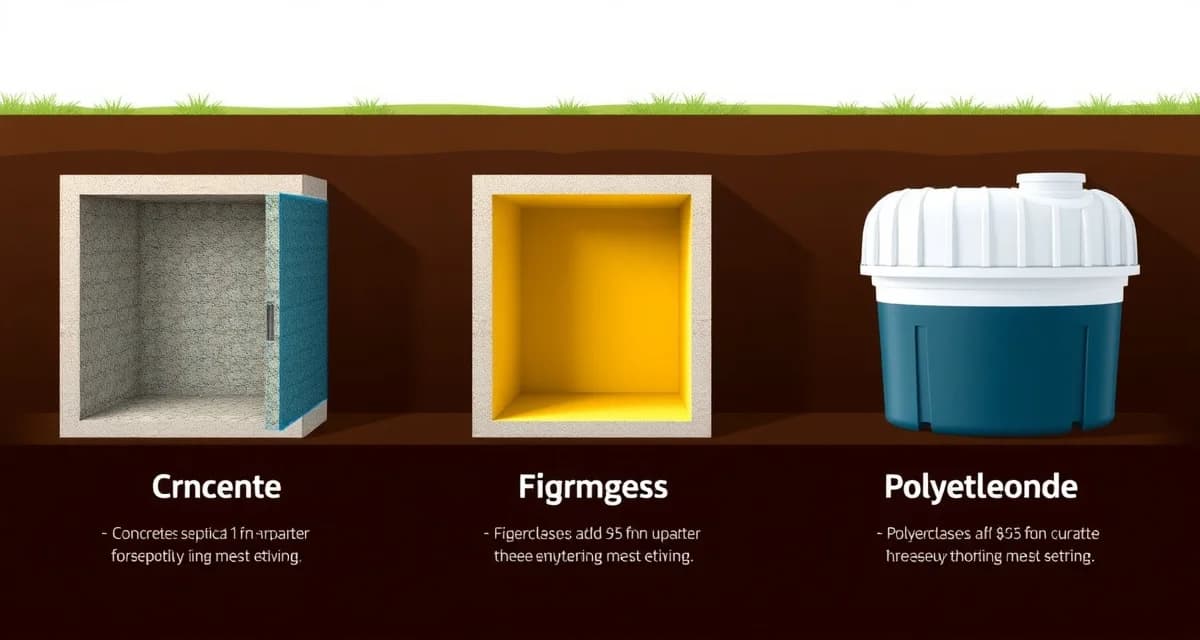
Septic Tank Types Compared: Concrete, Fiberglass, and Polyethylene
By the SepticMind Editorial Team
Technicians who treat all tank types identically miss material-specific inspection points and service requirements. That's not just an inspection quality problem. It's a liability problem when a material-specific failure mode wasn't documented because the tech was looking for problems they'd seen on concrete tanks, not the problems fiberglass tanks actually have.
TL;DR
- Concrete tanks are the most common type and last 40+ years if the concrete is sound and the soil chemistry is not aggressive.
- Fiberglass and polyethylene tanks generally outlast concrete in aggressive soil environments and are not susceptible to corrosion.
- Aerobic treatment units (ATUs) process effluent to a higher standard than conventional tanks but require consistent quarterly maintenance to function properly.
- Mound system tanks are conventional in construction but the drainfield uses imported fill material, which has a shorter design life than native soil absorption systems.
- Two-compartment tanks provide better effluent quality than single-compartment tanks because the second compartment provides additional settling before the outlet.
- Selecting the right tank type for a site depends on soil conditions, water table depth, setback requirements, and applicable state regulations.
Concrete septic tanks represent 70% of US inventory but are most prone to inlet/outlet baffle deterioration. The other 30% is primarily fiberglass and polyethylene, each with their own characteristics that affect how you service them, what you inspect, and what findings you document.
Concrete Tanks: The Most Common Type
Concrete tanks have been the industry standard for decades. They're heavy, durable, and most septic contractors have the most experience with them.
Advantages: Extremely durable structural life (50+ years when properly installed), heavy enough to resist flotation in high water table conditions, widely available and installed.
Common failure modes and inspection points:
- Inlet and outlet baffle deterioration: This is the most common finding in concrete tanks. The combination of hydrogen sulfide gas above the liquid level and organic acid from the scum layer attacks concrete baffles over time. Inspect baffle condition carefully. A deteriorated concrete baffle that's crumbling or missing sections needs replacement.
- Cracking: Concrete tanks can crack from ground settling, soil pressure, tree root intrusion, or vehicle traffic over the tank. Horizontal cracks on the side walls are the most concerning because they indicate soil pressure from outside. Hairline cracks that don't appear to penetrate are monitored. Active cracks with evidence of infiltration or exfiltration are findings.
- Lid and access port deterioration: Concrete lids crack and deteriorate. Check lid condition at every service call. A cracked lid is both a safety issue and an access/sealing problem.
- Corrosion at the waterline: The liquid/air interface zone in a concrete tank experiences the most corrosion. Inspect this zone for active spalling or structural loss.
Service interval: Generally 3-5 years for residential systems, depending on household size and tank capacity.
Fiberglass Tanks: Lighter and Corrosion-Resistant
Fiberglass tanks are manufactured in molds, making them watertight from the factory. They're lighter than concrete and resistant to the corrosion that attacks concrete baffles.
Advantages: Corrosion-resistant (the baffle failure mode common in concrete doesn't apply), factory-sealed construction eliminates infiltration from joint failures, lighter weight eases installation.
Common failure modes and inspection points:
- Flotation: This is the most notable fiberglass tank risk. Fiberglass tanks are light enough to float out of the ground when hydrostatic pressure exceeds the tank's weight plus contents. In high water table areas or after heavy rain events, this is a real risk. Inspect for signs of tank movement (shifted lid, distorted access port position, disturbed soil pattern around the tank).
- Inlet and outlet connections: Fiberglass tanks use fittings at the inlet and outlet pipe penetrations. These connections can fail over time, particularly if there's differential ground movement between the pipe and tank. Inspect these connections for any separation or cracking.
- Baffles: Fiberglass tanks typically use PVC baffles, which don't corrode like concrete. However, they can be damaged by contact with the access riser during pumping or by physical impact.
- Surface condition: Check the exterior of the tank where accessible for impact damage, which can compromise the sealed construction.
How does tank material affect inspection requirements and expected service intervals? Fiberglass tanks typically maintain their functional condition longer than concrete tanks in corrosive conditions, so the primary inspection focus shifts from baffle corrosion to flotation risk and connection integrity. Service intervals are similar to concrete.
Polyethylene (HDPE) Tanks: Increasingly Common in New Construction
High-density polyethylene tanks are the newest common material. They share many characteristics with fiberglass but are manufactured through blow molding rather than fiberglass layup.
Advantages: Lightweight, watertight construction, chemically inert and resistant to corrosion, long structural life when not mechanically damaged.
Common failure modes and inspection points:
- Flotation: Same risk as fiberglass. High water table conditions and heavy rain can cause flotation in lightweight polyethylene tanks that aren't properly anchored.
- Deformation under load: Polyethylene can deform if the tank is installed under a driveway or area subject to vehicle traffic without proper structural protection. Check for visible distortion of the tank shape.
- Inlet/outlet connections: Similar to fiberglass, the pipe penetration fittings are inspection points.
- Impact damage: Polyethylene is relatively flexible but can be damaged by heavy equipment or sharp objects during installation or service.
Are fiberglass tanks more or less durable than concrete tanks? For baffle corrosion and acid-related deterioration, fiberglass is more durable. For flotation resistance and resistance to surface loads, concrete is more durable due to its weight. The materials have different failure modes rather than a single durability ranking.
Material-Specific Documentation
SepticMind's tank records include a material field which adjusts inspection checklist requirements automatically. When you record a tank as concrete, the checklist includes baffle deterioration and cracking checks as specific inspection points. When you record it as fiberglass or polyethylene, the checklist adjusts to emphasize flotation indicators and connection integrity.
This adjustment happens automatically based on the material field in the customer's system record. You don't have to remember to check different things for different material types. The form surfaces the right questions for the material.
What to Tell Customers About Tank Material and Service
Customers with newer fiberglass or polyethylene tanks sometimes ask if they need service as frequently as their neighbor with an older concrete tank. The answer is yes, for reasons that differ by material:
Concrete tanks need service at regular intervals to assess baffle condition and structural integrity. Fiberglass and polyethylene tanks still need regular pumping (solids accumulate regardless of material), and they need inspection for the material-specific failure modes listed above. Material doesn't change the pumping interval. It changes what you're looking for when you have the lid open.
Get Started with SepticMind
SepticMind is designed around the actual workflows of septic service companies, from county permit tracking to automated maintenance reminders. Whether you are managing a single truck or a multi-county fleet, the platform scales with your operation. See how it works for your business.
Frequently Asked Questions
How does tank material affect inspection requirements and expected service intervals?
Tank material determines which failure modes are most relevant and therefore which inspection points receive emphasis. Concrete tanks require careful baffle inspection because hydrogen sulfide and organic acids attack concrete over time. Fiberglass and polyethylene tanks don't have baffle corrosion but are more susceptible to flotation in high water table conditions and require inspection of inlet/outlet fittings rather than baffle condition. Service intervals (pumping frequency) are similar across materials because solids accumulate regardless of tank type.
Are fiberglass tanks more or less durable than concrete tanks?
The materials are durable in different conditions. Fiberglass is more durable against the corrosive environment inside septic tanks (hydrogen sulfide gas, organic acids) and doesn't suffer from the baffle deterioration that's common in aging concrete tanks. Concrete is more durable against flotation risk because its weight resists hydrostatic pressure in high water table conditions. Fiberglass is also susceptible to structural damage from vehicle loads without proper protection. The most accurate answer is that they're durable in different ways, with different failure modes that require different inspection attention.
Does SepticMind adjust inspection checklists based on tank material?
Yes. Tank material is a recorded field in the customer's system record, and when an inspection job is created for that system, the inspection checklist adjusts to reflect material-specific inspection points. A concrete tank inspection emphasizes baffle condition, cracking, and lid deterioration. A fiberglass or polyethylene tank inspection emphasizes flotation indicators, inlet/outlet connection integrity, and deformation. This automatic adjustment ensures inspectors check for the problems that actually occur with each material type rather than applying a generic checklist to every tank.
Which septic tank type performs best in sandy or acidic soils?
Fiberglass and high-density polyethylene tanks perform better than concrete in sandy, acidic, or high-sulfide soil environments because they are not susceptible to corrosion or concrete degradation. Concrete tanks in aggressive soil chemistry can develop cracks at seams and suffer corrosion of the outlet baffle over time. For properties with these soil conditions, a plastic tank installed correctly with proper bedding and backfill will typically outlast a concrete tank of the same vintage. Installation quality is more critical for plastic tanks, however: improper backfill can deform the tank structure.
What is a two-compartment septic tank and when is it required?
A two-compartment tank has a dividing wall inside creating two chambers. The first chamber receives incoming waste and handles primary separation; the second chamber provides additional settling before effluent reaches the outlet. Two-compartment tanks produce higher-quality effluent (lower suspended solids) than single-compartment tanks and are required in some states for systems serving larger homes, commercial properties, or sites where effluent quality requirements are more demanding. The second compartment adds cost but extends drainfield life by reducing the solids load entering the field.
Try These Free Tools
Sources
- National Onsite Wastewater Recycling Association (NOWRA)
- US EPA Office of Wastewater Management
- NSF International
- Water Environment Federation
- National Environmental Services Center (NESC)