4 bedroom septic system cost: what to budget in 2025
By the SepticMind Editorial Team
TL;DR
- A septic system for a 4-bedroom home usually costs $6,000 to $25,000 installed.
- Most homeowners pay $10,000 to $15,000 for a conventional gravity system in decent soil.
- Tank size, soil, system type, and permit fees decide where you land.
- Mound, aerobic, and drip systems push you toward the top of that range or past it.
What does a 4-bedroom septic system cost?
Most 4-bedroom installs in the continental U.S. land between $10,000 and $15,000 for a conventional gravity system [1]. A simple job in a rural area with good soil can come in at $6,000 to $8,000. A mound system on a high water table lot, in a state that demands an engineer's stamp, can pass $25,000 before you touch landscaping.
That range frustrates people. It also reflects reality. The tank is a small slice of the total. Labor, excavation, drain field materials, permits, and soil testing eat most of the money.
The EPA's SepticSmart program treats proper sizing and installation as the biggest factors in how long a system lasts, which is another way of saying that cutting corners up front usually costs you more later [2].
When you compare bids, confirm each one covers the same scope: tank, distribution box, drain field, connecting piping, backfill, permit fees, and the perc or soil evaluation. A bid that leaves out the site evaluation or permit fees looks cheaper than it is. It isn't.
What tank size does a 4-bedroom house need?
Most state codes set a 1,000-gallon minimum tank for a 4-bedroom home, but 1,250 or 1,500 gallons is what you'll see in practice, and local health departments often require it [3].
The standard design assumption is 150 gallons of wastewater per bedroom per day. That gives a 4-bedroom home a peak design flow of roughly 600 gallons per day. A 1,000-gallon tank gives you about 1.7 days of retention at that flow, which is the floor for letting solids settle before effluent moves to the drain field.
Going up to a 1,250-gallon tank costs maybe $200 to $400 more and cuts pumping frequency while easing stress on the drain field. If you're building and have the room in your budget, it's one of the smarter few-hundred-dollar decisions you can make.
Material changes the price too. Concrete tanks run $700 to $2,000 for a 1,000-to-1,500-gallon unit depending on region. Polyethylene and fiberglass sit in a similar band but can cost a bit more for the same capacity. Your contractor's local supply chain usually decides which material comes in cheapest near you.
For a closer look at what goes into the job, see our guide on septic tank installation and the broader cost to install a septic system.
What does a 4-bedroom septic system cost by system type?
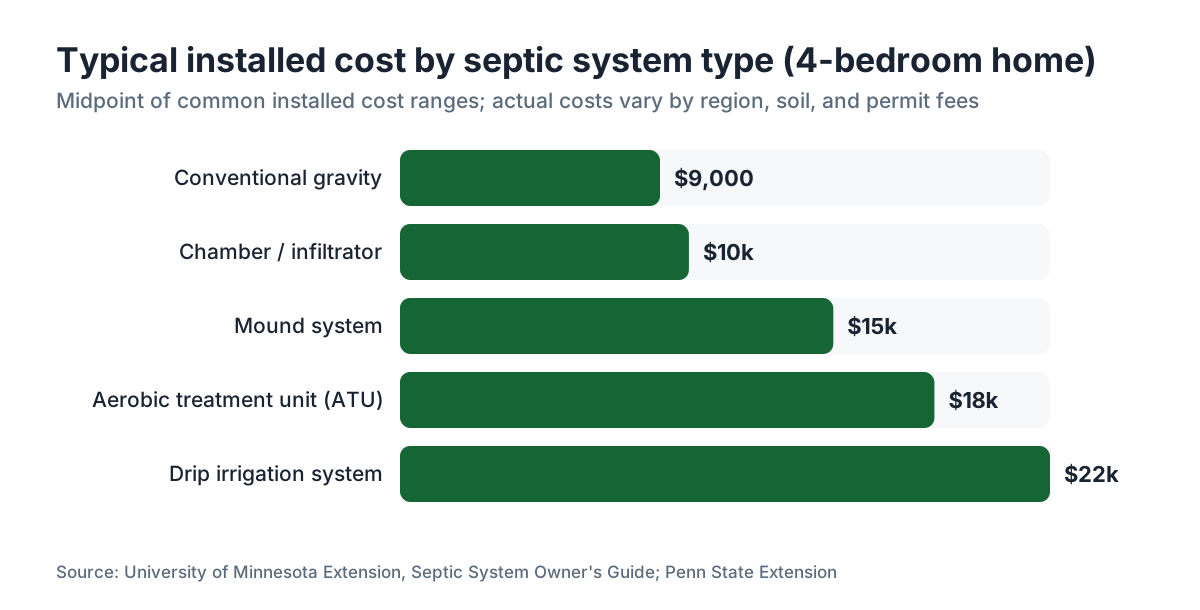
After lot conditions, system type is the biggest cost lever you have. Here's a realistic breakdown by type for a 4-bedroom home, built from contractor pricing and state extension estimates [1][4]:
| System Type | Typical Installed Cost | Best For |
|---|---|---|
| Conventional gravity | $6,000, $12,000 | Good soil, adequate setbacks |
| Chamber/infiltrator | $7,000, $13,000 | Slightly tighter soil, lower profile |
| Mound system | $10,000, $20,000 | High water table, shallow soil |
| Aerobic treatment unit (ATU) | $12,000, $25,000 | Poor soil, small lots, strict regs |
| Drip irrigation system | $15,000, $30,000+ | Very restricted sites |
| Constructed wetland | $8,000, $20,000 | Certain rural jurisdictions |
Conventional gravity systems cost the least because they have no moving parts. Effluent flows by gravity from the tank through a distribution box and into perforated pipes in gravel trenches. When soil and lot geometry cooperate, this is the system I'd choose every time.
Mound systems cost more because crews import sand fill, build an elevated bed above natural grade, and usually add a pump chamber with a dosing pump. The pump chamber alone adds $1,500 to $3,500.
Aerobic treatment units treat wastewater to a higher standard with an air compressor and a settling chamber. The effluent comes out cleaner, but they need electricity, an annual maintenance contract (typically $150 to $300 a year), and periodic inspection by a licensed operator in most states. Texas spells out its ATU operator licensing under 30 TAC Chapter 285 [5].
If your site fails the perc test or has a shallow water table, you don't get a choice. You install what the soil evaluation tells you to install.
What factors drive the cost up or down the most?
Soil is the biggest wildcard. A lot that passes a perc test easily, with sandy loam four feet deep, takes a conventional gravity system. A lot with clay, a high seasonal water table, or bedrock near the surface may force an engineered alternative that costs two to three times as much. You won't know until the site evaluation, which runs $300 to $1,500 depending on the state and how many test holes and percolation tests the health department wants [4].
Lot size and setbacks matter too. Codes require minimum horizontal setbacks from wells, property lines, foundations, and water features. A small or awkward lot may push the drain field to a poor spot, force a larger pump, or shrink the usable drain field area to the point where a conventional system won't fit. Each of those adds cost.
Excavation difficulty gets overlooked. Rocky ground burns equipment time. Steep grades need more engineering. Tight access or heavy traffic may mean hand-digging or smaller machines, which is slower and pricier.
Permit and inspection fees swing hard by state and county. They run under $200 in some rural counties and over $2,000 where the review process is complicated. Some counties require a licensed engineer to stamp the design. Others accept a contractor-drawn plan.
Labor tracks the regional market. Rural Midwest jobs regularly land at $8,000 to $10,000 all in. Coastal California, the Pacific Northwest, and New England routinely clear $18,000 for the same system, driven almost entirely by labor and regulatory overhead.
Site prep is the last piece. If you're replacing a failed system, demolition of the old tank and drain field adds $500 to $3,000 depending on tank size and how the old material gets hauled off.
How much does the drain field cost for a 4-bedroom home?
The drain field (also called the leach field or absorption field) often costs more than the tank. For a 4-bedroom home with a design flow around 600 gallons per day, a conventional gravity system typically needs 600 to 1,200 square feet of trench area, depending on the soil's absorption rate [4].
A standard gravel-and-pipe drain field runs roughly $3,000 to $7,000 for a 4-bedroom home in average soil. Chamber systems, which use plastic arch units instead of gravel, cost a bit more per unit but can cover the required area with fewer linear feet of trench, which sometimes trims excavation cost.
For how drain fields work and what shortens their life, see our guide on leach fields.
A drain field's design life runs 20 to 30 years with proper care. A field hit with grease, non-degradable solids, or steady overloading can fail in five to ten. That failure hurts: a drain field replacement alone runs $5,000 to $20,000 depending on system type and lot conditions [1].
Soil percolation rate is reported in minutes per inch (MPI). Most codes accept a perc rate between 1 and 60 MPI for a conventional system. Slower rates (clay-heavy soil) demand more trench area or an alternative system. Faster rates (coarse sand or gravel) sometimes require media filters so poorly treated effluent doesn't reach groundwater.
What are the permit and inspection costs for a 4-bedroom septic system?
Permits are non-negotiable. Installing a septic system without one is illegal in every state, and an unpermitted system is a serious liability when you sell. Most residential real estate deals now require a septic inspection and disclosure of the system's age and permit status [6].
Permit fees for a new install range from roughly $200 in some rural counties to $2,500 or more where the review runs several steps. Many states also require a licensed engineer or registered sanitarian to run or supervise the site evaluation, adding $500 to $1,500.
The completion inspection (often called a final or as-built inspection) is usually folded into the permit fee or runs $100 to $300 on its own. Some states require an as-built drawing filed with the county showing tank location, cleanout access, and drain field boundaries. Keep that document. It pays off at every future pumping, repair, and resale.
Buying a property with an existing system? A septic tank inspection before closing is money well spent. A pre-purchase inspection costs $300 to $700 and can surface problems that shift your negotiating position or save you from a $15,000 surprise in year two.
Operators managing a book of customers can use tools like SepticMind to track permit records, inspection dates, and service history across many properties, which matters when you're juggling dozens of systems.
How do you get an accurate quote, and what should the bid include?
Get three bids minimum. Septic installation is a local market, and pricing varies more than almost any other home system. A contractor 30 miles away may differ by $4,000 from a local one on identical work, because equipment costs, material supply chains, and labor markets differ.
A complete bid itemizes: soil evaluation and perc test (if not already done), permit fees, tank (type, material, capacity), distribution system, drain field (square footage, type), pump chamber and pump if required, all piping and fittings, backfill and rough grading, and a plain statement of what's excluded. If a bid doesn't break these out, ask. Bundled numbers make it impossible to compare or negotiate.
Verify the license. Every state requires septic installers to hold a specific license, and most let you check it online through the licensing board or health department. Ask for proof of liability insurance and, ideally, a workers' comp certificate.
Ask about their experience with your soil type and the system your evaluation recommends. A contractor who mostly builds conventional systems in sandy soil may be the wrong hire for a mound system in clay. It's a different skill set.
Timeline counts too. Most conventional installs take one to three days of field work, but the permit process can take two to eight weeks depending on the county. Plan around that if you're building a new home.
Are there financing options for a 4-bedroom septic system?
Septic systems are expensive and often not optional, which is a real hardship on a tight budget. Several paths exist.
USDA Rural Development offers grants and loans for septic repair and replacement through its Section 504 program (for very low-income rural homeowners) and the Water & Waste Disposal Loan and Grant program for community-scale systems. Eligibility is based on income and location [7].
Many states run their own onsite wastewater loan programs, sometimes through county health departments or state revolving funds. North Carolina and several other states operate revolving loan funds for onsite system repair and replacement for qualifying homeowners [9]. Search your state environmental or health agency site for "onsite wastewater financial assistance."
Home equity loans and HELOCs are the most common private route. Interest is often deductible when the loan is secured by your primary residence, but confirm that with a tax advisor given how tax rules change.
Some contractors offer payment plans. Read the terms hard. Rates can run high and terms short. A local credit union personal loan often beats contractor financing.
If your system has failed and your household income is low, call your county health department before you assume you're paying full price. Many counties have hardship provisions or can point you to state or federal help.
What are the ongoing costs after a 4-bedroom septic system is installed?
Installation is a one-time hit. The ongoing costs are where people get surprised.
Pumping is the most predictable of them. A 4-bedroom home generating roughly 600 gallons per day fills a 1,250-gallon tank's solids compartment in about three to five years under normal use, the rule of thumb the EPA SepticSmart program cites [2]. Real frequency depends on household size, garbage disposal use, and how fast solids build up. Pumping costs $250 to $600 depending on region and tank access. See our guide on how often to pump a septic tank for the full breakdown.
For the pumping process itself, see septic tank pumping and septic tank pump out.
Aerobic treatment units carry costs beyond pumping. Most states require an annual maintenance contract with a licensed provider. Those contracts run $150 to $300 a year and cover the air compressor, chlorination system, and effluent quality. Parts and repairs on ATUs are extra and hard to predict.
Drain field maintenance is mostly about what you don't do: no driving over it, no trees planted near it, no grease down the drain, no wipes or medications flushed. That costs nothing but restraint.
A septic riser (a vertical pipe that brings the tank lid to grade) costs $200 to $500 installed and saves $50 to $150 at every future pump-out by killing the need to dig up the lid. If your system doesn't have one, add it at your next septic tank cleaning.
Budget $300 to $600 a year as a rough long-run average across pumping, inspections, and minor maintenance for a conventional system in good shape.
What if the septic system fails or needs repair?
Septic systems fail two main ways: the tank develops a structural problem (cracks, baffle failure, inlet or outlet damage), or the drain field clogs with biomat and stops accepting effluent. The cost profiles are very different.
Tank repairs, like replacing a baffle or sealing a crack, run $150 to $1,500 depending on severity and access. Full tank replacement runs $2,000 to $5,000 or more. See our guide on septic tank repair for specifics.
Drain field failure is the expensive one. A failing field shows up as slow drains, sewage odor in the yard, or wet patches over the field, especially after rain. If resting the field (cutting water use for a stretch) and pumping the tank don't fix it, you're likely looking at replacement. That's $5,000 to $20,000 depending on system type and lot conditions, and you may need another perc test and permit. Our septic system repair guide walks through the diagnostics and repair process.
Some field failures respond to oxygen injection or biomat-disruption services, which run $1,000 to $3,000 and sometimes buy more field life. Nobody has good controlled data on success rates for these treatments; results vary widely with how far the biomat has progressed.
If you're weighing a full replacement, the cost to put in a septic tank guide covers the new-install cost factors in detail.
How does a 4-bedroom septic system cost compare to connecting to municipal sewer?
This question only matters where municipal sewer is even an option. In many rural areas it isn't, so the comparison is moot. But at the rural edge of the suburbs, you sometimes get to choose.
Sewer connection usually starts with a one-time connection fee (also called a tap fee or impact fee) of $2,000 to $15,000 or more, depending on the municipality and when the sewer line went in. Then you pay a monthly sewer service fee, which averages $30 to $70 per month nationally and can top $100 in some places [8].
Run the math over 20 years. A $40-a-month sewer bill totals $9,600, on top of the tap fee. A septic system installed for $12,000 and pumped every four years at $400 a pump-out totals about $14,400 over 20 years (installation plus five pump-outs). Those figures are close enough that lot conditions, system longevity, and personal preference reasonably drive the call.
Sewer has one real edge: you don't own the pipes. A failure is the utility's problem, not yours. Septic has one real edge back: no monthly bill and no dependence on a utility.
If your lot sits where regulators are expanding sewer service, check for a mandatory connection requirement once sewer arrives. Some municipalities require connection within a set window, which takes the choice away.
What questions should I ask a septic installer before signing anything?
A handful of specific questions separate experienced contractors from the rest.
Ask what system type they're recommending and why, tied directly to your soil evaluation results in plain terms. If they can't explain it clearly, that's a signal.
Ask who pulls the permit and who does the design. Some contractors subcontract the engineering. That's fine. You just need to know who owns what.
Ask about the drain field sizing: how many square feet, how many linear feet of trench, and what absorption rate they used. Compare it to your perc test results. If the numbers don't match your state's published sizing tables, ask why.
Ask about the warranty. Most tanks carry a manufacturer's warranty of 20 to 30 years on the tank itself. Workmanship warranties range from nothing to two years. Get it in writing.
Ask whether they handle the final inspection or whether you schedule it. Confirm who provides the as-built drawing and how long after installation.
Ask for references from jobs in your soil type in the past two years, and actually call them. Ask whether the job came in on budget, whether the timeline held, and whether anything went sideways after the final inspection.
Operators running these conversations at scale can use SepticMind to track bid details, service history, and permit records across customer properties, so nothing falls through the cracks between the sales pitch and the post-install follow-up.
Frequently asked questions
How much does a 4-bedroom septic system cost on average?
Most 4-bedroom septic installs run $10,000 to $15,000 for a conventional gravity system in average soil. The full range is $6,000 on the low end (simple rural install, good soil) to $25,000 or more for alternative systems like mound or aerobic treatment units on difficult lots. That figure includes tank, drain field, permits, and labor.
What size septic tank does a 4-bedroom house need?
Most state codes set a 1,000-gallon minimum for a 4-bedroom home, but 1,250 to 1,500 gallons is more common and often required locally. The design assumes about 150 gallons of wastewater per bedroom per day, making 600 gallons per day the baseline flow for four bedrooms. A slightly larger tank cuts pumping frequency and eases drain field stress.
How much does the drain field cost for a 4-bedroom home?
A conventional gravel-and-pipe drain field for a 4-bedroom home runs $3,000 to $7,000 installed, depending on soil percolation rate and required square footage. Poor soil or a high water table can push that much higher, especially when a mound or alternative drain field is required. The drain field often costs more than the tank itself.
How often does a 4-bedroom septic tank need to be pumped?
The EPA recommends pumping every three to five years for average household use. A 4-bedroom home with a 1,250-gallon tank and typical occupancy usually needs pumping every three to four years. Households with garbage disposals, more residents than bedrooms, or frequent guests may need it more often. Pumping costs $250 to $600 depending on region.
Can I install a septic system myself to save money?
In most states, no. Septic installation requires a licensed contractor, and the work must be permitted and inspected by the county health department. A few states allow owner-built systems on owner-occupied rural property, but the permit, perc test, and inspection requirements still apply. An unpermitted system creates serious liability at resale and can result in mandatory removal at your expense.
Does a 4-bedroom septic system cost more to install than a 3-bedroom system?
Yes, modestly. Moving from three bedrooms to four usually means a larger drain field (more square footage for higher design flow) and can push the tank from 1,000 to 1,250 gallons. The practical difference is often $1,000 to $3,000 over a comparable 3-bedroom system, mostly in drain field materials and excavation. The tank cost difference is minor.
What is the lifespan of a septic system for a 4-bedroom home?
A well-installed, well-maintained conventional system should last 25 to 40 years for the tank and 20 to 30 years for the drain field. Concrete tanks can last 50 years or more if they don't crack. Drain fields fail faster under grease, non-degradable solids, or hydraulic overloading. Regular pumping and conservative water use are the two biggest factors in reaching full lifespan.
Are there financial assistance programs for septic system installation?
Yes. The USDA Rural Development Section 504 program offers grants and loans to low-income rural homeowners for septic repair or replacement. Many states run onsite wastewater revolving loan funds or county-level hardship programs. Check your state environmental or health agency site for local options. Home equity loans and HELOCs are the most common private route for homeowners who don't qualify for assistance.
What happens if my soil fails the perc test?
A failed perc test doesn't mean the lot is unbuildable. It means a conventional gravity system won't work. Your engineer or health department will specify an alternative: a mound system, aerobic treatment unit, drip irrigation system, or another engineered design. These cost much more, often $15,000 to $30,000, but they're built for challenging soil. Some jurisdictions also allow variance processes.
Does a new septic system add value to my home?
A new system mostly supports value by removing a liability rather than adding a premium. A failing or aging system is a strong negative in any inspection and sale. Buyers and lenders increasingly require septic inspections, and a system that passes cleanly removes a common negotiating point for price reductions. Whether a brand-new system fetches more than a 10-year-old working one is far less clear.
How long does it take to install a septic system for a 4-bedroom home?
Field work takes one to three days for a conventional system. An alternative like a mound or ATU may take three to five days in the field. The permit process is where the time piles up: two to eight weeks is common, and counties with backlogged health departments take longer. Start the permit process as early as you can if you're on a construction timeline.
What is an aerobic septic system and how much does it cost for a 4-bedroom home?
An aerobic treatment unit (ATU) uses an air compressor to push oxygen into treatment, producing cleaner effluent than a conventional system. They're required on lots where soil can't adequately treat conventional effluent. For a 4-bedroom home, ATUs run $12,000 to $25,000 installed. They also need an annual maintenance contract ($150 to $300 a year) and electricity to run the air pump continuously.
What maintenance does a 4-bedroom septic system need beyond pumping?
Beyond pumping every three to five years, routine care means keeping vehicles and deep-rooted plants off the drain field, keeping grease and non-degradable solids out of the drains, and not flushing medications or harsh chemicals that kill the tank's microbes. ATU systems also need annual inspection by a licensed operator. Installing risers on the tank lids cuts access costs at every pump-out.
Sources
- University of Minnesota Extension, Septic System Owner's Guide: Typical installed costs for residential septic systems range from $6,000 to $25,000 depending on system type, soil conditions, and regional labor rates.
- U.S. EPA, SepticSmart Program: The EPA recommends pumping septic tanks every three to five years and states that proper sizing and installation are the primary factors in long-term system performance.
- U.S. EPA, Onsite Wastewater Treatment Systems Manual: A minimum 1,000-gallon tank is typically required for a 4-bedroom home with a design flow of 150 gallons per bedroom per day.
- Penn State Extension, Septic System Sizing and Soil Evaluation: Soil percolation rate determines drain field sizing; most codes accept 1 to 60 MPI for conventional systems, and site evaluation costs range from $300 to $1,500.
- Texas Commission on Environmental Quality, 30 TAC Chapter 285 (On-Site Sewage Facilities): Texas requires licensed maintenance providers for aerobic treatment units under 30 TAC Chapter 285, including annual inspections and reporting.
- U.S. EPA, SepticSmart: Protect Your Investment: Unpermitted septic systems create legal liability at resale; most residential real estate transactions now require septic inspection and disclosure of system status.
- USDA Rural Development, Water & Waste Disposal Loan and Grant Program: USDA Rural Development Section 504 offers grants and loans for septic repair and replacement for low-income rural homeowners.
- U.S. EPA, Municipal Wastewater and Sewer Costs: Average municipal sewer service fees range from $30 to $70 per month nationally, with tap or connection fees ranging from $2,000 to $15,000 or more.
- North Carolina State Extension, Septic System Cost and Financing Guide: North Carolina and several other states operate revolving loan funds for onsite wastewater system repair and replacement for qualifying homeowners.
- University of Florida IFAS Extension, Septic Tank Systems: A Homeowner's Guide: A well-maintained conventional septic system can last 25 to 40 years; drain fields typically last 20 to 30 years with proper maintenance and conservative water use.
- Ohio State University Extension, Household Sewage Treatment Systems: Septic system pumping is recommended every three to five years; concrete tanks are the most common tank material and can last 50 or more years if properly maintained.
Last updated 2026-07-09