Septic tank with no leach field: what are your real options?
By the SepticMind Editorial Team
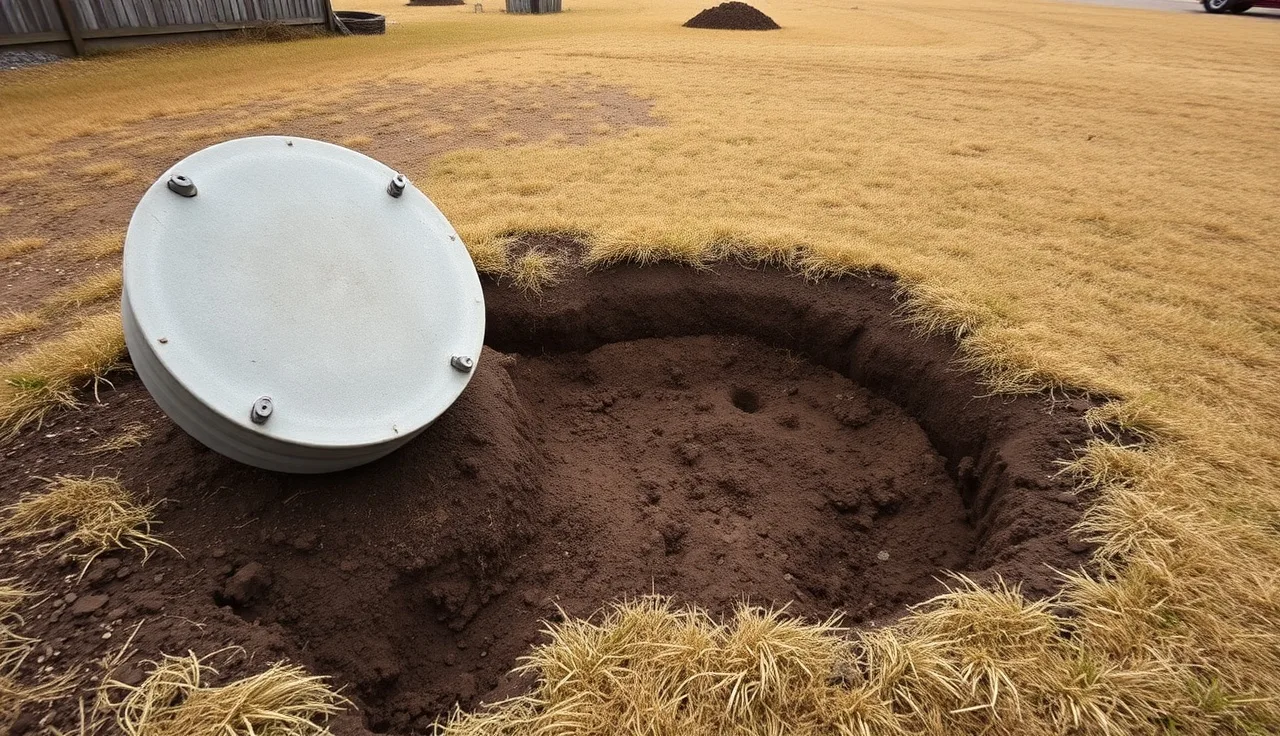
TL;DR
- A conventional septic tank needs a leach field (drain field) to treat and disperse effluent.
- Without one, raw or partially treated sewage has nowhere to go legally.
- Several proven alternatives exist for sites where a drain field won't work: aerobic treatment units, mound systems, constructed wetlands, cesspools (where still permitted), and holding tanks.
- Costs and local permit rules vary widely.
Why does a septic tank need a leach field in the first place?
A septic tank is only the first step in treating household wastewater. The tank holds incoming sewage long enough for solids to settle to the bottom as sludge and for grease to float to the top as scum. What's left in the middle, called effluent, still carries pathogens, nitrogen, and other contaminants. That liquid has to go somewhere, and sending it straight to a ditch or a stream is illegal in every U.S. state.
The leach field, also called a drain field or soil absorption system, is where the real treatment happens. Effluent trickles out through perforated pipes into gravel trenches, and then the soil filters out bacteria, viruses, and nutrients as the water moves down toward groundwater. The EPA's SepticSmart program describes a functioning drain field as the component that 'treats and disperses' effluent, distinguishing it from the tank itself, which merely separates solids from liquids [1].
Take away the drain field and you have a tank that fills up. Once it's full, sewage backs up into the house or surfaces in the yard. Neither outcome is safe, and both violate state and local onsite wastewater codes. That's the core problem this article addresses: what do you do when a conventional drain field isn't possible?
What stops a property from having a conventional leach field?
Several conditions can disqualify a lot from using a standard drain field, and they're more common than people expect.
Soil percolation (or 'perc') rate is the most frequent issue. Soil that absorbs water too slowly, typically anything over 60 minutes per inch on a perc test, can't handle the volume of effluent a household generates. Clay soils are the usual culprit. At the other extreme, very fast-draining sandy or gravelly soil can pass effluent through before pathogens are filtered out, which most state codes also prohibit for a standard system [2].
High groundwater is another common blocker. Most states require at least 2 to 4 feet of separation between the bottom of a drain field trench and the seasonal high-water table. Many states specifically require 2 feet of unsaturated soil between the bottom of the distribution system and the water table, though the exact number varies by state code [2].
Lot size matters too. Drain fields take up a lot of horizontal space, and they need a repair area (a backup location) of equal size. A small urban lot, a narrow coastal parcel, or a site with a steep slope may simply not have room. Rock close to the surface, proximity to wells, setback requirements from property lines, and soil contamination from prior industrial use can all knock out the standard option.
When any of these factors apply, homeowners and site engineers have to look at alternative systems, and the list is longer than most people realize.
Can a septic tank legally operate without any secondary treatment?
In almost every case, no. All 50 states regulate onsite sewage disposal, and the vast majority require that wastewater receive some form of secondary treatment and soil dispersal before it reaches groundwater or surface water. The EPA sets national policy guidance but onsite wastewater regulation is primarily a state and local function, administered through state environmental or health agencies [1].
There are two narrow exceptions worth knowing about.
The first is a holding tank (also called a vault or tight tank). A holding tank has no outlet at all. Effluent accumulates inside and gets pumped out by a licensed pumper on a schedule, sometimes weekly for a full-time residence. A few states and counties allow these as permanent installations on properties that can't support any dispersal system, but they're expensive to operate and most jurisdictions treat them as temporary solutions only [3].
The second is an older structure called a cesspool, which is essentially a tank with porous walls that leaches directly into surrounding soil. Cesspools were common before modern septic codes existed. Most states either banned new cesspools decades ago or are actively requiring conversions. Hawaii was the last state with widespread cesspool use and passed Act 125 in 2017 mandating that all cesspools be upgraded or converted by 2050 [4]. If you have an old cesspool, assume your state has rules about its future.
Outside these two narrow cases, every legitimate system needs both a tank and some form of secondary treatment or dispersal.
What systems work as alternatives to a standard leach field?
The alternatives are mature, well-tested, and permitted in most states. The trade-off is that they cost more to install and maintain than a conventional system.
Aerobic Treatment Units (ATUs)
An ATU injects air into the tank compartments, which drives up bacterial activity and produces a much cleaner effluent than a conventional septic tank. The treated effluent can then be dispersed in a smaller drain field, drip-irrigated onto the surface, or in some states discharged to a water body under a permit. ATUs need electricity to run the air pump, and most states require a maintenance contract with a licensed provider. Annual maintenance costs typically run $150 to $500 [5].
Mound Systems
When soil is too wet or too slow-draining, engineers can build an elevated sand mound above the existing ground surface. A pump doses effluent up into the mound, which acts as an engineered filter before dispersal. Mound systems work well but need more land area than the footprint suggests because of setback and slope requirements. They're common in the upper Midwest and mid-Atlantic states where seasonal high-water tables are widespread [2].
Drip Irrigation Systems
Drip systems pump highly treated effluent (usually after an ATU) through a network of subsurface drip emitters at shallow depth. Because dispersal happens over a larger area at a slow, controlled rate, these systems can work in soils and lot configurations that fail a standard perc test. They need filtration, pressure regulation, and regular inspection of emitters [6].
Constructed Wetlands
A constructed wetland routes effluent through a gravel-filled cell planted with wetland vegetation. Biological activity in the root zone treats the wastewater. These are more common in rural areas with enough land. They're permitted in several states but require a site-specific design [6].
Holding Tanks
As noted above, a holding tank stores all effluent with no treatment or dispersal. It's the option of last resort because pumping costs for a full-time household can run $3,000 to $8,000 per year or more depending on local pumping rates and tank size. They're appropriate for seasonal cabins or emergency situations [3].
Composting Toilets
Some jurisdictions allow a composting toilet to handle toilet waste separately, which sharply reduces the organic load on the septic system. The greywater (sinks, showers) still needs treatment, but the volume is small enough that a very modest dispersal system may qualify. Regulations vary enormously by state.
How much does an alternative system cost compared to a conventional one?
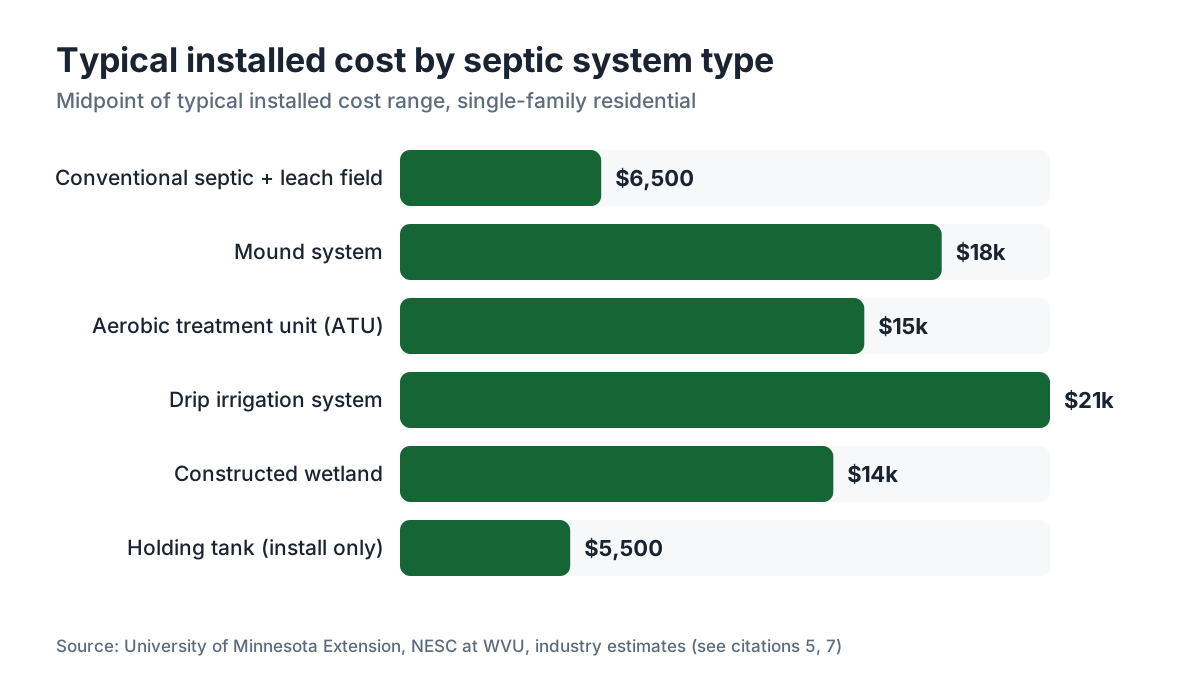
Cost comparisons are genuinely difficult because they depend on soil conditions, lot size, local labor rates, and permit fees. The table below shows typical installed cost ranges based on industry estimates and state-published guidance, not a single authoritative national study, so treat these as realistic starting points rather than firm quotes [5][7].
| System type | Typical installed cost | Annual O&M cost |
|---|---|---|
| Conventional septic + leach field | $3,000 to $10,000 | $250 to $500 (pumping every 3-5 yrs) |
| Mound system | $10,000 to $25,000 | $400 to $800 |
| Aerobic treatment unit (ATU) | $10,000 to $20,000 | $500 to $1,500 (maintenance contract + electricity) |
| Drip irrigation system | $12,000 to $30,000 | $600 to $2,000 |
| Holding tank (installation) | $3,000 to $8,000 | $3,000 to $10,000 (pumping) |
| Constructed wetland | $8,000 to $20,000 | $300 to $700 |
Installation cost is only part of the picture. ATUs and drip systems have ongoing electricity and maintenance contract costs that add up fast over a 20-year ownership period. A mound system might cost twice as much to install as a conventional system but cost about the same to maintain. Run a 20-year total cost of ownership calculation before comparing sticker prices.
For a deeper look at what drives septic system pricing, see our guide to the cost to install a septic system.
What does a site evaluation involve when no leach field is possible?
Before any alternative system can be designed, a licensed soil scientist or site evaluator has to characterize the lot. This almost always includes a soil profile examination (hand-dug or machine-dug test pits to look at soil texture, color, and signs of saturation) and often a percolation test, though many state codes now prefer soil morphology over perc tests because morphology is more predictive of long-term performance [2].
The evaluator is looking for the restrictive layer, the point in the soil profile where drainage fails. That depth determines whether a mound or ATU makes sense, or whether the only option is a holding tank. They'll also measure the seasonal high-water table, which is identified by mottled gray and orange soil coloring caused by alternating wet and dry conditions, not by visiting in wet season.
After the site evaluation, a licensed engineer or designer creates a system design sized for the household's estimated daily flow. Most state codes use 75 to 150 gallons per bedroom per day as a design flow, though actual household water use varies. North Carolina's onsite wastewater rules, for example, use 120 gallons per bedroom per day as the standard design flow [8].
Expect to pay $500 to $2,000 for a site evaluation and design, separate from installation costs. Do not skip this step to save money. An improperly designed system will fail, and fixing it costs far more than doing it right the first time.
For a complete look at what a septic tank inspection covers, that guide walks through what happens at every stage.
What are the signs that a septic tank has no functioning leach field, or that the field has failed?
If you're buying a property or diagnosing an existing problem, these are the signs that a leach field is absent or failed.
The most obvious is sewage backup inside the house, particularly at the lowest drain. If the tank is full and effluent has nowhere to go, it comes back up through floor drains or the lowest toilet.
Wet, spongy, or unusually green grass over where a drain field should be is a classic sign. Effluent that can't absorb into saturated soil pools near the surface. You might smell it before you see it.
Slow drains throughout the house (more than one fixture, which usually means a localized clog) can indicate the tank is full or the field is saturated.
On a property with no obvious drain field location, look for records. Older systems, especially those installed before county permit offices kept digital records, might have a sketch on file with the local health department. Some properties, particularly rural ones developed before modern codes, have only a cesspool or a tank with a simple overflow pipe into a ditch, neither of which is legal to maintain as-is in most states.
If you find a tank with no connected field during a real estate transaction, treat it as a significant defect. The septic tank inspection process should include locating and probing the drain field, more than pumping the tank.
A failed drain field is one of the more expensive repairs in residential real estate. The septic system repair guide covers what remediation typically involves and what it costs.
Can you install a new leach field on a lot that previously didn't have one?
Sometimes. This depends entirely on whether the lot has soil and space that can pass a current site evaluation under current codes. Many older properties were developed before modern standards and could theoretically support a proper system now, provided the soil conditions are acceptable.
The permit process requires a fresh site evaluation as if the property were being developed new. Old perc tests or evaluations don't transfer. If the soils pass, you apply for a construction permit, hire a licensed designer and installer, and build to current code. In some cases this is straightforward. In others, years of tank-only operation have created saturated or contaminated soil where a field would need to go, which complicates things.
If the lot simply cannot support a conventional field because of soil, size, or topography, you're back to the alternatives listed above. A mound system is often the first option designers reach for because it's well-understood, insurable, and permitted in most states.
For what full installation involves, the septic tank installation guide covers the steps from permit through final inspection.
If you're doing this as part of a broader property upgrade, the cost to put in a septic tank guide breaks down where the money actually goes.
How often does a septic tank without a leach field need to be pumped?
Without any outlet for treated effluent, a tank fills at the rate wastewater enters it. For a holding tank with no dispersal at all, pumping frequency depends on tank size and household water use. A 1,000-gallon holding tank for a family of four using a typical 70 to 100 gallons per person per day would need pumping every 2.5 to 3.5 days. That's not a typo. Holding tanks are genuinely impractical for full-time residential use at average consumption rates.
For an ATU or mound system that does include a secondary treatment component, the primary tank still needs routine pumping to remove accumulated sludge, just like a conventional system. The EPA recommends pumping a typical single-family septic tank every 3 to 5 years, though the actual interval depends on household size, tank volume, and how much solid waste enters the system [1].
ATU systems with aeration chambers may need more frequent inspection of the aeration equipment and the settled sludge in the first compartment. Most state-required maintenance contracts for ATUs include quarterly or semi-annual visits.
Our guide on how often to pump a septic tank covers the math in detail, including a table by household size and tank volume.
For the actual pumping procedure, see septic tank pumping and septic tank pump out.
What do state and local codes actually require for systems without a conventional drain field?
This is where you have to get specific to your state, because the variation is real and significant. The EPA sets broad national guidance but has no direct authority over individual onsite wastewater permits. That authority sits with state environmental or health agencies, which frequently delegate to county or local health departments [1].
Most states have a tiered permit system. A conventional system goes through a standard review. An alternative system, meaning anything that departs from the gravity-fed trench-and-gravel model, requires an engineer's stamp, a more detailed site evaluation, and sometimes a variance or special use permit. Some states maintain a list of approved alternative technologies. Others evaluate systems case-by-case.
A few specific examples:
Texas requires that ATUs meet NSF/ANSI Standard 40 for residential wastewater treatment devices [9]. This is a nationally recognized third-party testing standard for ATU performance. Specifying NSF 40-listed equipment is a reasonable baseline requirement anywhere in the country.
North Carolina's onsite wastewater rules categorize sites by soil and site conditions into eight system types ranging from conventional to 'innovative/alternative,' with increasingly complex permit requirements as site conditions worsen [8].
Florida requires performance-based treatment standards for systems near surface waters and mandates a maintenance agreement for all ATUs [10].
The safest approach is to contact your county health department or state environmental agency before doing any site work. Ask specifically what documentation they need for a site that cannot support a conventional drain field. Bring a licensed designer early in the process.
For operators managing multiple client sites with varied system types, tracking permit status and maintenance schedules across ATUs, mound systems, and holding tanks gets complicated fast. Tools like SepticMind are built specifically for that kind of multi-site compliance tracking.
What are the long-term risks of a septic tank with no proper dispersal?
The risks are real and they compound over time.
Public health is the most immediate concern. Untreated or undertreated wastewater carries bacteria like E. coli, viruses, and parasites including Giardia and Cryptosporidium. A surfacing cesspool or overflowing holding tank puts that material in a yard where children play, pets roam, and people garden. If it reaches a nearby well, the contamination risk is direct and serious.
Groundwater contamination from nitrates is a slower but equally serious problem. Nitrates from improperly dispersed effluent can travel significant distances in groundwater and have been linked to elevated nitrate levels in private wells in high-density septic areas. The EPA's maximum contaminant level for nitrate in drinking water is 10 mg/L as nitrogen [11].
Property value and legal liability are the financial risks. A property with a non-compliant or non-functional waste treatment system has a title encumbrance in many states. Some states require disclosure of septic system condition at sale. Selling a property with an unpermitted or failed system without disclosure exposes the seller to significant legal liability.
Environmental enforcement is the regulatory risk. State agencies can and do issue notices of violation for failing or unpermitted systems, with fines that vary by state and can accumulate daily. In some jurisdictions, a failed system can trigger a prohibition on occupying the structure until it's remediated.
None of this means you're in immediate crisis if you have an old tank with a questionable field. But it does mean the right move is to get a proper site evaluation, understand what you have, and work toward a permitted solution rather than hoping the problem stays hidden.
What should you do if you just discovered your property has a tank but no leach field?
Start with a professional inspection. You need to know the tank's condition, capacity, and current effluent level, and whether there's any dispersal component you didn't know about. Old systems are often improvised and not what they appear to be from the surface. A septic tank inspection by a licensed inspector will answer the basic questions.
Get the septic tank pumped if it hasn't been recently. This gives you a reset and buys time while you figure out next steps. It also lets the inspector see the tank walls, inlet and outlet baffles, and any connections septic tank cleaning reveals.
Contact your county health department. Ask whether the property has any permit on file for a waste treatment system. Ask what the current requirements are for a property in this situation. Some counties have hardship provisions or phased compliance timelines for older properties. Others move quickly to enforcement.
Hire a licensed onsite system designer or soil scientist for a site evaluation. They'll tell you what options the lot can support and at what cost. This evaluation is your decision tree.
From there, you're choosing among the alternatives described above based on what the site can support, what your budget allows, and what the county will permit.
If you're a service operator who encounters this situation regularly, the septic system repair guide covers the repair and upgrade pathway in more detail.
For cost planning across any of these paths, SepticMind's operator tools can help track job scope, permit status, and scheduling across multiple alternative system installations.
Frequently asked questions
Is it legal to have a septic tank with no leach field?
In almost every U.S. jurisdiction, a standard septic tank without any secondary treatment or dispersal system is illegal for full-time residential use. The only general exception is a permitted holding tank, which stores effluent for periodic pumping. Even holding tanks require a permit in most states, and many counties restrict them to seasonal or temporary use. Operating a tank with no outlet violates state onsite wastewater codes and can result in fines and mandatory remediation.
What happens if a septic tank has nowhere to drain?
A tank with no outlet fills up. Once it hits capacity, incoming wastewater has nowhere to go and sewage backs up through the lowest drains in the house, or effluent surfaces in the yard. This is a public health hazard, a building code violation, and in most states a reportable environmental violation. If you notice sewage backup or wet, odorous spots in the yard, stop using water-heavy fixtures and call a licensed pumper and inspector immediately.
What is a septic system alternative when the soil fails a perc test?
Mound systems, aerobic treatment units (ATUs), and drip irrigation systems are the three most common alternatives for sites with poor or failing soil perc. Mound systems build an elevated sand bed above the failing soil layer. ATUs treat effluent to a higher standard so it can be dispersed in a smaller footprint. Drip systems spread effluent over a larger area at a very slow rate. The right choice depends on the specific failure mode and lot constraints, which a site evaluation determines.
Can I use a composting toilet instead of a leach field?
A composting toilet handles toilet waste only, not greywater from sinks, showers, and laundry. In many states, eliminating toilet solids from the waste stream reduces the required dispersal area significantly, sometimes enough to permit a very modest greywater system on a lot that couldn't support a full septic system. Regulations vary widely. Some states explicitly permit composting toilets with greywater systems; others require a full system regardless. Check with your county health department before assuming this works.
How much does it cost to add a leach field to an existing septic tank?
Adding a conventional leach field to an existing tank typically costs $3,000 to $10,000 for the field itself, assuming the soil passes a perc test and the tank is in good condition. Site evaluation and permitting add $500 to $2,000. If the site requires a mound or ATU instead of a conventional field, total installed costs rise to $10,000 to $30,000. The tank may also need upgrading if it's undersized or deteriorated, which adds to the total.
What is a holding tank and how often does it need to be pumped?
A holding tank is a sealed tank with no outlet that stores all household wastewater until it's pumped out by a licensed service truck. For a family of four using roughly 300 to 400 gallons per day, a 1,000-gallon holding tank needs pumping every 2 to 3 days. That translates to $3,000 to $10,000 or more per year in pumping costs depending on local rates. Holding tanks are practical only for seasonal cabins or as emergency temporary solutions, not full-time residences.
What is the difference between a cesspool and a septic tank without a drain field?
A cesspool has no outlet pipe; it's a pit with porous walls and bottom that leaches raw sewage directly into surrounding soil with minimal treatment. A septic tank without a leach field has a closed tank that holds sewage but genuinely has no dispersal. A cesspool provides some primitive dispersal; a tank with no field provides none. Both are considered inadequate by modern standards. Most states banned new cesspools decades ago and Hawaii is mandating conversion of all existing cesspools by 2050 under Act 125 of 2017.
How do I find out if my property has a septic system permit on file?
Contact your county health department or environmental services office. Most counties maintain permit records for septic systems going back several decades, though older rural systems often predate permit requirements. Some states have moved permit records online; others require an in-person or written request. Your local health department is the right first call. If no permit exists, the county can also tell you what's required to bring the property into compliance, which is the information you need before doing any site work.
Can a mound system replace a failed or missing leach field?
Yes, and this is one of the most common uses for mound systems. When a conventional leach field fails or a site evaluation shows the soil won't support one, a mound system builds an engineered sand bed above grade that provides adequate treatment and dispersal. Mound systems are well-established, permitted in most states, and can work on sites with high water tables, slow soils, and shallow bedrock. Installed costs typically run $10,000 to $25,000 depending on system size and site conditions.
Does a septic tank work without a drain field if I only use it occasionally?
Even occasional use fills a tank eventually, and an overfull tank can allow partially treated effluent to back up or to push out through connections not designed for that flow. For a seasonal cabin, a small holding tank that's pumped once per season can work legally in many jurisdictions, provided it's permitted. Some states allow very small-footprint drip or ATU systems for low-use seasonal properties. A legitimate permitted option always exists; operating an unpermitted system even occasionally creates liability.
What are the signs that a drain field is missing or has failed?
Sewage backup into the lowest drains in the house is the most definitive sign. Wet, soggy, or unusually lush grass over the area where a drain field should be is another, especially when accompanied by a sewage odor. Slow drains throughout the house (not a single fixture) can indicate the tank is full with nowhere to drain. During a property inspection, a licensed inspector should probe for field pipes and measure effluent levels in the tank; a nearly full tank with no recent use is a red flag.
How do ATU septic systems work and are they reliable?
Aerobic treatment units inject air into one or more compartments of the tank, which sustains aerobic bacteria that break down waste far more efficiently than the anaerobic process in a conventional tank. The result is effluent that meets much higher treatment standards, typically measured by biochemical oxygen demand (BOD) and total suspended solids (TSS). NSF/ANSI Standard 40 sets the performance benchmark for residential ATUs. They're reliable when maintained; the failure mode is almost always a neglected aeration pump or a missed maintenance visit, not a fundamental system problem.
What environmental risks come from a septic tank with no leach field?
The primary risks are groundwater contamination from nitrates and pathogens, and surface water contamination if effluent reaches a ditch, stream, or wetland. The EPA's maximum contaminant level for nitrate in drinking water is 10 mg/L as nitrogen. Pathogens including bacteria, viruses, and parasites can travel significant distances in groundwater, particularly in sandy soils. Properties near private wells are at the highest risk. These aren't theoretical concerns; they're documented causes of drinking water contamination in rural areas with inadequate septic infrastructure.
What permits do I need to install an alternative septic system?
At minimum, you'll need a site evaluation report, a system design stamped by a licensed engineer or designer, and a construction permit from your county health department or state environmental agency. Alternative systems like ATUs, mound systems, and drip irrigation often require additional documentation, including manufacturer specifications and sometimes an engineer's certification that the design meets applicable performance standards. Many states also require a maintenance agreement with a licensed service provider as a condition of the permit. Start with your county health department to understand the specific sequence.
Sources
- U.S. EPA SepticSmart, Septic System Overview: The EPA describes the drain field as the component that treats and disperses effluent, and recommends pumping a typical household septic tank every 3 to 5 years.
- U.S. EPA, Onsite Wastewater Treatment Systems Manual (EPA/625/R-00/008): Most state codes require minimum separation between drain field bottom and seasonal high-water table; poor soil percolation rates disqualify sites from conventional systems.
- Wisconsin Department of Natural Resources, Holding Tanks: Holding tanks store wastewater with no treatment or dispersal and must be pumped regularly; most jurisdictions treat them as temporary or emergency solutions.
- Hawaii State Department of Health, Act 125 (2017) Cesspool Conversion: Hawaii Act 125 of 2017 mandates that all cesspools in the state be upgraded or converted by 2050.
- University of Minnesota Extension, Alternative Septic Systems: Mound systems typically cost $10,000 to $25,000 installed; ATU annual maintenance contracts typically run $150 to $500.
- Penn State Extension, Alternative Septic System Options: Drip irrigation and constructed wetland systems are recognized alternatives for sites where conventional drain fields are not feasible.
- National Environmental Services Center (NESC) at West Virginia University, Small Flows Quarterly: Industry cost estimates for alternative onsite wastewater systems including drip irrigation and ATUs range from $10,000 to $30,000 installed.
- North Carolina Department of Environmental Quality, Onsite Wastewater Rules 15A NCAC 18A .1900: North Carolina uses 120 gallons per bedroom per day as the standard design flow and categorizes sites into eight system types based on soil and site conditions.
- Texas Commission on Environmental Quality, Aerobic Sewage Treatment Systems Chapter 285: Texas requires ATUs to meet NSF/ANSI Standard 40 for residential wastewater treatment performance.
- Florida Department of Health, Onsite Sewage Treatment and Disposal Systems: Florida requires maintenance agreements for all aerobic treatment units and mandates performance-based treatment standards for systems near surface waters.
- U.S. EPA, Drinking Water Contaminants, Nitrates: The EPA maximum contaminant level for nitrate in drinking water is 10 mg/L as nitrogen.
- NSF International, NSF/ANSI Standard 40: Residential Wastewater Treatment Systems: NSF/ANSI Standard 40 is the nationally recognized third-party performance standard for residential aerobic treatment units.
Last updated 2026-07-10