Septic tank odour treatment: causes, fixes, and when to call a pro
By the SepticMind Editorial Team
TL;DR
- Septic odours come from hydrogen sulphide and methane escaping through vents, water traps, or a stressed tank.
- Most indoor smells clear up by refilling dry P-traps or fixing a loose vent cap.
- Outdoor smells near the tank or drain field usually signal overload, a full tank, or a failing drain field, and they need a pump-out or professional inspection before any treatment product touches the system.
What causes septic tank odours in the first place?
The smell everyone links to septic trouble is hydrogen sulphide, the gas that makes rotten eggs smell like rotten eggs. It forms when anaerobic bacteria break down organic waste inside the tank. A healthy, working tank produces this gas constantly. The system is built to contain and vent it safely, so a smell escaping into your house or pooling in your yard means the containment broke down somewhere.
Methane and carbon dioxide are the other two main gases. Methane is odourless but flammable and can build up in enclosed spaces. Carbon dioxide is also largely odourless. In normal operation, all three vent upward through the plumbing stack that exits your roof, scattering harmlessly into open air [1].
Odour problems fall into a few clear categories. A full or overloaded tank can't process solids fast enough, so gas production spikes. A blocked or undersized vent stack can't carry gas up and out, so it back-pressures into the house. Dry P-traps in floor drains, laundry sinks, or guest bathrooms you rarely use let gas come straight through the fixture. A cracked tank lid or crumbling baffles leaks gas out at grade level. And a failing leach field can push saturated, anaerobic effluent back toward the tank, making everything worse.
Knowing which category your smell falls into is the only way to treat it right. A bottle of bacteria additive does nothing for a dry floor drain. A $40 vent cap fixes nothing if the real problem is a tank that hasn't been pumped in eight years.
How do I figure out whether the smell is coming from inside or outside?
Location is the first diagnostic step, and you can do it yourself before spending a dollar. Walk the smell down. Start where it's strongest and follow it.
If the smell is inside, go room to room and sniff near every drain: toilets, sinks, shower drains, floor drains, utility sinks, and washing machine standpipes. A smell parked at one fixture almost always points to a dry or cracked P-trap right there. A smell that seems to come from the walls or the whole bathroom points to a venting problem. Negative air pressure is siphoning sewer gas through water traps that are otherwise intact.
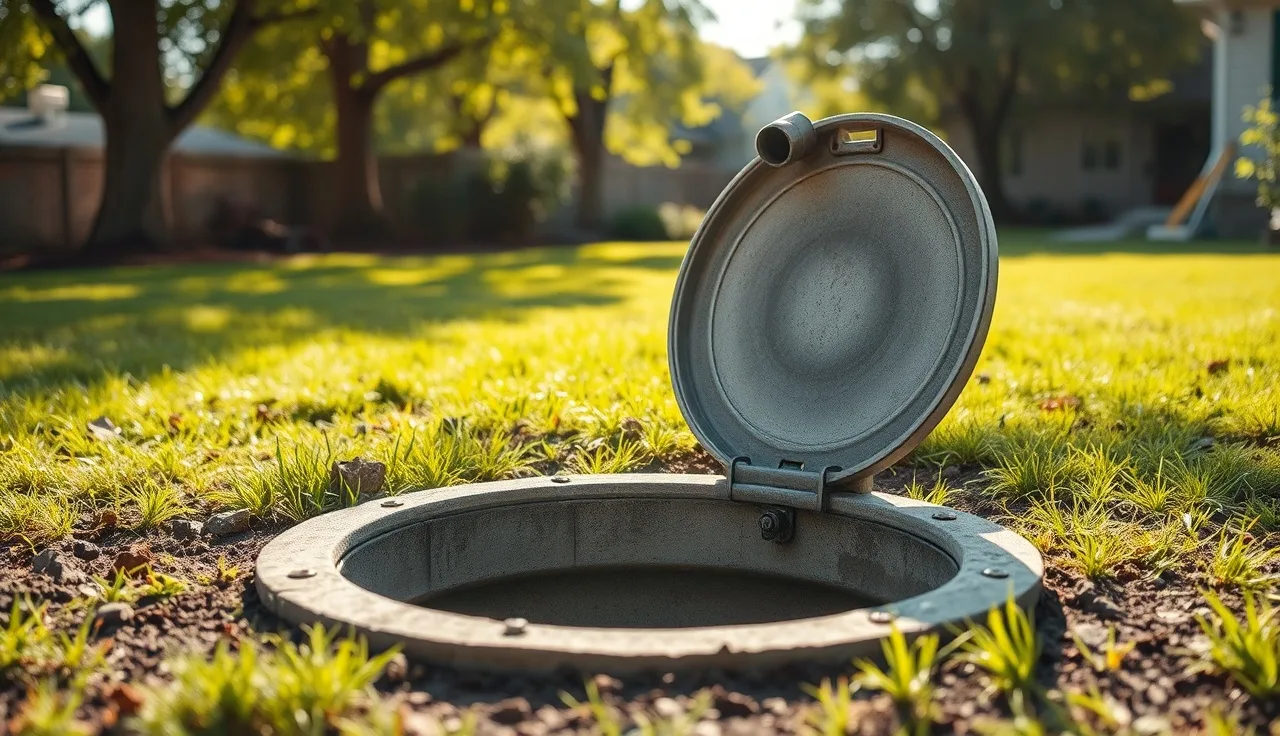
If the smell is outside, walk the path from the house cleanout to the tank lid to the drain field. Smell near the tank lid first. A strong smell right at the lid that fades ten feet away usually means a cracked or unseated lid, a shot inlet or outlet baffle, or a tank that's too full. If the smell is strongest over the drain field, especially after heavy rain, that's a different and more serious problem: the field is saturated, effluent isn't absorbing, and you likely have early or active drain field failure [2].
Write down what you find before you call anyone. "Strong rotten-egg smell at the laundry floor drain, nothing at the septic tank lid" gives a technician something to work with and keeps you from paying for a pump-out you may not need.
What are the proven DIY treatments for septic odours?
Most indoor septic odours respond to one of three cheap fixes. Try them in order.
Refill dry P-traps. Pour a quart of water into every drain you rarely use: basement floor drains, guest bathroom sinks, utility room drains. If you want a trap to stay wet between uses, float a small amount of vegetable oil on top of the water. It evaporates far slower than water alone and keeps the seal intact. This is free, takes five minutes, and fixes the problem for good if a dry trap was the cause.
Check and clear the roof vent stack. Climb up safely, with a helper, and look down the vent pipe. Leaves, bird nests, and winter ice can choke the stack partly or completely. A blocked stack creates negative pressure in the drain lines and pulls gas through every trap in the house. A plumber's auger or a garden hose clears most obstructions in under an hour. In cold climates, a vent that ices over every winter can be swapped for an insulated vent cap made for the purpose [3].
Add an air admittance valve if the venting is undersized. Some older homes never had enough vent capacity for the plumbing load. An air admittance valve, sometimes called a Studor valve, lets air into the drain line under negative pressure without letting gas out. A licensed plumber can add one to an individual drain branch in an afternoon. They're allowed in most jurisdictions but not all, so check your local plumbing code before buying one.
For outdoor odours at the tank itself, the cheapest fix is confirming the lid is seated and intact. Concrete lids crack over time. A cracked lid costs $50 to $150 to replace and kills the smell immediately if that was the source.
If you've ruled out structural issues and want to try a biological additive, the evidence is modest but not zero. Products like Zep Septic Tank Treatment add anaerobic bacteria and enzymes marketed to cut odour and organic buildup. The honest read: EPA's guidance on septic additives finds no reliable evidence that bacterial additives improve performance in a normally functioning tank, and also no evidence of harm from enzyme-bacterial products used at reasonable doses [1]. If your tank got hit by heavy antibiotic use in the household, or is recovering from a chemical flush, restoring bacteria makes biological sense. Using additives to dodge pumping a full tank does not.
Do septic tank treatment products actually work?
Here's where honest skepticism earns its keep. The additive market is huge and mostly unregulated at the federal level. Products split three ways: biological (bacteria and enzymes), chemical (acids, alkalis, solvents), and inorganic (hydrogen peroxide, brine).
The EPA, through its SepticSmart program, is blunt that additives are not a substitute for regular pumping and warns that some chemical additives can damage the tank, kill helpful bacteria, and contaminate groundwater [1]. That's not a fringe take. It's the consensus across every state extension program I've read that takes a position.
Biological additives are the least likely to cause harm and the most likely to help in narrow cases. If you've poured bleach straight into the tank, or the household has been on heavy antibiotics, or the tank sat empty and dry (rare, but it happens after a long vacancy), adding bacteria can help rebuild the microbial community. Products that carry NSF International certification have passed third-party performance testing, which beats a label claim [9].
Chemical additives, especially those with solvents or strong acids, can strip the bacterial film off the tank walls, pass through to the drain field, and wreck the soil structure that makes the field work. Several states, Washington and Wisconsin among them, restrict or ban certain additive categories in septic systems [4][11]. Check your state's onsite wastewater code before pouring anything in.
So the verdict on additives: biological products in a struggling-but-not-full tank, fine. Chemical solvents, no. Either way, additives treat a symptom at best. They don't remove solids. They don't fix broken baffles. They don't rehabilitate a saturated drain field. A septic tank pump out every three to five years does more for odour prevention than any product on the shelf.
When does a septic odour mean the tank needs pumping?
A full tank is one of the most common causes of stubborn outdoor odour, and the fix is simple: septic tank pumping. The trick is telling whether that's actually your problem.
You're due for a pump-out if it's been more than 3 to 5 years since the last one (EPA's SepticSmart program recommends pumping every 3 to 5 years for a typical household [1]), if more people live in the house than when it was last pumped, if slow drains have crept in across the whole house, or if sewage is backing up in the lowest fixtures.
The definitive test is opening the tank and measuring the scum and sludge layers. When the sludge layer on the bottom plus the scum layer on top take up more than one-third of the tank's liquid volume, it's time to pump [12]. A licensed pumper measures this on site in about two minutes with a sludge judge.
For a standard 1,000-gallon tank serving a family of four, pumping runs roughly $300 to $600 depending on region and access [5]. That's not cheap, but it's a rounding error against the $3,000 to $25,000 cost of drain field replacement if you let a full tank push solids into the field [7].
If you don't know how long it's been, a septic tank inspection before pumping gives you the full picture: baffle condition, tank integrity, effluent level, and drain field observations. Inspections run $100 to $300 on top of the pump-out and earn their keep if you're buying a home or the system history is a mystery.
Why does my septic tank smell worse after it rains?
Rain-triggered odour is one of the most common complaints, and it has a specific set of causes. Three things stack up after a storm.
First, saturated soil around the drain field can't accept effluent. When the ground is already full of water, effluent backs up in the distribution lines and, in bad cases, pushes back toward the tank. That raises liquid levels and cranks up gas production. You'll notice the smell most over the leach field after heavy or long rain [2].
Second, the drop in barometric pressure that rides in with storm systems changes how gases move through the vent stack. Lower atmospheric pressure makes it easier for sewer gas to back-pressure through water traps into the house. This is temporary and usually clears within hours once the pressure settles.
Third, rainwater leaking into a cracked tank through the lid or the concrete walls dilutes the bacterial environment and raises liquid levels fast. A tank that sat fine at 900 gallons is suddenly at 1,100, shoving effluent into the field before it's ready.
If your system smells after every real rain event, that's a pattern worth chasing down. Chronic drain field saturation is the worst-case reading, and it won't heal on its own. Redirecting roof gutters and surface drainage away from the field costs nothing and is the right first move. A leach field evaluation by a licensed designer or engineer tells you whether you have a drainage problem or a failing field.
What should I never pour down the drain if I want to prevent odours?
Prevention really is cheaper than treatment, and a handful of habits cause an outsized share of odour problems.
Bleach and disinfectant cleaners are the biggest culprit. A bleach toilet-bowl cleaner used twice a week can knock down bacterial activity in the tank enough to slow solids digestion. Slower digestion means faster sludge buildup, more volatile gas, and more frequent pumping. EPA's SepticSmart guidance calls out household chemicals including bleach, drain cleaners, and solvents as harmful to septic systems [1].
Fats, oils, and grease pile up the scum layer and can partly solidify in the inlet baffle, choking flow and creating anaerobic pockets that make gas right at the inlet pipe, which is positioned to vent back into the house. Never pour cooking oil or bacon grease down the drain.
Antibiotics and large batches of flushed pharmaceuticals kill the anaerobic bacteria the tank runs on. If the household is on a course of antibiotics, that's a fair time to use a bacterial additive.
Flushable wipes are not flushable in a septic system. They don't break down anywhere near as fast as toilet paper, they gather in the inlet zone, and they clog the inlet baffle. Same story for feminine hygiene products, cotton swabs, and paper towels.
Can a damaged baffle or tank component cause odours?
Yes, and it's an underdiagnosed source because you have to open the tank to see it. Most homeowners never look.
The inlet baffle steers incoming sewage down into the tank so it doesn't short-circuit straight to the outlet. When that baffle rots or collapses, scum and floating solids ride straight to the outlet and into the drain field. The odour angle: a missing or broken inlet baffle lets the gas column above the tank liquid connect directly with the inlet pipe, which connects to your house drain. Now there's a clear path for hydrogen sulphide to climb back into the building.
The outlet baffle, or the effluent filter in newer systems, sits at the outlet end and keeps solids from leaving the tank. A corroded or missing outlet baffle lets solids and high-strength effluent into the drain field, speeding up biomat formation and field failure. Biomat, the black anaerobic layer that forms at the soil interface, makes its own distinct sulphur smell.
Concrete tanks built before the 1980s often used steel-reinforced concrete baffles that rust and fail. A visual inspection during pumping catches these problems. Replacement baffles are cheap, $50 to $200 for the part. The real cost is having a licensed technician install them while the tank is open and pumped. See septic tank repair for the full picture.
If your pumper doesn't check the baffles during a service call, tell them to. It takes two minutes and heads off a much bigger bill.
How do odour problems in aerobic treatment units differ from conventional systems?
Aerobic treatment units run an air compressor to push oxygen into the treatment chamber, feeding aerobic bacteria that hit much higher treatment quality than a conventional anaerobic tank. They're common in Texas, parts of the Southeast, and anywhere soil won't support a standard drain field.
These units produce odours two ways. First, if the aerator or compressor fails, the tank flips back to anaerobic conditions fast and hydrogen sulphide production spikes. A dead aerator is often the first sign your unit needs septic system repair. Most units have an audible or visual alarm for exactly this reason.
Second, a unit working correctly still handles the same raw sewage as a conventional tank, and the spray heads or drip lines that spread treated effluent above ground can throw off a mild smell, especially in hot weather. That's usually a nuisance, not a safety issue, but chlorination tablets or UV disinfection are often required by state permit because the effluent hits the surface [6].
Maintenance on these units is heavier than on a conventional system. Most states that permit aerobic treatment units require a service contract with a licensed provider, usually with quarterly or semi-annual inspections. Texas, for one, requires a maintenance contract as a condition of the permit [6].
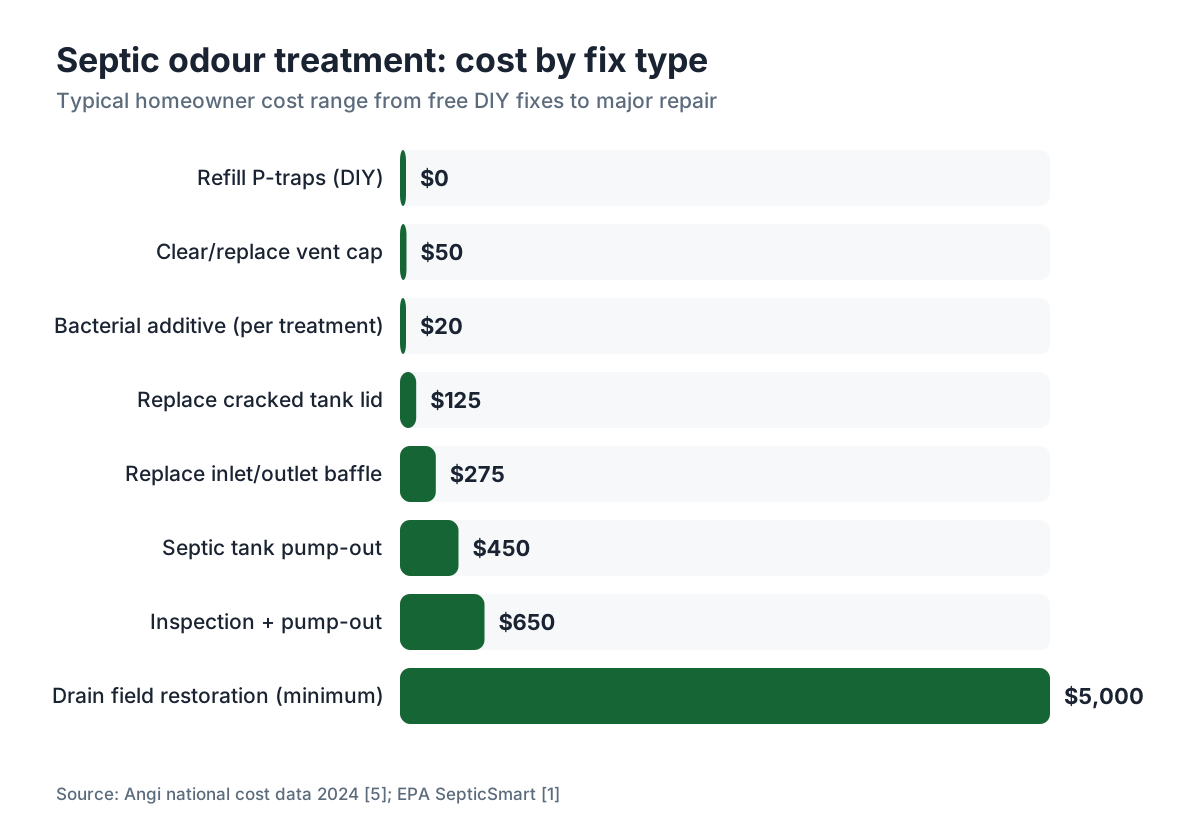
What does it cost to treat septic odour problems, from DIY to full repair?
Cost swings hard depending on the cause, and getting the diagnosis right first saves money at every level.
| Fix | Typical Cost | Best For |
|---|---|---|
| Refill P-traps | $0 | Dry trap causing indoor smell |
| Replace vent cap / clear blockage | $20 to $80 DIY | Blocked vent stack |
| Biological additive (e.g., Zep Septic Tank Treatment) | $10 to $30 per dose | Post-antibiotic bacterial recovery |
| Replace cracked tank lid | $50 to $200 | Lid-level outdoor odour |
| Replace inlet/outlet baffle | $150 to $400 total | Deteriorated baffles found at inspection |
| Install air admittance valve | $200 to $500 installed | Chronic indoor back-pressure odour |
| Pump-out (1,000-gal tank) | $300 to $600 | Full tank, more than 3 to 5 years since last pump |
| Full inspection + pump-out | $400 to $900 | Unknown history, home purchase |
| Drain field restoration or replacement | $3,000 to $25,000+ | Saturated or failed field [7] |
The pattern is clear: fix the mechanical and biological root cause first. Additives cost $10 to $30 and do nothing for structural problems. A pump-out at $300 to $600 solves the most common serious cause. Drain field work is where the numbers turn brutal, which is exactly why catching a problem at the $300 stage matters.
Service operators managing many accounts can track pump-out schedules and inspection records in platforms like SepticMind, which shrinks the gap between "last pumped" and "actually overdue" across a portfolio. That gap is what most often ends in expensive field repairs.
For a full breakdown of upstream costs, see how often to pump septic tank and septic tank cleaning.
Are septic odours a health risk?
Hydrogen sulphide is toxic at high concentrations. At the low levels found around a typical residential septic system (parts per billion to low parts per million), the effects are nuisance odour and occasional mild irritation. OSHA sets the permissible exposure limit for hydrogen sulphide at 20 parts per million as a ceiling concentration [8]. Ambient residential exposure from a septic odour problem sits far below that.
Methane is the bigger physical hazard. It's flammable and can build up in enclosed spaces like crawl spaces, basements, or poorly ventilated pump chambers. If you smell strong septic gas in an enclosed space below grade, don't use an open flame or spark-generating tools until the space is aired out. This is rare in residential settings, but not impossible.
The more serious health concern is what the odour signals about effluent management. A system releasing untreated effluent at the surface, or into a poorly treating drain field, is a pathogen risk to children, pets, and anyone who touches the wet area. Several states define surfacing effluent as a public health violation that requires immediate repair [2]. Odour at the drain field surface, paired with wet or spongy ground, is a sanitation issue, more than a smell.
EPA's SepticSmart program frames it plainly: "a properly maintained septic system protects public health, preserves valuable water resources, and maintains your property value" [1]. Early odours are a warning light for a system heading toward a public health problem if you ignore them.
What questions should I ask a septic service company about odour treatment?
The right visit starts with the right questions. Homeowners who show up with a vague complaint about smell sometimes pay for services they never needed.
Ask: when was this tank last pumped, and can you pull the history? A good company keeps records. If they can't give you the service history, check with the previous owner or the local health department; many counties keep permit records.
Ask: will you check the baffles and measure the sludge layer when you open the tank? This belongs in any pump-out visit at no extra charge. If they say no, find someone else.
Ask: what specifically is causing the odour, and what evidence did you find? You want a concrete answer ("cracked outlet baffle, replaced on site" or "inlet pipe had roots restricting flow"), not a shrug and a pitch for a monthly additive subscription.
Ask: is there any sign of drain field stress? Surfacing effluent, unusually lush grass over the field, or wet spots after dry weather are all flags a technician should raise. If they didn't walk the field, ask them to before they leave.
For operators coordinating multiple technicians and customer accounts, a standardized digital inspection checklist, like the ones built into SepticMind's inspection workflow, cuts the variability in what gets checked and documented from one call to the next.
If the technician pushes a drain field replacement or major repair, get a second opinion and ask for the findings in writing. Septic system repair is a high-cost decision that deserves at least two professional assessments.
Frequently asked questions
Why does my septic tank smell like rotten eggs?
Rotten egg smell is hydrogen sulphide gas, a normal byproduct of anaerobic digestion inside the tank. The smell means the gas is escaping somewhere it shouldn't: a cracked lid, a dry P-trap, a broken baffle, or a blocked vent stack. Find where the smell is strongest first. In most cases the fix is a physical repair, not a treatment product.
How do I get rid of septic smell in my house fast?
Check every drain you rarely use and pour a quart of water into each one to refill dry P-traps. That clears the most common indoor cause in minutes. If the smell comes from all drains at once, the vent stack is likely blocked; check it from the roof. Either fix takes under an hour and costs nothing. Chemical air fresheners mask the problem; they don't stop the gas.
Does Zep Septic Tank Treatment actually work?
Zep Septic Tank Treatment contains bacterial cultures and enzymes meant to support anaerobic digestion. It won't hurt a conventional tank at recommended doses. It can help restore bacterial populations after heavy antibiotic use or chemical exposure. It will not fix a full tank, a broken baffle, a blocked vent, or a failing drain field. EPA's position is that additives don't substitute for regular pumping.
Why does my septic smell after heavy rain?
Saturated soil around the drain field cuts its absorption capacity, so effluent backs up toward the tank and gas production climbs. Low barometric pressure before storms can also push gas through P-traps into the house. Rainwater leaking through a cracked lid raises liquid levels suddenly. If the smell hits after every real rain, investigate the drain field drainage and the lid integrity.
Is it safe to go near a smelly septic tank?
At outdoor ambient concentrations around a residential septic system, hydrogen sulphide is a nuisance, not an acute hazard. OSHA's ceiling limit is 20 ppm; outdoor residential exposure is typically well below that. The real risk is enclosed spaces like crawl spaces or pump chambers where methane and hydrogen sulphide can build to dangerous levels. Always ventilate enclosed spaces before entering them near a septic system.
How often should I treat my septic tank for odours?
A properly working tank pumped on schedule (every 3 to 5 years for a typical household, per EPA guidance) shouldn't need routine odour treatment. If you want to use a bacterial product monthly as insurance, that's harmless and costs about $10 to $15 a month. Don't swap monthly additives for scheduled pump-outs; solids only leave the tank through pumping, not through any product.
What household products should I avoid to prevent septic odours?
Bleach-based cleaners, drain solvents, and antibacterial soaps used often cut bacterial activity in the tank and speed up odour problems. Fats, oils, and grease build the scum layer and clog inlet baffles. Flushable wipes don't break down in septic systems and gather at the inlet. Unused medications, especially antibiotics, kill the anaerobic bacteria that make the tank work.
Can a full septic tank cause house odours?
Yes. When sludge and scum layers exceed about one-third of the tank's liquid volume, gas production climbs and the system can no longer process incoming waste well. Back-pressure through the inlet pipe can force gas into household drains. Slow drains, gurgling sounds, and odours showing up together strongly suggest a tank that's due for pumping.
What does septic smell outside near the tank vs. the drain field mean?
Smell parked at the tank lid points to a cracked or unseated lid, deteriorated baffles, or a full tank. Smell concentrated over the drain field, especially with wet or spongy ground, points to a saturated or failing field. The two situations need different responses: lid and baffle repair or a pump-out for the first, a professional field evaluation for the second.
How long does it take for septic odour to go away after pumping?
If a full tank was the cause, odour usually clears within 24 to 48 hours of pumping as the bacterial community re-establishes and gas production normalizes. If the smell hangs on past 72 hours after a confirmed pump-out, the cause isn't a full tank, and you need to check baffles, venting, or the drain field.
Do septic tank enzymes or bacteria additives damage the drain field?
Bacterial and enzyme additives sold for residential use are generally considered safe for the drain field. Chemical additives with solvents, strong acids, or alkalis are a different story; several states restrict them because they can pass through the tank and degrade the soil structure in the field. Always check your state's onsite wastewater code before using any additive.
Can I use baking soda or vinegar to treat septic odours?
Baking soda poured into a drain can briefly neutralize some odour in the drain line itself, but it does nothing inside the tank and the effect lasts minutes. Vinegar is acidic and in large amounts can cut bacterial activity in the tank. Neither is a treatment for a septic odour problem. Save both for their intended household uses and address the actual cause of the smell.
When should I call a professional instead of treating the odour myself?
Call a professional if the odour comes with slow drains throughout the house, sewage backing up in any fixture, wet or spongy ground over the drain field, visible sewage at the surface, or a tank that hasn't been pumped in more than five years. Also call if you've done the P-trap and vent checks and the indoor smell persists; at that point a camera inspection or baffle check is needed.
Sources
- EPA SepticSmart program and homeowner guidance: EPA recommends pumping every 3 to 5 years and states additives are not a substitute for pumping; chemical additives can harm the system and contaminate groundwater
- EPA, Nonpoint Source Pollution program: Surfacing effluent at a drain field constitutes a public health and water quality violation in most states
- University of Minnesota Extension: Blocked or iced-over vent stacks create negative pressure in drain lines, pulling sewer gas through water traps into the house
- Washington State Department of Health: Washington restricts certain chemical additive categories in septic systems due to soil and groundwater impacts
- Angi national cost data, septic tank pumping: National cost for septic tank pumping ranges from $300 to $600 for a standard 1,000-gallon tank
- Texas Commission on Environmental Quality, on-site sewage facilities: Texas requires a maintenance contract with a licensed provider as a permit condition for aerobic treatment units; chlorination or UV disinfection is required for surface-dispersal systems
- EPA, how your septic system works: Drain field replacement costs range from several thousand to over $25,000 depending on system size and site conditions
- OSHA, hydrogen sulfide safety guidance: OSHA permissible exposure limit for hydrogen sulphide is 20 ppm as a ceiling concentration in occupational settings
- NSF International, standards for onsite wastewater treatment products: NSF standards provide third-party performance testing certification for onsite wastewater treatment products including additives
- North Carolina State Extension: Bacterial additives may help restore microbial populations after antibiotic disruption but do not improve performance in normally functioning tanks; chemical additives present the greatest risk of harm
- Wisconsin Department of Natural Resources, private sewage systems: Wisconsin restricts or bans certain septic additive categories under state onsite wastewater code
- Penn State Extension: Combined sludge and scum layers exceeding one-third of tank liquid volume indicate need for pumping; a sludge judge tool is used to measure layers at service
Last updated 2026-07-09