Septic tank mound systems: how they work, what they cost, and how to keep them running
By the SepticMind Editorial Team
TL;DR
- A mound septic system is an elevated drain field built above natural soil when the ground below is too shallow, wet, or slow-draining for a conventional system.
- It costs $10,000 to $20,000 or more to install, needs a pump, and lasts 20 to 30 years with care.
- Pump the tank every 3 to 5 years.
- That single habit is what saves the mound.
What is a mound septic system and how does it work?
A mound system is a drainfield built on top of the ground instead of below it. Sand gets hauled in and mounded up, distribution pipes go inside that sand, and the whole thing gets capped with topsoil and grass. Wastewater flows from the house to a septic tank and settles there, exactly like any conventional system. Then it gets pumped up into the mound, spreads through the pipes, filters down through the clean sand, and reaches the native soil below. By the time it gets there, most of the pathogens and nutrients are gone.
The key word is "pumped." A conventional system moves effluent by gravity. A mound almost always needs a dosing pump in a separate chamber (or a second compartment of the septic tank) to push effluent uphill into the elevated bed. That pump is what makes the whole thing work, and it's also where most failures start. [1]
The mound is more than a pile of dirt. It follows an engineered design: a gravel bed holding the distribution pipes, a clean sand fill layer sized to treat the effluent before it hits native soil, and a topsoil cap over everything. The EPA's SepticSmart guidance is blunt about the tradeoff, noting that alternative systems such as mounds require additional care and maintenance beyond what a conventional system needs. [1]
Mounds work. They aren't a compromise or a last resort. In Minnesota and Wisconsin they're everywhere, because the glacial soils are shallow and the water table sits high. Minnesota's Pollution Control Agency treats mounds as one of the state's standard answers for sites that can't take a conventional drainfield. [2]
When do you need a mound system instead of a conventional one?
You need a mound when your soil fails a perc test, sits over a high seasonal water table, or runs too shallow before you hit bedrock. Those three conditions rule out a conventional drainfield, and a mound solves all three by bringing in engineered sand and building up.
A soil evaluation drives the decision. A licensed soil scientist or engineer digs test pits and reads texture, structure, and color. Mottled gray or orange staining in the profile signals a seasonal high water table, even if the hole is bone dry the day of the test. Most states require the bottom of any drainfield to stay 24 to 36 inches above that seasonal high water table. If there isn't enough suitable native soil to hit that number at grade, you bring in fill and build up. [2]
Poor percolation is a separate problem. Water that drains too slowly (or too fast, in loose sand) breaks the treatment process. A mound uses engineered sand as its primary treatment medium, so it sidesteps whatever the native soil can't do.
Common triggers for a mound system:
| Site condition | Typical threshold that triggers a mound |
|---|---|
| Seasonal high water table | Less than 24 to 36 in. below surface (varies by state) |
| Depth to bedrock or fragipan | Less than 24 to 36 in. below surface |
| Slow perc rate | More than 60 to 120 min/inch (varies by state) |
| Fast perc rate (coarse sand) | Less than 3 min/inch in some jurisdictions |
| Limiting layer (clay, hardpan) | Present within 12 to 24 in. of surface |
See "mound system" on a listing? That's not a red flag. It means the soil needed a different engineered answer. A well-designed, well-maintained mound performs the same as a conventional drainfield. [3]
How much does a mound septic system cost?
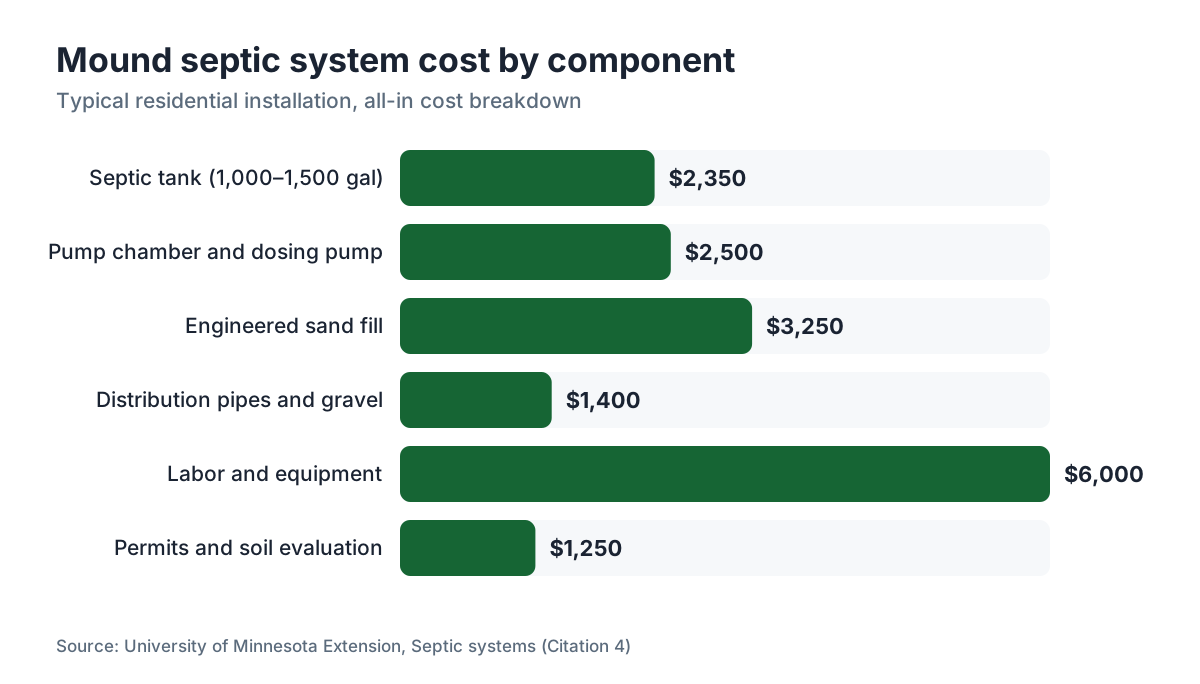
A mound costs more than a conventional drainfield, and the gap is real. Budget $10,000 to $20,000 for a typical residential install. Hard sites with long pump runs, poor access, or big household flow push that to $25,000 or more. [4]
The premium comes from a few things. The fill sand has to be hauled in and specified to spec. The pump chamber is an extra component. The mound itself takes more excavation and grading. Labor runs higher because the work is more involved.
Here's roughly where the money goes:
| Component | Typical cost range |
|---|---|
| Septic tank (1,000 to 1,500 gal) | $1,200, $3,500 |
| Pump chamber and dosing pump | $1,500, $3,500 |
| Engineered sand fill | $1,500, $5,000 |
| Distribution pipes and gravel | $800, $2,000 |
| Labor and equipment | $4,000, $8,000 |
| Permits and soil evaluation | $500, $2,000 |
| Total (rough estimate) | $10,000, $20,000+ |
Region swings these numbers hard. Minnesota, Wisconsin, and the upper Midwest see competitive pricing because mounds are routine work there. In the Southeast or Pacific Northwest, where mounds are less common, you may pay more just because fewer contractors do them week in and week out.
Operating costs count too. The dosing pump adds $50 to $150 a year to your power bill, depending on how often it runs. Pump replacement runs $400 to $1,000 installed, and pumps typically last 10 to 15 years. Tank pumping every 3 to 5 years runs $300 to $600 in most markets. See our guide on septic tank pumping for current price ranges.
For the full picture including the tank, our cost to install septic system article lays it out. [4]
How long does a mound septic system last?
A well-maintained mound lasts 20 to 30 years. Some go longer. Some fail in 10. The difference is almost entirely how the system gets treated. [5]
The sand layer clogs over time if solids escape the septic tank. That's biomat: a layer of organic slime that builds at the interface between the distribution pipes and the sand, slowing infiltration to a crawl. Enough biomat and you get sewage surfacing on the mound, which is a health hazard and an expensive fix. Keeping solids in the tank by pumping on schedule is the single most effective thing you can do to stretch the mound's life.
The dosing pump wears out sooner than the mound, usually in 10 to 15 years. Budget for a replacement at that interval. Most states require a float alarm on the pump chamber, and that alarm is what gives you warning before a dead pump becomes a flooded mound.
Compacting the mound, planting trees on it, or driving over it all cut its life short. The mound needs its grass cover intact, needs to breathe, and needs roots kept well away from the pipes. Willows, maples, and anything with aggressive roots are trouble within 50 feet. [5]
What does a mound system look like from the surface?
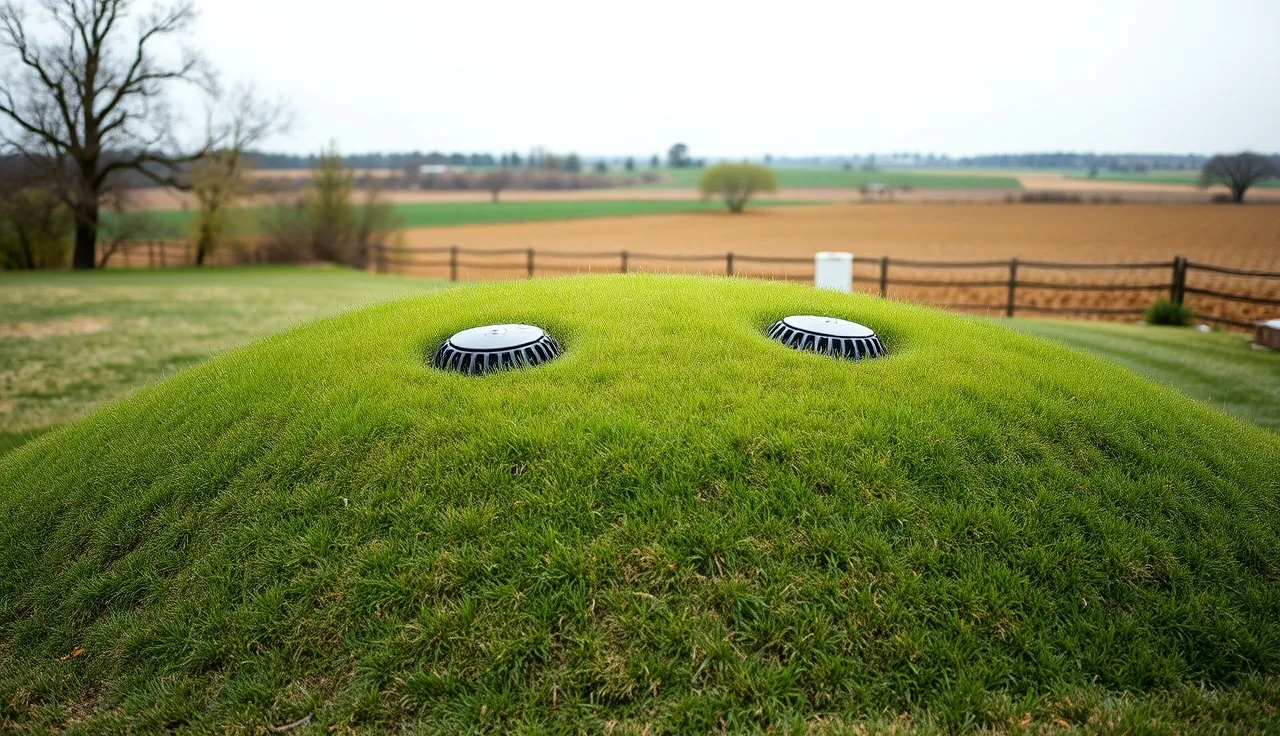
A mound is hard to miss. It's a raised oval or rectangular berm of grass-covered soil sitting visibly above the rest of the yard. Depending on the design it stands 2 to 4 feet tall and runs anywhere from 30 to 100+ feet long. You'll see inspection ports (capped pipes poking up) and often a small conduit running out to the pump chamber alarm panel.
New owners sometimes read the mound as a landscaping feature, a garden bed, or leftover construction dirt. It isn't. If a raised area in the yard has inspection ports and nobody can explain it, pull the property's septic permit from your county health department. Every permitted system has a record with a site plan.
Know where your mound is. You need the access for maintenance, and you need to keep vehicles and heavy foot traffic off it. Mark it on a property diagram and tell your landscaper before the mower shows up.
How do you maintain a mound septic system?
A mound has a longer maintenance list than a conventional system, mostly because of the pump. Here's what actually matters:
Pump the tank every 3 to 5 years. That's the rule for most households. Bigger families or garbage disposal users should pump every 2 to 3 years. Solids escaping the tank are the number one cause of mound failure. See how often to pump septic tank for the math on sizing your schedule to your household. [6]
Inspect the pump chamber at every pumping. Your pumper should check the float switches, the alarm, the pump itself, and the effluent screen if one is present. A stuck float or dying pump caught early costs $400 to $1,000. A pump that fails and floods the mound with solids can cost you the whole drainfield.
Protect the mound surface. Keep vehicles off it. Don't pile soil, wood, or materials on top. Mow the grass, but use a push mower or a small rider. A heavy lawn tractor compacts the soil enough to matter over the years.
Watch for warning signs. Wet spots, spongy ground, or sewage odors on or around the mound mean something is wrong. So do slow drains or sewage backing up inside. Don't wait. Call a licensed contractor.
Keep water use steady. A weekend full of guests or 10 loads of laundry in a day can blow past the dosing intervals. Spread laundry through the week. Fix leaky toilets fast. A running toilet can send 200+ gallons a day into a system designed for maybe 150 gallons per person per day. [7]
Keep records. Log the date and volume of every pump-out, every pump service, and every repair. When you sell the house, those records are gold for the buyer's septic tank inspection.
For operators tracking mound systems across a service territory, SepticMind's operations software makes it easy to log pump intervals, set service reminders, and flag high-risk accounts before a failure turns into an emergency call.
What can go wrong with a mound system and how do you fix it?
Here are the common failure modes, in rough order of how often they show up:
Pump failure. The dosing pump quits, effluent backs up into the pump chamber, then the tank, then the house. Fix: replace the pump, $400 to $1,000 installed. Catch it fast and the mound takes no lasting damage.
Clogged effluent screen. Most modern systems have a filter in the tank's outlet baffle. It catches solids and needs cleaning at every pump-out. A clogged screen slows flow and causes sluggish drains or backups. Fix: clean at pump-out, or replace if damaged, $25 to $100 for the screen.
Biomat in the mound. Organic slime builds at the pipe-to-soil interface and slows infiltration. Early biomat sometimes responds to resting the system (going days to weeks without use, which is hard in a lived-in house) or to enzyme and bacteria treatments (the evidence on those is mixed). Severe biomat means the mound is done and you replace some or all of the sand. Cost: $5,000 to $15,000 for partial or full replacement.
Frozen pipes. In cold climates, the shallow distribution pipes in a mound can freeze if the system sits idle, if snow gets cleared off the mound, or if dosing intervals run too long. Prevention beats the cure every time: keep the grass cover intact, never clear snow off the mound in winter, and set the dosing timers for cold-weather conditions.
Erosion. The side slopes can wash out, especially on steep lots or after heavy rain. Keep the grass cover thick. If erosion exposes pipes or the sand fill, get a contractor to regrade and reseed.
For repair costs and options, our septic system repair guide covers most scenarios. [8]
What are the rules and permits required for a mound system?
Every state regulates onsite wastewater treatment, and mounds fall under those state rules with county health departments handling most of the oversight. There's no single federal permitting process for residential septic. The EPA sets guidance and the states build their codes around it. [1]
Typically you'll need:
- A soil evaluation by a licensed soil scientist or engineer, filed with the county.
- A system design stamped by a licensed engineer or designer.
- A county health department permit before any work begins.
- An inspection of the installation by a county inspector before the mound gets covered.
- Final approval and permit closure.
Setbacks vary a lot. Mounds have to keep their distance from wells, property lines, surface water, and structures. A common well setback is 50 to 100 feet, and some states want 150 feet or more from a private well. Check your own state's onsite wastewater code. Wisconsin's code (SPS 383, formerly Comm 83) and Minnesota's (MN Rules Chapter 7080) are among the most detailed in the country, worth reading even in another state just to see how rigorous the design side gets. [2][3]
Replacing or repairing an existing mound needs permits too, in most places. Don't let a contractor start work without pulling one. If they push back on that, walk away.
Can you install a mound system yourself?
No. Not in any real sense.
You can own the mound. You can keep the grass mowed, check the alarm, and watch for wet spots. But the install needs licensed contractors, engineered plans, permitted inspections, and heavy equipment. Just hauling, grading, and placing the sand fill takes a dump truck and an excavator. Reading the soil profile takes a licensed soil scientist in most states.
DIY septic work on a mound is illegal without a license in most states, and an unpermitted system creates title problems when you go to sell. A county inspector who finds an unpermitted system can order you to dig it up and start over at full cost. It's not worth thinking about.
What you can do yourself is real and it saves money: keep records, run visual inspections, protect the mound from damage, and learn the signs of trouble. That's meaningful work over the life of the system.
How does a mound system compare to other alternative septic systems?
A mound is one of several engineered options for sites that can't take a conventional gravity drainfield. Here's how it stacks up against the main alternatives:
| System type | Best for | Relative cost | Key limitation |
|---|---|---|---|
| Mound | High water table, shallow soil | $$, $$$ | Visible in yard, needs pump |
| Drip irrigation | Large lots, marginal soil | $$$, $$$$ | Complex, many moving parts |
| Aerobic treatment unit (ATU) | Very poor soil, small lots | $$$, $$$$ | High maintenance, chlorine/UV needed |
| Constructed wetland | Rural, large lots | $$, $$$ | Regulatory complexity, climate limits |
| Cluster/community | Multiple properties | $$$$ | Easements, shared cost disputes |
| Low-pressure dose (LPD) | Moderate limitations | $$, $$$ | Less elevation gain than a mound |
A mound sits in a good spot. More complex than a conventional gravity system, but simpler and more reliable than an ATU or a drip system, with fewer moving parts to break. For a lot of sites with a high seasonal water table, the mound is the most cost-effective long-term answer. [9]
If a failing conventional drainfield is getting replaced, a mound is often exactly what the replacement permit will call for, especially when the soil conditions that killed the first system haven't changed. See our leach field guide for a comparison of drainfield types.
What should you check when buying a home with a mound septic system?
Buying a house with a mound is fine. Just do your homework.
Get a septic inspection before closing. Not a free "visual check" but the full workup: tank pumped, pump chamber checked, dosing pump tested, risers opened, distribution system inspected. It runs $300 to $600 and it's some of the best money you'll spend on any home purchase with a septic system. [10]
Ask the county for the permit records. You want the system's age, the original design flow rate (gallons per day), the soil evaluation results, and any repair history. Most counties keep this on file and will pull it for $25 to $100.
Check the age of the dosing pump. Over 10 years old, budget for replacement soon. Ask whether there's a float alarm and whether it works.
Look hard at the mound. Well-vegetated, no bare spots, no wet areas, no depressions? Fenced or marked so vehicles stay off? Any trees within 30 to 50 feet that might be growing roots into the system?
A mound in good shape on a permit sized right for the house is nothing to fear. A 25-year-old mound that's never been serviced and shows wet spots is a potential $15,000 to $25,000 problem. Know which one you're buying. [10]
What are the signs a mound system is failing?
Mounds fail in recognizable ways. The sooner you catch the signs, the cheaper the repair.
Outside signs: wet or spongy spots on or around the mound, especially in dry weather. Sewage odors outdoors near the mound or the pump chamber. Sewage visible on the surface (that's a health emergency, call a contractor the same day and keep people and pets away). Lush, fast-growing grass in one spot on the mound, which means nutrient-rich effluent is surfacing just below the turf.
Inside signs: slow drains throughout the house (more than one fixture). Gurgling in drains or toilets. Sewage backing up, usually in the lowest fixtures first. The pump alarm going off and staying on.
None of these prove mound failure on their own. A dead pump gives you the same indoor symptoms as a clogged drainfield, and a blocked distribution line can look like a failing mound from the surface. A licensed inspection sorts it out.
Never ignore an active pump alarm. Float alarms are required in most states precisely because they catch pump failure before it becomes mound damage. An alarm means the chamber is filling, and you have hours to a day or two before overflow, not weeks. [7]
For what a full assessment involves, our septic tank inspection article walks through the process. Repairs run from a simple pump swap to a full mound rebuild. See septic tank repair for cost expectations.
Frequently asked questions
How often should a mound septic system be pumped?
Every 3 to 5 years for a typical household. Larger families, garbage disposal users, or homes with heavy water use should pump every 2 to 3 years. The pump chamber gets inspected at every pump-out. Skipping pumping is the leading cause of mound failure, because solids escape the tank and clog the sand fill.
How much does it cost to replace a mound septic system?
Full replacement runs $10,000 to $25,000 or more, close to a new install. If only the sand fill is partly clogged, a partial replacement may run $5,000 to $15,000. Adding a new septic tank to an existing mound adds $2,000 to $5,000. Costs swing wide by region, site access, and how much engineered sand has to be hauled in.
Can you drive on a mound septic system?
No. Vehicles compact the soil in the mound, which cuts oxygen in the sand layer and speeds up clogging. Even a lawn tractor run over the same path repeatedly causes compaction. Keep vehicles, heavy equipment, and anything heavier than a person on foot off the mound completely. Mark the boundaries so contractors and delivery drivers stay clear.
What can you plant on a mound septic system?
Grass is the right answer. A shallow-rooted, drought-tolerant grass keeps the surface stable, pulls up excess moisture, and insulates the system in winter. Skip trees and large shrubs entirely. Even plants that look harmless can grow roots that crack distribution pipes or foul the sand layer over a decade or two. Native grasses or turf grass both work well.
Does a mound septic system smell?
A working mound shouldn't produce odors at the surface. Some faint earthiness near the inspection ports is normal. Strong sewage odors outside, especially near the mound or pump chamber, signal a problem: surfacing effluent, a cracked chamber, or a failed pump. Indoor odors usually point to a full pump chamber, a failing pump, or a venting issue in the house plumbing.
Can a mound system freeze in winter?
Yes, especially in northern climates. Distribution pipes in a mound sit shallower than in a conventional drainfield, which makes them more exposed. Risk factors include clearing snow off the mound (the snow insulates it), long gaps between doses, and low water use over holidays. Keep the grass cover intact going into winter, leave the snow alone, and set dosing timers for cold conditions.
How do you know if your mound system pump is working?
Most systems have a control panel with a green light showing the pump is running its normal cycle. The alarm (usually a red light or a buzzer) trips when the chamber level rises above normal, which usually means the pump failed or the floats are stuck. You can also have your septic contractor test the pump at each pump-out visit, which takes about 10 minutes.
What's the difference between a mound system and a standard septic system?
A conventional system gravity-feeds effluent from the tank into a drainfield buried below grade in native soil. A mound pumps effluent up into an engineered bed of clean sand built above the ground surface. The mound is used when native soil runs too shallow, too wet, or too slow-draining to treat effluent at grade. Mounds cost more and require a pump.
How long does it take to install a mound system?
Installation usually takes 2 to 5 days once permits are in hand and materials are on site. The permit and design process before work begins can run 4 to 12 weeks, depending on county backlog and how complex the soil evaluation is. Soil evaluations for new construction often happen months ahead, especially in cold-climate states where frozen ground shuts the install window.
Can a conventional septic system be converted to a mound system?
Yes. When a conventional drainfield fails and the site can't take a like-for-like replacement, the county often requires a mound for the replacement permit. The existing septic tank can sometimes be reused if it's sound and sized right. A new pump chamber is almost always added. Expect the full permit and design requirements, the same as a new install.
Are mound septic systems common?
Very common in certain regions. States with shallow soils over glacial till, high water tables, or lots of bedrock lean heavily on mounds. Minnesota's Pollution Control Agency and Wisconsin's regulators both treat mound systems as standard alternative options in their states. In regions with deep, well-drained soils, mounds are less common but still used on problem lots.
What is the setback distance required for a mound system?
Setbacks vary by state and sometimes by county. Common numbers are 50 to 100 feet from private drinking water wells, 10 to 25 feet from property lines, 25 to 50 feet from surface water, and 10 to 20 feet from structures. Some states want 150+ feet from public water supply wells. Always check your own state's onsite wastewater code and your county permit office before siting a system.
Do mound systems require electricity?
Yes. The dosing pump that moves effluent from the pump chamber up into the mound runs on standard household current, usually 120V. Power goes out, the pump stops. Most pump chambers hold a day or two of household flow before overflow becomes a risk. Long outages mean cutting water use hard. Some homeowners wire the pump into a backup generator circuit for extended outages.
Sources
- U.S. EPA, SepticSmart and homeowner septic resources: EPA SepticSmart guidance on alternative systems, including mound systems, requiring additional components and maintenance compared to conventional systems.
- Minnesota Pollution Control Agency, Subsurface sewage treatment systems (SSTS); MN Rules Chapter 7080: Minnesota regulatory context for mound systems as a primary alternative for shallow soils and high seasonal water tables; MN Rules Chapter 7080.
- Wisconsin Department of Safety and Professional Services, Private Onsite Wastewater Treatment Systems (SPS 383): Wisconsin SPS 383 (formerly Comm 83) mound system design and setback requirements.
- University of Minnesota Extension, Septic systems: Cost ranges for alternative and mound septic system installation in the Upper Midwest.
- Penn State Extension, Septic system care and maintenance: Guidance on protecting mound drainfields from compaction and tree root intrusion; system lifespan estimates of 20 to 30 years with proper maintenance.
- U.S. EPA, How to Care for Your Septic System: EPA recommendation to pump septic tanks every 3 to 5 years; water conservation advice to reduce system loading.
- U.S. EPA, Septic systems (SepticSmart) homeowner FAQ resources: Float alarm and pump failure warning signs; running toilet flow rate of 200+ gallons per day.
- National Environmental Services Center (NESC) at West Virginia University, Mound Systems Fact Sheet: Biomat formation as a leading cause of mound drainfield failure; repair cost estimates for partial and full mound replacement.
- University of Wisconsin-Madison Division of Extension, septic system publications: Comparison of alternative septic system types including mound, ATU, drip irrigation, and constructed wetland systems.
- American Society of Home Inspectors (ASHI), septic inspection guidance: Recommended scope and cost of pre-purchase septic inspections, including pump chamber and dosing pump assessment.
Last updated 2026-07-09