Septic tank baffles: what they do, when they fail, and how to fix them
By the SepticMind Editorial Team

TL;DR
- Septic tank baffles are concrete, sanitary tee, or plastic fittings at the inlet and outlet of your tank.
- They slow incoming waste, keep the scum layer from escaping, and protect the drain field.
- Baffles can rot or crack within 10 to 20 years.
- Replacing a failed baffle costs roughly $150 to $500 and can prevent a $5,000 to $20,000 drain-field replacement.
What is a septic tank baffle and what does it actually do?
A septic tank baffle is a physical deflector. It sits at the point where your house sewer enters the tank (the inlet baffle) and where clarified liquid leaves toward the drain field (the outlet baffle). It's either a concrete extension of the tank wall, a sanitary tee made from PVC or ABS pipe, or a factory-molded fiberglass piece. Both pieces look simple. Both are doing serious hydraulic work inside a tank you rarely see.
The inlet baffle points incoming wastewater downward, usually aiming it below the floating scum layer toward the middle liquid zone (the effluent zone, or clear zone). Without it, raw sewage would blast across the surface, churn up settled solids from the bottom sludge layer, and push partially treated waste toward the outlet almost immediately. That turbulence also tears up the scum mat, which needs to stay intact to work as a biological filter.
The outlet baffle (or outlet tee) is the one that matters most. It draws liquid from below the scum layer, typically the middle third of the tank, so grease and floating solids can't ride the current out to the drain field. EPA SepticSmart guidance is blunt about why every part has to be in place: a working system depends on intact components, baffles included, to protect the soil absorption area. The outlet baffle is the last line of defense before your leach field.
Some tanks also have an effluent filter clipped onto or inside the outlet tee. That filter is a separate component, but it lives in the same spot and does a complementary job: catching particles the baffle alone can't stop. Don't confuse the two. Replacing a clogged filter is routine maintenance. Replacing a rotted baffle is a structural repair.
What are the different types of septic tank baffles?
Not all baffles are made of the same stuff, and that matters a lot for how long they last.
Cast concrete baffles. Older tanks, especially those installed before the 1970s and 1980s, had baffles formed directly from the concrete at the inlet and outlet openings. They're strong when new but very vulnerable to hydrogen sulfide gas, which forms naturally inside a septic tank. That gas corrodes concrete through a process called sulfuric acid corrosion. A concrete baffle that looks fine on the outside can be soft, crumbling, or completely gone on the inside.
Sanitary tees. The current standard in most jurisdictions is a simple T-shaped PVC or ABS pipe fitting. One leg extends down into the tank liquid, one leg points up above the scum layer to vent gases back through the inlet pipe (toward your roof vent stack), and the horizontal opening faces the outlet pipe. These cost a few dollars at any hardware store, install fast, and shrug off hydrogen sulfide. PVC tees in a working tank can last 20 to 30 years or longer.
Fiberglass and high-density polyethylene baffles. Factory-installed in newer precast and plastic tanks. These are molded as part of the tank structure or snapped into place at manufacture. They share PVC's resistance to corrosive gases.
Effluent screens over the outlet. Not technically a baffle, but worth knowing. A Zabel, Bio-Microbics, or similar polypropylene filter screen installs inside the outlet tee and needs cleaning every one to three years. Some states now require them on new installations. The filter catches solids the baffle lets through.
Here's what you're likely to find based on tank age:
| Tank era | Typical baffle material | Expected lifespan | Biggest failure mode |
|---|---|---|---|
| Pre-1970 | Cast concrete | 20 to 40 years | Acid corrosion, physical collapse |
| 1970s to 1990s | Concrete or early PVC tees | 15 to 30 years | Concrete rot; PVC joint separation |
| 2000s to present | PVC/ABS sanitary tees | 25 to 40+ years | UV and physical damage (rare inside) |
| New construction | Molded plastic or PVC tee + filter | 30 to 40+ years | Filter clogging (maintainable) |
What are the signs of a failed or missing septic baffle?
Baffle failure is sneaky. You can have a completely missing outlet baffle and see no obvious backup in your house for months, because the liquid still flows outward just fine. The damage is happening invisibly, out at your drain field. By the time symptoms show up above ground, you may be looking at field failure instead of a cheap baffle fix.
Here's what actually signals a baffle problem:
Grease in the outlet pipe or at the distribution box. The most direct sign. If a pumper or inspector opens the outlet side and finds a greasy film, floating scum, or solid chunks in the pipe running to the leach field, the outlet baffle is compromised or gone.
Slow drains with no indoor clog. A broken inlet baffle can partly block the inlet or stir up the sludge layer and push solids toward the outlet faster than normal.
Sewage odors in the yard or near the tank. Hydrogen sulfide escaping through the tank lid can sometimes point to a missing inlet baffle vent path, though odors have plenty of other causes.
Tank pumped clean but the field is still wet. If your drain field is saturated right after a pump-out, solids damage to the field is a likely cause, and a missing or failed outlet baffle is the most common way solids get out there.
The pumping company finds the baffle missing. A good pumper looks for this during every septic tank pump out. Some do, some don't. Ask explicitly.
Inspection camera findings. A septic tank inspection that runs a camera to the outlet confirms baffle presence and condition. That's the only way to know for sure without pumping the tank.
Old concrete baffles often drop straight into the tank and get pumped out with the sludge, leaving no baffle at all. The tank looks fine from above. It's unprotected at both ports.
How long do septic tank baffles last?
This is where a lot of homeowners get surprised. The baffles are often the first part of your septic system to fail, even when the tank itself is still sound.
Concrete baffles in a tank that gets daily use often start breaking down within 10 to 20 years. The University of Minnesota Extension's onsite wastewater program has documented concrete septic components failing from hydrogen sulfide corrosion in as little as 10 years under heavy use. The corrosion is bacterial. Sulfate-reducing bacteria in the oxygen-starved tank produce hydrogen sulfide gas, which reacts with moisture on concrete surfaces to form sulfuric acid, and the acid eats the concrete.
PVC sanitary tee replacements last far longer inside a tank because they're inert to that reaction. The main risk to PVC inside a tank is physical damage during pumping (a vacuum hose catching the tee) or UV breakdown if the lid gets left off for a long stretch, which isn't a normal situation.
So, in practice: if your tank is 20 years or older and nobody has ever checked or replaced the baffles, assume the concrete ones are in some state of failure. Get the tank pumped, have the pumper or inspector look at both baffles, and swap in PVC tees if there's any doubt. The cost is nothing next to what a missing outlet baffle can do to a drain field.
How do you inspect a septic tank baffle yourself?
You can do a basic visual check if you're comfortable opening your septic tank lid. Read this first. Never enter a septic tank, and never lean your face over an open one. The hydrogen sulfide and methane inside can knock you out in seconds. This is a look-from-above inspection only.
What you need: a bright flashlight or work light, a stick or pole long enough to reach the baffle, and a second person nearby.
- Find and open the inlet and outlet access lids. Most two-compartment tanks have two sets of lids. The inlet is on the house side; the outlet faces the drain field. Older single-compartment tanks may have just one central lid.
- Let the tank breathe for a few minutes before you lean over it. Stand upwind.
- Shine the light down and look for the T-shaped fitting. On the inlet side you should see a pipe going down into the liquid. On the outlet side, same thing.
- If you see a jagged piece of concrete hanging from the inlet opening, that's a partly failed concrete baffle. If you see nothing at all, the baffle is missing.
- Check the liquid surface in the outlet compartment. Clear, relatively clean liquid is a good sign. A scum layer floating near the outlet pipe opening is a bad one.
For a real assessment, nothing beats having a pumper open the tank right after pump-out, when both ports show clearly and the liquid isn't hiding the condition of the fittings. During a septic tank cleaning or septic tank pumping appointment, ask the tech to check and photograph both baffles. Many do it automatically. Not all.
How do you replace a septic tank baffle?
Replacing a baffle is one of the simpler septic repairs. A licensed septic contractor can usually knock it out in under an hour once the tank is pumped. The basic process:
- Pump the tank. This is required to see and reach the baffles. See septic tank pumping for what a pump-out involves.
- Remove the old baffle or whatever's left of it. Crumbled concrete gets scooped out. Old PVC tees are cut free or unscrewed from the stub pipe.
- Install a new PVC or ABS sanitary tee. For the outlet, the down-leg should reach roughly 12 to 18 inches below the liquid surface (specifics vary by tank depth and your state code; Minnesota guidance calls for the outlet tee to draw from the middle third of the liquid depth). The inlet tee down-leg usually extends 6 to 12 inches below the scum layer.
- Seal around the pipe penetration if needed.
- Add an effluent filter to the outlet tee while you're at it. That's a reasonable upgrade with the tank already open.
Do it yourself? Maybe. It depends on whether your state lets homeowners work on their own septic system (many do for minor repairs) and whether you're comfortable working around an open tank with someone else present. The fittings run $5 to $30. The real work is accessing and pumping the tank, which most homeowners hire out anyway.
Some states require a permit for any septic repair. Check with your local health department before you start. EPA guidance recommends working with licensed professionals for septic system repairs.
What does it cost to replace a septic tank baffle?
Baffle replacement is one of the cheapest septic repairs you can pay for. The material cost for a PVC sanitary tee is under $30. Labor, when it's done alongside a pump-out, is usually $50 to $150 extra. Standalone service calls cost more because the trip charge and pump-out become their own line items.
Realistic cost breakdown:
| Scenario | Typical cost range |
|---|---|
| Baffle replacement during a scheduled pump-out | $50 to $150 additional |
| Pump-out plus baffle replacement (combined service) | $300 to $600 total |
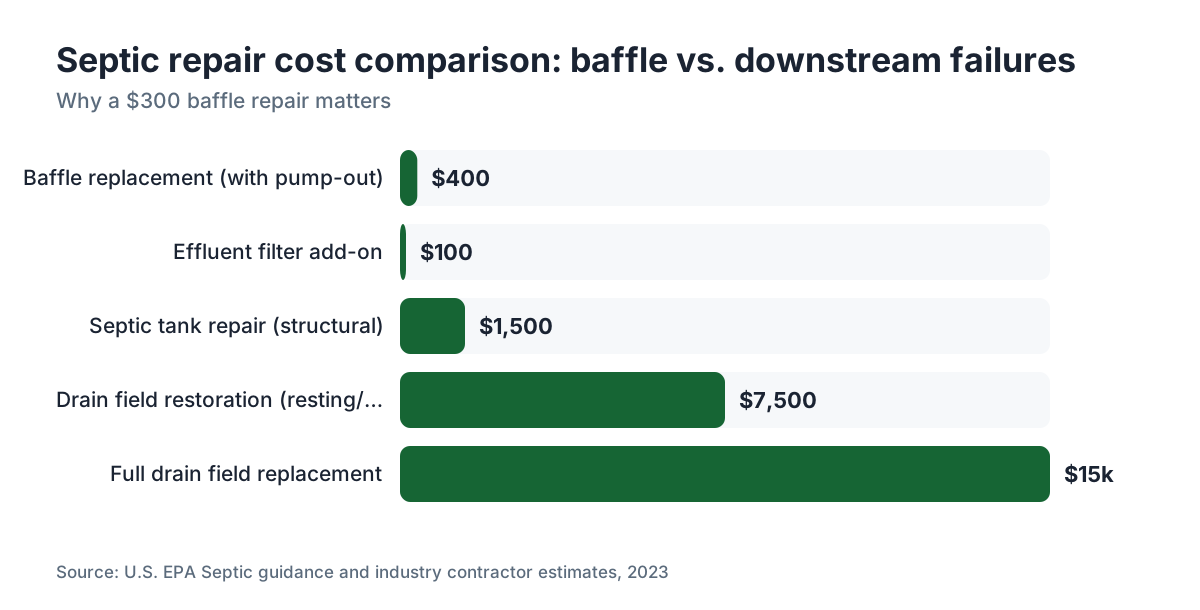
| Baffle replacement as a standalone repair call | $150 to $500 |
| Adding an effluent filter at the same time | Add $50 to $150 for parts and labor |
| Full septic tank repair if damage runs past the baffles | $500 to $2,500+ |
Geography matters. A contractor in the rural South might charge $200 for the whole job. One in the Northeast or Pacific Northwest might charge $500. These figures come from contractor quotes pulled across industry sources. There's no national database with clean averages, so treat these as working estimates and get two or three local quotes.
The math that matters isn't the sticker price. It's the opportunity cost. If a failed outlet baffle lets grease reach the drain field and biomat builds up, you're looking at a leach field restoration or replacement running $5,000 to $20,000 or more, depending on system size and soil. Spending $300 now is almost always the right move.
Can a missing septic baffle damage your drain field?
Yes, and it's one of the most common causes of premature drain-field failure.
The outlet baffle keeps fats, oils, grease, and floating solids inside the tank. When it's gone, those materials ride the effluent flow straight to the distribution box and into the perforated pipes in your leach field trenches. Grease coats the gravel and plugs the soil pores. Over time a dense biological mat (a biomat) forms on the soil interface. Biomat cuts the soil's ability to move water. The field can't take liquid as fast as it's getting it. You get soggy ground, sewage surfacing near the trenches, or backup into the house.
The frustrating part is the timeline. Biomat damage builds over months to years after a baffle fails. A homeowner might have a missing outlet baffle for two years without a single symptom, then one wet season the field goes. By then the baffle isn't the problem anymore. The field is.
Bringing a clogged field back means either resting the affected trenches (sometimes 6 to 18 months of alternating to a second field, if one exists), aerobic treatment upgrades, or full replacement. None of those are cheap. There's more on what goes wrong at the field level at leach field.
If you're buying a home on septic, a septic tank inspection that includes baffle condition is non-negotiable. Real estate deals turn up missing baffles all the time, ones that would have taken out the drain field within a year or two.
How often should septic tank baffles be inspected?
Inspect the system every one to three years and pump every three to five years for a typical household. That's the standard recommendation, consistent with EPA SepticSmart guidance, and baffle inspection should be part of every pump-out. If your pumper doesn't bring up the baffles, bring them up yourself.
For concrete baffles specifically, if your tank is 15 years old and nobody has ever checked a baffle, schedule it now. Don't wait for symptoms.
For PVC tees, once you've confirmed they're in place and positioned right, a visual check at each pump-out cycle is enough.
If you added an effluent filter over the outlet tee, that filter needs cleaning every one to three years no matter how often you pump. Heavy users (garbage disposal households, big families) may need annual filter cleaning. A clogged effluent filter can back sewage into the house, so this one isn't optional.
Operators managing multiple client systems find that tracking baffle age and last inspection date per property is one of the better ways to head off emergency calls. Tools like SepticMind let service operators log baffle condition notes per tank during routine pump-outs, so the history follows the property instead of sitting in a paper invoice. Small workflow change, real payoff, and it helps with how often to pump septic tank scheduling too.
Do all septic tanks have baffles?
Most modern septic tanks do. There are exceptions and degraded cases worth knowing about.
Most jurisdictions in the United States require inlet and outlet baffles (or tees) in any new septic tank installation. EPA's Onsite Wastewater Treatment Systems Manual describes them as standard components of conventional septic tanks. State plumbing and onsite wastewater codes usually spell out the minimum extension depths for each.
Very old tanks, especially ones installed before the 1960s in rural areas, may never have had proper baffles, or may have had ones that fully disintegrated. Cesspools, which predate modern septic tanks, had no baffles at all.
Alternative and advanced treatment systems (aerobic treatment units, mound systems, drip irrigation systems) separate and treat wastewater by other means. Some have no traditional baffle in the sense described here, though they have their own inlet and outlet controls.
If you're installing a new system or replacing a tank, all major precast concrete and fiberglass tank manufacturers include inlet and outlet tees or baffles as standard. The septic tank installation will spell out the baffle in the permitted design. If you're not sure whether your existing tank has baffles, a pump-out and inspection answers it for good.
What's the difference between an inlet baffle and outlet baffle?
They sit at opposite ends of the tank and do different jobs, even though they look alike.
The inlet baffle takes raw sewage from the house. Its main job is to steer the flow downward, calm the turbulence, and keep the scum layer from getting torn up. It has a second job too: the up-leg of the inlet tee lets gases vent back through the inlet pipe and out the house's roof vent stack, which relieves pressure buildup and stops fixtures from gurgling. That's why the inlet tee's up-leg matters even though no liquid runs through it.
The outlet baffle pulls clarified effluent from the middle zone of the tank, below the scum and above the sludge, and passes it toward the drain field. It's the more consequential baffle for protecting the whole system. Its failure hits the leach field directly.
The outlet baffle is usually a bit longer (the down-leg reaches deeper) than the inlet baffle, because it has to draw from below the scum layer reliably even as the tank liquid level shifts.
Both deserve attention at inspection. But if you have to prioritize, confirm the outlet baffle first.
Does a two-compartment septic tank handle baffles differently?
Two-compartment tanks are the current standard for new residential installations in most states. They have an internal dividing wall with a transfer port near the top of the wall (but below the liquid surface), which creates a first chamber for primary settling and a second chamber for more clarification before the outlet baffle.
In a two-compartment tank, the inlet baffle sits in the first chamber and the outlet baffle sits in the second. The transfer opening between chambers acts as a passive control, keeping solids in the first compartment. Some tanks add a small baffle or tee at the transfer opening as well.
The separation works better than a single-compartment tank. Extension research on onsite systems shows two-compartment tanks put out lower suspended solids at the outlet tee than single-compartment tanks of the same total volume, which is the whole point of the extra chamber.
Maintenance is basically the same: check both baffles at pump-out, replace with PVC if the concrete originals are shot. Pumping a two-compartment tank means pumping both chambers and checking the dividing wall and transfer port too. More detail at septic tank pump out.
Frequently asked questions
How do I know if my septic tank baffle is bad?
The most reliable way is a professional inspection during a pump-out, when the pumper can see whether both tees are present and intact. At home, you can open the tank lid from a safe distance and shine a light down to look for the T-shaped fittings at the inlet and outlet ports. Signs of failure include no visible tee, concrete fragments floating in the tank, or grease and scum near the outlet pipe.
Can I replace a septic baffle myself?
In many states, homeowners can do minor repairs on their own septic systems without a contractor license, but confirm with your local health department before starting. The part is cheap: a PVC sanitary tee costs under $30 at any hardware store. The practical challenge is that the tank needs pumping first, which most homeowners hire out. Never enter a septic tank, and always have someone with you when the lid is open.
What happens if there is no outlet baffle in a septic tank?
Without an outlet baffle, grease, scum, and floating solids flow straight from the tank into the drain field. Over months to years, that material plugs the soil pores and forms a biomat that stops the field from accepting liquid. The result is a failing drain field, soggy ground, or sewage backing into the house. Drain-field replacement costs $5,000 to $20,000 or more, which makes a $150 to $500 baffle repair a top priority.
How long does a septic baffle last?
Concrete baffles typically last 10 to 30 years depending on tank conditions, with hydrogen sulfide corrosion being the main failure mode. PVC or ABS sanitary tee replacements can last 25 to 40 years or more inside a tank because they're inert to that corrosion. If your tank is 15 to 20 years old and the baffles have never been checked, assume the concrete ones are at risk and schedule an inspection.
Do plastic septic tanks have baffles?
Yes. Most factory-made polyethylene and fiberglass tanks include molded inlet and outlet tees or baffles as standard. Some use PVC sanitary tee fittings clipped into place at manufacture. The function is identical to concrete tanks. Because plastic tanks don't suffer from concrete corrosion, their baffles tend to last longer, though they can still be damaged physically or break down over decades.
What is the correct depth for a septic tank outlet baffle?
The exact depth varies by state code, but a common standard is that the outlet tee down-leg extends to the middle third of the liquid depth, typically 12 to 18 inches below the liquid surface. The goal is to draw effluent from the clear zone between the floating scum and the settled sludge. Your state's onsite wastewater code or local health department has the specific dimension for your jurisdiction.
Is an effluent filter the same as an outlet baffle?
No, but they work together. The outlet baffle (usually a PVC sanitary tee) physically separates the scum and sludge zones from the outlet pipe by drawing liquid from mid-tank depth. An effluent filter is a mesh or slotted polypropylene screen that clips inside or over the outlet tee to catch fine particles. Some states require effluent filters on new installations. Filters need cleaning every one to three years; baffles usually don't need attention until they fail.
Will a septic additive or treatment fix a failed baffle?
No. Bacterial additives and septic treatments do not repair or replace a physical baffle. A missing or collapsed baffle is a structural problem that needs physical replacement. No product poured down the toilet will reform a concrete fitting or grow a new sanitary tee. Save the money you'd spend on additives and put it toward a pump-out and inspection instead.
How much does a septic tank baffle replacement cost?
Done during a scheduled pump-out, expect to pay $50 to $150 more for the baffle replacement on top of the pump-out fee. As a standalone service call, total costs usually run $150 to $500 depending on your region and contractor. Adding an effluent filter at the same time adds $50 to $150. This is one of the cheapest repairs in the septic world and far less than drain-field rehabilitation.
Should a septic inspection include checking the baffles?
Yes, always. A complete septic inspection should document the presence, material, and condition of both inlet and outlet baffles. Ask for this explicitly if you're scheduling a pre-purchase inspection or a routine check. Some inspectors use a camera or inspect only after pump-out to confirm baffle condition accurately. An inspection that skips the baffles is incomplete and can miss the single most common cause of drain-field failure.
Can a broken inlet baffle cause sewage to back up into the house?
A failed inlet baffle on its own rarely causes backup, since the tank still accepts and drains liquid. But if the broken baffle falls and partly blocks the inlet pipe, it can restrict flow and cause slow drains or backup. More often, inlet baffle failure leads to tank turbulence and early solids movement to the outlet side, which eventually causes field problems rather than immediate backup.
How do I find a contractor to replace my septic baffle?
Look for a licensed septic pumper or onsite wastewater contractor in your state. Most state environmental agencies keep directories of licensed septic contractors. You can also ask your local health department for a referral list. When you call, say you need a pump-out with baffle inspection and replacement if needed. Get two or three quotes. Anyone who quotes baffle replacement without pumping the tank first is a flag.
Sources
- U.S. EPA, SepticSmart homeowner guidance: EPA recommends septic systems be inspected every 1-3 years and pumped every 3-5 years, with all components including baffles intact to protect the soil absorption area
- U.S. EPA, Onsite Wastewater Treatment Systems Manual (EPA/625/R-00/008): EPA manual describes inlet and outlet baffles as standard components of conventional septic tanks; some states now require effluent filters on new installations
- University of Minnesota Extension, Onsite Sewage Treatment Program: Hydrogen sulfide corrosion can degrade concrete septic components including baffles in as little as 10 years; outlet tee down-leg should extend to middle third of liquid depth
- U.S. EPA, Septic Systems: What Homeowners Need to Know: Drain-field replacement can cost $5,000 to $20,000 or more depending on system size and soil conditions
- U.S. EPA, Onsite Wastewater Treatment Systems Manual: EPA manual identifies baffles as standard components required in conventional septic tanks to prevent short-circuiting and solids carryover
- University of Tennessee Extension: Two-compartment tanks show consistently lower suspended solids in effluent leaving the outlet tee compared to single-compartment tanks of the same volume
- North Carolina State University Extension, Septic Systems and Their Maintenance: PVC sanitary tees are the recommended replacement for failed concrete baffles due to resistance to hydrogen sulfide corrosion
- Minnesota Pollution Control Agency: State code specifies outlet tee depth requirements and mandates licensed contractor for septic repairs beyond basic maintenance in many circumstances
- Penn State Extension, Homeowner's Guide to Septic System Maintenance: Effluent filters on outlet tees should be cleaned every 1-3 years; more frequently in high-use households with garbage disposals
- Virginia Cooperative Extension, Septic Tank Maintenance: Inlet baffle directs incoming sewage downward below the scum layer to minimize turbulence and protect the scum mat's biological function
Last updated 2026-07-10