Septic tank bacteria treatment: what actually works
By the SepticMind Editorial Team
TL;DR
- Septic tank bacteria treatments are liquid or powder additives that replenish the microbial populations your tank needs to break down solids.
- The EPA says a healthy, normally-used tank doesn't need them, but they can genuinely help after antibiotic use, long vacancy, or a recent pump-out.
- Biological additives (bacteria and enzymes) are safe; chemical additives can harm your drain field.
What is septic tank bacteria treatment and how does it work?
A septic tank bacteria treatment is any product you add to your system to boost or restore the microbial community living inside the tank. That community, mostly anaerobic bacteria, does the actual work of digesting solid waste. Without healthy bacterial populations, solids accumulate faster, scum and sludge layers grow thicker, and eventually partially treated effluent pushes out toward your leach field before it should.
Most commercial treatments deliver one of three things: live bacterial cultures, dormant bacterial spores that activate in the wet tank environment, or enzymes that pre-digest fat, oil, and grease before bacteria finish the job. Some products combine all three. The better ones use strains selected for anaerobic performance, meaning they thrive without oxygen, which is the actual condition inside a working septic tank.
Here is what the products don't do. They don't replace pumping. They don't repair a cracked tank. And they don't unclog a saturated drain field. Bacteria treatment is maintenance support, not a rescue operation. If you're already seeing sewage backup or soggy ground over the leach field, no bottle of bacteria is going to fix that.
Does the EPA recommend using septic tank bacteria additives?
The EPA's SepticSmart program takes a measured position. The agency says a properly functioning septic system produces enough bacteria naturally and doesn't require biological additives under normal use [1]. That's the honest baseline answer.
But the EPA also draws a line between biological additives and chemical ones. Chemical additives, including solvents, sulfuric acid-based drain openers, and some surfactant-heavy products, can disrupt the bacterial community, corrode tank walls, and push inadequately treated effluent into the soil absorption area [1]. The EPA specifically cautions against chemical additives.
Biological additives (bacteria and enzyme products) land in a different category. The EPA doesn't condemn them. It just says a healthy system doesn't need them. That nuance matters. Most septic professionals would say the same thing, then add that "healthy" is carrying a lot of weight in that sentence. Plenty of systems have their bacterial populations knocked back regularly by antibiotics, bleach, antibacterial soaps, or long stretches of low use. In those situations, a biological treatment has a reasonable scientific basis.
The University of Minnesota Extension reviewed the published research and concluded that biological additives have not been shown to reduce pumping frequency in well-functioning systems, but noted the evidence base is thin and most studies are industry-funded [2]. Nobody has great independent data here. The closest rigorous review found no harm and modest benefit in stressed or recently pumped systems.
When does bacteria treatment for septic tanks actually make sense?
Four situations give adding bacteria to your septic tank real logic behind it.
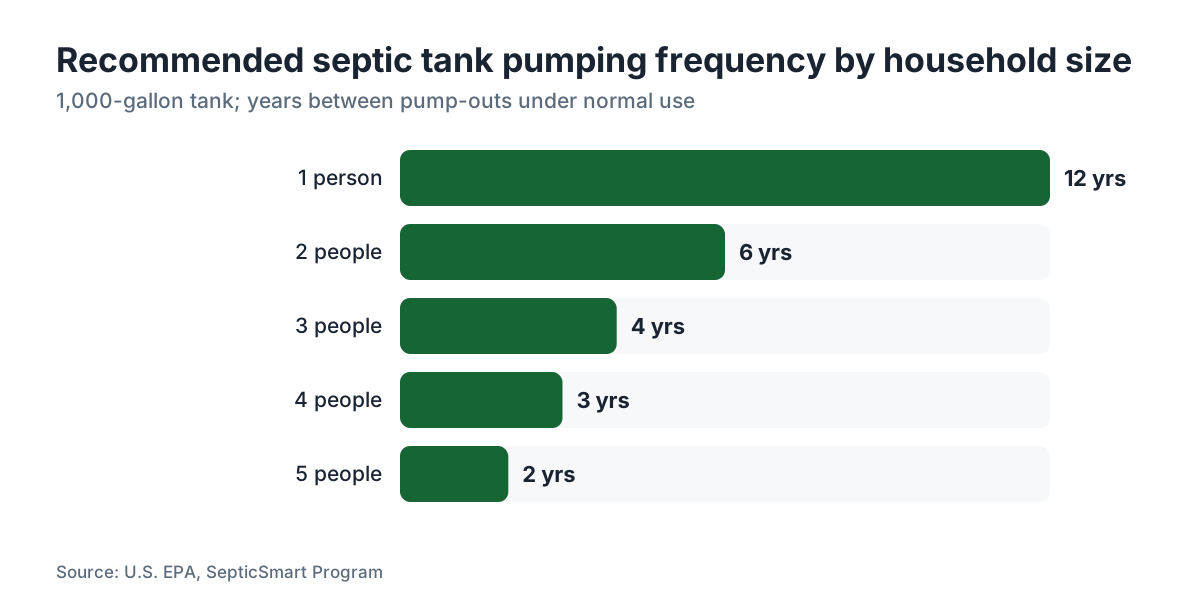
First, after a pump-out. When a tank gets pumped, the technician removes almost everything, including the microbial community. Starting with a fresh bacterial inoculant after pumping can speed up the return of digestion capacity, especially in colder climates where bacterial growth is already slower. Septic tank pumping intervals average every 3 to 5 years for a family of four [3], so this opportunity comes around rarely.
Second, after heavy antibiotic use in the household. Antibiotics don't stay in your body. They pass through and end up in the tank. A household member on a course of broad-spectrum antibiotics like amoxicillin-clavulanate or fluoroquinolones will flush enough active compound to measurably reduce anaerobic bacterial counts. Treating the tank during or just after the antibiotic course is one of the more defensible uses of these products.
Third, after long vacancy. A vacation home or rental that sits empty for months leaves a tank with depleted bacterial populations and thickened, dried scum. Reintroducing bacteria before the property goes back into regular use makes sense.
Fourth, new or newly repaired systems. A new tank has no microbial community at all. Adding a bacterial starter culture is reasonable, though the tank will colonize on its own within a few weeks of normal use.
If none of those apply, you have a normal working system with normal occupancy, no heavy antibiotic use, and no recent pump-out, then the bacteria treatment is probably unnecessary. Spending $20 to $50 a month on it for a healthy system is a waste.
What are the best septic tank bacteria treatments available?
The well-regarded products share a few traits. They use live or spore-form anaerobic bacteria more than enzymes. They list CFU counts (colony-forming units) on the label. And they skip harsh surfactants or solvents.
Walex Bio-Active is one of the most widely sold products in the U.S. and comes up constantly in contractor supply discussions. It uses a blend of bacterial strains and enzymes in a dissolvable packet format, which keeps dosing consistent. Bio-Active septic tank treatment reviews from homeowners and service operators tend to focus on ease of use and the lack of odor complaints after regular use, though independent controlled trials are scarce. Walex publishes its bacterial strains but not CFU counts on consumer packaging, which is a limitation.
RidX (Church and Dwight) is the mass-market leader and uses Bacillus strains in powder form. It's cheap and easy to find, but the CFU count per dose runs on the low end compared to professional-grade products.
Bio-Tab for Septic Systems and Cabin Obsession are popular in the seasonal-property market because they come in slow-dissolve tablet form built for infrequent use.
For active septic tank treatment at the professional level, products like Enviro-Zyme and Septic Saver (both sold through plumbing and septic supply chains rather than hardware stores) carry higher CFU concentrations and documented strain specifications.
A practical buying tip: look for products that list specific Bacillus species (B. subtilis, B. licheniformis, B. amyloliquefaciens are the most common and best-studied anaerobic performers) and state CFU counts above 1 billion per dose. Products that only list "proprietary enzyme blend" without live bacteria are doing less work.
How often should you add bacteria to a septic tank?
Manufacturer recommendations vary, but the most common guidance is monthly dosing for maintenance plus a larger initial dose after a pump-out or system restart.
For a standard residential system in regular use with no stressors, monthly treatment is the typical recommendation. The logic is that monthly dosing keeps populations steady through the normal household events that stress bacteria: laundry day (detergents and hot water), garbage disposal use, and the occasional antibiotic flush.
After a pump-out, most manufacturers recommend a "starter" dose that is two to three times the normal monthly amount, added right after the tank refills with water.
If the household has just finished a round of antibiotics, an extra dose right after the last antibiotic day makes sense, then return to normal monthly frequency.
One thing worth stating plainly: more is not better. Overloading the tank with bacteria doesn't speed up digestion beyond the tank's physical capacity. Bacteria settle at whatever population the tank environment can sustain. Save your money and stick to monthly.
Are septic tank bacteria treatments safe for all system types?
Biological treatments (bacteria and enzyme products) are safe for nearly all septic configurations: conventional gravity-fed systems, pressure distribution systems, mound systems, and aerobic treatment units (ATUs). Nothing in the bacterial strains used damages tank walls, distribution pipes, or drain field soil.
The caveat is for aerobic treatment units, which already force air in to speed bacterial activity. Some ATU manufacturers include bacterial inoculants in their maintenance programs. Others say their systems get no benefit from external bacterial additives because the aerobic environment selects for different microbial populations than an anaerobic tablet addresses. Check your ATU manufacturer's documentation before adding any product.
Chemical additives are a different matter entirely. Products containing solvents (common in older "septic tank opener" products) or strong acids can kill the bacterial community, corrode concrete tanks, and, most seriously, push semi-treated effluent into the soil faster than it can be absorbed. Several states have banned chemical septic additives outright. North Carolina prohibits chemical additives in onsite wastewater systems under its rules for engineered systems [4]. Washington State's Department of Health maintains guidance discouraging chemical additives specifically [5]. Always check your state's onsite wastewater regulations before using any product.
What do bio-active septic tank treatment reviews say about real-world results?
The honest picture from consumer reviews and contractor feedback is mixed in a useful way.
Homeowners who report positive results almost always name one of the specific situations where bacteria treatment has logical support: less odor after long vacancy, faster recovery after a pump-out, or fewer odor complaints after a household member finished antibiotics. Those reports line up with the mechanism.
Homeowners who report no results tend to be using monthly treatments on already-healthy systems and measuring success by nothing changing, which is hard to pin on the treatment versus normal system function.
Negative reviews usually split into two camps. Either the product did nothing to fix an actual mechanical problem (clogged pipe, failed drain field, cracked tank), which was the wrong tool for the job, or the reviewer used a chemical-based product and noticed worse performance, which is chemically predictable.
One pattern shows up in Walex Bio-Active reviews specifically: users on larger systems (1,500 gallon or bigger tanks) frequently mention needing to double-dose to get noticeable odor reduction. The standard monthly packet is sized for a 1,000 to 1,250 gallon tank, so scaling up for larger systems is a real consideration.
The takeaway on reviews: they're most useful for comparing ease of use, smell, and packaging quality. They can't tell you whether bacterial populations actually rose, because almost no homeowner is running microbial assays.
Can bacteria treatment reduce how often you need to pump your septic tank?
This is the big marketing claim, and it deserves a straight answer: the evidence doesn't support it reliably.
The EPA pumping interval guideline for a 1,000-gallon tank serving a family of four is every 3 to 5 years [3]. That interval is driven by the buildup of inorganic solids that bacteria can't digest: hair, grease remnants, mineral deposits, and the fraction of organic solids that resist anaerobic breakdown no matter how healthy the bacterial community is.
The University of Minnesota Extension's review of additive studies found no consistent evidence that biological additives slow sludge and scum accumulation enough to meaningfully extend pumping intervals [2]. The FTC has taken enforcement action against septic additive companies that made unsubstantiated claims about eliminating the need for pumping.
That said, some research suggests healthy bacterial populations do reduce the rate of settleable solids accumulation, just not enough to skip pumping cycles. Think of bacteria treatment as a tune-up for digestion efficiency, not a replacement for physical maintenance.
If you want to understand your actual pumping schedule, the how often to pump septic tank guide covers the calculation in detail.
What household products kill septic tank bacteria and should be avoided?
Knowing what kills your bacterial community matters as much as knowing what restores it.
Antibacterial soaps with triclosan are big offenders. Triclosan is built to kill bacteria on contact, and it reaches your tank intact. The FDA banned triclosan from consumer hand soaps in 2016 [6], so most major brands have reformulated, but some products still contain it. Check labels.
Bleach in large doses is a problem. A normal toilet bowl cleaning with diluted bleach won't crash your tank's bacterial population, but pouring multiple cups of undiluted bleach down the drain, cleaning a large surface and flushing all the runoff, or running bleach tablets in toilet tanks continuously will depress bacterial counts over time.
Drain cleaners are the worst offenders. Products with sulfuric acid, lye (sodium hydroxide), or organic solvents can wipe out most of the bacterial community in a tank in a single dose. Use a drain snake or an enzymatic drain cleaner (the latter is fine for septic systems) instead.
Garbage disposal use raises the organic load a lot. It doesn't kill bacteria, but it sends more raw material into the tank than bacteria can process efficiently, which speeds up sludge accumulation. If you run a disposal heavily, your septic tank pump out interval should be shorter than average.
Dishwasher detergents with phosphates and high-surfactant laundry detergents both stress bacterial communities. Choosing septic-safe detergents labeled low-surfactant or phosphate-free is practical. Spreading laundry loads across the week instead of doing eight loads on Saturday reduces hydraulic shock to the tank.
How do you add bacteria treatment to a septic tank correctly?
The mechanics are simple, but a few details matter.
For powder or packet products, flush them straight down the toilet. The toilet delivers material to the tank through the main inlet line, and flushing gets the product to the tank rather than sitting in a trap or partial pipe. Don't pour them down a floor drain that might connect to a grease trap or separate plumbing.
Timing matters for live bacterial products. Don't add a bacteria treatment right after using large amounts of bleach or antibacterial cleaner. Give the system 24 to 48 hours to flush through before adding live cultures, otherwise you're dropping bacteria into a chemically hostile environment.
For starter doses after a pump-out, add the treatment once the tank has refilled with water. Running a few toilets and faucets for 15 to 20 minutes after the pump truck leaves gets water back into the tank. Then add the starter dose.
Store unused product per label directions. Live bacterial spore products are fairly stable, but prolonged heat above 100 degrees Fahrenheit can reduce viability. Don't leave packets in a hot garage all summer.
Operators managing multiple properties can track treatment schedules and service intervals systematically. SepticMind's operations platform lets service companies log additive applications and set recurring maintenance reminders alongside pump-out scheduling, which cuts the chance of a site slipping through the cracks.
For a broader view of tank maintenance beyond bacteria treatments, the septic tank cleaning guide covers what a full service visit involves.
What is the cost of septic tank bacteria treatments and are they worth the money?
Price ranges by product type:
| Product type | Typical cost per dose | Annual cost (monthly use) |
|---|---|---|
| Mass-market powder (RidX, similar) | $5 to $10 per dose | $60 to $120 |
| Packet-format biological (Walex Bio-Active, similar) | $10 to $20 per dose | $120 to $240 |
| Professional-grade concentrate (Enviro-Zyme, similar) | $20 to $40 per dose | $240 to $480 |
| Slow-dissolve tablets (annual dose) | $15 to $30 per year | $15 to $30 |
For a homeowner on a tight budget, the honest advice is simple: skip the monthly maintenance dose if your system is healthy and normally used. Save the money for the one situation where bacteria treatment clearly earns its cost, the post-pump-out starter dose. One starter dose after your pump-out every three to five years runs $15 to $40 total and hits the exact moment when bacterial populations are lowest.
If you have a household member on frequent antibiotics, a seasonal property, or a history of heavy bleach use, monthly treatment at the $10 to $20 range is reasonable spending.
Compare that to the cost of a drain field repair, which runs $3,000 to $15,000 or more depending on system size and site conditions [7], and the math on prevention looks different. But bacteria treatment is not drain field insurance in any direct way. A failing drain field has causes (hydraulic overload, biomat formation, soil saturation, root intrusion) that bacteria treatments don't touch.
For what full repair work actually involves, the septic system repair article breaks down the scenarios.
Are there state regulations about septic additives you need to know?
Yes, and homeowners and operators routinely overlook this.
Some states flatly prohibit chemical septic additives. Others require any additive used in a permitted onsite wastewater system to be on an approved products list. A few states have no specific additive rules but fold additive use into a general prohibition on anything that could impair system function.
North Carolina's rules for engineered onsite wastewater systems prohibit chemical additives that could adversely affect system performance [4]. Washington State's Department of Health publishes guidance recommending against chemical additives and noting that biological additives are not proven to eliminate the need for pumping [5].
The National Sanitation Foundation (NSF) Standard 40 and Standard 46 cover septic system components and some additive products respectively, giving a baseline for judging whether a product meets a recognized minimum threshold [8].
The practical guidance: before using any additive, biological or chemical, confirm your state's department of environmental quality or department of health doesn't restrict it. Links to state onsite wastewater program pages are available through the EPA's SepticSmart homeowner resources [1].
SepticMind's operator resources include a state-by-state regulatory reference that service companies can check before recommending products to customers, which helps when operating across multiple state jurisdictions.
What are signs your septic tank bacterial population is struggling?
A handful of real indicators point to trouble with digestion in the tank, though none of them is diagnostic on its own.
Persistent sewage odor inside the house or near the tank lid when nothing is running is the most common. A healthy tank processes waste and releases gases through the vent stack, not back into the house. When bacterial activity drops, undigested organic material produces hydrogen sulfide faster than the vent can handle.
Slow drains throughout the house, more than one fixture, can mean the tank is backing up from solids accumulation, though this can also be a pipe problem. If your septic tank inspection shows sludge and scum layers higher than the rule-of-thumb one-third of tank volume, pumping is overdue regardless of additive use [3].
Unusually green or lush grass directly over the drain field can mean effluent is surfacing, which suggests the tank is pushing inadequately treated waste to the field. That's beyond what bacteria treatment addresses.
Foamy or milky effluent at a distribution box or inspection port signals excessive detergent load or disrupted bacterial activity.
If you're seeing any of the physical failure signs, the path forward is a septic tank repair evaluation by a licensed inspector, not more bacteria.
Frequently asked questions
How long does it take for septic tank bacteria treatment to work?
Live bacterial cultures start colonizing the tank within 24 to 72 hours in a hospitable environment. Measurable improvement in digestion capacity, meaning visible reduction in odor or slower sludge accumulation, typically takes two to four weeks of regular use. After a pump-out, expect the tank to take four to six weeks to reach a stable, functional bacterial population with or without an inoculant.
Can I use bacteria treatment in a new septic system?
Yes, and it's one of the more sensible times to use it. A brand-new tank has zero established microbial community. A starter dose after installation speeds up the initial colonization. The tank will colonize naturally within a few weeks of normal use anyway, but a bacterial inoculant gets digestion activity going faster, which matters if the system goes into immediate heavy use.
Is Walex Bio-Active septic treatment worth buying?
Walex Bio-Active is a legitimate biological product with real bacterial strains, more than enzymes. It's a reasonable choice for post-pump-out starter doses and for households with regular stressors like antibiotic use. For large tanks over 1,250 gallons, users frequently need two packets per dose rather than one. It's not meaningfully better than competing packet-format products at similar price points, but it's widely available and correctly formulated.
Do septic bacteria treatments really work or are they a scam?
Biological treatments (live bacteria and enzymes) work in the sense that they deliver viable organisms that participate in waste digestion. They don't work in the sense of eliminating pumping needs or repairing a damaged system. The FTC has pursued companies making exaggerated claims. For the specific situations where bacterial populations are genuinely depleted, post-pump-out, post-antibiotic use, long vacancy, they provide real benefit.
What is the difference between bacteria and enzyme septic treatments?
Enzymes are proteins that break down specific molecules (fats, proteins, starches) into smaller fragments. They're not alive and don't reproduce. Bacteria are living organisms that consume organic matter and reproduce in the tank. Enzymes alone do a partial job; they pre-digest material but don't complete the waste processing cycle. The best products combine both: enzymes to speed initial breakdown and bacteria to finish the digestion.
Can you put too much bacteria in a septic tank?
You can't harm the system by overdosing on biological additives, but you'll waste money. Bacterial populations self-regulate based on available food, oxygen, and space. Adding ten times the recommended dose won't produce ten times the benefit; the excess bacteria simply die off. Stick to manufacturer dosing recommendations. The one exception is the starter dose after a pump-out, where a double dose has logical support.
Does using a garbage disposal mean I need more bacteria treatments?
A garbage disposal raises the organic load entering your tank significantly, which speeds up sludge and scum accumulation. This means your pump-out interval should be shorter, roughly every two to three years versus three to five, and it gives a logical basis for regular bacterial supplementation since more substrate is entering the tank. But the primary response to heavy disposal use is more frequent pumping, not more bacteria.
Are natural alternatives to commercial bacteria treatments effective?
You'll find suggestions online for adding yeast, buttermilk, or molasses to a septic tank. Yeast (Saccharomyces cerevisiae) is a real microorganism that can contribute some fermentation activity in the tank, but it's not an anaerobic waste-digesting bacterium and it doesn't replace or augment the Bacillus strains that do the actual solids breakdown. There's no credible evidence that home remedies match commercial bacterial inoculants in CFU counts or strain specificity.
Should I add bacteria after my septic tank is pumped?
Yes, this is the single most defensible use of septic bacteria treatments. Pumping removes nearly the entire microbial community along with sludge and scum. A starter dose of biological treatment right after the tank refills with water speeds re-colonization. Use a dose two to three times the normal monthly amount. This matters most in cold climates where natural bacterial re-establishment is slower.
Are septic bacteria treatments safe for drain fields and soil?
Biological treatments pose no risk to drain field soil or perforated pipes. The bacterial strains used in commercial products are naturally occurring Bacillus species already present in soil environments. They don't alter soil permeability or damage pipe materials. Chemical additives are a different story and can damage the biomat layer in a drain field, so stick to biological products.
How do I know if my state allows septic tank additives?
Check your state's department of environmental quality, department of health, or equivalent agency for onsite wastewater rules. Some states keep approved product lists. Others ban chemical additives specifically while allowing biological ones. The EPA's SepticSmart program links to state resources. North Carolina and Washington State are two examples with explicit additive guidance in their published regulations.
What CFU count should I look for in a bacteria treatment product?
Look for products listing at least 1 billion CFU (colony-forming units) per dose. Products in the 5 to 10 billion CFU range per dose are typical of mid-grade and professional products. Very low CFU counts, under 100 million per dose, are unlikely to meaningfully shift bacterial populations in a 1,000-plus gallon tank. Products that don't list CFU counts at all are a red flag; it usually means the count is low or not quality-controlled.
Can bacteria treatments fix a failing drain field?
No. A failing drain field typically has biomat buildup, soil saturation, or physical damage that bacteria additives cannot address. Some companies market "drain field restorer" products, but the EPA and most state extension programs caution that there is no proven additive treatment for a failed soil absorption system. If your drain field is failing, the path is professional evaluation and likely repair or replacement.
Sources
- U.S. EPA, SepticSmart Homeowner Program: The EPA states that a properly functioning septic system produces enough bacteria naturally and does not require additives; chemical additives can disrupt the bacterial community and push untreated effluent to the drain field.
- University of Minnesota Extension, Septic System Owner's Guide: University of Minnesota Extension reviewed published studies and found no consistent evidence that biological additives reduce sludge accumulation rate enough to extend pumping intervals in well-functioning systems.
- U.S. EPA, How to Care for Your Septic System: EPA guidance recommends pumping a 1,000-gallon septic tank serving a family of four every 3 to 5 years; sludge and scum layers exceeding one-third of tank volume indicate pumping is overdue.
- North Carolina Department of Environmental Quality, Onsite Wastewater Section: North Carolina rules prohibit use of chemical additives that could adversely affect onsite wastewater system performance.
- Washington State Department of Health, On-Site Sewage Systems: Washington State Department of Health publishes guidance discouraging chemical additives for septic systems and notes biological additives have not been proven to eliminate pumping needs.
- U.S. FDA, Consumer Updates: Antibacterial Soap Rulemaking: The FDA banned triclosan from consumer hand soaps in 2016, requiring reformulation of products that previously contained this antibacterial compound.
- HomeAdvisor / Angi, Septic System Repair Cost Guide: Drain field repair costs typically range from $3,000 to $15,000 or more depending on system size and site conditions.
- NSF International, NSF/ANSI Standard 40 and Standard 46: NSF Standard 40 covers residential wastewater treatment systems and Standard 46 covers evaluation of components and products used in onsite wastewater systems.
- U.S. EPA, Septic System Additives Overview: EPA distinguishes between biological additives (bacteria and enzymes, generally considered safe) and chemical additives (solvents, acids) which can damage system components and the surrounding soil environment.
- Virginia Cooperative Extension, Septic System Additives Publication 448-407: Virginia Cooperative Extension reviewed available literature and found most biological additives contain Bacillus species selected for anaerobic waste digestion, and noted that post-pump-out inoculation is among the more defensible uses.
Last updated 2026-07-09