Mounded septic system: how it works, what it costs, and when you need one
By the SepticMind Editorial Team

TL;DR
- A mounded septic system puts the drain field in an engineered sand mound above the natural soil instead of buried in it.
- Regulators require one when your lot has a high water table, shallow bedrock, or slow-draining soil.
- Installed cost usually runs $10,000 to $20,000 depending on the site and your state's code.
- Maintained well, a mound lasts 20 to 30 years.
What is a mounded septic system and how does it work?
A mounded septic system puts the dispersal bed inside an engineered fill mound built on top of your native soil. Effluent leaves the septic tank, gets pumped up into small-diameter pipes buried in gravel or chamber media inside the mound, and then trickles down through a thick sand layer. Soil microbes treat it on the way down. The cleaned water finally soaks into the native soil, well above any groundwater or restrictive layer.
The mound has a layered anatomy, and each layer does a job. From top to bottom: a topsoil cap seeded with grass, a low-permeability fill that sheds rainwater, the gravel distribution bed holding the pipes, a sand fill bed roughly 1.5 to 2 feet thick, a thin layer of native topsoil (the basal area), and finally the undisturbed native soil. The sand bed is the whole point. It supplies the treatment distance that your lousy native soil cannot.
Most mound systems run on a dosing pump housed in its own chamber (also called a dose tank) between the septic tank and the mound. The pump sends a measured dose on a timed or demand cycle so the sand bed loads evenly, then drains and breathes before the next dose. That rest period keeps the bio-mat from smothering the system. Gravity-fed mounds exist in some places for modest slopes, but pumped systems win because they hand the designer control over the loading rate.
The EPA's SepticSmart program lists mound systems among the "alternative" or "advanced" systems used when a standard in-ground drainfield will not work [1]. In plain terms: if a perc test or soil evaluation turns up a high seasonal water table, a hardpan clay layer, shallow bedrock, or dense subsoil that barely moves water, the county sanitarian is going to point you toward a mound.
When does a site require a mound system instead of a conventional one?
A site needs a mound when the native soil cannot give you enough vertical space between the bottom of the drainfield and a limiting layer. Most state codes want 2 to 4 feet of usable soil below the dispersal bed before you hit groundwater, bedrock, or a restricting horizon like a fragipan or claypan. No natural separation, no conventional system. You build the separation with the mound instead.
Four conditions trigger it most often.
- Seasonal high water table within 24 inches of the surface. This is probably the single most common reason a mound gets specified. A soil evaluation or monitoring wells will show whether groundwater climbs into the code setback during wet months.
- Slowly permeable soils, roughly slower than 60 minutes per inch in many states. Clay-heavy ground cannot swallow effluent fast enough for a conventional trench, so the trench floods the surface.
- Shallow limiting layers. Bedrock, fragipan, or cemented horizons within 18 to 24 inches block downward water movement and leave no room for treatment.
- Sloping sites, where a mound can be terraced to gain separation while steering site drainage away from the bed. A few states also allow mounds over very permeable soils (faster than 3 minutes per inch), where a conventional trench would move effluent through too fast and skip treatment.
University of Minnesota Extension publishes some of the most detailed mound guidance in the country, which makes sense given the region's glacial soils. Its design guidance covers exactly this: mounds get used heavily where soils have seasonally high water tables and slowly permeable horizons [2]. Wisconsin, Pennsylvania, North Carolina, and New York all carry large installed mound populations for the same soil reasons.
Your county sanitarian or a licensed soil evaluator decides which condition applies to your lot. A septic tank inspection plus a soil morphology evaluation usually takes one to two days and costs $300 to $800 before any design work starts.
How much does a mounded septic system cost to install?
A mound system usually runs $10,000 to $20,000 installed across most of the country. Outliers on both ends are common. A small mound on an easy Midwest site might land near $8,000. A big system on rough Northeast terrain with sand hauled in from a distance can push past $25,000.
Here is what moves the number most.
- System size. Sizing follows daily flow, which most states peg to bedroom count (typically 150 gallons per bedroom per day of design flow). More bedrooms means a bigger mound, more material, and a higher bill.
- Pump and controls. A pump chamber with an alarm, timer, and floats adds $1,500 to $3,000 over a gravity setup.
- Fill material and hauling. The mound needs a specific grade of sand (often called mound sand or ASTM C33 fine aggregate, depending on state code). The farther you sit from a sand supplier, the higher the hauling cost.
- Site access and grading. Rocky lots, wet ground, and tight setbacks all buy more equipment time.
- Permitting and inspection. Permit fees swing hard, from under $200 in rural counties to over $1,000 in heavily regulated states.
- Tank replacement. An old or undersized tank means a new one. Budget $1,500 to $3,500 for a 1,000 to 1,500-gallon concrete tank. Our guide to cost to install a septic system breaks the whole job down.
Labor eats 40 to 60 percent of the total. The mound is real earthwork: clearing and scarifying the basal area, placing and compacting sand, setting distribution pipe, backfilling, then grading and seeding the cap.
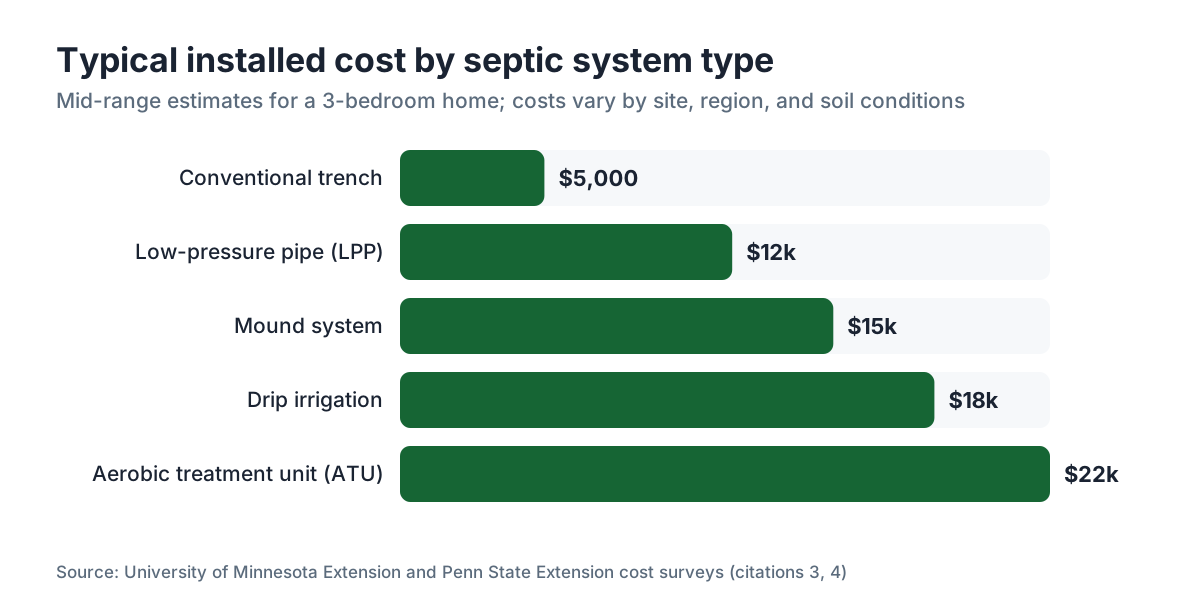
The table below uses mid-range estimates so you can see where a mound sits against other system types. These are contractor figures pulled from extension service cost surveys, not quotes [3][4].
How long does a mound septic system last?
A well-built, well-run mound system lasts 20 to 30 years. Some die at 10 to 15 from neglect or a bad install. A few run past 35 in ideal conditions. Longevity depends more on how you operate the system than on the mound itself.
The biggest killer is hydraulic overload, meaning more water going through the system than it was designed to take. Sometimes the source is obvious, like a running toilet dumping 200 extra gallons a day. Sometimes it hides, like a water softener backwashing into the system. The sand bed has a fixed hydraulic capacity. Saturate it long enough and anaerobic conditions set in, the bio-mat thickens, and the mound stops draining. Once the bio-mat locks up and the sand clogs, getting it back is hard and sometimes impossible.
The second killer is skipping pump-outs. Solids that carry over from an overfull tank ride into the mound, plug the distribution pipes, and eventually clog the sand. Our leach field guides cover bio-mat and clogging in more detail, but the rule is blunt: a tank that never gets pumped will kill a mound that would have lasted decades.
Watch the pump and controls too. A failed pump that goes unnoticed for a week can saturate the mound in ways that take months to recover from, if it recovers at all. Most state codes require a service contract for pumped mounds, and that rule earns its keep.
What maintenance does a mound system require?
Mound maintenance comes down to four things: pump the tank, inspect the pump and controls, watch the mound surface, and conserve water. Skip any of them for long and you shave years off the system.
Tank pumping. Pump the tank every 3 to 5 years for a typical household. Smaller tanks or heavier use need it sooner. Our guide on how often to pump a septic tank does the math by household size. On a $15,000 system, frequent pumping is cheap insurance. Use a licensed pumper who also checks the tank for cracks, baffle condition, and inlet/outlet integrity. See septic tank pumping for the full picture.
Pump and controls. The dosing pump is a mechanical part with a real service life, usually 7 to 15 years depending on brand and use. Most systems have a high-water alarm that warns you when the pump chamber backs up. Test the alarm once a year. Have a licensed installer check the pump, timer settings, and floats every 1 to 3 years, depending on your state's service contract rules.
Mound surface. Walk the mound each season. Look for soft spots, wet areas, surfacing effluent (your nose will find it), erosion channels, and settling that hints at subsidence. The grass on the cap is functional, not decorative. It pulls water out through transpiration and helps keep the mound from saturating. Keep it mowed. Never drive equipment across it or park on it. Never plant trees or shrubs on it, because roots hunt for the pipes.
Water conservation. This matters more for a mound than a conventional drainfield because the sand bed runs to a specific loading rate. Spread laundry across the week, fix running toilets fast, and keep water softener brine out of the system if your state lets you divert it elsewhere.
Some counties require annual or twice-yearly inspections by a licensed inspector to keep the operating permit valid. Read your permit conditions and follow them.
Operators running maintenance across a batch of client systems with mound components can track pump-test records and schedule reminders more easily with a purpose-built tool. SepticMind's operator platform was built for exactly that kind of preventive scheduling across a service territory.
What are the pros and cons of a mound septic system?
Mounds get a bad rap partly because they cost more and stand out, and partly because they land on lots that already have hard site conditions. That reputation is not really earned. A well-built mound on a tough site beats a badly placed conventional trench every time.
Pros:
- Makes lots usable that would otherwise be undevelopable or septic-restricted.
- Delivers better treatment in many soil types than a conventional trench, because the engineered sand bed is a known medium with predictable hydraulics.
- Sits above ground, so the dispersal bed is visible and inspectable. You can walk the mound and spot trouble before it turns into a failure.
- Pump dosing gives the designer tight control over loading, which stretches the life of the bed when the system is run right.
Cons:
- Costs more, usually $3,000 to $8,000 above a comparable conventional system on the same lot.
- Needs electricity for the pump. A power outage past a day or two during heavy use needs attention or the pump chamber overflows.
- It is visible. A mound rises 2 to 4 feet above grade and can cover 3,000 to 5,000 square feet for a 3-bedroom home. Some homeowners and HOAs balk at the look.
- More mechanical parts means more to maintain and repair. Pumps and controls fail. Our septic system repair guide covers what those repairs run.
- Construction can tear up a lot of ground, especially on sloped or wet sites.
One honest caveat. Nobody has strong long-term data comparing mound failure rates to conventional systems in matching soil conditions. The closest evidence is state inspection data from Wisconsin and Minnesota, which suggests mounds hold up about as well as other alternative systems when they are maintained. But those datasets do not run long enough to hand you a confident 30-year survival rate [5].
How big is a mound system and how much yard does it take up?
Mound size depends on design flow (bedrooms), soil type, and the state code used for sizing. As a rough guide, a 3-bedroom home (450 gallons per day design flow) on moderately slow soil might need a footprint of 3,000 to 5,000 square feet, with the mound rising 2 to 4 feet above the original grade.
The distribution bed area gets sized off a loading rate tied to the perc rate or soil texture. Slower soils get a lower loading rate, which means more square footage per gallon per day. The total site area you need runs larger than the mound footprint, because codes demand setbacks from property lines, wells, surface water, and buildings, plus a reserve area for a future replacement system. A typical site plan reserves 8,000 to 12,000 square feet total between the active mound and the reserve.
University of Minnesota Extension's mound design guidance ties the basal area directly to soil texture class, with long-term acceptance rates that run roughly 0.2 to 1.2 gallons per day per square foot [2]. That range means the same house can need a mound six times larger on one soil than another.
For a homeowner, the real question is whether the lot has enough usable room. Your designer produces a site plan showing the mound, every required setback, and the reserve area. If the lot is tight, the county may require a variance, or the system may not be approvable at all.
What are common mound system problems and signs of failure?
Mounds fail in patterns you can learn to read. Catch them early and you save real money. Late-stage failure usually means replacing the mound, which costs about what a new system does.
Wet spots or surfacing effluent on the mound. The most visible sign. If the top or sides stay wet or smell like sewage, the sand bed is saturated and effluent is backing up. Causes include hydraulic overload, a failed pump sending doses that are too large, or bio-mat clogging that has gone too far.
Slow drains or backups in the house. Usually the pump chamber is full and the pump has failed or a float is stuck. Check the alarm panel first. Caught quickly, this is a repair, not a failure.
Pump running nonstop or not at all. A pump that never shuts off means the dose chamber fills faster than it empties, which points to a household leak. A pump that never runs trips the high-water alarm.
Settling or erosion on the surface. Minor settling in the first year or two is normal as fill compacts. Major settling suggests a structural problem in the distribution bed. Erosion channels on the sides need grading and reseeding before they expose pipes or let rainwater in.
Lush green grass in stripes matching the pipes. Mild nutrient surfacing from shallow pipes. Not an emergency, but flag it for your inspector.
For repairs short of full replacement, a licensed contractor might rest the system (no use for weeks to months so the bio-mat can oxidize), fracture the sand bed hydraulically, or rehab the distribution pipes. Results are mixed. Our septic tank repair article covers what is fixable versus what needs a full replacement.
The EPA's SepticSmart program tells homeowners to have the system inspected regularly and pumped as needed, and reminds them that good maintenance saves thousands in repair costs [1].
How does a mound system compare to other alternative septic systems?
A mound is one of several alternative systems regulators approve when conventional trenches fail. Its main rivals are drip irrigation, aerobic treatment units (ATUs), and low-pressure pipe (LPP) systems. Each carries a different cost and complexity.
| System Type | Typical Installed Cost | Power Required | Maintenance Intensity | Best Soil Condition |
|---|---|---|---|---|
| Conventional trench | $3,000 to $7,000 | None (gravity) | Low | Deep, well-drained soil |
| Mound system | $10,000 to $20,000 | Yes (pump) | Moderate | High water table, slow soil |
| Low-pressure pipe (LPP) | $8,000 to $15,000 | Yes (pump) | Moderate | Moderately restricted sites |
| Drip irrigation | $12,000 to $25,000 | Yes (pump + filter) | High | Flexible, small lots |
| Aerobic treatment unit | $15,000 to $30,000 | Yes (aerator + pump) | High | Very restricted sites |
The mound lands in a useful middle. It handles problem soils better than a conventional trench, and it costs less and breaks less than a drip or ATU. LPP systems are cousins to mounds but disperse effluent through a shallow in-ground network instead of an above-grade sand bed. LPP works on slowly permeable soils that still have decent natural separation above the water table, where you need dosing but not the full elevation gain of a mound.
For most homeowners on a high water table or slow soil, a mound is the most proven and often the cheapest compliant option. On very tight urban lots, or sites that require high treatment before surface discharge, a drip or ATU may be mandatory no matter the price [6].
Do mound systems require a permit and what does the approval process look like?
Yes. Every state requires a permit for a new mound septic system, and nearly all require one for major repairs or modifications to an existing system too. Unpermitted septic work is illegal and turns into a real headache when you sell.
The approval process runs five steps.
- Site evaluation. A licensed soil evaluator or soil scientist reads soil profiles (dug by hand auger or backhoe) and pins down the limiting layer depth, soil texture, and seasonal high water table elevation. This produces the soil data the design needs.
- System design. A licensed designer (often a professional engineer or licensed sanitarian) draws a site plan and system design showing mound dimensions, pipe layout, pump sizing, and every setback required by your state's code.
- Permit application. The design goes to the county or state environmental or health department with the fee. Review runs from a few days in light-workload rural counties to several months in dense urban-adjacent ones.
- Installation. A licensed installer (in most states) builds the system under the permit. The inspector makes at least one visit, usually before the sand bed is covered, to confirm the built mound matches the approved design.
- Final inspection and approval. The county issues a certificate of construction or operating permit. In many states, a pumped mound needs an annual operating permit and a service contract with a licensed maintainer.
State rules vary a lot. Wisconsin's Chapter NR 113 is one of the more detailed mound codes in the country and gets referenced by designers well outside Wisconsin [7]. Minnesota's rules live in Minnesota Rules Chapter 7080 [8]. Buying a house with an existing mound? Get a proper septic tank inspection and ask to see the original permit and as-built drawing. If those papers do not exist, treat the system as unverified.
SepticMind's documentation features let operators store permit records and as-built drawings tied to specific service addresses, which speeds up permit verification during a real estate deal.
Can you sell a house with a mound septic system?
Yes, absolutely. A mound is not a defect and does not block a sale. What buyers, lenders, and inspectors care about is whether the system is permitted, working, and maintained.
FHA and USDA Rural Development loans both require a passing septic inspection to finance a property on an onsite system [10]. If the inspection turns up a failing mound or unpermitted work, the lender wants repairs before closing. Conventional mortgages carry similar rules, sometimes looser, depending on the lender.
Here is the practical play. Before listing a home with a mound, get a professional inspection, pump the tank if it is near the recommended interval, and dig up the original permit and as-built documents. A clean inspection report and a documented maintenance history are worth real money at the negotiating table. Buyers who do not know mounds sometimes assume they are a liability, and paperwork showing a working, maintained system kills that worry fast.
A buyer looking at a mound property should ask four things: when was it last pumped, is there a current operating permit, has the pump been serviced recently, and is the high-water alarm working. If the seller cannot answer, budget for a pre-purchase inspection. Our septic tank pump out guide covers what a professional pump-out and inspection includes.
What should you never put into a mound septic system?
The list of things that wreck a mound matches the list for any septic system, but the damage tends to hit faster and cost more because of the engineered sand bed.
Chemical and biological hazards:
- Solvents, paint, motor oil, and other petroleum products kill the soil bacteria that treat effluent and can contaminate the groundwater below the mound.
- Antibacterial soaps and cleaners in big volumes disrupt the microbial community in the tank and mound.
- Septic additives sold as enzyme treatments or bacterial boosters show no documented benefit in peer-reviewed research, and some may cause harm by liquefying solids that then carry over into the mound [9].
Physical damage:
- Grease and cooking fat harden in the tank and pipes, cause blockages, and drag solids downstream.
- "Flushable" wipes do not break down in a septic system. They pile up in the tank and jam pumps.
- Heavy garbage disposal use sends high-strength waste and non-degradable bits into the tank faster than a typical mound was built to handle.
Hydraulic overload:
- Any steady water source beyond the design daily flow (running toilets, irrigation runoff leaking in, water softener backwash) shortens the sand bed's life.
The EPA SepticSmart program says plainly to never pour cooking oil, grease, or fat down the drain, and to avoid flushing wipes even when they are labeled flushable [1]. Those two rules alone would extend the life of a big share of failing mound systems.
For a full septic tank cleaning and what-not-to-flush rundown, see that linked guide.
Frequently asked questions
How much does it cost to replace a failed mound septic system?
Replacing a failed mound generally costs $12,000 to $25,000 or more, roughly the same as a new install because you are building a fresh mound from scratch. If the old mound has to be dug out and hauled off, add $2,000 to $5,000 for demolition. The reserve area required by code exists for this. If yours sits on a lot with no reserve area, replacement may need a variance or an alternative design.
How often should a mound septic system be pumped?
Every 3 to 5 years for a typical household of three or four people. Smaller tanks or heavier water use pull that closer to 3 years. The pump-out interval for a mound matches a conventional septic system; the mound does not change the schedule. Skipping pump-outs risks solids carrying over into the sand bed, which is expensive to fix.
Can a mound system freeze in cold climates?
It can, but it rarely does when it is designed right. The mound has an insulating topsoil cap, and effluent moving through the pipes carries some heat. Designers in cold states like Minnesota and Wisconsin build frost depth into the cover soil. Trouble shows up when the system is used intermittently (a seasonal cabin) or when someone plows snow off the mound and strips its insulation. Leave the snow on the mound in winter.
How do I find out where my mound system is located on my property?
Start with your county health or environmental department. Most counties keep records of permitted systems, including a site plan with the tank and mound location. If the county record is thin, a licensed inspector can find the tank lid and trace the system. The mound is usually easy to spot as a raised grass-covered area 2 to 4 feet above natural grade, often 50 to 150 feet from the house.
What is the difference between a mound system and a raised drainfield?
People use the terms interchangeably, but technically a mound follows a specific engineered design with defined sand fill layers, loading rates, and setbacks set by state code. A raised drainfield might refer loosely to any drainfield placed with extra fill above native grade. Once a permit is involved, the exact design standard matters. Ask your county which code applies before you assume either term.
Will homeowners insurance cover a mound system failure?
Standard homeowners policies generally do not cover septic failure from neglect or wear and tear. Some cover sudden, accidental damage, like a pipe crushed by a vehicle. Separate septic service contracts and home warranties exist, but read the exclusions closely; many carve out drainfields and alternative systems. Your best financial protection is maintenance. A $400 pump-out every four years beats a $15,000 mound replacement.
Can you add a bedroom to a house with an existing mound system?
Maybe, but the county has to review it. Another bedroom raises the design daily flow, and the existing mound may not be sized for it. The sanitarian assesses whether the system has enough capacity for the added load. If it does not, you may need to expand the mound or add a supplemental system. Never add bedrooms without checking. Selling a house with more bedrooms than the permitted system covers creates real estate and legal trouble.
How long does it take to install a mound septic system?
The actual build usually takes 2 to 5 working days once permits are in hand and materials are staged. Permitting is the slow part: 2 weeks to 3 months, depending on the county and the complexity of the site evaluation. If you are working against a new-home or closing deadline, start permitting as early as you can. Delays almost always come from the approval queue, not the install.
Is a mound septic system environmentally safe?
Yes, when it is designed and maintained well. The engineered sand bed gives a defined treatment zone that strips pathogens and nutrients before effluent reaches the water table. In some soils a mound actually treats more consistently than a conventional trench, because the sand properties are known. Failures like saturated mounds and surfacing effluent are the environmental problem, which is why maintenance and inspection rules are baked into most state permits.
What grass or plants should be on a mound system?
Grass is the right call, specifically a shallow-rooted turf grass suited to your climate, like Kentucky bluegrass or fescue. The cover transpires water from the cap and holds the soil against erosion. Skip anything deep-rooted, along with shrubs and trees. Root intrusion into distribution pipes is a common cause of mound damage and costs a lot to fix. Never plant a vegetable garden on the mound; the effluent below is a contamination risk.
Can a mound system be installed on a sloped lot?
Yes, and a gentle slope (2 to 6 percent) can actually help drainage around the base. The designer runs the mound perpendicular to the slope so gravity carries surface water away from the bed. Steeper slopes need more careful engineering and sometimes retaining structures. Very steep lots can push the designer toward a different alternative system entirely. The site evaluation settles feasibility.
How do I know if my mound system is failing?
The clearest signs are wet or spongy areas on or around the mound, a sewage smell near it, slow drains or backups in the house, and a high-water alarm that keeps tripping. Lush grass in a stripe pattern over the pipes is a mild warning. Any of these earns a call to a licensed inspector. Catch problems before the sand bed fully clogs and you keep repair options that vanish once the system has failed outright.
What is the mound system sand specification?
Most state codes require a coarse to medium sand meeting a specific gradation. Minnesota and Wisconsin codes, for example, call for sand mostly in the 0.25 to 2.0 mm particle range with strict limits on fines (material passing the No. 200 sieve). Using the wrong sand, too fine or too coarse, is a common install error that leads to early clogging or weak treatment. Your designer's spec sheet lists the required gradation, and a licensed installer should document that the delivered sand meets it.
Sources
- EPA SepticSmart Program: Mound systems are described as alternative systems appropriate when standard drainfields are not feasible; EPA advises never pouring grease down the drain and avoiding flushable wipes.
- University of Minnesota Extension, Mound Septic Systems: Mound systems are widely used in Minnesota due to soils with seasonally high water tables and slowly permeable horizons; basal area sized using long-term acceptance rates ranging 0.2 to 1.2 gpd/sq ft.
- University of Minnesota Extension, Septic System Cost Guidance: Installed cost estimates for mound versus conventional septic systems compiled from contractor and extension surveys.
- Penn State Extension, Mound Septic Systems for Home Owners: Typical mound system installed cost ranges and component breakdown including pump chambers and fill material.
- Wisconsin Department of Natural Resources: State inspection data suggests mound systems perform comparably to other alternative systems when properly maintained.
- EPA, Onsite Wastewater Treatment Systems: Drip irrigation and ATU systems may be required on very restricted sites or where high treatment levels before surface discharge are mandated.
- Wisconsin Administrative Code Chapter NR 113: Wisconsin's NR 113 is a detailed mound system design and installation code widely referenced by designers in other states.
- Minnesota Rules Chapter 7080, Individual Sewage Treatment Systems: Minnesota's Chapter 7080 governs mound system design, permitting, and maintenance requirements statewide.
- EPA, Septic System Additives Overview: Septic system additives (enzyme and bacterial treatments) have no documented benefit and some may cause harm by liquefying solids.
- USDA Rural Development: USDA Rural Development loans require a passing septic inspection as a condition of financing on properties with onsite wastewater systems.
- North Carolina State Extension: Mound systems are among the systems used in North Carolina for sites with restrictive soil horizons and seasonal high water tables.
- EPA, SepticSmart Program: EPA recommends inspecting septic systems every 3 years and pumping every 3 to 5 years as standard maintenance guidance.
Last updated 2026-07-09