Perc test in Arkansas: what it costs, how it works, and what fails
By the SepticMind Editorial Team

TL;DR
- A perc test in Arkansas measures how fast your soil absorbs water, which decides whether a conventional septic drain field will work on your lot.
- The Arkansas Department of Health sets the rules under Regulation 21.
- Expect to pay $150 to $500 for the test.
- Sandy loam passes easily.
- Dense clay or fractured rock usually forces an alternative system that costs a lot more.
What is a perc test and why does Arkansas require one?
A percolation test, almost everyone just calls it a perc test, measures how fast water drains through your soil. That single number tells a licensed site evaluator whether a conventional leach field can treat and spread wastewater from your house without polluting groundwater.
Arkansas wants the test done before any new onsite wastewater system gets a construction permit. The legal authority is Arkansas Department of Health Regulation 21, formally "Minimum Standards of Design and Operation for Onsite Wastewater Systems." [1] No permit, no construction. No construction, no certificate of occupancy. That chain is real and the county enforces it.
The test also decides whether raw land is worth buying. If a lot has no municipal sewer, a passing perc result is often the single biggest factor in whether you can build on it. Sellers who skip the test are selling you an unknown.
Arkansas is not an outlier here. The U.S. EPA's SepticSmart program treats soil evaluation as the starting point of system design, because soil type, depth to bedrock, and the seasonal water table together decide which system can legally go in the ground. [2] Get the soil science wrong at the start and you pay for it years later.
Who can perform a perc test in Arkansas?
Only a site evaluator licensed by the Arkansas Department of Health can run an official perc test for permitting. [1] You cannot dig your own holes, time the drop, and submit the numbers. The evaluator signs and stamps the soil evaluation report, and the county health unit reviews it before issuing a permit.
Most homeowners hire a licensed septic installer who also carries a site evaluator credential, or they call a private environmental consulting firm. Some Arkansas counties let the county sanitarian do the evaluation for a fee, though whether one is available depends on the office's workload.
Ask one question before you book: is this person on the AHDCA active site evaluator roster? The department keeps that list and you can check it. [8] Hire someone unlicensed and you pay twice, because the county throws out the report.
How does the Arkansas perc test actually work?
Arkansas runs a two-part soil evaluation, not a lone perc hole. Regulation 21 calls for both a percolation test and a soil profile examination. [1] Both can happen on one site visit, or across two if the holes need to pre-soak overnight.
Here's the basic sequence:
- The evaluator digs or bores a soil profile hole, usually 48 to 60 inches deep, to read soil texture, structure, color mottling (which flags seasonal saturation), and depth to restrictive layers like hardpan or bedrock.
- Perc test holes go in next, typically 6 to 8 inches wide and 12 to 24 inches deep, placed where the drain field would sit.
- The holes get pre-soaked for the minimum period Regulation 21 spells out, which saturates the soil so the reading matches real-world conditions. [10]
- Water is added to a set level, and the drop is measured over timed intervals, usually 30 minutes per reading across several cycles.
- The evaluator calculates a percolation rate in minutes per inch (mpi), meaning how many minutes it takes the water to drop one inch.
That final perc rate drives everything after it: system type, field size, setback distances, and total installed cost.
What percolation rates pass or fail in Arkansas?
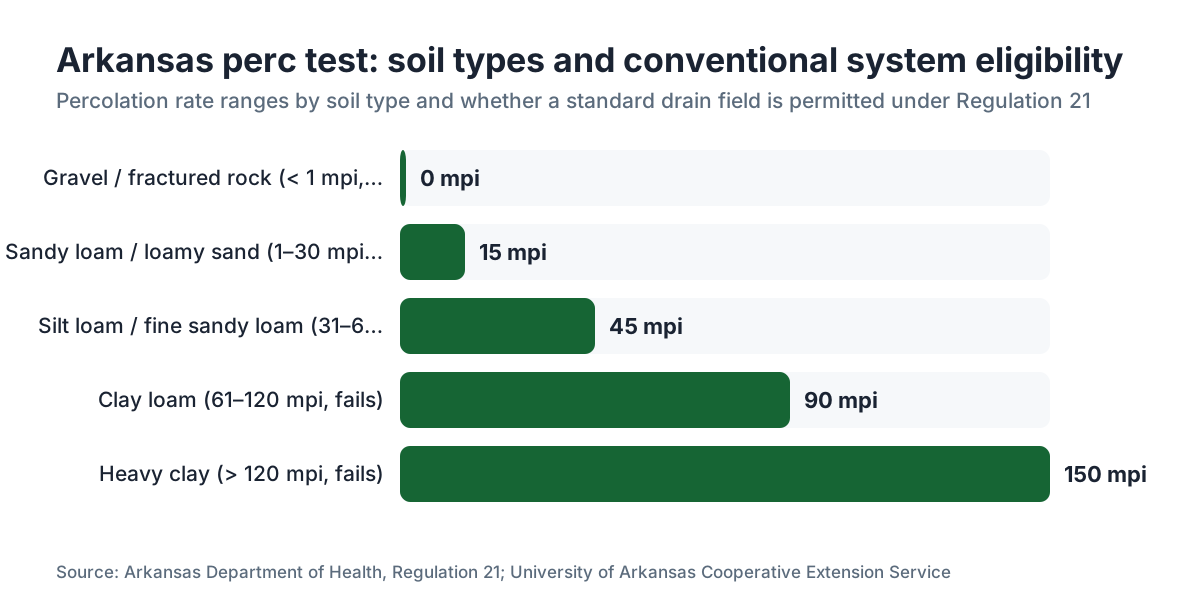
Arkansas Regulation 21 sets the acceptable perc rate for a conventional soil absorption system at 1 to 60 minutes per inch. [1] Here's what the range means:
- Faster than 1 mpi: soil is too coarse (gravel, fractured rock). Water races through before treatment happens. Fails for a conventional system.
- 1 to 60 mpi: fine for a standard trench drain field. The slow end (say 45 to 60 mpi) still passes but needs a bigger field.
- Slower than 60 mpi: soil drinks water too slowly. Fail for conventional. Heavy clay usually lands here.
A fail is not the end of the lot. It means you need an alternative system, and Regulation 21 allows several: mound systems, low-pressure dosing, aerobic treatment units (ATUs), and drip irrigation, depending on what the soil profile and site shape allow. [1]
Soil profile findings sit on top of the perc number. Even a passing rate gets overruled if the evaluator finds a seasonal high water table within 18 inches of the trench bottom, or bedrock too shallow for the required separation. Both show up all over the Ozark Plateau and the Gulf Coastal Plain. [9]
| Perc Rate (mpi) | Soil Type Example | Conventional System Allowed? |
|---|---|---|
| Less than 1 | Gravel, coarse sand, fractured rock | No (too fast) |
| 1 to 30 | Sandy loam, loamy sand | Yes |
| 31 to 60 | Silt loam, fine sandy loam | Yes (larger field required) |
| Greater than 60 | Clay, clay loam | No (alternative system needed) |
| Mottling within 18 in. | Any texture | No conventional (site-specific review) |
How much does a perc test cost in Arkansas?
Budget $150 to $500 for a perc test and soil evaluation in Arkansas. The spread comes from real variables: lot size and terrain, how many perc holes are needed, how far the evaluator drives, and whether the county sanitarian does it (usually cheaper) or a private firm does.
Rural counties in the Delta and Ozarks run lower, closer to $150 to $250. Urban-edge counties like Pulaski, Benton, and Washington often hit $300 to $500 because demand is higher and private evaluators can charge for it.
The test fee is pocket change against the system. A new conventional septic system in Arkansas runs roughly $3,500 to $8,000 depending on size and soil. An alternative system (mound, ATU, drip) piles another $5,000 to $15,000 or more on top. [3] So skipping a proper soil evaluation to save $200 before buying land is a bad trade if the lot turns out to need a $20,000 engineered system.
Want the full spend? See our guide to cost to install a septic system and cost to put in a septic tank.
How long does a perc test take in Arkansas?
The site visit runs two to four hours for a standard residential lot. Pre-soaking can stretch it: if the evaluator soaks the holes overnight and returns the next day for readings, the work spans two days. [1]
Scheduling is the real bottleneck. Licensed evaluators in rural Arkansas can be booked two to six weeks out during spring and fall, the busy seasons for new construction permits. In fast-growing northwest Arkansas (Benton and Washington counties), four to eight week waits are common at peak building season.
After the visit, the evaluator writes up the soil evaluation report and files it with the county health unit. The county sanitarian's review usually adds another one to three weeks before the permit is issued or denied. Plan on four to ten weeks total from scheduling to permit decision if nothing snags.
What happens if your perc test fails in Arkansas?
A failing result changes your cost and your options, but it is rarely a dead end.
The report names the reason: perc rate too slow, seasonal water table too shallow, restrictive layer too close to the surface, or not enough lot area for a field that meets setbacks. Each failure has its own fix.
Slow perc rate (over 60 mpi) usually points to an alternative system. The most common Arkansas answers for marginal clay are a mound system or a low-pressure-dosed (LPD) field, both of which put the treatment zone in imported sand fill above the native soil. An aerobic treatment unit can also get permitted where its cleaner effluent meets the reduced setback and absorption criteria in Regulation 21. [1]
A high water table is the harder problem. If seasonal saturation comes within 12 to 18 inches of the surface across the whole lot, you may need a licensed engineer to design something site-specific, and some lots simply cannot carry any onsite system at a price that keeps the property worth owning. That's a conclusion you want before you close, not after.
You can ask for a second evaluation on a different part of the lot if the first spot was not representative. Arkansas allows it. Both reports go to the county health unit, and you pay for both.
When a field fails later in a system's life, our guides on septic system repair and septic tank repair cover what comes next.
What does the Arkansas Department of Health look at beyond the perc rate?
The Arkansas Health Department review is a whole-site evaluation, not one number. County sanitarians check the following before issuing a permit: [1]
Soil profile characteristics. Mottling color, texture by horizon, and structure matter as much as the absorption rate. Gray and orange mottling in the profile is a reliable sign of seasonal saturation, and Regulation 21 requires a set vertical separation between the trench bottom and any mottled or saturated zone.
Setback distances. Arkansas requires minimum horizontal separations between the drain field and wells, streams, lakes, property lines, foundations, and other features. Common minimums include 50 feet from a private water well and 25 feet from a property line, though the exact numbers shift with system type and site conditions. [1]
Lot size and usable field area. The evaluator has to fit the required field square footage, plus a 100 percent reserve area, inside the lot lines while meeting every setback. Small and oddly shaped lots fail this more often than owners expect.
Site slope. Slopes over 30 percent generally rule out conventional trenches. Moderate slopes (5 to 30 percent) call for contour installation or an alternative design.
The Arkansas Department of Health publishes Regulation 21 on its website, and it's the primary technical document any evaluator or homeowner should read. [1] It's dense, but the site evaluation criteria are written plainly enough that a careful homeowner can follow the logic.
Perc test for a real estate transaction: what buyers and sellers need to know
In Arkansas, perc results are property-specific and don't legally transfer to a new owner on their own. They still matter enormously to a deal.
Buying land? Ask the seller for any existing soil evaluation reports. Reports done for permits are filed with the county health unit and are public record. A passing report from five years ago is a useful baseline, not a guarantee, because the county will require a current evaluation for any new permit. Soil doesn't change fast, though, so an old passing report in good soil is a good sign.
Selling land without a test? Listing it as "septic-ready" or "perc-approved" without a current, valid report can create legal exposure. Get the test done before you list.
For a home already on septic, a septic tank inspection tells you more than a new perc test would. Buyers should ask for the original system permit, the as-built drawing, and the last pump-out date. That paperwork reveals the current system's condition far better than re-testing soil around a system that's already buried.
How do you apply for a perc test permit through Arkansas AHDCA?
The process runs through your local county health unit, not a central AHDCA office. Here's how it actually goes:
- Contact your county health unit and ask for the onsite wastewater permit application. You'll need a site plan showing lot dimensions, the proposed structure footprint, well location (if any), and nearby surface water.
- Hire a licensed site evaluator and schedule the soil evaluation. In some counties the evaluator deals directly with the county sanitarian; in others you submit the report yourself.
- Pay the permit application fee. Arkansas county health units charge $50 to $200 for the application, separate from the evaluator's fee. [4]
- The county sanitarian reviews the report and either issues a construction permit, asks for more information, or denies the permit with stated reasons.
- Once you hold a construction permit, a licensed septic installer designs and installs the system. The installer must be licensed under AHDCA rules, and the finished system needs a final inspection before it gets covered.
SepticMind's operator tools help licensed installers manage permit paperwork, scheduling, and inspection tracking across multiple Arkansas county health units. That's genuinely handy when you're running jobs in several counties at once.
The county health unit directory is on the AHDCA website. [4] Don't try to route everything through Little Rock. AHDCA hands residential onsite wastewater permitting to the county sanitarians.
Does Arkansas accept a soil evaluation instead of a traditional perc test?
Yes, and it pays to understand why. Regulation 21 treats the soil morphology evaluation (the profile hole) as the primary method, with the percolation test as supporting or confirmatory data. [1] A trained evaluator can often read absorption capacity from texture, structure, and color alone when the profile is clear.
This matters because plenty of Arkansas evaluators and installers lean on morphology for permitting without running formal timed perc measurements, especially when the soil is obviously good or obviously hopeless. Regulation 21's framework allows it.
The EPA's guidance on onsite wastewater systems agrees, noting that soil morphology evaluations using color, texture, and structure can replace or supplement percolation tests in state programs that adopt morphological methods. [2] Arkansas is one of the states that moved this direction.
For homeowners, the takeaway is simple: don't be thrown if your evaluator spends more time studying the hole wall with a shovel than pouring water into test holes. They may be doing the more accurate version of the evaluation.
How does the perc test connect to the overall septic system installation process?
The perc test is step one of a chain that ends with a working system in the ground. Knowing the full sequence helps you dodge scheduling gaps and cost surprises.
After a passing evaluation and permit, the licensed installer sizes the drain field using Regulation 21's loading rate tables, which tie perc rate to required square footage of trench bottom per bedroom. A faster rate (lower mpi) means less field area; a slower rate means more. [1]
The installer then lays the system out on your lot, digs the trenches or builds the mound, sets the tank and distribution system, backfills, and calls the county sanitarian for a final inspection.
A new conventional system covering three bedrooms at a mid-range perc rate might need 250 to 400 square feet of trench bottom, which works out to roughly two to four trenches of 50 feet each. That fits fine on a half-acre lot. Add the 100 percent reserve requirement and you're looking at double that area that has to stay undisturbed.
Once the system is in, plan to pump the tank every three to five years. Our guide to how often to pump a septic tank covers what really drives pumping frequency, and for the job itself see septic tank pumping.
SepticMind's scheduling and job management platform helps operators track permit status and line up inspection dates across many jobs, which earns its keep during the spring permit surge in northwest Arkansas.
Frequently asked questions
How much does a perc test cost in Arkansas?
A perc test in Arkansas runs $150 to $500 for the combined soil evaluation and percolation testing. Private environmental consultants usually charge more than county sanitarians, and rural areas trend toward the lower end. The fee covers the evaluator's time, equipment, and report, but not the county health unit's permit application fee, which adds another $50 to $200.
Who performs perc tests in Arkansas?
Only site evaluators licensed by the Arkansas Department of Health can run official perc tests for permitting. Most are licensed septic installers who also hold a site evaluator credential, or private environmental consultants. Verify a person's current license status through the AHDCA active evaluator roster before you hire, since the county rejects reports from unlicensed evaluators.
What perc rate passes in Arkansas?
Arkansas Regulation 21 sets the acceptable range for a conventional soil absorption system at 1 to 60 minutes per inch. Faster than 1 mpi means the soil is too coarse for adequate treatment. Slower than 60 mpi means it absorbs too slowly for a conventional drain field. Rates inside that range pass but need larger field areas toward the slow end.
What happens if the perc test fails in Arkansas?
A failing perc test means a conventional drain field can't be permitted on that site, but it doesn't automatically make the lot unbuildable. Regulation 21 allows alternative systems including mounds, low-pressure-dosed fields, aerobic treatment units, and drip irrigation. Each costs more upfront. A licensed engineer may be required to design a system for especially difficult sites.
How long does a perc test take in Arkansas?
The site visit takes two to four hours, sometimes split across two days if the holes need overnight pre-soaking. Scheduling an evaluator can add two to eight weeks depending on location and season. County review after the report is filed adds one to three more weeks. Budget four to ten weeks from first contact to permit decision under normal conditions.
Does a perc test expire in Arkansas?
Arkansas doesn't publish a hard statewide expiration date for perc results, but county health units commonly treat evaluations older than two to five years as potentially outdated and may require a fresh evaluation before issuing a construction permit. If you have an old report, call your county health unit and ask before you assume it still counts.
Can I do my own perc test in Arkansas?
No. Arkansas requires a licensed site evaluator to perform and certify the soil evaluation for any official permit. A self-run perc test has no legal standing with the county health unit. You can dig exploratory holes on your own land for a rough sense of the soil, but you still have to hire a licensed evaluator before applying for a permit.
Is a perc test required to sell land in Arkansas?
Arkansas law doesn't require a perc test to sell land, but a buyer's lender or the buyer's own due diligence may demand one. Listing land as buildable or septic-ready without a current evaluation can create legal exposure if the claim turns out false. Getting a test done before listing is cleaner and usually speeds up the sale.
Where do I apply for a perc test permit in Arkansas?
Applications go through your local county health unit, not the central AHDCA office in Little Rock. Each county health unit handles residential onsite wastewater permitting. The AHDCA website has a county health unit directory. You hire a licensed evaluator separately, submit their report to the county, and pay the county's application fee, typically $50 to $200.
What soil types fail the perc test in Arkansas?
Heavy clay and clay loam are the most common cause of a slow-perc failure (over 60 mpi), especially in the Gulf Coastal Plain and parts of the Delta. At the other extreme, very coarse gravel and fractured limestone in the Ozark Plateau absorb water too fast (under 1 mpi) for adequate treatment, which also fails conventional permitting.
Does Arkansas require a perc test for a replacement septic system?
A full new soil evaluation is generally required when installing a replacement system on a fresh location, such as in the reserve area. If you're replacing components within an already-permitted system footprint, the county may not require a new perc test. Confirm with your county health unit before starting work, since requirements vary from county to county.
What is Regulation 21 in Arkansas and why does it matter for a perc test?
Arkansas Department of Health Regulation 21, formally "Minimum Standards of Design and Operation for Onsite Wastewater Systems," is the binding legal document governing septic permitting in Arkansas. It sets the acceptable perc rate range, soil evaluation procedures, setback distances, system sizing formulas, and alternative system criteria. Every licensed evaluator and installer works within its rules.
How many perc test holes are required in Arkansas?
Regulation 21 doesn't fix a single minimum number of holes for every situation; the evaluator uses judgment based on lot size, soil variability, and proposed field location. In practice, most residential evaluations use two to four perc holes across the drain field area. Larger lots or patchy soil may need more holes to get a representative reading.
Can a perc test result be appealed in Arkansas?
Yes. If a county health unit denies your permit based on a soil evaluation, you can request an administrative review through AHDCA. You can also hire a second licensed evaluator to test a different part of your lot. Both reports go into the record. A licensed engineer's site-specific design is another path forward for marginal or unusual sites.
Sources
- Arkansas Department of Health, Regulation 21: Minimum Standards of Design and Operation for Onsite Wastewater Systems: Regulation 21 sets the acceptable perc rate range of 1 to 60 mpi for conventional systems, requires licensed site evaluators, and governs the full permit process for onsite wastewater systems in Arkansas.
- U.S. EPA, SepticSmart Program: EPA SepticSmart identifies soil evaluation as the foundation of proper septic system design and notes that soil morphology evaluations can replace or supplement percolation tests in state programs that adopt morphological methods.
- U.S. EPA, Onsite Wastewater Treatment Systems Manual: Alternative onsite systems such as mound systems and aerobic treatment units cost significantly more than conventional soil absorption systems, with engineered designs adding thousands to tens of thousands of dollars to installation cost.
- Arkansas Department of Health, County Health Units Directory: County health units in Arkansas charge permit application fees and handle residential onsite wastewater permitting at the local level; AHDCA delegates this authority to county sanitarians.
- University of Arkansas Cooperative Extension Service, On-Site Sewage Disposal Systems: Percolation rates and soil profile characteristics together determine system type and field sizing requirements for Arkansas residential lots.
- National Environmental Services Center (NESC) at West Virginia University, Percolation Test Fact Sheet: Percolation rates are expressed in minutes per inch and drive field sizing calculations; rates outside the acceptable range require alternative system design.
- U.S. EPA, Onsite Wastewater Treatment Systems: A Homeowner's Guide: Conventional septic systems require a soil evaluation prior to permitting, and soil type directly determines whether a standard trench-type drain field is appropriate.
- Arkansas Department of Health, Licensed Site Evaluator Roster: The AHDCA maintains an active roster of licensed site evaluators whose credentials must be verified before hiring for official percolation test purposes.
- University of Arkansas Division of Agriculture, Soils of Arkansas Overview: Arkansas soils vary significantly by region, with heavy clay soils prevalent in the Gulf Coastal Plain and Delta regions and fractured limestone common in the Ozark Plateau, both presenting challenges for conventional septic system installation.
- National Onsite Wastewater Recycling Association (NOWRA), Percolation Testing Standards: Pre-soaking requirements before timed percolation measurements are standard practice to replicate saturated soil conditions and ensure reproducible results.
Last updated 2026-07-09