How deep is a leach field, and why it matters
By the SepticMind Editorial Team
TL;DR
- Leach field distribution pipes usually sit 6 to 24 inches below the surface, inside trenches that run 18 to 36 inches deep.
- The exact depth depends on soil type, frost depth, local code, and how much vertical separation you have to groundwater.
- Most state codes require at least 12 inches of soil cover over the pipe and a 2-foot minimum between the pipe bottom and the seasonal high water table.
What is a leach field and how does it actually work?
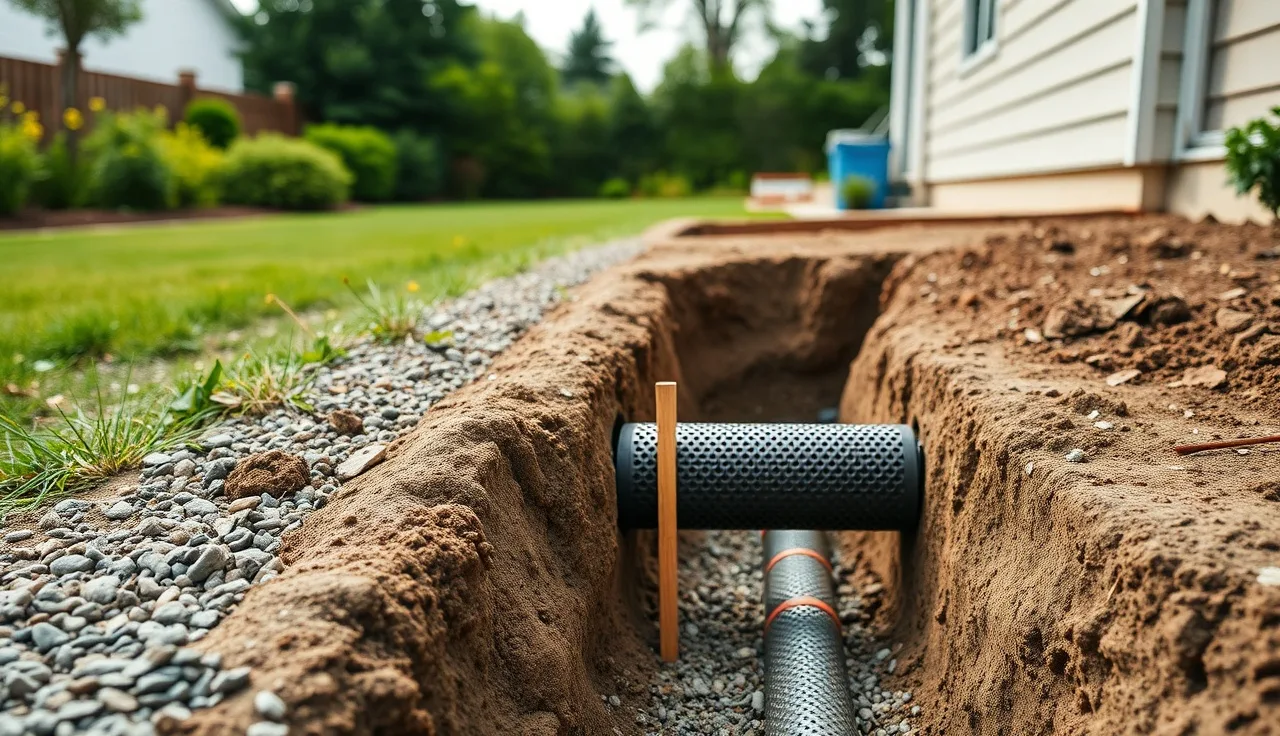
A leach field, also called a drain field or soil absorption system, is the last treatment stage in a conventional septic system. Wastewater leaves the septic tank as clarified effluent, runs through a distribution box or manifold, and spreads through perforated pipes buried in gravel-filled trenches. The effluent seeps out of those perforations, moves down through the gravel, and then into native soil, where microorganisms break down remaining pathogens and nutrients before the water rejoins the groundwater table.
The soil does the real work. Bacteria living in the top few inches of native soil beneath the gravel bed eat organic matter, filter out pathogens, and strip nitrogen to varying degrees. That biological mat, sometimes called the biozone or biomat, forms right at the line between the gravel bed and native soil. A healthy biomat slows effluent just enough to allow treatment. Too thick a mat and the field floods. Too little and effluent passes through undertreated.
The EPA SepticSmart program describes the process plainly: effluent is "naturally treated by the soil as it percolates through the ground." [1] That sentence holds the whole design logic. If the soil can't treat it, the system fails, and depth is the single biggest factor deciding whether the right soil layers are even in play.
For a fuller picture of how the whole system fits together, see our guide on the leach field.
How deep are leach field pipes typically buried?
The pipe in a conventional trench system sits 6 to 24 inches below finished grade, measured to the top of the pipe. The trench itself is usually 18 to 36 inches deep from the surface to the bottom of the gravel bed. Pipe diameter is almost always 4 inches, perforated schedule 40 PVC, though some older installs used 3-inch or clay tile.
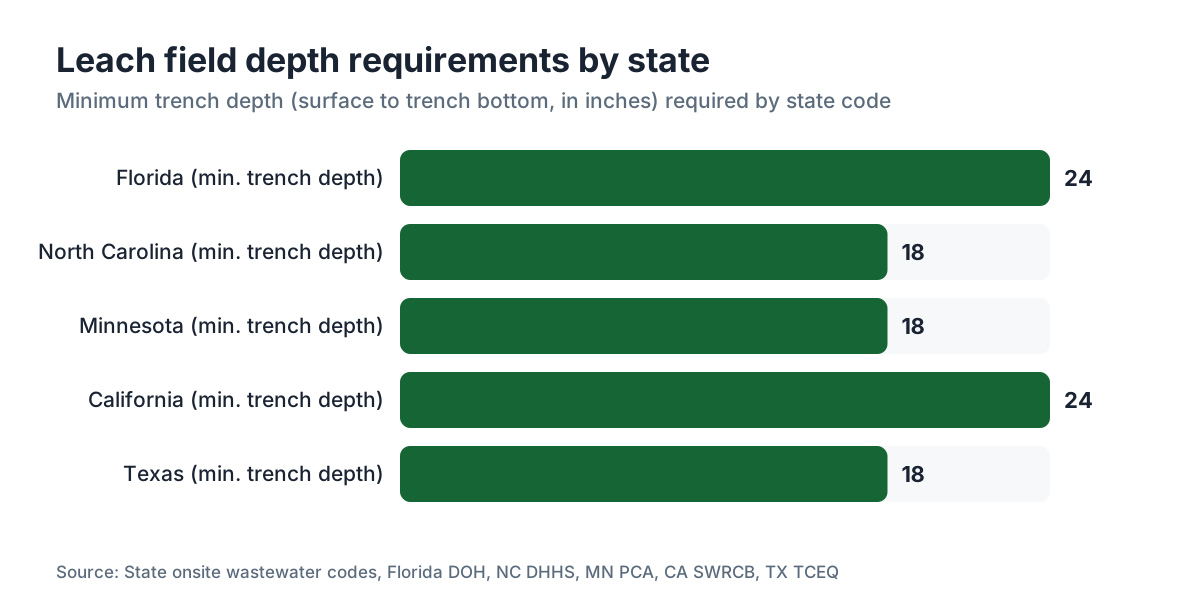
Those numbers come from aggregating state onsite wastewater codes, not a single federal mandate. The EPA sets principles; states write the enforceable rules. A few examples show the spread:
| State | Min. cover over pipe | Min. trench depth | Min. separation to SHWT* |
|---|---|---|---|
| Florida [2] | 12 in. | 24 in. | 24 in. |
| North Carolina [3] | 6 in. | 18 in. | 12 in. |
| Minnesota [4] | 9 in. | 18 in. | 36 in. (mound) / 24 in. (trench) |
| California [5] | 12 in. | 24 in. | 36 in. |
| Texas [6] | 6 in. | 18 in. | 12 in. (clay) / 24 in. (sandy) |
*SHWT = seasonal high water table
There is no universal number. A contractor in Florida digs to a different depth than one in North Carolina, and both follow their state rules correctly. When someone quotes you a single depth like "always 3 feet," that's a rough field approximation, not code.
Frost depth adds another layer of variation. In Minnesota, Wisconsin, and the northern plains, codes either require deeper installation or accept that pipes will run cold in winter, counting on the biomat and warm effluent to keep them from freezing solid. Minnesota guidance allows pipes as shallow as 9 inches if the trench is insulated with foam board. [4]
What factors control how deep a leach field is installed?
Five factors drive the final depth on any lot. A designer weights them against each other to find a depth that satisfies all of them at once.
Separation to groundwater. Most codes set a minimum vertical distance between the bottom of the trench and the seasonal high water table, typically 12 to 36 inches depending on the state. This gap gives soil time to treat effluent before it reaches the water table. Shallow water tables force shallow systems, and if the lot has a water table within 12 inches of the surface, a conventional trench system usually can't be permitted at all.
Soil percolation rate. A perc test or soil morphology evaluation tells the designer how fast water moves through the native soil. Fast-perc soils (sand, gravel) pass water quickly but treat poorly. Slow-perc soils (clay) treat better but can saturate. The designer adjusts trench bottom elevation to hit the soil layer with the right texture, often a loamy or silty band, even if that means going deeper or shallower than the default.
Frost depth. In cold climates, the frost line is the baseline. Pipes buried above it risk freezing solid in a hard winter. Most northern codes set a minimum bury depth equal to the local frost depth minus a code-allowed reduction for the warming effect of effluent flow.
Slope and topography. Trenches have to hold a steady 1/8 to 1/4 inch per foot slope for gravity distribution. On a sloped lot, the uphill end of a trench may be shallower and the downhill end deeper, sometimes requiring stepped trenches to stay within code depth limits.
Available soil profile. If bedrock or an impermeable hardpan layer sits close to the surface, the designer can't go below that layer. This is one reason some lots need a mound system instead of a conventional trench: there just isn't enough vertical soil to work with.
How deep is a septic leach field compared to the septic tank?
The septic tank is almost always deeper than the leach field pipes. A standard residential septic tank sits with its inlet at roughly 12 to 24 inches below grade and its bottom at 4 to 6 feet down. The outlet is a few inches lower than the inlet so flow keeps moving by gravity.
From the tank outlet, the effluent line drops toward the distribution box (or straight to the manifold on newer designs), and from there the pipes spread into the trenches. A conventional system runs entirely on gravity, so each downstream part has to sit a little lower than the one before it. That slope chain means the tank sits deep, the distribution box sits somewhat shallower, and the trench pipes sit shallowest of all.
If you're thinking about full system cost or planning a new install, the cost to install a septic system and septic tank installation guides break down what drives those numbers, including excavation depth.
What is the minimum soil cover required over leach field pipes?
Minimum soil cover over the top of a distribution pipe runs from 6 inches (North Carolina, Texas) to 12 inches (Florida, California, most Northeast states) across U.S. jurisdictions. [2][3][5][6] Some codes split "topsoil" from "fill" and require the cover to be native soil or specified fill, not topsoil alone.
Why does cover depth matter? A few inches of soil insulates pipes from freezing air. It protects the trench from compaction by vehicles or foot traffic. And it slows roots from finding the pipes right after installation, though tree roots eventually reach any moist soil at any depth.
More cover is not always better. Piling extra soil on top of a drain field raises the effective ground elevation and can choke the oxygen exchange the soil needs to stay aerobic. Some designers and extension publications actively discourage adding more than 12 to 18 inches of cover to an existing system. University of Minnesota Extension notes that deep cover and dense sod can restrict oxygen movement and hurt treatment performance. [4]
If you're planning a septic tank inspection and the inspector mentions that soil has been added over the field, take that seriously.
How does a septic leach field work when the depth is wrong?
Too shallow: pipes within a few inches of the surface are open to frost, vehicle damage, and root intrusion almost immediately. Effluent can reach the surface as wet spots or ponding, which is a nuisance and a public health problem at the same time. Cover that's too thin also means effluent hits the shallow, often aerobically weak, top of the soil without enough treatment time.
Too deep: placing pipes below the best treatment zone, usually the A and B soil horizons between 6 and 36 inches, drops effluent into subsoil that may have slower microbial activity, tighter structure, or a water table close below. You lose the benefit of aerobic bacterial treatment in the upper horizons. In sandy or fast-draining soils, very deep pipes also mean effluent has a shorter distance to travel before it reaches groundwater.
The sweet spot is a trench bottom sitting in soil with the right texture and a pipe placed so there's enough cover overhead and enough separation below. That sounds simple. Hitting it takes an actual soil evaluation, not digging to a round number.
Systems installed at the wrong depth fail faster. Premature failure means a septic system repair or full replacement, which runs $3,000 to $15,000 or more depending on the approach and soil conditions.
How deep are alternative leach field systems like mounds and chambers?
Not every drain field is trench-and-gravel. When conventional trenches won't work because of shallow water tables, poor soil, or tight space, designers turn to alternatives with very different depth profiles.
Mound systems are the inverse of a deep trench: the distribution pipes go in at or above natural grade inside a constructed mound of imported sand and fill. Pipe depth below the mound surface is typically 6 to 12 inches. The mound itself may rise 2 to 4 feet above natural grade. The Minnesota Pollution Control Agency, which runs one of the more detailed mound codes in the country, requires the bottom of the sand fill to sit 6 inches above the seasonal high water table. [4]
Chamber systems swap the gravel bed for arch-shaped plastic chambers. Pipe sits inside the chamber at roughly the same depth as conventional pipe, 6 to 24 inches below grade, but there's no gravel. The open bottom of the chamber lets effluent contact soil. These are common when gravel is expensive or the lot has fast-draining soil that fits.
Drip irrigation systems run very shallow, typically 6 to 12 inches, using pressure-dosed drip emitters instead of perforated pipe. They need a higher treatment level ahead of the field, usually an aerobic treatment unit, to keep the emitters from clogging.
Pressure-dosed conventional systems use the same trench depth as gravity systems but add a pump to spread effluent in timed doses across the whole field instead of flooding one end. Depth is the same; the engineering is in the dosing schedule.
| System type | Typical pipe depth below surface | Notes |
|---|---|---|
| Conventional gravity trench | 6 to 24 in. | Most common; depth to code |
| Mound system | 6 to 12 in. below mound top | Built above grade |
| Chamber system | 6 to 24 in. | No gravel; open-bottom chambers |
| Drip irrigation | 6 to 12 in. | Requires advanced pretreatment |
| Pressure-dosed trench | 6 to 24 in. | Same depth; pumped distribution |
Can you drive or build over a leach field, and how does depth affect that?
The short answer is no, and depth doesn't make it safe. Even pipes buried at 24 inches can crack or deflect under the weight and vibration of vehicles. Compaction from vehicles, patios, sheds, or fill also wrecks the soil pore structure that makes the field work. Compacted soil won't absorb effluent, full stop.
The EPA is blunt about this. SepticSmart guidance tells homeowners to "keep vehicles and heavy equipment off the drainfield." [1] State codes generally ban structures, pools, and paved surfaces over the field and over the repair area (a reserved second field location on many lots).
Grass is the right surface cover. Shallow-rooted turf takes up moisture and nitrogen without sending roots into the pipes. Deep-rooted trees and shrubs should stay at least as far from the field as the tree's mature height, and 30 feet is a commonly cited minimum for aggressive-rooted species like willows and silver maples, though that number shifts with root architecture and soil type.
For routine care that keeps a field working, see the how often to pump septic tank guide. Regular pumping cuts the solids load reaching the field and is the single most effective thing a homeowner can do to stretch field life.
How does frost depth affect leach field installation in cold climates?
Frost is a real design constraint in roughly the northern third of the contiguous U.S. and across Alaska. Frost depth, the depth soil freezes to in an average winter, ranges from near zero in the Deep South to 60 or more inches in northern Minnesota and the Dakotas. [7]
Designers in cold climates pull local frost depth data, usually from state extension services or NOAA records, to set minimum pipe depths. There's a useful counterweight, though: flowing effluent is warm (household wastewater usually leaves the home at 60 to 65 degrees F), and biological activity in the biomat throws off more heat. Active fields rarely freeze all the way to the pipe even in a hard winter, as long as the system keeps getting used.
Trouble shows up in vacation homes or seasonal properties where the system sits idle for weeks in January. A dormant field can freeze at shallower pipe depths. Designers sometimes spec insulation boards (extruded polystyrene) laid flat over the trench to slow heat loss in those cases.
Minnesota allows pipes as shallow as 9 inches when insulated with 2 inches of foam board, one of the more permissive shallow-install provisions in any cold-climate state. [4] Alaska's Department of Environmental Conservation requires site-specific engineered designs for most septic systems, given the permafrost and freeze-thaw conditions. [8]
How do you find out how deep your leach field is?
There are four practical ways to find the actual depth of an existing field.
As-built drawings. Every permitted septic system should have an as-built (record drawing) on file with the county or local health department. These show trench locations, pipe invert elevations, and sometimes the soil profile from the original site evaluation. Call your county environmental health office and ask for the file for your address. Most jurisdictions have them; not all keep them well-organized.
The installation permit file. Even if the as-built is thin, the permit application usually includes the soil evaluation report, which gives the soil layer depths and the designer's proposed trench bottom elevation.
A septic inspection. A licensed septic inspector can often locate and probe the field, and may run a camera or probe rod to verify trench depth at access points. A septic tank inspection is the logical starting point if you're buying a home or chasing a failing field.
Careful probing. You can probe with a thin steel rod to find the gravel bed and estimate depth, but this risks puncturing a pipe if you're careless, and you won't get an accurate picture of the full field. Use it only as a rough check, never a primary survey.
If you're a service operator and want to track system-specific data like trench depth, soil type, and inspection history across your whole customer base, software built for septic operations, like SepticMind, can store that record alongside pump-out history and work orders so nothing gets lost between service visits.
What are the signs that a leach field is failing, regardless of depth?
Depth problems usually show up as symptoms in the yard or inside the house. The signs are the same whether the original install was too shallow, too deep, or right on spec but worn out after 20 to 30 years.
In the yard: wet, spongy spots over the field that stay wet even in dry weather. Unusually lush, bright green grass over the trench lines (the effluent is fertilizing the surface). Standing water or a sewage smell in the yard. Any of these is worth acting on right away.
Inside the house: slow drains, gurgling from drains or toilets, or sewage backing up into the lowest fixtures. These point to a system that's surcharging, meaning the field can't take effluent as fast as the house makes it.
A failing field needs diagnosis before repair. Sometimes the fix is as simple as resting the field (cutting water use) for a few weeks and pumping the tank. Sometimes the biomat has hardened and the field needs replacement. A technician can run a dye test, camera the lines, or dig a small pit to read the trench condition.
See septic system repair and septic tank repair for a breakdown of what's actually fixable and what usually means full replacement.
How deep should a leach field be for a new installation?
If you're planning a new system, the depth is not something you pick off a table. The sequence goes: hire a licensed soil scientist or certified designer, run a soil evaluation (usually a soil morphology assessment and sometimes a perc test), and let the results drive the design.
A soil evaluation identifies the seasonal high water table elevation, the restrictive layer depth (clay, hardpan, or bedrock), and the best-performing soil horizon for treatment. The designer uses those findings to propose a trench bottom elevation that meets the separation requirements in your state code.
Designers usually aim for the B horizon of the soil profile, below the organic A horizon and above the C horizon (parent material). In most temperate U.S. soils, that puts the trench bottom somewhere between 18 and 30 inches below grade, which is why the "18 to 36 inches" range keeps showing up in code and in field practice.
The cost to put in a septic tank swings hard on soil conditions and system type. A straightforward gravity system in good soil costs $3,000 to $7,000 for the field alone in many markets; a mound system or engineered alternative can run $10,000 to $20,000 or more.
For reference, the EPA's "Onsite Wastewater Treatment Systems Manual" (2002) is still the foundational federal technical document. It says the soil treatment area should sit in soils "with adequate depth, texture, and structure" to treat effluent before it reaches groundwater, and gives sizing and depth guidance that state codes are largely built from. [9]
Frequently asked questions
How deep is a leach field in most U.S. states?
Distribution pipes in a conventional leach field sit 6 to 24 inches below the surface, inside trenches that are 18 to 36 inches deep from the surface to the bottom of the gravel bed. The exact depth depends on your state's code, local frost depth, and the soil profile on your lot. There is no single universal depth.
How deep is the gravel in a leach field trench?
Most codes require 6 to 12 inches of washed drain rock below the pipe and 2 to 4 inches above it before the filter fabric and soil cover begin. Total gravel depth in the trench is typically 8 to 16 inches. The gravel creates void space so effluent can spread sideways before contacting native soil.
How deep does a leach field need to be above groundwater?
Most state codes require the bottom of the trench to sit at least 12 to 36 inches above the seasonal high water table. California requires 36 inches of separation; North Carolina and Texas allow as little as 12 inches in some soil types. Insufficient separation is the most common reason a lot can't support a conventional system.
Can a leach field be too shallow?
Yes. Pipes less than 6 inches below the surface are open to frost, compaction, and root damage. Shallow systems are also more likely to produce surface breakout, where effluent reaches the surface as ponding or wet spots, which is a health hazard and a code violation. Minimum cover requirements exist to prevent exactly these problems.
How deep should a leach field be in a cold climate?
In cold climates, pipe depth should sit at or below the local frost depth, which ranges from 12 inches in moderate climates to 60 or more inches in northern Minnesota and the Dakotas. Some codes allow shallower installation with insulation board over the trench. Active systems rarely freeze at normal operating depths because effluent is warm.
How long does a leach field last?
A well-designed, well-maintained leach field typically lasts 20 to 30 years. Some go longer with conservative water use and regular tank pumping. Failure before 15 years usually points to poor installation, undersizing, too much water loading, or vehicles driving over the field. Pumping the tank every 3 to 5 years is the most reliable way to stretch field life.
How do I find where my leach field is?
Start with the as-built drawing on file at your county health or environmental department. If it's missing, hire a septic inspector who can locate the field with probes, a tank camera, or by tracing the outlet line from the tank. Your property's original permit file may also include a site plan showing trench locations and rough dimensions.
What happens if you put soil on top of a leach field?
Adding more than a few inches of fill over a drain field chokes oxygen exchange in the soil and can interfere with treatment. It can also change drainage patterns and concentrate surface runoff over the field. University of Minnesota Extension advises against deep cover or compacted fill over an existing field. Grass and thin mulch are the safest surface cover options.
How deep are leach field lines for a mound system?
In a mound system, distribution pipes sit 6 to 12 inches below the top of the mound, which is itself built above natural grade. The pipes aren't buried in native soil at all; they're inside imported sand fill. The mound rises 2 to 4 feet above the natural ground surface and provides the treatment zone that native soil can't.
Can you tell the depth of a leach field without digging?
Partly. A thin steel probe rod can find the gravel bed and give a rough depth estimate without much excavation. As-built drawings from the county give the designed depth with no digging at all. A septic inspector can often use the tank access riser and outlet elevation as a reference to estimate field depth from the surface grade.
Does leach field depth affect how often you need to pump the septic tank?
Depth itself doesn't change pump frequency. The standard recommendation is every 3 to 5 years for a typical household, based on tank size and occupancy. But if a field is failing because of depth-related issues (shallow install, poor separation), more frequent pumping cuts the solids load reaching the field and can buy time while you plan repairs.
What soil is best for a leach field, and does depth help reach it?
Loamy silt or sandy loam in the B soil horizon is the ideal treatment zone. These soils drain well enough to accept effluent but hold enough moisture and microbial life to treat it. Designers adjust trench depth specifically to hit this layer. Sandy or gravelly subsoil drains too fast; clay-heavy subsoil drains too slow. The soil evaluation identifies the right depth for your lot.
Sources
- U.S. EPA, SepticSmart Program: EPA SepticSmart program describes effluent as 'naturally treated by the soil as it percolates through the ground' and advises homeowners to keep vehicles off the drainfield
- Florida Department of Health, Chapter 64E-6 FAC, Standards for Onsite Sewage Treatment and Disposal Systems: Florida requires minimum 12-inch soil cover over distribution pipes and 24-inch separation from seasonal high water table
- University of Minnesota Extension, Septic Systems: Minnesota allows pipes as shallow as 9 inches when insulated; mound system sand fill bottom must be 6 inches above SHWT; deep cover restricts oxygen movement and degrades treatment
- California State Water Resources Control Board, Onsite Wastewater Treatment System Policy: California requires minimum 12-inch soil cover over leach lines and 36-inch separation from seasonal high water table
- Texas Commission on Environmental Quality, Chapter 285 TAC, On-Site Sewage Facilities Rules: Texas requires minimum 6-inch cover over pipe and 12-inch SHWT separation in clayey soils, 24 inches in sandy soils
- NOAA National Centers for Environmental Information, Frost Depth Data: Frost depth in the contiguous U.S. ranges from near zero in the Deep South to 60 or more inches in northern Minnesota and the Dakotas
- Alaska Department of Environmental Conservation, Wastewater Disposal Regulations (18 AAC 72): Alaska requires site-specific engineered designs for most septic systems due to permafrost and freeze-thaw conditions
- U.S. EPA, Onsite Wastewater Treatment Systems Manual (EPA/625/R-00/008, 2002): EPA manual states the soil treatment area should be located in soils 'with adequate depth, texture, and structure' to provide treatment before effluent reaches groundwater; provides foundational sizing and depth guidance adopted by state codes
- University of Minnesota Extension, Septic Systems: Active conventional drain fields rarely freeze at normal operating depths because effluent is warm; vacation or seasonal systems at risk when dormant in winter
Last updated 2026-07-09