What drain cleaner is safe for septic systems
By the SepticMind Editorial Team
TL;DR
- Enzyme-based and bacterial drain cleaners are the safest options for septic systems.
- Skip anything with lye (sodium hydroxide) or sulfuric acid, which kill the bacteria your tank runs on.
- Baking soda and vinegar clear minor clogs.
- A drain snake beats every chemical for hair.
- The EPA's SepticSmart program tells homeowners on septic to avoid chemical drain openers entirely.
Why does drain cleaner choice matter for a septic system?
A septic tank is not a passive holding tank. It's a live biological reactor. Billions of anaerobic bacteria break down solids, digest waste, and produce the clarified effluent that flows out to your leach field. Pour the wrong thing down the drain and you kill those bacteria. When they die, solids stop breaking down, sludge stacks up faster than normal, and you end up with a backed-up tank, a flooded drain field, or both.
The EPA's SepticSmart program says it plainly: "Avoid pouring fats, oils, grease, and chemicals down your drain" because these "can harm your system" [1]. Chemical drain cleaners are exactly the kind of thing that guidance covers.
Some homeowners figure a septic system can take anything, because it already takes sewage. That logic falls apart fast. Sewage is organic material the bacteria evolved to eat. Sodium hydroxide, sulfuric acid, and bleach are a different category. They're biocides. Killing living things is the whole point of them.
What types of drain cleaners exist and how do they differ?
Four broad categories cover almost everything on the shelf.
Chemical drain cleaners (caustic or oxidizing). These are the familiar big-box names. Caustic types use sodium hydroxide (lye) or potassium hydroxide. Oxidizing types use sodium hypochlorite (bleach) or peroxides. Acid types use sulfuric or hydrochloric acid. They all dissolve the clog chemically, and they're all hostile to the microbes in your tank. A 2018 review in the Journal of Environmental Management found that quaternary ammonium compounds and sodium hypochlorite at household concentrations showed significant inhibition of anaerobic digestion microorganisms [2].
Enzymatic drain cleaners. These carry catalytic proteins (enzymes) that break down fats, proteins, and starches. They don't kill bacteria. They speed up the natural breakdown of organic gunk. They work slower than chemical cleaners, which drives people nuts when they have a clog right now. For the tank's bacterial colony, they're genuinely safe.
Bacterial/biological drain cleaners. These add live bacteria cultures, often Bacillus species, that settle into the drain and keep digesting organic buildup. They're the most tank-friendly option on the market. Products like Bio-Clean have been in the plumbing trade for decades. They won't blast open a fully blocked drain, but for ongoing maintenance nothing beats them.
DIY and natural options. Baking soda, vinegar, boiling water, and mechanical tools (plunger, drain snake). Always safe for the tank. They also work on mild soap-scum or grease in the drain itself, though they won't touch a hair clog the way a snake will.
Which specific drain cleaners are safe for septic systems?
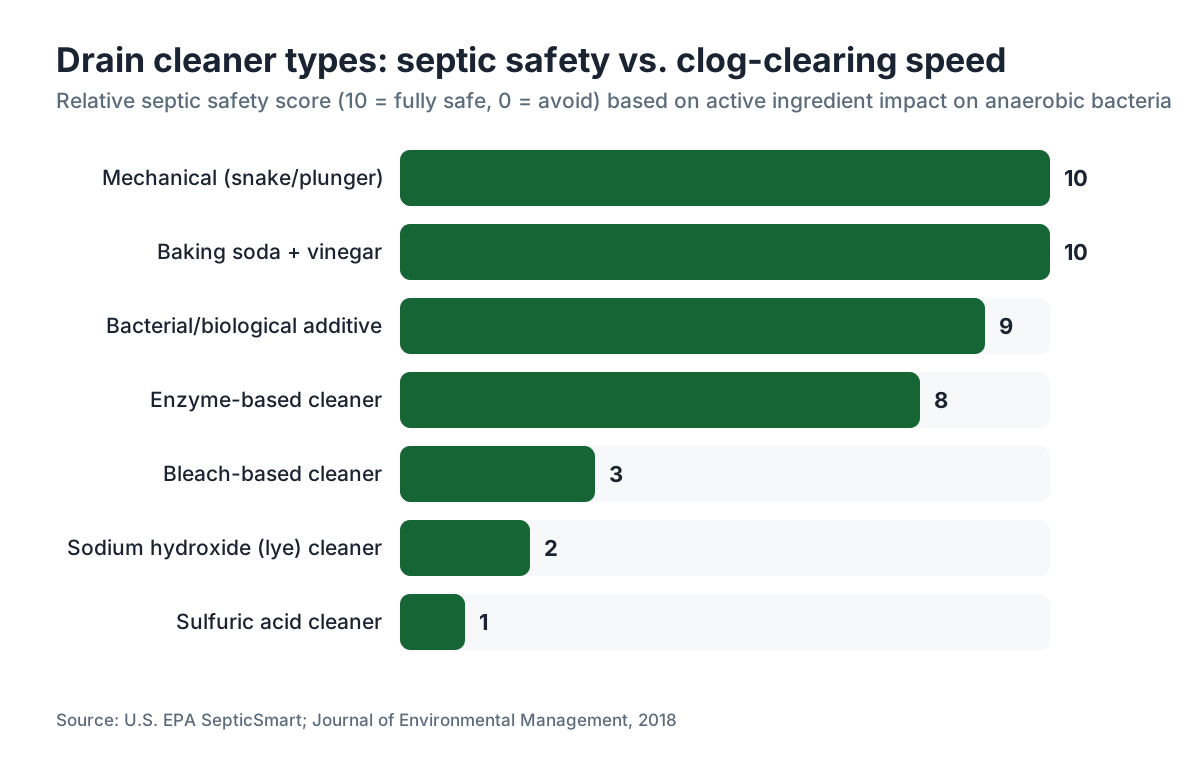
Here's the honest part: "septic-safe" on a label is marketing, not certification. No federal agency certifies drain cleaners as septic-safe [3]. With that said, here's how the categories actually shake out:
| Product type | Septic safety | Clog-clearing speed | Notes |
|---|---|---|---|
| Enzyme-based (e.g., Zout, Green Gobbler Enzyme) | Good | Slow (hours to days) | Safe for bacteria; works on grease and food |
| Bacterial/biological (e.g., Bio-Clean, Rid-X Septic Treatment) | Good | Very slow (maintenance use) | Best for prevention, not active clogs |
| Sodium hydroxide (e.g., Drano Max Gel) | Poor | Fast (minutes) | Kills anaerobic bacteria; avoid |
| Sulfuric acid (e.g., Liquid-Plumr Pro Strength) | Very poor | Fast | Severely disrupts tank biology |
| Bleach-based | Poor | Moderate | Hypochlorite is a biocide at higher concentrations |
| Baking soda + vinegar | Excellent | Mild clogs only | No tank impact; works on light grease buildup |
| Mechanical (snake/plunger) | Excellent | Immediate | Best for hair clogs; no chemistry involved |
For a slow drain from grease, pour an enzyme cleaner in at night, when no water runs for 6 to 8 hours. That's a solid choice. For a fully blocked drain, reach for a snake. Enzyme cleaners don't dissolve a solid plug fast enough to help in an emergency.
One thing worth knowing: even enzyme and bacterial products won't fix a drain that's slow because of trouble further down the system, like a partially full tank, roots in the line, or a failing drain field. If your drains crawl throughout the house, the problem probably isn't in the drain at all. Time to look at septic tank pumping or a septic tank inspection.
How much chemical drain cleaner actually kills septic bacteria?
Nobody has clean data on exact threshold doses in real home septic tanks, and I'll say that straight. Most lab work uses controlled bioreactors, not a 1,000-gallon concrete tank with years of settled sludge. The closest real-world guidance comes from wastewater treatment research.
A study in Bioresource Technology found that sodium hypochlorite concentrations as low as 50 mg/L significantly reduced methane production in anaerobic digesters, which is the same biological process your tank runs on [4]. One cup of household bleach (about 5% sodium hypochlorite) dumped into 1,000 gallons hits well above that threshold in the inlet zone.
The practical read: an occasional small dose probably won't permanently sterilize a healthy tank. Regular use, or one big slug of chemical, can knock the biology off balance enough that you'll see slower solid breakdown and faster sludge buildup. That means more frequent septic tank pump outs, which run $300 to $600 per service call in most U.S. markets [5].
If you've poured chemical cleaners down the drain for years and you're worried about the tank, septic tank cleaning plus a bacterial additive for two to three months afterward is a reasonable reset.
What does the EPA recommend for drains on a septic system?
The EPA's SepticSmart campaign, run by the Office of Water, puts out plain-language guidance for homeowners. One of its published tips: "Don't use chemical drain openers for a clogged drain. Instead, use boiling water or a drain snake" [1]. That's a flat recommendation against chemical drain cleaners.
SepticSmart also warns against flushing or draining antibacterial soaps, pharmaceuticals, solvents (paint thinner, gasoline), and large amounts of any disinfectant cleaner [1]. Same worry every time: your tank runs on bacteria, and anything that kills bacteria in quantity threatens the system.
Some states go further and regulate it. North Carolina's onsite wastewater rules (15A NCAC 18E) prohibit introducing chemicals that interfere with biological treatment. Minnesota's rules (Minn. R. 7080) require systems to be operated so biological treatment holds up. Check your state environmental agency's onsite wastewater program for what applies where you live [6][7].
For operators running multiple residential accounts, watch for customers who keep calling about slow drains. That pattern often means chemical overuse or an undertreated tank, and it's much easier to spot with organized service history. Tools like SepticMind exist for that kind of account-level visibility.
Are products labeled 'septic-safe' actually safe?
Not necessarily. The FTC regulates environmental marketing claims under its Green Guides (16 CFR Part 260), which require claims to be truthful and substantiated. But there's no federal certification a drain cleaner earns to print "septic-safe" [8]. Manufacturers self-certify.
Some products carry third-party seals, like NSF International testing, and those carry more weight. Plenty of others just print "septic-safe" because their formula is less caustic than a straight lye product, even when it still contains compounds that disrupt anaerobic biology at higher doses.
Best heuristic: read the active ingredient. If the label lists sodium hydroxide, potassium hydroxide, sulfuric acid, or sodium hypochlorite as a primary ingredient, it's not safe for regular septic use no matter what the front of the bottle claims. Enzyme-based or bacterial products with no oxidizing or caustic agents are the genuinely safer picks.
What's the safest way to unclog a drain when you're on septic?
Start mechanical. A good plunger handles most clogs in a toilet or sink. A hand-crank drain snake (also called a plumber's snake or auger) clears hair and soap blockages in showers and bathroom sinks in about five minutes, and it puts nothing in the water. These tools work, they're cheap (a decent snake runs $20 to $40 at any hardware store), and they don't touch your septic biology.
For grease in a kitchen drain, hot water poured slowly melts light deposits. Baking soda (half a cup) chased with boiling water is a step up. Adding vinegar after the baking soda sets off a fizzing reaction some people swear by, though the chemistry stays mild.
Want a chemical assist that won't hurt the tank? Pour an enzyme-based product in at night, when the drain sits unused for several hours. That gives the enzymes time to chew through the organic film coating the pipe walls. Think of it as maintenance, not an emergency fix.
For anything worse, a recurring clog, a drain that backs up even after snaking, or several slow fixtures at once, the problem is probably not in the individual drain. Check the tank. How often to pump a septic tank is a question worth revisiting when drains slow down house-wide.
Can you use Drano, Liquid-Plumr, or bleach in a septic system?
Drano Max Gel's main active ingredient is sodium hydroxide. It saponifies fats and hydrolyzes proteins, so it's effective on organic clogs. It's also a strong base that spikes pH hard in the inlet zone of your tank. Anaerobic bacteria that drive septic treatment work in a narrow pH band, roughly 6.5 to 7.5 [9]. A caustic product that pushes pH above 10 in the inlet zone kills or stuns those organisms, at least for a while.
Liquid-Plumr varies by product line. Its "Pro-Strength Full Clog Destroyer" pairs sodium hydroxide with sodium hypochlorite, a combination that's especially rough on tank biology.
Bleach is everywhere in households, and small residual amounts from laundry or surface cleaning reach the tank without wrecking a healthy system. Pouring bleach straight down a drain to "sanitize" it or clear a clog is another story. More concentrated, more direct, more likely to cause measurable bacterial die-off.
Here's the honest position. An occasional small dose in a large, healthy tank with an established colony probably won't destroy the system. Regular use almost certainly wears down treatment efficiency over time, and that shows up as faster sludge buildup, more frequent septic tank emptying, and possibly drain field trouble down the road. The safe answer is to skip them.
Do septic tank additives help restore bacteria after chemical exposure?
Biological additives (products that add live Bacillus bacteria or enzymes) are a real category with mixed evidence behind them. The EPA's SepticSmart page notes that "biological additives introduce bacteria and enzymes into the septic system" but stops short of calling them necessary for a normal system [1]. A properly sized, properly loaded tank keeps its own colony going without help.
Still, after significant chemical exposure, a bacterial additive for two to three months is a reasonable precaution. You're re-seeding the tank. Products with live Bacillus cultures and several enzyme types (protease, lipase, amylase, cellulase) have the most plausible mechanism.
None of these replace a pump-out if the tank is overdue. Additives don't dissolve accumulated sludge. If your tank is 60% full of solids, bacteria won't fix that. You need physical removal. See septic tank cleaning for what that service actually covers.
For what it's worth, some university extension programs, including Clemson Cooperative Extension, have published guidance saying healthy systems don't need additives under normal operation, while noting that biological products are unlikely to harm the system [10]. That's a fair summary of the evidence.
How do you prevent drain clogs without chemicals on a septic system?
Prevention beats treatment, and it isn't close. Most drain clogs in septic homes fall into a few buckets: hair in bathroom drains, grease in kitchen drains, and paper or non-flushable items in toilets.
For hair: install a mesh drain screen in every shower and tub. They cost a few dollars and catch the material before it hits the pipe. Empty them weekly. Done.
For grease: never pour cooking oil or fat down the drain. Collect it in a can and toss it in the trash. Wipe greasy pans with a paper towel before washing. Run hot water when you wash oily dishes. None of this is hard. It just takes a habit.
For toilets: flush toilet paper and nothing else. Wipes labeled "flushable" don't break down in a septic tank the way toilet paper does. They pile up in the tank and the line. Feminine products, cotton balls, and similar items don't belong in any drain tied to a septic system.
Keep the tank on a regular pumping schedule, every 3 to 5 years for a typical household per EPA guidance [12]. That stops solids from backing up into the lines and showing up as a "drain clog" when the real problem is a tank at capacity. Not sure when yours was last serviced? A septic tank inspection tells you where you stand.
What if you've already used chemical drain cleaner in your septic home?
Don't panic. One dose of chemical drain cleaner, especially in a large tank with an established colony, is unlikely to collapse the system. Volume is on your side: a 1,000-gallon tank dilutes a cup of drain cleaner to a low concentration pretty quickly, and bacteria down in the sludge layer are partly shielded from the inlet zone chemistry.
What to do: stop using chemical cleaners going forward. Let the tank recover for a month or two without any big chemical inputs. Want to speed recovery? Add a biological treatment product for 60 to 90 days. Watch how the drains perform.
If drains stay slow after a few weeks, or you catch sewage odors near the drain field, or you see wet patches over it, the system needs a professional look. A slow or saturated leach field can follow from compromised treatment, and field repair is expensive, sometimes $5,000 to $20,000 depending on scope [11]. Catching it early is always the cheaper path.
SepticMind publishes maintenance checklists and keeps service records that help you track your system's history. That documentation is exactly what lets a pro diagnose the problem faster when you do call.
Frequently asked questions
What drain cleaner is safe for septic systems?
Enzyme-based and bacterial (biological) drain cleaners are the safest options. They don't harm the anaerobic bacteria that treat waste in your tank. Products with live Bacillus cultures or multiple enzyme types (protease, lipase, amylase) are your best bets. For active clogs, a mechanical drain snake is safer and faster than any chemical product. The EPA recommends against chemical drain openers entirely for homes on septic.
Is Drano safe for septic systems?
No, not for regular use. Drano Max Gel uses sodium hydroxide (lye) as its primary active ingredient. Sodium hydroxide is a strong base that disrupts the pH range anaerobic bacteria need to function. Occasional, small use in a large healthy tank probably won't permanently damage the system, but regular use degrades biological treatment over time, leading to faster sludge buildup and more frequent pump-outs.
Is Liquid-Plumr safe for septic systems?
Most Liquid-Plumr formulations are not recommended for septic systems. Products like the Pro-Strength Full Clog Destroyer combine sodium hydroxide and sodium hypochlorite, both of which harm anaerobic bacteria. Some lighter formulations may carry a "septic-safe" label, but since that's a self-certified marketing claim with no federal oversight, check the active ingredients rather than trusting the label alone.
Can I use baking soda and vinegar to unclog a drain on a septic system?
Yes, baking soda and vinegar are completely safe for septic systems. The fizzing reaction can help loosen light soap scum and grease deposits in drain pipes. Pour half a cup of baking soda, then half a cup of white vinegar, let it sit for 20 to 30 minutes, then flush with hot water. This works well for slow drains caused by minor buildup, though it won't clear a solid blockage.
Does bleach hurt a septic system?
Small residual amounts from laundry or surface cleaning generally don't cause major problems in a properly sized healthy tank. But pouring bleach directly down a drain to clear a clog is a different matter. Sodium hypochlorite at concentrations as low as 50 mg/L has been shown to significantly inhibit anaerobic digestion in lab studies. A concentrated direct dose can cause measurable bacterial die-off in the tank's inlet zone.
What does 'septic-safe' on a drain cleaner label actually mean?
Very little from a regulatory standpoint. No federal agency certifies drain cleaners as septic-safe. The claim is self-certified by the manufacturer. The FTC's Green Guides require that environmental claims be truthful and substantiated, but there's no specific certification process. Always check the active ingredients: sodium hydroxide, sulfuric acid, and sodium hypochlorite are problematic regardless of what the label says.
How do enzyme drain cleaners work and are they effective?
Enzyme drain cleaners contain biological catalysts (protease, lipase, amylase, cellulase) that break down proteins, fats, starches, and cellulose in the drain. They don't kill bacteria; they accelerate organic decomposition. They work slowly, typically requiring 6 to 8 hours of dwell time without water flow, so they're best used overnight. They're effective for maintenance and mild grease buildup but won't clear a solid blockage quickly.
Should I use Rid-X or similar septic additives after using a chemical drain cleaner?
A bacterial additive for 60 to 90 days is a reasonable precaution after significant chemical exposure. Products with live Bacillus cultures and multiple enzyme types have a plausible mechanism for re-seeding tank biology. The EPA doesn't consider additives necessary for normally functioning systems, and university extension research generally agrees, but biological products are unlikely to cause harm and may help after a chemical disruption.
What causes most drain clogs in homes on septic?
Hair buildup in bathroom drains, grease accumulation in kitchen drains, and non-flushable items in toilets account for most drain clogs in septic homes. A mesh drain screen in showers catches hair before it reaches the pipe. Never pouring fats or cooking oils down the kitchen drain prevents grease buildup. Only flushing toilet paper prevents blockages from wipes and other materials that don't break down.
Can a drain clog mean my septic tank is full?
Yes, particularly if multiple drains in the house are slow simultaneously. When a tank reaches capacity, solids can partially block the outlet line, slowing drainage throughout the home. A clog in a single fixture is usually a local pipe issue, but slow drains in multiple locations, or water backing up in one fixture when another is used, points to a full tank. A septic tank inspection or pump-out is the next step.
How often should I pump my septic tank to avoid drain problems?
The EPA recommends pumping every 3 to 5 years for a typical household, though the actual interval depends on tank size and the number of occupants. A 1,000-gallon tank serving four people may need pumping every 3 years. A larger tank with two occupants might go 5 to 7 years. Staying on schedule prevents solids from reaching levels that cause backed-up drains and drain field damage.
What's the best tool for clearing a drain clog in a septic home without chemicals?
A drain snake (plumber's auger) is the most effective mechanical tool for most drain clogs. A hand-crank model costing $20 to $40 clears hair clogs in bathroom sinks and showers in minutes. For toilets, a closet auger works better than a standard snake. For simple slow drains, a plunger is the first tool to try. Neither tool has any impact on septic system biology.
Are there any chemical drain cleaners that are genuinely septic-safe?
No chemical cleaner with sodium hydroxide, sulfuric acid, or sodium hypochlorite as a primary active ingredient is genuinely safe for regular use in a septic system. Some products with lighter oxidizing chemistry are less damaging but still not ideal. The safest chemical option is an enzyme-based product with no caustic or bleach components. For real clogs, mechanical tools are more effective and have zero tank impact.
What are signs that chemical drain cleaners have damaged my septic system?
Signs include increasingly slow drains throughout the house (more than one fixture), sewage odors indoors or near the drain field, wet patches or unusually green grass over the drain field, and needing your tank pumped more frequently than before. These can indicate reduced biological treatment efficiency. A septic inspection can check sludge accumulation rates and effluent quality to determine whether the tank biology is functioning normally.
Sources
- U.S. EPA, SepticSmart Program: EPA recommends against chemical drain openers and advises using boiling water or a drain snake instead; advises against fats, oils, chemicals, and antibacterial products in septic systems
- Journal of Environmental Management, 2018 review on household chemical impacts on anaerobic digestion: Quaternary ammonium compounds and sodium hypochlorite at household concentrations showed significant inhibition of anaerobic digestion microorganisms
- U.S. EPA, Safer Choice Program: No federal agency runs a specific certification program for 'septic-safe' drain cleaner claims; Safer Choice certifies for environmental and health criteria broadly
- Bioresource Technology, study on hypochlorite inhibition of anaerobic digestion: Sodium hypochlorite concentrations as low as 50 mg/L significantly reduced methane production in anaerobic digesters
- HomeAdvisor / Angi, Septic Tank Pumping Cost Guide: Average septic tank pump-out costs $300 to $600 per service call in most U.S. markets
- North Carolina Department of Health and Human Services, On-Site Water Protection (15A NCAC 18E): North Carolina onsite wastewater rules prohibit introducing chemicals that interfere with biological treatment
- Minnesota Pollution Control Agency, Minn. R. 7080 Individual Sewage Treatment Systems: Minnesota rules require septic systems to be operated to maintain biological treatment function
- Federal Trade Commission, Green Guides 16 CFR Part 260: FTC Green Guides require environmental marketing claims to be truthful and substantiated; no specific certification process exists for 'septic-safe' labels
- U.S. EPA, How Your Septic System Works: Anaerobic bacteria that drive septic treatment function best in a near-neutral pH range
- Clemson Cooperative Extension, Home & Garden Information Center: Healthy septic systems do not need additives under normal operation; biological products are unlikely to harm the system
- HomeAdvisor / Angi, Drain Field Repair Cost Guide: Drain field repair costs range from approximately $5,000 to $20,000 depending on repair scope and system type
- U.S. EPA, How Your Septic System Works: EPA recommends pumping a septic system every 3 to 5 years for a typical household
Last updated 2026-07-09