What does a septic inspection consist of: a complete guide
By the SepticMind Editorial Team

TL;DR
- A septic inspection checks the tank condition, inlet and outlet baffles, liquid and sludge levels, distribution box, drain field, and all accessible lids and cleanouts.
- A routine inspection takes one to two hours and costs $100 to $900 depending on type.
- A full Title 5-style evaluation includes pumping and a loading test and can cost $400 to $900 or more.
What is a septic inspection and why does it matter?
A septic inspection is a physical evaluation of your entire onsite wastewater system: the tank, its internal components, the distribution system, and the drain field. The inspector hunts for anything that signals the system is failing, undersized, badly installed, or heading toward a problem that costs far more to fix than the inspection itself.
The EPA's SepticSmart program puts it plainly: replacing a failed septic system runs $3,000 to $7,000, sometimes much higher depending on soil and local rules. A $300 inspection that catches a cracked baffle or a waterlogged drain field before it fails completely is one of the smartest maintenance dollars a homeowner spends [1].
Inspections happen in a few different contexts. You might order one on a routine schedule, every three to five years being a common recommendation for systems without risers and easy access. Real estate deals nearly always require one. And if you see wet spots in the yard, slow drains, or sewage odors, an inspection is the first diagnostic step before anyone starts digging.
Depth varies a lot by inspection type, and that's where most homeowner confusion starts. Not every "septic inspection" is the same thing.
What are the different types of septic inspections?
There are three inspection types you'll run into. Knowing the difference matters, because sellers and buyers in real estate deals often expect different things from the same word.
Visual inspection. This is the most basic level. An inspector walks the property, looks for surface signs of failure (wet areas, lush green grass over the drain field, odors), checks any exposed access ports or risers, and notes the approximate age and location of the system. No pumping, no probing. Some states don't consider this adequate for a real estate transaction at all.
Standard inspection. The inspector locates the tank, opens or excavates the access lids, visually examines the interior baffles and condition of the tank walls, measures sludge and scum layer depths, checks the distribution box or drop boxes if accessible, and walks the drain field. Many inspectors will not open the tank unless it has risers or the homeowner arranges excavation, so confirm before you schedule.
Full system evaluation (often called a Title 5-style evaluation, though the term technically applies to Massachusetts law). This is the most thorough option. It includes pumping the tank, inspecting all components with the tank empty, running a hydraulic load test by flowing water through the system, and documenting findings in a written report. Massachusetts requires this by law for most real estate transactions [2]. Many other states have equivalent requirements under different names.
For most real estate transactions outside Massachusetts, a standard inspection with pumping is the accepted minimum. If you're on a routine maintenance schedule, a standard inspection every three to five years is reasonable, timed so the tank gets pumped during the same visit [3].
What exactly does an inspector check inside the septic tank?
Once the tank is open, the inspector works a checklist that covers structure, function, and capacity.
Tank walls and lid condition. Concrete tanks crack over time, especially in freeze-thaw climates. Plastic and fiberglass tanks can shift or deform. Any visible cracks in the walls or lid get flagged, as does corrosion in steel tanks (largely out of favor but still around in older systems).
Inlet and outlet baffles. This is one of the most common deficiencies found. The inlet baffle slows incoming sewage so it doesn't churn the settled solids. The outlet baffle keeps the floating scum layer from escaping into the drain field. Baffles are made of concrete (in older tanks), PVC sanitary tees, or effluent filters. A missing or deteriorated outlet baffle eventually sends solids into the drain field, clogging the soil and killing the system. The inspector physically looks for these and confirms they're intact [4].
Sludge and scum layer depths. The inspector uses a long probe or sludge judge to measure the settled solids at the bottom (sludge) and the floating material at the top (scum). The general rule: if the sludge layer is within 12 inches of the outlet baffle, or the scum layer is within 3 inches of the bottom of the outlet, it's time to pump [3]. Some inspectors give you a rough gallon figure instead of a depth measurement.
Effluent level. If the liquid level sits above the outlet pipe, that's a red flag. It usually means the drain field is saturated and effluent is backing up into the tank rather than flowing out.
Pumping access and risers. The inspector notes whether the tank has risers extending to grade for easy future access, or whether excavation is required every time. Lack of risers isn't a failure, but it's a recurring cost and hassle worth documenting.
How does the inspector check the drain field?
The drain field is where most catastrophic failures happen, and it's the most expensive part of the system to replace. A leach field replacement can run $5,000 to $20,000 or more depending on acreage and soil conditions.
The inspector walks the drain field area looking for specific warning signs. Soggy or saturated ground is a primary indicator that the field is not absorbing effluent properly. Unusually lush, green grass over specific lines (more than a general fertilization effect) can mean effluent is surfacing. Any sewage odor near the field is a serious failure sign.
For a standard inspection, the field evaluation is mostly visual and based on conditions observed that day. The inspector also reviews the distribution box (D-box) if accessible, checking that flow spreads evenly across all field lines. Uneven distribution, often caused by a tipped or damaged D-box, sends some lines all the flow while others sit dry. Over time that kills the active lines while the idle ones biomat up.
For a full evaluation with a hydraulic load test, the inspector runs water (150 to 200 gallons per bedroom is a common benchmark, though this varies by state protocol) and watches whether the system handles the load or backs up. This is the most reliable way to catch a marginal drain field that works under normal conditions but fails under peak load [2].
Ground-penetrating radar and video scoping of field lines are available as add-ons in some markets, but they're not part of a standard inspection. They're worth considering if you have a specific reason to suspect a problem.
What other components get checked during an inspection?
A thorough inspection goes beyond the tank and field. Here's what else a qualified inspector covers.
Distribution box. The D-box splits effluent flow from the tank into multiple field lines. The inspector opens it, checks for cracks or displacement, and confirms effluent is flowing level and even. Displacement of even one to two inches causes uneven loading and premature drain field failure [8].
Pump chamber (if the system has one). Pressure-dosed systems and systems on elevated terrain use a pump chamber with a float-activated effluent pump. The inspector checks pump operation, float settings, and the alarm. Float failures are one of the more common mechanical problems in these systems.
Inspection ports and cleanouts. Any accessible cleanout ports along the building sewer line from the house to the tank may get checked for root intrusion or blockage.
Tank lids and risers. All lids must be secure and watertight. A lid that lets surface water run into the tank during rain is a real problem, flooding the tank and hydraulically overloading the field.
Records and permits. A good inspector asks to see the original installation permit and as-built drawing if you have them. These documents show the tank size, field design, soil test results, and the approved daily flow rate the system was designed for. Without them, the inspector is working partly blind.
How long does a septic inspection take?
For a standard inspection with no excavation (risers exist), expect 45 to 90 minutes on site. If the tank lids need digging up, add 30 to 60 minutes. A full system evaluation with pumping and a hydraulic load test routinely takes two to three hours.
The written report usually follows within 24 to 48 hours for routine inspections. Massachusetts Title 5 reports, which are legally mandated documents, must reach the local board of health within 30 days of the inspection [2]. Many inspectors in other states produce similar documentation even without a legal requirement, and you should ask for a written report regardless.
If you're scheduling around a real estate closing, build in at least a week of buffer. In busy markets, qualified inspectors book out fast, and if the inspection turns up a problem needing further evaluation or repair, you need negotiating time.
How much does a septic inspection cost?
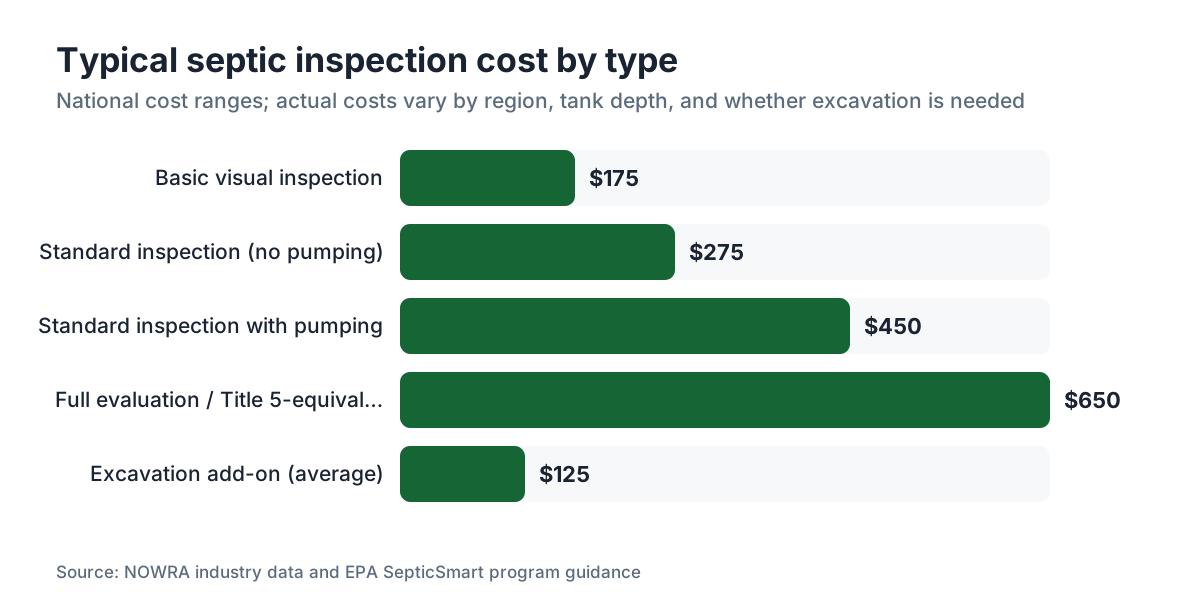
Cost depends on inspection type, region, and whether excavation is needed. The table below summarizes typical ranges based on industry data and state program guidance [1][5].
| Inspection Type | Typical Cost Range | Includes Pumping? |
|---|---|---|
| Basic visual inspection | $100 to $250 | No |
| Standard inspection (no pumping) | $150 to $400 | No |
| Standard inspection with pumping | $300 to $600 | Yes |
| Full evaluation / Title 5-equivalent | $400 to $900+ | Yes |
| Excavation to expose lids (add-on) | $50 to $200 | N/A |
These are national approximations. In high-cost areas like coastal Massachusetts or the Pacific Northwest, a full inspection with pumping regularly runs $600 to $900. In rural Midwest markets, the same service might be $250 to $400. Labor rates, travel distance, and tank depth all move the number.
If you're buying a home, the inspection cost is typically the buyer's responsibility and is almost always worth paying for. A failing system that needs a septic system repair or full replacement can easily cost $5,000 to $30,000 and is sometimes not negotiable with a seller who has no idea there's a problem.
For septic tank pumping alone, separate from an inspection, average national costs run $275 to $575 according to industry surveys, with outliers in both directions [5].
What are the most common deficiencies inspectors find?
After enough inspection reports, certain problems show up over and over.
Missing or deteriorated outlet baffles are probably the single most common finding. Concrete baffles in older tanks break down from hydrogen sulfide gas corrosion above the waterline. The fix (installing a PVC effluent filter or sanitary tee) usually costs $50 to $150 in parts and an hour of labor during a septic tank pump out. Catching it before it destroys the drain field is the whole point.
High sludge levels that need immediate pumping come up constantly. Many homeowners don't pump on any schedule and are surprised when the inspector says the tank is 60 to 70 percent full of solids. That's not a system failure yet, but it becomes one soon. How often to pump septic tank is a genuinely common question; the EPA recommends every three to five years for a typical household [1].
Drain field saturation or biomat formation ranges from early-stage (the field is wet but still functional) to full failure (effluent surfacing). Early-stage can sometimes be addressed with traffic removal, water conservation, and rest periods. Full biomat failure usually means a new field.
Cracked or sunken distribution boxes are another repeat offender. A D-box that has shifted even an inch or two can completely disrupt even distribution across field lines, causing premature failure of the most-loaded lines.
Improper connections turn up too. Inspectors sometimes find that a laundry drain or sump pump got tied into the septic system at some point, which hydraulically overloads it and introduces lint that clogs the drain field.
Missing permits or as-built records aren't a physical deficiency, but they complicate real estate transactions and any future repair or expansion work.
Who is qualified to perform a septic inspection?
This varies a lot by state. Some states require inspectors to hold a specific onsite wastewater license or be a licensed engineer. Others allow any licensed plumber or home inspector to do septic evaluations. A few states have no credential requirement at all.
The Massachusetts Title 5 program requires inspection by a Registered Sanitarian or Licensed Site Evaluator approved by the state [2]. Virginia requires licensed onsite soil evaluators for certain inspection types. Your state health or environmental agency website is the right place to check local requirements [6].
For a real estate transaction, don't use a general home inspector who offers septic inspection as a checkbox item unless they have documented onsite wastewater experience. The cost of a missed deficiency falls on you after closing. Ask how many septic systems they inspect per year and whether they hand you a written report with measurements.
For routine maintenance inspections, a licensed pumping company with inspection capability is often the most practical choice, because they can pump and inspect in one visit. Tools like SepticMind help service operators manage inspection records and report delivery, which matters when you're coordinating multiple systems.
For any inspection tied to a permit, variance, or legal transaction, a licensed onsite wastewater professional is the right call.
What happens after the inspection: pass, fail, or repair?
Most outcomes fall into one of three buckets.
Pass. The system is functioning, levels are acceptable, no structural deficiencies found. You get a written report, schedule your next service in three to five years, and move on. In a real estate transaction, the deal proceeds.
Pass with recommendations. The system works but has items that need attention: a deteriorated baffle, a cracked D-box lid, high but not critical sludge levels. These are typically negotiable repair items in a real estate deal and manageable septic tank repair jobs.
Fail. The system has a significant deficiency: surfacing effluent, confirmed hydraulic failure of the drain field, raw sewage backup, or structural failure of the tank. In Massachusetts, a failed Title 5 inspection triggers a legal obligation to repair or replace the system within two years (one year for a failure triggered by a property sale) [2]. Other states have similar enforcement through their local health boards [6].
A failure doesn't automatically kill a real estate deal. Buyers and sellers negotiate repair credits, escrow holdbacks, or price reductions. But you need the inspection to know what you're negotiating over.
If a repair is needed, the scope drives the cost dramatically. Replacing a baffle or installing an effluent filter might be $100 to $300. A new distribution box runs $500 to $1,500 installed. Full septic tank installation or a new drain field can run $10,000 to $30,000 depending on site conditions, tank size, and local permit costs [7].
How should you prepare for a septic inspection?
Prep on your end makes the inspection faster, more accurate, and cheaper.
Locate your records. Find the original installation permit, as-built drawing, and any prior inspection reports or pumping receipts. Your local health department or county building department should have a copy if you don't. This documentation tells the inspector the tank size, field design, and the system's history.
Locate the tank and access lids. If you know where they are and they're accessible, you save excavation time and cost. If you have risers at grade, make sure they aren't buried under mulch or a flower bed.
Don't run the laundry or dishwasher for several hours before the inspection. The inspector wants to see the system under normal, settled conditions, not right after a heavy water-use event. (For a hydraulic load test, the inspector introduces controlled flow deliberately.)
Write down anything unusual you've noticed: slow drains, gurgling sounds, odors, wet spots in the yard. The more context you give the inspector, the more targeted the evaluation.
Ask ahead of time whether the inspection includes pumping or whether that's a separate service call. Scheduling both at once is usually cheaper than two trips, and septic tank cleaning during an inspection gives the inspector the clearest view of the tank interior.
For homeowners building a longer-term maintenance record, tracking inspection findings and pump dates in one place is genuinely useful. SepticMind is built for that kind of record-keeping, mostly aimed at operators managing multiple properties but handy for homeowners who want organized documentation.
How often should you get a septic inspection?
The EPA recommends inspecting a conventional septic system every three years and pumping every three to five years, though systems with mechanical components (pumps, alarms, float switches) should be inspected annually [1][10].
Those are minimums. The real answer depends on household size, tank size, and how the system gets used. A 1,000-gallon tank serving four people fills faster than the same tank serving one. A system taking high-solids waste (garbage disposal use, heavy grease) needs more frequent attention.
The table in the cost section above is a useful starting point. Massachusetts, which has some of the most detailed onsite wastewater documentation in the country, mandates inspection whenever a property transfers, is expanded, or is refinanced under certain circumstances [2]. That's a higher bar than most states, but it reflects how sensitive the region's groundwater is.
For real estate specifically: always get an inspection before closing on a home with a septic system, period. The cost to install a septic system or replace a failed drain field is not a surprise you want to absorb after you've already signed.
Frequently asked questions
Does a septic inspection always include pumping the tank?
Not always. A basic visual inspection or standard inspection may skip pumping. A full evaluation almost always includes it, because the tank must be empty to see the walls, bottom, and baffle condition clearly. For real estate transactions, request an inspection that includes pumping. It costs more but gives the inspector and you a much more accurate picture of the system's condition.
Can a home inspector perform a septic inspection?
Some home inspectors have specific onsite wastewater training and credentials, but many do not. For a general home purchase inspection, the home inspector may note obvious surface signs of septic trouble but is unlikely to open the tank or evaluate the drain field properly. For anything tied to a real estate transaction, hire a licensed onsite wastewater professional or sanitarian rather than a general home inspector.
What does a failed septic inspection mean for a home sale?
A failed inspection doesn't automatically kill the deal, but it opens a negotiation. The buyer can request a repair credit, price reduction, or seller-funded repair before closing. In Massachusetts, a failed Title 5 inspection requires the system be repaired within two years. Most state and local health authorities have similar enforcement timelines. Either way, the repair or replacement cost gets factored into the transaction price.
How long does a septic inspection report stay valid?
This is set by state law and varies widely. Massachusetts Title 5 inspection reports are valid for two years in most circumstances, and three years if the system has been pumped annually since the inspection. Other states may have different windows, or no formal validity period. Check your state's onsite wastewater regulations or ask your inspector what applies locally.
What is a Title 5 septic inspection?
Title 5 refers to Title 5 of the Massachusetts State Environmental Code, which governs onsite sewage disposal. A Title 5 inspection is a full system evaluation required before most property transfers in Massachusetts. It includes pumping, hydraulic load testing, inspection of all accessible components, and a formal written report submitted to the local board of health. Other states have similar requirements under different regulatory names.
What are the signs that a septic system is failing before you call an inspector?
Common warning signs: slow-draining fixtures throughout the house (more than one clogged drain), gurgling sounds in the plumbing, sewage odors indoors or near the drain field, wet or soggy ground over the drain field when it hasn't rained, and unusually lush green grass in a defined area over the field lines. Any of these warrants an immediate inspection rather than a wait-and-see approach.
Can you inspect a septic system yourself?
You can do a surface-level check yourself: look for wet spots over the drain field, confirm all plumbing drains freely, listen for gurgling, and smell for odors. But opening the tank without proper equipment and training is dangerous because of toxic gases and confined space hazards. Any meaningful assessment of baffle condition, sludge levels, or drain field performance takes a trained professional with proper tools.
What is an effluent filter and does every tank have one?
An effluent filter is a cartridge installed in the outlet baffle that screens solids before effluent leaves the tank toward the drain field. Many newer tanks include one; older tanks typically don't unless one was retrofitted. Inspectors check whether one is present and whether it needs cleaning. A clogged effluent filter can cause backups inside the house, but cleaning it is simple and cheap during a routine service call.
How do inspectors find the septic tank if there are no risers?
Inspectors use several methods: reviewing the original as-built drawing (which shows tank location relative to the house), probing the ground with a soil probe or metal rod, and sometimes using a pipe locator or transmitter flushed through a toilet. If none of that works, a small excavation may be needed. This is exactly why installing risers at grade during your next pump-out is a worthwhile upgrade. It saves time and money on every future service call.
What size tank do I have, and does that affect the inspection?
Tank size is typically noted in the original installation permit or as-built drawing. Common residential sizes are 1,000 gallons, 1,250 gallons, and 1,500 gallons, though larger systems exist. Tank size affects how quickly it fills and how often it should be pumped, but it doesn't change the inspection process itself. The inspector notes the size in the report and factors it into pump-frequency recommendations.
Does a septic inspection cover the pipes from the house to the tank?
Usually only partially. The inspector checks any accessible cleanouts on the building sewer line and looks for obvious blockages or root intrusion, but a standard inspection does not include a camera inspection of the pipe run from house to tank. If you suspect root damage or a cracked line (slow drainage, frequent backups), a video scoping of that line is a separate service worth adding.
Who pays for the septic inspection when buying or selling a home?
In most real estate transactions, the buyer pays for the inspection, just like the general home inspection. It's part of due diligence. In some markets or negotiated deals, the seller orders and pays for an inspection before listing. If the seller provides a report, a buyer-commissioned second inspection is still reasonable given the financial stakes of a system failure.
Are alternative systems like mound systems or aerobic treatment units inspected differently?
Yes. Alternative and advanced treatment systems have extra components: pumps, air compressors, UV disinfection units, spray heads, and more. These systems typically require annual inspections (sometimes mandated by state permit conditions) rather than the every-three-years standard for conventional gravity systems. Mechanical components must be tested under power, and maintenance contracts with certified operators are often legally required for these system types.
Sources
- U.S. EPA, SepticSmart homeowner guidance: EPA recommends inspecting conventional septic systems every three years and pumping every three to five years; average replacement cost $3,000 to $7,000
- Massachusetts DEP, Title 5 of the State Environmental Code (310 CMR 15.000): Massachusetts Title 5 requires full system inspection before most property transfers; failed systems must be repaired within two years (one year for sale-triggered failures); reports submitted to local board of health within 30 days
- Penn State Extension, septic system resources: Pump when sludge is within 12 inches of outlet or scum layer within 3 inches of outlet baffle bottom; routine pumping recommended every 3 to 5 years
- University of Minnesota Extension, onsite sewage treatment resources: Inlet and outlet baffles are essential components; deteriorated outlet baffles allow solids to enter drain field, causing clogging and premature system failure
- National Onsite Wastewater Recycling Association (NOWRA), industry cost data: National average for septic tank pumping runs $275 to $575; full inspection with pumping typically $300 to $600
- Virginia Department of Health, onsite sewage program: Virginia requires licensed onsite soil evaluators for certain inspection and permit types under state onsite wastewater regulations
- U.S. EPA, septic system cost information: Drain field replacement costs range from approximately $5,000 to $20,000 or more depending on soil conditions and local regulatory requirements
- National Environmental Services Center (NESC) at West Virginia University, Septic System Owner's Manual: Distribution boxes must be level for even flow distribution; displacement of even one to two inches can cause uneven loading and premature drain field failure
- Florida Department of Health, onsite sewage program: Alternative and advanced treatment systems typically require annual inspection and maintenance by certified operators as a condition of operating permit
- U.S. EPA, guidelines for management of decentralized wastewater treatment systems: Systems with mechanical components including pumps and alarms should be inspected annually rather than on the standard three-year cycle
Last updated 2026-07-09