Signs your leach field is failing (and what to do next)
By the SepticMind Editorial Team

TL;DR
- A failing leach field shows up as soggy ground over the drain field, sewage odors in the yard or house, a stripe of unusually green grass above the trench lines, slow or gurgling drains, and sewage backing up into low fixtures.
- Any one of these earns a professional inspection within days.
- Biomat buildup and soil saturation get worse fast, not slowly.
What does a leach field actually do, and why does it fail?
A leach field (also called a drain field or soil absorption system) is where a conventional septic system finishes treating your wastewater. Clarified effluent leaves the septic tank, spreads through perforated pipes sitting in gravel trenches, and soaks down through the soil. Bacteria in the top few inches of soil break down the remaining pathogens and nutrients before the water ever reaches groundwater.
What kills most leach fields is biomat. Anaerobic bacteria in the effluent build a dense, black, gelatinous layer right at the point where pipe meets soil. Year after year that layer seals the soil pores shut. The water has nowhere left to go, so it backs up into the pipes, floods the trench gravel, and finally puddles on the surface. EPA's SepticSmart program describes a working drainfield as one where effluent "filters slowly through the soil." The moment that filtration rate falls to near zero, you have a failing system [1].
The other route to failure is hydraulic overload. Too much water, too fast. A weekend with a full house, a toilet that runs for three weeks, or a sump pump someone illegally tied into the septic line can each shove a marginal system over the edge.
Soil decides a lot. Clay percolates slowly to begin with, so it reaches failure sooner than sand. A system in decent soil that gets pumped on schedule can run 25 to 30 years or more. One buried in tight clay that nobody ever pumped might quit in 10 [2].
What are the most obvious signs of a failing leach field?
The clearest physical signs of leach field failure, roughly in order of how alarming they are:
Wet, soggy, or swampy ground over the drain field. This is the most definitive sign. When effluent can't move through the soil, it rises. You get saturated, spongy turf right above the trench lines, sometimes with standing puddles days after the last rain. In wet weather it can pass for a drainage problem, so check again after a dry stretch. If the soggy ground hangs around through dry weather and carries a faint sewage smell, the field is surfacing effluent.
Sewage odors outdoors or indoors. A working drain field has no smell at the surface. If you catch hydrogen sulfide (rotten eggs) or raw sewage in the yard, near the foundation, or drifting up from indoor drains, the system isn't treating waste. Odors inside without a wet yard sometimes point to the tank instead of the field, so you want a combined inspection.
Unusually lush, dark-green grass over the field lines. Surfacing effluent is liquid fertilizer. A stripe of vivid green running through an otherwise plain lawn is a classic tell. It jumps out most in a midsummer dry spell when the rest of the yard browns.
Slow drains and gurgling throughout the house. One slow drain means a clog in that fixture's trap or branch. When every drain in the house crawls, or the toilet gurgles when you run the sink, the problem is downstream at the tank or the field. This one often shows up before anything appears in the yard.
Sewage backing up into the lowest fixtures. Ground-floor toilets, basement floor drains, and laundry tubs back up first when the system saturates. Treat this as a health emergency. Stop all water use and call a septic contractor the same day [3].
Nitrate or coliform spikes in a nearby well. If you test your drinking water every year (you should), and you see nitrate-nitrogen or total coliform jump, a failing leach field is one likely source, especially if the well sits downslope of the field. EPA's Maximum Contaminant Level for nitrate is 10 mg/L. Anything over that in a private well near a septic system needs a look [4].
How fast does a failing leach field get worse?
Faster than most homeowners expect. Biomat feeds on itself. The wetter the trench stays, the longer anaerobic conditions hold, and the faster the mat grows. A field with only mild symptoms today (slightly slow drains, a faint odor after heavy rain) can surface completely within one or two wet seasons if nothing changes.
Hydraulic overload moves faster still. A stuck float switch on a pump-fed system, or one big leak inside the house, can saturate a drain field in days.
There's one exception. A field that's overloaded with water but doesn't yet have heavy biomat can sometimes recover partial function if you catch it early, rest it (cut water use hard), and fix whatever is dumping extra water in. True biomat failures don't heal on their own. Those take physical intervention.
So here's the rule. Two or more of the symptoms above means you schedule a septic tank inspection this week. Don't wait for the next pumping cycle.
Can a failing leach field look like something else?
Yes, and guessing wrong costs money. Wet spots in the yard can come from a burst irrigation line, a high water table after heavy rain, or a roof drain dumping near the field. Slow drains can be a plain mainline clog. A sewage smell near the house can trace back to a dried-out trap in a floor drain rather than the septic system at all.
The test that settles it is a dye test or a camera. A licensed inspector injects a non-toxic dye (fluorescein or similar) into the system and watches for it to surface on the field or in a nearby ditch. A camera run through the outlet baffle and distribution box shows whether effluent is even reaching the field. Some inspectors push a probe rod into the trenches to read soil moisture directly.
Here's a quick gut check. If you had the tank pumped recently and the symptoms came back within weeks, the field is almost certainly the culprit, not the tank. A pumped tank refills in three to five days under normal use. Symptoms that outlast that refill point to the field or the distribution piping between the tank and the field.
What causes leach fields to fail prematurely?
The common causes, and every one of them is avoidable:
Skipping pumping. A tank that doesn't get pumped on schedule lets solids drift out into the field. EPA recommends pumping every three to five years for a typical household, and University of Minnesota Extension cites research showing systems on that schedule outlast neglected ones by a wide margin [2]. Our guide on how often to pump a septic tank sets intervals by household.
Garbage disposals. Food solids can raise the suspended-solids load in effluent by 50 percent or more, by some extension estimates. That extra organic load speeds up biomat.
Flushing things that don't break down. Wipes (yes, even the "flushable" ones), feminine hygiene products, and paper towels don't dissolve in the tank. They mat up inside it or ride out to the field.
Household chemicals. Big doses of bleach, antibacterial soap, and drain cleaner kill the tank bacteria that digest waste, so more undigested material heads downstream.
Driving or parking on the field. Compaction crushes the pore space in the absorption zone and can crack the distribution pipes. A single vehicle pass can permanently drop percolation in the top foot of soil.
Tree roots. Willows, silver maples, and other water-hunting trees near the field send roots straight into the perforated pipes. Even aggressive turf like Kentucky bluegrass adds to it. The buffer to shoot for is 30 to 50 feet from large trees [5].
High water table. Where the seasonal water table sits shallow, a system sized for summer can be physically impossible to run in spring. Many states set a minimum separation between the trench bottom and the seasonal high water table, commonly 2 to 4 feet [6].
How do you confirm a leach field is failing versus just stressed?
A real diagnosis runs through several steps, and you need a licensed septic inspector or engineer for most of them.
Step 1: Visual site inspection. Walk the field after a dry stretch. Mark the wet spots, the odor sources, and any patch of unusually lush grass.
Step 2: Tank inspection and pumping. Rule out the tank before you condemn the field. Pump it, inspect it, and check the outlet baffle and the distribution box (D-box) for damage or blockage. A cracked or unlevel D-box can send all the flow to one arm of the field and starve the rest. That's a cheap fix.
Step 3: Soil saturation probe. A tech can push a metal probe into the trenches to check for saturation. Gravel that's still soaked months after a rain event means the soil has stopped absorbing.
Step 4: Dye test or camera. Confirms whether effluent is reaching the field and where it goes from there.
Step 5: Soil evaluation. Some states require a licensed soil scientist or engineer to run a site evaluation before they'll issue a repair permit. They dig test pits to gauge the soil's remaining absorption capacity and whether an alternative system will work on your lot.
SepticMind's inspection tools let operators document each step with photos and site notes in one job record, which speeds up permit applications and hands the homeowner a clear written report. That paper trail matters when you file for a repair permit with the county health department.
What are the repair options for a failing leach field?
Your options hinge on the failure mode, your lot size, and local rules. Here's the honest breakdown:
Rest and reduce. For mild hydraulic overload without much biomat, cutting household water use by 30 to 50 percent and giving the field four to eight weeks of light loading sometimes brings back partial function. It's a management tool, not a repair, and it rarely touches a true biomat failure.
Aerobic treatment unit (ATU) upgrade. An ATU ahead of the field sends cleaner effluent into it, which can slow or partly reverse biomat in some soils. Results vary, and the unit needs a maintenance contract. Figure roughly $6,000 to $15,000 depending on region and size [7].
Biomat additives. Products claim to biologically eat biomat, but independent research backing them is thin. EPA has not approved any additive as a substitute for proper design and maintenance [1]. I'd skip them until the evidence gets better.
New field in an alternate area. If the lot has a suitable repair area (most health codes require one be reserved at installation), a fresh field is the most reliable fix. Budget $5,000 to $20,000 for a conventional replacement, driven by soil, local labor, and system size [7].
Alternative system types. When a gravity system can't work (bad soil, shallow water table, small lot), you're looking at mounds, drip irrigation, aerobic systems with surface spray, or chambered systems. These run more, $10,000 to $50,000 or beyond on complex sites, and each carries ongoing maintenance [8].
For the full financial picture, our article on the cost to install a septic system covers replacement from permitting through installation.
If only the tank component needs work rather than the whole field, septic system repair and septic tank repair cover those separately.
How much does it cost to fix or replace a failing leach field?
Everyone asks about cost, and the honest answer is that it swings more than almost any home repair. It rides on lot size, soil type, local permit fees, and which system type your code demands.
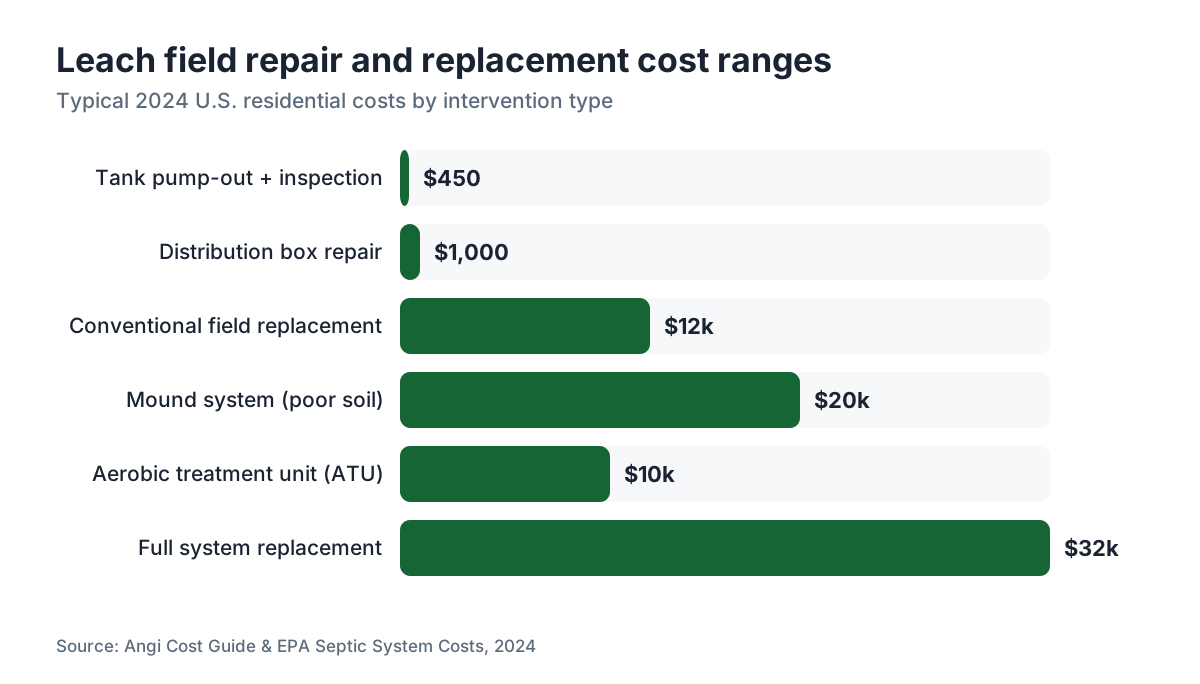
The table below gives real ranges from industry data and state extension cost guides. These are 2024 U.S. national estimates. Your state may run 20 to 40 percent higher or lower.
| Repair or replacement option | Typical cost range | Notes |
|---|---|---|
| Tank pump-out + inspection | $300 to $600 | Often the first diagnostic step |
| Distribution box repair/replacement | $500 to $1,500 | Fix this before replacing the field |
| Conventional leach field replacement | $5,000 to $20,000 | Requires approved repair area on lot |
| Mound system (poor soil / high water table) | $10,000 to $30,000 | Larger footprint, permit required |
| Aerobic treatment unit (ATU) addition | $6,000 to $15,000 | Ongoing maintenance contract needed |
| Full system replacement (tank + field) | $15,000 to $50,000+ | Complex sites with no repair area |
Permit fees on their own run $200 to $2,000+ depending on the county. Some places require a licensed engineer to sign the replacement design, which adds $1,000 to $3,000 [8][9].
The biggest cost driver after soil is whether your lot has a designated repair area. If it does, you get a clean new field installation. If it doesn't (common in older subdivisions), you may be forced into an engineered alternative that doubles or triples the bill.
Our cost to put in a septic tank guide walks the full financial picture if replacement is on the table.
Is a failing leach field a health hazard or a legal problem?
Both. And the legal exposure is usually what finally gets homeowners moving.
Start with health. Untreated effluent surfacing in a yard carries bacteria, viruses, and parasites. Kids playing on wet ground over a failing field face real fecal-oral exposure. Shallow private wells within 50 to 100 feet of a failing system run an elevated contamination risk, and unlike city water, a private well is the homeowner's job to test and protect [4].
Now the legal side. Most states classify a surfacing or overflowing septic system as a public health nuisance, and the penalties for knowingly ignoring it are steep. Many jurisdictions require you to report a failure to the local health department. Selling a house with a known failing system and not disclosing it is grounds for rescission and possible fraud claims in nearly every state [10].
Title 40 of the Code of Federal Regulations covers underground injection, and septic systems technically count as Class V injection wells. Surface discharge of untreated sewage violates the Clean Water Act. Most enforcement happens at the state and county level, but EPA can act on systems fouling surface water or drinking water sources [4][11].
Selling soon? Buyers' agents now routinely require septic inspections at closing. A failed inspection kills the deal or knocks the price down by more than the repair would have cost. Fix it before you list.
How do you prevent leach field failure in the first place?
Honest answer: you can't stop it forever. Every drain field loses absorption capacity eventually. But a well-kept system in reasonable soil should run 25 to 40 years or more before it needs major work. Neglected systems in rough soil often quit at 10 to 15 [2].
The steps that pay off most:
Pump the tank on schedule. This is the single most useful thing you can do. Most 3-bedroom homes need pumping every three to five years. Bigger households or smaller tanks, every two to three. See septic tank pumping for the full schedule, or septic tank pump out if you're booking service now.
Fix leaks the day you find them. A running toilet adds 200 gallons a day to the system. A dripping faucet adds less but compounds over years. These hydraulic loads speed up biomat faster than almost anything else.
Spread laundry across the week. Six loads on a Saturday dumps a huge slug of water into the system in a few hours. Split it over four or five days instead.
Protect the field surface. No driving, no heavy equipment, no raised garden beds over the field. Keep the grass short and healthy. Turf roots barely compact the soil. Deep-rooted shrubs are the real problem.
Inspect every one to three years. A septic tank inspection catches trouble at the distribution box or inlet baffle before it ever reaches the field. Far cheaper than a new field.
Keep extra water out. Roof drains, sump pumps, and patio drains belong away from the septic field, not tied into it. That's a code violation in most states and still shockingly common in older homes.
EPA's SepticSmart program sums it up in four words: "Protect it and inspect it" [1]. That really is the whole maintenance philosophy.
What questions should you ask a septic contractor before hiring them?
Plenty of contractors will show up, poke the ground, and quote a new field on the spot. That's not always wrong, but ask enough questions to know whether the diagnosis holds up.
Ask for their state license number and verify it with your state licensing board before you sign anything. Every state that regulates septic contractors (most do) has an online lookup. Ask specifically whether they're licensed to do soil evaluations, or whether they'll bring in a licensed soil scientist for the site assessment.
Ask whether repair beats replacement here. Is the distribution box working? Is this a localized failure in one lateral, or the whole field gone? Could a baffle swap or a D-box repair bring function back?
Ask what permits the job needs. A legitimate field replacement requires a county health department permit in nearly every state. A contractor who tells you no permit is needed is either wrong or working illegally, and unpermitted work makes trouble at your title when you sell.
Ask for a written scope of work that states the replacement system type and the total square footage of absorption area. Check that number against your state's sizing tables for your soil type and household size. If the proposed field is smaller than code, ask why.
Ask about the warranty. Most contractors cover labor and materials for one to two years. The field itself carries no performance warranty, since that depends on how you use the system, but the workmanship should be covered.
For operators running fleets of service calls, SepticMind's job management tools include standardized inspection checklists that keep technicians documenting these diagnostic steps the same way on every job.
What do state regulations say about leach field failures?
State rules vary a lot, but a few patterns hold nearly everywhere.
Many states require some minimum design life remaining in a septic system as a condition of sale. Massachusetts, New Hampshire, and others require a Title 5 (Massachusetts) or equivalent inspection at the point of sale, with mandatory repair or replacement if the system fails [10][12].
Nearly every state with a formal onsite wastewater code (called Title 5, Chapter 64E, or Chapter 19 depending on where you are) requires a permit for any repair or replacement of a drain field component. Many also require a licensed engineer or soil scientist to sign the repair design.
EPA's "Onsite Wastewater Treatment Systems Manual" (2002) is the federal framework most state codes grow from. It states that systems must be "designed, constructed, operated and maintained to protect public health and the environment" [11]. States then set their own minimum setbacks, soil evaluation procedures, sizing tables, and inspection intervals.
Live in a wellhead protection area or near a stream, lake, or estuary? Your county may run stricter than the base state code, including required nitrogen-reducing technology or mandatory inspection schedules.
For your own jurisdiction, start at your county health department's environmental health division. Most publish their onsite wastewater code online now. EPA's SepticSmart resource page also links out to state program contacts [1].
Frequently asked questions
How do I know if my leach field is failing or just temporarily saturated?
Temporary saturation from heavy rain clears within a few days once the rain stops. A failing field stays wet for weeks in dry weather, and the wet area sits directly over the trench lines rather than in the low spots of the yard. Odor is the clincher: rainwater doesn't smell like sewage. If the wet ground carries any sewage smell at all, treat it as a failure until an inspection proves otherwise.
Can I still use my house if the leach field is failing?
Minimally, yes, but cut water use hard and get a contractor out fast. Stop running the dishwasher, hold laundry to one small load a day, take short showers, and fix any running toilets. Don't just use the system normally and hope. Full sewage backup into the house is a genuine health hazard, and in most states, keeping a visibly failing system running without reporting it is a code violation.
What does it smell like when a leach field is failing?
The main odor is hydrogen sulfide, the rotten-egg smell of anaerobic decomposition. You may also pick up a broader sewage or musty organic smell at the ground surface over the field. Indoors, it usually comes up through floor drains or basement toilets first. Any sewage smell outside near your drain field, with no sewer manhole or cleanout nearby, points to surfacing effluent.
How long does a leach field last?
A well-designed, well-maintained conventional field usually runs 25 to 40 years. Fields in tight clay, fields that never get pumped, or fields fed high-solids loads from a garbage disposal often fail at 10 to 15 years. There's no fixed lifespan. Maintenance and soil matter more than age alone. EPA and most extension programs point to regular tank pumping as the biggest factor in how long a field lasts.
Does a failing leach field always have wet ground in the yard?
Not always, especially in early failure or in sandy soils where surfacing comes slower. Sometimes the only signs are indoors: persistently slow drains, gurgling pipes, or sewage backing up in the lowest fixtures. Tight clay usually shows wet ground early. Coarse soils can hide a field that's failing biologically (no longer treating waste) even while the surface looks dry, which is why well testing matters.
Can a failing leach field be repaired without full replacement?
Sometimes. If the failure is in the distribution box (cracked, tilted, or blocked), repairing or replacing the D-box alone can rebalance flow to the field lines at a fraction of replacement cost. If one lateral has failed but others still work, some contractors can add a new lateral in unused soil. Full biomat failure across the whole field is rarely reversible without either aerobic treatment upgrades or physical replacement.
Will pumping the septic tank fix a failing leach field?
Not if the field is the problem. Pumping removes accumulated solids and briefly eases the load on the field, which can bring short-term relief. If symptoms return within weeks of pumping, the field is the issue, not the tank. Even so, pumping is always the right first diagnostic step, because a full or baffled tank can mimic field failure symptoms.
How much does it cost to replace a leach field?
Conventional replacement runs $5,000 to $20,000 for most homes. Systems that need alternative designs (mounds, drip, aerobic units) because of poor soil or a high water table run $10,000 to $50,000 or more. Permit fees, soil evaluations, and engineering add $500 to $5,000 depending on state and county. The biggest variable is whether your lot has a pre-designated repair area.
Is a failing leach field covered by homeowners insurance?
Almost never for gradual failure, which is the common kind. Standard homeowners policies exclude damage from gradual seepage, wear, and maintenance failures. Some cover sudden and accidental damage, like a pipe crushed by a falling tree. A few specialty riders or equipment breakdown endorsements cover septic components, so check your declarations page. Flood insurance doesn't cover leach field damage from a rising water table.
Can I sell a house with a failing leach field?
Legally, yes, but disclosure is required in nearly every state. Many mortgage lenders (FHA and VA loans especially) won't approve financing on a property with a documented septic failure. Real estate contracts routinely carry septic contingencies. In practice, selling with a known failing field means either dropping the price by the full repair cost or fixing it before closing. Massachusetts, New Hampshire, and other states require a passing inspection to sell.
What should I do first if I think my leach field is failing?
Cut the water going into the system: fix running toilets, hold off on laundry, shorten showers. Then call a licensed septic inspector or contractor (more than just a pumping company) for a full inspection that covers the distribution box and the field. Have the tank pumped during that visit. If you see standing sewage on the ground or sewage backing up inside, call the same day and contact your county health department.
How do tree roots damage a leach field?
Roots chase moisture and follow the perforated distribution pipes straight into the trenches. Once inside, they form mats that block flow and crack the pipes. Willows, silver maples, and poplars are the worst offenders. Most extension guidance calls for a 30 to 50 foot buffer between large trees and the field. Root intrusion usually turns up on a camera inspection and can sometimes be cut back before the damage gets severe.
Does heavy rain cause leach field failure?
Rain doesn't cause failure by itself, but it can push a marginal system over the edge. Heavy rain raises the water table, which shrinks the unsaturated soil available for treatment. Surface runoff can also pour into cracked tanks or loose cleanout lids and send a huge hydraulic load through the system. A field that runs fine when it's dry but fails every wet spring likely has a shallow water table that needs an engineered fix.
What is the difference between a leach field and a drain field?
They're the same thing. Leach field, drain field, soil absorption system (SAS), and soil treatment area (STA) all name the same network of perforated pipes in gravel trenches that take clarified effluent and let it filter into the soil. States use different terms in their codes. EPA and most federal guidance say drain field or soil absorption system. The function and the failure modes are identical no matter what you call it.
Sources
- U.S. EPA, SepticSmart Program: EPA SepticSmart describes a healthy drainfield as one where effluent filters slowly through the soil, and states no additive is approved as a substitute for proper design and maintenance.
- U.S. EPA, How Your Septic System Works: Sewage backing up into the lowest fixtures is a sign of system saturation requiring immediate professional attention.
- U.S. EPA, Private Drinking Water Wells: EPA Maximum Contaminant Level for nitrate is 10 mg/L; a failing leach field near a private well elevates nitrate and coliform contamination risk.
- U.S. EPA, SepticSmart Program: EPA guidance recommends keeping trees away from the drainfield to prevent root intrusion; a 30 to 50 foot buffer from large trees is a common extension recommendation.
- U.S. EPA, Onsite Wastewater Treatment Systems Manual (2002): Many states require a minimum separation distance of 2 to 4 feet between the trench bottom and the seasonal high water table; EPA framework states systems must be designed to protect public health and the environment.
- Angi, Septic System Replacement Cost Guide: Conventional leach field replacement typically costs $5,000 to $20,000; aerobic treatment unit addition costs $6,000 to $15,000; full system replacement ranges $15,000 to $50,000+.
- National Environmental Services Center (NESC), West Virginia University: Alternative system types (mound, drip, aerobic spray) cost $10,000 to $50,000 or beyond for complex sites and carry ongoing maintenance requirements.
- U.S. EPA, Septic Systems Overview: Repair and replacement of drain field components requires a local health department permit in most jurisdictions, and some require a licensed engineer to sign the design.
- Massachusetts Department of Environmental Protection, Title 5 Septic Regulations: Massachusetts Title 5 requires a passing septic inspection as a condition of real estate sale; other states including New Hampshire have equivalent point-of-sale inspection requirements.
- U.S. EPA, Onsite Wastewater Treatment Systems Manual (2002): EPA manual states that onsite wastewater systems must be 'designed, constructed, operated and maintained to protect public health and the environment'; septic systems fall under Class V injection well regulations in 40 CFR.
- New Hampshire Department of Environmental Services, Subsurface Systems: New Hampshire requires septic inspection and mandatory repair or replacement when systems fail at point of sale.
Last updated 2026-07-09