Septic system inspection report: what every section means
By the SepticMind Editorial Team
TL;DR
- A septic system inspection report documents the condition of your tank, distribution box, and drain field after a licensed inspector tests each component.
- Reports typically classify systems as pass, conditional pass, or fail.
- A full inspection runs $300 to $650 in most states, and in Massachusetts a Title 5 inspection is required by law before most property transfers.
What is a septic system inspection report?
A septic system inspection report is the written record an inspector produces after physically examining your septic tank, outlet baffle, distribution box, and drain field. It documents measurements, observations, and test results. It gives whoever reads it, whether that's a buyer, a lender, a local health board, or you, a snapshot of whether the system is working as designed or sliding toward failure.
The report is more than a pass/fail slip. A good one tells you the age of the tank, its current liquid level, the condition of the inlet and outlet baffles, whether solids have reached the critical one-third depth threshold, and how the soil absorption area responded during the inspection. Some reports include photos. Some require a hydraulic load test: the inspector pumps a set volume of water through the system and watches how quickly the soil absorbs it.
Inspectors vary by state in their licensing requirements and in what the report must contain. Massachusetts has the most prescriptive standard in the country, codified as Title 5 [1], which dictates a specific observation protocol and mandates that inspectors use a state-approved form. Other states follow their own onsite wastewater regulations, but most have adopted some version of a tiered rating system.
What does a septic inspector actually look for?
Inspectors work through the system component by component, which is why the report is organized that way.
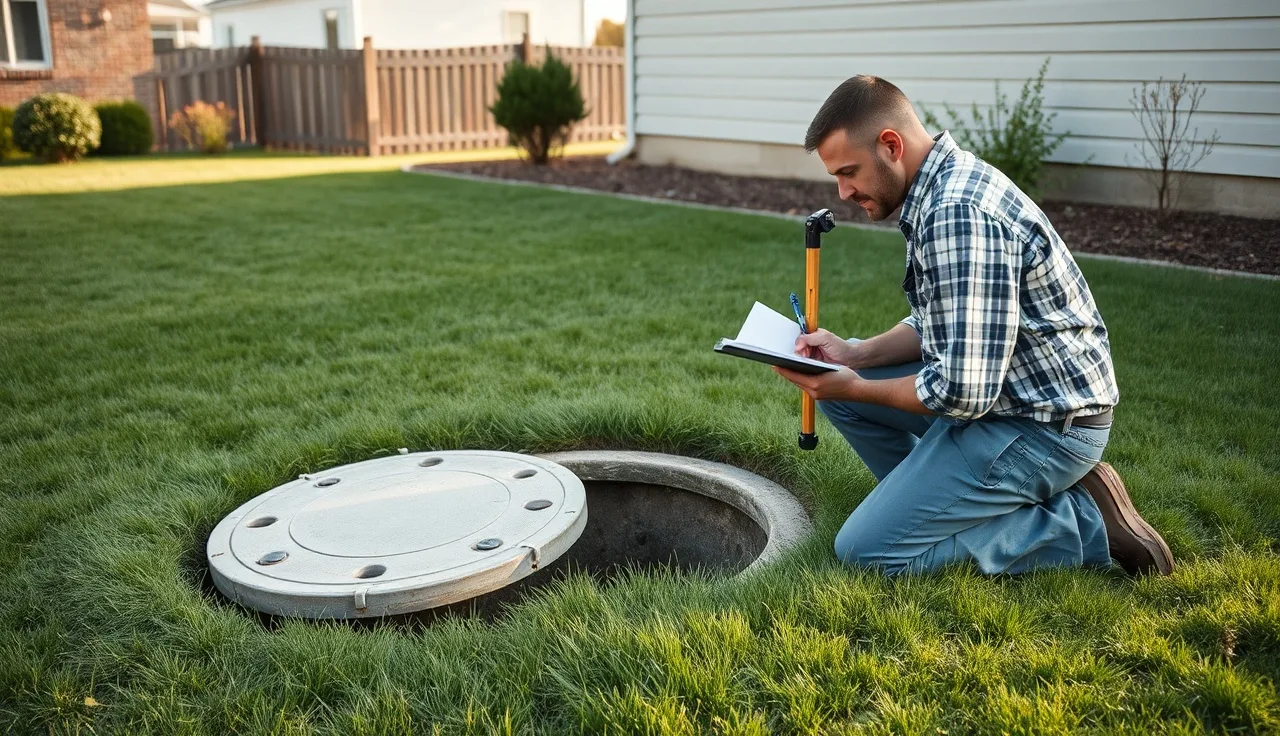
Septic tank. The inspector locates and uncovers the tank lids (sometimes both the inlet and outlet sides), measures the depth of scum and sludge layers, checks the inlet and outlet baffles for structural integrity, and notes any cracks, seam failures, or signs of groundwater leaking into the tank. Here's the rule inspectors use: if the combined sludge and scum layers fill more than one-third of the tank's liquid capacity, the system needs pumping before or during inspection, and that's a sign the maintenance history has been poor.
Distribution box or distribution pipes. The D-box splits effluent evenly among the drain field trenches. Inspectors look for cracks, tilting (which sends too much flow to one trench), and signs of solids carryover from the tank. A tilted or cracked D-box often explains why one section of a drain field is failing while the rest looks fine.
Drain field (leach field). This is where most of the real information lives. Inspectors probe the soil above the trenches, look for surfacing effluent, check for lush green stripes over the trenches that signal hydraulic overload, and in a full inspection may open observation ports to measure standing liquid levels in the trenches. A leach field that shows standing water in the pipes is in hydraulic failure, which is the most expensive outcome on a report. The EPA's SepticSmart program notes that "signs of a failing septic system include odors, wet spots, or lush vegetation over the drainfield" [2].
Other components. Pump chambers, effluent filters, alarm floats, and risers all get noted if they're present. If the pump runs during the inspection, the inspector records the cycle time. If the alarm hasn't been tested in years, that goes in the report too.
What are the different pass/fail ratings on an inspection report?
Most states use a three-tier rating system, though the exact language varies. A pass means the system works. A conditional pass means fix one thing. A fail means the system is broken and needs real money.
| Rating | What it means | Typical next step |
|---|---|---|
| Pass / Satisfactory | System is functioning as designed, no immediate defects | Routine maintenance, pump on schedule |
| Conditional Pass / Repair Required | A specific repairable defect exists (cracked D-box, failed baffle, pump alarm not working) | Fix the listed item within a set timeframe, often 30 to 180 days |
| Fail / Inadequate | System is in hydraulic failure or poses a public health risk | Full repair or replacement, permit required |
Massachusetts Title 5 adds a fourth outcome called "pass with conditions" that applies when a system has a minor deficiency not currently causing failure, like a tank that needs pumping or a missing riser lid, that the owner must address within a specified period.
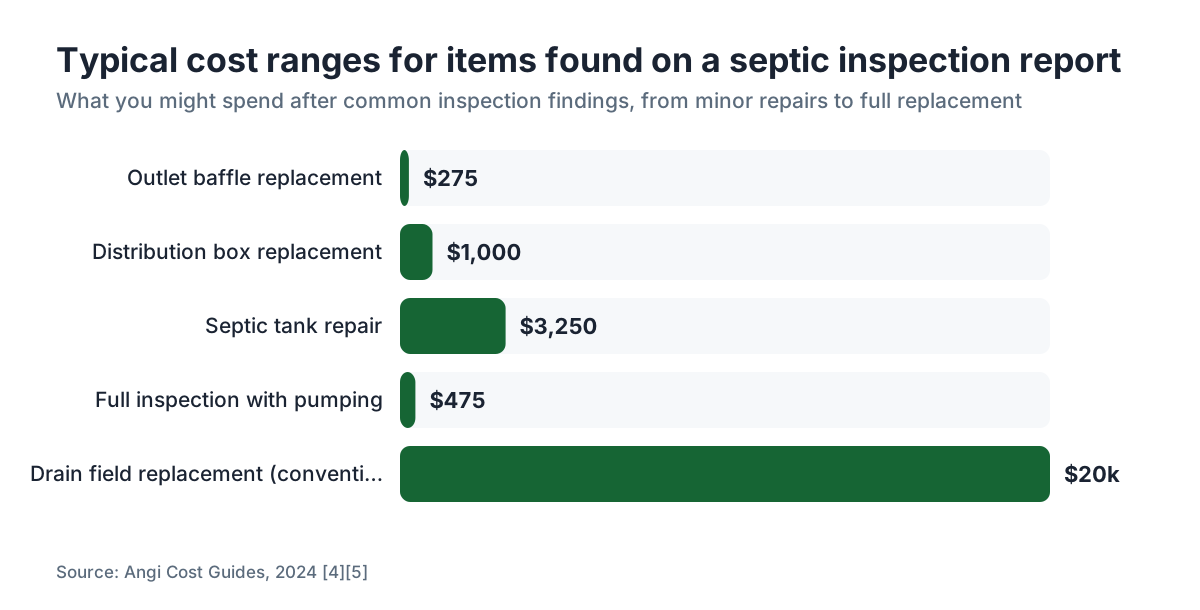
For buyers, a conditional pass is not necessarily a deal-breaker. The repair costs can be estimated and factored into negotiation. A full fail is a different conversation because drain field replacement runs $10,000 to $30,000 or more depending on soil conditions, site constraints, and local permit requirements [3]. Understanding the rating before you close on a property matters more than any other line item in the report.
How much does a septic inspection cost?
A basic visual inspection, where the inspector locates the tank, uncovers a lid, and observes the system, runs $100 to $200 in most parts of the country. That level of inspection tells you very little because it often skips pumping and a hydraulic load test.
A full inspection, with pumping, measurement of sludge and scum layers, D-box examination, and drain field probing, typically costs $300 to $650 depending on your region and the size of the system [4]. In high-cost markets like eastern Massachusetts, a Title 5 inspection with pumping included runs $600 to $900 when a larger 1,500-gallon or 2,000-gallon tank is involved.
Some inspectors separate the pumping cost from the inspection fee. If you're comparing quotes, ask whether the pump-out is included. A quote of $250 that excludes pumping ends up at $450 to $550 once you add a septic tank pump out.
For real estate deals, buyers usually pay for the inspection. For routine maintenance inspections (every one to three years is the EPA recommendation [2]), the homeowner pays directly. Some sellers order a pre-listing inspection to know what they're working with before they put the house on the market, which is a smart move if the system is older than 20 years.
What is a Massachusetts Title 5 inspection report specifically?
If you're buying or selling property in Massachusetts with a private septic system, Title 5 is the inspection you need to understand. The Massachusetts Department of Environmental Protection (MassDEP) enforces 310 CMR 15.000, known as Title 5, which requires a system inspection before most property transfers and within two years of a building permit for an addition that increases design flow [1].
The Title 5 report uses a standardized MassDEP form. It walks through a set checklist: tank condition, baffles, distribution system, soil absorption system, and compliance with setback distances from wells, property lines, and surface water. The inspector must be a MassDEP-certified Title 5 inspector.
A system that fails Title 5 must be repaired within two years of the inspection, with certain exceptions for public health emergencies that shorten that timeline. A passing system is valid for two years, or three years if the owner has pumped the tank within the past year [1]. MassDEP requires the report be filed with the local Board of Health within 30 days of the inspection.
For septic service operators working in Massachusetts, managing filing deadlines and inspection scheduling across dozens of accounts gets messy fast. Software like SepticMind tracks those deadlines automatically, so operators don't rely on calendar reminders and spreadsheets.
One nuance that catches buyers off guard: a Title 5 pass does not mean the system is in great shape. It means it passed the inspection criteria on that day. A system can pass and still need a pump-out, have an aging tank, or sit at the edge of its useful life. Read the full report, more than the rating.
How do inspectors test the drain field?
Drain field testing is the part of the inspection that produces the most important, and most expensive, findings.
The simplest method is visual observation and probing. The inspector walks the absorption area, probes the soil with a rod to feel for saturated or spongy ground, looks for surfacing effluent (sewage smell, wet spots, or lush green stripes), and checks any inspection ports for liquid levels above the pipe.
For a hydraulic load test, the inspector introduces a calculated volume of water (typically 150% of the system's daily design flow) over a set period, then measures how quickly the soil absorption system handles it. If water backs up into the tank or stays high in the distribution pipes after the load, that's evidence of soil absorption failure.
Some inspectors use dye testing as a backup: fluorescent dye gets flushed through the system and the drain field is watched for dye surfacing. It's cheap and works well for obvious failures, but it can miss partial failures where the field handles current loads but has little capacity left.
Soil texture drives drain field performance, which is why soil perc tests were once the standard for new installations and why some reports note the type of soil present. Heavy clay soils fail faster than sandy or loamy soils because they can't absorb effluent quickly enough. If the report notes "slow percolation" in the drain field observation, pay attention to that.
What happens when a septic inspection report finds a failure?
A failure on an inspection report is the start of a repair process, not the end of the conversation.
The first question is whether the failure is a component failure or a soil failure. A cracked distribution box costs $500 to $1,500 to replace [5]. A failed outlet baffle is a similar repair. Real issues, but manageable. A failed drain field is a completely different scale: replacing or expanding a drain field typically runs $10,000 to $30,000, and in areas with tough soils or setback constraints, costs can top $50,000 if alternative systems like mound systems or drip irrigation are required [3].
For real estate deals, a failed septic system triggers a negotiation. Sellers can repair it before closing, cut the sale price by the estimated repair cost, or hold the money in escrow until the repair is done. In Massachusetts, a system that fails Title 5 must be repaired before the property can transfer, with narrow exceptions.
For existing homeowners, a failed system means getting repair bids from licensed contractors and pulling the required permits from the local health department. You cannot legally operate a failed septic system in most jurisdictions. If you need more context on the repair side, septic system repair and septic tank repair cover the most common fixes and their costs.
The EPA estimates that about 10 to 20 percent of septic systems in the United States are failing at any given time, releasing inadequately treated wastewater into the environment [6]. Worth remembering when you're deciding whether to pay for a proper inspection.
How often should you get a septic inspection?
The EPA recommends inspecting a conventional septic system every one to three years and pumping it every three to five years [2]. In practice, most homeowners don't inspect anywhere near that often. They pump when they notice a problem, which is usually too late to prevent expensive damage.
The honest answer depends on your system's age, usage, and history. A system serving a large household with high water use (dishwasher running, multiple showers, laundry every day) fills up faster than a system with two occupants. A 20-year-old system with no maintenance history deserves an inspection right now, whether or not you're selling.
Alternative systems, meaning anything with a pump, timer, or advanced treatment unit, should be inspected every year because they have mechanical parts that fail. Some states require annual inspections for these systems by regulation.
The how often to pump septic tank guide goes deeper on pumping frequency tied to household size and tank capacity. Inspection and pumping usually happen at the same visit, which makes sense economically: if you're already opening the tank, measuring sludge and scum takes five minutes and gives you a baseline for next time.
What records and documents should come with the inspection report?
A good inspection report arrives with supporting documentation. At a minimum, expect the inspector's license number, the date of inspection, the address, the tank size (in gallons), and the measured sludge and scum depths.
For older systems where the tank location wasn't obvious, a sketch or map showing where the tank and distribution box were located is worth a lot. Some inspectors provide photos of the tank interior, baffle condition, and drain field area. Ask for these explicitly if the inspector doesn't include them by default.
If the inspection triggered a pump-out, get the pump-out receipt as a separate document noting the gallons removed. That receipt is your proof of maintenance for future inspections and for real estate disclosure.
In Massachusetts, the Title 5 report must be filed with the local Board of Health [1]. Keep your own copy. Health board files occasionally get lost during office transitions, and having your own record proves the inspection happened.
For buyers: request the last two inspection reports from the seller. Comparing reports from different years tells you how fast the system is aging and whether the maintenance history is consistent. If the seller can't produce any prior inspection records for a 30-year-old system, that itself is information.
Can a septic inspection report affect your home sale or mortgage?
Yes, and this is where homeowners get surprised most often.
Many mortgage lenders, including those backing FHA and USDA loans, require a septic inspection as part of the property appraisal. A failed inspection can halt loan approval. FHA guidelines, for instance, require that the septic system be working properly at the time of appraisal and have adequate capacity for the dwelling [7].
For conventional sales without specific lender requirements, the result still shapes the negotiation. A failed system found during the buyer's inspection period is grounds for contract renegotiation or cancellation in most purchase agreements. Some sellers get their own pre-listing inspection, learn what they're dealing with, and either repair it or price the home accordingly. That's a defensible strategy.
Title companies in some states flag properties where no recent septic inspection record exists. In Massachusetts, no Title 5 inspection means no transfer in most circumstances. Other states have softer requirements: the buyer can waive the inspection, but that's a real risk to accept without a price concession.
One more practical point: homeowners insurance does not cover septic system failure in most policies. Some carriers offer septic rider policies, but standard homeowners insurance treats the septic system as a maintenance item. That means inspection and maintenance costs come out of pocket, and replacement comes out of pocket too unless you've added coverage specifically.
How to read the key numbers in your septic inspection report
Even if you've never looked at a septic inspection report before, a few numbers tell most of the story.
Sludge depth and scum layer. These are measured in inches. The inspector records the distance from the tank bottom to the top of the sludge layer (sludge) and from the liquid surface to the underside of the floating scum layer. Add them together, divide by the liquid depth of the tank, and you get the fraction of the tank that's occupied. When that fraction hits one-third, the tank needs pumping [2]. A healthy tank might show 6 inches of sludge and 2 inches of scum in a 60-inch-deep tank. A neglected tank might show 18 inches of sludge and 8 inches of scum.
Liquid level in the tank. The tank should hold liquid at the level of the outlet pipe, not higher. If the liquid sits above the outlet invert, that points to either a full tank that hasn't been pumped or backflow from a struggling drain field. The report should note which situation applies.
Distribution box levelness. Some reports give actual measurements of how far the D-box has tilted. A D-box tilted more than a quarter inch can cause significantly uneven flow. Some inspectors just note "D-box level" or "D-box tilted" without a measurement, which is less useful.
Standing water in trenches. If observation ports exist, the inspector notes the depth to any standing liquid. Water at the pipe invert is normal right after a load test. Water well above the pipe invert after 24 hours points to poor soil absorption.
Once you understand what these numbers mean, the inspection report stops being intimidating and starts being useful. Operators who want to help clients read reports systematically can use SepticMind's inspection tracking to flag reports that show deteriorating trends across multiple visits.
What to do after you get your septic inspection report
The report is a to-do list. Work through it in order of urgency.
If the system passed with no conditions: schedule your next inspection and septic tank pumping based on the inspector's recommendation. File the report somewhere you'll find it in three years. If you don't have a maintenance log started, this inspection is a good baseline to build from.
If the report lists specific repairs: get bids from licensed septic contractors for the items listed. The repair cost spectrum is wide. A replacement outlet baffle might cost $150 to $400. A new distribution box runs $500 to $1,500 [5]. A full septic tank cleaning and re-inspection after a baffle repair is much cheaper than ignoring the deficiency and losing the drain field.
If the system failed: contact your local health department to understand the repair timeline and permit requirements before you call contractors. The health department may have pre-approved system designs for your area's soil conditions, which can speed the design phase. Get at least three bids. If the report suggests a full system replacement, read the cost to install septic system guide before you talk to contractors so you know what's reasonable in your area.
For any result, keep the report. Future inspectors and contractors will want to know the history. If you're selling in five years, the report is a disclosure document. If you're filing an insurance claim after a backup, it's evidence of maintenance. Treat it like a medical record for your house.
Frequently asked questions
How long does a septic inspection take?
A full inspection with pumping takes two to four hours on-site. The inspector needs time to locate and uncover the tank, pump it, measure sludge and scum, examine the baffles and D-box, and probe or test the drain field. A basic visual-only inspection without pumping can be done in under an hour, but that level of inspection misses most of what matters.
Does a septic inspection include pumping?
Not always. Some inspectors bundle pumping into the inspection fee; others charge separately. Always ask upfront. A proper full inspection should include pumping because the tank needs to be empty to accurately measure sludge and scum and to inspect the floor, walls, and baffles. If pumping isn't included, you'll likely need a separate pump-out visit, which costs $250 to $450 depending on tank size and location.
How long is a septic inspection report valid for?
Validity depends on your state. In Massachusetts, a Title 5 inspection report is valid for two years from the inspection date, or three years if the tank was pumped within the previous year. For non-regulatory purposes like maintenance tracking, most inspectors recommend treating any report older than three years as outdated. For real estate transactions, most lenders and buyers want an inspection done within six to twelve months of closing.
Who can perform a septic system inspection?
Requirements vary by state. Most states require a licensed or certified inspector, often called a licensed site evaluator, sanitarian, or Title 5 inspector. In Massachusetts, only MassDEP-certified Title 5 inspectors can produce a legally accepted report. In other states, licensed plumbers or engineers may qualify. A general home inspector without a specific septic certification is not qualified to produce a full inspection report in most jurisdictions.
What does a failed septic inspection mean for a home sale?
A failed inspection typically means the property cannot transfer until the system is repaired, or the buyer and seller agree on terms to handle the repair. In Massachusetts, a failed Title 5 system must be repaired before transfer with limited exceptions. For conventional sales in other states, a failed inspection triggers negotiation: the seller can repair it, reduce the price, or hold repair funds in escrow. FHA and USDA loans generally require a functioning system before approval.
What is the difference between a septic inspection and a septic evaluation?
These terms are used differently in different states, but in general use: an inspection examines an existing system's current condition. An evaluation (or site evaluation) tests the soil to determine whether a site can support a new septic system or an expansion of an existing one. If your inspection report recommends a "soil evaluation" or "perc test," that's a step toward designing a repair or replacement, not documenting current conditions.
Can a septic system pass inspection even if it needs pumping?
Yes. In most states, a tank that needs pumping but has functioning baffles and a drain field with no signs of failure will pass inspection with a note that pumping is required. In Massachusetts specifically, a system can pass Title 5 with conditions that include required pumping within a set period. A pass doesn't mean the system is in top shape, it means it meets the minimum criteria on that inspection date.
What causes a septic system to fail inspection?
The most common causes are hydraulic failure of the drain field (standing water in the pipes or surfacing effluent), sewage backing up into the house or surfacing on the ground, evidence that the system is discharging to surface water, and structural failures like a collapsed tank or missing baffles that pose an immediate health risk. Component-level failures like a cracked D-box or broken baffle more often result in a conditional pass requiring repair rather than an outright fail.
Who pays for a septic inspection when buying a house?
In most real estate transactions, the buyer pays for the inspection as part of their due diligence, similar to a home inspection. In Massachusetts, when Title 5 requires the seller to provide an inspection before transfer, custom varies by local market: sellers sometimes pay, buyers sometimes pay, and sometimes the cost is split. Always clarify in the purchase agreement who is responsible. The cost, typically $300 to $900 with pumping, is negotiable.
What is a Title 5 inspection in Massachusetts and who requires it?
Title 5 refers to Massachusetts regulations 310 CMR 15.000, which govern septic system design, installation, and inspection. MassDEP requires a Title 5 inspection before most property transfers and in other specific circumstances like building additions. The inspection uses a state-mandated form and must be performed by a MassDEP-certified inspector. The completed report must be filed with the local Board of Health within 30 days of the inspection date.
Can you do your own septic inspection?
For informal maintenance purposes, homeowners can watch their drain field for wet spots, odors, or unusually lush grass, and can check whether drains in the house run slowly, which are early signs of trouble. But for any regulatory purpose, a real estate transaction, a health department requirement, or a lender requirement, the inspection must be performed by a licensed or certified professional. Self-inspection doesn't produce a valid report for any official use.
How much does it cost to repair issues found on a septic inspection report?
Cost depends entirely on what's found. Replacing an outlet baffle: $150 to $400. Replacing a distribution box: $500 to $1,500. Repairing or replacing a septic tank: $1,500 to $5,000 depending on material and accessibility. Replacing a drain field: $10,000 to $30,000 for a conventional system, more for alternative systems. These ranges come from industry data and vary significantly by region, soil conditions, and site access.
Does a new septic system need an inspection?
Yes. New septic systems require multiple inspections during installation: typically a before-burial inspection where the health department or inspector verifies the tank size, placement, and setbacks before backfilling, and a final inspection after installation is complete. These are required by permit in every state. After installation, the system should enter a normal maintenance schedule with inspections every one to three years from that point forward.
Sources
- Massachusetts Department of Environmental Protection, Title 5 (310 CMR 15.000) overview page: Massachusetts Title 5 requires a septic inspection before most property transfers; the report must be filed with the Board of Health within 30 days; a passing inspection is valid for two years or three years if pumped within the past year
- U.S. EPA, SepticSmart homeowner guidance: EPA recommends inspecting conventional septic systems every one to three years, pumping every three to five years, and states that signs of a failing system include odors, wet spots, or lush vegetation over the drainfield
- HomeAdvisor / Angi, Septic Inspection Cost Guide: Full septic inspections including pumping typically cost $300 to $650 nationally, with variation by region and tank size
- HomeAdvisor / Angi, Septic Tank Repair Cost Guide: Distribution box replacement runs $500 to $1,500; outlet baffle replacement costs $150 to $400 in most markets
- U.S. EPA, Septic Systems Overview: EPA estimates 10 to 20 percent of septic systems in the United States are currently failing and releasing inadequately treated wastewater
- U.S. Department of Housing and Urban Development, FHA Single Family Housing Handbook 4000.1: FHA requires that the septic system be functioning properly at the time of appraisal and have adequate capacity for the dwelling
- National Environmental Services Center (NESC) at West Virginia University, Septic System Owner's Guide: When sludge and scum layers combined occupy more than one-third of the tank's liquid capacity, the tank requires pumping; D-box tilt can cause uneven distribution and accelerate partial drain field failure
- MassDEP, Title 5 Inspection Form and Instructions: Massachusetts requires use of a standardized state inspection form; only MassDEP-certified Title 5 inspectors can perform legally recognized inspections for property transfers
Last updated 2026-07-09