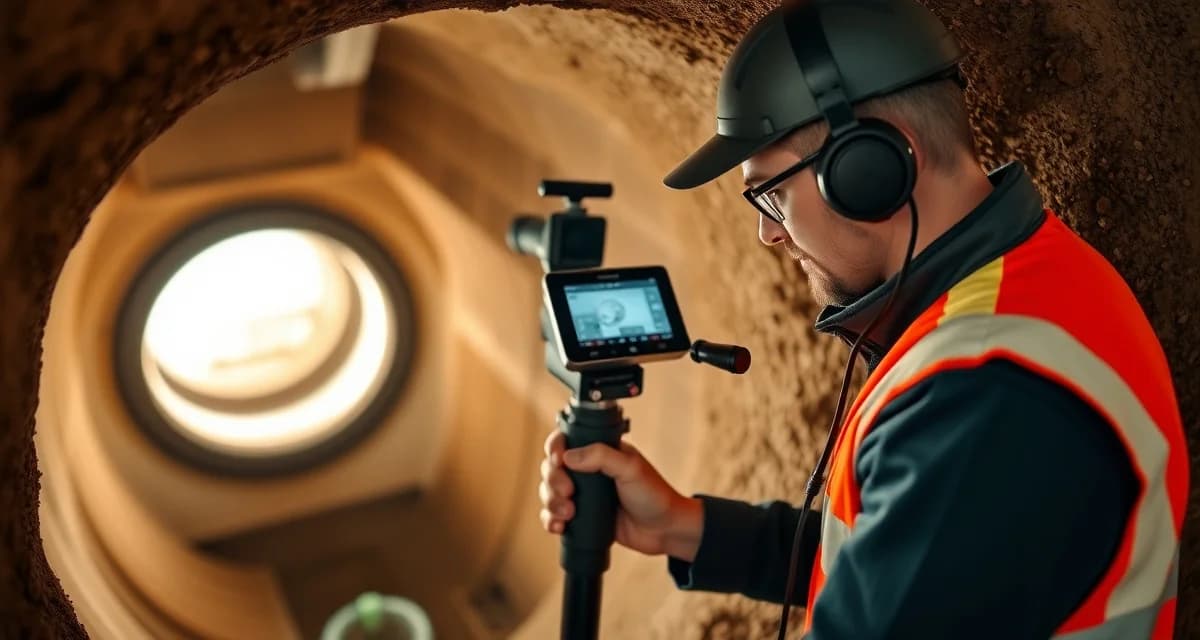
Septic System Inspection Technology: Tools and Equipment Guide
By the SepticMind Editorial Team
Modern inspection equipment has reduced average field inspection time by 34% since 2018. Inspectors using field cameras and probing equipment complete more accurate inspections 25% faster than those relying on visual observation alone. The right equipment doesn't just make your work easier -- it improves the defensibility of your findings and satisfies lender documentation requirements that have become more demanding over the same period.
TL;DR
- Septic System Inspection Technology: Tools and Equipment Guide is designed to address the specific workflow and compliance requirements of septic service operations.
- Purpose-built septic software handles permit tracking, state inspection report templates, and tank data management that generic platforms do not offer.
- Companies managing ATU contracts, multi-county permit portfolios, or real estate inspection volume need software designed around those workflows.
- Mobile access allows field technicians to complete and submit inspection reports before leaving a property.
- Cloud-based platforms ensure records are accessible from any device and backed up automatically.
- Switching costs from generic software are real, so evaluating septic-specific platforms early saves migration pain later.
SepticMind integrates with common field cameras so inspection photos upload directly to the job record. This guide covers the full equipment set for professional septic inspection work.
The Basic Inspection Equipment Set
Every professional septic inspector needs a baseline equipment set regardless of specialization:
Probe rod or soil probe: A 4-foot steel probe rod for locating buried tanks, testing soil saturation in drainfield areas, and confirming the depth of system components. The most fundamental inspection tool -- you can accomplish a lot with a good probe rod and an experienced hand.
Tape measure or measuring wheel: For documenting setback distances from wells, property lines, structures, and water features. Required for lender reports in most markets.
Flashlight (heavy-duty): For inspecting tank interiors. A handheld LED flashlight with a long battery life is the minimum. Many inspectors prefer a headlamp for hands-free illumination.
Gloves and protective gear: Heavy rubber gloves, boot covers or waterproof boots, eye protection. Standard PPE for work around open septic tanks.
Camera: Photos are required in essentially all professional inspection report formats. More on camera options below.
Inspection forms or mobile device: Either paper forms for later transcription or a mobile device running your inspection app. The mobile option eliminates the transcription step and is the professional standard in most markets.
Camera Options for Inspection Documentation
Photographic documentation is where the biggest equipment choices exist for inspectors:
Smartphone or tablet camera: The most common and most practical option. Modern smartphone cameras produce more than adequate image quality for inspection documentation. The advantage is that photos taken in an inspection app upload directly to the job record without a separate transfer step.
Dedicated point-and-shoot digital camera: Higher image quality and better zoom capability in some cases, but adds a transfer step -- photos need to be downloaded from the camera and attached to the report separately. This step is where documentation falls apart if it's not done immediately.
DSLR or mirrorless camera: Professional-grade image quality for inspectors who need high-resolution photos for complex lender reports or litigation support. The transfer and organization burden increases significantly.
360-degree action cameras: Some inspectors use 360-degree cameras mounted on extendable poles to capture inside-tank views or document hard-to-reach areas. These produce compelling visual documentation but require specialized software to view and annotate.
For most inspection companies, the smartphone camera within the field service app is the right choice. Photo quality is adequate, the workflow is efficient (tap to capture, automatically attached to the report), and there's no equipment to manage separately.
SepticMind integrates with common field cameras so inspection photos upload directly to the job record. This eliminates the most common documentation failure point -- photos that were taken but never made it into the report.
Tank Locating Technology
Locating buried septic tank components is one of the most time-consuming parts of an inspection on properties without marked access. The options from lowest to highest technology:
Manual probing: Systematic grid probing with a probe rod. Effective but slow on large properties or hard soils. Experienced inspectors develop a sense for tank location based on setback patterns from the house, but manual probing is always the ground truth.
Electronic locating (tracer wire): Some jurisdictions require tracer wire installation at the time of septic installation, allowing electronic locating equipment to trace the wire to buried components. Not universal, but where it exists it significantly speeds location.
Ground-penetrating radar (GPR): GPR equipment transmits radar pulses into the ground and interprets the reflections to create a subsurface image. Can identify tank locations and drainfield components without probing, but requires trained interpretation and is expensive equipment ($10,000-50,000).
Sonde and push camera: A sonde is a small transmitter attached to a drain camera. Feed the camera into the tank inlet pipe from inside the house, then use a locating receiver on the surface to trace the pipe and locate the tank. Effective and doesn't require tracer wire -- you're following the pipe electronically.
The combination of a sonde/drain camera with surface electronic locating is the most practical technology upgrade for inspection companies that want to speed up tank location without investing in GPR.
Drain Cameras and Tank Inspection
Tank cameras -- small cameras on flexible cables designed for insertion into drains -- have become standard equipment for professional inspectors who want to assess interior tank condition without full access:
Inlet and outlet inspection: A camera lowered through the inlet or outlet opening can document baffle condition, scum and sludge levels, and any visible structural concerns without requiring the technician to fully open the tank.
Pipe condition assessment: For inspectors who also assess building drain lines, a drain camera can document pipe condition from the house to the tank.
Documentation quality: Video footage from a camera inspection provides compelling, defensible documentation for borderline conditions where a verbal description alone might be challenged.
Entry-level drain cameras with recording capability are available for $800-2,500. Professional-grade units with integrated lighting, sonde capability, and remote display run $3,000-15,000.
Soil Testing Equipment
For inspectors who assess absorption field suitability -- particularly for installation permits or when evaluating whether a failing system can be rehabilitated in place -- soil testing equipment expands your capability:
Percolation test equipment: Stopwatch, water source, measuring tape, and standardized test containers for conducting perc tests per your state's methodology.
Soil texture analysis: Simple jar test equipment for on-site soil texture classification to supplement perc testing.
Soil probe with cutting edge: A soil probe that retrieves a core sample for visual texture and horizon assessment, more informative than a simple penetration probe.
Digital Inspection Tools and Software Integration
The equipment list above covers physical tools. The digital infrastructure is equally important:
Mobile inspection app: The software platform where you document findings, attach photos, complete checklists, and generate reports. This is where SepticMind's digital septic inspection forms capability fits -- inspection forms that are completed on the device, with photos attached at each section, generating the report automatically.
GPS: Built into every modern smartphone, GPS coordinates the exact location of tanks, drainfield components, and inspection observations. Coordinates stored in the property record are retrievable on every future visit.
Electronic signature: Clients signing the inspection agreement or acknowledging findings digitally, eliminating paper-based signature requirements.
Get Started with SepticMind
The right software for a septic company handles compliance and documentation alongside scheduling and billing, not just the basics. SepticMind is built specifically for septic operations, from county permit tracking to ATU maintenance management. Start a free trial to evaluate it against your workflow.
Frequently Asked Questions
What equipment does a professional septic inspector carry in the field?
The core field kit includes a probe rod for tank location and soil testing, heavy-duty flashlight or headlamp for tank interior inspection, measuring tape or wheel for setback documentation, PPE (heavy rubber gloves, eye protection, waterproof boots), and a smartphone or tablet for documentation and photo capture. Inspectors specializing in inspection work or working regularly with lenders typically also carry electronic locating equipment (sonde + receiver) for efficient tank location. A basic drain camera adds interior inspection capability and improves documentation quality for borderline findings. The specific equipment set expands with volume and specialization.
Which tank locating technologies are most accurate for buried system location?
Manual probing by an experienced inspector is reliable but slow on large or difficult properties. A sonde inserted through the access pipe and traced with a surface receiver is efficient and doesn't require tracer wire -- it follows the actual pipe path. Ground-penetrating radar is the most accurate non-invasive technology but requires expensive equipment and trained interpretation. In practice, most professional inspectors use manual probing as the primary method with electronic locating (sonde or tracer wire where available) for difficult sites. The accuracy of any technology depends on the operator's experience interpreting what it's showing.
Does SepticMind support integration with field inspection cameras and locating equipment?
SepticMind integrates with cameras through standard photo capture -- photos taken with any camera that can transfer to a smartphone are attached directly to the relevant inspection section in the job record. The most efficient workflow is capturing photos directly from within the SepticMind mobile app, which attaches them automatically to the current job without a separate transfer step. GPS coordinates from the phone are captured automatically when you log system component locations. SepticMind doesn't require proprietary hardware -- it works with whatever camera and locating equipment your inspection process already uses.
What makes Septic System Inspection Technology: Tools and Equipment Guide different from general field service software?
The primary differences are septic-specific features: county permit databases, state inspection report templates formatted for regulatory submission, tank size and system type records that drive service interval calculations, and ATU maintenance contract management. General field service platforms can handle scheduling and invoicing but require manual workarounds for every compliance and documentation task that purpose-built septic software handles automatically.
Is there a free trial available to test the software?
SepticMind offers a free trial period so you can evaluate the platform with your actual workflow before committing. The trial includes access to the permit database, inspection report templates, and scheduling tools. Most companies complete their evaluation within two to three weeks and have a clear picture of how the platform fits their operation before the trial ends.
Try These Free Tools
Sources
- National Onsite Wastewater Recycling Association (NOWRA)
- US EPA Office of Wastewater Management
- NSF International
- American Society of Home Inspectors (ASHI)
- Water Environment Federation