Septic inspection in Centerport, NY: what to expect and what it costs
By the SepticMind Editorial Team
TL;DR
- A septic inspection in Centerport, NY runs $200 to $600 and takes two to four hours on-site.
- Suffolk County Health Services regulates every onsite sewage system in the area under Sanitary Code Article 6.
- Inspectors check the tank, distribution box, and leach field.
- The county requires an inspection before you transfer title, and a failing system can delay or kill a sale.
What is a septic inspection in Centerport, NY?
A septic inspection is a physical evaluation of every working part of your onsite sewage system. In Centerport, that means the tank, the distribution box (the D-box), and the leach field. The inspector also opens the tank to check the inlet and outlet baffles, looks for backup or ponding, and reads the liquid level against the outlet pipe.
Centerport sits in the Town of Huntington, Suffolk County, on Long Island's North Shore. Suffolk County Health Services (SCHS) is the local regulator for onsite wastewater. It operates under New York State Public Health Law and the county's Sanitary Code, Article 6. That layered oversight means inspections here follow county protocols that differ from upstate New York rules.
Three inspection types show up in Centerport. A real-estate inspection (the most common) happens at property transfer and Suffolk County requires it. A routine maintenance inspection is one a homeowner schedules on purpose, usually every three to five years. A failed-system inspection gets triggered by a neighbor complaint, a sanitarian spot-check, or a renovation permit. The scope shifts a little between them, but all three cover the same core components.
What does Suffolk County require for septic inspections?
Suffolk County's Sanitary Code Article 6 is the document that governs septic here [1]. Any property with an onsite sewage system needs a certified inspection before title transfers. The seller usually starts the process, and the inspection has to come from a licensed engineer or a Suffolk County-approved inspector. The report goes to SCHS and becomes part of the public record for that parcel.
The county's concern is grounded in real environmental stakes. Long Island sits on a sole-source aquifer, the main drinking water supply for roughly 3.5 million people [2]. Failing septic systems on the North Shore leach nitrogen straight into Long Island Sound and into that aquifer. The EPA designated the Long Island aquifer system a sole-source aquifer in 1978 [2], which is a big reason county enforcement runs stricter than most of New York State.
If an inspection turns up a failing system, the county can require repairs before the sale closes. That might mean pumping, baffle replacement, or a full system replacement depending on what the inspector documents. There's no grace period that lets you sell "as-is" without disclosure, though the county does allow escrow arrangements in some cases. If you land in that spot, talk to a licensed engineer or a real estate attorney before you lean on your agent.
How much does a septic inspection cost in Centerport?
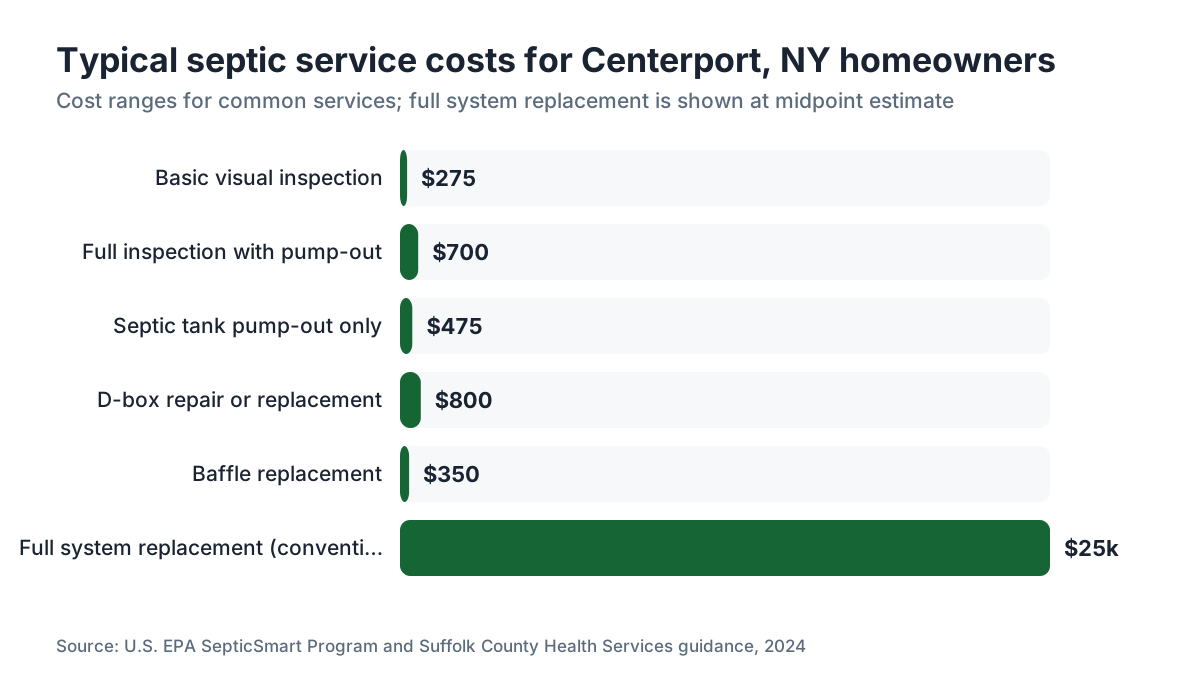
Inspection fees on the North Shore run $200 to $600 for a standard visual and functional inspection, and the average lands around $350 to $450. A full engineering report with dye testing, soil borings, or camera work pushes costs toward $500 to $900 or higher. Nobody can quote you a precise regional median with a straight face, because SCHS doesn't publish fee schedules for private inspectors, and prices swing with the firm, the system, and how long it takes to find buried components.
Here's what drives cost up. A system with no as-built drawing (common in older Centerport neighborhoods built in the 1950s through the 1970s) forces the inspector to probe for the tank and D-box, and that adds time. Pumping almost always has to happen before a real look inside the tank, and that's a separate line item. Septic tank pumping in Suffolk County typically costs $350 to $600 on its own, so budget for both together.
The EPA's SepticSmart program is blunt about the math: routine inspections cost far less than emergency repairs [3]. A $400 inspection that catches a cracked baffle turns into a $200 fix. The same cracked baffle found after it saturates your leach field turns into a $15,000 to $30,000 system replacement.
| Service | Typical cost range (Suffolk County) |
|---|---|
| Basic visual inspection | $200 to $350 |
| Full functional inspection (with pump-out) | $500 to $900 |
| Camera/scope of inlet or outlet line | $150 to $300 add-on |
| Dye test | $75 to $150 add-on |
| Engineering report for SCHS submission | $400 to $800 |
| Full system replacement (if required) | $15,000 to $35,000+ |
What do inspectors actually check during a Centerport septic inspection?
A good inspector works from the house toward the field, never the reverse. They start at the cleanout or access risers near the foundation, then move to the tank, then the D-box, then the leach field.
At the tank, they read the liquid level (it should sit at or just below the outlet invert), inspect the inlet and outlet baffles (older concrete tanks often have crumbling baffles or missing sanitary tees), measure scum and sludge depths, and look for hydraulic overload or solids carryover. Solids in the outlet baffle area is a red flag. It means the tank isn't settling waste properly and the field is getting material it should never see.
At the D-box, they check whether flow splits evenly to each leach line. If one side of the box is eroded or one pipe hogs the flow, some lines get overloaded while others sit idle. That's often fixable.
At the leach field, they hunt for surface ponding, lush green stripes of grass (a sign of effluent fertilizing from below), odor, and soft or spongy ground. They may run a simple dye test to confirm effluent moves from the tank through the field and isn't backing up or surfacing somewhere else on the lot.
They'll also measure setbacks from wells, surface water, and property lines. Centerport homes near Cold Spring Harbor or the harbor shoreline get tighter scrutiny here because of the county's nitrogen reduction goals.
How do I find a qualified septic inspector in Centerport?
Suffolk County Health Services keeps a list of licensed engineers and inspectors cleared to perform Article 6 inspections. That's your starting point, not Yelp. The SCHS Division of Environmental Quality is the office to call for that list [1].
Past licensing, look for inspectors who work Huntington Township regularly. Systems in Centerport vary widely in age and design. You'll find everything from 1950s cesspools (which the county has pushed hard to upgrade under its Reclaim Our Water initiative [4]) to modern innovative and alternative (I/A) systems that use nitrogen-reducing technology. An inspector who mostly works newer communities won't be as fluent with the older cesspool variants common here.
Get two quotes. Ask each one three things directly: do they include a written report, do they locate buried components when there's no as-built drawing, and do they coordinate the SCHS filing if this is a real-estate deal? Those questions separate a thorough inspector from someone who shows up, glances at the tank lid, and hands you a one-page form.
If you run a septic service business in the area and want to track inspection jobs, service history, and customer follow-ups in one place, SepticMind is built for that operations workflow.
How long does a septic inspection take in Centerport?
Budget two to four hours on-site for a standard real-estate inspection that includes locating components, pumping, and walking the leach field area. If the inspector has to probe for buried lids without an as-built drawing, add another hour.
The written report usually lands within two to five business days after the site visit. For SCHS submissions, processing on the county side can add another week or two, which matters a lot if you're in contract with a closing date. Build at least three to four weeks of buffer into your purchase timeline to cover the inspection, the report, and any back-and-forth with SCHS.
If a deficiency turns up, the repair timeline depends entirely on what broke. A baffle replacement takes a few hours. A D-box repair or replacement takes a day. A full leach field replacement needs a permit, soil testing, and contractor scheduling, and in Suffolk County that routinely takes six weeks to four months depending on the permit queue [1].
What happens if a Centerport septic inspection fails?
A failed inspection doesn't automatically kill a sale, but it forces a negotiation. The seller can repair the system before closing, cut the price and let the buyer handle it, or in some cases set up an escrow arrangement with SCHS approval. What the seller cannot do is ignore the finding. A documented failing system is a health code violation in Suffolk County.
Common failure reasons in Centerport: full cesspools that need replacement (the county has aggressively required cesspool-to-septic conversions under its nitrogen credit programs [4]); crumbling concrete baffles in tanks from the 1960s and 1970s; leach fields drowned by a high water table (the North Shore has shallow water tables in many spots, especially near the harbor); and D-box cracks that let roots or soil migrate in.
For repairs, see septic tank repair and septic system repair for what different fixes cost and how long they take. If the inspector calls for full replacement, the cost to install a septic system in Suffolk County runs $15,000 to $35,000 or more depending on lot size, soil perc rate, and whether the county requires an I/A system.
What is the difference between a cesspool and a septic system, and does it matter for inspections in Centerport?
It matters a lot in Centerport. A cesspool is a single covered pit that takes all household waste, leans on the surrounding soil to absorb liquid, and has no separate treatment tank or leach field. A conventional septic system has a two-compartment tank where solids settle, then sends liquid effluent to a distribution box and on to a leach field for soil treatment.
Centerport has a lot of older cesspools. They predate modern septic codes and were standard construction on Long Island through the mid-20th century. Suffolk County has worked to phase them out because cesspools discharge far more nitrogen per household than modern septic systems. EPA guidance notes that conventional systems with leach fields cut nitrogen loading compared to cesspools, and I/A systems cut it further, by as much as 70 percent [3].
When an inspector evaluates a cesspool, the protocol shifts. There's no D-box to check and no leach field to walk, but the inspector still reads the liquid level against the outlet (or overflow to a drywell), looks for signs of overflow, and checks whether the cesspool walls are sound. For a real-estate deal in Centerport, a cesspool can still pass if it's functional, but SCHS and county programs actively push owners to upgrade. Look at the grants and low-interest loans in the Smart Cesspool Replacement Program [4].
How often should Centerport homeowners schedule septic inspections?
The EPA's SepticSmart guidance says inspect a conventional septic system at least every three years and pump every three to five [3]. The real how often to pump septic tank answer depends on household size and tank volume. A 1,000-gallon tank serving four people typically needs pumping every three to four years.
For Centerport, I'd lean to the three-year side, not five, for two reasons. The North Shore's shallow water tables and closeness to surface water leave a failing system less margin before it does real environmental damage. And the older housing stock here means more systems with aging parts that pay off from frequent checks.
On a cesspool instead of a conventional system, do annual visual checks (odor, surface ponding, wet spots) plus pumping every two to three years. Cesspools have no settling tank to buffer solids from the absorption area, so they clog faster.
After any pump-out, ask the pumper to inspect the baffles while the lid is off. That takes five minutes and costs nothing extra, and it catches the most common failure mode before it becomes a leach field problem.
What are New York State and EPA rules homeowners in Centerport need to know?
New York State regulates onsite sewage disposal under 10 NYCRR Part 75 (State Sanitary Code, Appendix 75-A), which sets minimum design standards for systems serving properties with fewer than 1,000 gallons per day of flow [5]. For practical purposes in Centerport, Suffolk County's Sanitary Code is the operative document, because it's generally stricter than the state minimums.
The EPA doesn't directly regulate individual homeowner septic systems, but it runs the SepticSmart program as national guidance [3]. It also sets the broader context through the Clean Water Act and its oversight of sole-source aquifer protection, including the Long Island program [2].
One New York rule catches homeowners off guard: any addition that raises projected wastewater flow (bedrooms, bathrooms, or an accessory dwelling unit) triggers a new septic design review by SCHS. You can't add a bedroom without possibly forcing a septic upgrade. The county sizes systems by bedroom count, not by how much water you actually use, so a three-bedroom house you expand to five bedrooms needs a system designed for five [1].
The state also requires a licensed professional (an engineer or registered sanitarian) to sign off on new system designs. DIY installation isn't legal in Suffolk County.
Should Centerport homeowners do anything to prepare for an inspection?
Yes, and the prep list is short enough that there's no excuse to skip it.
Find your as-built drawing. This is the diagram of your system's layout filed with SCHS when the system went in or was last upgraded. No copy on hand? Request it from SCHS or dig through old home inspection reports. An inspector who has the as-built doesn't have to probe blind for buried components, which saves time and money.
Don't pump right before the inspection. Some sellers empty the tank just ahead of time thinking it hides problems. A good inspector usually spots a freshly pumped tank (scum lines on the walls, oddly clean walls with a fresh effluent smell, no liquid level to read). Worse, pumping removes the evidence the inspector needs to judge scum and sludge accumulation rates. Schedule the pump-out as part of the inspection, not before. The inspector evaluates the tank, then has it pumped, then checks the interior with the tank empty.
Fix obvious plumbing leaks first. A dripping faucet or running toilet isn't a septic problem by itself, but a toilet that runs nonstop can push two to four gallons an hour into the tank and hydraulically overload a system built for normal use [7]. An overloaded system throws symptoms that mimic field failure when the real culprit is the running toilet.
Clear access to the tank lids and the D-box. If a patio, deck, or garden bed covers the access points, you have to excavate them. That's on you as the owner, not the inspector.
What's the difference between a septic inspection and getting a septic tank pumped?
These are different services that often happen the same day but aren't the same thing. A septic tank pump out (also called septic tank emptying) removes accumulated solids and liquid from the tank with a vacuum truck. That's maintenance.
An inspection judges the condition and function of the whole system, including parts the pumper truck never sees: the D-box, the leach field, the baffles, the inlet pipe, and the soil over the absorption area.
Some pumping companies fold a basic inspection into the pump-out, but get clear on what you're buying. A pump-out tech looking through the access port is not the same as a licensed engineer producing an SCHS-compliant inspection report. For a routine maintenance check between major inspections, a pumper's observations are fine and useful. For a real-estate deal, you need a formal inspection from a qualified professional.
Septic tank cleaning means about the same thing as pumping in most cases, though some firms use "cleaning" for a fuller process that also backwashes the effluent filter (if your tank has one) and hoses down the walls. Worth asking about if the system hasn't been serviced in years.
For operators who want their crews to document inspections and pump-outs separately inside one system, SepticMind's job tracking and reporting tools are built for that split.
Frequently asked questions
Do I need a septic inspection to sell my house in Centerport, NY?
Yes. Suffolk County's Sanitary Code Article 6 requires a certified onsite sewage system inspection before title transfer on any property with a septic system or cesspool. A licensed engineer or county-approved inspector has to do it, and the report goes to Suffolk County Health Services. Skipping it isn't an option in a standard sale.
Who pays for the septic inspection when buying a home in Centerport?
In most Centerport deals, the seller orders and pays for the inspection Suffolk County requires. The buyer can hire their own inspector for due diligence, which is money well spent even when the seller's report exists. If deficiencies turn up, both inspections usually become buyer-negotiated costs against the sale price.
How much does it cost to replace a septic system in Centerport if mine fails inspection?
A full conventional replacement in Suffolk County generally costs $15,000 to $35,000, and an innovative and alternative (I/A) nitrogen-reducing system runs $20,000 to $50,000 if the county requires one for your location. Cost depends on lot size, soil conditions, permitting, and contractor. Suffolk County offers grants and low-interest loans for qualifying properties through its cesspool replacement programs.
What is an I/A septic system and does Centerport require one?
An I/A (innovative and alternative) system adds treatment steps to cut nitrogen in effluent by up to 70 percent versus a conventional system. Suffolk County requires I/A systems for new construction and replacements in certain nitrogen-sensitive zones, especially near surface water. Centerport's closeness to Long Island Sound and Cold Spring Harbor puts some parcels in those zones. Your engineer can confirm whether yours does.
How long does a septic inspection report take to come back in Suffolk County?
The written report usually takes two to five business days after the site visit. After it goes to Suffolk County Health Services, SCHS processing can add one to three weeks. For a closing, build at least three to four weeks of buffer from the day you schedule the inspection, and more if a deficiency needs follow-up.
Can a septic inspection be done in winter in Centerport?
Yes, but frozen ground complicates it. If the tank or D-box lids sit below the frost line and the ground is hard, excavation gets tough and can damage components. Most Centerport inspectors work in winter but may note access limits in the report if they can't reach everything. Avoid scheduling right after a deep freeze if you can.
What is the Suffolk County Smart Cesspool Replacement Program?
Suffolk County runs a program that helps homeowners swap outdated cesspools for modern septic or I/A systems, with grants up to $30,000 plus low-interest financing. Centerport homeowners with older cesspools may qualify depending on their location within the county's designated nitrogen-reduction areas. The program runs through the county's Department of Public Works and the Reclaim Our Water initiative.
How deep are septic tanks typically buried in Centerport?
Most Centerport tanks sit 12 to 36 inches below grade. Tanks installed before the 1980s often lack risers (extensions that bring the access lid near the surface), so the inspector or pump tech has to dig down to the lid. Modern systems usually have risers within a few inches of grade. Knowing your as-built location before the inspection saves real time and excavation cost.
Does a septic inspection cover the condition of indoor plumbing?
No. A septic inspection covers the treatment and disposal parts outside the house. It doesn't cover indoor drain lines, toilets, or fixtures. That said, a good inspector asks about running toilets or high water use, because those hit system performance directly. If the tank looks hydraulically overloaded, the inspector may tell you to check for internal leaks before blaming the field.
What is a distribution box (D-box) and why does it matter in a septic inspection?
A distribution box is a small concrete or plastic chamber that takes treated effluent from the septic tank and splits it evenly among the leach field trenches. If it's cracked, shifted, or eroded on one side, flow goes uneven, overloading some leach lines while others stay dry. This is a common failure point in older Centerport systems and is usually a straightforward repair if caught early.
Are there any septic system grants available for Centerport homeowners?
Yes. Suffolk County's Reclaim Our Water initiative offers grants for qualifying homeowners replacing cesspools with I/A septic systems. New York State's Clean Water Infrastructure Act has funded county-level programs too. Check directly with Suffolk County Health Services and the Department of Public Works for current grant amounts and income eligibility, since details change year to year.
How do I get a copy of my septic system as-built drawing in Centerport?
Contact Suffolk County Health Services, Division of Environmental Quality. They keep records for systems permitted through the county, and you can request them by address. Many older Centerport systems went in before permit records were digitized, so records may be incomplete or missing. Your prior home inspection report or original closing documents may also hold a copy.
What is the typical tank size for a Centerport home and does it affect inspection frequency?
Suffolk County code sets minimum tank sizes by bedroom count: 1,000 gallons for up to three bedrooms, 1,250 gallons for four bedrooms, and larger for more [5]. A smaller tank fills with sludge and scum faster relative to household load, so it needs pumping and inspection more often. A correctly sized tank for its household typically needs pumping every three to four years.
Sources
- Suffolk County Department of Health Services, Sanitary Code Article 6: Suffolk County's Sanitary Code Article 6 requires certified inspection of onsite sewage systems before property transfer and governs all septic system permitting and design standards in the county.
- U.S. EPA, Sole Source Aquifer Protection Program, Long Island: The EPA designated the Long Island aquifer system a sole-source aquifer in 1978, underlining the environmental sensitivity of groundwater in areas like Centerport.
- U.S. EPA, SepticSmart Program: The EPA's SepticSmart program recommends inspecting conventional septic systems at least every three years and pumping every three to five years; it also states that routine inspections cost far less than emergency repairs, and that failing systems can significantly increase nitrogen loading to groundwater.
- Suffolk County, Reclaim Our Water / Smart Cesspool Replacement Program: Suffolk County's Reclaim Our Water initiative offers grants and low-interest financing to help homeowners replace cesspools with modern I/A septic systems, with grants up to $30,000 for qualifying properties.
- New York State Department of Health, 10 NYCRR Appendix 75-A, Residential Onsite Wastewater Treatment Systems Design Handbook: New York State Sanitary Code Appendix 75-A sets minimum septic tank sizes based on bedroom count: 1,000 gallons for up to three bedrooms, with larger requirements for additional bedrooms.
- Cornell University Cooperative Extension: Cornell Extension guidance affirms that a running toilet can deliver two to four gallons per hour of unneeded flow to a septic system, potentially causing hydraulic overload that mimics leach field failure.
- U.S. EPA, How Your Septic System Works: EPA explains the function of the distribution box (D-box) in conventional septic systems and how uneven flow distribution leads to premature leach field failure.
- New York State Department of Health, Environmental Water Program: NYSDOH confirms that any addition increasing bedroom or bathroom count in a home served by an onsite system may require a new septic system design review by the relevant county health department.
Last updated 2026-07-09