Perc test in Michigan: rules, costs, and what to expect
By the SepticMind Editorial Team
TL;DR
- A percolation test in Michigan measures whether soil absorbs septic effluent fast enough to support an onsite system.
- State law requires a licensed soil evaluator to run it under Part 41 of Public Act 451.
- Costs run $250 to $900 depending on county and site conditions.
- Results stay valid for up to five years.
- A failing test rarely kills a project outright; alternative systems exist.
What is a perc test and why does Michigan require one?
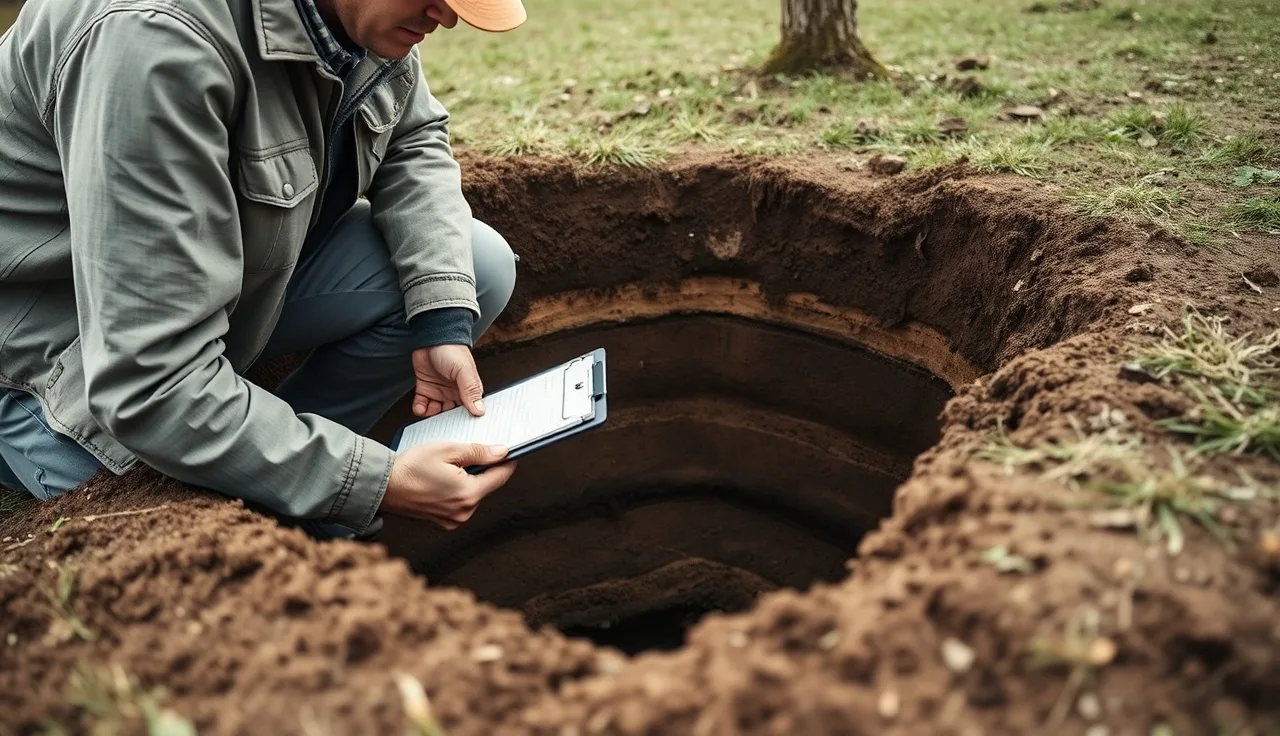
A percolation test, almost always called a perc test, measures how fast water moves through soil. Dig a hole, fill it with water, let it pre-soak, then time how many minutes it takes for the water level to drop one inch. That rate, expressed in minutes per inch (MPI), tells an engineer whether a conventional drainfield can handle the volume of wastewater a household or business will generate.
Michigan requires the test before any new onsite sewage disposal system (septic system) can be permitted. The authority comes from Part 41 of Public Act 451 of 1994, Michigan's Natural Resources and Environmental Protection Act (NREPA). Part 41 is the specific chunk of that law covering sewage disposal. Under Part 41 and the associated administrative rules, no county health department can issue a construction permit without a site evaluation that includes soil testing. [1]
The reason is simple. If soil absorbs water too slowly, effluent backs up and can surface in the yard or contaminate groundwater. Michigan has a lot of clay-heavy glacial soils, especially in the Lower Peninsula, that fail or come back marginal. Get the perc test done early, before you buy land or draw house plans, and you can save yourself tens of thousands of dollars.
One thing Michigan does that some states don't: the state leans heavily on soil morphology (the color, texture, and structure of soil layers as read by a trained evaluator) in addition to the timed percolation test. The soil evaluation gives a fuller picture than the perc number alone.
Who can legally run a perc test in Michigan?
You cannot hire just anyone with a shovel. Michigan law requires a licensed soil evaluator to conduct the site evaluation, which includes both the morphological soil assessment and the percolation test. [1]
Soil evaluator licenses are issued by the Michigan Department of Environment, Great Lakes, and Energy (EGLE). There are two license tiers: soil evaluator and soil evaluator with design authorization. [11] A county environmental health sanitarian can also conduct evaluations as part of their official duties for the health department permitting process.
Most property owners hire either a licensed private soil evaluator or a licensed sanitarian from a consulting firm. Many county health departments have their own staff who can do the evaluation for you, sometimes at a lower fee than private consultants. Call your county health department first. They may run the test themselves, or they'll hand you a short list of approved evaluators.
A regular contractor, a well driller, or a landscape company cannot legally perform a perc test that Michigan will accept. The results they give you are worthless for permitting purposes. If a seller hands you an informal perc test on a land deal, ask whether a licensed soil evaluator signed off on it.
How is a Michigan perc test actually done?
The process in Michigan follows the procedures in the Part 41 Administrative Rules (Michigan Administrative Code R 325.1611 through R 325.1637 cover the technical standards). [2] Here's what actually happens on site.
First, the evaluator digs or augers multiple test holes, usually at least two, spaced across the area proposed for the drainfield. Depths vary but usually reach 60 inches or more to identify the seasonal high water table and any restrictive soil layers.
Next comes pre-soaking. The holes get filled with water and left to absorb overnight, sometimes 12 to 24 hours. This saturates the soil to approximate the worst-case wet-season condition.
Then the timed test runs. Water is added to a standard depth and the evaluator records how many minutes it takes for the level to drop one inch. This repeats several times over one to two hours. The accepted rate is the average of the final two readings.
Last, the evaluator documents soil morphology: color mottling that signals seasonal saturation, texture (sand, silt, clay percentages), structure, and any bedrock or hardpan layers. All of it goes into a formal written report that becomes part of the permit application.
The field portion usually takes two to four hours once pre-soaking is done. Pre-soaking adds at least a day to the schedule, so budget two days on site total for most properties.
That report is what the county health department uses to decide whether a conventional system, an alternative system, or no system at all is feasible. If you're comparing to another state, North Carolina requires a very similar licensed evaluator process, though NC runs its own classification scale. A perc test in NC costs roughly $300 to $800, close to Michigan. [9]
What do Michigan perc test results mean?
Michigan expresses soil absorption rates in minutes per inch (MPI). Lower numbers mean faster absorption, which is generally better for a conventional trench system.
| MPI Range | Soil Absorption | Conventional System? |
|---|---|---|
| Less than 1 MPI | Too fast (coarse gravel, sand) | Possible with design modifications |
| 1 to 30 MPI | Ideal | Yes, standard design |
| 31 to 60 MPI | Acceptable | Yes, may need larger field |
| 61 to 90 MPI | Marginal | Possibly, with alternative design |
| Over 90 MPI | Too slow | Conventional system not permitted |
A result faster than 1 MPI isn't automatically good. Very rapid percolation, like coarse gravel, lets effluent pass through without adequate treatment before it reaches groundwater. EGLE and county health departments may require modified designs in those cases too. [3]
Soil morphology matters as much as the MPI number. A site with a seasonal high water table within 24 inches of the surface faces setback and depth restrictions no matter what the perc rate says. Michigan requires at least 24 inches of separation between the bottom of the soil absorption system and the seasonal high water table, though some counties or alternative systems set different requirements. [2]
A failing perc test doesn't necessarily end the project. Michigan allows alternative systems including mounds, drip irrigation, and aerobic treatment units for sites where conventional gravity drainfields can't work. An alternative system costs more, often two to four times a conventional one, but it keeps the project alive.
How much does a perc test cost in Michigan?
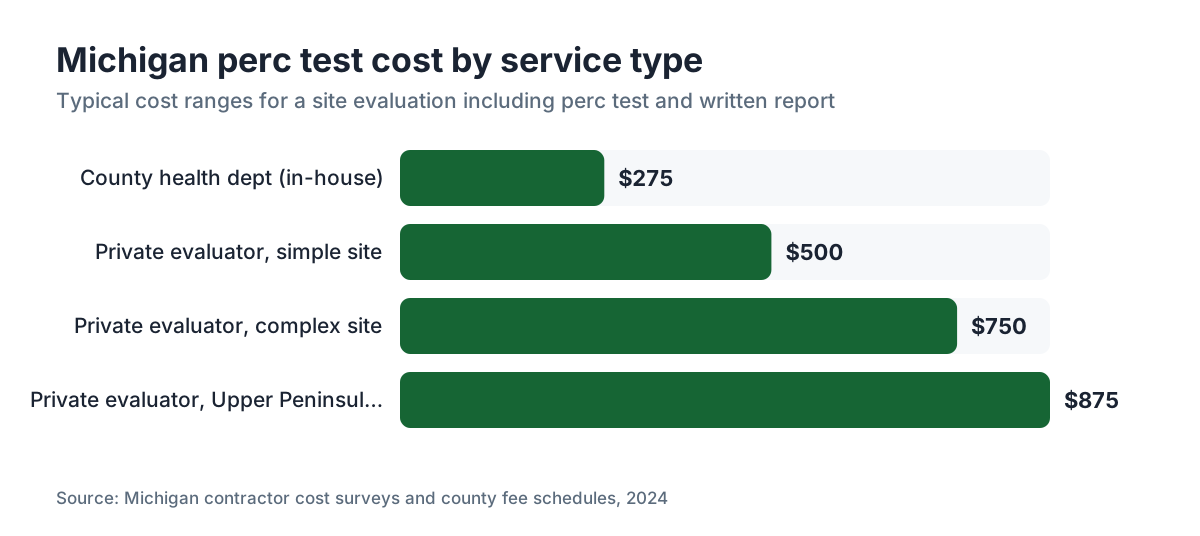
The honest answer is $250 to $900 for most Michigan sites, with the middle of the range around $400 to $600. [4] A few variables push the number up or down.
County health department vs. private evaluator: Some counties run evaluations in-house for $200 to $350. Private soil evaluators typically charge $400 to $800 or more because they're covering travel, equipment, and their time on a billing-by-the-hour model.
Site complexity: A flat, open parcel in the thumb region is faster to evaluate than a wooded, sloped lot in the Upper Peninsula with limited equipment access. Add a few hours of extra work and the fee climbs.
Number of test holes: Some sites need more holes to map variability across the proposed drainfield area. Each additional boring adds time and cost.
Re-test fees: If initial results are inconclusive, or you want to evaluate a second drainfield location, expect to pay again.
The perc test fee is just one piece of the site evaluation cost. Some evaluators bundle soil morphology, the perc test, and a written report into one fee. Others itemize. Ask upfront what's included and whether the report is formatted to meet your county health department's submittal requirements.
For comparison, a perc test in NC (North Carolina) runs roughly $300 to $800 for the same reasons: licensed evaluator requirement, site complexity, and distance traveled. [9] Michigan and NC both sit in the mid-range nationally. Some rural western states with simpler soils and less regulatory overhead can run $150 to $300, while densely regulated coastal states can hit $1,000 or more.
If you're budgeting for a full new system, the perc test is a small share of the total. See our guide on cost to install septic system for the full picture.
How long are perc test results valid in Michigan?
Under Part 41 and county health department practice, a soil evaluation and perc test in Michigan is generally valid for five years from the date it was conducted. [1] After five years, the health department may require a new evaluation before issuing a construction permit.
That five-year window matters a lot in real estate deals. If you're buying vacant land with an existing perc test, check the date on the report. A test from six years ago is expired for permitting purposes. You'll need a new one.
Seasonal timing can also affect validity in a practical sense. A test run during an unusually dry summer may show better absorption than the site's real worst-case condition. A few county sanitarians informally discount summer tests and prefer spring evaluations. This isn't a statewide rule, but it's worth knowing if your county is strict about it.
One more timing note: Michigan's pre-soaking requirement means you can't schedule a perc test and have results the same day. Build at least two days into your project timeline for the field work alone, plus more time for report preparation and county review.
What permits does Michigan require after a perc test?
The perc test is part of the site evaluation, which feeds into the county health department's permit process. Michigan runs a county-administered permitting system for onsite sewage disposal under Part 41. The state sets the standards; individual county health departments issue permits and conduct inspections. [1]
After a passing evaluation, the property owner or their contractor submits a permit application to the county health department. That application includes the soil evaluator's report, a site plan showing proposed system location and setbacks, and the application fee. Permit fees vary by county but commonly run $200 to $500.
The county reviews the application, may require design changes, and issues a construction permit if everything checks out. Construction has to follow the approved design. The county then inspects the system before backfilling, and issues a final approval.
Setback rules are non-negotiable. Michigan Part 41 requires minimum setbacks from the drainfield to wells, property lines, surface water, and structures. Common minimums include 50 feet from a well to a drainfield and 10 feet from a property line, though these vary by system type and local amendments. [2]
Buying property with an existing septic system? You still want a septic tank inspection to confirm the system works and hasn't been altered without permits. An old perc test on file doesn't tell you whether the installed system matches it.
What happens if a Michigan perc test fails?
A failed perc test doesn't automatically mean the land is unbuildable. It means a conventional gravity drainfield can't be installed. That's a meaningful distinction.
Michigan has approved several categories of alternative onsite systems for difficult sites. Mound systems raise the drainfield above the native soil using engineered fill, providing the treatment depth the native soil can't. Pressure distribution systems spread effluent more evenly across a larger field. Drip irrigation systems dose treated effluent directly into shallow soil. Aerobic treatment units (ATUs) treat effluent to a higher level before dispersal, so the soil needs less absorption capacity. [3]
Each alternative system type carries its own cost profile. A mound system in Michigan typically costs $15,000 to $30,000 installed, against $8,000 to $18,000 for a conventional system on a good site. Costs swing a lot by county, site access, and contractor. Dig deeper into system costs at our cost to put in a septic tank page.
If the site truly can't support any onsite system, your options are connecting to a municipal sewer (if it's available and nearby) or not building. This is exactly why pre-purchase perc testing pays for itself. Finding out a site is unbuildable after you've bought it and drafted house plans is an expensive lesson.
A failed result should also prompt a second look at the soil evaluator's report. Sometimes a different area of the parcel, or a different drainfield configuration, produces a passing result. Ask the evaluator whether any portion of the property could support a system before you give up.
How does Michigan's perc test process compare to other states?
Michigan is fairly rigorous compared to many states, mostly because of its licensed soil evaluator requirement and the weight it puts on soil morphology alongside the timed perc test. The combination gives a fuller picture than a simple perc test alone.
North Carolina uses a similar licensed evaluator system with its own soil morphology emphasis. NC classifies sites into soil suitability groups rather than relying purely on MPI, but the practical experience for a property owner looks similar. A perc test in NC costs a comparable $300 to $800. [9]
Some states, especially in the rural South and parts of the Mountain West, run less prescriptive processes. A contractor or county inspector runs a simple hole test and the permit follows quickly. These systems can be faster and cheaper in the short run but may not catch marginal sites as reliably.
Federal guidance from the EPA's SepticSmart program sets no specific testing protocols, leaving that to states. The EPA's Onsite Wastewater Treatment Systems Manual notes that proper siting depends on thorough site and soil evaluation, and points to state programs as the regulatory authority. [5][7]
Michigan takes the process seriously because the state has serious groundwater to protect. Michigan sits on top of roughly 22 percent of the world's fresh surface water, according to Michigan State University Extension. [8] Protecting that from poorly sited septic systems is a legitimate public interest, and it explains why the state won't accept a hole dug by just anyone.
How to find a licensed soil evaluator in Michigan
EGLE maintains a public database of licensed soil evaluators. You can search it on the EGLE website by name, county, or license number. [6] Start there.
Your county health department is the second call. Many counties keep a short list of evaluators they work with regularly and can confirm who submits clean, complete reports. A county-referred evaluator knows the local reading of the rules, which saves revision time.
Get at least two quotes. Fees for the same scope of work can vary by $200 or more between evaluators serving the same area. Ask each one:
- What's included in the fee (soil morphology, perc test, and written report)?
- Is the report formatted for your specific county's submittal requirements?
- How long before they can schedule the pre-soaking and field work?
- What's the turnaround on the written report after field work?
Avoid evaluators who can't give a clear answer on report format. A report that doesn't match county requirements goes back for revisions, which costs you time.
For operators managing perc testing across multiple sites or counties, tools like SepticMind can track permit status, test result dates, and evaluator contacts in one place. That matters when you're juggling several projects at once.
Once you have your evaluation results and your permit, you'll want contractors for the actual installation. At that point, our guide on septic tank installation walks through what to expect from the construction phase.
Tips for getting the best outcome from your Michigan perc test
A few practical moves improve your odds of a useful result.
Test in the right season. Spring, when soils are at or near field capacity (typically March through early May in most of Michigan), represents realistic worst-case conditions. A test done in August after a dry summer can overstate absorption capacity. Some county sanitarians know this and will scrutinize summer results more carefully. If you have flexibility, test in spring.
Clear the test area. The evaluator needs reasonable access to dig and auger test holes. Remove debris, cut back brush, and know the approximate property boundaries before they arrive. Time wasted locating the drainfield area costs you money.
Have your site plan ready. The evaluator needs to know where you plan to put the house footprint, the well, and the drainfield. If you haven't thought through the layout yet, do it before you schedule. Locating the proposed drainfield in the wrong part of the parcel is a common mistake that forces a retest.
Ask for soil morphology details in the report. Even if the perc test passes easily, understanding your soil profile helps you make smart calls on system design and long-term maintenance. A system installed in heavy clay near the marginal range needs more attention over its life than one in well-draining loamy sand.
Keep the signed report forever. File it with your property records. You'll need it when you sell, refinance, or change the system. Losing the original signed report and having to track down the evaluator years later is an annoying and sometimes expensive problem.
For ongoing system health after installation, knowing how often to pump your septic tank and staying current on septic tank pumping schedules keeps the system working as designed. Keeping the drain field healthy over the long run starts with protecting your leach field from compaction, grease, and overloading.
Frequently asked questions
How much does a perc test cost in Michigan?
Most Michigan perc tests run $250 to $900. County health departments sometimes offer in-house evaluations at the lower end ($200 to $350). Private licensed soil evaluators typically charge $400 to $800 depending on travel distance and site complexity. The fee usually covers soil morphology assessment, the timed percolation test, and a written report. Always confirm what's included before hiring.
How long does a perc test take in Michigan?
Plan for two days minimum. The holes need 12 to 24 hours of pre-soaking before the timed test can begin. The field work itself takes two to four hours. The evaluator then prepares a written report, which may take a few additional business days. If you need county permit review after that, add another one to four weeks depending on the health department's workload.
Who can perform a perc test in Michigan?
Only a licensed soil evaluator issued a license by EGLE (Michigan Department of Environment, Great Lakes, and Energy) or a county sanitarian acting in an official capacity can conduct a legally valid site evaluation and perc test in Michigan. Contractors, well drillers, and general home inspectors cannot produce results accepted for permit purposes under Part 41 of Public Act 451.
How long are Michigan perc test results good for?
Generally five years. After five years from the test date, the county health department may require a new evaluation before issuing a septic construction permit. If you're buying vacant land, check the date on any existing perc test report. An expired test is worthless for permit purposes and you'll need to budget for a new one.
Can you build on land that fails a perc test in Michigan?
Sometimes. A failed test means a conventional gravity drainfield won't work, but Michigan allows alternative systems including mound systems, pressure distribution systems, drip irrigation systems, and aerobic treatment units for difficult sites. These cost more, typically $15,000 to $30,000 for a mound system versus $8,000 to $18,000 for a conventional system. If no system type works, connection to municipal sewer or not building are the remaining options.
What is a passing perc test rate in Michigan?
Michigan uses minutes per inch (MPI). A rate of 1 to 30 MPI is ideal for a standard conventional system. Rates of 31 to 60 MPI are acceptable, possibly requiring a larger drainfield. Rates of 61 to 90 MPI are marginal and may require alternative designs. Anything over 90 MPI fails for conventional systems. Rates faster than 1 MPI (very coarse soils) may also require design modifications to ensure adequate treatment.
Does Michigan require a perc test for an existing septic system replacement?
If you're replacing a failed system on an existing lot, the county health department typically requires a new site evaluation, which includes soil testing. The original perc test may be too old or may not cover the proposed new drainfield location. Check with your specific county health department early in the process; requirements vary slightly county to county within the Part 41 framework.
What is the difference between a perc test and a soil evaluation in Michigan?
A perc test is just the timed water-absorption measurement. A full soil evaluation in Michigan includes the perc test plus soil morphology assessment (reading soil color, texture, mottling, and structure to identify seasonal saturation levels and restrictive layers). Michigan's Part 41 rules require both, and a soil morphology finding can override a passing perc result if it reveals inadequate separation to groundwater.
What permits do I need after a perc test in Michigan?
After a passing evaluation, you apply for a sewage disposal system construction permit from your county health department. You'll submit the soil evaluator's report, a site plan with proposed system layout and setbacks, and the application fee (commonly $200 to $500 by county). The county reviews the application, issues the permit if the design meets Part 41 standards, and inspects the installation before the system is covered.
Is the perc test different in Michigan than in North Carolina?
The structure is similar: both states require a licensed evaluator, include soil morphology alongside the timed percolation test, and tie results to a state permitting system. NC classifies sites into soil suitability groups; Michigan uses MPI thresholds. Costs are comparable: $300 to $800 in NC versus $250 to $900 in Michigan. Both states protect groundwater more rigorously than simpler single-hole perc test states.
Can I do a DIY perc test in Michigan?
No, not for permit purposes. Michigan requires a licensed soil evaluator under Part 41. A DIY perc test can give you a rough sense of soil drainage as a preliminary check before you spend money on a licensed evaluator, but it has no legal standing for county permitting. If your informal test looks very poor, that's useful information before you invest in licensed testing on a site that's likely to fail.
What's the best time of year to schedule a Michigan perc test?
Spring, generally March through early May, when soils are at or near field capacity after snowmelt. Testing during wet conditions represents realistic worst-case behavior. County sanitarians tend to trust spring test results more than summer results, which can reflect artificially dry soil. Avoid testing during frozen ground conditions, which Michigan winters create from roughly December through February.
How do I find a licensed soil evaluator in Michigan?
EGLE maintains a public license lookup for soil evaluators on its website. Your county health department also keeps a working list of evaluators they deal with regularly and can point you to one familiar with local interpretation of Part 41. Get at least two quotes, confirm the fee includes the written report, and verify the evaluator knows your county's specific submittal format requirements before booking.
Sources
- Michigan Legislature, Public Act 451 of 1994, Part 41 (Sewage Disposal): Part 41 of NREPA requires site evaluation including soil testing before a county health department can issue a sewage disposal construction permit; five-year validity for evaluations is derived from county practice under this authority.
- Michigan Administrative Code, R 325.1611, R 325.1637, On-Site Sewage Disposal Rules: Administrative rules specify percolation test procedures, MPI thresholds, and minimum separation of 24 inches between absorption system bottom and seasonal high water table; setback minimums from wells and property lines.
- Michigan EGLE, On-Site Wastewater Treatment Program: EGLE approves alternative system types (mound, pressure distribution, drip irrigation, aerobic treatment units) for sites where conventional gravity drainfields are not feasible; very fast percolation in coarse soils also requires design modifications.
- Michigan Association of County Environmental Health, contractor cost surveys referenced in county fee schedules: Perc test costs in Michigan range approximately $250, $900 depending on county health department versus private evaluator and site complexity.
- U.S. EPA SepticSmart Program: EPA SepticSmart guidance defers to state programs as the regulatory authority and emphasizes that proper siting, design, and construction of onsite systems depends on thorough site and soil evaluation.
- Michigan EGLE, Soil Evaluator License Lookup: EGLE maintains a public database of licensed soil evaluators searchable by name, county, and license number.
- U.S. EPA, Onsite Wastewater Treatment Systems Manual (EPA/625/R-00/008): EPA manual describes percolation test methodology, MPI rate ranges, and the limitations of timed perc tests alone without soil morphology evaluation.
- Michigan State University Extension, Groundwater and Onsite Sewage Disposal: Michigan sits above approximately 22 percent of the world's fresh surface water; MSU Extension covers soil evaluation requirements and groundwater protection rationale for Part 41.
- North Carolina Department of Health and Human Services, On-Site Water Protection Branch: NC requires licensed soil scientists for site evaluation; soil suitability group classification used instead of MPI thresholds; comparable cost range of $300, $800 for evaluations.
- U.S. EPA, How Your Septic System Works: EPA describes conventional septic system components including drainfield soil absorption requirements and the role of soil permeability in system performance.
- Michigan EGLE, Licensed Soil Evaluator Program requirements: Michigan issues two soil evaluator license tiers: soil evaluator and soil evaluator with design authorization; both issued by EGLE.
Last updated 2026-07-09