Leach field chambers: what they are, how they work, and what they cost
By the SepticMind Editorial Team
TL;DR
- Leach field chambers are arch-shaped plastic units set in trenches to spread septic effluent into the soil.
- They replaced gravel-and-pipe systems in most new construction because they weigh less, install faster, and give more soil contact per foot of trench.
- A new chamber leach field runs roughly $3,000 to $15,000 depending on size, soil, and location.
What is a leach field chamber, exactly?
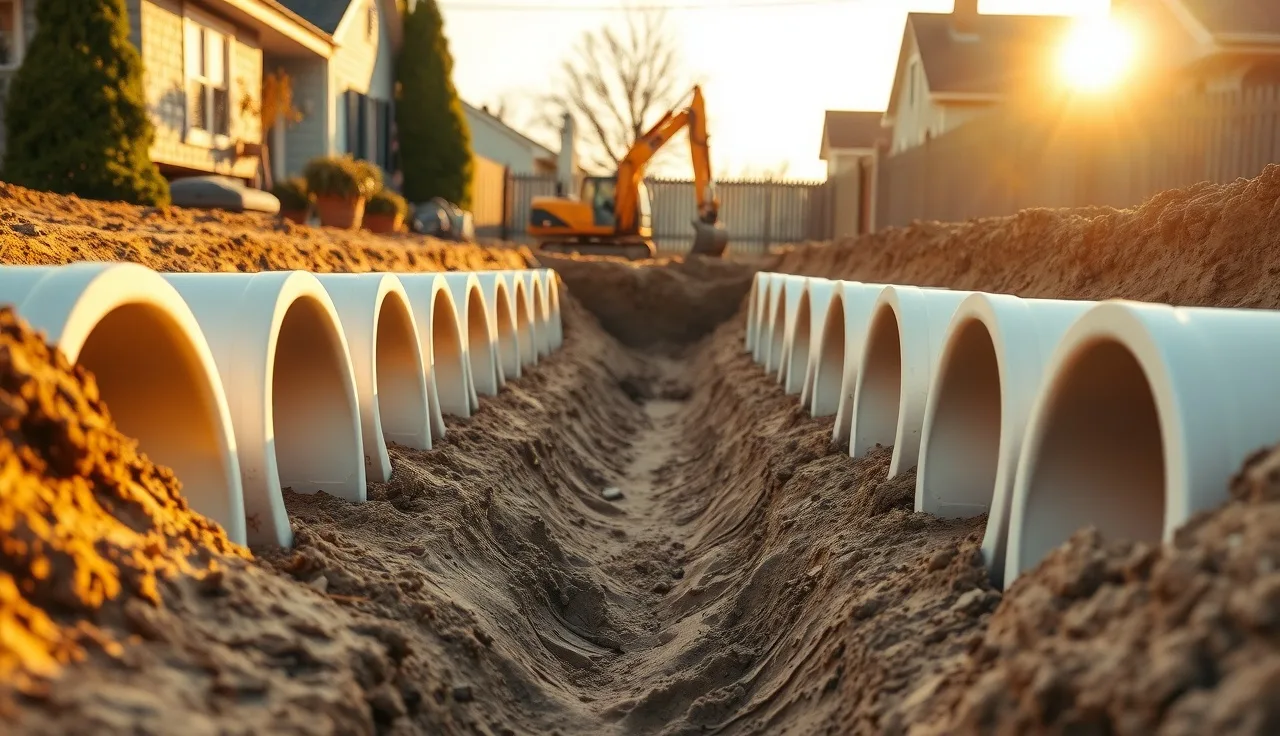
A leach field chamber is an open-bottomed, arch-shaped plastic unit that sits in a soil trench and spreads treated wastewater from your septic tank into the ground. Most are molded from high-density polyethylene (HDPE). Rows of them snap together end to end to form a run. Effluent flows in one end, fills the hollow interior, and seeps out through the open bottom and slotted sides into the surrounding soil.
The original drain field used perforated pipe buried in several inches of crushed stone. Chambers do the same job without the gravel. The arch creates an air space above the effluent, and that air feeds the aerobic soil bacteria that break down the wastewater before it percolates deeper. That open volume, what engineers call the "storage volume," also soaks up surge flows. It matters most during the morning rush.
Most residential chambers are 8 to 12 inches tall, 34 inches wide, and 4 or 8 feet long. A standard Infiltrator Quick4 chamber, one of the most widely installed products in North America, holds about 23 gallons of storage per 4-foot unit [1]. End caps seal the downstream end of each run. Manifold pipes tie multiple runs back to the tank outlet or a distribution box.
The leach field itself, meaning the whole system of trenches and distribution pipes, also goes by drain field, absorption field, or soil absorption system. The chambers are just the part that lives inside the trenches.
How do leach field chambers compare to gravel-and-pipe systems?
The performance difference is real but small. Where chambers actually pull ahead is install speed, weight, and footprint.
| Feature | Gravel-and-pipe | Chamber system |
|---|---|---|
| Trench depth (typical) | 18 to 36 in | 12 to 24 in |
| Stone delivery required | Yes (heavy, expensive) | No |
| Effective leaching area | Pipe diameter + stone surface | Bottom + lower sidewall of arch |
| Storage/surge volume | Mostly stone void space | Open chamber interior |
| Installation labor | Higher (stone placement, compaction) | Lower |
| Typical material cost per LF | $5 to $15 (stone + pipe) | $3 to $8 (chambers only) |
| Longevity (design) | 20 to 30+ years | 20 to 30+ years |
| Approved in all 50 states | Yes | Yes [10] |
The EPA's SepticSmart program treats soil absorption systems as the core of decentralized wastewater treatment, and chamber-based fields meet the same performance standards as conventional gravel fields when they are installed to local code [2].
Here is the honest caveat. Some older installers and a few state inspectors still favor stone on sites with marginal soils, arguing that stone braces the trench sidewalls against collapse. Modern chambers are engineered to the ASTM F2418 load-bearing standard [8], so structural failure is rare. The preference sticks around anyway.
For most homeowners getting a new system or replacing a dead one, chambers are the default. They are not automatically better. They are cheaper and faster to put in the ground, which is why contractors push them.
How does a septic chamber leach field actually work day to day?
Here is the trip from toilet flush to groundwater.
Wastewater leaves the house and enters the septic tank, where it splits into three layers: scum (floating grease and solids) on top, sludge (settled solids) on the bottom, and clarified liquid effluent in the middle. The effluent exits through a baffle at the tank outlet and heads for the leach field. If your system is pressurized, a dosing pump pushes effluent out in timed bursts. Gravity systems just let it flow.
Inside the trench, effluent enters the chamber runs through a distribution box or manifold. It pools in the bottom of the arch and wicks into the biomat, a thin layer of bacteria and fine solids that forms at the soil-chamber boundary over the first few months of use. That biomat actually improves treatment. It slows the water down and buys soil bacteria time to work [9].
The soil below and beside the chambers filters the effluent further. Sandy soils drain fast. Clay soils drain slow. A percolation test (perc test), often paired with a soil profile evaluation from a licensed designer, sets how many linear feet of chamber your household's daily flow needs [3].
Over years the biomat can thicken too far and choke the field. That is one of the main ways these systems fail. It is also why pumping the tank matters so much. When solids escape the tank and reach the chambers, biomat clogging speeds up hard. Most state agencies recommend a septic tank pumping interval of every 3 to 5 years for a typical household [4].
What does a leach field chamber system cost to install?
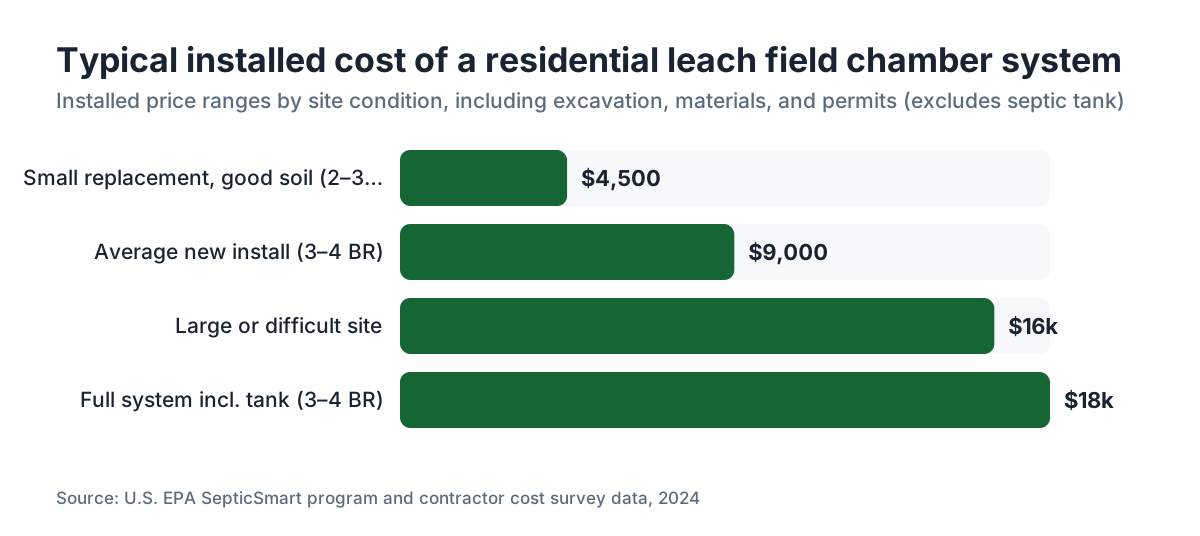
The honest range is wide: about $3,000 for a small replacement in easy soil with cheap permits, up to $20,000 or more for a large system in bad conditions. Most homeowners land somewhere in the middle.
| System size / condition | Typical installed cost |
|---|---|
| Small replacement (2 to 3 bedroom home, good soil) | $3,000 to $6,000 |
| Average new installation (3 to 4 bedroom home) | $6,000 to $12,000 |
| Large or difficult site (high water table, poor perc, rocky) | $12,000 to $20,000+ |
| Full septic system (tank + leach field) | $10,000 to $25,000 |
The chambers themselves are a small slice of the bill. A 4-foot Quick4 chamber retails for roughly $15 to $25 each, and a typical residential system uses 40 to 100 units, so chamber material runs $600 to $2,500 [1]. Everything else is excavation, backfill, distribution parts, permits, engineering, and labor.
Septic leach field replacement cost swings hard by state and county because permit fees, setbacks, and inspection charges all differ. A replacement permit in rural North Carolina might run $200. The same permit in parts of California or Massachusetts can top $1,500.
For the full picture on a complete septic tank installation or the total cost to install a septic system, the parts beyond the field add up too. The tank, risers, pump (if you need one), and distribution box tack on another $2,000 to $8,000.
SepticMind publishes regional cost benchmarks pulled from operator data if you want to check a quote against real local pricing. The better sanity check is three quotes from licensed installers in your own county.
When does a leach field need to be replaced?
Most chamber leach fields are built for 20 to 30 years, but that number assumes regular tank pumping and reasonable water use. Fields hit with poorly treated effluent, too much water (a leaky fixture, for example), or non-biodegradable solids can fail in 10 years. Some well-tended fields last 40.
Signs the field is in trouble:
- Sewage odors near the drain field or inside the house
- Wet, spongy, or unusually lush grass over the trench lines
- Slow drains throughout the house (more than one fixture)
- Sewage backing up into the lowest drains
- Water surfacing over the trench area after rain or heavy use
Don't assume the field is dead until it's inspected. A licensed septic tank inspection often finds the real culprit is a clogged distribution box, a cracked pipe, a dead pump, or a full tank, all of which cost far less than a new field. True full-field failure is rarer than people fear. Partial failure and upstream problems are far more common.
If the field really is saturated and clogged, your options are resting and dosing it (sometimes the biomat recovers), building a second field in an approved reserve area, or full replacement. Most state codes require a designated reserve area for exactly this situation [3].
Replacement means digging out the old chambers, hauling them off, and installing a new system in the reserve area, or re-treating the existing area where code allows it. Septic leach field replacement is a permitted job in every state. In most places you can't legally do it yourself without a licensed installer and an approved engineered plan.
What permits and inspections does a chamber system require?
Every state requires a permit for a new or replacement drain field. The specifics vary, but the sequence is roughly the same: site evaluation (soil profile and perc test), a design by a licensed engineer or registered designer, a permit application to the county or state health department, installation by a licensed contractor, and one or more inspections before backfill.
The pre-backfill inspection is the one homeowners most often miss. The inspector has to see the chambers in place, the inlet and distribution setup, the chamber bedding, and sometimes the soil profile itself, all before the trench gets covered. Backfill without that inspection and you may have to dig the whole thing up again.
Federal baseline guidance comes from the EPA's "Onsite Wastewater Treatment Systems Manual," which leaves specific design requirements to local rules [2]. In plain terms: call your county health department or state environmental agency. The EPA's SepticSmart program (epa.gov/septic) is the best starting point for what a compliant system looks like at the federal level [2].
Some states, North Carolina among them, publish their own detailed onsite wastewater rules with chamber sizing tables and setback distances [3]. Others defer to the International Private Sewage Disposal Code or a local adaptation of it. Your designer or installer should know the local rules cold. If they can't name the state rule that governs your system, hire someone else.
How do you maintain a chamber leach field to make it last?
Pump the septic tank on schedule. That's the single most effective thing you can do. A tank that spills solids into the field is the number one cause of early chamber clogging. For most 3- to 4-bedroom homes with a 1,000-gallon tank, pumping every 3 to 5 years keeps solids out of the field [4]. Bigger households or smaller tanks need it more often. The how often to pump a septic tank question has a real formula built on tank size and occupant count.
After pumping, the rules are simple:
- Don't drive over the field. Chambers are load-rated for soil cover, not vehicle traffic. Even a small truck can crack a chamber or pack the soil down enough to slow percolation.
- Don't plant trees or big shrubs near the field. Roots crack chambers and pipes, though it's less of a problem with modern HDPE than with old clay tile.
- Spread laundry across the week. Dumping 150 gallons of wash water in one hour hydraulically overloads the field and can shove fine solids into the chambers.
- Fix leaks fast. A running toilet can add 200 or more gallons a day, roughly double one person's typical daily contribution [5].
- Skip the septic additives. EPA guidance is blunt here: biological additives, enzymes, and chemical treatments have not been shown to cut pumping frequency or improve field performance [2].
If you run a service business with multiple accounts, tracking pump-out intervals and field inspection dates in one place kills the "we thought someone else called them" scenario that ends in expensive failures. Software like SepticMind is built for that kind of account-level scheduling.
What can go wrong with chamber systems that does not happen with gravel?
Chamber systems have a few failure modes tied to their design.
First, bad bedding. Chambers sit on a compacted, level bed of sand or gravel. Skip proper bedding, or set them on loose native soil, and the chambers rock or settle unevenly over time. Uneven settlement breaks end-cap seals and creates low spots where solids pile up.
Second, over-excavation. If the trench bottom gets smeared by excavator tracks, the soil pores at the infiltrative surface seal shut before the system ever runs. Gravel systems shrug this off because the stone layer acts as a buffer. Chambers sit right on the infiltrative surface, so smearing hurts more. Good installers either keep the machine out of the trench or hand-scarify the bottom before setting chambers.
Third, UV damage to exposed chambers. HDPE chambers are UV-stabilized but not UV-proof. Leave them baking on a job site for weeks before burial, or dig up a section and leave it out, and the plastic turns brittle. That's a site-management problem, not a material defect, but it's worth knowing.
Fourth, undersizing. Chambers are sized to the daily design flow and the site's long-term acceptance rate (LTAR), a soil-specific number pulled from the perc test or soil morphology [3]. An undersized field fails even with perfect maintenance. If your field went in before the household grew (more bathrooms, more people, an in-law suite), the original sizing may no longer hold up.
None of this is a reason to skip chambers. It's a reason to hire a good installer and pay for a real soil evaluation.
Can you repair a leach field instead of replacing it?
Sometimes, yes. Full replacement is the priciest outcome and it isn't always necessary.
If the problem is a cracked distribution box, a broken inlet pipe, or a dead pump, you're looking at a septic system repair in the $200 to $2,000 range, not a field replacement. A proper inspection tells these apart.
If one trench run has failed but the rest still work, some states let the installer plug the bad run and reroute flow to the surviving runs or the reserve area. This isn't universal. Some codes require replacing the whole field if any part of it fails.
Resting and aeration: pull the field offline for 3 to 6 months, sometimes with lime treatment or biomat disruption, and infiltration can partially come back. Results are all over the place. Nobody has strong controlled data on recovery rates. The best available evidence sits in state extension publications, which report that resting works best when the clogging is mild and the underlying soil hasn't been permanently changed [6].
Hydro-jetting the chamber runs gets marketed as a fix. It can temporarily restore flow by chewing up biomat, but it doesn't touch the root cause. Jet without fixing the real problem (overloaded system, solids from the tank, hydraulic overload) and you're back where you started in 6 to 18 months.
For a septic tank repair upstream of the field, fixing the tank before you write off the field is almost always the right move.
What are the best-known leach field chamber brands and do they differ much?
Infiltrator Water Technologies (now part of Advanced Drainage Systems, ADS) owns most of the North American market with its Quick4 and IM-Series chambers [1]. Cultec is the other big name, with its Contactor and Recharger lines. Both meet ASTM F2418, the standard specification for polyethylene septic chambers [8].
For practical purposes the differences are minor. Installers stick with whatever brand their local supplier stocks, partly because mixing brands in one run creates sizing headaches. The inspector doesn't care which brand you use as long as it's code-approved in your jurisdiction and installed to the manufacturer's spec.
Sizing does differ. The Quick4 Standard is 34 inches wide. The Plus series is 51 inches wide. Wider chambers give more bottom infiltration area per foot of trench, which can shorten the total trench length you need. That matters on a tight lot. Your designer should pick the model off your site's loading numbers, not off whatever the supplier happens to have on the shelf.
Some specialty systems pair chambers with textile filter layers for higher-treatment work where nitrogen reduction is required. These cost more, roughly $8,000 to $25,000 for a residential install, and they're mandatory in sensitive areas near water bodies or in nitrogen-sensitive watersheds [7].
How do you know if chambers are the right choice for your site?
Chambers work on most residential sites that pass a standard perc test or soil evaluation. They're a poor fit for very slow soils (clay-heavy ground with a perc rate slower than about 60 minutes per inch under many state codes), sites with a seasonal high water table closer than 2 to 3 feet from the trench bottom, and very steep slopes that need special erosion control.
For sites that flunk a conventional chamber field, the alternatives are mound systems (chambers set in imported fill above grade), drip irrigation, and aerobic treatment units (ATUs). All cost more. On marginal land they're the only compliant options.
Buying a home with an existing chamber system? A proper septic tank inspection before closing should include the distribution box and a dye test or probe to confirm the field is still accepting flow. Don't skip it. A failed leach field can cost more to replace than the earnest money you put down on the house.
For anyone still working out what a septic leach field is in the bigger picture, the chamber is one piece of a complete system. The tank, the distribution network, and the soil all work together. Chambers just make the soil-contact piece cheaper and faster to install, which is how they became the standard.
Frequently asked questions
How long do leach field chambers last?
Chamber systems are designed for 20 to 30 years, and many run longer with good maintenance. The HDPE plastic itself doesn't degrade underground. What fails is the soil's ability to keep accepting effluent, driven by biomat buildup, hydraulic overload, or solids from a neglected tank. Pumping the tank every 3 to 5 years is the single biggest factor in how long the field lasts.
What is the difference between a leach field and a drain field?
Nothing. They're the same thing. Leach field, drain field, absorption field, and soil absorption system all name the network of trenches (filled with perforated pipe or chambers) that takes clarified effluent from the septic tank and spreads it into the soil. Terminology varies by region. The EPA uses 'soil absorption system' in its technical guidance, while most homeowners say leach field or drain field.
Can I install leach field chambers myself?
In most states, no. Installing a septic drain field is a permitted activity that needs a licensed contractor, an approved engineered design, and a pre-backfill inspection by the health department. A few states allow owner-builders on their own property with a permit, but even then the design usually has to be stamped by a licensed designer. An unpermitted install risks fines and creates real problems when you sell the house.
How many chambers does a typical home need?
A 3-bedroom home generating roughly 300 gallons a day usually needs 50 to 100 four-foot Quick4-sized chambers, depending on the soil's long-term acceptance rate (LTAR). Fast, sandy soils need fewer. Slow soils need more. Your licensed designer calculates the count from the perc test results and local code. It isn't a number you should guess at yourself.
What does septic leach field replacement cost in 2025?
Septic leach field replacement runs $3,000 to $15,000 for most homes, with the wide spread driven by system size, soil conditions, permit fees, and regional labor rates. Difficult sites with poor soil, high water tables, or tight lots can push past $20,000. Chamber material alone is typically $600 to $2,500; excavation, labor, and permits make up the rest of the bill.
Do leach field chambers need to be pumped or cleaned?
The chambers themselves aren't pumped. The septic tank upstream is what needs pumping every 3 to 5 years. If solids escape the tank and reach the chambers, you can't easily remove them, and they speed up clogging. Hydro-jetting the chamber runs gets done on failing fields, but it's a temporary measure, not routine maintenance.
Can tree roots damage leach field chambers?
Roots can push in through end caps, joints, and any cracked sections. HDPE chambers resist roots better than old clay tile pipe, but they aren't root-proof. Willows, silver maples, and other aggressive-rooted trees planted within 20 to 30 feet of the trench lines are a genuine risk. Most state codes set minimum setback distances from trees to field lines for exactly this reason.
What happens if you drive over a leach field with chambers?
Driving over a chamber system can crack the arch, break end-cap joints, and pack down the soil at the infiltrative surface, cutting percolation. Chambers are load-rated for the soil buried on top of them, not for vehicle traffic. Even a heavy lawn tractor causes damage over time. Keep all vehicles, including ATVs and delivery trucks, off the field for good.
How do I know my leach field is failing?
Watch for wet or soggy ground over the trench lines, unusually lush green grass in the field area (fed by excess nutrients), sewage odors near the field or inside the house, and slow or backing-up drains throughout the house. One slow drain is usually a pipe clog. Slow drains everywhere point to a saturated or clogged field. Get a licensed inspection before you assume full failure.
Does the EPA regulate leach field chambers specifically?
The EPA sets general guidance through documents like the Onsite Wastewater Treatment Systems Manual and the SepticSmart program, but it doesn't set chamber-specific product standards. Those come from ASTM International (ASTM F2418 covers polyethylene chambers). Actual permit requirements and design standards are set by each state's environmental or health department, and they vary a lot between states.
Are chamber systems approved in all states?
Yes. Chamber-based drain fields are approved for residential use in all 50 states under current codes. Some states keep approved-product lists that a chamber has to appear on, and a few add requirements for certain site conditions. Infiltrator and Cultec chambers appear on the approved lists in every jurisdiction that maintains one [10].
What is the reserve area next to my leach field for?
State codes require most new septic installations to set aside a reserve area, an unused part of the yard that meets the same soil and setback requirements as the active field. If the primary field fails, the reserve is where the replacement goes without a fresh site evaluation. Build a shed, pool, or driveway over the reserve area and you lose that option and may violate your permit.
Can a leach field chamber system be used with an aerobic treatment unit?
Yes, and it's a common pairing. An aerobic treatment unit (ATU) puts out higher-quality effluent than a conventional septic tank, which lightens the load on the soil absorption system. Some states let you build a smaller chamber field with an ATU because pretreated effluent earns a higher LTAR credit. That helps on lots too tight for a full conventional field.
Sources
- Infiltrator Water Technologies / ADS, Quick4 Chamber product specifications: Quick4 Standard chamber dimensions (34 in wide, 4 ft unit) and per-unit storage volume of approximately 23 gallons; retail price range for chambers
- U.S. EPA, SepticSmart program and Onsite Wastewater Treatment Systems Manual: Chamber systems meet EPA performance standards for soil absorption; biological additives not proven to reduce pumping frequency; soil absorption systems are the core of decentralized treatment
- North Carolina Department of Health and Human Services, On-Site Water Protection rules (15A NCAC 18E): State onsite wastewater rules with chamber sizing tables, long-term acceptance rate (LTAR), setback requirements, and reserve area requirements
- U.S. EPA, How to Care for Your Septic System: Recommended pumping frequency of every 3 to 5 years for typical households; effects of excess solids entering the drain field
- U.S. EPA WaterSense, Fix a Leak Week resources: A running toilet can waste 200 or more gallons per day, significantly increasing daily hydraulic load on a septic system
- Penn State Extension, Septic System Maintenance and Troubleshooting: Resting a clogged drain field for 3 to 6 months can partially restore infiltration; most effective when clogging is mild
- U.S. EPA, Nutrient Pollution and Septic Systems: Advanced treatment systems with textile filter chambers required in nitrogen-sensitive watershed areas; cost range for advanced residential systems
- ASTM International, ASTM F2418 Standard Specification for Polyethylene Chambers: ASTM F2418 is the standard load-bearing and material specification for polyethylene septic chambers used in residential drain fields
- University of Minnesota Extension, Septic System Owner's Guide: Explanation of the biomat formation process and its role in wastewater treatment within chamber drain fields
- National Onsite Wastewater Recycling Association (NOWRA), Model Regulatory Framework: Chamber systems approved in all 50 states; operator licensing and inspection requirements for septic drain field installation
- U.S. EPA, Septic Systems overview and planning guidance: Full septic system installation cost context; EPA guidance on reserve area requirements for new installations
Last updated 2026-07-09