What's the best septic tank treatment? An honest guide
By the SepticMind Editorial Team
TL;DR
- The EPA says a properly sized, pumped-on-schedule septic tank needs no added treatment to function well.
- If you want a product, use a live-bacterial (Bacillus-based) additive with at least 1 billion CFU per dose.
- Avoid any product containing bleach, solvents, or lye.
- The single best thing you can do for your system costs nothing: pump it every 3-5 years and watch what goes down the drain.
Do septic tank treatments actually work?
It depends entirely on what you mean by 'treatment.' A healthy septic tank already holds billions of anaerobic bacteria that digest solids. Those bacteria got there on their own, from your own waste. The real question is whether adding more bacteria, enzymes, or chemicals makes the tank work better, or whether you're mostly buying expensive water.
The EPA's SepticSmart program states plainly that 'biological additives may not be necessary for a properly functioning septic system' [1]. A 2020 literature review by the University of Minnesota Extension examined 26 studies on septic additives and found mixed results at best: some biological products maintained or slightly improved effluent quality, but none consistently outperformed a well-maintained system that was pumped on schedule [2].
That doesn't mean every product is useless. It means the baseline, which is regular pumping and sane flushing habits, matters far more than any additive. A treatment layered on top of good maintenance might give you a modest edge. The same product dumped into a tank that's overdue for a pump-out, or one getting hit with antibacterial soap and bleach every week, won't do much.
So be honest about the basics before you spend a dollar on a bottle. If you're not sure when your tank was last pumped, start there. Our guide on how often to pump septic tank gives you the full breakdown.
What are the main types of septic tank treatments?
There are three real categories, and they behave very differently.
Biological additives (bacteria and enzymes) are the most common and the most defensible. Bacterial products contain live cultures, usually Bacillus species, that add to the native microbial population. Enzyme products add proteins that break down fats, proteins, or cellulose but don't reproduce. Most commercial 'septic treatments' combine both. These products are generally safe for your system and the environment, though their benefit beyond a placebo effect is still genuinely debated in the literature [2].
Chemical additives fall into two camps: acid-based products (often sulfuric acid or hydrochloric acid) and solvent-based products (historically methylene chloride or trichloroethylene). Both are a hard pass. The EPA warns against chemical additives because they corrode concrete tanks, disrupt the bacterial ecosystem, and push dissolved contaminants into your drain field, which costs far more to fix than any problem the chemical was supposed to solve [1].
Inorganic compounds like baking soda or lime turn up in homeowner forums. Lime can knock down odor for a while but doesn't speed digestion. Baking soda in casual amounts is harmless and useless at typical doses. Neither is worth buying for this purpose.
If a product's label won't clearly state the active ingredient, that's a flag. Good bacterial products tell you the strain (usually Bacillus subtilis, B. licheniformis, or B. megaterium) and the colony-forming unit count per dose [3].
Which septic tank treatments does the EPA recommend?
The EPA doesn't endorse specific brands. What it does say, through SepticSmart, is that 'the best way to take care of your septic system is through proper use and regular maintenance, including pumping every three to five years' [1].
The agency's position on additives is cautious. It grants that biological additives are unlikely to harm a system (unlike chemical additives), but it does not recommend them as necessary or proven. State environmental agencies mostly hold the same line. North Carolina's Division of Water Resources has published guidance noting that no additive has been shown to reduce required pumping frequency [4].
A few states go further. Massachusetts and several others have at various times restricted or banned chemical septic additives containing solvents, citing groundwater contamination risk [5]. If you live in a state with heavy regulation of onsite wastewater systems, check your state's onsite wastewater code before you buy anything.
The practical takeaway is simple. If you want a biological additive and your state permits it, pick one with a clear ingredient list and a reasonable CFU count (1 billion or more per dose is a common benchmark in the literature). Don't expect it to substitute for pumping.
What makes a good septic tank treatment? Key criteria
If you've decided to buy a product, here's what separates a decent one from garbage marketing.
Live bacterial cultures, more than enzymes. Enzymes break things down but don't reproduce. Bacteria reproduce and hold a working colony over time. A product with only enzymes gives a short-term effect and then needs re-dosing constantly. Products with live Bacillus strains give you something that can sustain itself, at least partly, between applications [3].
CFU count matters. Colony-forming units (CFU) measure the viable bacteria in a dose. Products sold for septic use typically range from 100 million to 10 billion CFU per dose. A tank holds hundreds of gallons with a native bacterial population in the trillions, so very low-dose products are unlikely to shift anything you can measure. Look for at least 1 billion CFU per dose.
No surfactants, no harsh preservatives. Some cheaper products use stabilizers that are mildly bactericidal, which is absurd inside a bacterial product. Read the ingredient list.
Matched to the solids load you have. Enzyme blends vary: lipase targets fats, protease targets proteins, cellulase targets paper and plant matter. If your household runs a garbage disposal hard, a blend heavy on protease and lipase makes more sense than a generic mix.
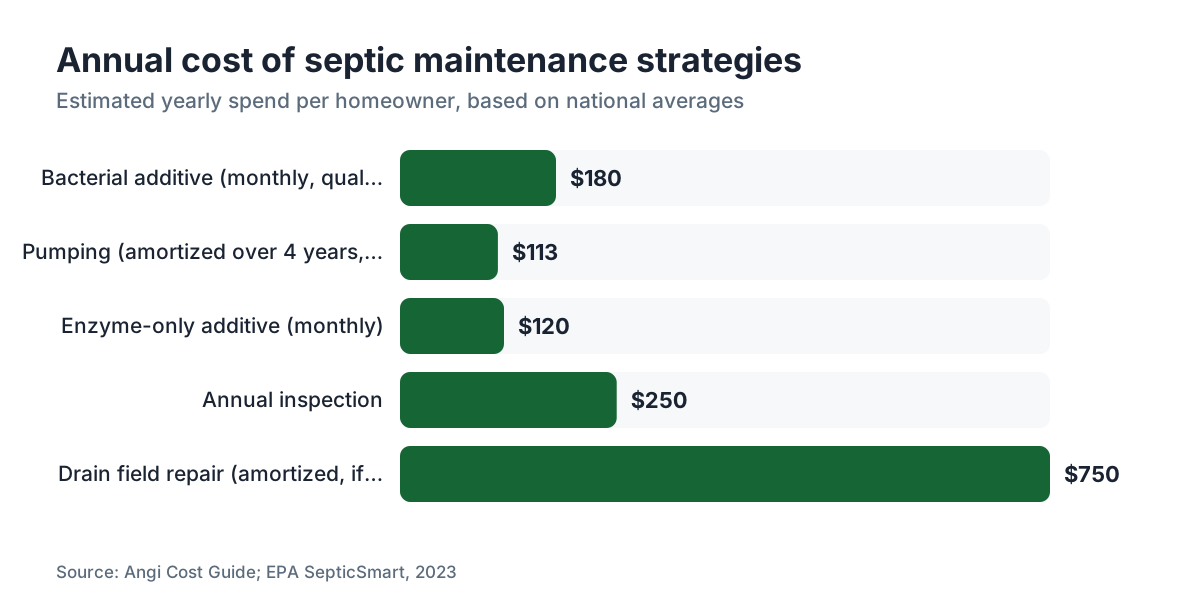
Reasonable cost relative to benefit. Monthly treatments run $5 to $20 per dose for reputable products. That's $60 to $240 a year. Weigh it against pumping, which costs $300 to $600 on average and is required whether you use additives or not [6]. No product eliminates pumping.
How do biological septic additives compare to chemical ones?
| Treatment type | Mechanism | Safety profile | Effectiveness evidence | Cost range |
|---|---|---|---|---|
| Biological (bacteria) | Adds live bacterial cultures to aid digestion | Generally safe; no groundwater concern | Mixed; modest benefit in some studies | $5-$20/dose |
| Biological (enzymes only) | Protein-based catalysts break down organics | Generally safe | Short-term; no sustained colony | $5-$15/dose |
| Acid-based chemical | Dissolves scum/sludge rapidly | Can corrode concrete; disrupts biology | Unreliable; may damage tank | $5-$25/dose |
| Solvent-based chemical | Dissolves fats and oils | High groundwater risk; banned in some states | Dangerous; not recommended | $5-$20/dose |
| Inorganic (lime, baking soda) | pH adjustment, odor reduction | Safe in small amounts | Minimal to none | Low |
The gap between biological and chemical additives isn't close. If you're shopping for a good septic tank treatment, you want the first two rows. The rest are either counterproductive or just useless.
Can septic treatments reduce how often you need to pump?
No. No peer-reviewed study has found that any additive consistently reduces required pump-out frequency. North Carolina's guidance is blunt on this: 'No product has been proven to reduce the need for routine septic tank pumping' [4].
The reason is mechanical as much as biological. Sludge piles up at the bottom of the tank because inorganic material, grit, and non-digestible solids have nowhere else to go. Bacteria digest organic matter, but they can't eliminate grit, hair, and mineral deposits that build up over years. Those have to come out physically. A septic tank pump out every three to five years isn't optional maintenance that a good product might replace. It's the foundation.
The three-to-five year window comes from EPA SepticSmart guidance and is calibrated to household size and tank volume [1]. A single-person household with a 1,000-gallon tank might go longer. A family of five with a 1,000-gallon tank and a garbage disposal might need pumping every two years. No additive moves those numbers.
If a product label claims it eliminates pumping, that's marketing with no science behind it. Treat it like any other unsupported claim.
What household products harm your septic system?
This matters more than which additive you pick. The most common cause of biological trouble in septic tanks isn't what homeowners forget to add. It's what they actively pour in.
Antibacterial soaps and cleaners are the biggest culprit. Products with triclosan or quaternary ammonium compounds kill bacteria broadly, including the anaerobic bacteria doing the real work in your tank. A 2005 EPA study found triclosan in 57.6 percent of streams tested, largely from household drain sources, and noted its persistence in soil environments like drain fields [7].
Bleach in large doses. Routine toilet cleaning with normal amounts of bleach is usually fine, because it's diluted a lot before it reaches the tank. Dumping a gallon at once is not fine.
Grease and cooking oils. These don't respond to any biological treatment. They form a persistent scum layer that seals the surface off from oxygen exchange and eventually clogs outlet baffles.
Medications. Antibiotics in particular, flushed deliberately or excreted in urine, suppress bacterial activity in the tank. It's hard to avoid when someone in the house is on a course of antibiotics, but the effect is real.
Wipes. Anything labeled 'flushable' that isn't toilet paper. They don't break down, and they pile up faster than bacteria can touch them.
Keeping these out will do more for long-term septic health than any product you can buy. The septic tank cleaning guide covers what professionals see most often when tanks get opened.
How do you use a septic treatment product correctly?
Even good products get wasted through bad use. A few practical notes.
Flush it down the toilet, not the sink. The path from toilet to tank is more direct, with less dilution from trap water and less chance of the dose parking in a drain line.
Dose after a low-use period, ideally at night before a day when the household will run minimal water. High flow through the tank flushes bacteria out before they can settle in. Some manufacturers recommend dosing before a weekend away, which makes sense.
Hold the dose schedule. Bacterial populations don't sustain indefinitely at elevated levels on their own, especially if the household uses any antibacterial products. Monthly dosing is the standard recommendation from most manufacturers.
Don't double-dose after a heavy cleaning day. If you just bleached the bathrooms, running a double dose of bacteria the same day accomplishes almost nothing. The bacteria die before they reach the tank in meaningful numbers. Wait 48 to 72 hours after heavy chemical cleaning before adding a bacterial treatment.
If your system is already in trouble, with slow drains, odor near the drain field, or wet spots in the yard, a bottle of additive won't fix it. Those symptoms point to mechanical problems that need a professional. Our septic system repair guide covers what those symptoms usually mean and what they typically cost to fix.
Some septic operators use SepticMind to track maintenance schedules across many customer accounts, which makes it easy to flag systems that are overdue for a pump-out or showing early signs of trouble before they turn into emergency calls.
Are there septic treatments specifically for drain fields?
Yes, and this is where some products make claims that deserve extra scrutiny.
Drain field restoration products usually pack concentrated bacterial or enzyme blends meant to break down biomat, the dense microbial mat that forms on the soil interface in a drain field over time. Some biomat is normal and actually useful, because it slows effluent and gives bacteria time to work. Excessive biomat clogs the soil and kills the system.
The evidence for drain field additives is thinner than for tank additives. A rested drain field (meaning the system goes offline for several weeks to let the biomat die back naturally) is one of the few interventions with reasonable evidence behind it. Bacterial products aimed at field restoration have limited controlled study data.
Some county extension offices have documented cases where terralift or fracturing combined with bacterial reseeding helped restore partially failed drain fields. But those are professional interventions, not bottle products.
If your leach field is showing signs of failure, get a professional inspection before you spend money on restoration products. Restoring a failed drain field professionally runs $1,000 to $5,000 depending on method. Full replacement runs $3,000 to $15,000 [6]. A septic tank inspection first tells you whether the problem is the field or something upstream.
What do septic professionals actually recommend?
Ask ten pumpers and inspectors which product they recommend and you'll get a spread of answers, but most land on the same core message: pump on schedule, watch what goes in, and don't stress about additives.
Some operators stock a bacterial product they sell to customers who ask. That's fine. The honest ones will tell you it's a belt-and-suspenders measure, not a replacement for the fundamentals.
The National Association of Wastewater Technicians (NAWT) doesn't endorse specific additive brands, but it does recommend that homeowners focus on water conservation and pump-out schedules as the primary maintenance strategy [8].
One piece of advice comes up again and again from field pros: if the household just went through a prolonged illness with heavy antibiotics, or the system sat unused for a long stretch, a bacterial reboot with a quality product makes sense. Those are real cases where the tank's native population may be genuinely depleted. Otherwise, the bacteria are already there.
The cost math is one-sided. You might spend $150 a year on a solid bacterial product. A system failure that needs septic tank repair can run $1,000 to $10,000 or more. Pumping and behavioral changes win over any bottle, every time.
What's the verdict: what is a good septic tank treatment?
Here's the honest ranking, from most to least effective use of your maintenance budget.
- Pump on schedule. Every three to five years for most households, calibrated to actual use and tank size [1]. Nothing else comes close as a maintenance move. See our septic tank pumping guide for current cost ranges and what the service includes.
- Change your flushing habits. No wipes, no grease, no antibacterial everything. This is free, and probably more useful than any additive.
- Use a quality bacterial additive if you want belt-and-suspenders coverage. Look for live Bacillus strains, at least 1 billion CFU per dose, and no chemical preservatives. Monthly dosing via toilet. Expect $60 to $200 a year.
- Have your system inspected every one to three years if you have any concerns, especially if it's older than 20 years or you don't know its history. A septic tank inspection catches problems while they're still small.
What's not worth buying: enzyme-only products at low doses, any chemical additive, any product that claims to eliminate pumping, anything without a clear ingredient list and CFU count.
If you run a septic service business and track additive recommendations and maintenance schedules across a customer base, SepticMind's operator platform is built to log exactly this kind of per-system data so nothing slips through between service intervals.
The bottom line is unglamorous but real: a well-maintained septic system with no additives will outlast a neglected system running the best product on the market. The bacteria are already there. Give them favorable conditions and they'll do the job.
Frequently asked questions
What's the best septic tank treatment you can buy?
For most homeowners, a live-bacterial product with Bacillus strains at 1 billion CFU or more per dose is the safest and most defensible choice. Brands like Rid-X, Green Gobbler, and Cabin Obsession get used widely, though no independent body has ranked them definitively. Focus on CFU count and ingredient transparency over marketing claims. No commercial product replaces pumping every three to five years.
Does Rid-X actually help your septic system?
Rid-X combines bacteria and enzymes and has been on the market for decades. Independent studies haven't confirmed it meaningfully reduces sludge accumulation or extends pump-out intervals. It's unlikely to harm your system, and it may give modest support to the tank's biological activity. If you use it, follow the dosing instructions and keep pumping on the normal schedule.
How often should you treat your septic tank with additives?
Most bacterial additive makers recommend monthly dosing. The reasoning is that bacteria added from outside don't sustain indefinitely, especially in households using any antibacterial cleaning products. Dosing after low-use periods (late evening, before a day away) improves effectiveness. Annual or one-time treatments are unlikely to produce lasting change in tank biology.
Can you use baking soda as a septic tank treatment?
Baking soda in small amounts won't harm your tank, but it won't meaningfully help either. At typical household doses, it has a negligible effect on tank pH or bacterial activity. It's sometimes suggested for odor reduction near drains, where it has a mild effect. It's not a substitute for bacterial additives, and certainly not for pumping.
What kills the bacteria in a septic tank?
The biggest killers are antibacterial soaps and cleaners (especially triclosan and quaternary ammonium compounds), large amounts of bleach, antibiotics excreted in urine, and chemical drain cleaners. Overloading the system with water in a short window can also flush bacteria out before they establish. Avoiding these does more for tank biology than any additive.
Do septic treatments work for old or failing systems?
No. If your system is actively failing, showing wet spots near the drain field, sewage odors, or backup, an additive won't fix it. Those are signs of mechanical problems: failed drain field soils, damaged baffles, or a full tank. You need a professional inspection. Products marketed as 'drain field restorers' have limited evidence behind them and aren't a substitute for professional diagnosis.
Are chemical septic treatments safe?
No. Acid-based and solvent-based chemical additives are specifically warned against by the EPA. They can corrode concrete and fiberglass tank components, kill the bacteria that make the system work, and push dissolved contaminants into the drain field and groundwater. Some states have banned solvent-based additives. Stick with biological products if you use anything at all.
What is a good septic tank treatment for a system that smells?
Odor near the tank or drain field usually means the system is full, the inlet baffle is broken, or venting is inadequate. A bacterial product won't fix a structural issue. If the smell is mild and the tank was recently pumped, a bacterial reboot can help restore biological balance. Persistent or strong odors call for a professional inspection before you spend money on products.
How do you know if a septic tank treatment is working?
Honestly, it's hard to tell in a healthy system because you have no baseline to compare against. Signs that a treatment is helping (or that the system is healthy) include no odors, no slow drains, and normal pump-out intervals. If you start treatment after a disruption (illness with antibiotics, long vacancy) and normal function returns, that's a reasonable signal. No home test measures tank bacterial populations directly.
Is it worth buying septic tank treatment every month?
At $10 to $20 per month, a bacterial product costs $120 to $240 a year. Whether that's worth it depends on your situation. For a household that uses antibacterial soaps or had recent heavy antibiotic use, monthly treatment makes sense. For a household with good habits and a recently pumped tank, it's optional. It won't hurt, but the evidence for routine monthly treatment in a healthy system is thin.
Can I make my own septic tank treatment at home?
Some sources suggest active dry yeast (one packet flushed monthly) as a cheap bacterial supplement. Yeast (Saccharomyces cerevisiae) isn't the same species found in septic tanks, which run primarily on anaerobic Bacillus strains, but it does contribute some enzymatic activity. The evidence is anecdotal. It's harmless and cheap, so if cost is a concern it's not a dangerous choice, just an unproven one.
What septic treatments are safe for the environment?
Biological additives with Bacillus strains have a good safety profile for groundwater and soil. Chemical additives, particularly solvent-based ones, carry real groundwater contamination risk and are banned in some states. If you're near a well, a lake, or in a sensitive watershed, the EPA's SepticSmart guidance recommends biological-only products and strict avoidance of chemical treatments.
Do I need septic treatment after pumping my tank?
Not strictly. When a tank is pumped, some sludge residue stays behind, and it holds enough native bacteria to re-seed the tank as normal use resumes. Some pumpers recommend a bacterial treatment after the pump-out as a jumpstart, which is reasonable but not required. The tank re-establishes a working bacterial population within days to weeks on its own, assuming normal household waste inputs.
What's the difference between septic tank treatment and septic tank cleaning?
Treatment means adding a product (bacteria, enzymes) to support biological activity inside the tank. Cleaning, or pumping, means physically removing accumulated sludge and scum with a vacuum truck. They're not the same thing, and one doesn't replace the other. Treatment products work on what's already in the tank. Cleaning removes material bacteria can't digest. Both have a role, but cleaning is non-negotiable.
Sources
- EPA SepticSmart: Caring for Your Septic System: EPA states biological additives may not be necessary for a properly functioning septic system and recommends pumping every three to five years as the primary maintenance action.
- University of Minnesota Extension: Septic System Additives: A review of studies on septic additives found mixed results; some biological products maintained effluent quality but none consistently outperformed well-maintained systems pumped on schedule.
- NSF International: Septic System Additives Standard: NSF evaluates septic additives including bacterial strain identification and CFU count as key quality markers for biological products.
- North Carolina Department of Environmental Quality: Septic System Additives Guidance: North Carolina guidance states no product has been proven to reduce the need for routine septic tank pumping.
- Massachusetts Title 5 Regulations (310 CMR 15.000): Massachusetts restricts chemical septic additives containing solvents due to groundwater contamination risk.
- Angi: Septic Tank Pumping Cost Guide: Average septic tank pump-out costs $300 to $600; drain field replacement can cost $3,000 to $15,000 depending on method and region.
- EPA Water Research: Triclosan in Streams Study: A 2005 EPA study found triclosan in 57.6 percent of streams tested, largely from household drain sources, with persistence noted in soil environments.
- National Association of Wastewater Technicians (NAWT): Homeowner Guidance: NAWT recommends water conservation and pump-out schedules as the primary septic maintenance strategy rather than reliance on additive products.
- EPA: A Homeowner's Guide to Septic Systems: EPA guidance document outlines that chemical additives can corrode tank components and push contaminants into drain fields and groundwater.
- Penn State Extension: Septic System Maintenance: Penn State Extension notes that pump-out frequency should be calibrated to household size and tank volume, with typical intervals of two to five years.
Last updated 2026-07-09