Septic sprinkler systems: how aerobic treatment and spray heads work
By the SepticMind Editorial Team
TL;DR
- A septic sprinkler system is an aerobic treatment unit (ATU) that adds oxygen and disinfection to standard treatment, then pumps the cleaned effluent through yard spray heads.
- Installed cost runs $10,000 to $20,000.
- It needs monthly chlorine and quarterly professional inspections.
- Florida and Texas require these systems on lots too small or too wet for a conventional drain field.
What is a septic sprinkler system and how does it differ from a conventional system?
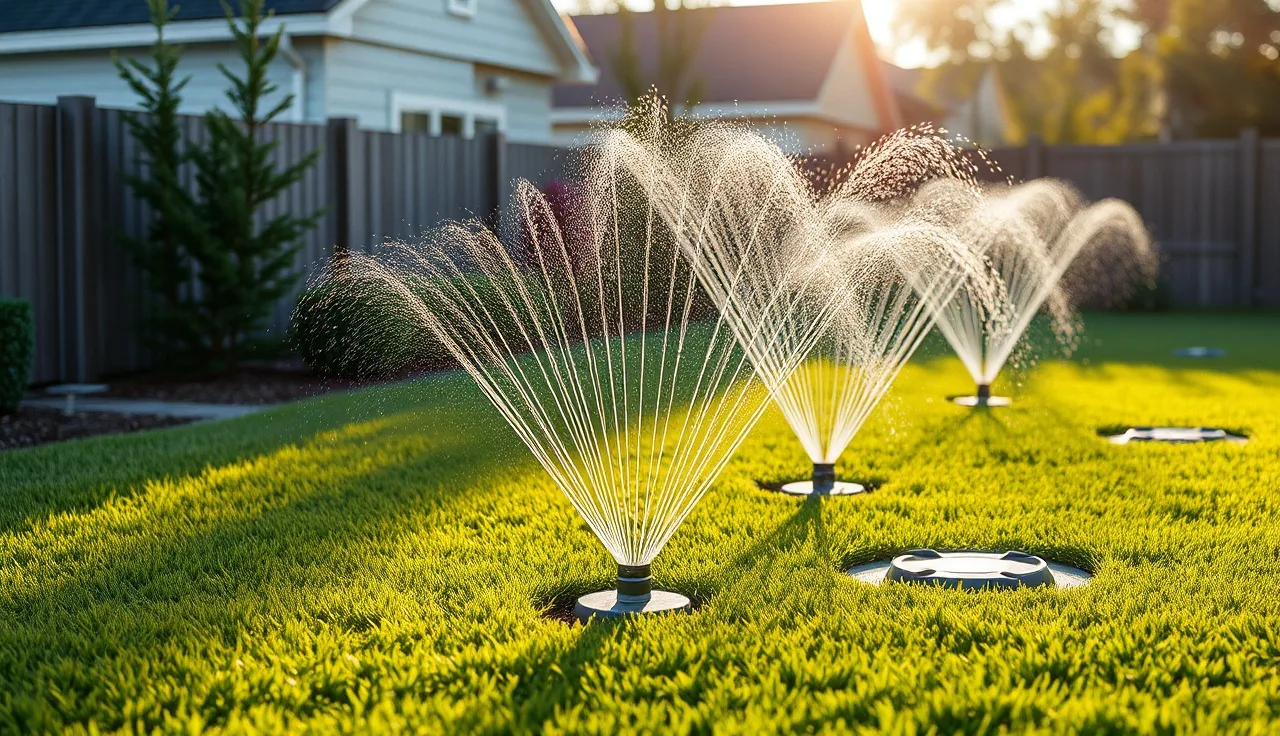
A septic sprinkler system is almost always an aerobic treatment unit (ATU). It runs household sewage through three or four chambers, then distributes the treated effluent through above-ground or flush-mounted spray heads across your lawn. A conventional septic system stops at passive anaerobic treatment and buries the effluent in a leach field. The aerobic version pumps forced air into the tank, which feeds oxygen-hungry bacteria that break waste down faster and further.
The result is effluent clean enough to spray on the surface legally. EPA guidance classifies the output of a properly running ATU as "secondary treatment" or better, versus the "primary treatment" of a plain septic tank. [1] That difference is the whole reason surface spray is allowed. Spraying raw septic tank effluent on your yard is a health hazard and a code violation in every state.
Conventional systems are simpler and cheaper. They also need enough permeable soil to absorb hundreds of gallons a day underground. Aerobic sprinkler systems get around the space problem. Treatment happens mechanically inside the unit, and the finished water spreads over a large surface at low volume per square foot. That makes them the answer on small lots, clay soils, and high water-table sites.
The tradeoff is real. These systems have motors, air pumps, and chlorinators that all need attention. They cost two to three times what a basic system does to install, and they carry ongoing maintenance costs a conventional system never sees.
What are the main components of an aerobic septic sprinkler system?
Learn the layout and maintenance stops being a mystery. Most ATU sprinkler systems have five functional zones.
Trash tank (pre-treatment chamber). Raw sewage enters here first. Solids settle, scum floats, and the clarified middle layer moves on. This chamber works like a conventional septic tank and needs pumping every three to five years, same as one. [2]
Aeration chamber. An electric air compressor, sometimes called a blower or aerator, pushes air into this chamber around the clock. Aerobic bacteria digest suspended organic matter fast. The compressor runs 24/7 and is the component most likely to fail first, usually within seven to ten years. [7]
Clarifier or settling chamber. Treated water separates from leftover solids here before disinfection. Compact units sometimes fold this into the aeration chamber.
Disinfection chamber. A chlorinator, either a tablet feeder or a liquid injector, disinfects the clarified effluent. Texas Commission on Environmental Quality rules require a residual chlorine level in the disinfection chamber at the point of discharge. [3] Some systems use UV instead, but chlorine tablet feeders are far more common.
Pump tank and spray distribution system. A submersible sprinkler pump sits in a final chamber or a separate pump tank. It cycles on a timer or float switch, pushing disinfected effluent through PVC pipes to spray heads across the yard. The heads look like ordinary irrigation heads and are usually color-coded purple or tan to flag reclaimed water.
A basic aerobic septic system sprinkler diagram shows these chambers in series, the blower motor riding on top of the aeration chamber and the sprinkler pump wired to a separate timer panel. Manufacturer diagrams from Norweco, Infiltrator, and Jet are free to download and worth grabbing before any service call.
How does the aerobic septic system sprinkler pump work?
The sprinkler pump is a submersible unit, usually 1/2 to 1 horsepower, sitting in the pump tank or final chamber. It does not run continuously. A timer panel cycles it on for 10 to 30 minutes, then off for 30 to 90 minutes, all day long. Some systems skip the timer and use a float switch that fires the pump when effluent reaches a set level.
Flow rates run between 5 and 15 gallons per minute during a spray cycle, depending on system size and yard layout. The pump pushes effluent through a manifold and out to individual zones. Most residential systems split the yard into two to four zones that run one after another so no single patch gets soaked.
Pump failures are the most common service call on these systems. The warning signs are easy to read: heads that never activate, a pump that hums but moves no water (seized impeller), or a high-level alarm on the control panel. Replace the pump, do not try to rebuild it. A replacement sprinkler pump runs $150 to $400 for the part, and a technician charges $200 to $400 for the swap, so figure $350 to $800 total depending on region. [4]
One habit that saves headaches: write down the pump's model number and head pressure rating before it dies. Dropping in an undersized pump is a common DIY mistake. You end up with short spray distance and uneven distribution.
What does an aerobic septic sprinkler system cost to install?
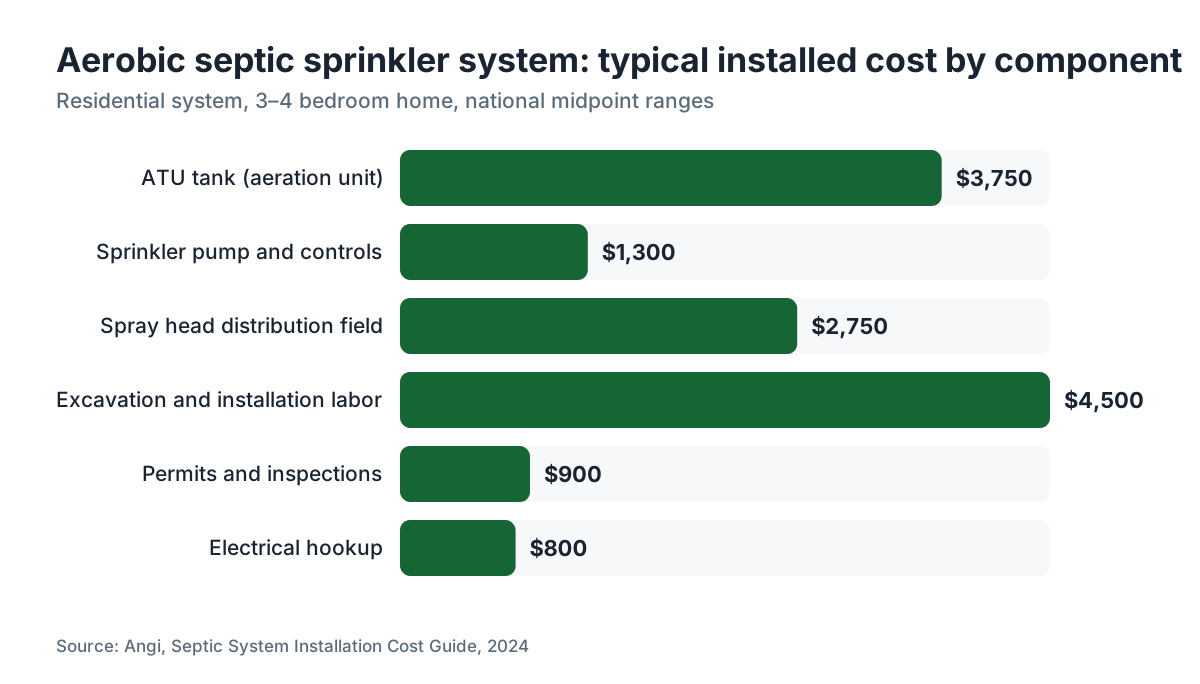
Installed cost for a residential aerobic sprinkler system runs $10,000 to $20,000 in most U.S. markets, with the national midpoint around $13,000 to $15,000. [5] The spread is wide because head count, tank size, and local permit fees all move the number.
Here is the breakdown by cost category:
| Component | Typical cost range |
|---|---|
| ATU tank (aeration unit) | $2,500 to $5,000 |
| Sprinkler pump and controls | $800 to $1,800 |
| Spray head distribution field | $1,500 to $4,000 |
| Excavation and installation labor | $3,000 to $6,000 |
| Permits and inspections | $300 to $1,500 |
| Electrical hookup | $400 to $1,200 |
Against a conventional septic tank installation, you pay roughly $4,000 to $8,000 more. That premium buys the ability to put a septic system on a lot that could never support a conventional drain field. On a lot where both options work, a conventional system almost always wins on cost unless local rules require ATU treatment.
The ongoing costs add up too. A maintenance contract with a licensed provider runs $200 to $500 a year and covers quarterly inspections and chlorine refills. Some states require the contract by law. Add electricity for the air compressor (about $10 to $25 a month) and the occasional pump or aerator swap, and the realistic ten-year operating premium over a conventional system lands around $5,000 to $10,000. [5]
For a full comparison of system types and costs, see our guide to the cost to install a septic system.
What are the rules for aerobic septic systems in Florida specifically?
Florida runs one of the highest volumes of aerobic ATUs in the country. Shallow water tables, sandy soils with uneven absorption, and dense development on small lots all push homeowners toward them. The Florida Department of Health administers onsite sewage treatment and disposal system (OSTDS) rules under Florida Administrative Code Rule 64E-6. [6]
Florida allows aerobic systems with drip or spray distribution as an "innovative/alternative" system when a standard system will not fit because of lot size, setbacks, or soil. Before surface application, the effluent must hit "basic disinfection": at least 20 mg/L CBOD5 and 30 mg/L TSS with a fecal coliform count below 200 CFU/100 mL. [6]
The Florida-specific rules that trip people up:
- Spray heads sit at least 2 feet back from the property line and cannot spray toward a residence, well, or water body.
- The spray distribution area needs a 30-foot setback from potable water wells.
- Where the county requires it, the system runs under contract with a licensed service provider, and that provider files annual reports with the county health department.
- Installations near wetlands or Outstanding Florida Waters face tighter nutrient limits that can force advanced nitrogen-reduction technology beyond basic ATU treatment.
Florida homeowners often meet their aerobic system for the first time during a home sale. A septic tank inspection in Florida should confirm the ATU's service history and whether the maintenance contract is current. Lapsed contracts sometimes trigger county notices of violation.
Gulf Coast neighbors: Texas has similar ATU volume, governed by TCEQ rules under 30 TAC Chapter 285. [3] Both states run large networks of licensed ATU service providers.
How often does an aerobic sprinkler system need maintenance?
More often than most homeowners expect. These systems have moving parts, and neglect turns into code violations and repair bills faster than with a conventional system.
Monthly. Check the chlorine supply and refill the tablet feeder or chlorine tank. Most systems burn one to three tablets a week depending on household size. Run out of chlorine and untreated effluent reaches your spray heads. That is a health risk and a permit violation.
Quarterly. A licensed technician should check air compressor function, dissolved oxygen in the aeration chamber, chlorine residual in the disinfection chamber, spray heads for clogs or damage, and the pump timer setting. Many states mandate quarterly inspections for ATU systems.
Every 3 to 5 years. The trash tank needs pumping, same as a conventional septic tank. Skip it and solids carry over into the aeration chamber, which kills the aerobic bacteria and wrecks the treatment process. Our septic tank pumping guide covers what that service looks like.
As needed. The air compressor diaphragm lasts five to eight years. Spray heads crack or clog. The pump impeller wears out. The chlorinator feed tube calcifies. A well-maintained ATU sprinkler system runs 20 to 25 years on the tanks themselves, with mechanical parts replaced along the way.
The EPA's SepticSmart program puts it plainly: "Regular inspection and pumping are the most important things you can do to protect your investment in your septic system." [1] For ATU systems that goes double, because neglect shows up faster and messier.
Is it safe to be around aerobic sprinkler heads when they activate?
Here is the honest answer: effluent from a properly disinfected ATU is far cleaner than raw sewage, but it is not drinking water and you should not stand in the spray. A working system with adequate chlorine residual keeps fecal coliform below regulatory limits, typically under 200 CFU/100 mL, and under 23 CFU/100 mL in stricter jurisdictions. [3] That beats a lot of recreational water bodies.
The catch is those numbers only hold when the system works. A unit with a dead aerator or an empty chlorine feeder can spray effluent with much higher pathogen counts, and you cannot tell by looking.
Sensible precautions no matter what the system status is:
- Keep kids and pets out of the spray zone during active cycles. The timer panel usually tells you when the system runs.
- Do not eat vegetables or fruit grown in the spray area. Most state codes ban food crop irrigation with ATU effluent anyway.
- Wash your hands after touching spray heads or wet turf in the distribution area.
- A noticeable sewage odor during spray means the system is not treating properly. Call your provider, less for the safety risk than because a malfunctioning ATU is a code violation.
The heads themselves are harmless to walk past when the system is off. The risk window is during an active cycle on a system that might not be performing to standard.
What problems are most common with aerobic septic sprinkler systems?
Once the install honeymoon ends, ATU sprinkler troubles fall into a handful of repeat offenders.
Air compressor failure. The aerator is the heart of the system, and it runs nonstop. Diaphragm pumps and rotary vane compressors both wear out. When the aerator quits, aerobic bacteria die within hours, the tank reverts to anaerobic conditions, and effluent quality drops fast. [7] The control panel alarm is your first warning. Replacement aerators cost $200 to $600 for the unit.
Clogged or damaged spray heads. Hard-water minerals, soil intrusion, and UV degradation all chew on spray heads. A clogged head either does not spray or throws an uneven pattern that overloads one spot. Replace clogged heads instead of cleaning them. They cost $5 to $15 each.
Chlorinator problems. Tablet feeders clog with calcium buildup from dissolving tablets. The feed tube needs cleaning once a year. Running out of tablets is the most common homeowner miss and the easiest fix.
High-level alarms. A float alarm in the pump tank usually means the sprinkler pump has failed or the distribution lines are blocked. Ignore it and you risk a surface overflow. Deal with it the same day.
Solids carryover. When the trash tank goes unpumped, solids wash into the aeration chamber and plug the air diffusers, killing the aerobic process. Fixing this takes a full septic system repair and sometimes damages the tank.
Operators running multiple ATU accounts know the real work is tracking inspection schedules and service history across dozens of systems. That is where a platform like SepticMind earns its keep, pulling work orders, compliance records, and alarm history into one place.
If you are chasing down a failing system, start with our septic tank repair guide for a structured way to troubleshoot.
How do you maintain the spray heads and distribution field?
The distribution field for an aerobic sprinkler system forgives more than a conventional leach field does, because the soil is not the treatment mechanism. The spray heads and PVC lines still need attention.
Inspect the heads quarterly during your routine visit. Watch for:
- Heads that do not pop up during a cycle (clogged or seized)
- Heads that spray sideways or in a distorted pattern (cracked body or damaged nozzle)
- Standing water or soggy soil around one head (broken line or stuck-open head)
- Spray reaching driveways, structures, or the property line (angle or coverage needs adjusting)
Mowing over the spray area is fine. These heads are built to live in a lawn. But do not run a mechanical aerator over the distribution zone. The tines can punch through shallow PVC lines. Hand-pull weeds near the heads instead of using a string trimmer that might nick the supply line.
If the system has multiple zones on solenoid valves, test each zone by hand at least once a year to confirm every valve opens and closes. A stuck-open solenoid floods one zone and starves the rest.
Trees and shrubs: keep woody plants at least 10 feet from any distribution line. Root intrusion is rarer here than in a conventional drain field because the pipes carry pressure flow rather than gravity percolation, but it still shows up in older systems.
Can you convert a conventional septic system to an aerobic sprinkler system?
Yes, and it happens all the time. Usually a conventional system has failed and the lot cannot support a new drain field, or local rules now require ATU treatment on a property that used to be grandfathered.
A retrofit usually goes like this:
- Install a new ATU tank. The existing septic tank can often stay on as the pre-treatment trash tank if it is structurally sound.
- Add an aerator, disinfection chamber, and pump tank.
- Install a new spray distribution field across the available yard.
- Upgrade the electrical panel to run the aerator and pump.
- Pull permits and pass county inspection.
A retrofit conversion runs $8,000 to $16,000, a bit under a full new install because the existing tank cuts the excavation. [5] The permitting process matches a new installation in most jurisdictions.
If only the drain field failed and the tank is sound, a simpler repair may cost less. Read our overview on septic system repair options before committing to a full conversion. A licensed engineer or soil scientist should decide whether ATU spray distribution is actually required or whether repairing the existing drain field will do.
Our cost to put in a septic tank guide walks through what drives the gap between repair and full replacement.
What permits and inspections does an aerobic sprinkler system require?
Every state requires permits for ATU installation, and most require ongoing inspection and reporting that conventional systems skip. This is not red tape for its own sake. Aerobic systems discharge treated water above ground, where people can come into contact with it.
What you can expect:
Installation permits. Filed with the county health department or environmental agency before any digging. The application usually wants a site plan, a soil evaluation, a system design stamped by a licensed engineer or designer, and a fee of $300 to $1,500.
Construction inspection. An inspector visits during installation to verify setbacks, chamber dimensions, and component specs before backfill.
Operating permit. Many states issue an ongoing operating permit or registration number tied to the system. That number has to stay current, and it connects to the maintenance contract requirement.
Annual or quarterly reporting. In Texas, licensed maintenance providers submit inspection reports to TCEQ or the local authorized agent. [3] Florida requires similar reporting to the county health department. [6] These reports document chlorine residual, aerator function, and any repairs.
Buying or selling a home with an aerobic sprinkler system? A septic tank inspection at closing should review permit status, maintenance contract history, and the most recent inspection report. A system with lapsed permits or unreported repairs is a negotiating point and a potential liability.
The EPA's SepticSmart program advises homeowners at closing to "ask to see the inspection report from the most recent maintenance visit." [1]
How long does an aerobic septic sprinkler system last?
The concrete or fiberglass tanks are essentially permanent, with a realistic life of 30 to 50 years if they are maintained and not physically damaged. [8] The mechanical and electrical parts are another matter.
Realistic component lifespans:
| Component | Expected lifespan |
|---|---|
| Concrete/fiberglass tanks | 30 to 50 years |
| Air compressor/aerator | 5 to 10 years |
| Sprinkler pump | 5 to 10 years |
| Spray heads | 10 to 20 years |
| Chlorinator feeder | 5 to 10 years |
| Control panel/timer | 10 to 20 years |
| Distribution PVC lines | 20 to 40 years |
A system installed today, maintained on schedule, should run 25 years or more before it needs anything beyond component swaps. The main killer is neglect. Let the aerator run dry, the aerobic bacteria die, solids build up in the aeration chamber, and the whole bioprocess has to restart, stressing every part in the chain.
Buying a home with an existing aerobic system? Ask for service records going back at least five years and find out when the aerator and pump were last replaced. A system with no records and a compressor older than eight years comes with known upcoming expenses. Budget $800 to $1,500 to replace both proactively rather than wait for failure.
Recordkeeping is one reason service operators who maintain ATU fleets are moving to management software like SepticMind, which tracks inspection history, alarm events, and component replacement dates across every account without paper files.
Frequently asked questions
How much does it cost to run an aerobic septic sprinkler system per month?
Electricity for the air compressor runs $10 to $25 a month depending on unit size and local rates. Chlorine tablets cost roughly $5 to $15 a month. Add the pro-rated maintenance contract ($200 to $500 a year) and you land around $30 to $60 a month in ongoing costs, against essentially zero for a well-functioning conventional system.
Why does my aerobic septic system smell like chlorine near the spray heads?
A faint chlorine odor near active spray heads is normal and means disinfection is working. A strong sewage smell during spray cycles is not normal and usually means the aerator has failed or the system is taking on more flow than it can treat. Check the aerator first, then call your service provider if the odor sticks around after you confirm the compressor is running.
Can my aerobic sprinkler system spray water near my neighbor's property?
No. Most state codes require setbacks of 2 to 10 feet from property lines for spray distribution. Texas TCEQ requires 10 feet from property lines for unrestricted spray areas. Florida requires 2 feet minimum. Spray reaching a neighboring lot is a code violation. Adjust head angles or fit deflector plates to keep distribution inside your own property.
How do I add chlorine to my aerobic septic system?
Most residential ATUs have a PVC standpipe with a lid marked "chlorine" or "disinfection" near the tank. Open it, drop in 1-inch or 3-inch trichlor tablets (check your manual for the right size), and replace the lid. Checking monthly and keeping two to four tablets in the feeder is a reasonable default. Never use calcium hypochlorite pool shock in a feeder built for trichlor.
What does the alarm light on my aerobic septic system mean?
A high-water alarm (red light, often with a buzzer) means effluent in the pump tank has risen too high because the sprinkler pump is not cycling it out. Check the pump breaker first, then the timer, then the pump. A different colored light (often green or yellow) on some systems shows aerator status. Do not silence the alarm without finding the cause.
Do aerobic septic systems require a maintenance contract?
In Texas, yes. A maintenance contract with a licensed service provider is legally required for ATU systems under 30 TAC Chapter 285. Florida requires contracts in many counties under Rule 64E-6. Even where the law does not mandate one, a contract is worth having, because quarterly professional inspections catch failures before they turn into code violations or property damage.
Can I install an aerobic sprinkler system myself to save money?
Not legally in most states. ATU installation requires a licensed designer, a licensed installer, and a county permit in nearly every jurisdiction. Installing without permits is a code violation that can void your homeowner's insurance and create title problems when you sell. Homeowners can legally maintain their own systems in most states, including adding chlorine tablets and cleaning spray heads.
How far do aerobic septic spray heads need to be from a well?
Setbacks vary by state. Florida requires 30 feet from a potable water well to the spray distribution area. Texas TCEQ requires 50 feet from water wells under most conditions. Always check your specific county or state health department, because local rules can be stricter than the state minimum, and wells on neighboring properties count in the calculation.
What happens if I stop maintaining my aerobic septic system?
Without regular chlorine and quarterly inspections, the system eventually sprays inadequately treated effluent through the heads. Most states require annual or quarterly reporting, and a lapsed maintenance contract triggers a notice of violation from the health department. Uncorrected violations can bring fines and orders to stop using the system, which means no water use in the home until repairs are done.
How many spray heads does a typical aerobic system have?
A standard residential ATU serving a three-to-four-bedroom home typically has 6 to 20 spray heads across the yard in two to four zones. [9] The count depends on the required spray area (from daily flow and soil characteristics), the spray radius of each head (usually 8 to 15 feet), and the shape of the yard. Your permit documents specify the exact head count and layout.
Is an aerobic septic system better than a conventional system?
It depends on the site. Aerobic systems produce cleaner effluent and work where conventional systems cannot. They also cost more to install, need far more maintenance, and have mechanical parts that fail. On a site that can support a conventional system, the conventional system is almost always more reliable and cheaper over 20 years. ATU systems solve a problem. They are not an upgrade for its own sake.
How often should the pump tank be pumped on an aerobic system?
The pre-treatment trash tank needs pumping every three to five years, same as a conventional septic tank. The pump tank itself (the final chamber holding the sprinkler pump) rarely collects much solid material if the upstream treatment works. During your regular pump-out, ask the technician to check both chambers. See our guide on how often to pump a septic tank for general timing.
Can an aerobic sprinkler system freeze in cold climates?
The underground tanks will not freeze in most climates because soil insulates them. The spray heads and above-ground lines can freeze in cold-winter regions. Most cold-climate ATU installs use flush-mounted heads and insulated line burial. If you live somewhere with sustained below-freezing temperatures, confirm with your installer that the distribution system is designed for your climate zone before installation.
Sources
- U.S. EPA, SepticSmart Program: Regular inspection and pumping are the most important things you can do to protect your investment in your septic system; EPA classifies properly functioning ATU effluent as secondary treatment or better.
- U.S. EPA, Onsite Wastewater Treatment Systems Manual: Pre-treatment chambers (trash tanks) in ATU systems require pumping every 3 to 5 years, consistent with conventional septic tank schedules.
- Texas Commission on Environmental Quality, 30 TAC Chapter 285 (On-Site Sewage Facilities): TCEQ requires a chlorine residual in the disinfection chamber at the point of discharge, licensed maintenance provider reporting, and property-line and well setbacks for spray distribution.
- Angi, Septic System Repair Cost Guide: Replacement sprinkler pump costs $150, $400 for the part, with total installed cost of $350, $800 including technician labor.
- Angi, Septic System Installation Cost Guide: Installed costs for residential aerobic ATU sprinkler systems range from $10,000 to $20,000 nationally; annual maintenance contracts run $200, $500; retrofit conversions run $8,000, $16,000.
- Florida Department of Health, Onsite Sewage Programs (Rule 64E-6, F.A.C.): Florida requires aerobic systems used for surface spray distribution to achieve 20 mg/L CBOD5 and 30 mg/L TSS with fecal coliform below 200 CFU/100 mL; spray heads must maintain a 2-foot property line setback and 30-foot well setback.
- West Virginia University / National Environmental Services Center: ATU air compressors typically have a service life of 5 to 10 years; aerobic bacteria die within hours of aeration failure.
- University of Florida IFAS Extension (EDIS): ATU concrete and fiberglass tanks have a realistic lifespan of 30 to 50 years; mechanical components including pumps and aerators have significantly shorter service lives.
- Texas A&M AgriLife Extension: A typical residential ATU sprinkler system for a 3 to 4 bedroom home uses 6 to 20 spray heads in 2 to 4 distribution zones with individual heads covering an 8 to 15 foot radius.
- U.S. EPA, Wastewater Technology Fact Sheet: Aerobic Treatment: Aerobic treatment units can achieve secondary treatment standards and are approved in most states for surface spray distribution when conventional subsurface disposal is not feasible due to site constraints.
Last updated 2026-07-09