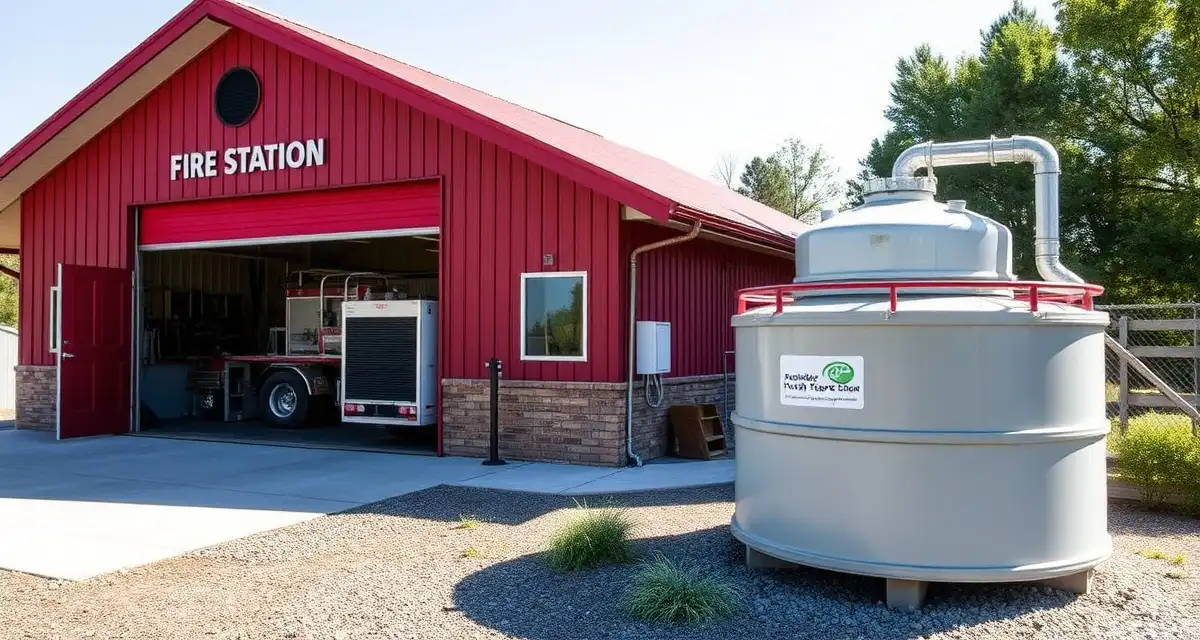
Septic Service for Rural Fire Stations
By the SepticMind Editorial Team
Rural fire stations are 24/7 facilities. Firefighters sleep there, cook there, shower there, and spend extended shifts between calls. The wastewater load from a staffed rural fire station is more like a small residential facility than a typical commercial office, and the consequences of a septic failure go well beyond inconvenience. Fire station septic failures create operational disruptions affecting emergency response readiness. When the bathrooms don't work at a fire station, you have a public safety problem.
TL;DR
- Fire Stations facilities have distinct wastewater loading patterns that affect septic system sizing, service frequency, and permit requirements.
- Commercial and institutional properties like fire stations typically require more frequent pumping than residential systems due to higher daily usage.
- Some fire stations operations generate waste streams (grease, chemicals, or high-volume flow) that require pre-treatment before reaching the septic system.
- Service contracts for fire stations provide predictable recurring revenue and are easier to manage with a platform that tracks commercial account schedules.
- Health department inspections for fire stations properties may require septic system condition documentation as part of facility licensing.
- Septic companies specializing in fire stations service build referral networks with property managers, architects, and health inspectors in that niche.
That's the core reason fire station septic management deserves more attention than it typically gets. These facilities are often publicly owned by rural fire districts or volunteer organizations with limited administrative capacity. Septic service can fall through the cracks until there's a problem.
What Makes Fire Station Septic Different
The wastewater profile of a rural fire station is driven by a few specific factors:
24/7 occupancy with variable staffing. Career fire stations have consistent daily use. Volunteer stations may have intermittent use during the week but high occupancy during drill nights, special events, or extended emergency incidents. That variable load makes calculating a service interval harder than for a facility with predictable daily use.
Kitchen and food preparation. Most fire stations have a full kitchen. Firefighter crews cook meals together during shifts. This adds fats, oils, and grease to the wastewater stream, which is exactly what overloads septic systems most rapidly. If your station doesn't have a grease interceptor before the septic tank, it probably should.
Shower and laundry facilities. Firefighters clean gear and themselves after structure fires and other incidents. Shower and laundry use adds gray water volume and, importantly, can introduce fire suppression foam residues (AFFF) that have their own environmental compliance concerns at stations using legacy AFFF products.
High-heat incident periods. During extended wildfire seasons or major incidents when off-duty crews may shelter at the station, water use can spike dramatically above the daily baseline.
Compliance Documentation for Fire Stations
Fire stations that are owned by counties, municipal fire districts, or other government entities have a different compliance burden than private businesses. Public facility septic records may be subject to public records requests, and county health departments often apply additional oversight to public safety facilities.
SepticMind's public safety account type tracks fire station septic compliance requirements in a format that's ready for review. Documentation that's organized and complete avoids problems when a county health department conducts a facility inspection or a public records request comes in.
For fire stations operated by volunteer fire companies that are nonprofit organizations, the compliance obligations are similar to public facilities in most jurisdictions. State fire marshal offices often have authority over volunteer fire company facilities, and many require regular maintenance documentation as a condition of state certification.
Setting a Service Interval
A staffed rural fire station with 4-6 firefighters on duty continuously is generating roughly the equivalent of a 4-6 person household in daily wastewater, plus kitchen loads. On a standard 1,500-gallon tank, that suggests a pump-out interval of 2-3 years under normal conditions.
Add a commercial kitchen without a grease trap, and that interval compresses significantly. Grease buildup is the leading cause of drain problems in fire stations that haven't been actively managed.
The right approach is to start with an inspection of the current tank condition, document what you find, and work backward to estimate how frequently the system needs service given your specific station's occupancy and kitchen use. Don't assume the previous service interval was correct.
Grease Interceptors for Fire Station Kitchens
If your fire station has a full kitchen and doesn't have a grease interceptor between the kitchen drain and the septic tank, this is worth addressing proactively. A grease interceptor captures fats, oils, and grease before they reach the tank, dramatically extending the life of your septic system and reducing pump-out frequency.
Grease interceptors themselves need regular cleaning and service, which adds a maintenance task but is much cheaper than dealing with a grease-clogged drain system or drainfield failure.
Managing Multiple Fire Station Facilities
Many rural fire districts operate multiple stations across a service area. Tracking septic service for Station 1, Station 2, and Station 3 separately, with different service dates, different tank sizes, and different compliance documentation requirements, gets complicated without a system.
SepticMind's public safety account type manages multiple facility records under a single district account. Each station has its own record with its own service history, but district administrators can see the full compliance picture across all locations. For municipal facilities managing similar multi-site portfolios, the same structure applies.
Connecting your station records with your septic service agreement management keeps your maintenance contracts, scheduled visits, and documentation in sync.
Emergency Preparedness and Septic
A fire station that loses its septic system during a major incident response is dealing with a logistical crisis at exactly the wrong time. Pre-emptive service before major fire season, wildfire response season, or other periods of anticipated high use is an easy preventive step that almost no rural stations actually take.
Build your septic service calendar around your operational calendar. If summer is your high-activity season, schedule your annual pump-out in spring. If you're in a northern climate with extended winter incident periods, service before freeze-up is essential.
Get Started with SepticMind
Managing service contracts for fire stations properties is easier with a platform built for the septic trade. SepticMind tracks commercial service schedules, documents every inspection visit, and keeps your compliance records organized by property. See how it handles your commercial account portfolio.
Frequently Asked Questions
How often should a rural fire station's septic system be serviced?
A staffed rural fire station with continuous 24/7 occupancy should plan for septic service every 2-3 years on a standard tank, assuming a typical crew size of 4-6. If the station has a commercial kitchen without a grease interceptor, or if the station regularly hosts large gatherings, drill nights, or extended incident responses that spike occupancy, annual service is more appropriate. Volunteer stations with lighter weekday use but heavy weekend and event use should have the system inspected to establish baseline condition and then schedule service based on actual fill rate rather than a fixed calendar interval.
What compliance documentation does a fire station need for its onsite septic system?
Publicly owned fire stations should maintain records of all pump-outs, inspections, and repairs, including dates, contractor information, and tank condition at each visit. These records may be subject to public records requests and should be organized for quick retrieval. State fire marshal offices often require proof of functioning sanitation facilities as part of station certification. County health departments may require periodic commercial facility inspections for fire stations. Some states also require maintenance agreements for commercial facilities above a certain occupancy threshold. Check with your county health and your state fire marshal's office to confirm what documentation is required in your jurisdiction.
Does SepticMind support public safety facility septic account management?
Yes. SepticMind's public safety account type is designed for fire stations, EMS facilities, and similar 24/7 public safety buildings. The account captures facility type, staffing levels, kitchen equipment, and any special compliance requirements from the state fire marshal or county health department. Service history is stored in a format that's easy to share with inspectors or produce in response to records requests. For fire districts managing multiple station locations, all facility records can be managed under a single district account, giving district administrators a clear view of compliance status across every station.
How often should a septic system serving a fire stations property be inspected?
Septic systems at fire stations properties should be inspected at least annually and pumped more frequently than residential systems, since commercial-scale daily water usage accelerates sludge and grease accumulation. The exact frequency depends on the specific activities at the facility, peak occupancy, any food service or chemical use on-site, and local regulatory requirements. A service provider familiar with fire stations operations can recommend an appropriate inspection and pumping schedule based on the system's actual usage profile.
What septic system issues are most common at fire stations properties?
The most common septic problems at fire stations properties are rapid sludge accumulation from high occupancy, grease trap failure if food service is involved, hydraulic overloading during peak-use periods, and non-biodegradable waste disposal from cleaning or maintenance activities. Regular inspection and a service contract with clear maintenance intervals are the most effective ways to catch these problems before they cause system failure or regulatory violations.
Try These Free Tools
Sources
- National Onsite Wastewater Recycling Association (NOWRA)
- US EPA Office of Wastewater Management
- NSF International
- Water Environment Federation
- National Environmental Services Center (NESC)