Septic inspection in Southampton: what to expect and what it costs
By the SepticMind Editorial Team
TL;DR
- A septic inspection in Southampton, NY runs $300 to $600 for a standard visual and functional check.
- Add a camera scope or a full SCDHS-style evaluation and you're at $500 to $900.
- New York State and Suffolk County both regulate onsite systems, and buyers, lenders, and county permits push an inspection at nearly every property transfer.
- Most take two to four hours.
What does a septic inspection in Southampton actually involve?
A septic inspection is a structured look at every part of your onsite system: the tank, the distribution box, the leach field, and the pipes that connect them. In Southampton, inspectors work against Suffolk County Department of Health Services (SCDHS) standards for individual sewage disposal systems, so they're checking your setup against real code, more than running a generic checklist.
Here's what a thorough inspection covers. The inspector finds the tank (sometimes with a probe or electronic locator if you have no as-built drawing), pulls the lid, and checks the liquid level, the baffles, and any cracking. They measure scum and sludge depth to judge accumulation. Then they walk the drain field looking for wet spots, odors, unusually lush grass, or effluent breaking through to the surface. The distribution box gets checked for even flow to every lateral. If the system has a pump, the float switches and alarm get tested.
A functional test is standard for a real estate deal. The inspector runs water into the system from inside the house and watches how the tank and field respond. Some add a dye test as a backup. A camera scope of the inlet and outlet pipes costs extra, and it catches cracked baffles and root intrusion that a naked-eye check misses.
What an inspection does not do is dig up the whole field or promise the system will last another 20 years. No inspector can promise that. Anyone who does is selling you something.
When does Southampton require a septic inspection?
Southampton Town and Suffolk County both have triggers that turn an inspection from optional into mandatory. Property transfer is the big one, and buying, selling, repairing, or expanding a system can all pull you into the county's rules.
Suffolk County expects a seller to document that the system meets county standards before a real estate closing. SCDHS Article 6 governs individual sewage disposal systems in the county [1], and the practical effect is that buyers and lenders almost always demand an inspection as a condition of sale.
New York State has no statewide mandatory inspection law like Massachusetts Title V, but Suffolk County's local authority fills most of that gap. The county can require a full system evaluation, including soil testing and site plan review, before it issues a permit for any repair or replacement.
Beyond transfers, get an inspection any time you're buying a home, seeing signs of failure (slow drains, odors near the field, wet patches in dry weather), adding bedrooms or a heavy fixture load, or you just haven't pumped the tank in three to five years. The EPA's SepticSmart program recommends inspecting your system at least every three years and pumping every three to five years, depending on household size [2].
Bought a home with a septic system and skipped the inspection? Get one now. Buyers waive it in hot markets all the time, then find a failing system inside a year.
What does a septic inspection cost in Southampton?
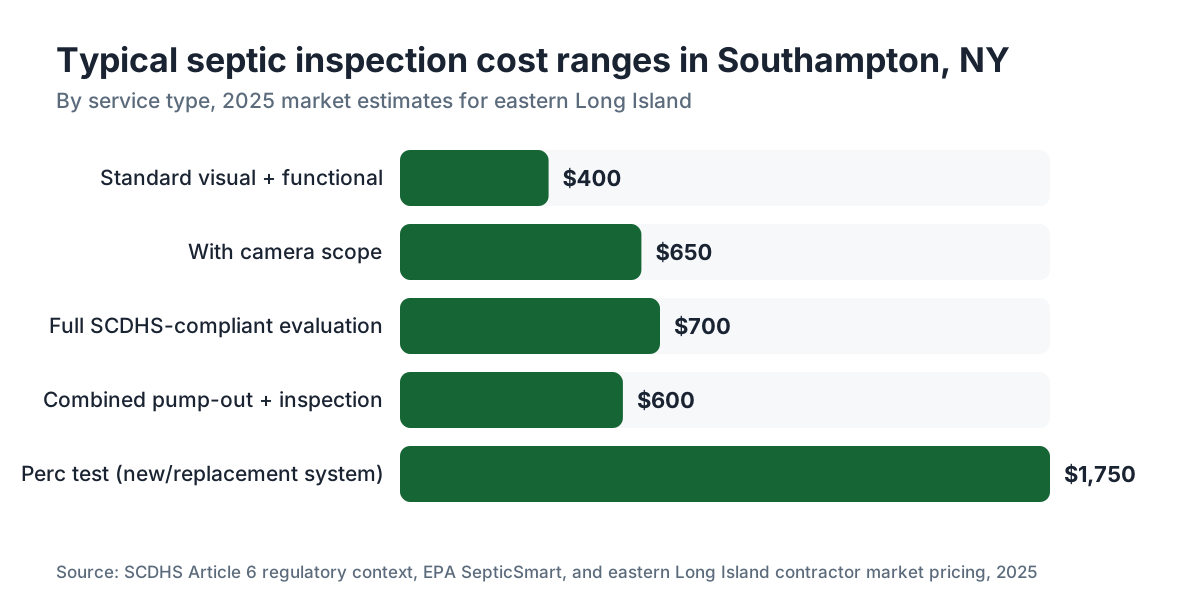
Cost tracks what the inspector actually does. Here's a realistic breakdown for the Southampton area as of 2025.
| Inspection type | Typical cost range | What's included |
|---|---|---|
| Standard visual + functional | $300 to $500 | Tank, field walk, basic dye test |
| Camera scope added | $500 to $800 | Above plus pipe inspection |
| Full SCDHS-compliant evaluation | $500 to $900 | Required for some permits and variances |
| Perc test (new system or expansion) | $1,000 to $2,500 | Soil evaluation by licensed engineer |
| Pumping combined with inspection | $450 to $750 | Pump-out plus visual check |
These ranges reflect contractor pricing common in the eastern Long Island market. Exact quotes vary by company and by travel distance inside Southampton Town's large footprint. Hamptons prices generally run 15 to 25 percent above comparable inland Suffolk County work because labor and overhead cost more out here.
Combining your septic tank pump out with the inspection is usually the smart move. The tank needs to be empty or nearly empty for the inspector to read the interior walls and baffles, and you're already paying a truck to show up.
Don't hire on price alone. An inspection that misses a failing baffle or a saturated field can cost you tens of thousands in septic system repair later. Ask each inspector whether they're licensed by SCDHS, whether they carry errors and omissions insurance, and exactly what the report includes.
Who can perform a septic inspection in Southampton?
Septic work in New York falls under a patchwork of licensing. Suffolk County requires an SCDHS installer's license for anyone installing or repairing an individual sewage disposal system. Real estate inspections often get done by licensed home inspectors, who hold a New York State Home Inspector license under Article 12-B of the Real Property Law, but a home inspector's septic evaluation is thin next to what a licensed engineer or SCDHS-approved contractor can produce [3].
For a Southampton closing, the safest path is a licensed professional engineer or a certified septic contractor who can hand you a report SCDHS will accept. If a lender, attorney, or buyer's agent is pushing for an inspection, ask exactly what documentation the lender needs. Some lenders and title companies have their own specific requirements.
Here's the practical split. A general home inspector with a septic add-on is fine for a quick buyer's read before you decide to bid. A licensed PE or SCDHS-approved contractor is what you need for a closing document, a permit application, or anything where the report carries legal weight.
Ask for references. Check that the contractor is in good standing with SCDHS, which keeps records of licensed installers.
What are the Suffolk County SCDHS rules that apply to Southampton septic systems?
Suffolk County runs its own regulatory framework that goes well past the New York State Sanitary Code. SCDHS Article 6 sets minimum standards for the design, installation, and operation of individual sewage disposal systems (ISDS) in the county [1]. Southampton Town sits entirely inside Suffolk County, so these rules apply everywhere from village centers to the rural edges of the East End.
The SCDHS requirements that shape inspections and repairs include minimum separation distances (the tank must sit at least 10 feet from property lines, 20 feet from a building, and 100 feet from a private well in most cases), minimum tank capacity tied to bedroom count, and leach field sizing based on soil percolation rates.
Suffolk County also runs a Septic Improvement Program that offers low-cost financing to homeowners upgrading failing systems to nitrogen-reducing technology [4]. The county has named nitrogen loading from septic systems as a leading driver of surface water decline in the bays and estuaries around the South Fork. If your system predates 2000 and sits near a water body, you may qualify for a subsidized upgrade. Ask about it when you schedule the inspection.
New York's Environmental Conservation Law and the state's SPDES permit program add another layer for systems near regulated wetlands or inside special groundwater protection areas [10]. Southampton Town also has zoning sections that limit what can be built in certain overlay districts, which shapes where a replacement system can go.
What do inspectors look for in a Southampton leach field?
The leach field (drain field or absorption field) is where an inspection passes or fails in the way that costs you the most money. Southampton's sandy soils drain well and fields often run for decades, but the water table across much of the South Fork sits high, so overload the system or park heavy equipment on the field and you'll saturate or compact the soil fast.
Inspectors look for surface ponding or soggy ground above the trenches, especially in dry weather. Wet spots during a drought are a near-certain sign of hydraulic failure. They check for odors (hydrogen sulfide has a rotten-egg smell you won't confuse with anything else), for unusually dark or lush grass along the trench lines, and for soil subsidence that hints at a collapsed pipe.
During the functional test, water goes into the system at a controlled rate while the inspector watches the distribution box handle flow. If flow backs up at the D-box, or one lateral fills while the others sit dry, the field is failing or the D-box itself is cracked. Both are problems. A cracked D-box is a cheap fix. A saturated field is not.
Leach field trouble in Southampton hits hard because replacement runs high and tight lots often force alternative system designs. A full leach field replacement in the Hamptons can run $15,000 to $40,000 or more depending on system type and engineering. That's the whole reason the inspection matters.
For what happens after the field gets flagged, see our guide to septic tank repair.
How do you prepare your property for a septic inspection?
Good prep saves time and can head off a re-inspection fee. Do these things before the inspector shows up.
Find your as-built drawing. Southampton homeowners should have gotten an as-built septic plan when the system went in. No copy? SCDHS may have one on file. Bring it to the inspection, because it tells the inspector exactly where the tank, D-box, and field lines sit.
Clear the lids. If your tank and distribution box lids are buried, mark them. Some contractors charge a digging fee when they have to locate and unearth lids themselves.
Don't pump right before the inspection without telling the inspector first. A freshly pumped tank makes it hard to read scum and sludge accumulation, which is exactly the data that shows how your system has been performing. The inspector should see the tank before and after any pump-out.
Keep water use normal for the 24 to 48 hours before the appointment. A house sitting empty for a week won't give an honest functional test. Run the dishwasher, do a load of laundry, use the fixtures like you always do so the system is in its normal state.
Know your history. How often has the tank been pumped? Any past repairs? Pump records, usually available from the pumping company, give the inspector real context.
SepticMind's homeowner maintenance tracker helps you organize these records before inspection day, so you're not digging through a drawer of old receipts.
What happens if a Southampton septic inspection reveals a problem?
A problem isn't a disaster, but it does need a plan. Southampton inspectors write reports that usually sort findings into pass, conditionally pass (minor repairs needed), or fail (system not functional or a public health risk).
A cracked baffle is typically a few hundred dollars to repair. A distribution box that's shifted and cracked is also manageable. Those are the good outcomes from a bad inspection.
A failed field is a bigger process. SCDHS will require an engineered repair plan, a permit, and installation by a licensed contractor. On a tight South Fork lot, an engineer may have to design an alternative system: a mound system, a shallow drip irrigation setup, or a nitrogen-reducing advanced treatment unit. The county's Septic Improvement Program loan program is worth a look at that point [4].
In a real estate deal, a failed inspection opens a negotiation. The seller can fix it before closing, cut the price to cover the buyer's expected repair cost, or, rarely, the deal collapses. Most Southampton real estate attorneys have run this play before and can talk you through the options.
For major work, see our guides on septic system repair and, if replacement is the answer, cost to install septic system to size up the financial hit.
Don't ignore a failed inspection and hope the system holds. Suffolk County can order a system out of service if it's a public health hazard, and the county's groundwater protection programs come with enforcement teeth.
How often should you get a septic inspection in Southampton?
EPA SepticSmart guidance says every three years for most residential systems [2]. Treat that as a floor, not a ceiling. Older Southampton systems, systems serving more people than they were built for, and systems near water bodies deserve a closer eye.
For context, the tank for a typical three-bedroom home holds about 1,000 gallons and should be pumped every three to five years under normal use [2]. Timing an inspection with each pump-out is efficient: the system is already open, so have someone look at it hard while it is. For pump intervals by household size, see how often to pump septic tank.
Southampton's seasonal population creates an odd stress case. A house used only in July and August by a big group takes a short, intense load, then sits idle for nine months. That cycle isn't necessarily harder on a system than year-round use, but it means the calendar lies to you. Count gallons, not years. A house that hosts large parties or packs in more summer occupants than a year-round home should pump on the short end of the range.
For systems installed before 1990, inspecting every two years is a defensible standard. These were built to earlier design rules and many are running well past their original design life.
How does a Southampton inspection differ from what other states require?
Massachusetts is the most useful comparison, a neighboring state with a strong framework. Massachusetts Title V (310 CMR 15) requires a full system inspection before any property transfer and uses a pass/fail/conditional pass structure run by licensed Title V inspectors [5]. The Massachusetts regulation states that its purpose is "to protect public health, safety, welfare and the environment." Every Title V inspection gets reported to the state.
New York has no equivalent statewide law. Suffolk County fills most of the gap locally, but the county's approach is more contractor-driven and less standardized in reporting than Title V. That's a weakness and a flexibility at once: not every Southampton inspection produces a comparable document, so buyers and their attorneys have to ask sharper questions about what a given report actually covers.
New Jersey runs its inspection requirements through local health departments. Connecticut leaves most of it to town health departments too. The thread across the region is that coastal communities with dense seasonal populations and sensitive water bodies have pushed harder than most states toward mandatory inspection, and Southampton fits that pattern.
Bought in Southampton recently without a proper inspection? SCDHS can require one as a condition of any permit application, even a simple repair permit. Bringing your system into compliance on your own terms is almost always less painful than doing it under regulatory pressure.
How to find a reputable septic inspector in Southampton
Start with the SCDHS list of licensed septic system installers and contractors. The county maintains it, and it's the most reliable place to find someone who knows local code [1]. Not every name on the list does inspections, but most can point you to someone who does.
Word of mouth from a local real estate attorney or buyer's agent who handles a lot of Southampton closings is also solid. These folks have seen which inspection reports hold up and which ones blow up a deal later.
Questions to ask before you hire anyone: Are you licensed by SCDHS? Do you carry errors and omissions insurance? What's included in the report, and will it satisfy a lender's requirements? How fast will the report come back? Do you pump in-house or subcontract it?
Be skeptical of anyone who guarantees the system will be fine or wraps up an inspection in under an hour on a standard residential lot. A thorough inspection of a three-bedroom home with a conventional system takes two to three hours minimum when it's done right.
Operators running multiple inspection workflows in the Hamptons use tools like SepticMind to coordinate scheduling, track permit status with SCDHS, and send digital reports to clients. If you're a service company handling Southampton volume, that workflow matters more than most homeowners realize.
For the mechanics of the inspection itself, our guide to septic tank inspection walks through the general process in detail.
Frequently asked questions
Is a septic inspection required to sell a house in Southampton, NY?
Yes, in practice. Suffolk County's SCDHS Article 6 requires that individual sewage disposal systems meet county standards, and most Southampton transactions require documentation of the system's condition at closing. Lenders and buyers' attorneys routinely demand a current inspection report. The exact form of the requirement varies by deal, but assuming you don't need one is a mistake that can delay or kill a closing.
How much does it cost to pump a septic tank in Southampton?
Septic tank pumping in Southampton typically runs $350 to $600 for a standard residential tank, higher than inland Long Island because local labor costs more. Larger tanks (1,500 gallons or more) and systems overdue for service push the number up. Bundling the pump-out with an inspection saves a trip charge and is usually the most cost-effective route. See our full guide to septic tank pumping for a detailed breakdown.
How long does a septic inspection take in Southampton?
Plan for two to four hours for a thorough residential inspection. Locating and uncovering the tank and distribution box takes 30 to 60 minutes if you have no exact location records. The tank evaluation, functional test, and field walk add another hour or more. A camera scope of the pipes adds 30 to 45 minutes. The report usually lands within one to three business days after the visit.
What is the Suffolk County Septic Improvement Program and can Southampton residents use it?
Yes. The Suffolk County Septic Improvement Program offers low-interest loans and potential grants to help homeowners upgrade failing or inadequate systems to nitrogen-reducing advanced treatment units. Southampton Town residents are eligible. The program targets systems near sensitive water bodies, which covers much of the South Fork. Contact SCDHS or your town's Department of Land Management for current terms and eligibility.
Can a home inspector do my septic inspection in Southampton, or do I need a specialist?
A licensed New York State home inspector can fold a basic septic evaluation into a home inspection, but the scope is limited next to a licensed PE or SCDHS-approved septic contractor. For a closing document or a permit application, you need a contractor or engineer licensed by SCDHS. For pre-purchase due diligence, a home inspector's read is a reasonable start, but treat it as a screening tool, not a final verdict.
What are signs that a Southampton septic system is failing?
Slow drains across multiple fixtures are the most common early sign. Outside, look for wet or soggy ground above the leach field during dry weather, a sewage odor in the yard or near the tank, unusually lush green grass over the drain field lines, or sewage backing up into the lowest fixtures in the house. Any one of these warrants an immediate inspection. Two or more together strongly suggest active field failure.
How old do most septic systems in Southampton tend to be, and does age matter for an inspection?
Much of Southampton's housing stock dates to the 1960s through 1990s, so many systems are 30 to 60 years old. Age matters a lot. Concrete tanks from that era often have corroded baffles (sometimes swapped for plastic at some point) and can develop hairline cracks. Older leach fields may be undersized by current standards. An inspector who knows the local building history will flag age-related issues a generic checklist skips right over.
Does Southampton have nitrogen rules that affect septic system requirements?
Yes. Suffolk County has named nitrogen from septic systems as a leading cause of algal blooms and water quality decline in local bays and estuaries. For new installations, significant repairs, and replacements near water bodies, SCDHS may require nitrogen-reducing technology (advanced treatment units) instead of a conventional leach field. The county's Septic Improvement Program subsidizes these upgrades. Southampton's proximity to Shinnecock Bay, Peconic Bay, and numerous ponds makes this especially relevant here.
What's the difference between a septic inspection and a perc test?
A septic inspection evaluates an existing system: is it working, is it compliant, what shape is it in? A percolation test (perc test) measures how fast water absorbs into the soil and is used to design a new system or size a replacement field. Perc tests are done by a licensed engineer before a new system goes in or when a significant repair needs a new field. They cost $1,000 to $2,500 in the Southampton market and take one to two site visits.
What documents should I have ready before a septic inspection in Southampton?
Gather the as-built septic plan (filed with SCDHS when the system was installed), any prior inspection reports, pump records from your service company, and records of past repairs or permits. If the system has never been pumped or inspected, say so upfront and the inspector will adjust. SCDHS may hold copies of permits and as-builts if you've lost yours.
How does a Southampton septic inspection affect a home's sale price?
A clean inspection removes uncertainty and can support the asking price. A conditional pass with minor repairs usually leads to a modest price negotiation or a seller credit toward repair costs. A failed inspection is a significant negotiating event; buyers typically expect either a full repair before closing or a price cut large enough to cover replacement, which in Southampton can mean $20,000 to $50,000 depending on system type and site constraints.
Is it possible to get a mortgage on a Southampton property with a failing septic system?
It's hard. Most conventional lenders (and FHA and VA lenders for certain) require proof the system is functional and compliant before funding a mortgage. A failing system found at inspection typically has to be repaired or replaced before the loan closes, or a significant escrow holdback gets arranged. Cash buyers face fewer financing hurdles but still carry SCDHS enforcement risk if they skip repairs.
What should a septic inspection report include for a Southampton property?
A complete report identifies the system type, tank size, age if known, and location. It documents the condition of the tank, baffles, distribution box, and leach field. It notes the results of any functional or dye tests, lists deficiencies with recommended actions, and states whether the system passes, conditionally passes, or fails. For a closing document, it should reference SCDHS compliance status and carry the signature of a licensed professional.
Sources
- Suffolk County Department of Health Services, Individual Sewage Disposal Systems (Article 6): SCDHS Article 6 governs individual sewage disposal systems in Suffolk County, including minimum design standards and licensing requirements for installers and contractors.
- U.S. EPA, SepticSmart: Protect Your Investment: EPA SepticSmart recommends inspecting septic systems at least every three years and pumping every three to five years depending on household size.
- Suffolk County, Septic Improvement Program: Suffolk County's Septic Improvement Program provides low-interest loans and potential grants for homeowners upgrading to nitrogen-reducing advanced treatment units.
- Massachusetts Department of Environmental Protection, Title 5 (310 CMR 15): Massachusetts Title V requires a full septic system inspection before any property transfer and mandates reporting to the state, using a pass/fail/conditional pass classification administered by licensed inspectors. The regulation's stated purpose is to protect public health, safety, welfare and the environment.
- U.S. EPA, How Your Septic System Works: EPA describes the standard components of a residential septic system including the tank, distribution box, and drain field, and their functional roles.
- Cornell Cooperative Extension of Suffolk County: Cornell Cooperative Extension provides homeowner guidance on septic system maintenance relevant to Long Island soil and water table conditions.
- New York State Department of Health, Part 75 Sanitary Code: New York State Sanitary Code Appendix 75-A sets baseline standards for individual water supply and sewage disposal systems in realty subdivisions, which counties including Suffolk County may exceed with local regulations.
- Suffolk County Water Authority: Nitrogen loading from septic systems is identified as a major driver of water quality degradation in Suffolk County's bays and estuaries, providing context for local nitrogen-reducing upgrade requirements.
Last updated 2026-07-09