Perc test in California: what it costs and how to pass
By the SepticMind Editorial Team
TL;DR
- A percolation test measures how fast soil absorbs water, which decides whether your California land can hold a septic system.
- County environmental health departments run or oversee the test.
- The test itself costs $150 to $600 in county fees, plus $300 to $1,500 if an engineer is required.
- You need a passing result before any septic permit is issued on land with no sewer.
What is a perc test and why does California require one?
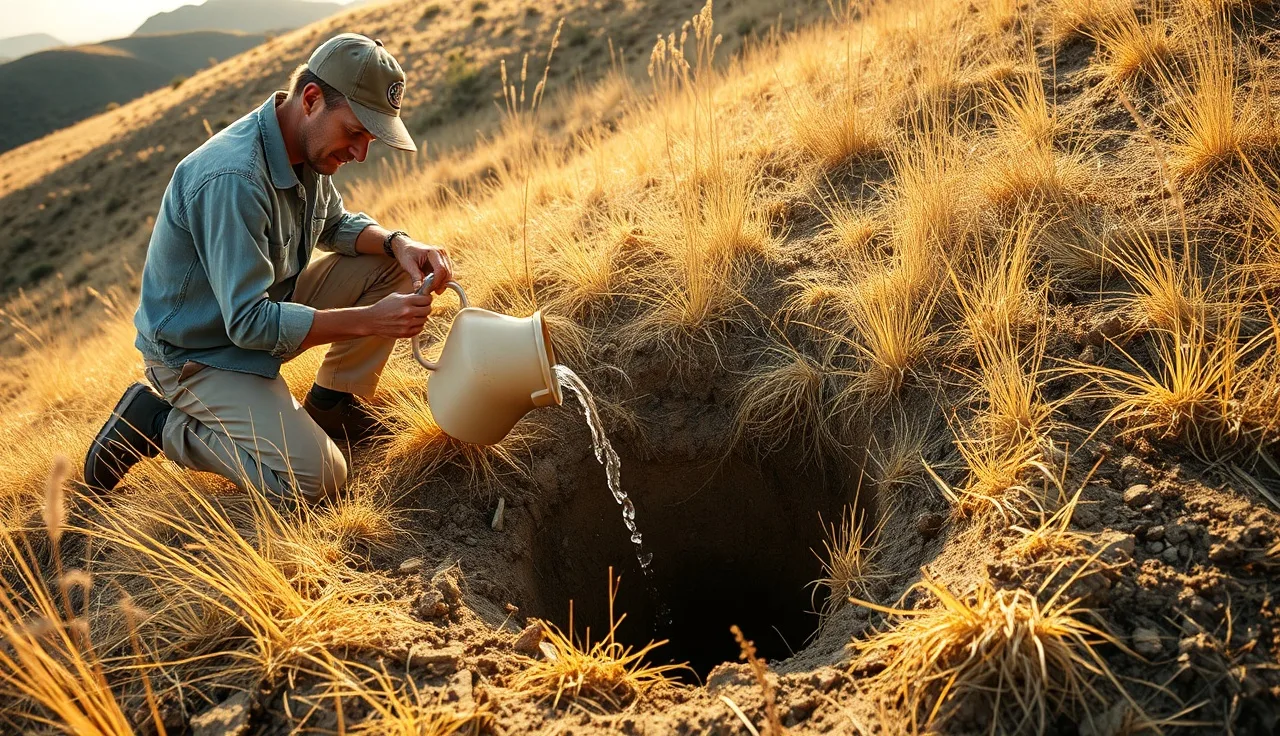
A percolation test, almost always shortened to perc test, measures how fast water drains through soil at the depth where your leach field will sit. The result comes in minutes per inch (MPI). That number tells a designer how big the leach field has to be and whether a plain gravity system will work at all.
California has no single statewide code that spells out perc testing the way some states do. The California Plumbing Code and Title 27 of the California Code of Regulations set baseline environmental standards, but the day-to-day rules live with individual county environmental health departments. Sonoma County's protocol can look meaningfully different from San Bernardino County's, even though the physical test looks about the same everywhere. [1]
The state requires a satisfactory site evaluation, including soil percolation data, before any county issues a septic permit on a parcel that has no sewer connection. Buying raw land in a rural area or splitting a bigger parcel? A passing perc test is almost always a condition of closing or of getting a building permit. Failing it does not automatically kill the project. It changes what system you can install and what that system costs.
No sewer stub at your property, and you want to build. You need a perc test.
Who performs perc tests in California?
Your county environmental health department either runs the test itself or requires a licensed professional to run it while county staff watch. There is no state license called "perc test technician." The work falls to one of three parties depending on county rules:
- A registered environmental health specialist (REHS) or sanitarian employed by the county who comes to your site.
- A licensed civil engineer or registered geologist who runs the test and submits results to the county for review.
- A licensed contractor or soil scientist working under the engineer's stamp.
Los Angeles County requires a licensed civil engineer or geologist to perform the soil investigation, with the county Environmental Health division reviewing and approving the report. Napa County runs percolation tests directly through its Environmental Health office as part of a scheduled site evaluation appointment. [10]
Call your specific county environmental health department before you hire anyone. Some counties void a test that their own staff did not witness. Others take an engineer's report as the entire deliverable. Getting this backward costs you weeks.
How does a perc test actually work, step by step?
The physical test is simple. The preparation is where people get it wrong.
First, test holes get dug or bored at the site, usually 6 to 12 inches across and to the depth the county specifies, often 24 to 36 inches below the proposed leach field invert. Most counties want at least two holes per site. Some want more, depending on lot size or how much the soil changes across the parcel. [7]
Second, the holes get saturated. California counties that follow EPA guidance recommend at least 4 hours of presaturation, though soaking the holes for 24 hours the night before is common and some counties demand it. Saturation swells the clay particles and copies what the soil does after real rain. It is the step homeowners skip when they run informal tests, which is exactly why those tests read misleadingly fast. [3]
Third, the measurement. Water goes into the hole to a set level, then the drop in water level gets recorded at intervals, usually every 30 minutes for 4 hours or until the rate holds steady. The slowest consistent drop is what sets the MPI.
Fourth, the county or the licensed professional turns MPI into a required absorption area per bedroom (or per gallon per day of estimated flow). Fast sandy soil might read 5 MPI. Slow clay might read 60. California counties generally reject a standard system or force an alternative once MPI passes 60 to 90, depending on the jurisdiction. [9]
Presaturation day, test day, and county review together realistically run three to seven business days before you have a usable number.
What do perc test results mean for your septic system design?
The MPI number sets how many square feet of leach field you need. California design pulls absorption rates from your perc result, expressed as gallons per day per square foot of trench bottom. Slower soil means a bigger field.
Here is a rough translation based on standard California design tables:
| Perc rate (MPI) | Approx. absorption rate (gal/day/sq ft) | Typical leach field size for 3-BR home |
|---|---|---|
| 1 to 5 | 1.2 to 1.6 | 600 to 800 sq ft |
| 6 to 15 | 0.8 to 1.2 | 800 to 1,200 sq ft |
| 16 to 30 | 0.5 to 0.8 | 1,200 to 2,000 sq ft |
| 31 to 60 | 0.3 to 0.5 | 2,000 to 3,500 sq ft |
| >60 | Typically unacceptable for standard system | Alternative system required |
Numbers above 60 MPI in most California counties put you into an alternative system: a mound, a drip dispersal setup, or an aerobic treatment unit. Those cost a lot more to install and keep running. Before you sign a purchase agreement on raw land, read our guide on the cost to install a septic system.
The perc result also plays against groundwater depth, setbacks from property lines and wells, and hidden layers like hardpan or fractured rock. A county evaluator can reject a site with a passing perc rate if seasonal groundwater rises within four feet of the proposed trench bottom. One number never tells the whole story.
How much does a perc test cost in California?
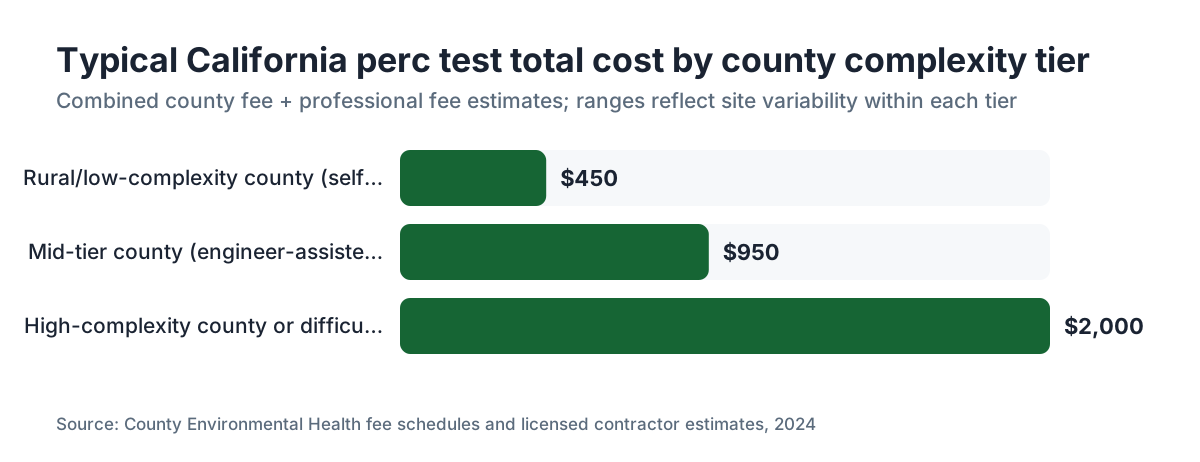
Plan for two separate buckets: county fees and professional fees. Total realistic range for a standard single-family lot is $400 to $2,000.
County fees for a perc test or site evaluation permit run roughly $150 to $600 in most California counties as of 2024. Some counties fold this into a broader onsite wastewater treatment system application fee. A few rural counties charge as little as $75 for the perc component alone.
Professional fees, if your county requires a civil engineer or soil scientist or you choose to hire one, run $300 to $1,500 for a straightforward residential lot. Complex sites with steep slopes, patchy soils, or extra test holes can push that past $2,500. The engineer's stamped report is a real deliverable, and the fee reflects real skilled labor.
That wide spread comes from county-by-county process differences, not padding.
The test is a small fraction of what a passing result commits you to spend on a septic tank installation, so treating it as optional is a mistake. Ordering a full geotechnical report with soil borings before you even decide you want the parcel is the opposite mistake. A preliminary county consultation, often free or around $50, that tells you whether the area historically passes is the smart first move.
How long does a perc test take in California?
The presaturation and test itself takes one to two days of physical site time. The county review that follows is the wild card, and it can stretch to eight weeks in a busy jurisdiction.
Turnaround varies a lot. A rural county with light application volume might return results in five business days. Los Angeles County environmental health can run four to eight weeks for full plan review, especially when the site needs extra soil investigation. [2]
On a real estate timeline, plan for four to eight weeks total from application to approved site evaluation in a busy county. Use that number when you negotiate your contingency period. I have watched buyers lose deposits because they assumed a two-week process in a county that actually took six.
Booking the field test is its own bottleneck. Some counties schedule perc appointments two to four weeks out. Apply early.
Can you fail a perc test in California and still build?
Yes, though it gets more expensive and more complicated.
When percolation rates come back too slow (above 60 or 90 MPI depending on county), or when other site conditions fail, California counties usually let applicants submit an engineered alternative system design. Your options:
Mound systems: the leach field sits above native grade on imported fill, lifting the dispersal area above the bad soil layer. It works, and it adds $10,000 to $30,000 or more to the install.
Drip dispersal systems: treated effluent gets pressure-dosed through small-diameter tubing just below the surface, spreading the load over more ground at a slower rate. Often paired with an aerobic treatment unit.
Aerobic treatment units (ATUs): the tank itself treats the effluent to a much higher standard before dispersal, which allows a smaller or shallower dispersal area. Maintenance contracts are mandatory for ATU systems under California law. [4]
If the site is a genuine failure, meaning perc rates run above county maximums everywhere AND no alternative system can meet the required setbacks or area, the county denies the permit. At that point the land cannot legally support septic-based development. That is rare, but it happens on lots with clay hardpan, seasonal high groundwater, or a tiny buildable footprint. A pre-purchase call to county environmental health is genuinely worth your time before buying rural land.
For what repairs look like once a system is already in the ground, see our guide on septic system repair.
What is the difference between a perc test and a full site evaluation in California?
A perc test in the strict sense is only the percolation rate measurement. A full site evaluation includes that test plus a soil profile, a site sketch with setbacks, groundwater depth, and a preliminary sizing recommendation. This distinction matters because counties and real estate listings throw the terms around loosely.
The perc test tells you how fast water moves through the soil at test depth. That is it.
A full site evaluation (sometimes called an onsite wastewater treatment system evaluation, or OWTS evaluation) is the whole package. California's 2012 State Water Board OWTS Policy requires a complete site evaluation before a permit is issued, more than a perc number. The policy is formally titled the "Policy for Siting, Design, Operation, and Maintenance of Onsite Wastewater Treatment Systems." [5]
Most county fees cover the full evaluation as one line item. When a seller's disclosure says "perc test completed," ask to see the actual county-stamped report. A test done ten or more years ago may not meet current county rules, and a test run by someone who is not on the county's approved list can be worthless. Verify directly with county environmental health that the existing test is still valid and approvable for what you plan to build.
Which California counties have the strictest perc test requirements?
Every California county follows the State Water Board OWTS Policy, adopted in 2012, as a floor. Several stack extra requirements on top. Marin, Santa Cruz, and the Lake Tahoe basin are the ones that trip people up most. [11]
Marin County is notably strict, with mandatory setbacks, wet-season groundwater monitoring, and a longer presaturation period than many counties. Properties near San Francisco Bay tributaries get extra review under regional water quality rules.
Santa Cruz County requires a licensed civil engineer to prepare all OWTS reports, so the county does not run field tests itself. That adds professional fee cost but often speeds turnaround once the report lands correctly.
Properties in the Lake Tahoe Basin fall under the Lahontan Regional Water Quality Control Board, which enforces tighter nitrogen and phosphorus standards for systems near the lake. Advanced treatment systems are often required there. [6]
Many Central Valley and inland desert counties sit at the other end, with sandy soils that drain fast and simpler procedures, though agricultural land use and groundwater depth bring their own headaches.
If you run septic service across several California counties, a tool like SepticMind can pull permit tracking and service scheduling from different county jurisdictions into one dashboard.
The honest version: before you assume your county's process, call the environmental health office and ask about presaturation rules, who has to be present, and current scheduling waits. Fifteen minutes on the phone saves weeks of rework.
How do you prepare your property for a perc test?
Preparation moves the result. Here is what actually matters.
Pick test locations carefully. The evaluator or engineer chooses spots based on where the leach field will really go, respecting setbacks from wells (100 feet minimum in most California counties), property lines (usually 5 to 10 feet), and structures. Walk the site with whoever runs the test before any holes get dug. Moving a location after digging costs money.
Schedule during the right season. Many California counties require or strongly prefer wet-season testing (roughly November through April) or full presaturation. Test dry clay in August and you get a fast rate that lies about how the soil behaves in winter. Some counties accept tests only between November and April for exactly this reason. Check before you schedule.
Leave the test area alone. Compacted soil from vehicle traffic, scraped topsoil from grading, or fresh imported fill produces invalid results. If site work has already started, ask the engineer whether the test spots still represent the natural soil.
Have your site information ready. The evaluator wants lot dimensions, proposed structure location, distances to any wells on your property and neighboring ones, and any prior test data. Pull the county parcel report before the appointment.
If your system is already in the ground and you are doing a septic tank inspection for a sale rather than a new permit, the perc test requirement does not apply the same way. County records of the original test can still surface in disclosure.
How long are California perc test results valid?
Most California counties treat an approved site evaluation as valid for three to five years from the approval date, as long as the site has not changed. The exact window varies by county, and this is one of the most practically important things to confirm before you buy.
Some counties expire results at three years. A few set no explicit expiration but require the evaluating engineer to certify that conditions have not changed.
Buying land with a perc test on record? Three questions matter: (1) is the test inside the county's validity window, (2) was it run under the current county protocol or an older one, and (3) was it approved for the same use you plan (a four-bedroom house and a two-bedroom ADU carry different loading calculations).
Here is the scenario that burns people. Seller has a five-year-old approved perc test. Buyer assumes it holds. At permit application, the county tells the buyer the test predates the 2012 OWTS Policy and has to be redone. That is a four-to-eight-week delay and several hundred to several thousand dollars nobody budgeted. Verify validity with the county before you remove a contingency.
What happens after you pass a perc test in California?
Passing is the start, not the finish. Next you submit a septic system design for permit review, then get through construction inspections before the county signs off.
The design has to be prepared by a licensed civil engineer or registered environmental health specialist (which one depends on the county), and it must show system sizing, materials, installation details, and setbacks that match both your perc results and the county's design standards.
The county issues a construction permit after it approves the design. In most counties that means a separate fee, often $200 to $800. [8]
Installation gets inspected, usually at the trench-open stage before backfill, and again at final. The county does not take the contractor's word that it was built to plan.
After final inspection, the county issues a certificate of completion (the name varies). Keep that document permanently with your property records. It matters at resale, when buyers doing due diligence or lenders requiring a septic tank inspection ask for it.
Once it is installed, maintenance is on you. California's OWTS Policy requires mandatory maintenance contracts and annual inspections for all alternative systems (ATUs, drip systems, mounds). Standard gravity systems have no state-mandated inspection interval, though how often you pump the septic tank still decides how long the system lasts.
Frequently asked questions
Do I need a perc test to sell land in California?
Not always. You need a perc test to get a septic construction permit. If you are selling raw land with no septic system and the buyer plans to develop it, the buyer needs a passing perc test and site evaluation before the county issues a permit. As a seller, disclosing any prior test results, passing or failing, is part of your material disclosure obligation.
Can I do a perc test myself in California?
No. California counties require the test to be run by, or in the presence of, county environmental health staff or a licensed professional (civil engineer, registered geologist, or registered environmental health specialist). A self-run test has no standing for permitting. You can dig a rough hole and watch it drain for your own information, but that result cannot be submitted to any county.
How much does a perc test cost in California?
Plan for $400 to $2,000 total, combining county application fees ($150 to $600 in most counties) with professional fees if your county requires a licensed engineer or geologist. Simple lots in rural counties land at the low end. Complex sites with multiple test holes, steep slopes, or required groundwater monitoring can push past $2,500.
What perc rate passes in California?
Most California counties accept perc rates of 60 minutes per inch (MPI) or faster for conventional gravity leach fields. Some use 90 MPI as the cutoff. Rates above the county threshold require an alternative system design. Rates below 1 MPI (extremely fast-draining soil) can also cause problems, because effluent may not get enough treatment before it reaches groundwater.
Does a perc test expire in California?
Yes. Most counties treat an approved site evaluation as valid for three to five years. The exact period varies by county. If the test predates major regulatory changes (notably California's 2012 OWTS Policy) or the proposed use has changed, the county can require a new evaluation regardless of when the original test was done. Verify validity directly with county environmental health.
What time of year should you do a perc test in California?
Many California counties require or prefer wet-season testing (November through April) so soil moisture reflects real winter operation. Testing dry clay soils in summer produces faster, unrealistically optimistic results. Some counties flatly reject perc tests run outside the wet season. Check your specific county's seasonal rules before you schedule.
What is the California OWTS Policy and how does it relate to perc tests?
The State Water Board's Policy for Siting, Design, Operation, and Maintenance of Onsite Wastewater Treatment Systems (adopted 2012) sets minimum statewide standards for septic permitting. It requires a complete site evaluation, including percolation testing, before any OWTS permit is issued. Counties must meet or exceed the policy and can add stricter local rules. It replaced a patchwork of older county-only standards.
Can a perc test help me buy or avoid buying bad land?
It is one of the best tools for that. A failing perc test on land with no sewer access means either expensive alternative systems or no development at all. Making a purchase offer contingent on a satisfactory perc test and county site evaluation approval is standard practice in rural California real estate. Removing that contingency early is a real financial risk.
How deep are perc test holes in California?
Depth varies by county protocol and the proposed leach field design, but holes are usually bored or dug to 24 to 36 inches below the intended trench invert. The evaluator sets final depth based on the soil profile. If a restrictive layer (hardpan, clay, high groundwater) shows up shallower, the evaluator may stop the hole early or adjust the design depth.
Do I need a perc test for a replacement septic system in California?
Usually no, if you are replacing a system in the same location with the same design capacity. The original site evaluation data on file with the county typically covers a replacement in kind. But if you are expanding the system, moving the leach field, or switching system types, the county may require a new or updated evaluation. Always ask the county before you assume the old data is enough.
What is the difference between a percolation test and a soil profile analysis?
A percolation test measures how fast water drains through soil, reported in minutes per inch. A soil profile analysis is a visual read of the soil layers, noting texture, structure, color, mottling (which flags historical saturation), and any restrictive layers. California's OWTS Policy requires both as part of a complete site evaluation. The perc rate alone misses the groundwater and soil texture issues the profile reveals.
Can a property fail a perc test but still have a septic system installed legally?
Yes. A failing conventional perc rate means you need an alternative system, not that you cannot build. Mound systems, drip dispersal, and aerobic treatment units can work on sites that fail standard perc requirements, as long as setbacks and site geometry allow. Only sites where no alternative system can meet all county requirements get denied outright, which is fairly uncommon.
Who do I call to schedule a perc test in California?
Start with your county's Environmental Health department. Search your county name plus 'environmental health OWTS' or 'septic permit.' They will tell you whether they run tests directly, require a licensed engineer, or both. Do not hire an engineer before you confirm county requirements. Some counties reject engineer-only reports submitted without a county witness or pre-approval of the engineer.
Sources
- California Department of Water Resources: California septic permitting authority rests with county environmental health departments operating under state baseline standards including the California Plumbing Code and State Water Board OWTS Policy
- US EPA, Septic Systems (SepticSmart): County plan review turnaround for onsite wastewater site evaluations can run several weeks depending on application volume and site complexity
- US EPA, Septic Systems (SepticSmart): EPA recommends a minimum presaturation period before percolation testing to simulate realistic soil conditions; 24-hour presaturation is standard guidance
- California State Water Resources Control Board, Onsite Wastewater Treatment Systems Policy (2012 OWTS Policy): California OWTS Policy (2012) requires mandatory maintenance agreements and annual inspections for all alternative and advanced treatment septic systems in California
- California State Water Resources Control Board, Policy for Siting, Design, Operation, and Maintenance of Onsite Wastewater Treatment Systems: The 2012 State Water Board OWTS Policy requires a complete site evaluation including percolation testing and soil profile analysis before any OWTS construction permit is issued; adopted as statewide minimum standard
- Lahontan Regional Water Quality Control Board: Properties within the Lake Tahoe Basin fall under Lahontan RWQCB jurisdiction with stricter nitrogen and phosphorus treatment requirements, often mandating advanced treatment systems
- University of California Agriculture and Natural Resources (UC ANR): Standard California residential perc test procedures involve test holes 6-12 inches in diameter, presaturation, and 30-minute interval measurements to determine MPI for leach field sizing
- California Department of Housing and Community Development: California Plumbing Code (Title 24, Part 5) establishes baseline requirements for private sewage disposal systems in California
- US EPA, Onsite Wastewater Treatment Systems Manual (2002), EPA/625/R-00/008: EPA design guidance translates perc test MPI values into absorption area requirements per bedroom; rates above 60 MPI typically indicate soil too slow for conventional gravity leach fields
- County of Napa, Environmental Health: Napa County Environmental Health runs percolation tests directly through its office as part of a scheduled site evaluation appointment for OWTS permits
- California State Water Resources Control Board: California counties are required to adopt local OWTS programs that meet or exceed the statewide 2012 OWTS Policy, resulting in county-by-county variation in specific procedures and fees
Last updated 2026-07-09