How to inspect a septic tank: a step-by-step guide
By the SepticMind Editorial Team

TL;DR
- A septic tank inspection means finding the tank, exposing the lids, measuring the scum and sludge layers, checking the baffles and outlet, and confirming the drain field shows no saturation or odor.
- Homeowners can do a basic visual check.
- A full inspection with pumping usually costs $300 to $600 and should happen every 3 to 5 years.
- Skip it and you risk a $5,000 to $50,000 drain field failure.
What does a septic tank inspection actually check?
A real inspection follows the whole system, from the house plumbing connection to the far end of the drain field. A failure anywhere in that chain can condemn everything downstream, so peeking into a hole in the ground doesn't count.
The inspector (or a careful homeowner doing the prep work) looks at six things:
- Tank condition: concrete integrity, cracks, corrosion on steel tanks, watertightness.
- Scum and sludge levels: the floating grease layer on top and the settled solids on the bottom. When the combined sludge and scum leaves less than about 12 inches of clear liquid, it's time to pump [1].
- Inlet and outlet baffles: the T-shaped pipes that keep solids inside the tank. A broken outlet baffle is one of the fastest ways to destroy a drain field.
- Effluent quality: the liquid leaving the tank should be relatively clear. Cloudy or dark effluent means solids are escaping.
- Tank lids and risers: lids should be intact and child-safe. Cracked or missing lids are a safety hazard and a regulatory violation in most states.
- Drain field condition: wet spots, lush green stripes over the trenches, sewage odor, or spongy ground all point to a field that's failing or already failed.
A licensed inspector also pressure-tests the distribution box and sometimes runs a camera down the inlet pipe from the house. That level of detail matters most at a home sale, where a bad system can blow up a deal.
What tools and safety gear do you need before you open the tank?
Doing the prep work yourself before a pro shows up? Or just checking the lids and yard? You need a short kit. Never open a septic tank without it.
Safety first. Septic tanks make hydrogen sulfide gas, which can kill in seconds at high concentrations. The Occupational Safety and Health Administration classifies hydrogen sulfide as immediately dangerous to life or health at 100 ppm [2]. A tank that's been closed for years can hold far more than that. Never lean directly over an open tank. Never climb in (that's a confined space needing special equipment and training). Keep kids and pets back.
Tools you'll need:
- Metal probe or soil probe rod (to locate buried lids)
- Flat spade and hand trowel (to uncover concrete lids)
- Lid hook or pry bar
- Sludge judge or clear acrylic tube (to measure sludge depth)
- Rubber gloves, eye protection, and old clothes
- Measuring tape
- Flashlight or headlamp
- Garden hose for cleanup
A sludge judge costs $30 to $60 at plumbing supply stores. It's a clear tube you lower to the tank bottom; pull it up and the layers of scum, effluent, and sludge are right there to measure. That single tool tells you whether pumping is urgent.
How do you find a buried septic tank and its lids?
This is the step that stumps most homeowners. The tank sits anywhere from 5 feet to 25 feet from the house, buried under a few inches to 2 feet of soil.
Start with the permit record. Most counties and states keep septic as-built drawings on file. Call your local health department or check their website. Many now run GIS portals where you enter your address and download the original installation diagram. That drawing shows tank location, size, and number of access ports.
No record? Look for clues. The sewer pipe leaves the house at the lowest point, usually through the basement or crawl space wall. Walk that direction across the yard; the tank almost always sits along that line. Look for a slight dip or a raised patch in the grass, or ground that stays greener or drier than the lawn around it.
Probe systematically. Poke a soil probe or a piece of rebar into the ground every 12 to 18 inches along your estimated tank line. When you hit concrete or fiberglass at a consistent depth, you've found the tank top. Mark all four corners, then find the lids (most tanks have two, some older ones have one).
Once the lids are exposed, lift them carefully. Concrete lids weigh 50 to 150 pounds. Get a second person, or rent a lid hook that gives you a mechanical edge.
How do you measure sludge and scum levels?
This is the core diagnostic step. The EPA's SepticSmart program recommends pumping when the top of the sludge layer is within 6 inches of the outlet baffle, or when the bottom of the scum layer is within 6 inches of the baffle inlet [1].
The sludge judge method: lower the clear tube to the tank bottom, put your thumb over the top to hold the suction, and pull it up. You'll see a color gradient. Clear or lightly tinted water is the effluent zone. Dark, dense material at the bottom is sludge. Measure both the sludge column and the scum layer floating at the top.
A simpler field test for scum uses a velcro-wrapped stick. Lower it through the scum until you hit the liquid zone, mark the depth, drop further until you feel the sludge bottom, mark again. The difference is your clear zone depth.
The rule of thumb: sludge thickness plus scum thickness should not exceed one-third of the total liquid depth in the tank [7]. A 1,000-gallon tank holds about 5 feet of liquid. When sludge plus scum passes roughly 20 inches, the tank is overdue for a septic tank pump out.
Not comfortable doing this yourself? Any pumping company will measure levels when they come out. Ask them to read the numbers before they start pulling waste, so you have a baseline for next time.
How do you check the baffles and tank condition?
Lid off, flashlight on. Check the inlet baffle first. It's the T-shaped fitting on the side of the tank closest to the house. It should reach at least 6 inches below the liquid surface and be intact. Cracked or missing inlet baffles let grease and scum shoot straight through the tank during heavy flow.
The outlet baffle matters more. It sits on the drain field side of the tank. It should reach 12 to 18 inches below the liquid surface so only the clear middle layer of effluent gets out. If you can't see an outlet baffle at all, or it's broken off, fix that before you set the lids back on. Solids escaping through a broken outlet baffle clog drain field trenches fast. Once a field is clogged with biomat, cleaning it is expensive and sometimes impossible. See leach field for what that failure looks like.
Check the tank walls. Concrete tanks should show no visible cracks, and the interior surface should be intact. Minor surface spalling on older concrete is normal. Horizontal cracks near mid-tank can mean soil is shifting and deserve a structural look. Steel tanks from the 1970s and earlier often have corroded walls and baffles; some collapse when the lids come off, which is a serious hazard.
Check around the inlet and outlet pipe penetrations for gaps. Groundwater seeping in through gaps dilutes the tank and can hydraulically overload the drain field. Effluent leaking out through gaps contaminates soil and groundwater, which is a health code violation in every state.
How do you inspect the drain field from the surface?
You don't need to dig up the field. A surface walk tells you a lot.
Walk the whole drain field slowly. Look for:
- Wet or soggy ground, especially after dry weather. Saturation means the soil can't absorb effluent fast enough.
- Sewage odor at or near the surface. That's partially treated wastewater breaking through.
- Unusually lush, dark-green grass strips running in parallel lines that match the trench layout. Some extra green is normal; bright, thick grass signals nutrient loading from effluent near the surface.
- Standing water over trenches, which means a failed or failing field.
Also check for things that shouldn't be on or near a drain field: parked vehicles, structures, garden beds, or tree roots creeping in from the edge. Tree roots can penetrate perforated pipes and crush the gravel bed [8]. Keep the field clear of anything with a big root mass.
See any of those failure signs? Cut back hard on water use in the house and call a septic professional. Don't pour drain-field-revival products into the toilet; there's no solid evidence they work and some can harm the microbial community in the tank. What actually helps is rest, time, and sometimes mechanical aeration of the soil.
How much does it cost to have a septic tank inspected?
Cost depends on what level of inspection you need and where you live.
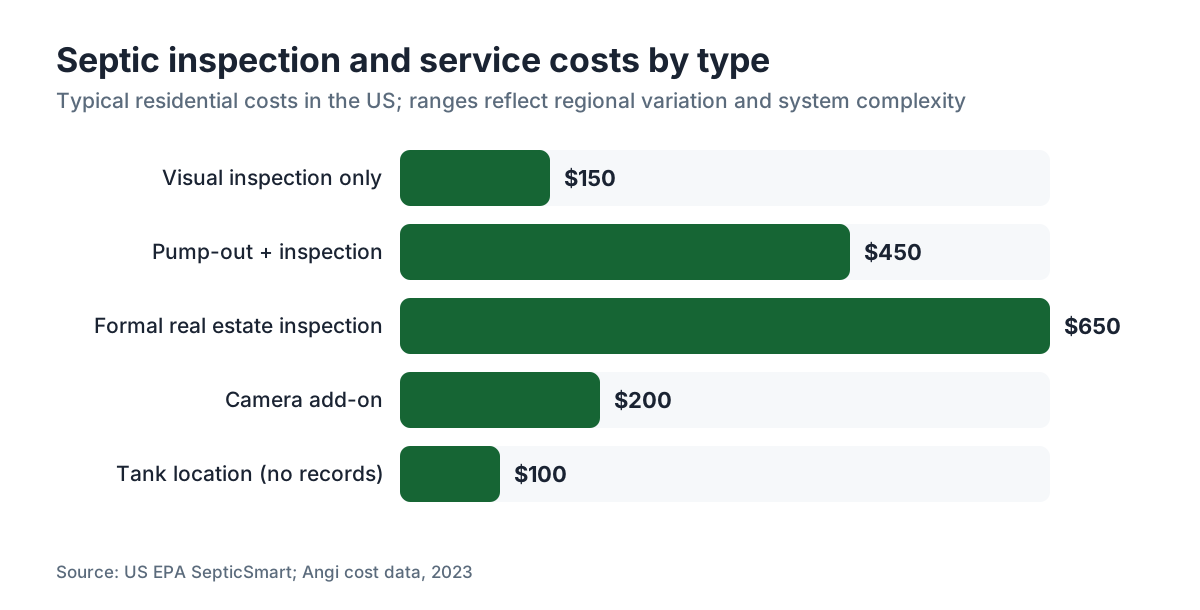
A visual inspection without pumping, where the inspector finds the tank, pulls the lids, and checks baffles and effluent level, runs roughly $100 to $200 in most markets. Some counties offer free or subsidized inspections through onsite wastewater management programs.
A full inspection with pumping is the standard. The inspector pumps the tank first so the walls and floor show, then inspects condition, baffles, and pipes. That combo typically costs $300 to $600 including the pump-out for a 1,000 to 1,500 gallon residential tank [3].
At a real estate sale, inspectors sometimes do a Title 5 inspection (Massachusetts) or a similar formal evaluation that includes a hydraulic load test, which means running water for hours while watching the drain field. Those cost $400 to $900 depending on the state, the system, and how much digging it takes to expose every access point [4].
A camera inspection of the inlet line or distribution box adds $100 to $300 to any base price.
Locating a tank with no records and no obvious clues can add a site visit fee of $50 to $150, or you can rent a pipe locator for about $75 a day and do it yourself.
| Inspection type | Typical cost | What's included |
|---|---|---|
| Visual only (no pump) | $100 to $200 | Lids, baffles, liquid level |
| Pump-out + inspection | $300 to $600 | Tank interior, walls, baffles, effluent quality |
| Real estate / formal eval | $400 to $900 | Hydraulic test, field check, report |
| Camera inspection add-on | $100 to $300 | Inlet pipe, distribution box |
| Tank location (no records) | $50 to $150 additional | Probing, permit research |
How often should you inspect your septic tank?
The EPA recommends a professional inspection of a typical household septic system every 3 years and pumping every 3 to 5 years. Systems with mechanical parts (pumps, floats, aerators) need annual inspections [1].
That's the general guideline. The real answer turns on three things: household size, tank size, and what goes down the drain. A 1,000-gallon tank serving four people fills faster than the same tank serving one. Household size is the single strongest predictor of how often you'll pump [6].
See how often to pump septic tank for a full table of size-versus-occupancy estimates.
A quicker rule: walk the drain field yourself every spring and fall. Takes 10 minutes. Look for the failure signs above. If anything looks off, call for an inspection even if you're not due. Catching a problem early is the difference between a $400 pump-out and a $15,000 drain field replacement.
Service companies managing dozens of systems tend to lose track of inspection intervals when they do it by hand. That's one of the problems SepticMind handles with automated service scheduling tied to system records, but any well-organized paper or spreadsheet setup works if you actually use it.
What is a septic tank vs. sewer, and why does it matter for inspections?
Not sure which system your home has? Here's the short version. A public sewer connects your house to a municipal treatment plant through underground pipes. The city owns everything past your property line; you pay a monthly sewer fee and carry no maintenance responsibility beyond the lateral pipe on your lot.
A septic system is all yours. You own the tank, the pipes, and the drain field. You pay for every bit of maintenance, inspection, and repair.
On cost, the comparison looks like this:
| Cost category | Septic system | Public sewer |
|---|---|---|
| Installation | $3,000 to $15,000+ | $5,000 to $25,000+ to connect if not at street |
| Monthly fee | $0 (ongoing) | $30 to $100 per month typical |
| Inspection (your cost) | $300 to $600 every 3-5 yr | Not required (city handles plant) |
| Major repair/replacement | $5,000 to $50,000 | Usually city cost if main fails |
Over 30 years, septic and sewer land close together in most markets. Septic owners dodge monthly fees but absorb maintenance costs. Sewer users pay every month but carry no field-failure risk. Homes without sewer access have no choice anyway; connection isn't free and often isn't possible without a municipal expansion project.
What is a septic tank versus a sewer in practice? A septic tank is a buried watertight chamber (concrete, fiberglass, or polyethylene) where anaerobic bacteria break down solids. Effluent then flows to a drain field. A sewer is a gravity or pressure pipe network. Neither wins on principle; lot size, soil type, and what's available at the street decide what you have and what you can do about it.
What happens after an inspection: repairs, pumping, or reinspection?
An inspection ends in one of three outcomes.
All clear. Sludge and scum levels are fine, baffles are intact, the drain field looks healthy. Schedule the next inspection in 3 years and write down today's readings.
Pumping needed. The inspector recommends a pump-out, maybe right away if levels are high. A septic tank pumping visit typically costs $250 to $500 for a standard residential tank. Ask the pumper to note the sludge depth before pumping so you can track how fast your system fills. That number tells you exactly how long you have until next time.
Repairs needed. Common findings: broken baffles, cracked inlet pipes, tree root intrusion, or a failing distribution box. A baffle replacement usually runs $100 to $300 in parts and labor. A distribution box repair or replacement runs $300 to $800. If the drain field itself is failing, costs jump; a full field replacement runs $5,000 to $20,000 depending on soil and local permitting. See septic tank repair and septic system repair for what those jobs actually involve.
For serious findings, get a second opinion before you authorize expensive work. Some companies quote a full drain field replacement when a targeted repair or a stretch of system rest would add years of field life.
One thing that's never smart: ignoring the report because the estimate looks steep. A $400 baffle job left for two years often turns into a $12,000 drain field. The math almost always favors acting early.
What records should you keep after each inspection?
Keep a simple file, paper or digital, with these items:
- System as-built drawing (tank location, field layout, tank size, installation date)
- Date of every inspection and the inspector's name and license number
- Sludge depth and scum depth readings at each visit
- Pump-out dates and volumes removed
- Any repairs, with dates, descriptions, and contractor details
- Copies of any county or state inspection reports, especially ones required for a home sale
This file has real value. It makes the next inspection faster because the inspector knows where everything is. It documents your maintenance history when you sell, which protects you legally and speeds up closing. And it gives you trend data: if sludge depth is climbing faster than expected, you can dig into why (more people in the house, a garbage disposal, certain cleaning products) before it turns into a crisis.
Many state health departments require inspection records to be filed with the county, especially after a formal real estate inspection. Check your local onsite wastewater regulations. States like Massachusetts, Washington, and Maine tie specific record-keeping rules to their Title 5 or equivalent programs [5].
Service companies juggling many client systems benefit from one central record system. SepticMind was built to store this kind of asset-level history across a provider's whole customer base, tying inspection records to scheduled service reminders automatically.
When should you call a professional instead of doing it yourself?
Be honest about what DIY covers. You can locate the tank, uncover lids, do a visual surface check of the drain field, and take a rough sludge measurement. Those tasks are safe if you follow the gas rules and never enter the tank.
Call a licensed inspector or pumper for any formal real estate inspection, any sign of system failure, any tank more than 3 years past its last pump-out, and any system with mechanical parts like a pump, aerator, or float switch. Most states require licensed professionals to perform any inspection that produces a written report for legal or regulatory purposes [5].
Just bought a house and have no idea when the tank was last serviced? The right first move is a professional pump-out and inspection together. The pump-out lets the inspector see the tank interior properly, and you walk away with a clean baseline reading. Budget $350 to $600 for that first visit.
If your house is on septic and you're thinking about the total cost picture, see cost to install septic system for what replacement would run if the worst happens, and cost to put in a septic tank for tank-specific replacement numbers.
Frequently asked questions
How do you inspect a septic tank yourself?
Locate the tank using permit records or probing, uncover the lids, and use a sludge judge to measure the sludge layer at the bottom and scum layer at the top. Check that inlet and outlet baffles are intact and visible. Walk the drain field and look for wet spots, odor, or unusually lush grass. Never lean directly over an open tank because of hydrogen sulfide gas. For a written report or a real estate inspection, you need a licensed professional.
How much does it cost to inspect a septic tank?
A visual inspection without pumping runs $100 to $200. A full inspection that includes pumping the tank so the interior is visible typically costs $300 to $600 for a standard residential system. Formal real estate inspections, which include a hydraulic load test and a written report, run $400 to $900 depending on your state and system complexity. Adding a camera inspection of the inlet pipe or distribution box adds $100 to $300.
How often should a septic tank be inspected?
The EPA recommends a professional inspection every 3 years for conventional gravity-fed systems, and annual inspections for systems with mechanical components like pumps or aerators. Pumping is recommended every 3 to 5 years depending on household size and tank capacity. Doing your own quick visual check of the drain field twice a year takes 10 minutes and can catch early problems between professional visits.
What are the signs a septic tank needs to be pumped?
The most reliable sign is a sludge measurement showing the sludge layer within 6 inches of the outlet baffle, or sludge plus scum exceeding one-third of the tank's liquid depth. Observable signs include slow drains throughout the house, gurgling toilets, sewage odor inside or outside, wet soggy ground over the drain field, or unusually green grass over the tank or field. Any of these means call a pumping company promptly.
What is the difference between a septic tank and a sewer?
A septic system is entirely on your property: you own the tank, distribution pipes, and drain field, and you pay for all maintenance and inspections. A public sewer connects your home to a city treatment plant, and the municipality maintains the infrastructure past your property line for a monthly fee. Septic owners have no monthly fee but absorb inspection and repair costs. Sewer users pay ongoing fees but have no drain field to fail.
What does a home inspector check on a septic system?
A general home inspector typically does a limited visual check: verifying the tank location, looking for surface signs of failure over the drain field, and sometimes running water to see if drains flow freely. They are not required to open the tank or measure sludge levels. For a thorough evaluation, hire a licensed septic inspector separately. Real estate transactions in many states require a specialized septic inspection report beyond what a home inspector provides.
How long does a septic inspection take?
A basic visual inspection with lid removal and sludge measurement takes about 45 minutes to an hour once the lids are exposed. If the inspector has to locate and uncover buried lids first, add 30 to 60 minutes. A full pump-out combined with inspection typically runs 2 to 3 hours. Formal real estate inspections that include a hydraulic load test and drain field evaluation can take 3 to 4 hours.
Can a septic tank pass inspection and still have a failing drain field?
Yes. The tank can be in good shape with acceptable sludge levels while the drain field is failing at the same time. The two components age independently. A field can be biomat-clogged from years of fine solids escaping a once-broken outlet baffle, even after that baffle has been replaced. Always insist the inspector walk and visually evaluate the full drain field, more than pull the tank lids.
What happens if you fail a septic inspection?
A failed inspection means the system poses a public health or environmental risk in the inspector's professional judgment. In a real estate context, the buyer typically has the right to request repairs or renegotiate price before closing. Outside of a sale, a failed inspection usually triggers a county or state notice requiring repairs within a defined timeframe, often 30 to 180 days depending on severity and local regulations. Fines can apply if repairs are not completed on time.
Is septic or sewer cheaper in the long run?
It's genuinely close over 30 years. Sewer users pay roughly $30 to $100 per month in fees, totaling $10,800 to $36,000 over 30 years with no field-failure risk. Septic owners pay $0 in monthly fees but absorb $1,500 to $3,000 in maintenance over that period under normal conditions, with the risk of a $5,000 to $50,000 field replacement if the system fails. In rural areas without sewer access, there's no real comparison: septic is the only option.
Do I need a permit to inspect my own septic tank?
Generally no. Removing lids to measure sludge levels or inspect baffles visually on your own property does not require a permit in most states. Permits are typically required for any physical repair, modification, or replacement of system components, and most states require licensed contractors for permitted work. Always check your local health department's rules; some counties limit what a homeowner can do beyond routine observation.
What is a sludge judge and how do you use it?
A sludge judge is a clear acrylic or polycarbonate tube, typically 5 to 8 feet long in sections, with a ball-valve at the bottom. You lower it to the tank floor, and the valve opens to fill the tube. Place your thumb over the top to create suction and lift it out. The layers are visible: dark dense sludge at the bottom, clear effluent in the middle, and grease or scum at the top. Measure each layer with a tape measure.
How do I find my septic tank if there's no diagram?
Start by calling your county health department; most keep permit records and as-built drawings on file, and many have online GIS portals. If no records exist, locate the sewer pipe leaving the house (usually in the basement or crawl space) and probe the soil in that direction every 12 to 18 inches with a metal rod until you hit a consistent hard surface at a uniform depth. Slight depressions or unusually green patches in the yard often mark buried tanks.
Sources
- US EPA, SepticSmart: Caring for Your Septic System: EPA recommends professional inspection every 3 years, pumping every 3-5 years, and annual inspection for systems with mechanical components; pumping needed when sludge/scum within 6 inches of outlet baffle
- OSHA, Hydrogen Sulfide Hazards: OSHA classifies hydrogen sulfide as immediately dangerous to life or health at 100 ppm
- HomeAdvisor / Angi, Septic Tank Pumping and Cleaning Cost Guide: Full inspection with pump-out for a standard residential tank typically costs $300 to $600
- Massachusetts DEP, Title 5 Inspection Program: Formal real estate septic inspections in Massachusetts (Title 5) cost $400 to $900 depending on system complexity and access
- Washington State Department of Health, On-Site Sewage System Information: States including Washington and Massachusetts have specific record-keeping and licensing requirements for septic inspections
- US EPA, Septic Systems (SepticSmart): Household size is the single strongest predictor of pumping frequency according to EPA septic system management guidance
- National Environmental Services Center (NESC) at WVU: Sludge plus scum should not exceed one-third of total liquid depth in the tank; measurement methods for sludge judge use
- University of Minnesota Extension: Tree roots can penetrate perforated drain field pipes; drain field surface indicators of failure include wet spots, odor, and lush grass stripes
- Maine Department of Environmental Protection: Maine requires licensed professionals for septic inspections resulting in written reports and mandates record filing with the county
- US EPA, Septic Systems (SepticSmart): Approximately 21 million homes in the US rely on septic systems; drain field replacement costs range from $5,000 to $50,000 depending on soil and permitting conditions
Last updated 2026-07-09