How to know when your septic tank is full (7 real signs)
By the SepticMind Editorial Team

TL;DR
- Your septic tank needs pumping when you get slow drains all over the house, gurgling pipes, sewage odors indoors or out, wet or unusually green patches over the drain field, or sewage backing up into low fixtures.
- Most tanks need service every 3 to 5 years, depending on household size and tank capacity.
- A licensed pumper confirms the level with a probe in under 10 minutes.
What does 'full' actually mean for a septic tank?
Full means three different things, and they're three different problems. Sort out which one you have before you do anything else.
The first is normal operating level. A working tank always holds liquid up to the outlet pipe, usually 8 to 12 inches below the lid. That isn't full in the bad sense. It just means the system is doing its job: solids sink to the bottom as sludge, grease floats as scum, and clarified liquid (effluent) flows out to the leach field continuously.
The second is sludge-full. This is what most people mean when they say the tank is full. The sludge on the bottom has stacked up high enough, or the scum on top has grown thick enough, that less than 12 inches of clear liquid sits between them. Solids start escaping to the drain field, and that's where the expensive clogs begin [1].
The third is a backup. The tank is so full, or the outlet so blocked, that wastewater has nowhere to go but back into the house. That's the emergency version.
Which state you're in decides how fast you move. Signs one through four below point to sludge-full. Signs five through seven mean you're already at or past a backup.
How to tell when your septic tank is full: 7 signs to check
Run through these in order. The early ones are quiet. The late ones are not.
1. Slow drains throughout the entire house
One slow drain is usually a clogged pipe. Every drain running slow at once, toilets and sinks and showers, means the problem sits downstream of all of them. A full or nearly full tank creates back-pressure that drags everything down. Check every fixture before you call anyone. If several are affected, call a septic tank pumping company, not a plumber.
2. Gurgling sounds from pipes or toilets
That gurgle is air getting displaced when wastewater can't flow freely. You'll hear it clearest after a flush or when the washing machine drains. Gurgling from a single fixture usually means a partial clog nearby. Gurgling that shows up in a toilet on a different floor than the fixture you just used points at the tank or the line between the house and the tank.
3. Sewage odors inside the house
A full tank can push sewer gas back through the water seals (traps) in your drains. You'll often smell it first near a basement floor drain, because those traps dry out fastest. If you haven't run water in that drain for weeks and the smell just showed up, pour a gallon of water in to reseal the trap before you assume the worst. If the smell comes from multiple drains and doesn't clear after you reseal, the tank is a likely suspect.
4. Sewage odors outside, near the tank or drain field
A faint earthy smell near the tank lid or the leach field after heavy rain can be normal. A sewage odor you can smell from 20 feet away is not. It means either the tank lids are cracked or sealed badly, or effluent is surfacing in the drain field because the tank is dumping solids into it [2].
5. Wet, spongy, or unusually green patches over the drain field
This is one of the most reliable things you can see with your own eyes. When a full tank sends solids downstream, the distribution pipes clog and force effluent up to the surface. The grass over those spots gets extra water and nutrients, so it grows greener and faster. The soil feels soft, and in bad cases you'll see standing liquid. This is past sludge-full and into damage. Get a pumper out that day, and schedule a septic tank inspection.
6. Sewage backup into the lowest fixtures
Raw sewage coming up through a shower drain or basement floor drain is the clearest emergency sign there is. It surfaces in the lowest fixtures first because of gravity. Stop using water in the house until the system is pumped. This is a health hazard. The EPA's SepticSmart program flags untreated sewage as a direct human health and water quality risk [3].
7. A very long time since the last pump-out
This one isn't a symptom. It's a calendar check. If you don't know when the tank was last pumped, or it's been more than 5 years, the tank is probably carrying more sludge than it should even without visible signs. A septic tank pump out is cheap next to a new drain field. The average U.S. household needs pumping every 3 to 5 years [1].
How often should a septic tank be pumped to prevent it from getting full?
Frequency comes down to three things: tank size, how many people live in the house, and how much water they use. The EPA's general guidance is every 3 to 5 years for most tanks, but that range is wide on purpose [1].
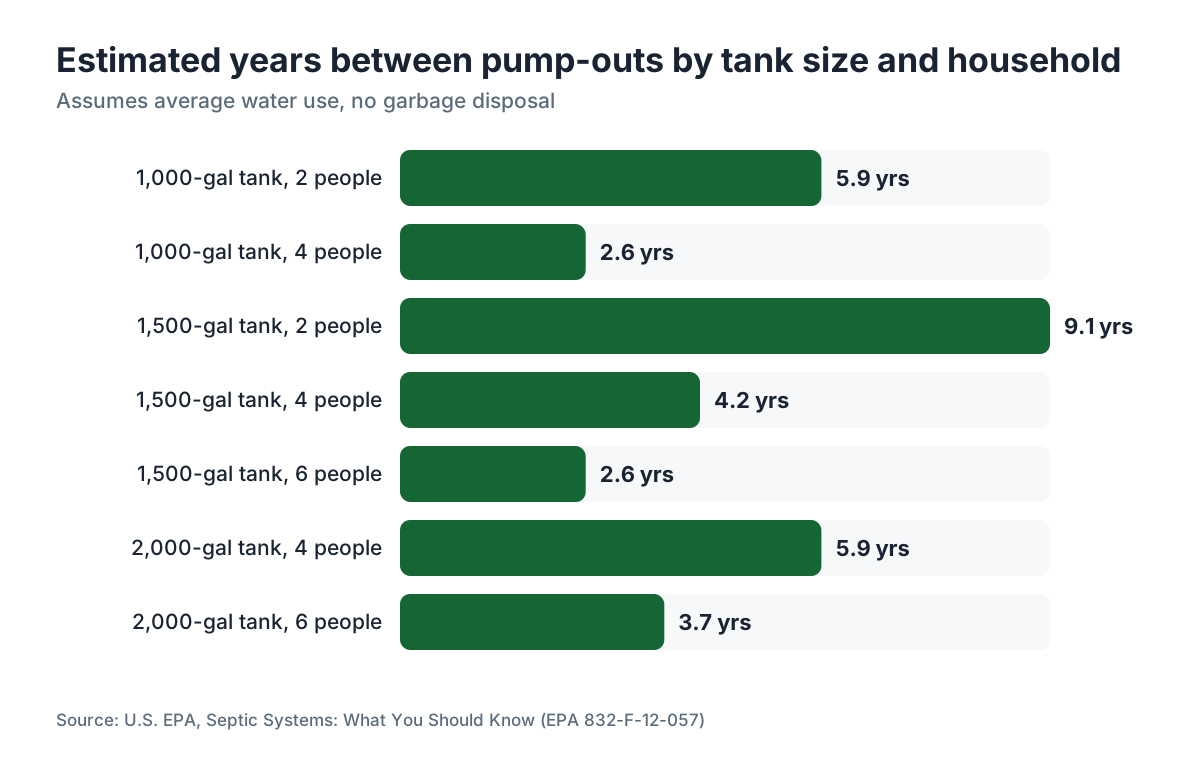
The table below shows the EPA's own estimates by household size and tank capacity. They assume average water use and no garbage disposal, which adds a lot of sludge.
| Tank size (gallons) | 1 person | 2 people | 4 people | 6 people |
|---|---|---|---|---|
| 500 | 5.8 yrs | 2.6 yrs | 1.0 yr | 0.7 yr |
| 750 | 9.1 yrs | 4.2 yrs | 1.8 yrs | 1.1 yrs |
| 1,000 | 12.4 yrs | 5.9 yrs | 2.6 yrs | 1.7 yrs |
| 1,250 | 15.6 yrs | 7.5 yrs | 3.4 yrs | 2.2 yrs |
| 1,500 | 18.9 yrs | 9.1 yrs | 4.2 yrs | 2.6 yrs |
| 2,000 | 25.4 yrs | 12.4 yrs | 5.9 yrs | 3.7 yrs |
Source: EPA, Septic Systems: What You Should Know (EPA 832-F-12-057)
A 1,000-gallon tank, which is a very common residential size, serving a family of four needs pumping every 2.6 years by EPA's math. Most homeowners stretch it longer than that. That gap is exactly why the early warning signs are worth knowing cold.
For a fuller breakdown of schedules and what shifts them, see how often to pump a septic tank.
Can you check the septic tank level yourself before calling a pumper?
Yes, with real caveats. Opening a tank exposes you to hydrogen sulfide gas, which is colorless and can knock a person unconscious fast at high concentrations [4]. Homeowners still check their own tanks safely all the time by taking basic precautions: never lean over an open tank, keep a helper nearby, and never, under any circumstances, go into the tank.
The DIY check uses a long stick (a piece of PVC pipe works fine) with a white rag tied to one end. Lower the cloth end gently to the bottom, then draw it out slowly. The dark, greasy line where the scum layer stops and the clear zone starts shows on the cloth. Do the same to find where the sludge starts on the bottom. If the sludge is within 12 inches of the outlet, or the scum is within 3 inches of it, the tank is ready to pump [1].
Here's the honest part. Most homeowners find this fussy enough that they skip it and pay for an inspection. A pumper opens the lid, probes the tank, and tells you in a few minutes whether you need service. If your lid is buried, which is common, you have to locate it before any of this matters. Many states require tanks installed after a certain date to have risers that bring the lid up to grade.
Some people install electronic liquid-level sensors or float systems for continuous monitoring. They're worth it for a vacation home you check rarely. For a primary residence with predictable usage, they're overkill.
What happens if you ignore a full septic tank?
The bill climbs fast, and the damage doesn't undo itself.
In the early sludge-full stage, solids start slipping past the outlet baffle into the drain field pipes. Those pipes are built for clarified liquid only. Once solids get in, they clog the soil in the absorption trenches. Biomat, a dense layer of organic matter and bacteria, forms on the pipe walls and trench floor. The field loses capacity.
Mild biomat sometimes recovers with rest, either by routing wastewater to a second field if you have one or by cutting water use hard. Severe biomat doesn't recover. The drain field fails.
A new drain field runs $3,000 to $15,000 or more depending on soil, lot size, and local permits, and that's before any tank work [5]. Compare that to the $300 to $600 it costs to pump a tank [6]. Routine pumping is the cheapest insurance in the whole septic world.
The damage isn't only financial. A failed drain field creates a public health problem. Untreated sewage that reaches groundwater can contaminate wells. The EPA points to failing septic systems as one of the most common sources of groundwater contamination in the country [3]. Many states fine owners for failures, and some require repair before a property can sell. North Carolina, for one, requires a system evaluation before ownership transfers [7].
For what goes wrong and what repair looks like, see septic tank repair and septic system repair.
Is it a full tank or a different problem? How to tell
Not every symptom that looks like a septic problem is a full tank. Several other causes throw off nearly identical signs.
Clogged inlet or outlet baffle. The tank might sit at a normal sludge level while a broken or clogged baffle chokes the flow. A pumper can see this the moment the lid is open. The fix is usually a new baffle, far cheaper than dealing with a genuinely full tank.
Blocked sewer line between house and tank. Tree roots in the pipe are the usual culprit. From inside the house the symptoms look identical to a full tank, but a pumper who opens the tank finds normal liquid levels. A plumber with a camera scope confirms it. Don't mix these up. Sending a plumber to a tank problem or a pumper to a root problem burns money.
Drain field saturation after heavy rain. Soil around the field saturates after long rain. The field backs up, which backs up the tank, which slows your interior drains. Wait 24 to 48 hours after the rain passes. If the symptoms clear, the field may be fine but undersized or sitting in poorly drained soil. If they don't clear, the problem is structural.
Pump failure on a pump-to-field system. If your system pushes effluent uphill or to a pressurized field, a dead pump looks exactly like a full tank. The tank actually fills fast, because effluent can't get out. Check your pump alarm first. Most systems have a float alarm panel near the electrical panel or in the basement.
A proper septic tank inspection by a licensed inspector sorts these out quickly.
How much does it cost to pump a septic tank that's full?
Pumping a standard residential tank runs $300 to $600 in most U.S. markets, with the national average usually landing around $400 to $500, depending on tank size, access, and region [6]. Rural areas with few providers tend to run higher. Competitive urban markets run lower.
Extra charges show up for a few things. Locating a buried lid can add $50 to $150 if the pumper has to probe for it. A tank much larger than 1,000 gallons costs more. So does breaking up hardened sludge in the bottom of a long-neglected tank.
An emergency call on a weekend or holiday can double the rate. One more reason to track your last pump date and book service before the symptoms start.
The septic tank cleaning and septic tank emptying articles cover what the visit involves and what to ask the pumper before they start.
If you're weighing this against the cost of fixing a failed system, or installing one from scratch, see cost to put in a septic tank. Pumping on schedule is cheap insurance against every number in that article.
What to do right now if you think your septic tank is full
Stop using water you don't need. Every gallon that enters the house goes through the tank. If the tank is already overloaded, more water makes it worse and drives more solids into the drain field.
Call a licensed septic pumping company. Most states require a state license or certification for septic waste handling. Ask for it when you schedule, especially with a company you haven't used before. A good pumper probes the sludge and scum layers and reports the actual levels before and after pumping.
Have them inspect the inlet and outlet baffles while the lid is open. Replacing a cracked or missing baffle costs almost nothing in that moment. Catching it later means a second trip and a second bill.
If anything about the reading confuses you, ask the pumper to show you the sludge measurement. Good operators explain what they found. That conversation also helps you set the right pumping interval going forward.
If you run a service business with multiple customer accounts, tracking pump dates, sludge levels, and maintenance schedules at scale is exactly what SepticMind was built for. Operators log tank readings, set customer reminders, and flag high-sludge accounts before they turn into emergency calls.
For homeowners, a simple written log does the job: pump date, tank size, household count, and any symptoms. Put it in a folder with your property survey. The next owner of your house will thank you.
How do septic service companies confirm the tank is full?
Licensed pumpers use a handful of straightforward methods.
The most common is the Imhoff sludge judge, a clear acrylic tube you push to the tank bottom. Liquid fills the tube and shows the layers clearly: sludge on the bottom in one color, clear effluent in the middle, scum on top. The reading takes a couple of minutes [8].
A simpler version is the rag-on-a-stick method described earlier. It's less precise but plenty good enough to tell whether the tank needs pumping now or has another year left.
A look at the effluent clarity in the outlet zone tells a lot too. Cloudy or discolored effluent means solids are already escaping, which is past the point of a simple pump-out. That may call for a full septic tank inspection to check the drain field.
Electronic sensors are starting to appear in commercial and municipal installations. They aren't common in residential septic yet, but the technology is here. Some newer tanks come with monitoring ports built in.
State and local rules you should know
Septic systems are regulated at the state and county level, not by the federal government, though the EPA sets guidance most states follow [3]. The National Environmental Services Center (NESC) at West Virginia University tracks state-by-state rules and notes that most states require a licensed or certified pumper to handle and transport septage [9].
Some states set mandatory pumping intervals. Rhode Island requires all systems to be inspected on a set schedule and pumped when needed [10]. Florida requires permitted service providers and transport manifests for every pump-out. If you're not sure what your state requires, search for your state environmental agency plus "onsite wastewater regulations."
Local health departments usually hold your tank's installation permit, which shows the size and design. If you don't know your tank size or where it sits, that permit file is a good first stop before you call a pumper.
Property sales in many states now require a septic inspection, and often a pump-out, as a condition of closing. Knowing your system's status ahead of time keeps a surprise from blowing up your closing date. The septic tank inspection article covers what a formal inspection involves in detail.
Frequently asked questions
How do I know when my septic tank is full?
The clearest signs are slow drains in multiple fixtures at once, gurgling after a flush or a laundry cycle, sewage odors inside or outside the house, wet or unusually green patches over the drain field, and sewage backing up into low fixtures like basement drains. Any single one warrants a call to a pumper. Several at once mean call today.
How can you tell when a septic tank is full without opening it?
Watch for whole-house slow drains, gurgling pipes, and an outdoor sewage smell near the tank or drain field. Wet, spongy ground over the field is a reliable visual sign. A full tank also shows up on the calendar: if it's been more than 5 years since the last pump-out, it's likely full regardless of symptoms, especially in a household of 3 or more people.
What does a full septic tank smell like?
The smell is unmistakably sewage, close to rotten eggs, sulfur, or a porta-potty. Inside, it tends to rise from floor drains or fixtures you rarely use. Outside, it's strongest near the tank lid or over the drain field. A brief smell after heavy rain can be normal. A smell that lingers and won't clear is a signal to schedule service.
Can a full septic tank fix itself?
No. The bacteria in the tank break down solids continuously, but they can't keep pace with a household's waste input forever. Sludge builds over years and has to be physically removed. Additives sold as tank treatments do not replace pumping. The EPA and most state extension services recommend against relying on additives as a substitute for routine pump-outs.
How often does a septic tank need to be pumped?
The EPA estimates every 3 to 5 years for most households, but the real answer rides on tank size and occupancy. A 1,000-gallon tank serving four people needs pumping every 2.6 years by EPA estimates. A 1,500-gallon tank for two people can go over 9 years. Check the EPA's pumping frequency table and track your actual pump dates to dial in your schedule.
What happens if you never pump your septic tank?
Sludge eventually reaches the outlet pipe and flows into the drain field. Solids clog the absorption trenches and form biomat, cutting the field's capacity. Eventually the field fails outright. Replacing a drain field costs $3,000 to $15,000 or more depending on soil and system design. That's 10 to 30 times the cost of routine pumping every few years.
Is sewage backing up into the house always a septic tank problem?
Not always. A clogged sewer line between the house and tank, a dead pump in a pump-to-field system, or a blocked inlet baffle can all cause a backup without the tank being sludge-full. A pumper checks the liquid level first. If it's normal, the trouble is likely upstream in the sewer line or the pump, and a plumber or electrician may be the next call.
Can heavy rain cause a septic tank to overflow?
Yes, indirectly. When soil is saturated, the drain field can't absorb effluent. Effluent backs up into the tank, which then fills faster than normal. That can cause interior slow drains or even a backup during long rain. If symptoms clear within 48 hours after the rain stops, the system may be working but undersized or sited in poorly drained soil. Persistent problems after rain warrant an inspection.
How do I find out when my septic tank was last pumped?
Check the closing documents from when you bought the house; a pump receipt is sometimes tucked in. Call your local health department and ask for the septic permit records for your address; some counties also keep service history. If you've lived there more than 5 years with no record of pumping, assume it needs service. Ask the pumper to record the date and sludge depth for your files.
Does a garbage disposal make the tank fill faster?
Yes, by a lot. Food waste from a disposal adds a heavy load of organic solids that the tank's bacteria struggle to break down fully. Research from the University of Minnesota Extension found garbage disposals can raise sludge accumulation enough to require pumping roughly twice as often. On a septic system, either drop the disposal or cut the time between pump-outs by about half.
What is the difference between a full septic tank and a failed septic system?
A full tank is a maintenance issue: the sludge and scum layers need pumping, and the system runs normally again afterward. A failed system usually means the drain field is damaged, often from years of solids overflowing out of a repeatedly full tank. Drain field failure means repair or replacement, which costs far more and disrupts far more than a routine tank pump-out.
How long does it take to pump a full septic tank?
A standard residential pump-out takes 20 to 60 minutes from opening the lid to closing it. Large tanks, tanks with hardened sludge from years without service, or tanks with hard access take longer. The pumper should also spend a few minutes checking the baffles and looking for cracks in the tank interior while it's open. Ask them to do this if they don't offer.
Should I use septic tank additives to prevent it from getting full?
The EPA and state extension agencies consistently say additives don't replace pumping and can harm the system. Some biological additives claim to boost bacterial activity; some chemical ones damage concrete tanks or kill the beneficial bacteria already present. A healthy tank already has the bacteria it needs. Save the money and put it toward pump-outs on schedule.
Can I pump my own septic tank?
In most states, no. Septage is a regulated waste in nearly every U.S. state, and transporting it requires a licensed hauler with approved disposal at a permitted facility. DIY pumping typically violates state environmental code and creates a serious health hazard. Hire a licensed pumper; it's cheap relative to the risk and the regulatory exposure.
Sources
- U.S. EPA, Septic Systems: What You Should Know (EPA 832-F-12-057): Most septic tanks need pumping every 3 to 5 years; EPA table of pumping frequency by household size and tank volume
- U.S. EPA, SepticSmart Program: Persistent sewage odors near the tank or drain field indicate system stress or solids escaping to the drain field
- U.S. EPA, Septic Systems Overview: Failing septic systems are one of the most common sources of groundwater contamination in the United States; sewage poses human health and water quality risk
- U.S. OSHA, Hydrogen Sulfide Hazards: Hydrogen sulfide in confined spaces like septic tanks is colorless and can cause rapid unconsciousness at high concentrations
- Penn State Extension, Septic System Costs and Maintenance: Drain field replacement costs $3,000 to $15,000 or more depending on soil and system design
- Angi, Septic Tank Pumping Cost Guide: Average residential septic tank pump-out costs $300 to $600 nationally
- North Carolina Department of Health and Human Services, Onsite Wastewater Rules: North Carolina requires septic system evaluation before transfer of property ownership
- University of Minnesota Extension, Septic System Owner's Guide: The Imhoff sludge judge is a standard tool for measuring sludge and scum layer depth in septic tanks
- National Environmental Services Center (NESC), West Virginia University, State Septic Regulations: Most states require a licensed or certified pumper to handle and transport septage
- Rhode Island Department of Environmental Management, ISDS Regulations: Rhode Island requires septic systems to be inspected on a set schedule and pumped when needed
- University of Minnesota Extension, Garbage Disposals and Septic Systems: Garbage disposals can increase sludge accumulation enough to require pumping approximately twice as often
Last updated 2026-07-09