How long does it take to install a septic system?
By the SepticMind Editorial Team
TL;DR
- The digging and pipe work for a conventional septic system takes 1 to 3 days.
- The whole timeline is a different animal.
- From permit application to a working system, plan on 3 weeks on the fast end and 3 to 6 months when regulators are slow or the site needs an engineered design.
- Replacements move faster because the county already has soil data on file.
What's the short answer on septic installation time?
The physical work runs 1 to 3 days for a standard residential system on an easy site. That covers excavation, tank placement, and drain field construction. [1] Add a day for inspection sign-offs, backfill, and cleanup, and you're at a week at most once crews are on the ground.
The permit process is the real wildcard.
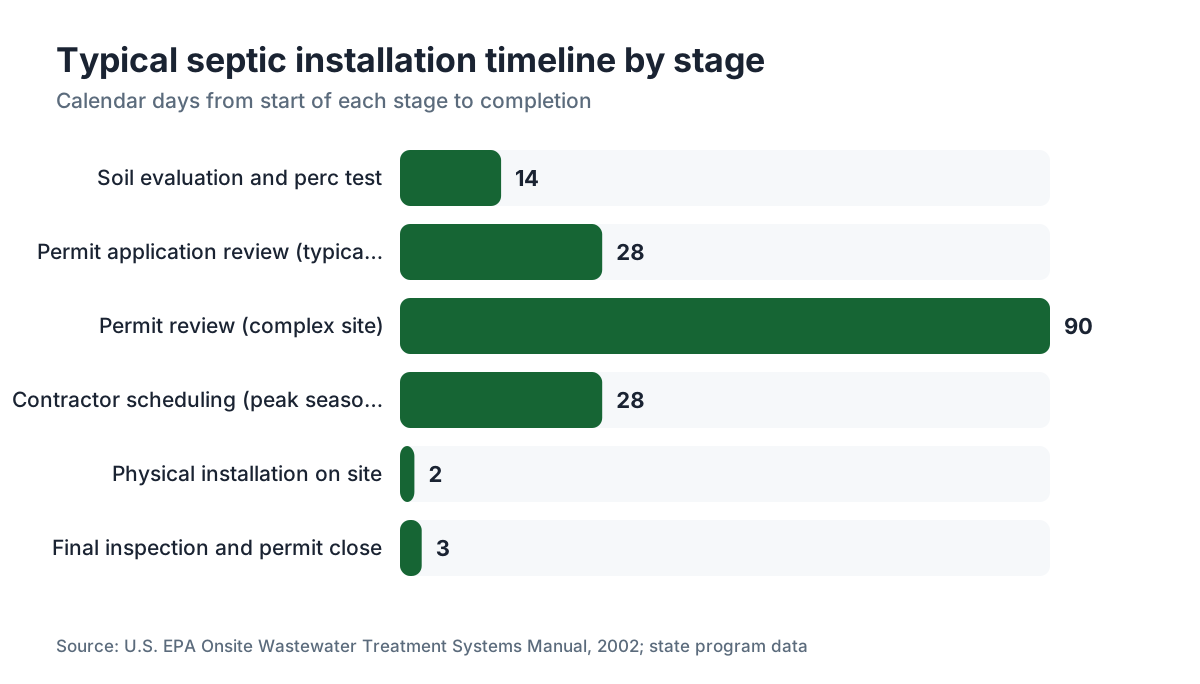
Most counties want a soil evaluation, a percolation test or soil profile, a permit application review, and at least one inspection during the dig. That whole cycle takes 2 to 8 weeks in most states. In backlogged or heavily regulated jurisdictions it stretches to 6 months. [2]
If a construction schedule is riding on this, solve the permit timeline first. Everything else is fast by comparison.
What are the stages of septic installation and how long does each take?
Break the timeline into stages and you can see exactly where you stand, and where you're likely to wait.
| Stage | Typical Duration | What Controls the Timing |
|---|---|---|
| Site evaluation and soil testing | 1 day of fieldwork + lab turnaround | Seasonal timing, licensed evaluator availability |
| Permit application review | 2 to 8 weeks | County health department backlog |
| Contractor scheduling | 1 to 4 weeks | Seasonal demand, contractor availability |
| Excavation and tank installation | 4 to 8 hours | Site access, rock, water table |
| Drain field construction | 4 to 12 hours | System type, footage of trenches |
| Cover, final grading | 2 to 4 hours | Weather, inspector scheduling |
| Final inspection and permit close | 1 to 5 business days | Health department workload |
A perc test has to happen when soil moisture sits in a specific range, and many states ban testing during frozen ground or drought. [2] That one rule can push a project into the next available season.
The EPA's SepticSmart program treats site evaluation as the biggest factor in how long a system lasts, which is why regulators build in checkpoints you can't skip. [1] Rush them and you get a system that fails inside a decade.
How long does permit approval take before installation can start?
Permit approval is almost always the longest part of the job, and it swings wildly by state and county. Expect 2 weeks in fast, streamlined places and up to 6 months where reviews stack up.
Texas keeps its onsite sewage rules relatively simple under Title 30, Chapter 285 of the Texas Administrative Code. A standard permit there can clear in 2 to 4 weeks once the soil evaluation is in. [3] Massachusetts is the other end of the spectrum. Title 5 requires a licensed site evaluator, a submittal to the local Board of Health, and in some towns a separate engineering review. Six to ten weeks is normal, and hard sites run longer. [4]
There's no national timeline. The EPA's design and sizing guidance defers entirely to state and local standards, so there's no federal benchmark to point at. [1]
Some conditions reliably add weeks. Sites near wetlands or wellhead protection areas trigger extra environmental review. Lots below a minimum size may need a variance. New subdivisions often require a full engineered design stamped by a licensed engineer before any permit issues.
Buying land to build on? Call the county health department and ask their current permit turnaround before you close. It's a free phone call that can reshape your entire schedule.
How long does the physical installation take on the day crews arrive?
On a normal lot with no surprises, a two or three person crew installs a conventional gravity-fed system in one full day. Here's how the hours break down.
Digging the tank pit takes 1 to 2 hours with a mid-size excavator. Setting the tank runs another hour, including the inlet and outlet connections. A precast concrete tank weighs 7,000 to 14,000 pounds for a 1,000 to 1,500 gallon unit, so it goes in with the machine, not by hand. Trenching the drain field varies the most. A 300-foot field goes quick. A 1,200-foot field at 18 inches wide eats most of a day. Then you lay distribution pipe, add aggregate or chambers, and cap the trenches, which is a few more hours.
Two days is the more honest calendar figure. Many counties require an inspection after the tank is set but before backfill. The crew leaves, the inspector shows up the next morning, the crew comes back to finish. That pause turns a one-day job into a two-day job.
Hard rock below grade is the biggest schedule killer. Blasting or hydraulic breaking adds a day or more and drives cost up fast. [5] A seasonally high water table does the same thing when it forces an engineered mound or elevated bed, which means far more earthwork than a plain in-ground design.
Does system type change how long installation takes?
Yes, and the spread is wide. A conventional system goes in during a single day. A residential drip system can take a full week.
Conventional gravity system. The baseline. 1 to 2 days on site.
Chamber system (Infiltrator or similar). A little faster than gravel and pipe because there's no aggregate to haul and spread. Usually saves 2 to 4 hours. [6]
Mound system. A mound needs imported fill sand, a raised bed, a pump, and extra grading. Plan on 2 to 4 days of site work. These show up on sites with thin soil over rock or a high seasonal water table.
Aerobic treatment unit (ATU). The treatment unit itself isn't much slower than a conventional tank, but the spray or drip dispersal field needs more plumbing and a control panel. Add 1 to 2 days.
Drip irrigation system. The slowest of the bunch. Drip tubing runs across a wide area, and the control system needs careful setup and testing. Three to five days is realistic for a full residential drip system.
Any system with a pump means electrical work. An electrician runs a dedicated circuit to the control panel, and coordinating that sub-trade can add a day.
Still deciding? You can compare full septic tank installation costs by system type before you commit.
How long does it take to replace an existing septic system?
Replacing a system is usually faster than a new build, but less than most homeowners expect. Figure 2 to 6 weeks including permitting when everything cooperates.
The permit side is shorter because soil data from the original install often still sits in the county file. Some jurisdictions accept the old perc test data if you're replacing in kind. Others want a fresh soil evaluation regardless. Call the health department first and find out which one you're dealing with.
Site work runs 1 to 3 days, similar to new construction, plus demolition time. The old tank gets pumped out, then either crushed in place or dug up and hauled, depending on local rules. Excavating a buried 1,000-gallon concrete tank takes 2 to 4 hours. If the new field is going in the same footprint, the old pipes and aggregate have to come out too, which adds hours.
Here's the catch with failures. If the old field failed from saturation, the soil there may need to rest before a new field goes in the same spot. Some county codes require a completely different location, which can mean a full new site evaluation. [2]
Systems that need a new location or an engineered design sit closer to 2 to 4 months.
Not sure if you need a full replacement or just a fix? Read up on septic system repair first.
What factors make a septic installation take longer than expected?
A handful of site and regulatory conditions reliably blow up a timeline. Here are the ones that show up most.
Wetland proximity. Installing inside a buffer zone of a wetland, stream, or lake triggers state environmental review on top of the health permit. In many states that's a separate application to a separate agency, and the response comes back in months, not weeks.
Rock or ledge. Granite ledge near the surface means blasting permits, specialized equipment, and a licensed blaster. Each one adds scheduling time.
Existing trees and utilities. Mature trees near the field may force hand digging or root barriers. Utility locates have to clear before any excavation, and the 811 call-before-you-dig process carries a minimum wait of 48 to 72 hours in most states. [7]
Engineered design requirements. Any time a standard design manual doesn't cover your conditions, you need a licensed engineer to produce a stamped design. That takes 2 to 6 weeks to draw, and the reviewer needs more time to evaluate it.
Contractor backlog. Spring and early summer are peak season. In rural areas with few licensed installers, a 4 to 6 week wait for a crew is normal.
Operators juggling multiple jobs across these variables lean on scheduling and documentation software to track permit status, inspection windows, and crew availability. Tools like SepticMind are built for that kind of multi-job coordination, and they earn their keep the first time a missed inspection window would have cost two weeks.
When can you use a new system after installation is complete?
A conventional gravity system takes load the moment the final inspection passes. No cure time. Water flows to the tank, the tank flows to the field, done.
Aerobic treatment units are the one exception.
ATUs need a bacterial population to establish before they treat as designed. Some manufacturers recommend a 2 to 4 week break-in with limited loading, or seeding the unit with liquid from an active system. Check the startup guide for your specific unit.
Some states also require a maintenance contract with a licensed service provider before they'll issue the final operating permit on an ATU. Line that contract up before the inspection and you save a day or two.
One rule holds for every system: keep heavy vehicles, digging, and landscaping off the drain field for at least 6 months after install. The soil needs to settle and the bacterial mat needs to form. [1]
How do installation timelines compare across different states?
No federal database tracks average permit-to-completion time by state, so clean apples-to-apples numbers don't exist. What does exist is each state's regulatory framework, and that's a decent proxy.
States that run onsite wastewater programs from the state level (Florida, Virginia, Tennessee) tend to hold more consistent timelines than states where every county runs its own show. County-by-county programs produce big swings. Two adjacent counties in the same state can run 3-week and 12-week permit timelines.
Florida's Department of Health runs the onsite sewage program statewide under Chapter 64E-6 of the Florida Administrative Code, with a 30-day review requirement for permit applications. [8] That's one of the faster formal commitments in the country.
Virginia requires a permit from the local health department under the Sewage Handling and Disposal Regulations (12VAC5-610), and rural county permits typically run 3 to 6 weeks. [9]
Massachusetts runs through local Boards of Health under Title 5, and timelines swing hard by town. [4]
The safe move before any build is the same everywhere: call the health department with the parcel address and ask. They'll tell you current processing times and whether anything on the site is likely to trigger extra review.
What should you have ready to speed up the process?
Most permit delays trace back to incomplete applications or scheduling gaps. A little prep closes both.
Get a licensed soil evaluator scheduled early, ideally before you finalize the site plan. Evaluators often book out 2 to 4 weeks. Hand the health department a complete packet in one shot (site plan, soil evaluation, and design proposal) and you typically cut review time by 20 to 30% versus feeding them pieces one at a time.
Have your contractor pull the permit, either alone or with you. Contractors who work a health department regularly know the reviewers, know the local formatting quirks, and know what draws extra scrutiny. That familiarity genuinely speeds things up.
Building a new home? Coordinate the septic permit with the building permit. The building permit is often contingent on septic approval. Get the septic application in first and you avoid the nightmare where framing is done but there's no certificate of occupancy because the septic permit is still stuck in review.
For a real cost picture next to your timeline, see our breakdown of cost to install a septic system and the more detailed cost to put in a septic tank.
How long does a new septic system last once it's installed?
A well-installed concrete tank lasts 40 years or more. The drain field is the part that gives out first, and a properly designed, maintained field lasts 25 to 30 years in average soil. [10]
The EPA's SepticSmart guidance puts it plainly: "A well-designed, properly installed system, with routine maintenance, can last for decades." [1] The words doing the work there are properly installed and routine maintenance. Systems that get neither, or that were undersized for the home's real water use, commonly fail in 15 to 20 years.
Regular septic tank pumping every 3 to 5 years is the highest-return thing you can do. Let solids build up and spill into the drain field and a 30-year field turns into a 12-year field. The EPA recommends pumping every 3 to 5 years for a typical household. [1]
Not sure how often your system needs it? Household size and tank volume are the two variables that matter. See how often to pump a septic tank for the math.
On the contractor side, SepticMind's service tracking lets operators log the install record, tie in the maintenance schedule from day one, and send inspection reminders automatically. That continuity is what helps a new system reach its full service life instead of dying young from neglect.
Frequently asked questions
How long does it take to install a septic system from start to finish?
From the first soil evaluation through final inspection, the full process takes 3 weeks to 6 months. The digging and installation itself runs 1 to 3 days. Permit review is the longest stage, typically 2 to 8 weeks for a standard residential system, but sites near wetlands or needing engineered designs sit at 3 to 6 months.
How long does it take to replace a septic system?
Replacing an existing system typically takes 2 to 6 weeks including permitting, when the replacement is in kind at the same location. If the field must move to a new area or needs a fresh soil evaluation, plan for 6 to 12 weeks. Removing the old system and installing the new one takes 2 to 3 days on site.
Can a septic system be installed in one day?
The on-site work can be done in a day on a simple site with a two or three person crew and an excavator. In practice it stretches to two days because many counties require a mid-installation inspection before backfill. The tank goes in, the inspector comes the next morning, and the crew returns to finish the drain field.
How long does a septic permit take to get approved?
Permit approval ranges from 2 weeks to 6 months depending on state, county, and site complexity. Florida has a 30-day review requirement. Texas typically processes straightforward applications in 2 to 4 weeks. Massachusetts towns can take 6 to 10 weeks or more. Always call the local health department for their current backlog.
What time of year is best for septic installation?
Late summer through fall is generally best across most of the U.S. Soil moisture is lower, so excavation is cleaner and perc tests read more reliably. Spring is the busiest season, so backlogs run longer and prices climb. Winter work is possible in unfrozen ground, but frozen soil stops everything and perc testing is usually banned.
How long does a perc test take?
The field portion of a percolation test takes 2 to 4 hours, but the pre-soak period before the official test often runs 12 to 24 hours, so the evaluator makes two site visits. Scheduling the evaluator is usually the bigger delay, often 1 to 3 weeks out during peak season.
How long after installation can you use the septic system?
A conventional gravity-fed system can be used immediately after the final inspection passes. There's no cure or break-in period. Aerobic treatment units are the exception. Manufacturers typically recommend a 2 to 4 week startup period to establish the bacterial population before the unit reaches full treatment capacity.
Does replacing a septic system take as long as installing a new one?
Usually a bit less, because the health department may have soil data on file that skips the need for a new evaluation. If that data is current and the replacement is in kind, permitting can run 1 to 3 weeks instead of 4 to 8. The physical work matches new installation but adds time for demolishing and hauling the old system.
How long does it take to install a mound septic system?
A mound system takes 2 to 4 days of site work, longer than a conventional system. Mounds need imported fill sand, a raised bed with a pump, and heavier grading. Permitting is similar to a conventional system, though the engineered design mounds require in most states can add 2 to 4 weeks to permit prep.
What can delay a septic installation after the permit is approved?
The common post-permit delays: contractor backlog (4 to 6 weeks at peak season), hitting rock or ledge that needs blasting, a high water table that forces a design change mid-project, failed utility locates that halt excavation, and weather that stops work or leaves the soil unfit for installation.
How long does the drain field portion of the installation take?
Drain field trenching and pipe or chamber installation typically takes 4 to 12 hours depending on total footage and system type. A small 300-foot field goes in half a day. A large 1,200-foot field or a wide-bed chamber system takes a full day. Gravel delivery and spreading adds time compared to chamber systems.
Do I need to be home during septic installation?
You don't have to be there for most of the work, but stay reachable by phone and walk the site before digging to confirm the layout. The county inspector needs site access at the mid-installation inspection. Your contractor schedules that visit, but you should know it's happening and that it adds at least half a day to the timeline.
How long does a newly installed septic system last?
A properly installed concrete tank lasts 40 years or more. The drain field is the life-limiting part and typically lasts 25 to 30 years with proper maintenance. The EPA's SepticSmart program says a well-designed, properly installed system with routine maintenance can last for decades. Pumping every 3 to 5 years is the most important step.
Should I get a septic inspection before buying a home with an existing system?
Yes, always. A pre-purchase inspection tells you the age and condition of the tank and field, whether the system was permitted and installed to code, and whether failure is close. A system near end of life can cost $10,000 to $30,000 to replace. An inspection costs $300 to $600 and takes 1 to 2 hours. See our guide to septic tank inspection for what's covered.
Sources
- U.S. EPA SepticSmart Program: Proper site evaluation is the key determinant of long-term system performance; regular pumping every 3 to 5 years is recommended; a well-designed, properly installed system with routine maintenance can last for decades.
- U.S. EPA Onsite Wastewater Treatment Systems Manual: Percolation tests must be conducted under appropriate soil moisture conditions; many states restrict testing during frozen ground or drought; replacement fields may require a completely new location.
- Texas Commission on Environmental Quality, Title 30 Chapter 285 Onsite Sewage Facilities: Texas administers onsite sewage facility rules under Title 30, Chapter 285 of the Texas Administrative Code; standard permits can be approved in 2 to 4 weeks once the soil evaluation is submitted.
- Massachusetts Department of Environmental Protection, Title 5 Septic System Regulations: Massachusetts Title 5 requires a licensed site evaluator, submittal to the local Board of Health, and in some cases separate engineering review; typical permit timelines run 6 to 10 weeks for standard sites.
- U.S. EPA Onsite Wastewater Treatment Systems Manual: Shallow bedrock and high water tables require design modifications such as engineered mound systems, adding earthwork and site time compared to conventional in-ground designs.
- Infiltrator Water Technologies, Chamber System Installation Guidance: Chamber systems eliminate the need for aggregate, reducing installation time by 2 to 4 hours compared to conventional gravel-and-pipe drain fields.
- Common Ground Alliance, 811 Call Before You Dig: The 811 call-before-you-dig process requires a minimum 48 to 72 hour waiting period in most states before excavation can begin.
- Florida Department of Health, Chapter 64E-6 Standards for Onsite Sewage Treatment and Disposal Systems: Florida administers the onsite sewage program statewide under Chapter 64E-6 with a 30-day review requirement for permit applications.
- Virginia Department of Health, Sewage Handling and Disposal Regulations 12VAC5-610: Virginia requires a permit from the local health department under 12VAC5-610; typical rural county permit processing times run 3 to 6 weeks.
- National Onsite Wastewater Recycling Association (NOWRA): Conventional concrete septic tanks last 40 years or more; drain fields typically last 25 to 30 years with proper maintenance.
Last updated 2026-07-10