How long does a septic inspection take?
By the SepticMind Editorial Team
TL;DR
- A standard septic inspection takes 2 to 4 hours for most homes.
- A quick visual check runs about 45 minutes.
- A full inspection with tank pumping, flow testing, and a drain field walk can stretch past 4 hours.
- The three biggest time drivers are system complexity, how easy the tank is to reach, and whether the tank has to be pumped first.
What actually happens during a septic inspection?
A septic inspection isn't one fixed thing. It's a layered process, and the type you book decides how much ground gets covered and how long it runs.
At the low end, an inspector walks the property, looks for surface ponding or odors near the drain field, checks the lids and risers, opens the tank, probes the inlet and outlet baffles, and measures the scum and sludge layers. That's a basic operational check. It tells you whether the system works today. It doesn't tell you whether it lasts another decade.
A thorough inspection, the kind most real estate deals now require, adds tank pumping, a look at the tank interior, flow testing by running water into the system, an evaluation of the distribution box and leach field, and sometimes a dye test. Some states make a licensed engineer sign off.
The EPA describes a working septic system as one where "wastewater is treated and dispersed into the soil without surfacing or creating a nuisance." [1] A good inspection confirms exactly that. An inspector who skips the drain field walk is handing you half a report.
Ask what's included before anyone shows up. A basic visual check takes under an hour. A full inspection with a pump-out eats a half day. Both get sold as "septic inspections," and the price gap between them is real.
How long does a typical residential septic inspection take?
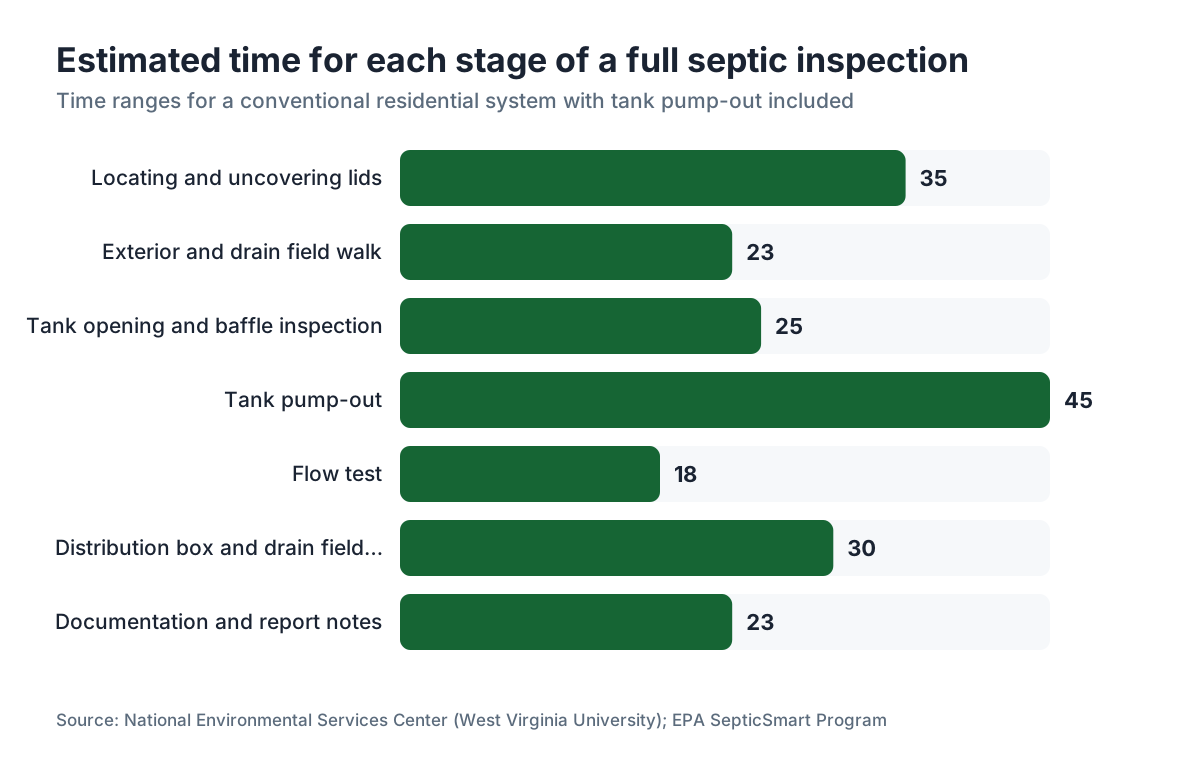
For a standard 3-bedroom home with a conventional gravity-fed system, expect 2 to 4 hours from the moment the inspector arrives to the moment they leave. Here's how that time usually breaks down.
| Stage | Typical time |
|---|---|
| Locating and uncovering tank lids | 20 to 45 min |
| Visual exterior / drain field walk | 15 to 30 min |
| Tank opening, baffle inspection, sludge measurement | 20 to 30 min |
| Tank pumping (if included) | 30 to 60 min |
| Flow test / running water into system | 15 to 20 min |
| Distribution box and drain field evaluation | 20 to 40 min |
| Documentation and report notes | 15 to 30 min |
Stack those up and you land at 2 to 4 hours under normal conditions. The pump-out is the single biggest block of time, because the truck has to actually pull the waste and sometimes reposition to reach the tank. Drop the pumping and the inspection alone might run 90 minutes.
Older systems, tanks of 1,500 gallons or more, and setups with multiple tanks or pump chambers all add time. A system with an aerobic treatment unit (ATU) tacks on a separate mechanical inspection and can push past 4 hours.
What slows an inspection down?
Most overruns trace back to a handful of predictable problems.
Buried lids are the top offender. If the tank lids sit under soil or sod and no riser is installed, the inspector has to probe and dig to find them. That alone adds 30 to 60 minutes. Installing concrete or plastic risers before an inspection is one of the smartest things a homeowner can do, and it pays off every service visit after.
Not knowing the layout is the next big time sink. An inspector who shows up without as-built drawings, on a property where nobody knows where the distribution box sits, is guessing. Many counties keep the original permits and installation drawings. Pull them before inspection day and you cut real time off the process.
Site condition matters too. Dense landscaping, a deck built over the tank, or a truck parked on the drain field all create trouble. The field needs to be walkable and clear.
A full tank surprises people. If the tank sits at or above capacity, the inspector may not be able to read the inlet and outlet baffles until it's pumped. That's not a failure. It just adds time and often a second visit. Knowing how often to pump your septic tank keeps you from arriving overdue.
System complexity is the last one. A gravity system is simple. Add a pump chamber, pressure distribution, a mound, or an ATU, and every part needs its own evaluation. Some inspectors aren't certified for ATUs. You may need a specialist.
Does the inspection take longer if the tank needs to be pumped first?
Yes. This is the most common source of scheduling confusion, so nail it down when you book.
In many states and most real estate deals, the inspection protocol requires the tank to be pumped as part of the job. You can't see the tank walls, the baffles, or the tank bottom through 1,000 gallons of waste. Pumping first is the only way to get a full interior read.
If the inspector and pump truck come from the same company and arrive together, the pump-out folds into that 2-to-4-hour window. If you're coordinating separately (say a home inspector handling the septic piece while you line up pumping through someone else), you may end up with two site visits and two scheduling windows.
Some inspectors do a preliminary walk and lid check, then book the pump-out for a separate day if the tank is full but the inspection isn't urgent. That works. It just spreads the whole thing across two days or more.
The practical move: ask whether the price includes pumping or whether pumping is a separate cost and a separate trip. Our article on septic tank pump out covers what that side of it runs.
How long does a septic inspection take for a home sale?
Real estate inspections run on the longer end, 3 to 4 hours, because buyers and lenders want a thorough record. Massachusetts Title 5 inspections, among the most detailed protocols in the country, typically take 3 to 4 hours. The licensed inspector pumps the tank, tests all components, and files a report with the local board of health. [2]
The report isn't instant. Even after the inspector drives off, expect the written document within 24 to 72 hours. Some inspectors give a preliminary pass or fail on-site, but the official paperwork takes time to prepare.
FHA and VA loans can add requirements depending on the lender. Some want a separate water quality test alongside the septic inspection. It's a different test, but it can be ordered at the same time and adds coordination.
One thing that genuinely varies by state: whether a government official has to witness part of the inspection. In some jurisdictions the local health department must be present for the drain field evaluation. If that applies where you live, you're scheduling around two parties, which often pushes the appointment out a week or more. Call your county health department before you book.
How long does a septic inspection take by system type?
System type is the time driver people forget. Here's an honest breakdown.
Conventional gravity system: The baseline. One tank, gravity flow to a drain field. 2 to 3 hours with pump-out, under 90 minutes without.
Pressure distribution system: Adds a pump chamber to the main tank. The pump, floats, and control panel all need checking. Add 30 to 45 minutes.
Mound system: The drain field sits above grade. The inspector assesses the mound structure, checks cover depth, and reads drainage patterns. Mound inspections often run 3.5 to 4.5 hours.
Aerobic treatment unit (ATU): These have motors, aeration parts, and sometimes chlorination equipment. The mechanical inspection alone adds an hour. Not every inspector is certified for ATUs. In Texas, for one, ATU maintenance and inspection has to be done by a licensed maintenance provider. [3]
Two-compartment or multiple-tank systems: Common in older homes. Each tank is a separate pumping and inspection event. Plan for a half day.
Alternative or experimental systems: Constructed wetlands, drip irrigation, or newer nitrogen-reducing systems may require the designer or a specialist on-site. These can eat a full day.
Don't know what you have? Pull the original permit from your county. It's the fastest way to know what's in the ground before an inspector shows up.
How long does it take to get the inspection report?
The on-site work finishes in hours. The written report runs on its own clock.
For routine maintenance inspections, some inspectors hand you a basic checklist or a verbal summary on the spot. A formal written report usually lands within 1 to 3 business days.
For real estate deals, especially in states with formal protocols, the report may take 3 to 5 business days. In Massachusetts, the licensed inspector files the Title 5 report with the local board of health, and the buyer typically gets a copy within a few days of completion. [2]
If the system fails or gets a conditional pass, the report should document the specific failure point, because you'll need that for any repair permit. Repair permits want specifics. A vague failure note won't satisfy most building departments.
Electronic delivery is standard now. Paper reports are slower and mostly turn up with older sole-operator inspectors. Ask about turnaround when you book, especially with a closing deadline hanging over you.
Operators juggling records across many properties use platforms like SepticMind to track inspection results and follow-up service windows, which shrinks the gap between a finding and the fix.
What can a homeowner do to speed up the inspection?
A lot, actually. Most delays are preventable with about 30 minutes of prep.
First, find and expose the tank lids before the inspector arrives. If you have riser lids at grade, clear the mulch or grass off them. If the lids are buried, dig down. You'll shave 30 to 60 minutes off the visit and the inspector will love you for it.
Second, dig up your as-built drawing or the original permit. It shows the tank location, the distribution box, and the drain field footprint. Your county health or building department usually has it on file as a public record. With it in hand, the inspector spends time inspecting instead of guessing.
Third, stake or flag the tank and distribution box the day before. Inspectors probe damp soil and listen for hollow spots, but a marker makes it instant.
Fourth, if the tank is overdue, schedule the pumping ahead of the appointment. The inspector can still run the full evaluation and you won't stand around waiting on a pump truck. Our guide on septic tank pumping tells you where you stand.
Fifth, move vehicles, equipment, and outdoor furniture off the drain field. The inspector needs to walk it clean.
Sixth, mention anything unusual in advance: a recent high-water event, an alarm on the pump chamber, a slow drain in the house. That context tells the inspector where to look.
Do those six things and a 3-hour inspection routinely runs in 2.
How often should you get a septic inspection?
The EPA recommends a professional inspection at least every 3 years, with pumping frequency set by household size and tank capacity. The pumping interval the EPA cites runs every 3 to 5 years for most households. [1]
Systems with mechanical parts (pumps, aerators, float switches) need shorter intervals. Annual inspections are standard for ATUs in most states, and many state codes require it as a condition of the operating permit.
Most homeowners ignore the septic system until something backs up. That's the expensive path. A failing drain field costs $5,000 to $25,000 to replace depending on system type and site conditions, while a septic tank inspection runs $300 to $700. The math isn't subtle.
For a sale, the requirement depends on state law and the lender. Some states mandate an inspection at every transfer. Others leave it to the buyer to request. Either way, schedule early in the contract period, not the week before closing, so you have time to handle any findings without a crisis.
Haven't had an inspection in five years and your system is over 20 years old? That's the one thing to do this year.
How much does a septic inspection cost, and does it affect scheduling?
Cost and scheduling are tied together, because price usually tells you what's included. Here's the honest range.
A basic visual inspection without pumping runs roughly $100 to $200 in most markets. A full inspection with pump-out costs $300 to $700. In high-cost metros, full inspections with pumping reach $800 to $1,000. [4]
Real estate inspections on the high end usually include the written report, which is a formal legal document in states like Massachusetts. That document has teeth. A Title 5 failure has to be disclosed to the buyer and repaired before or as a condition of closing. [2]
Some inspectors price the pump-out and the inspection separately because they use a subcontracted pump truck. In that case you might pay $200 to $400 for the inspection and $150 to $400 for the pump-out. Ask upfront whether the quote is all-in.
Inspectors quoting very low ($75 to $125) are doing a limited visual check. Fine for routine peace of mind. Not enough for a sale or if you have real concerns. A cheap inspection that misses a failing drain field is worse than no inspection at all, because it hands you false confidence.
Weighing repair costs after a failed inspection? Our article on septic system repair covers what typical repairs actually run.
Does a septic inspection cover the drain field?
It should. If it doesn't, the inspection is incomplete, and you should hire someone else.
The drain field (also called the leach field) is where effluent from the tank disperses into the soil for final treatment. It's the priciest component to replace and the most common failure point in aging systems. Inspecting the tank without checking the drain field is like checking a car's oil and ignoring the tires.
A proper drain field inspection means walking the field for wet spots, surface odors, unusually green grass (a sign of surfacing effluent), or soft, saturated ground. The inspector may probe to check the gravel bed depth and soil saturation. Some protocols use a dye test, flushing dye into the system and watching for it to surface over the field.
A visual check doesn't catch everything. Drain fields fail from the inside out, and early biomat buildup (the clogging layer of organic material at the soil interface) won't show on the surface. That's why flow testing matters. Running a real volume of water into the system and watching whether the field accepts it is a functional test, not a visual one.
For more on drain field anatomy and how they fail, see our leach field guide.
What should you ask the inspector before booking?
Seven questions tell you whether you're hiring someone competent or someone going through the motions.
- Are you licensed or certified in this state, and for this system type? Requirements vary by state, but an inspector who can't answer clearly is a red flag.
- Does your inspection include tank pumping? If not, is that a separate charge or a separate visit?
- Will you inspect the drain field and distribution box, or only the tank? Any honest inspector says yes to the drain field.
- Do you use a camera to inspect the tank interior? Camera work is more thorough but not always standard. Knowing the answer helps you compare quotes.
- What's your turnaround on the written report? If you have a closing deadline, this matters.
- Do you file the report with the local health department when required? In Massachusetts and some other states, that filing is the inspector's legal job, not yours. Confirm they know it.
- What happens if you find a problem? A good inspector explains the failure clearly, tells you what permits you'd need, and refers you to qualified contractors without forcing you to hire back through them.
These questions take five minutes on the phone and they filter out corner-cutters fast. The answers also let you compare quotes honestly. A $700 inspection with pumping, a camera, and a filed report can beat a $300 one that includes none of it.
Frequently asked questions
How long does a basic septic inspection take without pumping?
A basic visual inspection without pumping takes 45 to 90 minutes. The inspector opens the lids, checks the baffles, measures sludge and scum layers, walks the drain field, and looks for obvious failure signs. You get a snapshot of current conditions but not a full read on the tank interior or its structural condition. Most real estate deals require pumping as part of the inspection.
Can a septic inspection be done in one day for a home sale closing?
Yes, if you schedule early in the contract period and the inspector does same-day pump-out and inspection. The on-site work takes 3 to 4 hours. The written report usually arrives within 1 to 3 business days. If your state requires the report to be filed with a health department before the sale proceeds, allow at least a week of buffer between the inspection and closing.
Does a septic inspection take longer for older systems?
Generally yes. Systems 20 years and older are more likely to have buried lids without risers, deteriorated baffles, and failing drain fields that need careful evaluation. A 1970s system may have components that match no existing as-built drawing, so the inspector spends more time locating and probing. Add 30 to 60 minutes to your estimate for anything built before 1990.
Who does a septic inspection and how do I find one?
Depending on your state, inspections are done by licensed septic inspectors, sanitarians, civil engineers, or licensed home inspectors with septic endorsements. Your state health department website usually lists certified inspectors. Your real estate agent often has a list too, but you're not obligated to use their referral. Confirm the inspector is licensed specifically for onsite wastewater systems in your state.
What does it mean if a septic inspection fails?
A failed inspection means the inspector found a condition that violates the applicable state or local standard. Common failures include backed-up or surfacing effluent, collapsed or missing baffles, a saturated drain field, or a tank in structural disrepair. A failure doesn't always mean full replacement. Sometimes a baffle repair or a new distribution box is all you need. Get a repair estimate before assuming the worst.
Is a septic inspection required when selling a house?
It depends on the state. Massachusetts requires a Title 5 inspection before any property transfer. Connecticut has inspection requirements tied to how long a property sits on the market. Many other states leave it to the buyer or lender. FHA and VA loans often require inspection regardless of state law. Check your state department of environmental or public health for the rule that applies to your transaction.
How long after a septic inspection do you get the results?
Most inspectors give a verbal pass-or-concern summary on-site the day of the inspection. The formal written report usually arrives within 1 to 3 business days for routine inspections, and 3 to 5 business days for real estate inspections that require a formal filing. If your inspector promises a report in more than 5 business days without a clear reason, press on it, especially with a closing timeline.
Do I need to be home during the septic inspection?
You don't have to be there, but it's worth it. Being present lets you ask questions in real time, understand what the inspector finds, and hear concerns before they show up in a written report. For real estate inspections, the buyer's agent or buyer often attends. If you can't be there, make sure someone can grant access to the tank and drain field, and confirm lid locations are marked clearly.
How long does a septic inspection take for a commercial property?
Commercial inspections take much longer than residential. A system serving a restaurant, office building, or apartment complex may have multiple tanks, multiple drain fields, grease interceptors, and high-flow pumping. Expect 4 to 8 hours minimum, and possibly a multi-day process for large or complex systems. Commercial inspections almost always require a licensed engineer rather than a certified inspector.
Can weather affect how long a septic inspection takes?
Yes, in two ways. Frozen ground in winter can make it nearly impossible to probe for distribution boxes or read drain field conditions accurately. Saturated soil after heavy rain can mimic a failing drain field visually, leading to inconclusive results. Most inspectors note weather conditions in the report. Scheduling during a wet or frozen period? Ask whether conditions will limit the evaluation and whether a follow-up visit is needed.
What's the difference between a septic inspection and a septic pumping?
Pumping removes the accumulated solids from the tank. Inspection evaluates whether the system works and is structurally sound. Pumping is often part of a full inspection, but pumping alone tells you nothing about baffle condition, drain field health, or code compliance. Think of pumping as maintenance and inspection as diagnosis. You need both on a regular schedule, not one instead of the other.
How long does a septic inspection take with a camera?
Adding a camera inspection of the tank interior or the inlet and outlet pipes usually adds 20 to 40 minutes. The camera catches cracks, root intrusion, collapsed pipes, and baffle condition more definitively than a visual probe. Not every inspector carries one, so ask when you book. For pre-purchase inspections on a system more than 20 years old, camera work is worth the extra time and cost.
Sources
- EPA SepticSmart Program: EPA recommends professional septic system inspection at least every 3 years and pumping every 3 to 5 years depending on household size and tank capacity, and describes a working system as one that treats and disperses wastewater into the soil without surfacing or creating a nuisance.
- Massachusetts DEP, Title 5 Inspection Program: Massachusetts Title 5 inspections require a licensed inspector to pump the tank, test all components, and file the report with the local board of health; inspections typically take 3 to 4 hours and are required before property transfer.
- Texas Commission on Environmental Quality, On-Site Sewage Facilities: In Texas, aerobic treatment unit maintenance and inspection must be performed by a licensed maintenance provider.
- Angi, Septic Inspection Cost Guide: Full septic inspections with pump-out typically cost $300 to $700 nationwide, with higher costs in expensive metro areas reaching $800 to $1,000.
- Connecticut Department of Energy and Environmental Protection: Connecticut has septic inspection requirements tied to how long a property has been listed for sale.
- National Environmental Services Center, West Virginia University: Full septic inspections including drain field evaluation and flow testing are considered best practice and should be distinguished from limited visual-only inspections.
- University of Minnesota Extension, Septic Systems: Inspections of systems with mechanical components such as pumps and aerators should be performed annually as a condition of many state operating permits.
- Virginia Department of Health, Onsite Sewage Program: State onsite wastewater codes vary significantly in what components must be inspected and what credentials inspectors must hold.
- EPA, How Your Septic System Works: Drain field failure is the most common and costly failure mode in septic systems; a failing drain field can cost thousands of dollars to replace.
Last updated 2026-07-09