DIY drain field replacement: what you can actually do yourself
By the SepticMind Editorial Team
TL;DR
- Most homeowners cannot legally replace a drain field alone.
- Nearly every U.S.
- state requires a licensed designer, a soil evaluation, and a permit before any digging starts.
- Some states let you do site prep, gravel hauling, and pipe laying if a licensed engineer seals the design.
- Materials alone run $3,000 to $15,000.
- Skip the permit and you risk fines, a dead home sale, and contaminated groundwater.
What is a drain field and why does it fail?
A drain field (also called a leach field or soil absorption system) is the part of your septic system where pre-treated wastewater soaks into the ground. Effluent leaves the septic tank, runs through perforated pipes laid in gravel-filled trenches, and spreads into the surrounding soil. Bacteria in the soil handle the final treatment. When it works, you never think about it.
Failure usually traces to one of four causes. Biomat buildup is the most common: a layer of anaerobic bacteria and organic slime coats the trench walls and blocks water from moving into the soil. Hydraulic overload, where too much water enters too fast, saturates the soil before it can drain. Root intrusion from nearby trees crushes or blocks the pipes. Compaction from driving or parking over the field collapses the gravel bed and kills the air space the system needs.
A failing drain field smells like sewage outdoors, grows soggy patches of unnaturally green grass over the trench lines, and eventually backs up toilets and drains inside. None of those symptoms proves the drain field is dead. A clogged outlet baffle, a full tank, or a broken pipe can fake all of them. Before you rent an excavator, get your septic tank pumped and have a qualified inspector check the outlet baffle and distribution box. [1]
Is DIY drain field replacement legal in your state?
This is the first question, and the answer varies more than almost any other home improvement topic. Most states classify a drain field install as "onsite wastewater treatment system construction" and issue a permit only after a licensed soil scientist or professional engineer submits a site evaluation and a system design. Many states also require the install itself to be done or directly supervised by a licensed contractor. [2]
A smaller group of states, including parts of Texas, Missouri, and rural counties across the Southeast, allow a homeowner to install a system on their own property under a homeowner exemption, as long as they still pull a permit and pass inspection. California, New York, and Washington have no homeowner exemption for drain field construction at all. Massachusetts Title 5 requires licensed contractors and engineers for all septic install and repair work, with no homeowner carve-out. [12] Florida requires a septic permit from the county health department and a licensed contractor for any new drainfield install. [3]
The EPA's SepticSmart guidance says onsite systems "should be inspected by a septic service professional" and that installation must follow local and state rules, which in practice means you cannot skip permitting no matter who swings the shovel. [4]
Call your county health department or environmental services office to find your actual rule. Ask two specific things: does the county require a licensed installer, and is there a homeowner-permit exemption for drain field work on a primary residence? Write down the name of the person you talked to. If they say DIY is allowed, get the code section number in writing before you buy a single pipe.
What does a permit for drain field replacement actually require?
Permits are more than paperwork. They keep you from installing a system that fails inspection when you sell the house, and they keep your neighbors from drinking sewage that migrates through shared groundwater.
Most county applications ask for three things: a site plan showing the tank, proposed trenches, and setbacks from wells, property lines, and structures; a soil evaluation (perc test and/or soil profile by a licensed evaluator); and a stamped design from a licensed professional for anything beyond the simplest systems. Fees run from about $100 in small rural counties to over $1,500 in suburban California or New Jersey counties. [5]
Setbacks are where DIYers underestimate the job. EPA guidance for conventional systems recommends at least 50 feet from any drinking water well, 10 feet from property lines, and 25 feet from streams or seasonal drainage swales. Your state rules may be tighter. California and Massachusetts Title 5 are both strict. If your lot is small, a replacement may need an alternative design like a mound system or drip field, and that is almost certainly past DIY territory.
Skipping a permit costs more than a fine. A real estate attorney reviewing a sale will ask for septic permits and inspection records. An unpermitted system is a material defect that can sink a sale or leave you liable after closing. This is not a theoretical risk.
What does DIY drain field replacement actually cost vs. hiring a contractor?
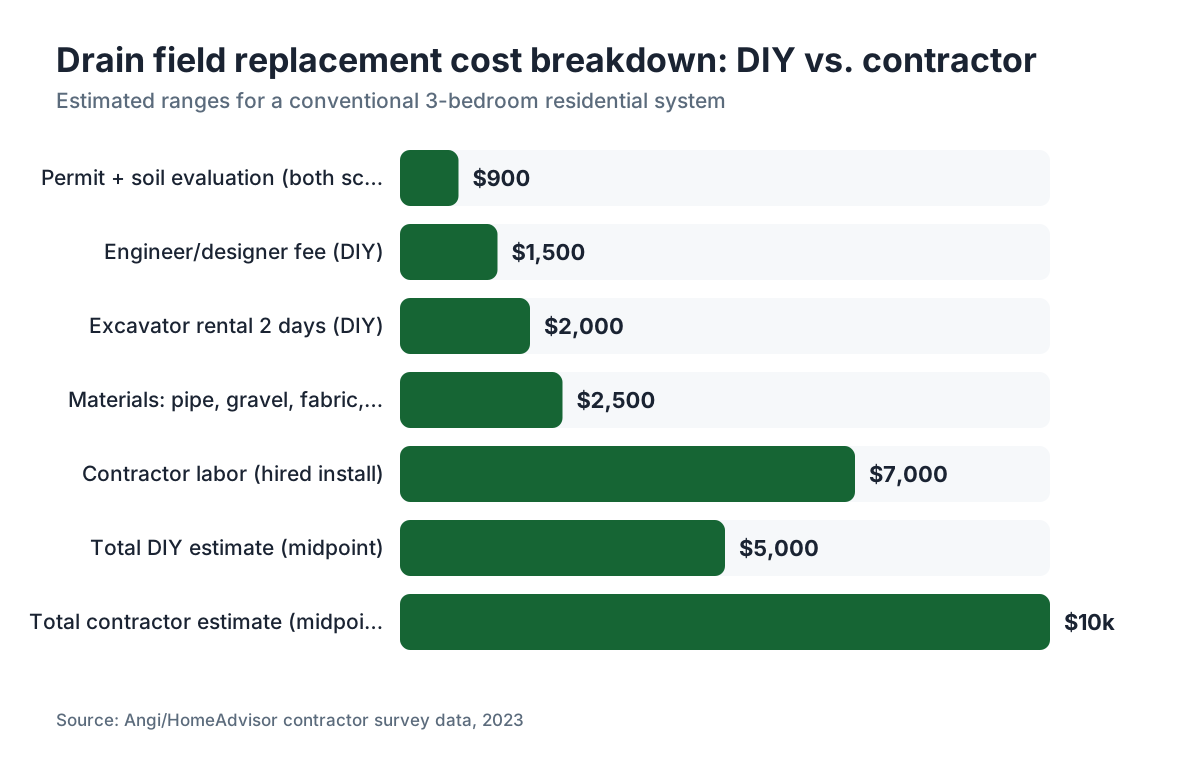
Here the honest math gets complicated. The "savings" are mostly labor, and excavation plus hauling is hard physical work that most homeowners are not set up to handle alone.
| Cost item | DIY estimate | Contractor (full install) |
|---|---|---|
| Permit + soil evaluation | $300, $1,500 | $300, $1,500 (same either way) |
| Engineer/designer fee | $500, $2,500 | Often bundled |
| Excavator rental (1 to 3 days) | $500, $1,200/day | Included |
| Perforated pipe (per 100 ft) | $50, $120 | Included |
| Drain field gravel (per ton) | $25, $65 | Included |
| Filter fabric (per roll) | $80, $200 | Included |
| Distribution box | $40, $150 | Included |
| Dump fees for old material | $200, $800 | Included |
| Contractor labor | $0 | $4,000, $10,000 |
| Total range | $3,000, $7,500 | $6,000, $20,000+ |
Those ranges come from contractor survey data compiled by Angi (formerly HomeAdvisor) and match state extension service guides. [6] The national average for a full drain field replacement by a contractor was roughly $10,000 as of 2023, with wide variance by system size, soil, and region. Alternative systems like mound or aerobic treatment units can push totals above $20,000.
The honest DIY case saves you $4,000 to $10,000 in labor IF your state allows it, IF your design passes on the first submission, and IF you can competently run excavation equipment. A botched install that fails final inspection costs you re-excavation time and materials. Inspectors report amateur installs fail at higher rates than licensed work, though nobody has solid published data on the exact gap. The closest proxy is EPA data showing poorly installed systems are a leading cause of premature failure. [7]
For a wider look at install pricing, see our guide on cost to install septic system.
What does a perc test involve and can you do it yourself?
A percolation (perc) test measures how fast water drains through your soil. The result, in minutes per inch (mpi), tells you whether the soil supports a conventional trench system, needs an alternative system, or cannot support an onsite system at all. Most states accept 1 to 60 mpi for a conventional system. Faster than 1 mpi usually means the soil is too coarse and gives no treatment. Slower than 60 mpi means the soil is too tight. [8]
Whether you can run the test yourself depends entirely on your jurisdiction. Some states just want a licensed soil scientist or engineer to observe and certify the results. Others require a licensed evaluator to perform and document the whole test. A handful of rural counties still accept a homeowner-run perc test for simple repairs with inspector oversight.
Even where DIY perc testing is allowed, it is rarely smart to try alone with no experience. Soil evaluation also means digging a profile pit to read soil horizons, spot seasonal high water table indicators (mottling), and check for restrictive layers. Get that wrong and the design fails. A licensed soil scientist usually charges $300 to $800 for a combined perc and profile evaluation. That is one of the better places to spend money you might otherwise blow on tools.
How do you actually install a conventional drain field trench system?
Say your state allows owner-installation under permit. Here is what the physical work looks like from start to finish.
Step 1: Design approval. You need a stamped design in hand before any soil moves. It specifies trench length, width, depth, gravel depth, pipe spacing, and slope. A conventional system for a 3-bedroom house usually needs 300 to 500 linear feet of trench, split among 3 to 5 parallel trenches, depending on perc rate. [9]
Step 2: Mark and verify. Locate your water and gas lines through your state 811 call-before-you-dig service (free, and required by law before excavation). Mark the trench lines with spray paint, following the approved design exactly. Setbacks must be physically measured, not eyeballed.
Step 3: Excavation. Trenches run 18 to 36 inches wide and 18 to 36 inches deep. A compact track excavator is the right tool. Do not use a backhoe bucket with teeth on the trench floor. Smearing or "glazing" the sidewalls with the bucket cuts soil permeability, and it is one of the most common amateur mistakes. The trench bottom should be flat and at the specified elevation.
Step 4: Gravel bed. Place 6 to 12 inches of clean, washed drain rock (3/4 inch to 2.5 inch aggregate) in the trench bottom. Do not use crushed stone with fines. Many inspectors pull samples to check.
Step 5: Pipe installation. Lay perforated 4-inch PVC pipe centered on the gravel, perforations down, at 1/8 inch per foot of slope (roughly 1% grade). Some designs call for level pipe with end caps to spread flow evenly. Follow your approved design.
Step 6: Cover gravel and lay fabric. Add gravel to at least 2 inches above the pipe. Lay geotextile filter fabric over the gravel to keep soil out. Do not use straw or newspaper as a substitute.
Step 7: Backfill. Cover with native soil to grade. Do not compact over the trench. Traffic compaction after install is one of the main causes of early field failure.
Step 8: Inspection. Your county inspector must observe and approve the install before you close any trench. In most jurisdictions you call for inspection before backfilling completely. Ask exactly what the inspector wants left exposed.
What tools and materials do you need for a drain field installation?
You are not doing this with a shovel and a wheelbarrow. Here is the realistic equipment list for a small residential system.
Excavator rental: a compact track excavator (mini-ex) in the 3 to 5 ton class handles most residential trenching. Rental runs $500 to $1,200 per day from equipment yards. Add delivery and pickup fees of $150 to $350 if you cannot haul it yourself. You need at least one person who has run excavation equipment before, or you will wreck your design.
Dump truck or trailer: you will dig out several tons of soil and haul in gravel. Soil disposal costs money. A 10-wheel dump truck holds roughly 10 tons. A standard 12-foot equipment trailer can haul bulk gravel from a materials yard.
Survey equipment: a builder's level or laser level to set trench bottom elevation and pipe slope. You cannot eyeball a 1/8-inch-per-foot slope.
Pipe and fittings: 4-inch perforated SDR-35 PVC pipe, solid PVC for the lead line from the distribution box, end caps, and cleanouts per design.
Gravel: ask for "drain field rock" or "washed round river gravel" at 3/4 to 2.5 inch. Crushed limestone fines will clog your system. Most local quarries sell it by the ton. Order 10 to 15% more than your calculation to cover uneven trench bottoms.
Geotextile filter fabric: non-woven polypropylene, at least 4 oz per square yard. Buy rolls wide enough to drape over both sides of the gravel without a seam down the middle.
Distribution box (D-box): connects the tank outlet to the trench headers. Concrete or high-density polyethylene. Concrete is cheaper. HDPE lasts longer and does not crack in freeze/thaw. Cost: $40 to $150.
If you are also weighing septic tank repair or replacing the tank itself alongside the field, those are separate scopes.
What are the biggest mistakes DIYers make that cause a drain field to fail inspection or fail early?
Inspectors who review owner-installed systems keep a short list of repeat problems. Know them in advance and you save a re-do.
Glazed trench walls. Dragging the bucket along the soil face smears and compacts it. Water cannot move through compacted soil, and there is no clean fix after backfill. If you see smearing, scrape the walls with a flat blade and texture them lightly with a hand tool before you gravel.
Wrong gravel or gravel with fines. Fines in the aggregate migrate into the pores over time and cut permeability. Buy washed stone and ask the supplier for a gradation certificate.
Wrong pipe slope. Level pipe spreads effluent evenly. A steep pipe dumps all the liquid at the head of the trench and starves the rest. Use a laser level, not a 4-foot bubble level.
Backfilling before inspection. Closing the trench before the inspector shows up is the single most common reason homeowners face a mandatory re-excavation. Some counties fine you for it. Call for inspection the day you are ready, then wait.
Digging in wet conditions. Working saturated soil compacts it. Most county health codes want excavation when soil moisture is "near field capacity" but not saturated. In practice, no digging within 48 hours of significant rain.
Skipping proper decommissioning of the old system. Some counties require the old trench gravel and pipe to come out and the void backfilled with clean soil before you start the new install. Others let the old trenches stay in place while you build new ones in virgin soil nearby. Read your permit conditions.
For a reference on what a professional septic system repair looks like, that overview covers scope and sequence.
Are there alternatives to full drain field replacement that a homeowner can try first?
Yes, and several are worth trying before you commit to an excavator.
Pump and rest. If your system is hydraulically overloaded rather than biologically dead, pumping the tank and cutting the field's use for 3 to 6 months can sometimes let the biomat dry out and recover part of its capacity. This works better in warm climates with permeable soil. It costs nothing but the pump-out. See how often to pump septic tank for baseline frequency.
Biological additives. Products sold as "drain field restorers" claim to break down the biomat with enzymes or bacteria. There is little independent evidence that any additive reverses a mature biomat. The EPA says the value of septic additives "has not been established" and that some chemical additives can harm the system or pollute groundwater. [4] I would not spend real money on them as a primary strategy, though low-cost enzyme products are unlikely to hurt anything.
Hydro-jetting and aeration. Some contractors offer field rejuvenation by jetting compressed air into the laterals to break up the biomat, sometimes with a vacuum truck to pull out the debris. Results are inconsistent. It works best on fields that failed from root intrusion or minor biomat, not full soil saturation.
Aerobic treatment unit (ATU) upgrade. Swapping your conventional tank for an ATU that aerates wastewater before it hits the field drops the organic load. In some cases that stretches the life of a marginal field. It needs its own permit and licensed install, and ATUs carry ongoing electricity and maintenance costs.
Temporary D-box bypass. If only one lateral has failed, rotating flow to unused laterals can buy time while you plan a real fix. A licensed plumber or septic contractor can reconfigure the D-box. This buys time, not a permanent solution.
How do you know when the drain field is beyond repair and must be replaced?
No single test declares a field dead, but a few signs make the call clear. If a licensed inspector runs a dye test or camera inspection and confirms complete biological plugging of all laterals, and soil probing shows saturated material throughout the absorption zone, replacement is the only real path.
A soil profile showing the seasonal high water table has risen within 12 inches of the trench bottom also means the field has permanently lost treatment capacity, no matter what else you try. The soil simply cannot provide the aerobic treatment zone the system needs.
Ask your inspector directly: "Is there any part of this field that still has absorption capacity?" If they say no on all laterals, get a second opinion from a licensed septic system designer rather than another pump truck operator. Designers think about the soil science, more than the visible symptoms.
A septic tank inspection is a reasonable starting point to confirm the tank itself is not the problem before you condemn the field. A collapsed outlet tee or blocked distribution box can produce every symptom of a failed field while the field is fine.
What should you know about operating and maintaining a new drain field?
A new drain field starts with a biological head start: fresh, uncompacted soil at full absorption capacity. How you treat it in the first two to five years largely decides how long it lasts.
Water conservation extends field life directly. Every gallon that never enters the system is a gallon that never has to drain through the field. Fix running toilets fast. Spread laundry over several days instead of seven loads on Saturday. High-efficiency washing machines can cut household water to the system by 30% or more. [10]
Never drive over the drain field. The void space in the gravel bed matters. A single pass by a loaded concrete truck or a full pickup can compact it permanently. Mark the boundaries clearly.
Keep deep-rooted plants off the field. Shallow grass is fine and actually helps pull moisture out. Shrubs, trees, and vegetables (especially anything with edible roots or fruit) should stay at least 10 feet away, and 25 feet for trees.
Pump the septic tank on schedule. Keeping solids out of the field is the single most effective thing you can do to protect it. When solids escape a neglected tank, they move into the laterals and speed up biomat formation. Most 3-bedroom households with a 1,000-gallon tank need pumping every 3 to 5 years. [1]
Operators running multiple properties or service routes can use tools like SepticMind to track pump-out histories and field install records across accounts. That matters when a customer calls years later and nobody can find the permit paperwork.
For a closer look at the leach field on its own, including sizing and what speeds up failure, that guide covers the soil science in more detail.
What are the environmental and health risks if you install a drain field incorrectly?
These risks are concrete. Poorly treated wastewater reaching groundwater can contaminate drinking wells with pathogens including E. coli, Cryptosporidium, Giardia, and enteric viruses. USGS national survey data found roughly 10% of tested private wells showed evidence of fecal contamination, and failed onsite systems were among the documented sources. [11]
The EPA calls failing septic systems a leading source of groundwater contamination in rural areas. Its SepticSmart program says plainly that "failing septic systems can contaminate groundwater and surface water with bacteria, viruses, and nutrients." [4] Nitrogen from septic effluent is a special worry in coastal states because it feeds algal blooms and hypoxic zones in estuaries.
The liability for a homeowner is real. If your neighbor's well tests positive for fecal bacteria and your new unpermitted drain field sits upgradient of it, you have a serious legal problem. Permits and inspections create a documented record that the system was built to code, which is your best defense.
Environmental regulators in most states can order the removal of an improperly installed system and remediation of contaminated soil at the owner's expense. That number easily tops $50,000 in cleanup on top of the replacement install. The economics of skipping a permit look very different from there.
Frequently asked questions
Can a homeowner legally replace their own drain field without hiring a contractor?
It depends entirely on your state and county. Some states allow a homeowner-permit exemption that lets you do the physical install on your own property. Most states require a licensed contractor for any drain field installation. Even where DIY is allowed, you still need a permit, a soil evaluation, and a design from a qualified professional. Call your county health department and ask specifically about homeowner exemptions before assuming either way.
How long does a DIY drain field installation take?
The physical install of a conventional 3-bedroom system, including excavation, gravel, piping, and backfill, usually takes 2 to 4 full days with one or two people and rented equipment. That excludes the permitting timeline, which commonly runs 2 to 8 weeks depending on county backlog and how fast soil testing gets scheduled. Total project time from permit application to final inspection is commonly 1 to 3 months.
How much gravel does a drain field need?
A conventional system with 400 linear feet of trench, 18 inches wide, with a 12-inch gravel depth plus 2 inches above the pipe, needs roughly 25 to 35 tons of drain field rock. Always order 10 to 15% more than your calculation because trench bottoms are uneven and gravel settles. Get washed round aggregate in the 3/4 to 2.5 inch range and ask for a gradation certificate. Gravel with fines will cut absorption over time.
What size drain field does a 3-bedroom house need?
A 3-bedroom house is typically assumed to generate 450 gallons per day of wastewater. Required trench length depends on your perc rate. At 30 minutes per inch, most state tables require about 375 to 450 linear feet of trench. Faster perc rates need less length; slower rates need more. Your licensed designer calculates the exact footage from your soil evaluation and your state's sizing tables.
Can I install a drain field over an old one?
In most cases no, not directly. The soil in a failed field is biologically plugged and often structurally compromised. Building new trenches over old material without removing it usually makes the new field fail faster than it should. Most permits require the new system to sit in undisturbed, virgin soil at the specified setbacks. Some counties require the old trench material to be excavated and disposed of properly before the permit closes.
What is the difference between a drain field and a leach field?
They are the same thing. Drain field, leach field, soil absorption system, and lateral field all name the network of perforated pipes buried in gravel-filled trenches where septic tank effluent spreads into the soil. Terminology varies by region: drain field is more common in the Southeast and Midwest, leach field in the Northeast and West. Your county permit office, state code, and pipe supplier may use different terms for the same component.
How deep should drain field trenches be?
Most state codes require trench bottoms 18 to 36 inches below grade, with the exact depth set by the seasonal high water table and the required vertical separation to limiting layers from the soil profile. A common rule is that trench bottoms must sit at least 24 inches above the seasonal high water table. Your approved design specifies the depth. If the inspector finds trenches dug deeper than the design, you may need to add gravel to bring the pipe up to elevation.
Does homeowner's insurance cover drain field replacement?
Standard homeowner's policies typically exclude drain field replacement because it counts as gradual system failure, not a sudden covered peril. Some insurers offer add-on service line coverage or a septic endorsement that covers sudden failures, but most policies do not cover a worn-out field. Read your declarations page for "service line" or "systems breakdown" coverage. If a covered event like a tree fall damaged the field, the calculus changes, but you still need documentation.
What permits do you need to replace a drain field?
At minimum you need a local permit from your county health department or environmental health office, plus a site plan with a soil evaluation attached. Many jurisdictions also require a state environmental agency permit for larger systems or sensitive areas. Some counties require a building department permit on top of the health department permit. Check both offices. Fees range from roughly $100 in rural counties to over $1,500 in dense suburban counties.
How long does a new drain field last?
A well-designed, properly installed, and maintained conventional field usually lasts 20 to 30 years. Some last 40 or more. The main variables are soil type, system load, how consistently the tank gets pumped, and whether the field stays clear of vehicle traffic. Systems fed by an under-pumped tank, or hit with compaction or heavy water use, often fail in 10 to 15 years. Regular tank pumping is the single most documented factor in extending field life.
What happens if you fail a drain field inspection?
You get a written notice of deficiencies spelling out exactly what failed. Common failures include wrong gravel, incorrect pipe slope, glazed trench walls, or setback violations. You correct the listed items and call for a re-inspection. If the trench is already backfilled when a problem turns up, the inspector may require you to re-excavate to verify the fix. Some counties charge a re-inspection fee of $75 to $200. Repeated failures can trigger a stop-work order and, in severe cases, referral to the state environmental agency.
Can you add a new drain field without replacing the old one?
Yes, in some cases. If your lot has a usable reserve area of undisturbed soil that meets setbacks, you may be able to add new laterals and redirect flow to them rather than replacing the whole system. This is sometimes called a relief field or secondary field. It still needs a permit, soil evaluation, and design. A licensed designer can tell you whether your lot geometry and soil support it. Lots with limited area often cannot fit a second field.
What slope should drain field pipes be installed at?
The standard spec for perforated laterals in a conventional trench system is 1/8 inch per foot (about 1% grade). Some designs call for level pipe with end caps to force even distribution. The lead line from the distribution box to each lateral usually runs at 1/4 inch per foot. Your approved design specifies each segment. Use a laser level to set grade; a 4-foot bubble level is not accurate over a 100-foot run.
Sources
- EPA SepticSmart: Homeowner Education on Septic Systems: Septic systems should be inspected by a septic service professional; regular pumping every 3 to 5 years protects drain field function
- EPA: Onsite Wastewater Treatment Systems Manual: Most state regulations require licensed designers and installers for onsite wastewater systems
- Florida Department of Health: Onsite Sewage Program: Florida requires a permit from the county health department and a licensed contractor for drainfield installation
- EPA SepticSmart Program Fact Sheet: The EPA SepticSmart program states failing systems can contaminate groundwater with bacteria, viruses, and nutrients, and that the value of septic additives has not been established
- EPA: Types of Septic Systems and Permitting: Permit fees and soil evaluation requirements vary by jurisdiction from about $100 to over $1,500
- Angi (formerly HomeAdvisor): Septic System Replacement Cost: National average for a full drain field replacement by a licensed contractor was approximately $10,000 as of 2023; alternative systems can exceed $20,000
- EPA: Failing Septic Systems and Groundwater Contamination: Poorly installed and maintained systems are a leading cause of premature system failure and groundwater contamination
- EPA: Onsite Wastewater Treatment Systems Manual: Soil percolation rates determine whether a conventional trench system, alternative system, or no onsite system is feasible
- EPA: Types of Septic Systems: Conventional residential drain field trench sizing depends on household size and soil perc rate
- EPA WaterSense: Water Efficiency and Septic Systems: High-efficiency appliances can reduce household water use by 30% or more, reducing hydraulic load on the septic system
- USGS National Water Quality Program: Private Well Water Quality: Approximately 10% of tested private wells nationwide showed evidence of fecal contamination in USGS national survey data; failed onsite systems were among contributing sources
- Massachusetts Title 5: State Environmental Code for Septic Systems: Massachusetts Title 5 requires licensed contractors and engineers for all septic system installation and repair work; no homeowner exemption for drain field construction
Last updated 2026-07-09