Septic tank vs sewer: which is better for your home?
By the SepticMind Editorial Team

TL;DR
- Septic systems treat wastewater on your property using a buried tank and drain field.
- Public sewer sends waste through pipes to a municipal treatment plant.
- Septic costs more upfront in rural areas but has no monthly bill.
- Sewer costs more to connect in cities but needs almost no owner maintenance.
- Neither wins outright.
- Your lot size, location, and local fees decide it.
How does a septic system actually work?
A septic system has two main parts: the tank and the drain field (also called a leach field). Wastewater from your toilets, sinks, and laundry flows into the buried tank. Solids settle to the bottom as sludge. Grease floats to the top as scum. The liquid in the middle, called effluent, leaves through an outlet baffle and travels to the leach field, where it spreads through perforated pipes into the soil. The soil does the final filtering.
The EPA's SepticSmart program describes a conventional septic system as a decentralized treatment system that relies on natural processes in the soil to treat and dispose of wastewater [1]. That soil step is the whole game. It's also why a failing drain field is such an expensive problem.
Most tanks hold between 1,000 and 1,500 gallons and are made from concrete, fiberglass, or polyethylene. Anaerobic bacteria inside break down solids over time, but they can't clear them out completely. That leftover sludge is why you need a septic tank pump out every three to five years on average.
Advanced systems add a second treatment step before effluent reaches the drain field, either an aerobic treatment unit or a constructed wetland. Those cost more. They also make a permit possible on lots where a conventional system would never pass.
How does public sewer work?
Public sewer is a network of underground pipes owned and run by a municipality or regional authority. Your home connects to a lateral pipe that feeds a main sewer line under the street. Gravity does most of the work. Lift stations with pumps handle low-lying areas. The wastewater travels to a central plant, where it goes through screening, biological treatment, settling, and disinfection before the treated effluent is discharged to a waterway or reused [2].
Your responsibility stops at the property line in most places. The lateral from your house to the main is usually yours to repair. Everything past that is the utility's problem. Your monthly sewer bill covers the operating cost of the plant and the pipe network.
Sewer systems handle almost unlimited flow because they're sized for a whole community. That makes them the only practical option in dense neighborhoods, where lots are too small for a drain field and the water table sits too high for soil treatment.
What does it cost to install a septic system vs connect to city sewer?
Both options front-load a big cost that most homeowners underestimate. This is where the comparison gets messy.
A conventional septic system runs roughly $3,000 to $15,000, depending on your region, soil type, lot conditions, and permit fees [3]. A mound or drip-irrigation system on a hard lot can push past $20,000. The cost to install a septic system also covers soil testing (a perc test or soil profile), the permit, excavation, tank, distribution system, and backfill. We break down every line item in our cost to put in a septic tank guide.
Sewer isn't cheap either. A sewer connection fee, sometimes called a tap-in fee or connection charge, typically runs $5,000 to $30,000 depending on your municipality [4]. Some utilities add capacity charges, benefit assessments, and the cost of the lateral pipe from your house to the main. That can add several thousand dollars more. If you're in a new development where sewer is already stubbed to your lot, you might pay only $1,000 to $3,000 for the lateral hookup itself.
| Cost item | Septic system | Public sewer connection |
|---|---|---|
| Installation / connection fee | $3,000, $20,000+ | $5,000, $30,000 |
| Monthly operating cost | $0 (electricity if pumped) | $30, $100/month [4] |
| Pumping every 3 to 5 years | $300, $600 | None |
| Major repair (drain field) | $5,000, $20,000 | Covered by utility |
| Expected system life | 25 to 40 years (tank); 20 to 30 years (field) | Indefinite (utility managed) |
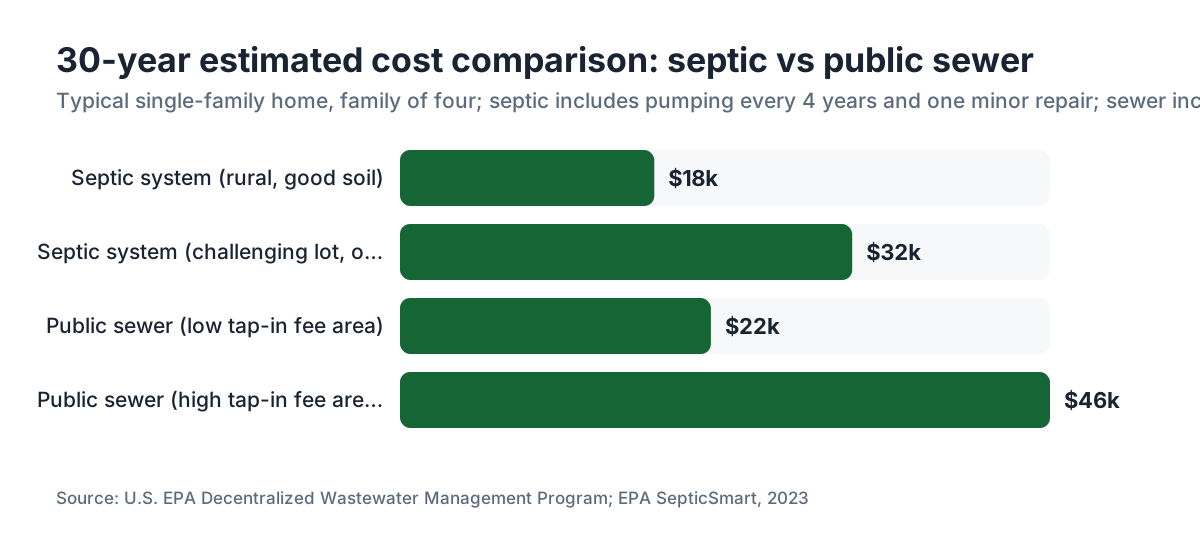
Over a 30-year window, the two land closer together than people expect. A septic system with normal pumping and one minor repair might cost $15,000 to $25,000 total across 30 years. A sewer connection at $10,000 upfront plus $50 a month in service fees runs about $28,000 over the same stretch. Neither is the obvious winner.
What are the ongoing maintenance costs and responsibilities?
Septic ownership means you're the utility. The tank needs pumping every three to five years for a typical family of four, per EPA guidance [1]. That runs $300 to $600 across most of the country. You also have to watch what goes down the drains: no flushable wipes, no grease, no hammering the garbage disposal, and no harsh chemicals that kill the bacteria doing the treatment work.
The leach field is the priciest component to replace. Unlike the tank, it can fail with little warning if it's been overloaded or if tree roots have gotten into the pipes. A septic tank inspection every one to three years catches trouble early. That's the difference between a $400 pump-out and a $12,000 drain field replacement.
Sewer ownership means paying the monthly bill and dealing with the occasional blocked lateral. A hydro-jet cleaning runs $150 to $500. A full lateral replacement can hit $3,000 to $10,000. Everything past your property line is the utility's expense.
For homeowners who hate tracking this stuff, tools like SepticMind automate pumping reminders and keep a digital service history, which comes in handy when you sell.
Here's the honest split. Sewer is lower maintenance for the homeowner. Septic is lower ongoing cost but demands more attention from you.
Which system is better for the environment?
This one is genuinely contested, and the answer swings on local conditions.
A properly working septic system can be quite clean. Soil treatment removes pathogens and nutrients naturally. The EPA notes that well-sited and maintained systems protect groundwater and surface water effectively [1]. Some scientists argue decentralized treatment avoids the energy cost and pipe-leak losses of a centralized network.
A failing septic system is a different story. The U.S. Geological Survey and EPA have documented cases where poorly maintained or failed systems put nitrates and pathogens into groundwater and nearby streams [5]. On lots with high water tables, sandy soils, or tight spacing, septic carries more contamination risk than centralized treatment.
Sewer concentrates treatment in one place, which allows nutrient removal and disinfection that on-lot systems can't touch. Modern plants can remove more than 95 percent of biochemical oxygen demand before discharge [2]. The catch is combined sewer overflows during heavy rain, which can dump untreated sewage straight into waterways. The EPA is working that problem under the Clean Water Act [6].
Rural areas with big lots and good soil usually give septic the smaller footprint. Dense suburbs near sensitive water bodies usually favor sewer.
Does septic vs sewer affect your home's resale value?
Most agents will tell you septic is a harder sell, and there's truth to that. Buyers who've never owned a septic home worry about maintenance, smell, and the cost of a failure. An old, uninspected, or known-bad system can shave an offer or kill a deal outright.
Septic homes are the norm in rural and exurban markets, though. Sewer isn't available there, so buyers don't count septic against you. Age and condition matter far more than the type.
What actually moves the deal is the inspection. Most lenders and purchase agreements require a septic inspection before closing. A system that passes with a recent pump-out and a clean report is rarely a deal-breaker. A failing drain field, an old steel tank showing corrosion, or an unpermitted repair is a serious problem [7].
Where municipal sewer has recently reached a street, some local governments require owners to connect within a set window, often one to three years after service becomes available. That mandate, plus the connection fee, can be a big unplanned hit for someone who bought expecting to stay on septic [4].
The short version: a well-maintained, recently inspected septic system doesn't meaningfully hurt resale where septic is common. It can hurt where buyers expect sewer.
Can you switch from septic to sewer, or vice versa?
Switching from septic to sewer is common when a municipal system extends into a formerly rural area. The process involves abandoning the septic tank (pumping it out, then crushing it in place or filling it with sand or gravel, per your state's decommissioning rules), running a new lateral to the street, and paying the tap-in fee. Many states require a licensed contractor to do the abandonment and the local health department to inspect it [8].
Going the other way, from sewer back to septic, is rare and getting harder. Most municipalities flat out don't allow it. If you're eyeing a sewer-served property and want to install septic because sewer rates are steep, you'll almost certainly hit a wall. Septic needs a perc test, a soil evaluation, and a permit, and health departments in sewer-served areas often won't issue them.
The real case for switching usually comes down to a failing system. If your drain field is done and sewer runs down your street, connecting might cost about the same as a full septic replacement, minus the ongoing maintenance. Run your own numbers before you assume either path is cheaper.
What are the health risks of septic systems vs sewer?
Both systems protect public health when they work. The risk shows up when they fail.
A septic system that overflows, backs up, or has a saturated drain field can expose your yard and nearby wells to raw or partly treated sewage. The pathogens of concern include E. coli, norovirus, giardia, and hepatitis A [5]. The danger peaks on small lots with private wells, where the distance between system and well may be too short. EPA and most state codes require a minimum separation of 50 to 100 feet between a septic system and any drinking water well, though the exact number varies by state [1].
Sewer keeps on-lot sewage away from you, but sewer gas (mostly hydrogen sulfide from the pipes) can be a concern if plumbing traps dry out or vent pipes fail. Sewer backups during storms can push sewage into homes through floor drains, a nasty problem in older cities with combined sewer overflows.
Households on well water and septic together warrant more vigilance. Annual testing for coliform bacteria is a reasonable practice, and many state health departments recommend it [9].
How do rural vs urban settings change the comparison?
Geography largely decides your options. About 21 percent of U.S. households rely on septic or other onsite treatment, per EPA data [1]. That number leans hard toward rural areas. In some rural counties, more than 80 percent of homes are on septic.
In a rural setting, septic is often your only realistic choice. Running sewer mains to low-density areas costs far more per household than it's worth. Your county health department sets the rules for design, siting, and maintenance. State onsite wastewater codes govern everything from tank size to drain field setbacks, and they vary enormously. What passes in Texas may not pass in Massachusetts [8].
In urban and dense suburban areas, sewer is typically required for new construction and can be mandatory for existing homes within a set distance of the main. Sewer's advantages (no land needed for a field, no pumping schedule, professional treatment) fit smaller lots and higher density well.
The edge cases are the interesting ones. Exurban neighborhoods built in the 1970s and 1980s on half-acre lots with aging septic systems are now being offered sewer service as cities expand. That forced connection mandate is a real burden for those owners. Know your local rules before you buy in one of those areas.
What questions should you ask before buying a home on septic?
Before you close on a septic home, get straight answers to these.
How old is the tank and what is it made of? Steel tanks from before the 1980s corrode and can collapse. Concrete tanks last 40 years or more with good care. Fiberglass and poly tanks are durable but can shift in high-water-table soils.
When was it last pumped and inspected? Ask for receipts. A seller who can't show a pump receipt from the last five years is a red flag. Make a full septic tank inspection a condition of the purchase.
Where is the drain field and what shape is it in? A licensed inspector should locate the field, check its size against the home's bedroom count, and look for saturation or surfacing effluent.
Is the system permitted and does it match current code? A common trap is an unpermitted addition that bumped the bedroom count without any septic upgrade. Many state codes size systems by bedroom count, not actual occupancy [8].
Is sewer coming to the street? Ask the local utility. If a main extension is planned for your road in the next five years, work the connection cost into your offer.
A septic tank inspection before closing is the single best $300 to $500 you'll spend on a septic home purchase.
Is septic or sewer cheaper in the long run?
Nobody has clean, nationally representative data on 30-year total cost of ownership for both. The closest thing to a rigorous comparison comes from state-level studies and municipal cost-benefit analyses done when utilities weigh sewer expansion.
The common finding: per-household costs for centralized sewer in low-density areas run very high, because the fixed infrastructure cost gets spread over few homes. An EPA analysis of decentralized wastewater management found that onsite systems can cost 50 to 90 percent less than centralized sewers in low-density settings [10]. That comes with a big caveat. It assumes the septic systems are maintained and don't fail early.
In higher-density areas, sewer is usually cheaper per household, because the infrastructure cost is shared across many more connections.
For one homeowner, the math turns on four things: your local tap-in fee, your monthly sewer rate, the remaining life of your current septic system, and whether your health department will eventually mandate connection. If your septic is in good shape and you're rural with no sewer expansion planned, staying on septic is almost certainly cheaper. If your drain field is failing and sewer is at the curb, the gap may be small enough that sewer's lighter maintenance tips it.
Frequently asked questions
Is a septic system the same as a sewer tank?
No. A septic tank is a private, on-property vessel that holds and partly treats your household wastewater before it flows to a drain field. A sewer system is a public network of pipes that carries raw wastewater off your property to a central treatment plant. Both handle the same waste, but they work differently and have different ownership, cost, and maintenance structures.
What are the signs that a septic system is failing?
Watch for slow drains throughout the house, gurgling plumbing, sewage odors inside or out, and wet or spongy ground over the drain field. Green, unusually lush grass right over the field can mean effluent is surfacing. Any of these warrants an immediate inspection. A failing drain field rarely fixes itself and gets worse with use. See our guide on septic system repair for next steps.
How often does a septic tank need to be pumped?
The EPA recommends pumping every three to five years for a household of four using a standard 1,000-gallon tank. Smaller tanks, larger households, or garbage disposal use can shorten that to two to three years. A tank that's never pumped fills with solids that push into the drain field, clogging it and forcing an expensive replacement. See our guide on how often to pump a septic tank for size and household charts.
Can a house be on septic in a city?
It depends on the city. Some older homes inside city limits were built before sewer reached the area and still run on septic. Many cities require those homes to connect once service becomes available, typically within one to three years. Check with your local building or health department. New construction in a city with public sewer almost always requires connection.
Does septic vs sewer affect mortgage approval?
FHA, VA, and USDA all allow financing of septic homes, but most require a satisfactory septic inspection as a loan condition. FHA and VA loans have specific distance requirements between the septic system and any well on the property. A failing system or one that misses current code can hold up or kill the loan. Getting an inspection before you make an offer avoids the surprise.
What happens if you flush the wrong things down a septic toilet?
Flushing wipes (even the flushable kind), paper towels, medications, harsh bleach, or grease can damage the bacteria in the tank or clog the pipes and distribution system. Medications can pass through partly treated and reach groundwater. The EPA's SepticSmart program specifically lists these as harmful to septic systems. Stick to toilet paper and human waste only.
How long does a septic system last compared to sewer?
A concrete septic tank can last 40 years or more. The drain field typically lasts 20 to 30 years with good maintenance, less if it's overloaded or invaded by tree roots. Steel tanks from before the 1980s often fail in 20 to 25 years. Public sewer infrastructure is maintained and replaced by the utility over time, so individual homeowners don't face a defined end-of-life cost for the system itself.
Is well water safe with a septic system nearby?
Yes, if the system is properly sited and maintained. State codes require minimum separation between septic systems and drinking water wells, typically 50 to 100 feet depending on the state. A failing system can contaminate a nearby well with bacteria and nitrates. Households on both well and septic should test their water for coliform bacteria every year. Most county health departments offer low-cost testing kits or referrals.
Can you add a bathroom if you're on septic?
You can, but many states require you to verify or upgrade your septic system first. Most state codes size systems by bedroom count, and regulators often treat a new full bathroom as an added bedroom. Adding one without checking your permit can create an unpermitted system that flags during a resale inspection. Contact your local health department before you start the project.
What is the sewer connection fee and who charges it?
A sewer connection fee (also called a tap-in fee or capacity fee) is charged by your local municipal utility or sewer district when you connect a property to the public main. Fees range widely, from around $1,000 in some rural districts to $30,000 or more in high-cost areas. The fee usually covers your share of the plant's capacity and the infrastructure, separate from the physical pipe work to connect your house.
Do septic systems smell worse than sewer?
A properly working septic system has no noticeable odor. If you smell sewage near your tank or drain field, something is wrong: a cracked tank, a failing baffle, a saturated field, or a lid issue. Sewer systems can also produce odors if plumbing traps dry out or a lateral cracks. Neither system should be noticeably smelly under normal conditions.
Is it better to buy a house with septic or sewer?
There's no universal answer. In rural areas, septic is normal and not a strike against the home. In cities, buyers generally prefer sewer because it drops the maintenance responsibility. Condition is the key: a well-maintained septic system on a rural property is fine. An aging, uninspected system in a market where buyers expect sewer is a real liability. Always get an inspection before buying a septic home, whatever the seller says.
What does a septic inspection cost and what does it cover?
A basic septic inspection runs $100 to $300 and usually covers locating the tank, checking the inlet and outlet baffles, measuring the sludge and scum layers, and assessing the drain field for signs of failure. A thorough inspection with pumping included runs $300 to $600. Some inspectors run a camera through the distribution pipes. For a home purchase, always get the inspection with pumping so the inspector can see inside a clean tank.
Can a septic system handle a garbage disposal?
Technically yes, but a disposal significantly increases the solids load hitting the tank. The EPA and most septic pros recommend against pairing a garbage disposal with septic, or at least suggest pumping more often (every two to three years instead of three to five) if you use one. The extra organic matter can overwhelm the bacterial digestion and speed up sludge buildup.
Sources
- U.S. EPA, SepticSmart Program: About 21 percent of U.S. households use septic systems; EPA recommends pumping every 3-5 years and describes septic as decentralized treatment relying on natural soil processes.
- U.S. EPA, Primer for Municipal Wastewater Treatment Systems: Modern wastewater treatment plants use screening, biological treatment, settling, and disinfection; treated effluent is discharged to waterways or reused.
- U.S. EPA, Types of Septic Systems: Conventional septic system installation costs vary by region, soil type, and lot conditions; EPA describes system types and cost factors.
- U.S. EPA, Water Infrastructure Finance: Sewer tap-in/connection fees and monthly service charges vary widely by municipality; monthly sewer fees typically range from $30 to over $100 per household.
- U.S. Geological Survey, Water Science School: Poorly maintained or failed septic systems have been documented as sources of nitrate and pathogen contamination in groundwater and nearby surface water.
- U.S. EPA, Combined Sewer Overflows: Sewer overflows during heavy rain events can discharge untreated sewage to waterways; EPA addresses this under the Clean Water Act.
- U.S. EPA, Homeowner's Guide to Septic Systems: A septic inspection at time of home purchase identifies failing systems, old steel tanks, and unpermitted work that can affect sale and financing.
- National Environmental Services Center, West Virginia University: State onsite wastewater codes govern tank size, drain field setbacks, bedroom-count sizing, and abandonment procedures; requirements vary significantly by state.
- U.S. EPA, Private Drinking Water Wells: Households on private wells are advised to test annually for coliform bacteria, especially when a septic system is nearby.
- U.S. EPA, Septic Systems (Decentralized Wastewater Management): EPA analysis found that onsite/decentralized systems can cost 50 to 90 percent less per household than centralized sewers in low-density settings.
- U.S. EPA, SepticSmart: What Not to Flush: EPA SepticSmart program lists wipes, grease, medications, and harsh chemicals as harmful to septic system function.
Last updated 2026-07-09