Septic inspection in The Dalles, OR: what to expect and what it costs
By the SepticMind Editorial Team
TL;DR
- A standard septic inspection in The Dalles, Oregon runs $200 to $600 depending on whether the inspector pumps the tank, dye-tests the drainfield, or produces a full real-estate report.
- Wasco County follows Oregon DEQ's onsite wastewater rules under OAR Chapter 340, Division 71.
- Most single-family systems should be inspected every 1 to 3 years and pumped every 3 to 5 years.
Why does septic inspection matter specifically in The Dalles?
The Dalles sits in Wasco County on the south bank of the Columbia River. It's high-desert country with thin, rocky soils in the hills and heavier clay soils down on the river benchlands. Both give septic systems trouble. Rocky hillside lots often have shallow soil over bedrock, which limits drainfield options and makes a failed system hard to replace. Clay-heavy benchland drains slowly, so a drainfield that looked fine two summers ago can back up badly after a wet spring.
Wasco County Environmental Health enforces Oregon DEQ's onsite wastewater standards under Oregon Administrative Rules Chapter 340, Division 71 [1]. They issue permits, approve system designs, and handle complaints about failing systems. Most of the county's rural areas have no municipal sewer, so a very large share of homes outside the city core rely entirely on their own septic system.
Buying a home here? The inspection is not optional in any practical sense. Oregon law does not require a septic inspection at the point of sale the way it requires a title search, but lenders increasingly ask for one, and any agent who lets a buyer skip it is doing them a disservice.
If you already own the home, a periodic inspection catches slow failures before they turn into a $15,000 to $40,000 drainfield replacement. That spread reflects how much site conditions vary here. A straightforward gravity system on a usable lot costs less. A mound or engineered fill system costs much more [2].
What does a septic inspection in The Dalles actually involve?
There are three levels of inspection, and the name "septic inspection" gets slapped on all three. Knowing which one you're getting matters.
A visual or basic inspection is what some real estate agents order. The inspector finds the tank lid, checks that the outlet baffle is intact, looks at the drainfield surface for wet spots or odors, and writes a one-page report. Cost runs $100 to $200. It misses most early problems.
A standard inspection pumps the tank so the inspector can see the inlet and outlet baffles clearly, check tank walls for cracks, measure sludge and scum layers before pumping, and confirm the distribution box (if present) is level and intact. The inspector should run water through the house while the tank is empty to confirm flow reaches the drainfield and isn't backing up. This level costs $250 to $450 in the region, though rural access fees or buried lids add to that. Pairing the inspection with a septic tank pump out makes sense since you're already paying for access.
A full or real-estate inspection adds a dye test. A fluorescent dye gets flushed through the system while the inspector walks the drainfield looking for surfacing effluent. Some inspectors also run a hydraulic load test, pushing 150 to 250 gallons through the system over a short window to stress-test the field's absorption. This level costs $400 to $600 and is what you want for a home purchase. Wasco County doesn't certify inspectors at a standard beyond DEQ licensing, but the inspector should hold an Oregon onsite wastewater installer or maintenance provider license from DEQ [1].
A camera inspection of the sewer line from house to tank is a separate service, usually $150 to $300 extra. Worth adding for older homes in The Dalles where clay tile or cast-iron pipes may have root intrusion or failed joints.
How much does a septic inspection cost in The Dalles, OR?
Costs in Wasco County track the general Oregon rural market. Pumping contractors who also inspect tend to run cheaper than standalone inspection firms, but they have an obvious interest in finding things that need pumping. Most are honest, and the combined visit saves a trip charge.
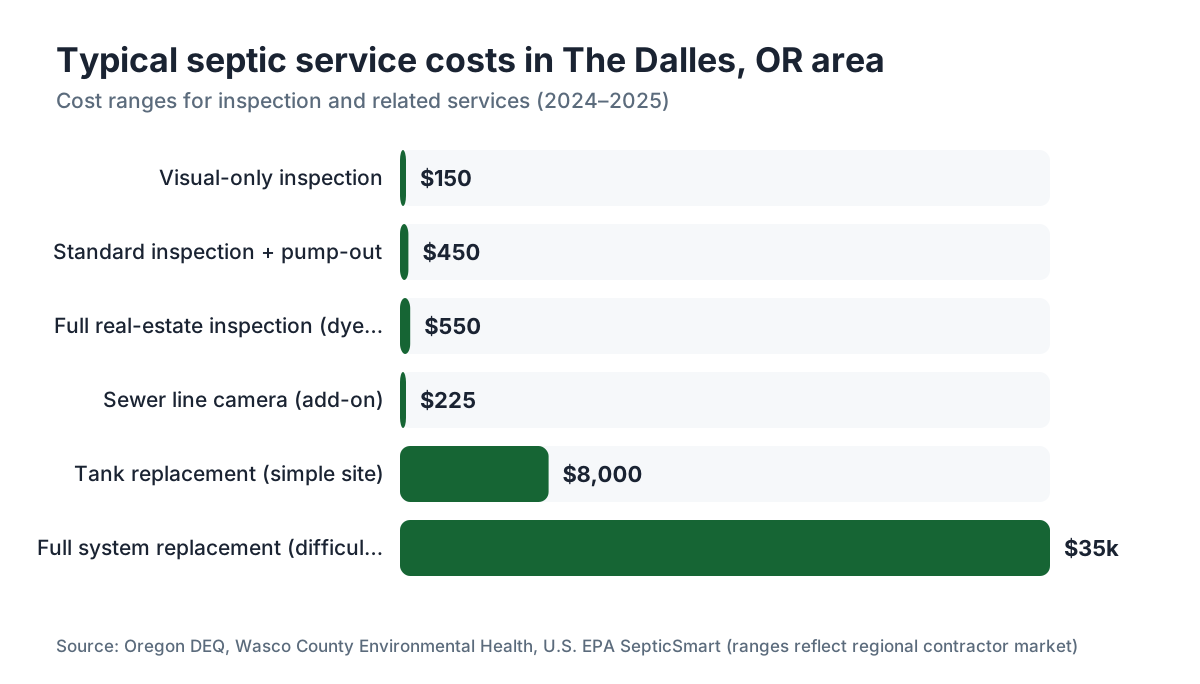
The table below shows typical cost ranges for each service type in the The Dalles area:
| Service | Typical cost range | Notes |
|---|---|---|
| Visual-only inspection | $100, $200 | Minimal; not useful for home purchase |
| Standard inspection (with pump-out) | $350, $550 | Tank pump-out + baffle inspection |
| Full real-estate inspection (dye test) | $450, $650 | Adds hydraulic load and dye test |
| Sewer line camera (house to tank) | $150, $300 | Separate service, add-on |
| Wasco County permit (new system) | $300, $700+ | Varies by system complexity [8] |
| Drainfield replacement (if needed) | $8,000, $40,000+ | Wide range based on soil and lot [2] |
The gap between a $450 inspection and a $40,000 replacement is the whole economic argument for not skipping the full inspection on a purchase. Watch one trick: some companies quote a low inspection fee, then charge separately for the pump-out at full retail. Ask for an all-in price before booking.
If cost is a barrier, Oregon Housing and Community Services sometimes runs programs for low-income households with failing septic systems, and Wasco County Environmental Health can point you toward any current local assistance [3].
What are the Oregon DEQ rules that govern septic systems in Wasco County?
Oregon DEQ administers the state's onsite wastewater program under OAR Chapter 340, Division 71 [1]. Here are the points that matter for homeowners in The Dalles.
Any new installation, replacement, or significant repair requires a DEQ permit issued through Wasco County Environmental Health. You can't legally install or expand a system without one. The permit requires a site evaluation, a soil profile, and in many cases a percolation test or soil morphology assessment by a licensed site evaluator.
Maintenance is different. Oregon has no statewide mandatory inspection schedule for existing systems the way some states do, but DEQ's guidance recommends inspection every 1 to 3 years and pumping every 3 to 5 years for a typical household [10]. Systems with advanced treatment components (aerobic treatment units, for example) require more frequent inspection under their individual operating permits.
Selling a home triggers a disclosure duty. Oregon Revised Statutes 105.464 requires sellers to disclose known defects in a septic system on the real estate disclosure form [4]. A known failure, or a known permitted repair that never happened, is a material fact the seller must disclose. Buyers can and should get their own independent inspection regardless.
Systems within 100 feet of a public water source or inside a wellhead protection area face stricter siting rules. Parts of Wasco County near the Columbia River and its tributaries carry additional overlay rules under DEQ's water quality programs [1].
The EPA's SepticSmart program puts it plainly: "Proper maintenance of your septic system protects your investment in your home, protects the environment, and protects public health" [5]. That's agency boilerplate, but the math behind it is real. A failing system in the wrong spot contaminates groundwater that may feed neighboring wells.
What do inspectors look for and what are the red flags?
A good inspector works the system in order. Here's what that looks like in practice.
At the tank: they check the inlet baffle or tee (keeps solids from surging toward the drainfield), the outlet baffle or tee (keeps scum from exiting), the liquid level (a high level can mean a blocked outlet or saturated field), the tank walls and lid for cracks, and the risers if present. A collapsed or missing outlet baffle is common in older tanks and is one of the more important findings, because solids reaching the drainfield clog the soil fast [6].
At the distribution box (D-box): they check whether the box sits level (an unlevel D-box sends all the flow to one trench and starves the others, burning out part of the field early) and whether the outlet pipes are intact.
At the drainfield: they look for wet or soggy soil, lush green stripes of grass over trenches when everything else is dry, sewage odors, and standing water. A dye test or hydraulic load test can reveal a field that's failing under the surface while looking fine on top. They note setback distances from wells, property lines, and structures.
Inside the house: they run fixtures to confirm the system takes a normal load without backing up, and they check the sewer line cleanout.
Red flags that mean you need attention now:
- Sewage odors inside the house, or strong odors at ground surface near the drainfield
- Gurgling or slow drains across more than one fixture
- Wet, marshy ground over the drainfield, especially in dry weather
- Tank liquid level above the outlet pipe invert
- Sewage surfacing anywhere on the lot
None of these are automatically fatal. A slow-draining D-box can sometimes be rehabilitated. A temporarily saturated field after a wet winter may recover. But each one needs a licensed evaluation before you close on a home or before the problem grows.
How often should you inspect a septic system in The Dalles?
For a year-round home in Wasco County, DEQ's guidance of every 1 to 3 years is the right target [10]. Where you land in that range depends on household size and system type.
A 1,500-gallon tank serving two people makes far less sludge than the same tank serving five. EPA's SepticSmart guidance names household size and tank size as the two main variables driving pumping frequency [5]. Oregon State University Extension, which covers this region, recommends a 3- to 5-year pumping cycle for average households [7].
Pump more often if you run a garbage disposal (it adds meaningful solids load), if you have a large family or frequent houseguests, or if the system has a history of trouble. Some older homes in The Dalles have tanks that are undersized by today's standards, often 750 to 1,000 gallons, which were common before the 1980s. Those need service more often.
Seasonal properties are their own case. Lower usage sounds like it should mean less pumping, but scum and sludge don't vanish during vacancy, and the shock load when a vacation home suddenly fills after months empty can stress a system. A pre-season inspection is smart for any seasonal place.
Want a simple rule? Inspect it every time you pump it. The inspection becomes part of the service visit instead of a separate trip. Septic tank pumping and inspection together usually cost less than two separate visits.
How do you find a licensed septic inspector in The Dalles?
Oregon DEQ keeps a searchable database of licensed onsite wastewater practitioners, covering both installers and maintenance providers [1]. Start there. You want someone licensed by DEQ, more than someone with a pumping truck.
Wasco County Environmental Health can hand you a list of contractors who work the county regularly and know the local soils, permit process, and the area's elevation and geology [8]. Local familiarity counts. Someone who mostly works the Willamette Valley may not immediately clock the shallow-soil conditions common on the south-facing hillsides above The Dalles.
Ask the contractor directly. Do they carry a DEQ onsite wastewater maintenance provider or installer license? Do they carry liability insurance? Can they produce a written report that satisfies a lender? For real estate deals, your escrow officer may keep a list of inspectors whose reports local lenders accept.
Get at least two quotes for a real-estate inspection. The range above ($450 to $650) reflects real regional variation, and some firms tack on rural access fees that aren't obvious from the first quote.
One operator tool worth knowing: SepticMind (septicmind.com) is software that helps septic service companies manage inspection scheduling, reporting, and customer records. Companies using it tend to keep cleaner documentation trails. That helps you as a homeowner when you're trying to verify a service history on a property you're buying.
What happens if the inspection reveals a failing system?
A failing system in Oregon is a defined term under DEQ rules. A system that is surfacing effluent, backing up into the house, or contaminating groundwater requires a permit for repair or replacement [1]. Wasco County Environmental Health gets involved, and there are timelines for remediation.
In a real estate transaction, a failing system doesn't necessarily kill the deal, but it changes the negotiation. The repair or replacement cost gets built into the purchase price, or the seller fixes it before closing. Either way, you need a licensed contractor's estimate and a DEQ permit path before you can finalize numbers. Budget at minimum $3,000 to $8,000 for a tank replacement or major repair. Full system replacement on a difficult Wasco County site can hit $30,000 to $40,000 or more [2].
If you already own the home, DEQ has a compliance process that gives you time to permit and complete the work, but ignoring a documented failure is not an option. Fines for operating a failing system are real, and the liability for downstream water quality can be significant.
Before you assume the worst, get a second opinion on any finding that seems extreme. Not every wet spot near a drainfield is a failure. Not every high tank level means the field is gone. A competent second inspector can confirm or qualify the finding. Septic system repair and septic tank repair cover what different repair scenarios actually involve and cost.
What should a buyer do before closing on a home with a septic system in Wasco County?
Start by requesting the system's permit history from Wasco County Environmental Health. Oregon's public records law lets you request permit files, inspection records, and any enforcement actions on a property [8]. That tells you the system's age, original design, tank size, and whether any repairs were permitted and completed.
Order a full real-estate inspection (the dye-test level) from a DEQ-licensed contractor, more than a visual check. Make it a contingency in the purchase agreement so you have the right to renegotiate or walk if the system has real problems.
Check the site evaluation for the drainfield repair area. Oregon DEQ rules require that replacement area be identified and protected at the time of original installation [1]. If the drainfield fails, you need to know where the replacement goes. If that reserve area has been built over (a shed, a concrete pad, a fence), you have a problem.
For older homes with systems installed before 1980, tank material matters. Steel tanks from that era are often corroded through. Concrete tanks can crack. Ask the inspector specifically about tank material and condition.
If the property shares a system serving more than one lot, there should be a recorded easement and maintenance agreement. Verify both exist and are current. Shared systems in rural Wasco County without clear maintenance agreements are a recurring source of disputes.
Also worth reading: leach field covers how drainfields work and fail, useful context for reading any inspection report you get.
Can you get a septic inspection for a home you already own, more than for a sale?
Yes, and more homeowners should. Routine maintenance inspections are cheaper, less stressful, and catch problems while they're still minor. You're not under a transaction deadline, so you can shop for better pricing and schedule at a convenient time.
EPA's SepticSmart program recommends that all septic system owners keep a record of pumping, inspections, repairs, and permit activity [5]. That file pays off when you eventually sell, when you have a problem, or when you're trying to figure out why your system is acting up.
For ongoing maintenance tracking, tools like SepticMind help operators keep accurate service records linked to individual properties. If your service company uses it, you should be able to pull your full service history easily.
Budgeting for routine care is simpler than most homeowners expect. Annual visual check between full pump-outs: $150 to $300. Full pump and inspection every 3 to 5 years: $350 to $550. Compare that to emergency pumping when you have a backup ($400 to $700), plus repair costs that start at $1,500 for a simple fix and climb fast. How often to pump a septic tank has more detail on building a realistic maintenance schedule.
What permits and records should you have for your septic system in The Dalles?
Every legally installed septic system in Oregon has a permit file with Wasco County Environmental Health [8]. That file should hold the original site evaluation, the system design, the installation permit, and a final inspection sign-off. If you don't have this paperwork and you own the home, request it from the county. It's a public record and copies usually cost nothing.
The permit drawing shows the tank location, drainfield layout, and reserve drainfield area. This matters enormously if you're planning any addition: a deck, a detached garage, a pool. Building over septic components or the reserve area violates DEQ rules and can kill your ability to get a repair permit later [1].
If a previous owner did unpermitted work, that's now the current owner's problem. Wasco County Environmental Health will require unpermitted work be brought into compliance, which can mean excavating and re-permitting work that was done correctly but never inspected. It's less common, but it happens, and it's another reason to pull the permit history before closing.
DEQ's onsite wastewater program page lists the specific records that should exist for each system type [1]. For newer systems with advanced treatment units, there are also annual operating permits and required maintenance contracts with licensed service providers. Missing operating permits on an advanced system flag that maintenance has been neglected.
Frequently asked questions
How much does a septic inspection cost in The Dalles, OR?
A basic visual inspection runs $100 to $200. A standard inspection with tank pump-out costs $350 to $550. A full real-estate inspection with dye test and hydraulic load runs $450 to $650. Rural access fees and camera line inspections add to those figures. Get an all-in quote before booking so you're not surprised by separate pump-out charges.
Do I need a septic inspection when buying a home in Wasco County?
Oregon doesn't legally require one at the point of sale, but lenders often ask for it and skipping it is a real financial risk. Wasco County's rocky hillside and clay benchland soils mean a failing drainfield replacement can cost $15,000 to $40,000 or more. Order a full real-estate inspection with a dye test as a purchase contingency, and pull the permit history from Wasco County Environmental Health before closing.
Who is licensed to do septic inspections in The Dalles?
Oregon DEQ licenses onsite wastewater installers and maintenance providers statewide. You can search DEQ's online directory for licensed practitioners in Wasco County. The county Environmental Health office can also provide a list of contractors who regularly work in the area. Ask any inspector for their DEQ license number and proof of liability insurance before hiring.
How often should I pump my septic tank in The Dalles?
Oregon DEQ recommends pumping every 3 to 5 years for a typical household. Smaller tanks, larger families, or garbage disposal use push you toward the shorter end of that range. Older homes in The Dalles may have 750- to 1,000-gallon tanks that need more frequent service. Having the tank inspected at each pump-out is the most efficient way to catch problems early without extra trip charges.
What does a failing septic system look like?
Signs include sewage odors inside the house or near the drainfield, slow or gurgling drains throughout the house, wet or marshy areas over the drainfield during dry weather, and sewage surfacing on the lawn. A high liquid level in the tank can also mean the drainfield isn't absorbing. Any of these warrant an immediate call to a DEQ-licensed inspector, not a wait-and-see approach.
What are the Oregon DEQ rules for septic systems in Wasco County?
Oregon Administrative Rules Chapter 340, Division 71 govern onsite wastewater systems statewide. Any new installation, replacement, or significant repair requires a Wasco County Environmental Health permit. Existing systems have no mandatory inspection schedule under state law, but DEQ recommends inspection every 1 to 3 years. Systems with advanced treatment units require annual operating permits and licensed maintenance contracts.
Can a seller hide a septic problem in Oregon?
Oregon Revised Statutes 105.464 requires sellers to disclose known defects in a real estate transaction, including known septic system problems. A seller who knows the system is failing and doesn't disclose it faces real legal liability. That said, disclosure laws only cover what the seller actually knows. An independent inspection protects buyers from undisclosed problems the seller may not have been aware of.
What is the reserve drainfield area and why does it matter?
Oregon DEQ requires that a repair area for the drainfield be identified and protected when a system is originally permitted. If the existing drainfield fails, the replacement goes in that reserve area. If a previous owner built a structure over it, you may have no viable repair option on that lot without an engineered solution or variance. Always confirm the reserve area is clear before buying and before adding any improvements.
How long does a septic inspection take in The Dalles?
A basic visual inspection takes 30 to 45 minutes. A standard inspection with pump-out takes 1.5 to 2.5 hours, depending on tank depth, access difficulty, and lid location. A full real-estate inspection with dye test and hydraulic load test can take 3 to 4 hours. Budget a half-day for a full inspection, especially on an older property or one with difficult site access.
What is included in a septic inspection report?
A complete report should cover tank size and material, inlet and outlet baffle condition, sludge and scum levels at the time of inspection (before pump-out), distribution box condition and level, drainfield surface condition, any dye test or hydraulic load test results, distance to wells or water sources, and the inspector's overall assessment. Ask specifically for a written report, more than a verbal summary, especially for real estate purposes.
Does the city of The Dalles have sewer service that might replace my septic?
The City of The Dalles operates a municipal sewer system within city limits, but many surrounding Wasco County properties are outside service boundaries and will stay on septic indefinitely. If your property is near the city boundary, contact The Dalles Public Works to ask whether sewer connection is available or planned. Connection costs can be substantial but eliminate ongoing septic maintenance obligations.
What's the difference between a septic inspection and a septic pumping?
Pumping removes accumulated sludge and scum from the tank. Inspection evaluates the condition of the entire system: tank structure, baffles, distribution box, and drainfield. You can pump without inspecting (common but not ideal) or inspect without pumping (which limits what the inspector can see inside the tank). The best practice is to do both at the same visit, which most licensed contractors offer as a combined service.
Are there financial assistance programs for septic repairs in Wasco County?
Oregon Housing and Community Services administers some programs for low-income homeowners with failing septic systems, and USDA Rural Development has loan and grant programs for rural wastewater improvements. Wasco County Environmental Health can direct you to any current local or state programs. Availability changes year to year, so contact the county office directly for the most current information on what's accessible.
What soil conditions in The Dalles affect septic system performance?
The Dalles area has two main challenge types: shallow rocky soils on hillside lots above the city, which limit drainfield depth and replacement options, and heavier clay soils on river benchlands, which have low percolation rates and saturate more easily in wet winters. Both require careful site evaluation. A licensed site evaluator's percolation test or soil morphology assessment is the right way to understand a specific lot's constraints.
Sources
- Oregon DEQ, Onsite Wastewater Management Program (OAR Chapter 340, Division 71): Oregon DEQ administers statewide onsite wastewater rules under OAR 340-071; Wasco County Environmental Health issues permits; DEQ recommends inspection every 1 to 3 years and pumping every 3 to 5 years; reserve drainfield area must be identified and protected at original installation.
- Oregon DEQ, Onsite Wastewater System Costs and Design Types: Full septic system replacement costs on difficult Oregon sites can reach $30,000 to $40,000 or more depending on soil conditions and system type required.
- Oregon Housing and Community Services, Home Repair Programs: Oregon Housing and Community Services administers programs for low-income homeowners with failing systems; Wasco County Environmental Health can provide referrals.
- Oregon Revised Statutes 105.464, Real Property Disclosure: Oregon law requires sellers to disclose known septic system defects on the real estate disclosure form.
- U.S. EPA SepticSmart Program: EPA SepticSmart states: 'Proper maintenance of your septic system protects your investment in your home, protects the environment, and protects public health.' EPA cites household size and tank size as main variables driving pumping frequency.
- U.S. EPA, How Your Septic System Works: A missing or collapsed outlet baffle allows solids and scum to reach the drainfield, rapidly clogging the soil matrix and causing field failure.
- Oregon State University Extension Service, Septic System Maintenance: OSU Extension recommends a 3- to 5-year pumping cycle for average Oregon households and notes that garbage disposals and large families shorten that interval.
- Wasco County, Oregon, official county website (Environmental Health / onsite septic permits): Wasco County Environmental Health issues onsite wastewater permits and can provide permit history files for individual properties as public records; county permit fees vary by system complexity.
- USDA Rural Development, Water and Waste Disposal Loan and Grant Program: USDA Rural Development offers loans and grants for rural wastewater improvements including failing septic system repair for qualifying low-income households.
- U.S. EPA, Septic System Inspection and Pumping Frequency: EPA recommends inspecting septic systems every 1 to 3 years and pumping every 3 to 5 years for a typical household; advanced treatment systems require more frequent inspection under individual operating permits.
Last updated 2026-07-09