Perc test and mound (mantle) testing: what homeowners need to know
By the SepticMind Editorial Team

TL;DR
- A percolation (perc) test measures how fast water moves through soil to see if a conventional drain field will work.
- A mantle test, common with mound and at-grade systems, checks the depth and quality of permeable soil layers.
- Most new septic permits require one or both.
- Failing rarely kills a build.
- It usually means a pricier system design.
What is a perc test and why does it matter?
A perc test, short for percolation test, measures how fast water drains through soil. Regulators use the number to decide whether your lot can support a conventional septic drain field and how big that field has to be. Slower soil means more drain field area. Soil that drains too fast or too slow fails outright.
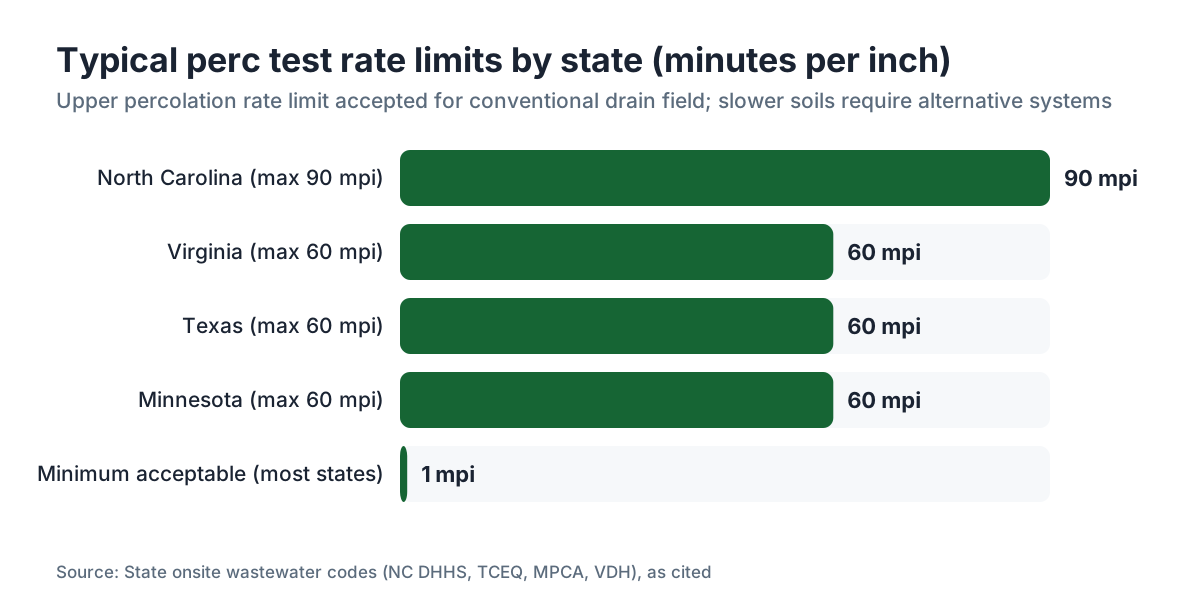
The result is a percolation rate in minutes per inch (mpi): how many minutes it takes the water level in a test hole to drop one inch. Most state codes accept conventional drain fields on soils between roughly 1 and 60 mpi, though the cutoffs vary. North Carolina's rules allow a rate between 1 and 90 mpi for a ground-absorption system [1]. Texas caps acceptance at 60 mpi [2].
A rate faster than 1 mpi means the soil is too coarse to treat wastewater before it reaches groundwater. That's a public health problem more than an engineering one. A rate slower than the state maximum means the soil is too tight, usually clay-heavy, for water to move through at all.
Buying undeveloped land or a lot with no existing septic? A failed perc test can end the deal or force a costly redesign. That's why lenders and real estate contracts often make the perc test a contingency.
What is a mantle test and how is it different from a perc test?
The word "mantle" here means a permeable soil layer, usually sand or sandy loam, sitting above restrictive layers like clay, fragipan, or bedrock. A mantle test evaluates the depth and character of that permeable zone. It shows up most often for mound systems, at-grade systems, and any design where effluent gets dosed into a constructed or natural sand bed rather than into native soil through a conventional trench.
A mantle test puts a soil scientist or licensed evaluator in the dirt. They dig or auger a pit, then describe what they find layer by layer: texture, structure, color (mottling from rust or gray patches signals seasonal saturation), and the depth to any restrictive horizon. The mantle has to be thick enough and drain well enough to handle effluent loading from the mound above it.
The confusion between the two tests makes sense. Both are soil evaluations done before a permit, and many states require both on the same site. The perc test gives a rate. The mantle or soil morphology evaluation gives a profile. Wisconsin and Minnesota have largely replaced the old timed water test with a full morphological evaluation, because trained soil scientists read a profile more accurately than a stopwatch reads variable conditions [3].
So: perc test equals a rate number. Mantle test equals a physical description of soil layers. Depending on your state's onsite wastewater code, you might need one, both, or a soil morphology report in place of either.
How is a perc test actually performed?
The procedure follows a standard that's been around for decades, though states add their own wrinkles. Here's the general sequence.
First, the tester digs or augers test holes, usually 6 to 12 inches wide and 12 to 36 inches deep, in the proposed drain field area. Most jurisdictions want 2 to 6 holes per site. The holes sit overnight (at least 4 to 12 hours) with a few inches of water inside. This pre-soak saturates the soil, mimics long-term wet conditions, and stops dry soil from giving a falsely fast reading.
The next day, the tester refills each hole to a set depth and times how long the water takes to drop a fixed increment, usually 1 inch. They repeat this several times and average the readings, often tossing the first one as an outlier. The final rate for that hole is the average of the stable readings.
The slowest rate across all holes usually governs the design. If one hole reads 45 mpi and another reads 5 mpi, the designer plans for 45 mpi to stay conservative.
Some states require a licensed professional engineer or soil scientist to run or supervise the test. Others let the homeowner or contractor do it with a county sanitarian watching. Check your county health department for the exact protocol before you schedule anything.
What soil conditions cause a perc test to fail?
Two opposite extremes cause failures, and each points to a different next step.
Soil that's too slow, anything past the state's upper mpi limit, is almost always clay-dominant. Water just won't move. These soils also tend to saturate seasonally, which mottled colors confirm during a profile evaluation. A slow-perc site usually still has options: a mound system, a drip irrigation system, or a constructed wetland can work where a conventional trench would fail.
Soil that's too fast, under 1 mpi, is usually coarse gravel or fractured rock. Water rushes through before biological and physical treatment can happen. This one is harder to fix and may need a lined system or engineered filter media.
High seasonal water tables are a separate problem that often rides along with slow perc. Even when the rate is fine, a water table within 12 to 24 inches of the proposed drain field bottom disqualifies a conventional system in most states. This is where mantle depth matters. The system needs enough separation between effluent disposal and groundwater.
Some lots simply vary too much. Rocky soils can produce wildly different readings hole to hole, which makes a reliable design hard. In those cases, a full soil morphology report from a licensed soil scientist often gives regulators more confidence than a handful of inconsistent perc numbers.
How much does a perc test cost?
A basic perc test with a county sanitarian supervising a contractor runs $150 to $800, depending on region and how many holes you need. A full site evaluation that pairs perc testing with a soil morphology report from a licensed soil scientist typically runs $500 to $1,500 or more in high-cost markets.
Some counties charge separately for the permit to conduct the test, which adds $50 to $200. If the site needs a soil scientist on-site (more than a contractor and a stopwatch), day-rate fees for a licensed soil scientist often run $400 to $700.
Geography drives a lot of this. Rural Midwest counties with easy soils often come in under $300. Coastal or mountainous states with complex geology, or states where only licensed pros can run the test, routinely push past $1,000 for the full evaluation.
If the test passes and you move into design and installation, that fee is a rounding error against total project cost. A new septic tank installation for a conventional system runs roughly $3,000 to $10,000 for the tank alone, and a full system with drain field often lands between $10,000 and $25,000 or more depending on system type and local labor. Our breakdown of the cost to install a septic system has current figures by system type. [4]
What happens if your lot fails a perc test?
A failed perc test is not a dead end. It means a conventional gravity-fed drain field won't work. It does not mean septic is impossible.
The most common fix on slow-perc soil is a mound system, where treated effluent gets pumped up into a constructed sand bed elevated above native soil. Mound systems need the mantle evaluation to confirm there's enough permeable soil below for final dispersal. They cost more, generally $15,000 to $30,000 or more installed, and they need a pump plus periodic pump maintenance. Our page on leach field options walks through what comes with alternative designs.
Drip irrigation systems, aerobic treatment units (ATUs), and constructed wetlands are other paths, each approved in different states for different conditions. An ATU makes cleaner effluent that can sometimes disperse in soils that would fail for a conventional system.
If the failure comes from soil that's too fast, options narrow. An engineered system with a liner and controlled media may work, or the lot may simply not be approvable for on-site sewage.
A second opinion from a different licensed soil scientist or engineer occasionally overturns an initial failure, especially if conditions were unusual (a drought year, frozen ground, freshly disturbed soil). That's not gaming the system. Perc tests have real variability and regulations recognize it. Wisconsin's administrative code allows retesting under certain conditions [3].
If the lot fails every option, that has to be disclosed in a real estate deal in most states. Buying land without a passing perc test or a permit-ready evaluation is a real financial risk.
Who performs perc and mantle tests, and who approves the results?
The chain of authorization varies by state but usually runs like this.
A licensed soil scientist, professional engineer, or registered sanitarian conducts the evaluation. Some states let a licensed septic contractor or credentialed soil evaluator run perc tests, though a soil scientist is usually required for the full morphological evaluations used in place of perc testing.
The local county health department or state environmental agency reviews the results and issues or denies an installation permit. The EPA does not directly regulate septic permitting. That authority sits with the states under their own onsite wastewater codes [5]. The EPA's SepticSmart program provides national guidance and backs state programs.
For a property deal, results stay valid 1 to 5 years depending on the state before retesting kicks in. A site that's been graded, filled, or cleared since the original test may need re-evaluation even inside that window.
Hiring someone? Ask straight out: are they licensed in your state for this test type, and will your county accept the results? Get it in writing before you pay. Some consultants sell "perc tests" that local health departments reject because the person isn't credentialed for your jurisdiction.
How do perc test results connect to septic system design?
Once you have a passing perc rate, the designer uses it to calculate required drain field area. The standard method comes from the EPA's 1980 Design Manual on onsite wastewater, though most states have since updated their own loading rate tables [5].
The basic relationship: slower perc rates need larger absorption area per bedroom or per gallon per day of design flow. A 3-bedroom home might need 450 square feet of drain field at 5 mpi and 900 square feet or more at 45 mpi. That drives both lot feasibility and system cost.
Mantle results shape mound geometry: how thick the sand bed has to be, how the mound is crowned to shed rain, and what separation is required between the mound bottom and the restrictive layer below.
For operators running many installs, tracking test results, permit numbers, and design parameters across sites is where software like SepticMind earns its keep. It gives field teams and designers one record that follows the project from soil evaluation through final inspection.
The septic tank inspection that follows installation verifies the system got built to those specs. Test results and design drawings usually travel with the property deed, so future owners and inspectors can confirm the system matches what the soil evaluation approved.
Can you do a perc test yourself, or do you need a professional?
In a small number of jurisdictions, a homeowner can run their own perc test with a county inspector present to witness and record results. Most states no longer allow this, and for good reason: pre-soak timing, hole dimensions, and measurement technique all move the number. A self-done test that doesn't match the state protocol won't be accepted.
The practical answer for most people is to hire a licensed professional. The cost is real but small next to the risk of buying land or designing a system on bad data. A $400 soil evaluation can head off a $20,000 mistake.
For states that use a soil morphologist's evaluation in place of perc testing, there's no DIY path at all. Reading soil morphology takes training in texture, structure, and redoximorphic features (the mottles and iron stains that mark water tables). That's a professional skill.
Want to understand the work before the evaluator shows up? The county health department usually publishes a written protocol. Read it. Ask the evaluator to walk you through what they're seeing as they dig. It's your land. You're entitled to follow along.
How do perc and mantle tests affect a property sale or purchase?
Buying raw land or a property with a failed or missing septic evaluation? This is the single most important due-diligence step after the title search. Real estate agents call it a "perc contingency," meaning the deal is conditional on the site passing a percolation test.
A passed test with a valid permit on file is a genuine asset. It means the lot is buildable for on-site sewage, which in rural areas is often the only option. A failed test, or a lot that's never been tested, is a liability that belongs in the price of any offer.
For existing homes on septic, a septic tank inspection at sale is common and sometimes required. Perc retesting of a working system is less common, but a buyer worried about original sizing or drain field condition can request one.
In a few states, sellers must disclose known test failures. Even where disclosure isn't mandated, a seller who knows the lot failed and stays quiet can face liability. If you're selling, transparency is the right call, ethically and legally.
Planning to expand a home or add a bedroom? Check whether your existing perc test and permit cover the higher load. Adding bedrooms often triggers a new or supplemental soil evaluation because design flow goes up. See the cost to put in a septic tank if you're facing a system upgrade alongside an expansion.
What are realistic timelines for perc and mantle testing?
Scheduling is where projects stall. Here's the honest picture.
First you apply for a permit to test at the county health department. That takes anywhere from a few days to six weeks depending on the county's backlog. Some rural counties have one sanitarian covering hundreds of square miles and book tests months out.
Once scheduled, the pre-soak needs the holes wet for at least one night, sometimes longer in clay. So the physical test spans at least two days: dig and pre-soak on day one, run the test on day two. The evaluator may want to come back after a rain event if the ground was unusually dry.
After the test, the evaluator submits results to the county, which then issues or denies a site evaluation approval. That review takes days or weeks. In busy markets, the whole run from application to approved evaluation stretches 2 to 4 months.
Working against a real estate deadline? Start the process the day you sign. Don't wait for the inspection period to end before scheduling. Evaluators get booked out fast in spring and summer, when most land sales happen.
A soil morphology evaluation done in place of a perc test can move faster because it skips the overnight pre-soak, just the soil pit in one day. But the licensing bar for the evaluator is higher, so finding the right person may add time.
What regulations govern perc and mantle testing?
There is no single federal perc test standard. The EPA sets broad guidance through its onsite wastewater technology fact sheets and the SepticSmart program [5], but permitting authority sits entirely with state and local agencies.
Each state has its own administrative code for onsite wastewater. A few examples:
North Carolina: 15A NCAC 18A .1900, which sets perc rate limits and soil evaluation requirements for all onsite sewage systems [1].
Wisconsin: Chapter SPS 383 (formerly Comm 83), which moved away from timed perc testing toward morphological soil evaluation by licensed soil testers [3].
Texas: Title 30 TAC Chapter 285, the On-Site Sewage Facilities rule, which specifies perc test procedures and acceptable rates [2].
Minnesota: Minnesota Rules Chapter 7080, which requires a site evaluation by a licensed designer using soil borings and sometimes perc tests [6].
The EPA's SepticSmart guidance puts the stakes plainly: properly maintained septic systems protect public health, property values, and water quality [5]. The flip side is that improperly sited systems, the ones a failed perc test would have caught, become the source of those problems.
The National Environmental Services Center at West Virginia University keeps state-by-state onsite wastewater regulatory summaries, and the Water Environment Federation publishes technical guidance that many state codes draw from [7]. Working in a new state? Those are the right first stops before you call a consultant.
Frequently asked questions
How long does a perc test take?
The physical test takes two days minimum: one day to dig holes and pre-soak them with water, a second day to run the timed test. Add permit scheduling at the county health department, which runs days to weeks, and review of results after submission, another 1 to 4 weeks. In busy spring or summer seasons, the full sequence from application to approved evaluation often takes 6 to 12 weeks.
Can a property be built on if it fails a perc test?
Often yes, but it depends on why it failed. Slow-draining clay soils past the state's maximum rate can usually be served by mound systems, drip irrigation, or aerobic treatment units. Soils that drain too fast pose harder problems. Some lots with multiple failed alternatives genuinely cannot support on-site sewage and can't get a permit for a dwelling that needs it.
What is the difference between a perc test and a soil evaluation?
A perc test is a specific timed-water test producing a rate in minutes per inch. A soil evaluation (also called a soil morphology evaluation) is broader: a soil scientist describes the texture, structure, color, and layering of soil through a pit or boring. Many states now use soil evaluations in place of or alongside perc tests because they show more about drainage, seasonal water tables, and system suitability.
How much does a perc test cost?
A basic perc test with county oversight typically runs $150 to $500 in most regions. A full site evaluation with a soil scientist's morphological report often costs $500 to $1,500 or more. Permit fees for testing authorization add $50 to $200 in many counties. High-cost markets, or states that require licensed soil scientists for every evaluation, push costs toward the higher end of those ranges.
Who can legally perform a perc test?
It depends on the state. Some allow licensed septic contractors or registered sanitarians to run perc tests, with a county inspector witnessing. Others require a professional engineer or licensed soil scientist. A handful of jurisdictions still permit homeowner-conducted tests under sanitarian oversight. Always verify with your county health department before hiring anyone, because results from an uncredentialed tester won't be accepted.
How deep are the holes for a perc test?
Perc test holes are typically 12 to 36 inches deep and 6 to 12 inches wide, though exact dimensions vary by state protocol. The depth is chosen to represent the zone where the drain field will actually discharge effluent. Shallower holes might miss restrictive clay layers below the topsoil. Deeper holes are sometimes required when a system is designed deeper than typical.
Do perc test results expire?
Yes. Most states set validity periods of 1 to 5 years for perc test results. Some counties require retesting if significant site disturbance has happened (grading, filling, clearing) even inside the validity window. Buying land with an old passing test on file? Check the date and whether the county still accepts it. An expired test may require a full re-evaluation before a new permit is issued.
What does a perc rate of 60 minutes per inch mean?
It means the water in the test hole drops one inch every 60 minutes. That's on the slow end of what most state codes accept for a conventional drain field. A system designed for 60 mpi soil needs a larger absorption area than the same house on faster-draining soil. Some states set their upper limit below 60 mpi, so a 60 mpi result could be a failed test depending on where you are.
What is a mound system and when is it required?
A mound system builds a sand bed above the native soil surface, then doses pre-treated effluent into that bed. It's required when the native soil is too slow to pass a perc test, when the seasonal water table sits too high for a conventional trench, or when bedrock or other restrictive layers are too close to the surface. The mound gives adequate treatment depth above those limits. Mound systems typically cost $15,000 to $30,000 or more installed.
Does a new septic system always require a perc test?
Almost always for a new install on previously untested land. Some states allow a soil morphology evaluation in place of a timed perc test, but some form of soil evaluation is universally required before a permit issues. Replacement systems on existing permitted sites sometimes skip retesting if the original evaluation is on file and still valid, but adding bedrooms or changing design flow typically triggers a new evaluation.
Can you do a perc test in winter?
Most jurisdictions require perc tests when the ground is not frozen, because frozen soil gives falsely fast readings that don't reflect real conditions. Some states specifically prohibit testing from December through March. In a northern state facing a spring real estate deadline? Schedule the evaluation for early spring the moment the ground thaws. Don't assume you can test in January and have the results accepted.
What is a mantle in septic system terms?
In septic design, a mantle is a layer of permeable soil, usually sand or sandy loam, sitting between the surface and a restrictive layer below. For mound and at-grade systems, the mantle needs to be thick enough and permeable enough to accept and treat effluent after it passes through the constructed sand bed above. The mantle test confirms whether that permeable layer exists, how deep it is, and whether its drainage is adequate.
What happens to a home's value if it fails a perc test?
A failed perc test with no approvable alternative can make undeveloped land essentially unsellable as a building lot, dropping its value to that of raw land with no development potential. For existing homes on septic, the concern is usually drain field condition rather than a fresh perc test. If a replacement system on a failed lot can only use a more expensive alternative, that cost typically reduces the property's value by a similar amount.
Sources
- North Carolina Department of Health and Human Services, Environmental Health (15A NCAC 18A .1900 Sewage Treatment and Disposal Rules): North Carolina requires a percolation rate between 1 and 90 minutes per inch for a ground-absorption sewage disposal system.
- Texas Commission on Environmental Quality, On-Site Sewage Facilities (Title 30 TAC Chapter 285): Texas sets an upper percolation rate limit of 60 minutes per inch for conventional on-site sewage facilities.
- Wisconsin Department of Safety and Professional Services (Chapter SPS 383, Private Onsite Wastewater Treatment Systems): Wisconsin replaced traditional perc testing with morphological soil evaluation conducted by licensed soil testers under Chapter SPS 383.
- University of Minnesota Extension, Septic Systems: New septic system installation costs vary widely by system type, with conventional systems typically ranging from $10,000 to $20,000 and alternative systems such as mounds costing more.
- U.S. Environmental Protection Agency, SepticSmart Program: The EPA SepticSmart program states that properly maintained septic systems protect public health, property values, and water quality; permitting authority rests with states.
- Minnesota Pollution Control Agency, Subsurface Sewage Treatment Systems (Minnesota Rules Chapter 7080): Minnesota Rules Chapter 7080 requires site evaluation by a licensed designer using soil borings and percolation tests before an onsite sewage permit is issued.
- National Environmental Services Center, West Virginia University: The National Environmental Services Center maintains state-by-state onsite wastewater regulatory summaries and technical guidance on perc testing procedures.
- U.S. Environmental Protection Agency, Onsite Wastewater Treatment Systems Manual (EPA/625/R-00/008): The EPA's Onsite Wastewater Treatment Systems Manual provides loading rate tables that relate percolation rate to required drain field absorption area per bedroom.
- Virginia Department of Health, Environmental Health / Onsite Sewage and Water Services: Virginia requires both a soil morphology evaluation and percolation testing for most new onsite sewage system permits, with results valid for a defined period before retesting is required.
- Penn State Extension, Water and Septic: Perc test validity periods in most states range from 1 to 5 years, and retesting is required if significant site disturbance has occurred within that window.
Last updated 2026-07-09