Perc test and mantal test in Placer County: what you need to know
By the SepticMind Editorial Team
TL;DR
- Placer County, California requires a percolation test and a soil profile (mantal) evaluation before issuing a septic system permit.
- The Placer County Environmental Health Division reviews both.
- Perc tests run $400 to $900 for simple sites; a full evaluation with a licensed geologist or PE costs $1,500 to $4,000.
- Failing either test doesn't kill a project.
- It sends you to an alternative system review.
What is a perc test and why does Placer County require one?
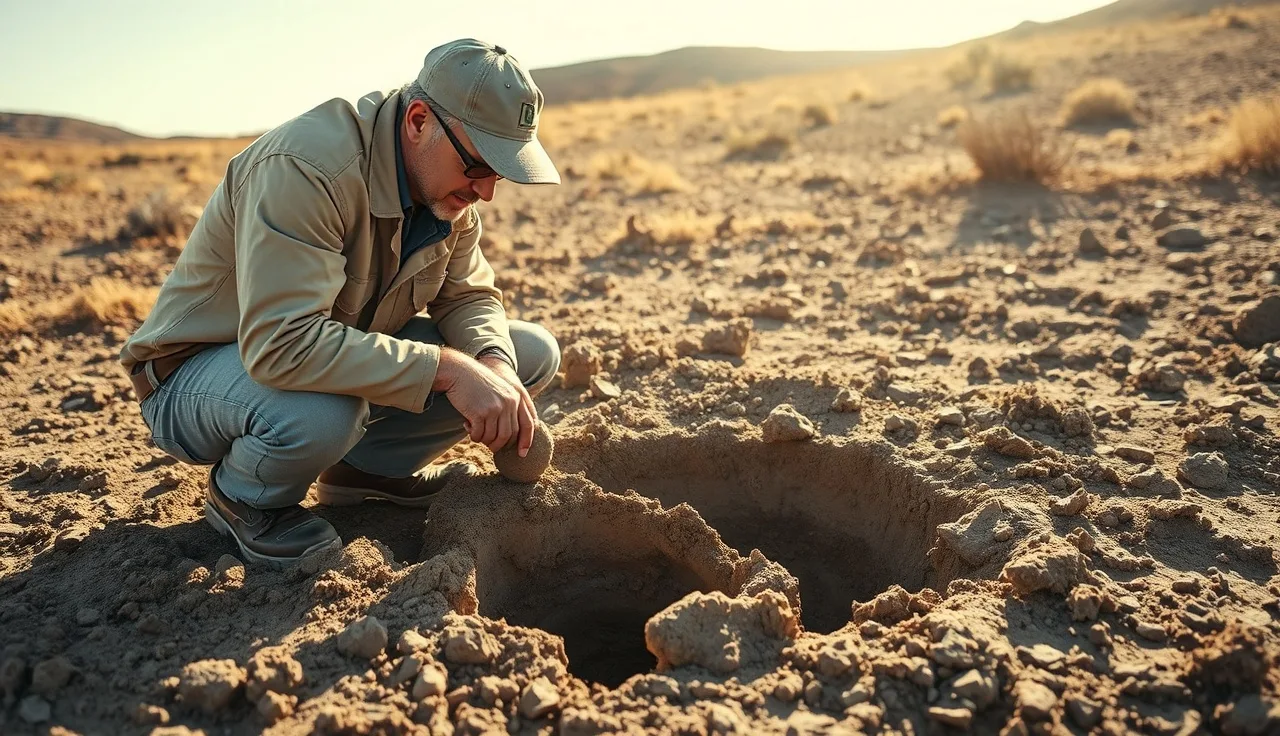
A percolation test (perc test) measures how fast water moves through soil. You dig or bore a hole to the depth of the proposed leach field, saturate it, then time how many minutes it takes for water to drop one inch. That rate is the perc rate, expressed in minutes per inch (mpi). Soil that absorbs water too slowly (above roughly 60 mpi in most California counties) or too quickly (below about 1 mpi) can't safely treat wastewater before it reaches groundwater.
Placer County Environmental Health (PCEH) requires a perc test as part of the site evaluation for any new onsite wastewater treatment system (OWTS). The requirement flows from California's statewide standard, the State Water Resources Control Board's Policy for Siting, Design, Operation, and Maintenance of Onsite Wastewater Treatment Systems (the OWTS Policy, effective May 1, 2013) [1]. That policy sets minimum statewide standards and lets counties add stricter rules where local hydrology demands it. Placer County uses that flexibility. Its soils run from Sierra Nevada granite to clay-heavy foothill ground to high water table zones near the American River. [2]
No approved perc test, no septic permit. That's the rule for virtually every new build that can't tie into a municipal sewer.
What is a mantal test and how is it different from a perc test?
The word 'mantal' comes from the Spanish 'manto' (layer or mantle) and refers to a soil profile examination, sometimes called a soil morphology analysis or soil boring evaluation. In Placer County practice the mantal test means digging or boring to a depth that reveals restricting layers, seasonal high water table indicators, mottling, and soil texture below your proposed leach field. A qualified examiner (usually a licensed geologist, soil scientist, or civil engineer with soils training) logs what they see and writes a soil profile report.
Here is the practical difference between the two tests:
| Test | What it measures | Who performs it | Key output |
|---|---|---|---|
| Perc test | Water absorption rate (minutes per inch) | Licensed contractor or engineer under PCEH oversight | Perc rate (mpi) |
| Mantal / soil profile | Soil texture, structure, mottling, restrictive layers, estimated seasonal high water table | Licensed geologist, soil scientist, or PE | Soil profile log |
You need both. A soil can pass a perc test on a dry fall day yet have a seasonal high water table that sits within 24 inches of the leach field bottom in February. The mantal catches that. A poorly structured soil can also look fine in a boring but drain so fast it skips treatment entirely. Together the two evaluations give PCEH a full read on whether a site can safely treat and disperse wastewater. [3]
Placer County's OWTS application packet asks for soil profile data alongside perc results. If your contractor runs a perc test without a mantal evaluation, expect your application to come back incomplete.
Who can perform perc and mantal tests in Placer County?
Placer County Environmental Health must approve the person doing site evaluations before it accepts any results. The county generally accepts:
- A licensed civil engineer (PE) with demonstrated soils/geotechnical competence
- A licensed geologist (PG or CEG)
- A registered environmental health specialist working under a PE or PG
- A contractor specifically approved by PCEH for perc testing (check the current approved contractor list on the PCEH website before hiring)
The PCEH office is in Auburn. You submit a Site Evaluation Application and pay the fee before testing begins. You cannot dig holes, hand in results, and expect approval. [2] Testing done without prior PCEH authorization is usually rejected outright.
For the mantal portion, Placer County wants someone who can read restrictive horizons, mottling (the rust and gray coloration that signals historical saturation), and rock fragments accurately. Many homeowners hire a general contractor to do both tests. That works for the perc timing. The soil profile analysis almost always needs a licensed geologist or PE. Hire accordingly from the start, not after your first submission gets bounced.
How much does a perc test cost in Placer County?
Expect to pay in two buckets: county fees and professional fees.
Placer County Environmental Health charges a site evaluation application fee. As of the most recent published fee schedule, PCEH fees for OWTS site evaluations sit in the range of several hundred dollars, and the county updates its Master Fee Schedule annually (adopted by the Board of Supervisors, typically each July) [6]. Check the current schedule before you budget.
Professional fees for the fieldwork vary by site complexity:
| Scenario | Typical cost range |
|---|---|
| Simple perc test only, flat accessible site | $400 to $900 |
| Perc test plus basic soil profile | $800 to $1,800 |
| Full OWTS site evaluation with licensed geologist/PE | $1,500 to $4,000 |
| Complex site (steep slope, rocky, high WT concerns) | $3,000 to $6,000+ |
Those ranges reflect what independent consultants and soil engineers charge in the Sacramento and Sierra foothills market as of 2024 to 2025. Nobody publishes a clean survey for this specific market, so treat them as honest estimates built from publicly posted rate sheets from regional firms and licensed geologists working the area.
Site access drives cost hard. A parcel in Auburn or Loomis with road access and gentle slopes costs far less to test than a 40-acre parcel in Foresthill or Tahoe City with steep grades and seasonal snow. Budget higher if your land is rough.
For how site evaluation fits into total system costs, the cost to install a septic system page has a fuller breakdown.
What is the step-by-step process for getting a perc and mantal test approved in Placer County?
Here is the sequence PCEH actually uses. Skip steps and you waste money.
- Pre-application review. Call or visit PCEH in Auburn before you touch the ground. Ask whether your parcel has any prior site evaluation history (it might, especially on older rural lots). Confirm current fee amounts and form versions.
- Submit the Site Evaluation Application. Fill out PCEH's OWTS application, pay the fee, and name the licensed professional who will do the evaluation. PCEH issues an authorization to proceed.
- Schedule and conduct the testing. Your licensed professional digs or bores test holes (minimum depth varies by proposed system type, typically 60 to 84 inches for a standard trench system). Perc holes get pre-soaked for a required saturation period, usually 24 hours minimum in Placer County to approximate wet-season conditions. The professional runs the timed perc readings and logs the soil profile at the same time.
- Submit results and soil profile report. Your professional turns in a written report with perc rates (mpi), soil horizon descriptions, mottling observations, estimated seasonal high water table depth, and a site map. PCEH reviews it.
- PCEH issues a site evaluation determination. The county classifies the site as approved, conditionally approved (requiring a specific system type), or not approved for a conventional system. A conditional approval might require a pressure-dosed system, mound system, or other alternative. [1][3]
- PCEH issues a permit (or denial). If approved, you move to design and permitting. A conditional approval routes you to an alternative system design. A denial triggers appeal options or alternative system evaluation.
Application to determination commonly takes four to twelve weeks in Placer County, depending on PCEH workload and weather that can delay field testing. Budget the time if you're racing a real estate transaction deadline.
What perc rates does Placer County consider acceptable?
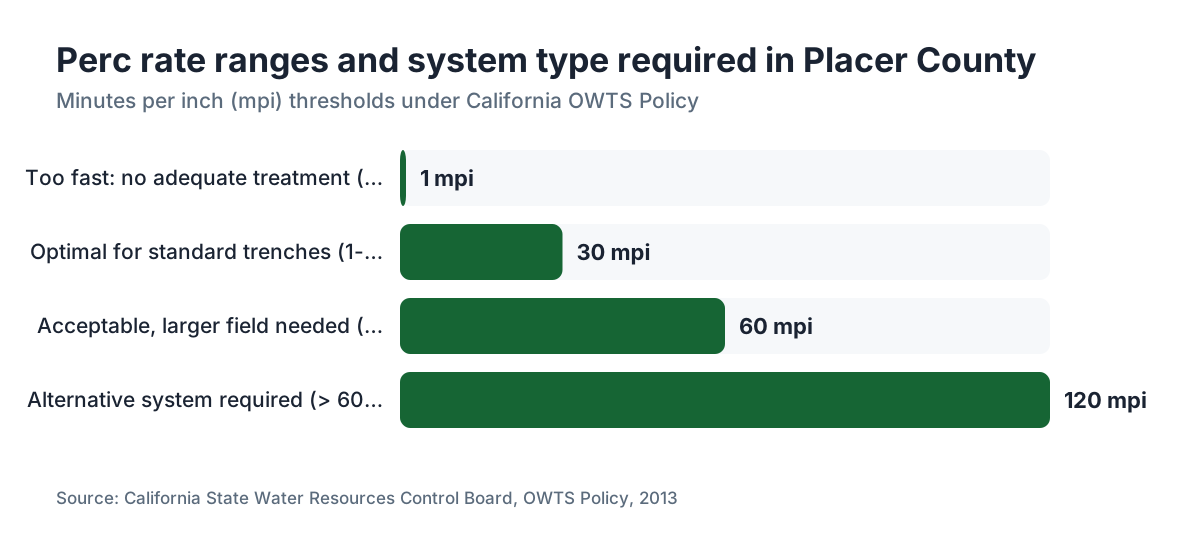
The California OWTS Policy [1] and Placer County's local ordinance work together to define acceptable perc rates. Under the state OWTS Policy, conventional trench systems are generally suitable for soils with perc rates between 1 and 60 minutes per inch. Placer County has historically applied similar thresholds.
The nuance is in how the county handles borderline results:
- Perc rate faster than 1 mpi: soil is too permeable. Raw waste can reach groundwater before adequate treatment. Alternative systems or engineered fill may be required.
- Perc rate 1 to 30 mpi: generally acceptable for standard trench or seepage bed systems, depending on soil profile results.
- Perc rate 31 to 60 mpi: acceptable for standard systems in many cases, but PCEH may require a larger leach field (longer trenches) to make up for slower absorption.
- Perc rate slower than 60 mpi: conventional systems typically not approved. Alternative or innovative system required.
Those are the common benchmarks. PCEH can apply stricter standards in sensitive areas (near watercourses, ground draining to Lake Tahoe's watershed, or parcels with documented water quality concerns). The Lahontan Regional Water Quality Control Board, which covers the Lake Tahoe basin portion of eastern Placer County, keeps its own overlay requirements stricter than the baseline state policy. [4]
The State Water Resources Control Board notes that 'a system that is not properly designed, constructed, operated, and maintained can pose a risk to public health and degrade water quality.' [1] That language is why a slow perc rate triggers a different system rather than just a bigger conventional trench.
What happens if your site fails the perc or mantal test in Placer County?
Failing doesn't automatically mean your lot is unbuildable. It means a conventional gravity-fed trench system is the wrong answer for that soil. PCEH will point you toward alternatives.
Common paths after a perc/mantal failure:
- Pressure-dosed system. A dosing pump spreads effluent evenly across the leach field at timed intervals, which helps even moderately slow soil absorb wastewater without hydraulic overload. This works well for perc rates in the 60 to 90 mpi range.
- Drip irrigation system (drip dispersal). Low-pressure drip lines distribute treated effluent at shallow depths. Effective for slow soils and small lots. It needs a higher treatment level upstream, usually an ATU (advanced treatment unit).
- Mound system. A raised bed of engineered fill above the native soil provides the treatment depth the native soil can't. Common where seasonal high water table is the problem the mantal found.
- Import fill and re-test. On some sites, removing unsuitable soil, replacing it with approved fill, then retesting is feasible. It's expensive and not always approvable, but worth asking PCEH about.
- Lot infeasibility determination. A small fraction of lots genuinely can't support any onsite system at any reasonable cost. PCEH documents this if that's the conclusion. Then connecting to municipal sewer (if available) or not building is the outcome.
Real estate transactions: if a perc/mantal test is part of due diligence for a land purchase, negotiate who eats the cost of alternative system design if the conventional system fails. That cost can run $8,000 to $25,000 above a standard system. See the full picture at septic tank installation and cost to put in a septic tank.
How do Placer County's rules compare to the rest of California?
California counties have broad latitude under the OWTS Policy to set standards above the state minimums. Placer County sits in the middle of the strictness spectrum for foothill and mountain counties.
| County | Key distinction |
|---|---|
| Placer (western zone) | State OWTS Policy baseline, local discretion on alternatives |
| Placer (Lake Tahoe / Lahontan zone) | Lahontan RWQCB overlay, stricter nitrogen limits, more ATU requirements [4] |
| El Dorado | Similar baseline to Placer western zone |
| Nevada County | Requires both perc and mantal; some jurisdictions require a third-party peer review |
| Marin | Some of the strictest in-state, 120-day waiting period for perc |
| Central Valley counties | Generally follow state baseline, fewer alternative system requirements |
The biggest practical difference in Placer County versus a flat Central Valley county is that Placer's terrain and geology produce more failed tests. Rocky granite outcrops in Foresthill and Alta don't perc at all. Clay-heavy soils in parts of Lincoln and Rocklin perc very slowly. That's not a flaw in the rules. That's the rules doing their job.
Operators running crews across multiple counties often use scheduling and documentation tools to track which jurisdiction wants what. SepticMind's operations software handles county-specific test documentation and permit tracking, which saves time when your teams work Placer and El Dorado in the same week.
EPA's SepticSmart program emphasizes that proper siting is the most important factor in the long-term performance of a septic system. [5] The perc and mantal process is exactly that siting work.
How long are perc and mantal test results valid in Placer County?
Most buyers and developers forget to ask this until they pull old files and find the tests were done in 1988.
Placer County Environmental Health generally treats site evaluation results as valid for five years from the date of the PCEH determination, provided parcel conditions have not materially changed. Major grading, changes in drainage, nearby development affecting groundwater, or a lapse beyond five years typically forces a new evaluation.
For a real estate transaction, verify the date on any existing perc/mantal documentation with PCEH directly. Don't rely on the seller's word. Call the Environmental Health Division and ask for the file on that parcel's APN (Assessor Parcel Number). PCEH keeps records and can usually tell you whether a prior approval is still current.
Buying land with expired results? Budget for new testing. You may be able to use the old soil profile log as supporting data to cut fieldwork, but you'll almost always need updated perc readings and possibly new borings. Budget $1,000 to $2,500 for a re-evaluation on a previously tested site with good existing documentation.
What do I need to bring to a PCEH appointment about my site evaluation?
PCEH (located at 3091 County Center Drive, Auburn, CA 95603) expects you to come prepared. Walking in without documentation wastes your time and the reviewer's.
Bring or have ready:
- Assessor Parcel Number and current parcel map
- Topographic map or contour lines showing proposed building and system locations
- Any existing well locations on the parcel and on neighboring parcels within 100 feet
- Any existing drainage ditches, streams, or seasonal waterways within 200 feet
- Prior site evaluation files if they exist
- Proposed system type if you've already talked options with a designer
- Name and license number of the professional you're hiring to run the evaluation
Still unsure where the house will sit on the parcel? That's fine at the pre-application stage. But the closer you are to a site plan, the more targeted the PCEH guidance will be. Some reviewers flag obvious problem areas (rock outcrops, drainage easements, setback conflicts) on the spot if you bring a parcel map.
For existing systems that need inspection rather than new construction, the septic tank inspection page covers what PCEH looks at during OWTS inspections.
How do perc and mantal results affect septic system design in Placer County?
The results don't just decide whether you can build. They decide exactly what you build.
The perc rate sets the required linear footage of leach field. Slower soil (higher mpi) needs more trench length per bedroom to handle the design flow. The California OWTS Policy provides a loading rate table designers use to size leach fields based on perc rate [7]. A three-bedroom house on 30 mpi soil needs substantially more trench footage than the same house on 10 mpi soil.
The mantal results set the minimum depth to the seasonal high water table and restrictive layers, which governs how deep trenches can go and whether a pressure-dosed or elevated system is needed. If the mantal shows mottling (evidence of seasonal saturation) at 36 inches, you can't put the bottom of your leach field trenches at 30 inches. Those observations directly constrain what a septic designer can draw.
A leach field undersized because the designer ignored borderline mantal results is the number-one cause of premature OWTS failure in foothill counties. Soil mottling is not a maybe. It's a record of what that soil has done, and it'll do it again in a wet year.
For parcels in the Lake Tahoe basin portion of Placer County, the Lahontan RWQCB's Basin Plan adds nitrogen loading constraints on top of standard sizing, often requiring an ATU (advanced treatment unit) upstream of the dispersal field regardless of perc rate. [4]
Can you do a perc test in any season in Placer County?
Technically, yes. Placer County doesn't restrict perc testing to a specific calendar window the way some counties do (Marin County, for instance, has historically required winter-period testing). But seasonality matters in practice.
PCEH and most competent licensed professionals will tell you a test run during the dry season (June through October in the Sierra foothills) may not show the true worst-case soil behavior. The state OWTS Policy requires the seasonal high water table be identified, and the mantal assessment must account for wet-season conditions even if testing happens in August. [1]
This is where the mantal's soil morphology evidence becomes the honest proxy for wet-season conditions when you can't wait six months to test. Mottling in the soil profile tells the examiner where water historically sat, no matter when the test holes are dug.
For borderline sites, test during late winter or early spring (February through April in Placer's foothill zone) when soils are at or near field capacity. That gives the most conservative perc readings and the clearest mantal evidence of a high water table. Yes, it's harder to schedule. But a septic system permitted on optimistic dry-season numbers that then fails in the first wet winter costs far more to fix. See septic system repair for what failure remediation actually runs.
Frequently asked questions
How much does a perc test cost in Placer County?
A basic perc test with a licensed contractor runs $400 to $900 for a simple site. Add a mantal (soil profile) evaluation and a licensed geologist or PE, and the full site evaluation typically costs $1,500 to $4,000. Complex or steep sites in areas like Foresthill can push past $6,000. County application fees are separate and set annually by the Placer County Board of Supervisors.
Who can perform a perc test in Placer County?
Placer County Environmental Health must approve the tester before work begins. Accepted professionals include licensed civil engineers (PE), licensed geologists (PG or CEG), and PCEH-approved contractors. The soil profile (mantal) portion specifically needs someone trained to identify soil horizons, mottling, and restrictive layers, which usually means a licensed geologist or PE with geotechnical experience. Never hire anyone who hasn't confirmed approval with PCEH first.
What perc rate is required to pass in Placer County?
Conventional trench systems generally require a perc rate between 1 and 60 minutes per inch (mpi). Faster than 1 mpi, soil is too permeable for adequate treatment. Slower than 60 mpi, a conventional system is typically not approved and alternative systems are required. Placer County follows the California OWTS Policy on these thresholds, with stricter rules in the Lahontan (Lake Tahoe basin) zone.
What is the difference between a perc test and a soil profile (mantal) test?
A perc test measures how fast water absorbs into soil (minutes per inch). A mantal or soil profile evaluation examines the physical layers of soil below the leach field, looking for restrictive horizons, mottling from seasonal saturation, and rock. Placer County requires both because a site can pass one and fail the other. Together they tell PCEH whether the soil can safely treat and disperse wastewater year-round.
How long does the Placer County perc test approval process take?
From application submission to PCEH determination, expect four to twelve weeks in typical conditions. PCEH workload, scheduling your licensed professional, weather delays, and how complete your submission is all affect the timeline. Complex sites or incomplete applications can stretch the process to several months. If you're buying land and a septic permit is contingent, build at least ninety days of buffer into your escrow timeline.
Do perc test results expire in Placer County?
Yes. PCEH generally treats site evaluation results as valid for five years from the determination date, assuming no material changes to the parcel. After five years, or after significant grading or drainage changes, new testing is typically required. Always verify expiration directly with PCEH using the parcel's APN rather than relying on documents from a seller or prior owner.
What happens if my land fails the perc test in Placer County?
A failed conventional perc test does not necessarily mean the lot is unbuildable. PCEH will evaluate whether an alternative system works: pressure-dosed systems, mound systems, drip dispersal with an ATU, or engineered fill. Only if no alternative system is feasible does PCEH issue a lot-infeasibility determination. Alternative system costs run $8,000 to $25,000 above a standard system, so factor that risk into any land purchase.
Does the mantal test apply in the Lake Tahoe area of Placer County?
Yes, and additional requirements apply. The eastern Placer County portions within the Lake Tahoe basin are under the jurisdiction of the Lahontan Regional Water Quality Control Board, which imposes nitrogen loading limits and often requires advanced treatment units (ATUs) regardless of perc rate. Both the perc test and mantal evaluation are required, and the resulting system design must meet Lahontan Basin Plan standards, which are stricter than the baseline state OWTS Policy.
Can a failed perc test affect a real estate transaction in Placer County?
Absolutely. If a rural parcel in Placer County cannot be permitted for any OWTS and municipal sewer is unavailable, the lot effectively cannot support residential development. Buyers should make purchase agreements contingent on a satisfactory site evaluation. If existing test results are more than five years old, treat them as expired and budget for new testing. A lot infeasibility determination from PCEH can kill a deal entirely.
How many test holes are required for a Placer County perc test?
PCEH typically requires a minimum of two to three perc test holes and at least one soil profile boring per proposed dispersal area. The exact number depends on parcel size, system type proposed, and site variability. Your licensed professional will determine the layout based on PCEH guidance and the site plan. More holes give a more representative result and reduce the risk of a failed submission due to insufficient data.
Does Placer County require a perc test for a replacement septic system?
A replacement system on an existing parcel may not require a full new perc and mantal evaluation if valid prior results are on file with PCEH and the proposed new system footprint is within the previously tested area. If you're expanding the system, moving the leach field, or prior results are expired, new testing is required. Call PCEH and provide the parcel APN to find out what documentation already exists before spending money on new tests.
Where do I contact Placer County Environmental Health about a perc test?
Placer County Environmental Health (PCEH), Environmental Health Division, 3091 County Center Drive, Suite 180, Auburn, CA 95603. The phone number and current application forms are listed on the Placer County government website. Always call before scheduling any field testing to confirm current forms, fees, and any changes to approved professional lists. Walking in with an application and a check is the fastest way to start.
Sources
- California State Water Resources Control Board, Policy for Siting, Design, Operation, and Maintenance of Onsite Wastewater Treatment Systems (OWTS Policy): California OWTS Policy sets statewide minimum standards including acceptable perc rate ranges and soil evaluation requirements for septic system permitting; effective May 1, 2013
- Placer County Environmental Health Division: Placer County Environmental Health requires a site evaluation application and authorized professional before perc and soil profile testing; fee schedule updated annually by Board of Supervisors
- California State Water Resources Control Board, OWTS Program guidance on soil evaluation: Soil profile (mantal) evaluation documents restricting layers, mottling, and seasonal high water table depth required alongside percolation test results
- Lahontan Regional Water Quality Control Board: Lahontan RWQCB imposes nitrogen loading limits and ATU requirements for septic systems in the Lake Tahoe basin portion of Placer County, stricter than baseline state OWTS Policy
- U.S. EPA, SepticSmart program: EPA SepticSmart guidance states proper siting is a leading factor in the long-term performance of a septic system
- Placer County government, Master Fee Schedule: Placer County Master Fee Schedule sets Environmental Health site evaluation application fees, updated annually each July
- California State Water Resources Control Board, OWTS Policy loading rate provisions: California OWTS Policy provides loading rate tables relating perc rate (mpi) to required leach field linear footage per bedroom for design purposes
- U.S. EPA, Septic Systems resources: EPA guidance documents soil percolation testing methodology including pre-soaking requirements and timed readings for site evaluation
- University of California Agriculture and Natural Resources: UC extension guidance on soil profile examination methodology and interpreting mottling as evidence of seasonal high water table for OWTS siting
- California State Water Resources Control Board, Water Quality programs: State water quality policy requires onsite wastewater systems to meet OWTS Policy standards to protect groundwater quality in rural parcels
Last updated 2026-07-09