Septic camera inspection: what it finds, what it costs, and when you need one
By the SepticMind Editorial Team
TL;DR
- A septic camera inspection threads a waterproof video camera through your pipes and tank to find cracks, root intrusion, blockages, and structural failures.
- It costs $250 to $900 depending on scope and region.
- Most homeowners need one before buying a home, after a backup, or every 3 to 5 years as part of routine maintenance.
- It does not replace pumping.
What is a septic camera inspection?
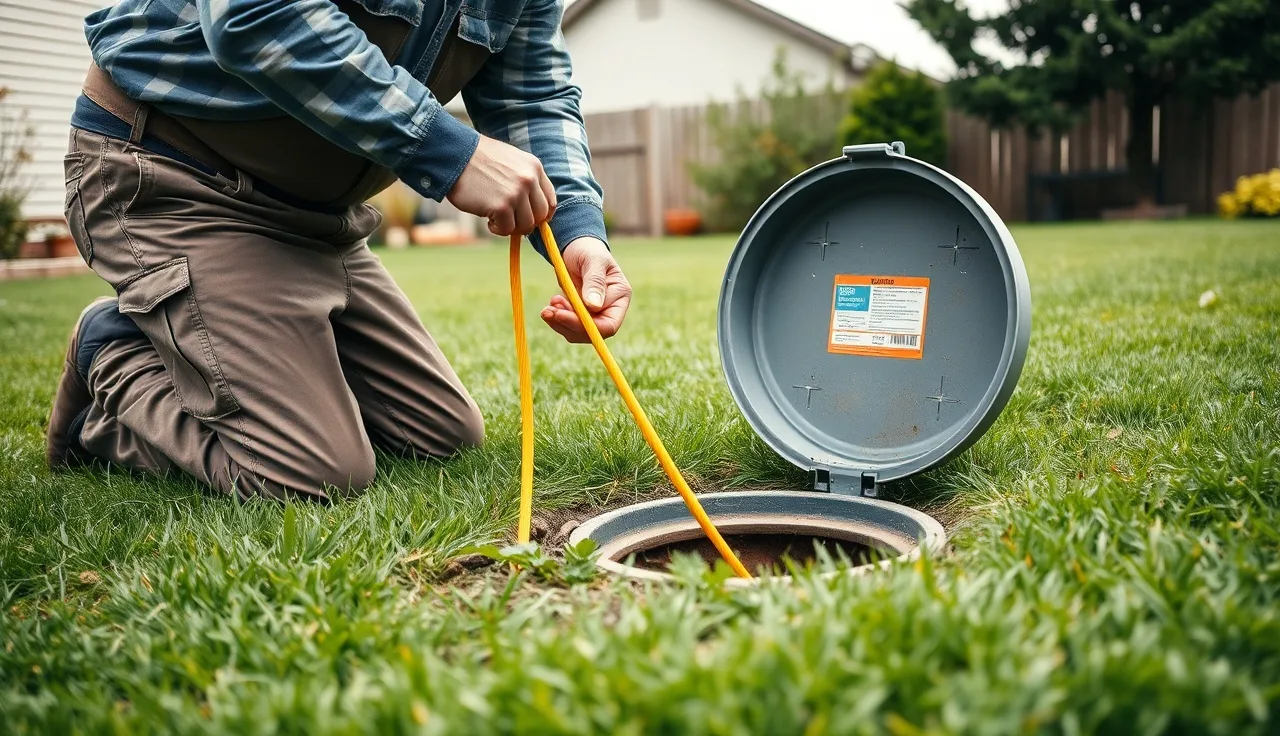
A septic camera inspection is exactly what it sounds like: a licensed technician pushes a flexible, waterproof camera on a cable through your sewer line, into your septic tank, and sometimes through the outlet baffle toward the drain field. The camera sends live video to a screen so the technician sees the inside of your pipes and tank in real time. They can pause, record, and in most cases save a timestamped video file for you.
The camera itself is usually a self-leveling lens mounted on a push-rod cable or a self-propelled crawler. Push-rod cameras work fine for most residential sewer lines up to about 100 feet. Crawler cameras, which move on little wheels and can articulate, handle longer runs or larger-diameter pipes where push-rod cables become unwieldy.
One thing people consistently get wrong: a camera inspection is a diagnostic tool, not a cleaning or pumping service. The camera shows you what's there. It does not remove it. If the technician finds a grease blockage or a root mat, you'll need a separate septic tank cleaning or jetting service to clear it. Think of the camera as the MRI. The treatment comes next.
Some companies bundle camera inspection with septic tank pumping, which makes real sense. A pumped tank gives you a clear view inside without liquid hiding the walls. Ask before you book whether the quote includes both.
What does a septic camera inspection actually find?
This is where the money is. The whole point of paying for a camera is the list of problems it catches that no surface inspection ever will.
Root intrusion is probably the most common finding. Tree and shrub roots follow moisture and grow through the smallest crack in a pipe joint, then branch out inside the pipe until they form a mat that backs up everything upstream. You won't see or smell this until sewage starts coming back through your floor drain.
Cracks and pipe separation are the second big category. Older homes often have clay tile or Orangeburg pipe (a fiber and tar composite used from the 1940s through the 1970s) that degrades badly over time. A camera shows you exactly where a section has collapsed or where two pipe joints have separated and no longer seal. The EPA's SepticSmart program lists inspecting for cracks and damage as a reason to get a camera inspection done before buying a home with a septic system [1].
Baffle condition matters a lot and gets overlooked. Your tank has an inlet baffle that slows incoming waste and an outlet baffle that keeps floating solids from escaping toward the drain field. If the outlet baffle is broken or missing, solids flow straight into the leach field and clog it. A camera inspection from inside the tank is usually the only way to confirm baffle integrity without pulling the lid and doing a physical probe. Penn State Extension names outlet baffle failure as a leading cause of drain field clogging and early failure [8].
Other common findings:
| Finding | What it means | Urgency |
|---|---|---|
| Root intrusion | Roots in pipe; partial or full blockage | High; clear soon |
| Cracked pipe | Structural failure; sewage leaking into soil | High; repair or replace |
| Separated joint | Joint pulled apart; ground infiltration possible | High |
| Broken outlet baffle | Solids reaching drain field | High; causes field failure |
| Grease/scale buildup | Pipe diameter reduced; slow drains | Moderate |
| Orangeburg pipe degradation | Pipe collapsing from inside | High; plan replacement |
| Tank wall cracks | Tank integrity compromised | Moderate to high |
| Missing inlet tee | Incoming waste hits liquid surface; turbulence | Moderate |
What a camera inspection cannot find: drain field soil saturation, groundwater intrusion from high water tables, or the condition of the distribution box's internal plumbing beyond what the camera reaches. Those require a separate perc test, soil probe, or dye test.
How much does a septic camera inspection cost?
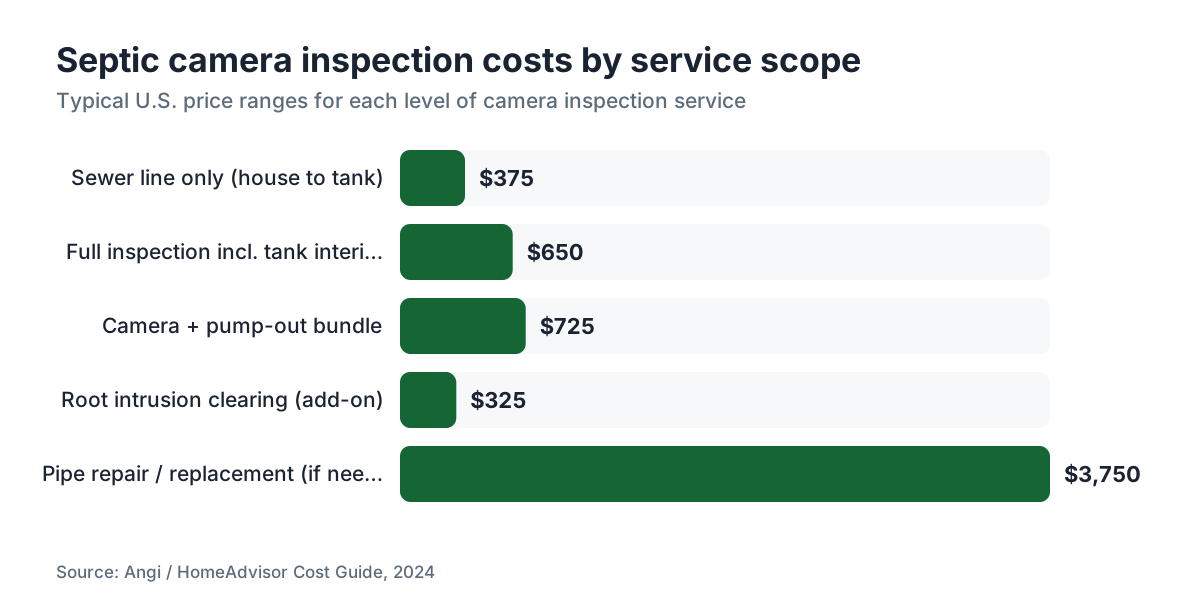
A standalone sewer line camera inspection runs $250 to $500, and a full septic camera inspection that includes the tank interior and baffle check runs $400 to $900. Those are national ranges from contractor pricing data [2]. Price moves with region, scope, and whether pumping is bundled in.
Florida pricing tends to sit at the lower end for basic inspections because more licensed operators compete for business, and the state's onsite sewage program requires periodic inspections of many systems anyway. A septic tank inspection in Florida that includes camera work generally runs $300 to $600 depending on the county and whether the inspector is also a licensed pumper [3].
Bundle camera inspection with a pump-out and many companies discount the camera portion by $50 to $150, because the equipment is already on site and the pumped tank is easier to inspect. That bundle usually makes sense. Paying $650 for both at once beats paying $350 for pumping and $400 for a separate camera visit six months later.
Travel distance matters more than people expect. Rural properties 30 or more miles from a service center often see trip-charge additions of $75 to $150. Get that quoted upfront.
One scenario spikes the cost: a buried access cleanout. The technician has to locate and dig it out before the camera goes in. Locating a buried cleanout with a pipe locator typically adds $100 to $200, and hand excavation adds more on top of that.
When should you get a septic camera inspection?
There are four clear triggers and a few optional ones.
Before buying a home. Skipping a camera inspection here is genuinely reckless. A standard home inspection does not include the septic system. The inspector looks at the surface grade, maybe runs water, and checks the tank lid. They cannot see pipe condition, baffle integrity, or root infiltration. A $400 camera inspection before closing can reveal a system that needs $8,000 to $15,000 in repairs, which gives you room to negotiate or a reason to walk [4].
After a sewage backup. If waste came back up through a drain or toilet, something is blocking or broken. A camera tells you exactly where, which stops your plumber from guessing (and billing you to guess).
Slow drains that don't clear with normal methods. A slow drain that snaking or jetting won't fix usually has a structural cause: collapsed pipe, offset joint, root mat. A camera confirms that before you pay for repeated service calls.
Routine maintenance every 3 to 5 years. The EPA recommends professional inspection of septic systems every 1 to 3 years, though camera inspection specifically is not required at every interval [1]. Many operators and state extension programs suggest a camera look every 3 to 5 years as a practical middle ground between cost and early detection.
After a large tree removal near the sewer line. Roots keep dying and decomposing inside pipes after the tree is gone, and the sudden change in moisture can speed up joint movement. Worth a check.
In Florida specifically, the 2010 amendments to Chapter 381, Florida Statutes, and the rules under Florida Administrative Code Rule 64E-6 require inspection of certain older systems and systems at time of property transfer in some counties. Check with your county health department to see what applies to your property [3].
How does the inspection process work, step by step?
Knowing what to expect makes the appointment go faster and helps you ask the right questions.
Step 1: Access. The technician locates your sewer line cleanout, usually a capped pipe 4 to 6 inches in diameter near the foundation or somewhere in the yard between the house and tank. Some older homes don't have an accessible cleanout, so one has to be installed. That's worth doing anyway, because it makes every future service call cheaper.
Step 2: Camera insertion. The cable and camera head go into the cleanout. The technician feeds the cable through your sewer line toward the septic tank, typically 20 to 100 feet depending on your property layout. Most cameras carry a locator transmitter, so the technician can walk the surface above the pipe with a receiver and mark the path, depth, and location of any problems.
Step 3: Tank interior inspection. If the scope includes the tank, the technician opens the tank access lid (or has it pumped first if you've scheduled a septic tank pump out), then lowers the camera to check baffles, inlet tee, outlet tee, wall condition, and any visible cracks or evidence of root intrusion through the walls.
Step 4: Reporting. A good operator gives you a copy of the video, a written report noting the location and nature of every finding, and a diagram or marked-up map showing problem spots. This documentation matters enormously in a real estate transaction or if you later need to pull permits for repair.
The whole job takes 45 minutes to 2 hours depending on line length and whether pumping is involved. You don't need to be present, but it helps to be there for the walkthrough at the end.
What equipment do technicians use and does quality matter?
Camera systems vary a lot in quality, and it changes what gets found.
Entry-level push-rod cameras record at lower resolution and don't always self-level, so the image rotates as the cable twists in the pipe. Fine for finding a big root ball or a collapsed section. Less useful for spotting hairline cracks or small joint separations.
High-resolution self-leveling cameras record in HD or better, hold a consistent upright image no matter how the cable twists, and often have wider-angle lenses and stronger LED lighting. These systems cost operators $5,000 to $30,000 or more and are standard among serious septic and drain contractors. Ask before booking whether the company uses a self-leveling, recording camera. If they hesitate, find someone else.
Crawler cameras with full pan-and-tilt handle larger pipes (8 inches and up) and long lateral runs where a push-rod camera loses enough stiffness that it won't advance. Most residential septic inspections don't need a crawler, but commercial properties or homes with unusually long sewer runs might.
Pipe locators pair with the camera to surface-locate every defect. The transmitter in the camera head broadcasts a signal, the technician walks above with a receiver, and can mark GPS coordinates or measure depth. Without a locator, you know something is broken but not where to dig. A camera inspection without locating capability is worth about half as much for repair planning.
Operators who manage large inspection volumes use field management software to attach video files, GPS pins, and written findings to a single customer record. Multi-truck fleets find tools like SepticMind useful for exactly this documentation workflow, where inspection reports need to tie to service history and scheduling.
Can a camera inspection see inside the drain field?
Partially, with limits. This question comes up a lot, and the honest answer is sometimes, but not reliably.
From the tank outlet, a camera can see a few feet into the outlet baffle and the beginning of the effluent pipe that leads toward the distribution box or straight to the leach field. If there's a visible blockage close to the tank outlet, the camera catches it. But most drain field pipes are perforated 4-inch PVC or corrugated pipe laid in gravel-filled trenches, and the camera signal gets lost in the perforations and multiple runs of pipe fast.
If you specifically need to assess drain field condition, the right tools are a dye test (dye added to the system, then inspection of the field surface for surfacing effluent), a soil probe (a metal rod pushed into the field area to feel for saturated or spongy soil), or a site assessment by a licensed soil evaluator. These aren't camera functions. They're separate diagnostic steps.
Some contractors push a jetter with a camera attached through individual drain field laterals, but this is specialized, slow, and not standard for a typical residential inspection.
Here's the honest limit: a camera inspection is excellent for the pipe from house to tank and the tank itself. It gives you partial visibility into the start of the outlet run. For genuine drain field assessment, you need other methods.
How is a septic camera inspection different from a standard septic inspection?
This matters if you're buying a home or satisfying a lender requirement.
A standard septic inspection (sometimes called a visual inspection, or a Title V inspection in Massachusetts) has a licensed inspector evaluating the system's general condition, pumping history, tank capacity relative to bedroom count, setback distances, and sometimes a water test. The inspector may open the tank lid, check liquid levels, and probe the outlet for baffle presence. They typically do not insert a camera.
A camera inspection goes a layer deeper. It adds actual visual evidence of pipe condition, baffle integrity from the inside, root intrusion, and crack location with GPS coordinates. A system can pass a standard inspection and still hide significant pipe problems that only a camera reveals.
For most real estate transactions, lenders (including FHA and VA programs) require at minimum a standard inspection by a licensed professional. Many buyers and their agents now request a camera inspection too, especially for older homes or systems that haven't been pumped recently [4]. The added cost is small next to the information you get.
For the broader inspection process, the septic tank inspection guide covers the full picture.
What happens after a septic camera inspection, and what do repairs cost?
The camera report tells you what's wrong. What you do with that depends on what it found.
For root intrusion, the first step is hydrojetting or mechanical cutting to clear the roots, followed by a camera pass to confirm the line is clear. Then you decide whether to apply a root-killing treatment (copper sulfate or dichlobenil-based products, used carefully given their toxicity to the soil ecosystem) or repair the entry point. Root intrusion clearing typically costs $150 to $500 depending on severity [2].
For cracked or broken pipe, the repair depends on pipe material, depth, and location. Short sections get replaced with open excavation. Longer runs are sometimes relined using cured-in-place pipe (CIPP) lining, which costs more per foot but skips the excavation. Pipe repair or replacement for a residential sewer run typically costs $1,500 to $6,000 depending on length and method [2].
For a broken baffle, this is often a straightforward repair. A new PVC tee drops into the tank from the access lid and gets secured in place. Baffle replacement generally runs $150 to $400 for parts and labor.
For significant structural tank damage, you're looking at septic tank repair or in severe cases full septic system repair or replacement. Replacement costs vary widely by region and system type. The EPA puts basic replacement at $3,000 to $7,000, but $10,000 to $30,000 is the realistic range for a conventional system on a difficult lot [10].
The earlier a camera finds a problem, the cheaper the fix almost always is. A $400 inspection that catches root intrusion before it blocks the line costs you $400 plus $300 to clear. Leave that same intrusion another 18 months and it can crack the pipe and send solids into the drain field, and now you're looking at leach field replacement at $5,000 to $20,000.
How do you find a qualified technician for a septic camera inspection?
Licensing for septic camera inspection varies by state. In most states, the person operating a septic system or accessing its components must hold a license from the state environmental or health department. In Florida, septic inspectors must be licensed through the Florida Department of Health under Chapter 489, Florida Statutes, and Rule 64E-6 [3]. In Texas, the TCEQ licenses On-Site Sewage Facility inspectors. California uses county-level licensing.
The National Association of Wastewater Technicians (NAWT) offers certification for onsite system inspectors [9], and the National Onsite Wastewater Recycling Association (NOWRA) maintains a directory of certified professionals [6]. These aren't universal requirements, but they signal someone who has studied the systems beyond just running a camera.
Questions to ask before booking:
- Are you licensed in this state for septic system inspection?
- Does your camera self-level and record to a file I can keep?
- Will the report include GPS locations of any defects?
- Is this a standalone camera run or do you enter the tank too?
- Do you include a written report with the video?
Be wary of anyone quoting a very low flat rate (under $150) for a full inspection that includes camera work. At that price they're either using an inferior camera, skipping the tank interior, or planning to upsell hard once they're on site.
For operators running a fleet of technicians doing these inspections at scale, consistent documentation matters as much as the camera gear. That's where a platform like SepticMind helps operators tie inspection videos, reports, and GPS data to a single job record that syncs with scheduling and billing.
How often should you get a septic camera inspection?
The EPA's SepticSmart guidance recommends professional inspection every 1 to 3 years, with pumping every 3 to 5 years for a typical household [1]. Camera inspection specifically isn't required at every service visit.
A practical schedule most experienced operators recommend: get a camera inspection at the time of purchase if you're buying a home with a septic system. Then combine a camera inspection with your routine pump-out every second or third pump cycle, roughly every 6 to 10 years for an average household. Move that up to every 3 years if you have large trees near the sewer line, an older pipe material like clay or Orangeburg, a history of slow drains, or high groundwater.
The how often to pump septic tank guide has full pumping frequency guidance based on household size and tank capacity, which pairs well with knowing when to schedule camera work.
For properties in Florida under the Department of Health's inspection requirements for systems near water bodies, inspection frequency may be mandated rather than optional. Check Florida Administrative Code Rule 64E-6 for current requirements for your system type and location [7].
Frequently asked questions
Does a septic camera inspection replace a septic pump-out?
No. A camera inspection is diagnostic only. It shows what's inside the pipes and tank but doesn't remove anything. Pumping removes the accumulated sludge and scum from the tank. Many operators offer both services together, which makes practical sense: a pumped tank is easier to inspect because the liquid doesn't hide the tank walls and baffle bottoms. Book them together when you can.
How long does a septic camera inspection take?
Plan on 45 minutes to 2 hours for a typical residential property. A camera inspection of just the sewer line from house to tank takes 30 to 60 minutes. Adding the tank interior, baffle check, and surface-locating of any defects adds another 30 to 60 minutes. If the tank needs to be pumped first, add another 30 to 90 minutes for that service.
Can a camera inspection see if my drain field is failing?
Only partially. A camera can see the outlet baffle and the first few feet of the effluent line toward the drain field. It can't reliably inspect the perforated pipes in the actual leach field trenches. For drain field assessment, you need other methods: a dye test, a soil probe to check for saturation, or a surface inspection for ponding effluent. Tell your inspector if you're worried about the field specifically.
Is a septic camera inspection required when selling a house?
It depends on the state and sometimes the county. Many states require a standard septic inspection at time of sale, but camera inspection specifically isn't always mandated. Florida, Massachusetts (Title V), and several other states have formal inspection requirements at property transfer. Buyers can request a camera inspection as part of due diligence even if the lender doesn't require it. It's a reasonable ask for any home over 20 years old.
What is the difference between a septic camera inspection and a sewer scope inspection?
A sewer scope is typically limited to the pipe from the house to the point where it connects to the public sewer main or septic tank, used on city-sewer homes to check lateral pipe condition. A septic camera inspection goes further: it also includes the tank interior and baffle check. Same equipment, broader scope. If you have a septic system, request a full septic camera inspection rather than a sewer scope.
How much does a septic camera inspection cost in Florida?
In Florida, a septic tank camera inspection typically runs $300 to $600 for a standard residential system. That range reflects the competitive market of licensed operators and the relatively flat geography that keeps access simple. Bundle camera inspection with pumping and total cost is usually $450 to $800. Rural areas with limited service coverage may see higher prices from travel time and distance.
Can roots really block a septic pipe that fast?
Yes. Tree roots can grow into a pipe crack or joint within one growing season if conditions are right: a leaking joint, warm soil, consistent moisture from effluent. Fine root hairs enter first, then thicken over years into a mat that can reduce a 4-inch pipe to near zero flow. Willow, oak, maple, and poplar are the worst offenders. Root intrusion is one of the most common camera findings in properties with mature trees.
Do I need to be home during the septic camera inspection?
You don't have to be, but it's worth it if you can manage it. Being present for the final walkthrough means you see the video findings firsthand and can ask about severity and recommended repairs. If you can't be there, ask the technician to send you the recorded video file and a written summary of every finding with GPS locations of defects, so you have documentation for insurance or resale.
What pipe materials show up worst on camera inspections?
Orangeburg pipe (a fiber-tar composite made from 1940 to 1970) is the most problematic. It degrades from the inside out, and a camera shows a pipe that looks like a squashed oval or is actively delaminating. Clay tile pipe is durable but has many joints that can separate or let in roots. Cast iron corrodes. Modern PVC and ABS hold up well and rarely cause camera findings in systems less than 30 years old.
Will my homeowner's insurance cover septic camera inspection or repairs found during inspection?
Standard homeowner's insurance policies generally exclude septic system components from coverage, treating them like underground utilities. Some policies and add-on riders cover sudden, accidental sewage backup damage but not wear-and-tear pipe repair or inspection costs. A few specialty insurers offer septic system riders. Review your policy before assuming coverage. The inspection cost itself is almost never covered; it's a maintenance expense.
How do I find a licensed septic camera inspection company near me?
Start with your state environmental or health department's online license lookup. In Florida, use the Department of Health's contractor search under Chapter 489. The National Onsite Wastewater Recycling Association (NOWRA) and National Association of Wastewater Technicians (NAWT) both keep member directories. Ask specifically whether the technician is licensed for septic system inspection in your state, uses a self-leveling recording camera, and provides a written report with GPS defect locations.
What should the inspection report include?
A complete report includes the date and address, the camera operator's license number, a description of each finding with its location measured from the cleanout, GPS coordinates of any defects, a photo or video timestamp for each finding, a condition rating or written assessment for each finding, and the technician's recommended next steps. A playable video file is standard with any reputable operator. If you don't get all of this, ask before they leave the property.
How do septic camera inspections help during new septic system installation?
After installation, a camera inspection verifies that the installed pipe has no joints that pulled apart during backfill, that connections are properly seated, and that grade is correct with no sags where solids can collect. Some state codes and county inspectors require post-installation video documentation before issuing a certificate of occupancy. If you're overseeing a new installation, it's a reasonable requirement to build into your contract.
Sources
- U.S. EPA, SepticSmart: Protect Your Home and the Environment: EPA recommends having septic systems inspected by a professional every 1 to 3 years and pumped every 3 to 5 years; SepticSmart cites inspecting for cracks and damage as a reason to get a camera inspection
- HomeAdvisor / Angi, Sewer Camera Inspection Cost Guide: Standalone sewer camera inspection costs $250 to $500; full septic camera inspection with tank interior runs $400 to $900; root intrusion clearing runs $150 to $500; pipe repair or replacement runs $1,500 to $6,000
- Florida Department of Health, Onsite Sewage Treatment and Disposal Systems: Florida licenses septic inspectors under Chapter 489 Florida Statutes and Rule 64E-6; inspection requirements apply at property transfer and for certain system types; septic tank inspection in Florida runs $300 to $600
- U.S. EPA, How to Care for Your Septic System: A pre-purchase professional inspection reveals septic problems before closing; EPA advises inspection before buying a home with a septic system
- National Onsite Wastewater Recycling Association (NOWRA), Find a Professional: NOWRA maintains a directory of certified onsite wastewater professionals including septic system inspectors
- Florida Administrative Code Rule 64E-6, Standards for Onsite Sewage Treatment and Disposal Systems: Florida Administrative Code Rule 64E-6 sets inspection frequency requirements for systems near water bodies and at property transfer
- Penn State Extension, Septic System Basics: Outlet baffle failure allows solids to enter drain field and is a leading cause of drain field clogging and premature failure
- National Association of Wastewater Technicians (NAWT), Inspector Certification Program: NAWT offers certification for onsite system inspectors and maintains standards for inspection practice
- U.S. EPA, How to Care for Your Septic System: EPA states the average cost of replacing a septic system is $3,000 to $7,000 at the lower end and substantially more for complex or failed systems
- University of Florida IFAS Extension, Electronic Data Information Source: Florida extension guidance covers septic inspection requirements, system maintenance schedules, and the role of baffle inspection in system longevity
Last updated 2026-07-09