Perc test Massachusetts: what it costs, how it works, and what happens if you fail
By the SepticMind Editorial Team
TL;DR
- A perc test in Massachusetts measures how fast soil absorbs water to decide whether a septic system can go in.
- The state calls it a soil evaluation under Title 5 (310 CMR 15.000).
- It costs $500 to $1,500, a licensed soil evaluator has to run it, and a board of health agent has to witness it.
- Failing rarely kills the project.
- It usually just means a more engineered system.
What is a perc test in Massachusetts?
A perc test measures how fast water drains through native soil. The number tells you whether a conventional septic leach field can treat wastewater on a given lot. Most states run the test informally. Massachusetts runs one of the strictest programs in the country.
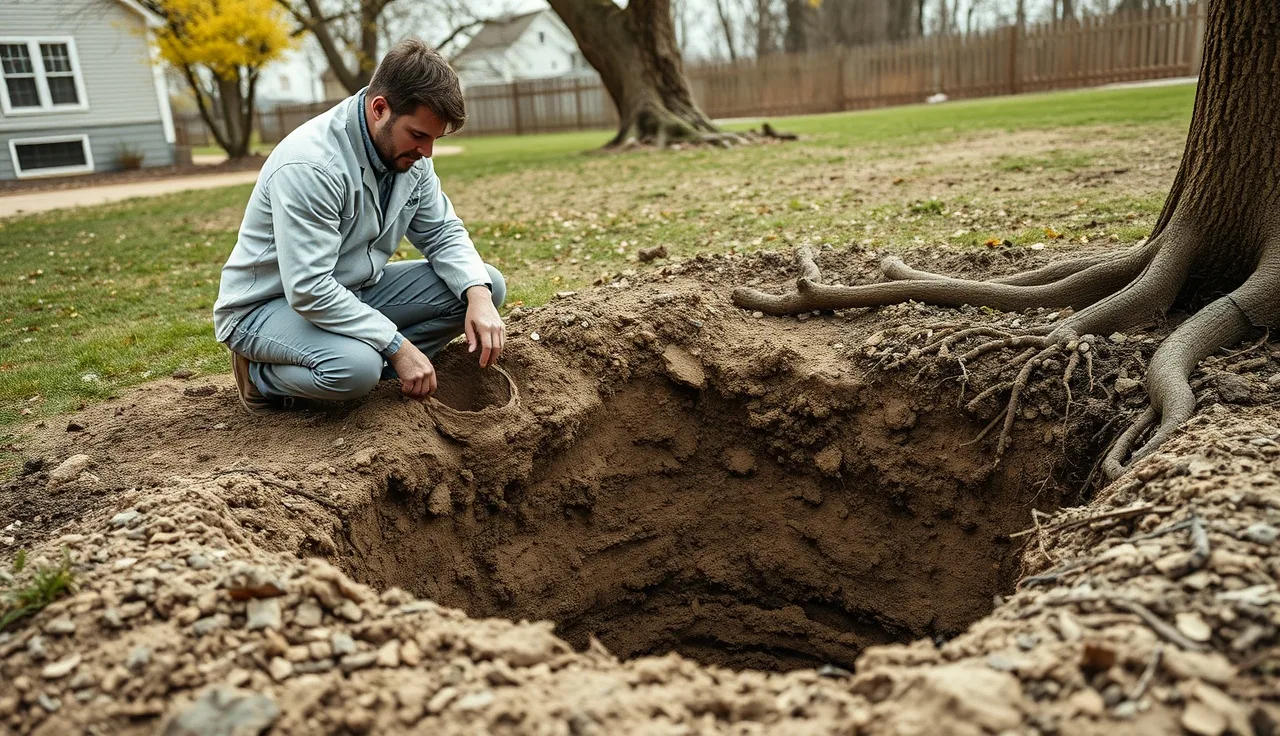
Under the state's sanitary code, Title 5 (310 CMR 15.000), the perc test is one part of a wider "soil evaluation" that also includes a deep observation hole. That hole is where the evaluator reads soil texture, structure, mottling, and the seasonal high water table [1]. The percolation rate by itself doesn't decide anything. A lot can pass the perc portion and still fail because the water table sits too high, or the reverse.
The formal term on permits and reports is "percolation test" or "soil absorption system evaluation." Realtors, homeowners, and contractors all say "perc test" and everyone knows what you mean.
Here's what surprises people. Massachusetts does not let homeowners dig or witness their own perc test. A Massachusetts-licensed soil evaluator has to perform it, and a representative of the local board of health has to be present for at least part of the evaluation [1]. That adds scheduling friction, especially in rural towns where the health agent works part-time.
What are the Massachusetts Title 5 rules for a perc test?
Title 5, codified at 310 CMR 15.000, is the Massachusetts Department of Environmental Protection (MassDEP) regulation that governs how on-site sewage systems get sited, built, and inspected [1]. It has been substantially in its current form since 1995, with amendments through the 2010s.
For a soil evaluation, Title 5 sets these minimums:
- The licensed soil evaluator has to dig at least one deep observation hole to a depth at least 2 feet below the proposed invert of the soil absorption system, which usually means 5 to 10 feet total [1].
- Percolation tests run in at least two test holes for most lots. The holes get pre-soaked for at least 4 hours (or saturated the night before), and the timed measurement runs at least 30 minutes.
- The seasonal high groundwater table has to sit at least 4 feet below the bottom of the soil absorption system for a conventional system [1].
- The evaluator has to hold a licensed soil evaluator (LSE) certification from MassDEP. The list of licensed evaluators is public [2].
- Results expire. A soil evaluation is good for 2 years toward a new construction permit, and some evaluations done before 1996 may not be accepted at all.
MassDEP's Title 5 text is the citation to keep handy. The percolation procedure is set out in 310 CMR 15.017, so if anyone runs a non-standard test, that's the section you point to [1].
Title 5 also spells out variances. If your soil technically fails, you can apply to the local board of health for a variance to install an alternative system, as long as you meet MassDEP's technology approval criteria. More on that below.
How much does a perc test cost in Massachusetts?
Budget $500 to $1,500 for a standard perc test and soil evaluation in Massachusetts. That range reflects real variation across the state. On Cape Cod and in eastern Massachusetts, where lots are small and environmental scrutiny is high, fees run toward the top. In western Massachusetts and the rural central counties, you'll more often see $600 to $900.
Here's roughly where the money goes:
| Cost component | Typical range |
|---|---|
| Licensed soil evaluator fee | $400 to $900 |
| Excavator (if not included) | $150 to $400 per day |
| Board of health witnessing fee | $50 to $150 |
| Report preparation | Often included in LSE fee |
| Re-test if conditions need revisiting | $300 to $600 additional |
The excavator is the wild card. Some soil evaluators bring their own equipment and roll it into the quote. Others give you a lower number and expect you to hire a separate excavator, which means juggling two schedules plus the board of health agent. Ask who's bringing the machine before you book.
If the first evaluation turns up complicated conditions, the LSE may want to come back when the seasonal high water table is highest, usually March through May in Massachusetts. That follow-up costs extra. Budget for it if your lot shows any sign of drainage trouble.
For the full septic installation cost that follows a passing test, see our guide on the cost to install a septic system.
What is the perc test process step by step?
The process has more moving parts than most people expect before they schedule one.
Step 1: Hire a licensed soil evaluator. MassDEP keeps a registry of licensed soil evaluators [2]. Your local board of health can also name people they work with often, which smooths scheduling.
Step 2: Schedule with the board of health. The board has to be notified at least 48 hours ahead, and a board representative has to be present for at least the deep observation hole excavation [1]. In practice, call the board first, get their open dates, then book the LSE and excavator around those dates.
Step 3: Pre-saturation. The night before, or at least 4 hours before timing starts, the test holes get filled with water to saturate the soil. This is the step most homeowners don't know happens. The ground has to be wet before the timed measurement so you're reading the soil's sustained absorption, not its dry-soil drainage.
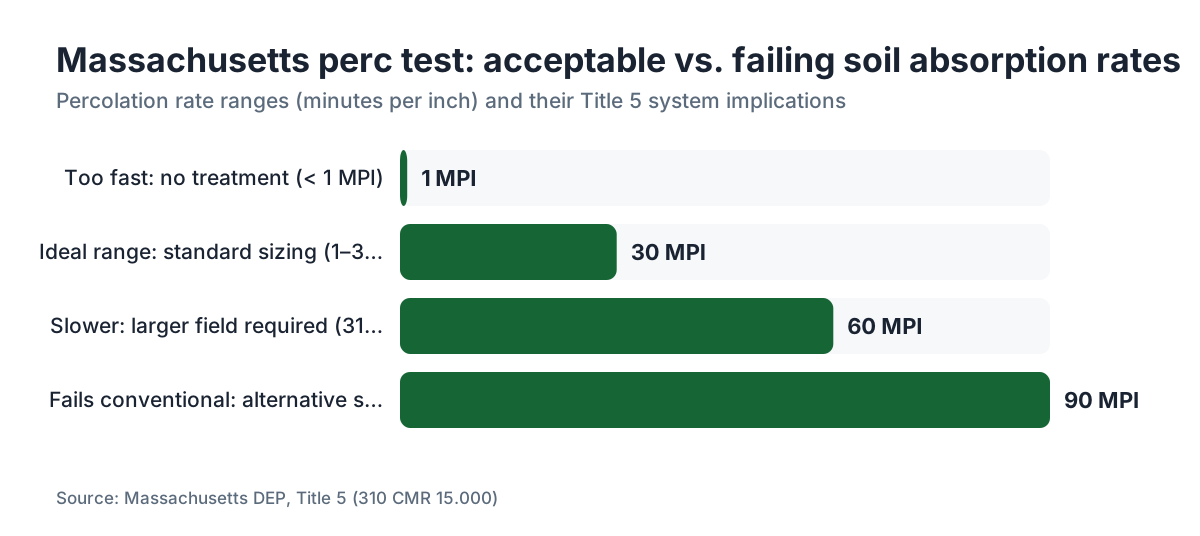
Step 4: Timed percolation measurement. The LSE measures the drop in water level at set intervals over at least 30 minutes. Under 310 CMR 15.017, the perc rate is reported in minutes per inch (MPI). A conventional leach field in Massachusetts needs a rate between 1 MPI and 60 MPI [1]. Faster than 1 MPI means the soil is too coarse and won't filter pathogens. Slower than 60 MPI means it's too tight to take effluent.
Step 5: Deep observation hole analysis. While the perc holes run, the LSE reads the deep hole for soil morphology and estimates the seasonal high water table from mottling, redoximorphic features, and any groundwater seen directly.
Step 6: Report and submittal. The LSE fills out the soil evaluation report on the standard MassDEP form. You or your engineer submits it to the board of health with the septic design application.
From the field visit to a permitted design, figure 4 to 12 weeks, most of it waiting on board of health scheduling windows and the LSE's calendar.
What perc rate do you need to pass in Massachusetts?
The acceptable range is 1 to 60 minutes per inch [1]. That's a specific, fairly strict window. Here's what the numbers mean on the ground:
- Under 1 MPI: Too fast. Usually gravelly or sandy fill. Effluent moves through before it gets treated. No conventional system allowed. Some engineered alternatives may still work.
- 1 to 30 MPI: The sweet spot. Typical loamy soils land here. Standard leach field sizing applies.
- 31 to 60 MPI: Slower, often silty or mildly clayey. The system still passes, but Title 5's sizing table forces a bigger leach field footprint to make up for the slower absorption.
- Over 60 MPI: No conventional system. You're into alternative technology.
The seasonal high water table carries equal weight. Say your perc rate is a healthy 20 MPI. If groundwater sits within 4 feet of where the leach field bottom would go, a conventional system is still out [1]. You need the bottom of the leach field at least 4 feet above estimated seasonal high groundwater.
For lots with slow perc or high water, the next move is an engineered alternative system, not walking away from the project.
What happens if you fail a perc test in Massachusetts?
Failing doesn't mean the lot is unbuildable. It means a conventional gravity-fed leach field won't work as-is. Massachusetts approved a set of alternative technologies precisely because so many lots, especially on the coast and in areas with thin glacial soils, can't pass a conventional evaluation.
MassDEP keeps a list of approved alternative technologies under its Innovative/Alternative (I/A) septic system program [3]. Common ones:
- Pressure-dosed systems: Effluent gets pumped to the leach field in doses. Better distribution, and it can work in moderately tight soils.
- Mound systems: The leach field is built above grade with imported sandy fill, lifting it clear of the seasonal high water table. Common where groundwater is high.
- Drip irrigation systems: Effluent is treated to a high level, then drip-irrigated into shallow soil. Good for tight lots.
- Recirculating sand filters: Extra treatment ahead of the leach field, which lets you shrink the footprint in tough soils.
- Approved products under 310 CMR 15.284 to 15.289: Presby EnviroSeptic, Infiltrator chambers, and other MassDEP-approved designs.
Alternative systems cost more. A mound system on a hard lot can run $25,000 to $50,000 or higher, against $8,000 to $20,000 for a conventional system on an easy lot. See the full breakdown in our septic tank installation guide.
If the lot genuinely can't support any system, even with variances, the board of health can deny the permit. That's rare. It happens most often on very small lots with groundwater right at the surface, or where the parcel is simply too small to hold the required setbacks.
When do you need a perc test in Massachusetts?
You need a soil evaluation any time a new septic system permit is required. The common triggers:
New construction. Any new home or building off municipal sewer needs a septic system. The soil evaluation comes before the town issues a building permit.
Vacant land purchase. Smart buyers require a perc test before closing on a lot they plan to build on. A failed test hammers lot value and sometimes kills the deal.
Adding bedrooms. Title 5 sizes septic systems by bedroom count. Adding bedrooms may force a system upgrade, and if the existing system is near capacity, the board of health may require a new soil evaluation for the bigger design.
Failed system replacement. When an existing system fails a Title 5 inspection, the replacement design may need a new or updated soil evaluation, especially if the original data is old or thin.
Real estate transactions. Massachusetts law under Title 5 (310 CMR 15.301) requires a septic system inspection within 2 years before the sale of a property on private septic [1]. That inspection isn't a perc test. But if it turns up a failed system, you'll need a new soil evaluation for the replacement design. Our septic tank inspection guide covers what that inspection includes.
You do not need a new perc test every time you pump the tank or do routine maintenance.
How long does a perc test take in Massachusetts?
The field work runs most of one day. Pre-saturation happens the evening before or early on test day. The timed perc measurement takes at least 30 minutes per hole, there are at least two holes, and then the deep observation hole gets read. A typical site visit runs 3 to 6 hours.
Scheduling lead time is the real bottleneck. In spring (March through May), when water tables sit at seasonal highs and boards of health want worst-case conditions, everybody books at once. Expect 2 to 6 weeks just to get on the calendar in that window. Summer and fall move faster.
After the field work, the LSE writes the report and submits it to the board of health. Review and approval of the septic design that follows usually adds another 2 to 8 weeks, depending on the town's workload and whether the board holds a public hearing.
Total timeline, from deciding you need a test to holding an approved septic design, commonly runs 2 to 4 months in a busy season. Plan around that if you have a construction schedule or a closing date.
Who can perform a perc test in Massachusetts?
Only a Massachusetts-licensed soil evaluator (LSE) can run the official soil evaluation. MassDEP issues the license and keeps the public registry [2]. The exam covers soil morphology, Title 5 procedures, and documentation.
Your engineer or septic designer may also be an LSE, which simplifies everything. Plenty of civil engineers who do septic design in Massachusetts hold both credentials. Ask when you get quotes.
A soil scientist who isn't a licensed LSE can help but can't perform the official test or sign the state form. Same goes for a plumber or septic installer, no matter how much experience they have.
The board of health agent who witnesses the test is not the evaluator. Their job is verification, and they don't need LSE credentials, though some agents happen to hold them.
For operators managing properties across several towns, tracking which LSEs work well with which boards of health matters a lot. Friction between an unfamiliar evaluator and a particular board can add weeks. SepticMind helps operators track permit status and evaluator relationships across accounts, which pays off more than it sounds like when you're running dozens of sites.
How does a perc test affect property value in Massachusetts?
A lot without a passing perc test and an approved septic design is worth meaningfully less than a comparable lot that has both in hand. How much less depends on the market and on what alternatives exist.
On the South Shore, Cape Cod, and the Islands, where buildable lots are scarce and regulation is heavy, a lot that fails perc can lose 30 to 60 percent of its value against a passing lot, purely because an engineered alternative system carries so much cost and uncertainty. On a $200,000 lot, that's real money.
For existing homes, a failed Title 5 inspection forces the seller to either fix the system before closing or escrow funds for the repair. An older system in an area with notoriously bad soils can turn into a serious negotiating point even if it technically passes inspection today.
Buyers should pull the soil evaluation report and any Title 5 inspection reports during due diligence. Those documents live with the local board of health and are public records in Massachusetts. You can request them straight from the board without going through the seller.
One practical note. If a seller says there's an existing perc test on file, check its age. Results under Title 5 are good for 2 years toward construction [1]. An 8-year-old passing test doesn't promise the site still passes today, especially if the area's groundwater has shifted.
What's different about perc tests on Cape Cod and the Islands?
Cape Cod, Martha's Vineyard, and Nantucket run under the same Title 5 baseline as the rest of Massachusetts. In practice they're much tougher.
The Cape Cod Commission and individual town boards of health have adopted local nitrogen-loading rules that go past Title 5 [4]. The region's coastal ponds and estuaries are acutely sensitive to nitrogen from septic systems, so many towns require nitrogen-reducing I/A systems even when a conventional system would pass a perc test. Falmouth, Mashpee, and Barnstable, among others, have bylaws requiring denitrifying systems in nitrogen-sensitive watersheds.
On the Islands, the Martha's Vineyard Commission adds another layer of environmental review for new construction near wetlands or coastal resources.
So a clean passing perc test on the Cape may still not be enough to get a conventional system approved. Budget for an I/A system if you're buying or building there, and check the watershed rules for the specific parcel before you close.
The practical result: perc testing on the Cape and Islands means more coordination, more documentation, and often a more expensive outcome than the same test would produce in, say, Worcester County.
Can a failed perc test be appealed or retested in Massachusetts?
Yes to both, with caveats.
Retesting: If you think the test ran under bad conditions (unusual drought, frozen ground, or a procedural error), you can request a re-evaluation. Conditions have to be appropriate, and a board of health agent has to witness it again. It isn't free, and boards aren't obligated to grant unlimited retests. Most will allow one more evaluation when there's a legitimate reason.
Appealing a denial: If the board denies a variance or permit based on the soil evaluation, you can appeal to MassDEP's Board of Appeals on Wastewater Disposal [5]. The appeal means submitting technical documentation showing the board erred, or that an alternative system would protect public health and the environment. You'll want a licensed engineer and probably an environmental attorney. It's slow and expensive, and it works sometimes.
Variance requests: Before you appeal, ask the board about variances under 310 CMR 15.410 to 15.415 [1]. Local boards can grant certain variances for setback distances, design criteria, and alternative technologies. Many hard lots get solved at the local level with a well-designed alternative system and a variance, without ever reaching the state.
Nobody has clean aggregate data on Massachusetts perc test failure rates by region. Practitioners in southeastern Massachusetts routinely report that 20 to 40 percent of the raw land they evaluate needs some form of alternative system or variance because of soil or groundwater.
Frequently asked questions
How much does a perc test cost in Massachusetts?
Plan on $500 to $1,500 for a full soil evaluation. The fee covers the licensed soil evaluator's time, report preparation, and usually the board of health witnessing fee. If you hire a separate excavator, add $150 to $400. Complex sites that need a follow-up visit in spring, to catch the seasonal high water table, cost more, sometimes $300 to $600 extra.
How long is a perc test valid in Massachusetts?
A soil evaluation under Title 5 is good for 2 years toward a construction permit. After that, the local board of health can require a new one. Some boards accept older data if conditions haven't changed and the evaluator certifies the results still reflect the site, but don't count on it. If your test is older than 2 years, check with your board before spending money on system design.
Can I do my own perc test in Massachusetts?
No. Massachusetts requires a licensed soil evaluator to run the official evaluation, and a board of health agent has to witness it. You can't self-perform a test and submit the results. Homeowners can observe and should show up if they can, but they can't run it. This is stricter than many other states, which do allow owner-supervised tests.
What happens if my land fails a perc test in Massachusetts?
A failed perc test doesn't necessarily mean you can't build. Massachusetts has approved a range of innovative and alternative septic technologies for lots where conventional systems won't work. Mound systems, pressure-dosed systems, drip irrigation, and nitrogen-reducing I/A systems are all options depending on the failure mode. Alternative systems cost more, sometimes $25,000 to $50,000 or higher, but many hard lots do get developed.
What does a perc test actually measure?
It measures how fast water drops in a test hole, reported as minutes per inch (MPI). Massachusetts requires a rate between 1 and 60 MPI for a conventional leach field. Faster than 1 MPI means the soil is too coarse for adequate pathogen treatment. Slower than 60 MPI means it can't absorb effluent fast enough. The perc rate gets combined with soil morphology and water table data to set the system design.
Do I need a perc test to sell my house in Massachusetts?
Not a perc test specifically, but Title 5 requires a septic system inspection within 2 years before the sale of a property on private septic. If that inspection reveals a failed or failing system, you'll need to repair or replace it, and the replacement design requires a soil evaluation. If your existing system passes inspection, you don't need a new perc test just for the sale.
Who do I contact to schedule a perc test in Massachusetts?
Start with your local board of health to get their open witnessing dates and any local requirements. Then hire a MassDEP-licensed soil evaluator; the state's registry is public at mass.gov. You'll also need an excavator unless your evaluator provides one. Coordinate all three parties for the same date. Your board of health can often recommend evaluators they've worked with, which cuts scheduling friction.
What is the difference between a perc test and a Title 5 inspection?
They're completely different. A perc test (soil evaluation) happens before a septic system goes in, to decide whether a system can be built and how to design it. A Title 5 inspection happens on an existing system to assess its current condition, usually required at sale or every 3 to 5 years for systems near wetlands or water supplies. One is about design, the other is about condition.
What time of year is best for a perc test in Massachusetts?
Spring, roughly March through May, is technically best because groundwater sits at its seasonal high. Testing then gives you worst-case conditions. Pass in spring and you'll almost certainly pass year-round. Summer and fall tests are easier to schedule and cheaper thanks to lower demand, but if your test barely passes in fall, a spring retest might show a worse water table. When in doubt, test in spring.
How big does a lot need to be to pass a perc test in Massachusetts?
There's no universal minimum lot size, but setbacks matter enormously. Title 5 requires a soil absorption system at least 10 feet from property lines, 50 feet from a private well, 100 feet from a public well, and set distances from wetlands and water bodies. On a small lot, you may not fit a leach field that meets every setback even if the perc rate is fine. Most Title 5-compliant systems need at least half an acre of usable land.
Does Cape Cod have different perc test rules?
The perc test procedure under Title 5 is the same statewide, but many Cape Cod towns add local nitrogen-loading rules that require denitrifying alternative systems even when a conventional system would pass. The Cape Cod Commission and individual town bylaws govern this. If you're buying or building on the Cape, check the watershed nitrogen rules for the parcel, more than whether the perc test passed.
How deep are perc test holes in Massachusetts?
The deep observation hole has to reach at least 2 feet below the proposed invert of the soil absorption system, which usually means 5 to 10 feet deep. The percolation test holes themselves are typically 8 to 24 inches deep, set at the elevation where the leach field would actually sit. An excavator is almost always needed for the deep hole; hand-digging is rarely practical.
Can I appeal a failed perc test or a permit denial in Massachusetts?
Yes. If the local board of health denies a permit based on the soil evaluation, you can appeal to MassDEP's Board of Appeals on Wastewater Disposal. You can also request a variance from the local board under 310 CMR 15.410 to 15.415 for specific design criteria, which often solves the problem without a formal appeal. Either path needs engineering support and takes time, but appeals do win on solid technical grounds.
Sources
- Massachusetts Department of Environmental Protection, Title 5 of the State Environmental Code (310 CMR 15.000): Percolation rate must be 1 to 60 MPI; seasonal high groundwater must be 4+ feet below leach field bottom; board of health must witness evaluation; results valid 2 years for construction permits; sale inspection required within 2 years under 310 CMR 15.301
- Massachusetts Department of Environmental Protection, Licensed Soil Evaluator Registry: MassDEP maintains a public registry of licensed soil evaluators authorized to conduct Title 5 soil evaluations
- Massachusetts Department of Environmental Protection, Innovative and Alternative Septic System Technologies: MassDEP approves alternative septic technologies for lots that cannot support conventional systems under Title 5
- Cape Cod Commission, Wastewater and Nitrogen Management: Cape Cod towns layer nitrogen-loading regulations on top of Title 5 due to coastal water quality sensitivity, often requiring I/A systems even where conventional systems would pass
- Massachusetts Department of Environmental Protection, Board of Appeals on Wastewater Disposal: Property owners may appeal local board of health decisions on septic system permits to MassDEP's Board of Appeals on Wastewater Disposal
- U.S. EPA, Septic Systems Overview (SepticSmart): EPA's septic program outlines how on-site septic systems treat wastewater and why soil absorption capacity is central to system performance
- UMass Extension, Soil and Plant Nutrient Testing Laboratory: UMass Extension provides soil science resources relevant to soil morphology interpretation used in Massachusetts soil evaluations
- Massachusetts Department of Environmental Protection, Septic Systems Guidance and Forms: MassDEP provides official guidance, forms, and policy documents for septic system permitting and inspection in Massachusetts
Last updated 2026-07-09