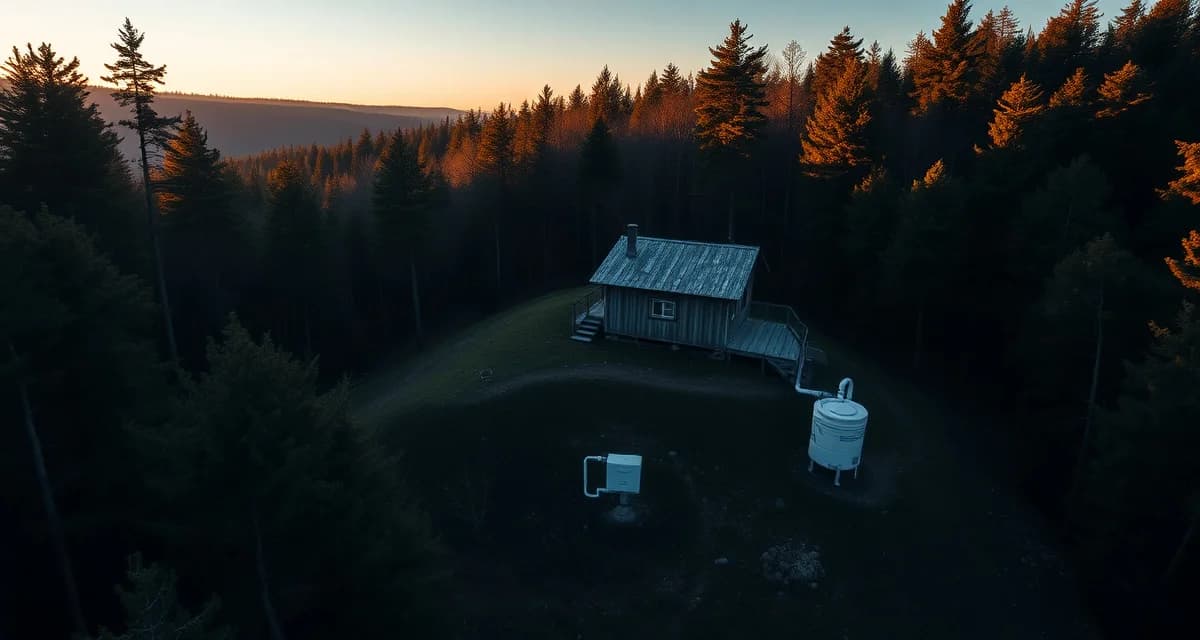
Septic Service Software for Hunting Camps and Remote Properties
By the SepticMind Editorial Team
Remote rural septic systems fail at 2x the rate of primary residence systems due to irregular maintenance. Remote hunting camp septic systems are often under-serviced because owners forget service intervals, not because they don't care about their camps, but because a property used for three or four weekends per year doesn't generate the daily reminders that a primary residence does. When the water backs up during the first weekend of deer season, the camp owner calls in a crisis that proper interval tracking would have prevented.
TL;DR
- Hunting Camps facilities have distinct wastewater loading patterns that affect septic system sizing, service frequency, and permit requirements.
- Commercial and institutional properties like hunting camps typically require more frequent pumping than residential systems due to higher daily usage.
- Some hunting camps operations generate waste streams (grease, chemicals, or high-volume flow) that require pre-treatment before reaching the septic system.
- Service contracts for hunting camps provide predictable recurring revenue and are easier to manage with a platform that tracks commercial account schedules.
- Health department inspections for hunting camps properties may require septic system condition documentation as part of facility licensing.
- Septic companies specializing in hunting camps service build referral networks with property managers, architects, and health inspectors in that niche.
SepticMind's remote property account type stores GPS coordinates, access notes, and system details for every camp so your team can find and service the system without hunting for information at the last minute.
The Hunting Camp Septic Profile
Hunting camps and seasonal rural properties have a distinctive septic use pattern:
Intermittent, concentrated use. A camp used for a few weekends per season sees minimal loading for most of the year and then concentrated use (sometimes 10-15 people) during the specific periods when it's occupied. That pattern creates an uneven loading profile that's different from any other property type.
Extended periods of non-use. Long periods without water use affect the bacterial ecosystem in septic tanks. Extended non-use followed by heavy use can create conditions where the tank's biological treatment capacity is temporarily reduced precisely when it's most needed.
Deferred maintenance. Properties that are only visited occasionally accumulate maintenance deferrals. The pump-out that should have happened three years ago didn't happen because nobody was thinking about the camp's septic system in February when it would have been scheduled.
Remote access challenges. Many hunting camps are on private roads, forest service roads, or properties where vehicle access requires specific knowledge, gate codes, route instructions, clearance restrictions. Access information that's not documented creates notable service delays.
Older and non-standard systems. Many rural hunting camps were developed before current permit requirements. Existing systems may be cesspools, older designs that predate current standards, or improvised systems that no longer comply with applicable regulations.
Service Interval Calculation for Seasonal Properties
The standard residential pump-out interval of 3-5 years doesn't apply directly to hunting camps. The right interval depends on actual loading, not calendar time.
For a camp used 20 days per year with a 1,000-gallon tank serving 8 people:
- Daily loading during use: roughly 8 people x 50 gallons/person/day = 400 gallons/day
- Annual loading: 20 days x 400 gallons = 8,000 gallons/year
- Annual sludge accumulation: much lower than residential (roughly 60-80 gallons/year for the usage pattern)
- Appropriate pump interval: likely 7-10 years based on loading alone
Compare that to a full-time residence in the same tank: 3 people x 50 gallons x 365 days = 54,750 gallons/year, appropriate pump interval 3-4 years.
The hunting camp needs pumping far less frequently than the residential property, but it still needs pumping, and without systematic interval tracking, it often doesn't happen until there's a problem.
Septic maintenance reminder software tracks seasonal property service intervals based on actual usage patterns rather than calendar defaults, ensuring reminders go out at the right time rather than being triggered by residential assumptions.
Documenting Remote Property Access
The access documentation challenge at hunting camps is real. A service call to a camp your company has never visited before requires:
- Property address or coordinates (many hunting camps have no street address)
- Gate codes or lock combinations
- Route instructions from the nearest paved road
- Parking and approach instructions for the pump truck
- System location relative to visible landmarks
- Contact phone number for the property owner (who may not be at the property)
If any of this information is missing on the day of service, your technician either can't complete the job or spends notable time figuring out how to access the property. That non-billable time costs you money and frustrates the customer.
SepticMind's customer management software stores property-level access notes (GPS coordinates, gate codes, route instructions, system location notes) that appear on every work order for that property. When a hunting camp job is dispatched, the technician has all access information in the mobile app before leaving the shop.
GPS Coordinates Over Street Addresses
For remote properties, GPS coordinates are more reliable than street addresses. Many hunting camp properties have addresses that don't appear in mapping software, either because the address wasn't assigned, the road name isn't in the mapping database, or the property has been subdivided since the address was assigned.
Storing GPS coordinates for the property access point and the septic system location solves both problems:
Access navigation. The technician can navigate directly to the property using coordinates in their mapping app, bypassing address lookup problems.
System location. GPS coordinates for the tank and distribution system location mean that a technician who has never been to the property can find the access points without searching the property.
Collect GPS coordinates during the first service visit and store them in the property record. This is a one-time effort that pays dividends on every subsequent visit.
Offline Operation for Remote Areas
Many hunting camps are in areas with no cellular coverage. A mobile app that requires connectivity for data entry or photo upload is useless at these properties.
SepticMind's offline mode stores all property data (including GPS coordinates, access notes, system details, and service record templates) locally on the device. Technicians complete service records and attach photos in offline mode at the camp, then sync when they return to an area with connectivity. No data is lost; no service record is incomplete because of a connectivity gap.
Get Started with SepticMind
Managing service contracts for hunting camps properties is easier with a platform built for the septic trade. SepticMind tracks commercial service schedules, documents every inspection visit, and keeps your compliance records organized by property. See how it handles your commercial account portfolio.
Frequently Asked Questions
How often should a hunting camp with seasonal use have its septic tank pumped?
Service frequency for hunting camps depends on actual use pattern (how many people, how many days per year, and tank size) rather than a fixed calendar interval. A camp used 20-30 days per year by 6-8 people typically needs pumping every 6-10 years, notably less often than a primary residence of comparable tank size. The right interval is calculated from estimated annual loading and typical sludge accumulation rates rather than guessing. When taking on a new hunting camp account, ask the owner about typical occupancy (number of people per visit) and annual number of use days. This information, combined with tank size from the property record or inspection, allows a realistic service interval estimate. Tracking from first service with reminder automation ensures the camp gets serviced before problems develop, regardless of how infrequently the owner thinks about it.
How do I document a remote property's septic system location for future service visits?
The most reliable documentation combines GPS coordinates with physical reference measurements and photographs. Collect GPS coordinates for: the property access point (where the truck parks), the tank lid location, and the distribution system or drainfield boundary. Take photographs of the tank lid relative to the building and any permanent landmarks (corner of building, large tree, fence post). Measure from a permanent reference point: "Tank lid is 18 feet from the northwest corner of the camp building, 3 feet from the edge of the deck." Store all of this in the property record in SepticMind so it appears on every future work order. Property access notes should include: GPS coordinates, gate codes (updated when the owner changes them), route instructions from the nearest highway, any weight or clearance restrictions for the access road, and the property owner's contact information.
Does SepticMind's offline mode work for service calls at remote hunting camp properties?
Yes. SepticMind's mobile app operates fully offline for service calls at locations without cellular coverage. All property data (customer information, system details, access notes, GPS coordinates, service history) is cached on the device before the technician leaves the shop. In the field, the technician completes service records, enters observations, and attaches photos in exactly the same way as when connected. Data saves locally and syncs automatically when cellular connectivity is restored, typically when the technician returns to a road with coverage. No action by the technician is required to trigger the sync. This offline capability is specifically important for hunting camp and remote property accounts, where connectivity is often nonexistent and a connectivity requirement would make field documentation impractical.
How often should a septic system serving a hunting camps property be inspected?
Septic systems at hunting camps properties should be inspected at least annually and pumped more frequently than residential systems, since commercial-scale daily water usage accelerates sludge and grease accumulation. The exact frequency depends on the specific activities at the facility, peak occupancy, any food service or chemical use on-site, and local regulatory requirements. A service provider familiar with hunting camps operations can recommend an appropriate inspection and pumping schedule based on the system's actual usage profile.
What septic system issues are most common at hunting camps properties?
The most common septic problems at hunting camps properties are rapid sludge accumulation from high occupancy, grease trap failure if food service is involved, hydraulic overloading during peak-use periods, and non-biodegradable waste disposal from cleaning or maintenance activities. Regular inspection and a service contract with clear maintenance intervals are the most effective ways to catch these problems before they cause system failure or regulatory violations.
Try These Free Tools
Sources
- National Onsite Wastewater Recycling Association (NOWRA)
- US EPA Office of Wastewater Management
- NSF International
- Water Environment Federation
- National Environmental Services Center (NESC)