Septic Service for Religious Summer Camps and Bible Schools
By the SepticMind Editorial Team
Religious camp septic systems serve weeks-long high-occupancy sessions separated by low-use periods, and a septic failure at a religious summer camp displaces children and creates legal exposure for the sponsoring organization. Church camps and bible schools are often operated by faith communities that have deep experience running youth programs but may have limited institutional knowledge of facility maintenance obligations.
TL;DR
- Religious Summer Camps facilities have distinct wastewater loading patterns that affect septic system sizing, service frequency, and permit requirements.
- Commercial and institutional properties like religious summer camps typically require more frequent pumping than residential systems due to higher daily usage.
- Some religious summer camps operations generate waste streams (grease, chemicals, or high-volume flow) that require pre-treatment before reaching the septic system.
- Service contracts for religious summer camps provide predictable recurring revenue and are easier to manage with a platform that tracks commercial account schedules.
- Health department inspections for religious summer camps properties may require septic system condition documentation as part of facility licensing.
- Septic companies specializing in religious summer camps service build referral networks with property managers, architects, and health inspectors in that niche.
The result is that religious camp septic management is sometimes left to whoever is willing to take it on, which may be a volunteer with no facility management background. Getting it organized before a problem arises is much better than scrambling after camp opens.
The Session-Based Occupancy Pattern
Religious summer camps have a distinctive occupancy pattern that drives everything about septic management:
Pre-season: Minimal use. Staff preparation activities, maybe a volunteer work weekend. Very low daily wastewater.
Session 1 (early June or late June): Full camper and counselor occupancy for 1-2 weeks. Intense daily load.
Between sessions: Several days to a week with minimal occupancy. The system gets a brief rest.
Session 2, Session 3: Back to full occupancy for 1-2 weeks each.
Post-season: Low use. Cleanup, staff wrap-up. Minimal load.
The critical insight: the system gets most of its annual use in concentrated 1-2 week bursts. If the system goes into Session 1 with a tank that was never pumped after last summer, it may hit capacity mid-session.
SepticMind's religious camp account type schedules pre-session service before each summer program period. The session calendar drives the service calendar.
Pre-Session Service Protocol
Before each session:
2-3 weeks before Session 1 opens: Complete inspection and pump-out of all systems. This is the most important service event of the year. Don't wait until opening week.
Between sessions: Quick visual inspection of all drainfield areas. If any system shows signs of stress (odor, wet areas), schedule emergency service before the next session begins.
Before Session 2 and 3: If the first session ran at full capacity, have the highest-load systems (main dining, central bathhouse) inspected. Pump if needed.
Post-season: Service all systems at the end of the camping season. The off-season is your longest maintenance window. Use it.
Multi-System Camp Infrastructure
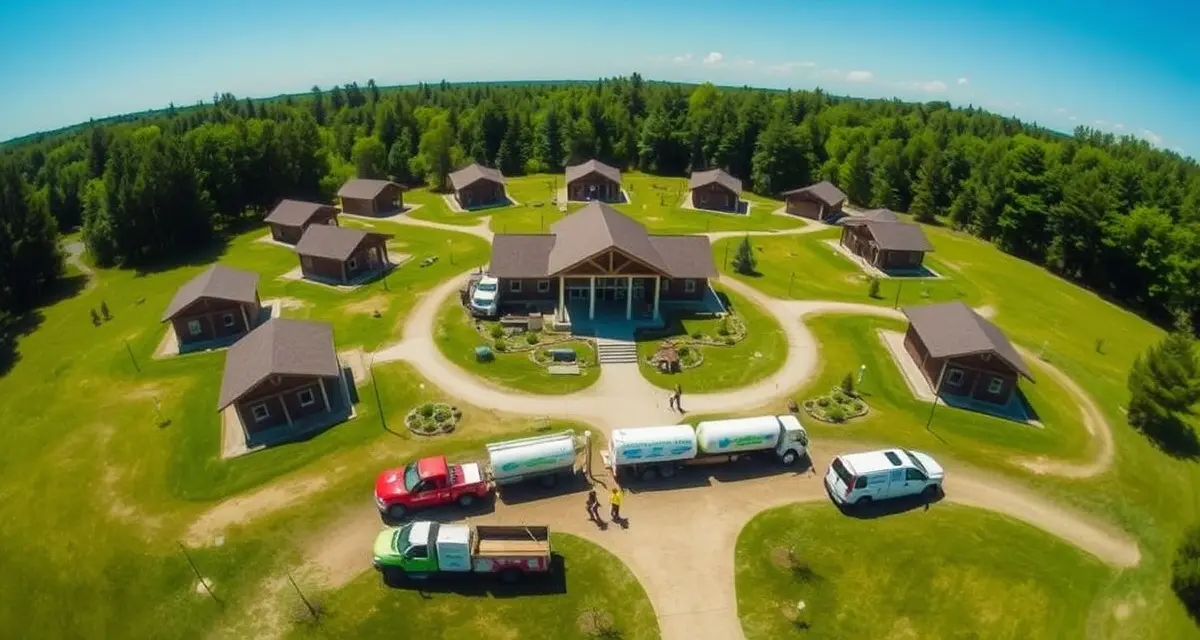
Religious camps vary in size from small family camps to large conference centers with hundreds of acres and dozens of buildings. Common systems to track:
- Central bathhouse (highest use per day during sessions)
- Cabin clusters (individual systems or shared systems per cluster)
- Dining hall with commercial kitchen
- Staff housing
- Waterfront facilities and restrooms
- Chapel and activity buildings
For camps affiliated with denominations that own multiple camp properties, the septic service for summer camps guide covers the multi-system tracking framework.
Faith Organization Governance and Facility Accountability
Religious camps are often governed by church boards, denominational camping committees, or non-profit boards that meet quarterly or annually. Septic maintenance is rarely on the agenda unless something has gone wrong.
The person running day-to-day camp operations (camp director, facilities manager, or volunteer caretaker) typically handles maintenance decisions without board oversight unless costs exceed a threshold. This works fine for routine service, but a failed system during camp requires immediate decisions and expenditures that may exceed the director's authorization level.
Having a documented maintenance plan, an established service relationship, and a pre-authorized emergency repair budget makes the governance question manageable.
State Health Department and Camp Licensing
Most states license residential camps, including church camps and bible schools, as recreational camps or youth residential facilities. Licensing requirements include sanitation standards that the health department verifies through inspection, typically before the first session of each season.
What inspectors look for at camp licensing inspections:
- Adequate restroom facilities for expected camper count
- Functioning septic systems with recent service documentation
- Clean, sanitary restroom facilities
- Handwashing access throughout the camp
Having pre-session pump-out records and current inspection documentation makes the health department inspection routine. A camp director who can't produce service records is having a difficult inspection conversation.
For church facilities beyond the camp setting, see the septic service for churches guide. For year-round camp operations or camp properties used for retreats, the septic service for retreat properties guide covers the program-calendar service scheduling approach.
Get Started with SepticMind
Managing service contracts for religious summer camps properties is easier with a platform built for the septic trade. SepticMind tracks commercial service schedules, documents every inspection visit, and keeps your compliance records organized by property. See how it handles your commercial account portfolio.
Frequently Asked Questions
How should a religious summer camp manage septic across multiple session periods?
Schedule pre-session service for all systems 2-3 weeks before Session 1 opens each summer. Between sessions, do a visual drainfield inspection and pump any systems showing stress before the next session begins. After the final session, service all systems during the off-season window. Build your service calendar around your session schedule from the start of each year, not around arbitrary annual dates. For camps with 3 sessions, this typically means one major pre-season service, spot service between sessions as needed, and post-season service for winter maintenance. Keep records for each session's service history so you can see trends year to year.
What pre-session service is recommended before each session of a summer bible camp?
Complete pump-outs and inspections of all high-load systems (central bathhouse, dining hall) are recommended 2-3 weeks before Session 1 opens. Before subsequent sessions, visual inspection of drainfield areas and tank condition assessment is sufficient if Session 1 ran without problems. If Session 1 showed any signs of stress (slow drains, odors), have affected systems professionally assessed and pumped before Session 2. For smaller systems serving cabin clusters, annual service in the pre-session window is typically sufficient. Confirm with your service provider that the service schedule is reasonable for your session structure and expected camper count.
Does SepticMind support session-calendar-based septic scheduling for religious camp accounts?
Yes. SepticMind's religious camp account type links service reminders to the session calendar rather than arbitrary annual dates. You enter your session schedule and the system generates pre-session service reminders at the appropriate lead time for each session. Multiple systems across the camp have separate records and schedules under the same account. Post-season service reminders fire automatically after the final session. Service history from previous years helps identify which systems are highest-stress and need priority attention before new seasons begin.
How often should a septic system serving a religious summer camps property be inspected?
Septic systems at religious summer camps properties should be inspected at least annually and pumped more frequently than residential systems, since commercial-scale daily water usage accelerates sludge and grease accumulation. The exact frequency depends on the specific activities at the facility, peak occupancy, any food service or chemical use on-site, and local regulatory requirements. A service provider familiar with religious summer camps operations can recommend an appropriate inspection and pumping schedule based on the system's actual usage profile.
What septic system issues are most common at religious summer camps properties?
The most common septic problems at religious summer camps properties are rapid sludge accumulation from high occupancy, grease trap failure if food service is involved, hydraulic overloading during peak-use periods, and non-biodegradable waste disposal from cleaning or maintenance activities. Regular inspection and a service contract with clear maintenance intervals are the most effective ways to catch these problems before they cause system failure or regulatory violations.
Try These Free Tools
Sources
- National Onsite Wastewater Recycling Association (NOWRA)
- US EPA Office of Wastewater Management
- NSF International
- Water Environment Federation
- National Environmental Services Center (NESC)