Home Depot EcoStrong 6 oz. septic tank treatment pods: do they work?
By the SepticMind Editorial Team
TL;DR
- EcoStrong 6 oz.
- septic tank treatment pods are bacteria-and-enzyme pods sold at Home Depot for roughly $8 to $12 a pack.
- One pod dissolves monthly to top up the tank's bacteria.
- They can support a healthy tank between pumpings but cannot replace septic tank pumping, and no peer-reviewed study shows they extend drain field life.
What exactly are EcoStrong septic treatment pods?
EcoStrong septic tank treatment pods are pre-measured, water-soluble pods, each weighing 6 oz., that carry a blend of bacterial strains and enzymes meant to break down organic waste inside a septic tank. You drop one pod in the toilet and flush it once a month. The pod dissolves in the water, and the live bacteria it carries settle into the tank's anaerobic environment, where they digest fats, proteins, and carbohydrates in your wastewater.
Home Depot sells the product in its septic tank treatment category alongside single-use packets, liquid additives, and annual treatment kits. A standard pack holds six pods, enough for one full year of monthly doses. Pricing runs $8 to $12 per six-pod pack, depending on promotions. That makes it one of the cheaper monthly additive options on the shelf.
The ingredient list matches most biological septic additives: a mix of naturally occurring bacterial species (usually Bacillus strains) paired with lipase, protease, and amylase enzymes. The enzymes go to work fast on solids. The bacteria take longer to establish, but once they do, they keep digestion going between doses.
Here is the context that matters most. EcoStrong is a retail brand sold through The Home Depot, not a product tested under a rigorous third-party protocol or backed by a septic service company. Keep that in mind when you read the performance claims on the box.
How do the pods actually work inside your septic tank?
Once the pod reaches the tank, the water-soluble shell dissolves and dumps its contents into the liquid zone. What happens next depends on which layer of the tank you look at.
At the scum layer, the floating grease and oil on top, lipase enzymes start cleaving fat molecules into smaller compounds bacteria can eat. This is the slowest layer to change. Most additives show the least activity here, because the anaerobic bacteria they carry don't do well in that oily zone.
In the liquid effluent zone (the middle section), bacterial populations build up and consume dissolved organics. That helps keep biochemical oxygen demand (BOD) lower in the effluent that eventually exits to your leach field. Cleaner effluent means less biomat buildup on the soil interface of your drain field over time.
At the sludge layer, the settled solids at the bottom, protease and amylase enzymes break down proteins and starches while anaerobic Bacillus bacteria digest the leftovers. This is the layer that matters for the additive's whole pitch, because a slower-building sludge layer is the only way a monthly pod could theoretically stretch out how often you need a septic tank pump out.
Now the honest part. Enzymes are proteins. They denature at high pH, flush through before they finish working, or lose out to the microbial community your tank already grew on its own. Whether a monthly 6 oz. dose actually changes the sludge accumulation rate in a 1,000-gallon tank serving a family of four is genuinely unclear. No controlled, peer-reviewed study has shown that retail bacterial additives measurably slow sludge accumulation in real residential tanks [1].
What does the EPA say about septic additives like these?
The EPA's SepticSmart program is the clearest federal guidance homeowners have. EPA says biological additives may help restore bacterial populations after a disruption, like heavy antibiotic use or a stretch of low water use, but it does not endorse regular additive use as a substitute for routine maintenance [1].
EPA's care guidance goes further: a working septic tank already holds the bacteria it needs to treat wastewater, so adding more rarely helps and can throw off the balance already there. That's not a condemnation of EcoStrong. It's a reality check.
State regulators tend to be blunter. Several state environmental agencies (Virginia, Washington, and Florida among them) say plainly that no commercial biological or chemical additive has been proven to eliminate the need for routine pumping [2]. Some states go harder. South Carolina and Wisconsin have at times prohibited or restricted the sale of additives that claim to replace pumping, though policies shift over time, so check your state's onsite wastewater code before you assume anything [3].
The National Onsite Wastewater Recycling Association (NOWRA) and the Water Environment Federation have both looked at the additive literature and called the evidence weak [9]. That is not the same as calling the products harmful. Most biological additives are benign. But "does no harm" and "does what it claims" are two different bars, and EcoStrong, like most retail septic additives, has not cleared the second one in independent testing.
Is there any situation where EcoStrong pods are actually useful?
Yes. Three scenarios give a biological additive a real, if modest, reason to exist.
Start with heavy antibiotic use. If someone in your house has been on a broad-spectrum antibiotic for several weeks, part of that drug passes through the body into the wastewater stream and can knock down the tank's bacteria. A monthly pod during and after that stretch gives the tank a bacterial boost that makes biological sense, even if the effect is small.
Next, a long vacancy. If a home sits empty for months, the tank's microbial community can go dormant or thin out. Rebuilding that population before heavy use resumes is a reasonable precaution, and a pod is a convenient way to do it.
Third, right after a pump-out. Following a septic tank cleaning, the tank holds mostly water and very little organic material, so the bacterial seed population starts low. A pod post-pumping can help the tank get digestion going faster, though normal household use reseeds it naturally within a few weeks anyway.
For the average home with a healthy, regularly pumped tank, the added benefit is probably small. The product is cheap enough that if it buys you peace of mind, the $10 a year is fine. What it should never do is talk you into skipping septic tank pumping or putting off a septic tank inspection.
How do EcoStrong pods compare to other septic treatments at Home Depot?
Home Depot usually stocks several competing septic treatment formats. Here is a straight comparison of the main options you'll see on the shelf.
| Product Format | Typical Price | Dose Frequency | Active Ingredients | Convenience |
|---|---|---|---|---|
| EcoStrong 6 oz. pods (6-pack) | $8-$12 | Monthly | Bacteria + enzymes | Drop and flush |
| Rid-X powder (single dose) | $7-$10 | Monthly | Bacteria + enzymes | Measure and flush |
| Rid-X liquid (32 oz.) | $12-$16 | Monthly | Bacteria + enzymes | Pour in toilet |
| Green Gobbler packs | $10-$15 | Monthly | Enzymes + Bacillus | Single-use packs |
| Annual treatment tablets | $20-$35 | 1x/year | Bacteria + enzymes | Drop-in annual |
The EcoStrong pod's edge over powder is pre-measurement. No guessing, no mess. Against other pod or single-use formats, the differences in bacterial species counts and enzyme concentrations are small and not independently verified at retail. Most of these products use similar Bacillus strains and similar enzyme blends, because those are what's available at scale.
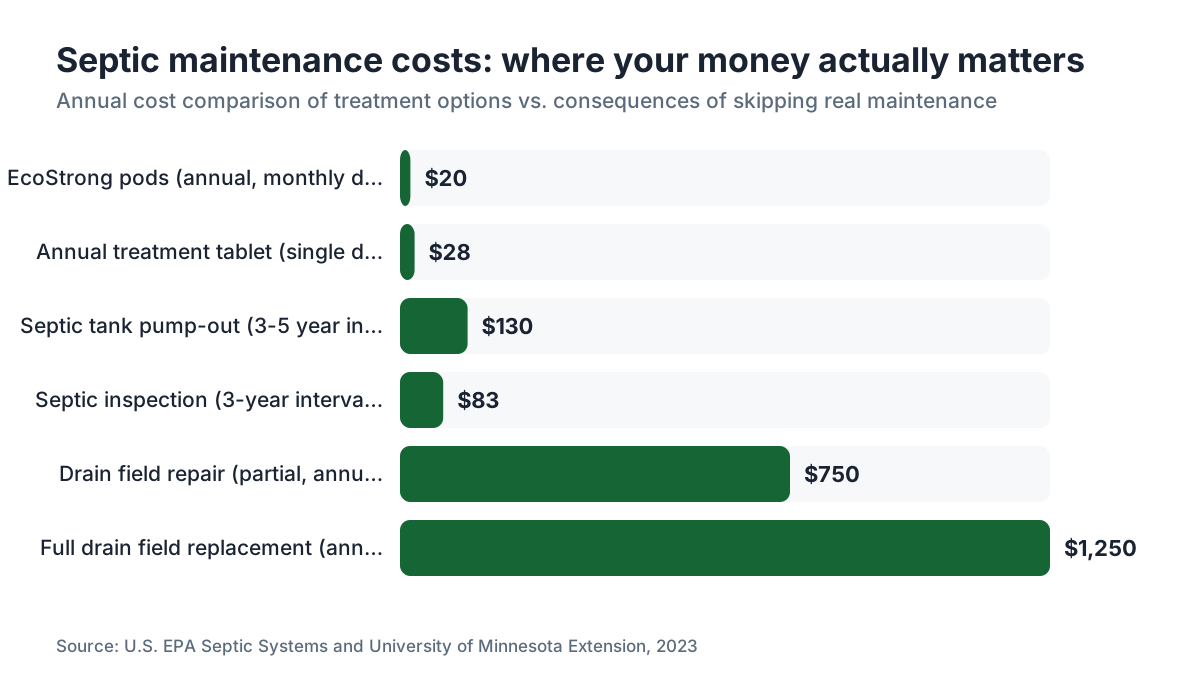
Run the annual math at monthly dosing. EcoStrong comes to roughly $16 to $24 a year (two six-packs). Rid-X lands about the same. Annual tablets cost more upfront but less per dose. None of these gaps matter next to the $400 to $600 you'd pay for a pump-out, which is where your real maintenance money belongs [4].
One honest note. Home Depot's selection in this category turns over often, and in-store pricing can differ from online. Verify the current price before you shop off this table.
How do you use EcoStrong septic treatment pods correctly?
Using the pods right matters more than most people think. A common mistake is tossing the pod straight into the septic tank access port or flushing it with a wall of water. Here's the better way.
Drop one pod in the toilet bowl. Flush once, normally. That carries the pod through the drain line and into the tank, where it dissolves over the next several minutes. Don't double-flush right away, and don't run the pod through a laundry or dishwasher drain, because detergents there can partly denature the enzymes before they reach the tank.
Timing helps a little. Evening is a good time to dose, since the tank sees lower flow overnight, which gives the bacteria more contact time with the waste before the morning flush cycle pushes effluent toward the drain field. Call it a minor optimization, not a rule.
To give a product like this its best shot, pair it with bacteria-friendly habits. Go easy on antibacterial soaps and cleaners. Keep grease out of the drain. Don't flush wipes, even the ones labeled flushable. Those choices matter far more to your tank's bacterial health than any monthly pod [5].
One more thing if you're on a well with a salt-based water softener. High sodium discharge can suppress the anaerobic bacteria in your tank. In that case a monthly additive has a slightly stronger rationale, because your native bacteria are already working under more stress.
Can EcoStrong pods replace regular septic pumping?
No. This one needs to be direct, because additive marketing sometimes hints otherwise.
Solid waste that the bacteria can't fully digest settles out as sludge at the bottom of the tank. Every tank builds sludge over time no matter how well its bacteria work, because not all organic matter is biodegradable under anaerobic conditions and because inorganic material (sand, grit, and non-organic solids) never breaks down at all. Once sludge reaches roughly 30% of the tank's liquid capacity, it has to be pumped, period [4].
EPA recommends most residential tanks be pumped every 3 to 5 years, with frequency set by tank size, household size, and water use [1]. A 1,000-gallon tank serving four people usually needs pumping every 3 to 4 years. No additive changes that math in any real way on the current evidence.
Skipping pumping because you've faithfully dropped in EcoStrong pods is a genuine risk. An overfull tank does more than back up into the house. It sends solid-heavy effluent into the leach field, clogs the soil interface, and drives drain field failure that runs $5,000 to $30,000 or more to fix [6]. That number swallows a lifetime supply of treatment pods.
For a full breakdown of how often pumping is actually needed, see our guide on how often to pump septic tank. The short version: know your tank size, count the people in the house, and follow EPA guidance instead of a label.
Are EcoStrong pods safe for all septic system types?
For conventional gravity-fed septic systems, EcoStrong pods are considered safe. The bacterial strains (mostly Bacillus varieties) are non-pathogenic and naturally occurring. The enzymes are standard food-grade compounds with no known toxicity to soil biology or groundwater.
For alternative or engineered systems, check with your manufacturer or installer before adding anything. Aerobic treatment units (ATUs), mound systems, drip-irrigation systems, and constructed wetlands all run tighter microbial environments than a conventional tank. In an ATU, for instance, the aerobic bacteria doing the treatment are a different class from the anaerobic Bacillus strains in most pods, so the product may just be irrelevant rather than harmful.
Got a pump-equipped system with a dosing chamber? Flush the pod through the toilet as directed. It dissolves in the main tank before the pump ever kicks on.
On a shared or community septic system, ask the managing entity first. Some shared systems write specific additive restrictions into their maintenance agreements.
One thing the pods definitely won't handle: chemical problems. If your tank has a pH issue, often from overusing cleaning chemicals, bacterial additives won't fix it. When you suspect a chemical imbalance is hurting the system, a septic tank inspection with effluent testing is the right tool, not a pod.
Where to buy EcoStrong pods and what to expect from the purchase
EcoStrong pods are sold at Home Depot stores and on HomeDepot.com. Availability varies by region, and the product has been delisted and re-listed before, so if you can't find it in a store, the online listing is the more reliable source. The six-pod pack is the standard unit. At the time of writing, pricing sat in the $8 to $12 range, though Home Depot's promotional pricing moves around.
Open the Home Depot app and search "EcoStrong septic" to see the current aisle location and in-stock status at your local store. The product usually sits in the plumbing or home improvement aisle near other septic treatments.
For operators running multiple accounts, SepticMind's operations platform tracks which customers are on additive programs and flags accounts that may be overdue for pumping regardless of additive use. That records visibility keeps you out of the awkward spot where a homeowner thinks they've been maintaining the system because they keep buying pods, when they're actually years past due for a pump-out.
One practical note for homeowners. If you're shopping online and the six-pod EcoStrong pack is out of stock, Rid-X pods or Green Gobbler pods are functionally comparable on the evidence. Don't let loyalty to a specific retail brand delay your actual septic maintenance schedule.
What are the signs that your septic system needs more than a pod can fix?
Treatment pods work in a healthy, functioning system. They don't fix problems. These are the signs you need a professional, not a pod.
Slow drains throughout the house, especially when several fixtures crawl at the same time, can mean the tank is full or the line to the tank is partly blocked. A single slow drain is usually a local clog. Multiple slow drains point at the tank or the field [7].
Odors inside the house or out near the tank or drain field suggest a full tank, a failing field, or a venting problem. A working system should be close to odor-free at ground level.
Grass that's lush and unusually green right over the drain field, while the rest of the yard is ordinary, means the field is getting effluent closer to the surface than it should. That's biomat buildup or a high water table pushing up, and no pod touches either one.
Sewage surfacing at ground level is an emergency. Stop using water in the house, keep children and pets away from the area, and call a licensed septic contractor right away. This is a public health situation, not a maintenance one [8].
For any of these, the path forward starts with a septic tank inspection and probably a septic tank pump out. If the drain field has failed, you're looking at a septic system repair or, worst case, a full septic tank installation. Don't let the low price of a pod tempt you into putting off that call.
Are EcoStrong pods worth the money? An honest verdict
Here's the straight answer. EcoStrong pods are low cost, low risk, and low reward.
At $8 to $12 for six months to a year of treatment, the money is trivial next to the cost of septic service. If you're the kind of homeowner who wants a monthly ritual that keeps you engaged with your system, a pod is a harmless one. The bacteria and enzymes won't hurt the tank, and they might do a little good in specific spots (after antibiotics, after a vacancy, after pumping).
But if you're buying pods instead of scheduling a pump-out, or treating them as your only form of maintenance, that's a mistake that can cost tens of thousands in drain field replacement.
EPA's SepticSmart guidance sums up responsible ownership as regular inspections, regular pumping, and being careful about what goes down the drain [1]. Additives aren't on that list. That's no accident.
Spend the $10 on the pods if you want. Also spend the $400 to $600 on a pump-out every 3 to 5 years. Book septic tank emptying on schedule. Get your septic tank inspection done when you buy or sell a home. Do those things and the pods are a harmless extra. Skip them and no pod on any shelf will save you.
Frequently asked questions
How often should I use EcoStrong 6 oz. septic treatment pods?
The manufacturer recommends one pod per month for typical residential use. For a household of four with a 1,000-gallon tank, monthly dosing is the standard starting point. Smaller households or homes with low water use sometimes stretch to every 6 to 8 weeks. There's no evidence that dosing more often than monthly adds any benefit, and it just costs more with no clear return.
Can I use EcoStrong pods in an aerobic septic system?
EcoStrong pods are made for conventional anaerobic septic tanks. Aerobic treatment units (ATUs) run on oxygen-dependent bacteria, a different class from the Bacillus strains in these pods. In an ATU, the pod's bacteria won't thrive, though they're unlikely to actively harm the system. Check with your ATU manufacturer or service provider before using any additive in an engineered system.
Do EcoStrong pods really work, or is it just marketing?
The honest answer is that the evidence is weak. EPA does not endorse regular additive use for normally functioning tanks. No peer-reviewed study has shown that retail bacterial additives meaningfully slow sludge accumulation in real conditions. That said, the product isn't harmful, and specific situations (after antibiotics, after a vacancy, after pumping) give adding bacteria a real biological rationale. For most homeowners it's a cheap optional step, not a proven maintenance tool.
Where can I find EcoStrong septic pods at Home Depot?
In store, EcoStrong septic treatment pods usually sit in the plumbing or home improvement aisle near other septic and drain products. Availability varies by region and season. The Home Depot app's store mode lets you search by product name and see the exact aisle and bay. The product is also listed on HomeDepot.com with standard shipping if your local store is out of stock.
Can EcoStrong pods prevent or fix a clogged drain field?
No. A clogged drain field (biomat buildup on the soil interface) develops over years when solid-heavy effluent overwhelms the soil's absorptive capacity. Bacterial additives in the tank never reach the drain field in meaningful concentrations, and even if they did, they can't break down the anaerobic biomat layer effectively. A failing drain field needs a professional inspection and likely mechanical work, resting, or replacement.
Do septic treatment pods void a septic system warranty?
For most conventional tank installs, biological additive use doesn't affect warranty terms, because the tank itself (a concrete, fiberglass, or plastic vessel) isn't harmed by bacteria or enzymes. Aerobic treatment units and some engineered components, though, come with maintenance agreements that list approved additives. If your system has a manufacturer warranty or a service contract, read the additive policy before using any product.
Are EcoStrong pods safe for the environment and groundwater?
The bacterial strains in EcoStrong pods are naturally occurring, non-pathogenic Bacillus species, and the enzymes are food-grade. Neither poses a known risk to groundwater or surrounding soil biology when used at the labeled dose in a normally functioning system. That said, any additive that upsets the tank could in theory increase the risk of partially treated effluent reaching groundwater, which is exactly why proper maintenance matters more than additive choice.
How do EcoStrong pods compare to Rid-X?
Both use similar bacterial strains (mostly Bacillus varieties) and similar enzyme blends (lipase, protease, amylase). The main difference is format: EcoStrong comes in pre-measured pods, while Rid-X comes in powder, liquid, and pod versions. On documented effectiveness they're comparable, because neither has strong independent evidence of measurable impact on sludge. Price per year of monthly treatment lands about the same for both at Home Depot.
What happens if I accidentally use two pods instead of one?
One accidental double dose is not a problem. The bacterial and enzyme concentrations involved are far too low to upset a functioning tank's balance. Just resume the normal monthly schedule. Regular overdosing (say, weekly instead of monthly) is wasteful but still unlikely to harm the system. The tank's existing microbial community and natural processes simply dilute or out-compete the excess.
Should I use septic treatment pods after my tank is pumped?
It's a reasonable practice. Right after pumping, the tank holds mostly water with a depleted bacterial seed population. A pod in the first week or two post-pumping can help get active digestion going faster, though the tank re-inoculates naturally within a few weeks from normal wastewater flow. Think of it as an optional head start, not a required step.
Can I flush EcoStrong pods if I'm also using bleach or antibacterial cleaners?
Heavy bleach or antibacterial cleaner use can suppress the tank's bacteria and blunt any additive you put in. If your household regularly pours bleach straight into toilets or drains (rather than using it on surfaces and rinsing normally), some of it reaches the tank in bacteria-killing concentrations. Cut back on direct drain pours before relying on a biological additive. Normal surface cleaning with diluted bleach usually isn't a problem.
What is the shelf life of EcoStrong septic treatment pods?
Most bacterial septic additive pods have a shelf life of 2 to 3 years from manufacture when stored somewhere cool and dry. Heat and humidity cut bacterial viability before the product ever reaches the tank. Check the packaging for an expiration or best-by date. An expired pod isn't dangerous, but the live bacterial count may run well below the labeled dose, shrinking whatever small benefit the product offers.
Are there any state regulations that restrict septic additive use?
Yes, and they vary by state. Some states, including Wisconsin and South Carolina, have at times restricted additives that claim to substitute for pumping. Several state environmental agencies state flatly in their onsite wastewater guidance that no additive eliminates the need for routine pumping. Check your state's onsite wastewater or environmental quality agency website for current additive policy before assuming a product is unrestricted where you live.
Can using EcoStrong pods reduce how often I need to pump my septic tank?
There's no credible evidence they do. EPA recommends pumping every 3 to 5 years based on tank size and household size, and that schedule tracks the accumulation of inorganic and non-biodegradable solids, which no bacterial additive can change. Using pods monthly while staying on a normal pumping schedule is fine. Using pods to justify skipping or delaying pumping is a risk that can end in drain field failure costing thousands.
Sources
- U.S. EPA, SepticSmart Homeowners: EPA does not endorse additive use as a substitute for routine septic maintenance; recommends pumping every 3-5 years based on tank size and household size
- Virginia Department of Health (onsite sewage program guidance): No commercially available biological or chemical additive has been proven to eliminate the need for routine pumping
- Wisconsin Department of Natural Resources: Wisconsin has regulated or restricted septic additive sales that claim to substitute for pumping
- U.S. EPA, Septic Systems (How Your Septic System Works): When sludge accumulates to approximately 30% of tank capacity it must be pumped; average pump-out cost ranges from $400-$600 for a residential system
- U.S. EPA, Septic Systems (Care and Maintenance): What goes down the drain (grease, wipes, antibacterials) affects tank bacterial health more than additives; proper use habits are the primary maintenance tool
- University of Minnesota Extension: Drain field replacement costs range from $5,000 to $30,000 or more depending on system type and site conditions
- Penn State Extension: Slow drains throughout the house, particularly when multiple fixtures are affected simultaneously, indicate a full tank or partial blockage in the main line rather than individual fixture clogs
- U.S. CDC, Septic Systems (Healthy Water): Sewage surfacing at ground level is a public health emergency requiring immediate cessation of water use and professional intervention
- National Onsite Wastewater Recycling Association (NOWRA): NOWRA has reviewed additive literature and found evidence of effectiveness weak; biological additives are not endorsed as maintenance substitutes
- University of Florida IFAS Extension (EDIS): Florida extension research found no peer-reviewed evidence that retail bacterial additives measurably reduce sludge accumulation under real-world residential tank conditions
- Washington State Department of Health: Washington State guidance notes that no additive has been shown to eliminate the need for periodic pumping of residential septic tanks
Last updated 2026-07-09