Septic tank risers and lids: the complete homeowner guide
By the SepticMind Editorial Team

TL;DR
- Septic tank risers are vertical pipe extensions, usually 12 to 24 inches tall, that bring buried tank access ports up to ground level.
- They kill the excavation cost at every pump-out, run $200 to $600 installed per riser, and by code the lids must lock or resist a child's hands.
- Most tanks need two.
- Payback lands inside two pump-out cycles.
What is a septic tank riser and what does it actually do?
A septic tank riser is a cylindrical pipe that bolts or seals to an access port on top of your tank and runs up to ground level. It ends in a lid that sits flush with the lawn. Without it, that access port is buried anywhere from 6 inches to 4 feet down, and a pumper has to dig before every single service call.
The riser kills the digging. A technician walks to the lid, pops it with a hook or a screwdriver, and the access hole is right there. A pump-out that took 90 minutes and a shovel now takes 20. That time shows up directly on your invoice, which is why most pumping contractors say risers pay for themselves in two visits.
Risers do one more thing that matters: they make the tank inspectable without guesswork. An inspector can check effluent levels, look at the baffles, and hunt for cracks without staging a small excavation. The EPA's SepticSmart program recommends easy tank access as part of routine homeowner maintenance [1].
The lid on top is a separate part. It can be plastic, concrete, or cast iron. It has to be secured so a child or an animal can't pull it off, a point most state codes now treat as a hard requirement rather than a suggestion.
How many risers does a septic tank need?
Most residential tanks have two access ports and both should get a riser. One sits over the inlet, where waste enters from the house. The other sits over the outlet, where clarified liquid heads toward the drain field. Some older single-compartment tanks have only a center port and need just one riser, but proper pump-out access means reaching both ends.
Two-compartment tanks, now required in many states for new work, have at least two ports and often three. Each accessible port needs its own riser. If a contractor quotes one riser for a two-compartment tank, ask why.
A pump station or dosing chamber, if your system has one, is a separate structure with its own riser and lid. Treat it as an independent tank for access.
The practical answer for most homeowners is two risers. Budget for that, and get quotes that spell out how many risers are included and at what diameter.
What materials are septic tank risers made from?
Three materials own the market: high-density polyethylene (HDPE) plastic, polypropylene, and concrete. Each has real trade-offs.
Plastic (HDPE or polypropylene) is the default for new installs today. It's light, it doesn't corrode, and it cuts to exact height in the field. A 24-inch diameter HDPE riser section runs roughly $40 to $80 for the pipe alone [2]. The lids come green or black to hide in the lawn. The catch: cheap plastic lids turn brittle under years of UV and hard cold, so a UV-stabilized or double-wall design is worth the extra $15 to $30.
Concrete is the old solution. Plenty of older tanks already have a short concrete collar cast into the tank top. Concrete is heavy, so nobody moves it by accident, but it goes porous over time and cracks under freeze-thaw. If your existing concrete riser is solid, leave it. If it's cracked or the lid won't seal, switching to plastic makes sense.
Fiberglass risers exist but they're a niche buy. They cost more than HDPE and give you no real performance edge on a standard residential tank. Skip them unless your installer has a specific reason.
One choice beats material for how much it affects your life: diameter. Most residential tanks use 20-inch or 24-inch risers. A 24-inch opening gives a pumper room to work and to drop a camera or an inspection mirror. Some installers push 12-inch or 16-inch risers because they're cheaper, but that narrow opening is a genuine pain for anything past a basic pump-out. Go 24-inch if your port allows it.
| Material | Typical riser cost (per section) | Weight | Corrosion resistance | Notes |
|---|---|---|---|---|
| HDPE plastic | $40, $80 | Light | Excellent | Most common; get the UV-stabilized version |
| Polypropylene | $50, $90 | Light | Excellent | A touch stiffer than HDPE in cold |
| Concrete | $30, $60 | Very heavy | Moderate | Cracks over time; common on older tanks |
| Fiberglass | $90, $150 | Moderate | Excellent | Rarely worth it for residential |
How much do septic tank risers cost to install?
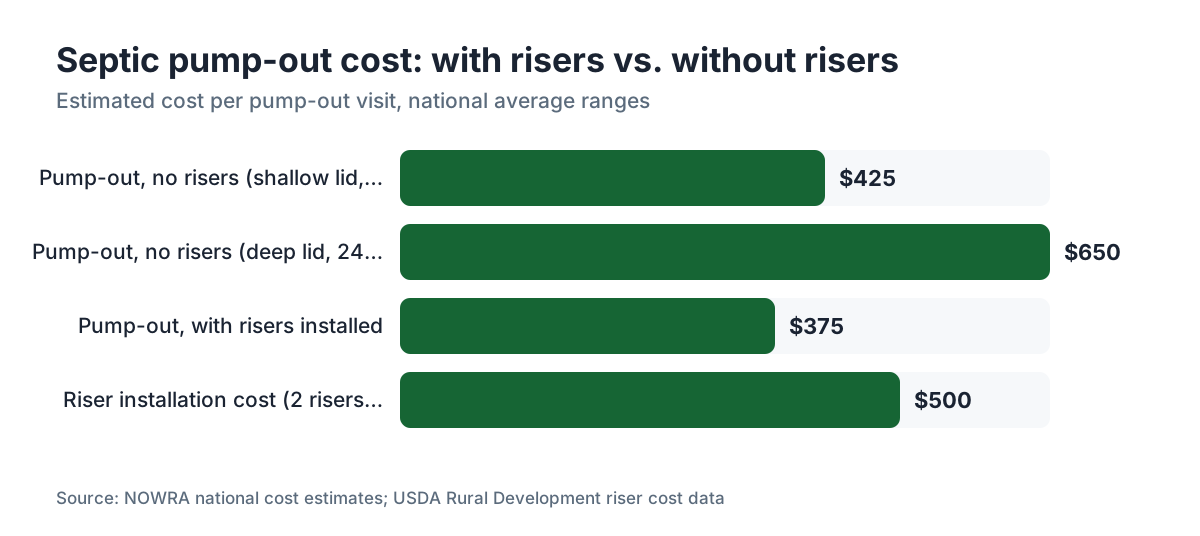
A single riser installed runs $200 to $350 when it's done during a routine pump-out, and $300 to $600 as a standalone job. Two risers installed at the same time as a pump-out usually runs $400 to $800 total, pump-out included [2][3]. Region, tank depth, and whether the installer has to break a concrete lid all move the number.
Lid depth is the biggest cost lever. A lid 8 inches down is a 10-minute hand-dig. A lid 36 inches down may need a small excavator, and that adds $150 to $400. Some contractors charge a flat rate for excavation up to 12 inches and go hourly beyond that. Ask before you approve the job, not after.
For context, septic tank pumping runs $300 to $600 nationally [3]. If the pumper digs first every time, tack on $75 to $200 per visit. Two pump-outs over five years without risers can cost $150 to $400 extra in dig fees, which already covers the install. That's the whole payback argument in one sentence.
DIY kits from HDPE suppliers cost $80 to $180 in materials. The install asks you to locate both ports accurately, cut the riser to exact height, seal the joint with butyl tape or an approved sealant, and backfill without wrecking the connection. It's a manageable job if you're comfortable with utility work and already know where both ports are. If you've never found your tank, hire it out the first time and watch.
One cost people forget is the lid itself. A basic plastic lid comes with most kits. A locking lid, which most codes now require, adds $20 to $60. A green or decorative lid that hides in turf adds $30 to $80. Small numbers on their own, but they stack when you're pricing three or four access points.
What are the safety and code requirements for septic tank lids?
A septic tank lid is a safety item first and a convenience second. An unsecured or cracked lid over an open tank is a drowning hazard, and the hydrogen sulfide gas inside a tank can knock a person out within seconds at high concentrations [4]. Most state onsite wastewater codes now require every access riser to have a lid that can't be opened without a tool or a deliberate two-step motion, written specifically to keep children out.
The exact wording changes by state. Minnesota's onsite treatment rules (Minn. R. ch. 7080) require secured covers on all access risers, defining secured as needing a tool or special knowledge to remove [5]. California, Texas, Florida, and most other states carry similar language in their onsite rules. Look up your state environmental agency or health department for the section that applies to you.
Lids turn dangerous over time even when they started compliant. UV and freeze-thaw make plastic brittle. Concrete chips and loses its lip. A lid that looks fine but hides a fracture can fail under a foot or a tire. The EPA recommends checking lids at every pump-out, and most pumpers will flag a bad one [1].
A riser in a driveway or any vehicle path is a separate concern. Standard residential risers are not rated for vehicle loads. You need a traffic-rated assembly, which costs more and prevents a collapse. If a car, truck, or riding mower crosses that spot, confirm the load rating with your installer before you buy.
Never go into a septic tank. Never let a child near an open riser. Those two rules matter more than everything else on this page.
How do you install a riser on an existing septic tank?
The sequence is simple. The work is dirty, and a second person helps.
Start by locating both ports. If you don't know where the tank is, your county health department may have a site drawing from the original permit on file. Many do. A probe rod, a slim metal rod pushed into soft soil, confirms the tank top. A pumper can also locate it with a transmitter dropped in the cleanout.
Once you find the port, dig carefully down to the existing cover. That cover may be concrete cast into the tank lid, or a separate concrete collar. Measure the opening diameter and the depth from the port collar to your finish grade. That number sets the riser height you cut.
Clean the tank top around the port. Clear away debris and crumbled concrete. HDPE risers connect differently by brand: some use a rubber gasket adapter bolted to the tank, others use a butyl tape seal and concrete screws. Follow the manufacturer instructions exactly, because a bad seal here lets groundwater in and gas out.
Cut the riser to height with a reciprocating saw or a PVC handsaw. Fit it, check plumb, and secure it. Backfill with the excavated soil, tamping in light lifts so the riser doesn't lean. Set the lid. If it's a locking lid, test the mechanism before you finish backfilling.
One riser with no surprises takes one to two hours. A crumbling concrete collar that needs chipping out cleanly adds another hour. A deep lid that needs machinery changes the timeline entirely.
A septic tank inspection is a good moment to add risers, because the inspector has already found the tank and can often install them or point you to a contractor on the spot.
How do you maintain septic tank risers and lids?
Maintenance is close to nothing, which is part of the appeal. Here's what actually needs your attention.
Check the lid at every pump-out, which for most households means every three to five years. Look for cracks, missing lip sections, or a lid that no longer seats firm. A lid that rocks or shows a gap lets surface water in and odors out. Replace it.
Clear grass and thatch off the lid. Roots work into seams over time. A light trim around the perimeter keeps the lid visible and reachable. Don't run a heavy riding mower over a riser at speed; even a solid riser can shift if it gets hit again and again.
Check the tank-to-riser joint seal every five to seven years. You're looking for any gap or separation. A visible gap means groundwater gets in during rain, which dilutes the tank and can push half-treated effluent toward your leach field early. A $15 tube of butyl sealant on a clean joint fixes it.
If you have a concrete collar, probe around it with a screwdriver once a year. Soft or crumbling concrete is a warning. At that point, sleeving a HDPE riser over the old collar (if the geometry allows) or replacing the riser outright is the right call. A septic tank repair contractor can tell you which.
Operators running multiple properties can track riser condition alongside pump-out schedules. SepticMind lets a service team log lid condition notes per site so nothing slips between visits, which matters when you're on dozens of systems across a service area.
One thing you never need to do: treat or seal the inside of the riser. Nothing in there degrades HDPE. Leave it alone.
What problems can septic tank risers develop over time?
Risers are durable, not indestructible. The problems that actually show up fall into a short list.
Lid failure is the common one. Plastic lids in freeze-thaw country get brittle after 10 to 15 years. A hairline crack often goes unnoticed until the lid gives out underfoot or breaks when a pumper stands on it. Lids are cheap to replace. The danger is missing the crack.
Riser joint separation happens when soil settling or frost heave pulls the riser off the tank collar. You might see it as a slight tilt or, at worst, a sunken patch around the riser. Ignore it and the open joint lets in serious groundwater. This is a septic tank repair job, not a DIY fix, because it means re-excavating and re-sealing the base connection.
Root intrusion is rarer with HDPE than with old clay or concrete, but aggressive tree roots can push a riser hard enough to crack a joint or the pipe wall. Keep large trees at least 10 feet off any septic component, and watch for root activity if mature trees stand nearby.
Odor at the lid is usually a dead or missing gasket. Most riser lids have a foam or rubber gasket that seats against the pipe rim. When it degrades, hydrogen sulfide escapes at the lid. Replacement gaskets cost $5 to $15 from any septic supply distributor.
Water pooling inside the riser in winter is normal, not a defect. Homeowners call about it every year. That liquid is condensation from warm tank gases hitting cold pipe walls. True infiltration looks different: the tank fills fast during or right after heavy rain.
Should you add risers to an existing tank or wait until you replace the tank?
Add them now. That's the honest answer.
Every pump-out without risers costs you extra dig money and eats more of a technician's time. The septic tank pump out gets pricier and, in practice, less likely to happen on schedule once homeowners realize it means digging. Skipped pump-outs push solids into the drain field, and that's the most expensive septic failure there is.
The only case for waiting is a tank you know needs replacement in the next year or two. If a septic tank inspection flagged a cracked tank or a failing baffle headed for major work, putting risers on a tank you're about to pull is a waste. Otherwise, install them.
Age alone is not a reason to wait. Concrete tanks routinely last 30 to 50 years with no structural trouble [6]. If yours works and has no cracks, treat it as permanent and buy the proper access hardware.
If the cost to put in a septic tank is already on your horizon from a known failure, that's when new risers come inside the new install quote. Make sure any new tank quote says risers to grade are included. Some contractors quote the tank and bill separately for risers and their install. Get it in writing before you sign.
Are there decorative or hidden riser lid options?
Yes, and they work fine. The standard move is a green or brown flat lid that blends into turf. For most homeowners that's enough. You can spot it if you know where to look, but it doesn't take over the yard.
For real concealment, several makers sell fake rock covers that sit over a standard riser lid. These are hollow fiberglass or polyethylene shells shaped like landscaping boulders. They hide the lid completely, lift easily, and don't block access. They run $40 to $120 by size. The downside: a heavy fake rock is annoying to move when you just want a quick look, and if you sell the house, the next owner needs to know it's there.
Flower bed planters made to sit over risers also exist. They work as long as the planter has no solid bottom sealing against the riser, which would let water pool and infiltrate. Use a pass-through design that keeps the lid dry.
One thing to avoid: building anything permanent over a riser. A deck, a patio, a garden shed all kill access and may break your local onsite wastewater code, which usually demands clear access around every septic component. Setback distances vary by jurisdiction, but burying a riser under a deck is always the wrong call.
How do risers affect septic system inspections and home sales?
Risers matter at a home sale more than most sellers realize. A real estate septic inspection needs the inspector to reach both tank compartments. If the ports are buried, someone has to dig, and that cost usually lands on the seller. Worse, an inspector who can't reach the tank may write a conditional or incomplete report, which stalls closing.
A tank with risers already installed clears the access requirement on arrival. The inspection runs in full, takes less time, and costs less. In states where the seller must have the tank inspected and pumped before closing, Massachusetts being the well-known example with its Title 5 inspection, having risers in place is a direct help to the deal [7].
Buyers who know the game read risers as a proxy for maintenance. A tank with risers has probably been pumped on schedule because it was easy to reach. A tank buried under a foot of soil with no access raises questions about the maintenance history. It's an imperfect signal, but it shapes how the buyer sees the property.
For operators running septic tank inspections for real estate clients, offering riser installation as a bundled service makes the inspection cleaner and the report more complete. SepticMind's scheduling tools track which properties have risers noted in the record, so inspectors show up knowing what they'll find.
What do state codes actually require for risers and lids?
State rules vary more than most homeowners expect. The EPA sets no federal riser requirement; it publishes guidance through SepticSmart, but enforcement sits entirely at the state level [1]. What states actually require breaks into three buckets.
No specific riser rule, access implied. Some states simply require tanks to be accessible for inspection and pumping. They don't name risers, but a buried tank fails a pre-sale inspection and the fix is a riser.
Risers required at new install. Many states, Wisconsin, Minnesota, and North Carolina among them, require risers to within a few inches of grade on all new septic installations [5][8]. Existing systems may face no retrofit mandate unless the system gets upgraded or hits a permit-required repair.
Risers required for any permitted work. Some jurisdictions require any permitted work on an existing system to bring risers to grade as a condition of the permit. Even a baffle replacement can trigger the requirement.
The practical play is the conservative one: install risers to grade with secure lids on every access port. That satisfies the strictest state and clears any access snag at resale or routine service. Check your state environmental or health department site for the exact onsite wastewater section. The EPA's SepticSmart page links state-by-state contacts [1].
For a new septic tank installation, risers belong in the base quote. If your contractor leaves them out, ask why and get the answer in writing either way.
Frequently asked questions
Can I install a septic tank riser myself?
Yes, if you've located both tank ports and you're comfortable with basic utility work. HDPE riser kits run $80 to $180 in materials and ship with instructions. The step that matters is sealing the base joint with butyl tape or an approved sealant; a bad seal lets groundwater in. If you've never found your tank, hire a contractor for the first install and watch the process before you try it yourself.
How long do plastic septic tank lids last?
UV-stabilized HDPE lids typically last 20 to 30 years without cracking. Standard non-UV-stabilized plastic lids can turn brittle in 10 to 15 years, especially in harsh winters or intense sun. Check the lid at every pump-out for hairline cracks or a loose fit. Replacement lids cost $20 to $60 and are sold separately from the riser pipe.
What diameter riser should I get for my septic tank?
A 24-inch diameter riser is the best pick for most residential tanks. It gives a technician room to work, lower equipment, and inspect baffles comfortably. Some tanks have 20-inch ports, which work but feel tight. Avoid 12-inch or 16-inch risers on main access ports; they're cheaper but a real nuisance for anything past a basic pump. Match the riser diameter to the existing port opening.
Do risers need to be airtight?
The base seal where the riser meets the tank collar should be watertight to keep groundwater out; it doesn't need to be a pressure seal. The lid should seat firm to hold odors in, but many lids aren't fully airtight by design. Minor odor at the lid seam usually means a degraded gasket. Replace the gasket for $5 to $15 before assuming the riser itself has a problem.
How deep should a septic tank riser extend above ground?
The lid should sit at ground level or 2 to 4 inches above grade. At grade means less of a trip hazard and easier mowing. Slightly above grade means easier location and better drainage away from the seam. Never run a riser high enough for a mower blade to strike it. Most installers aim for the lid surface about 2 inches above the surrounding lawn.
Can a septic riser lid support foot traffic or vehicle weight?
Standard residential plastic riser lids are rated for foot traffic only, typically 100 to 250 pounds static load. They are not rated for vehicles or heavy equipment. If a riser sits in a driveway or anywhere a vehicle crosses, you need a traffic-rated riser and lid assembly, a heavier reinforced product. A standard lid in a traffic area risks sudden failure and a collapse hazard.
My septic lid has a bad smell near it. What causes that?
A sewage odor near the lid usually means the gasket has failed, the lid is cracked, or the lid isn't seated firm. Replace the gasket first; it's cheap. If the smell survives a new gasket and a tight seat, the riser-to-tank joint may have a gap and a contractor should check the base seal. A strong sulfur odor indoors near a cleanout is a different problem and needs faster attention.
How often should septic tank risers be inspected?
Check the lid and visible riser at every pump-out, which for most households is every 3 to 5 years. Look for cracked lids, a lid that won't seat flat, cracks in the pipe itself, and any settling or heave around the base. Check the riser-to-tank seal every 5 to 7 years. The inspection adds about 5 minutes to a pump-out visit and catches problems before they get expensive.
What is the difference between a riser and a septic tank cleanout?
A cleanout is a smaller pipe, typically 4 inches, on the inlet or outlet lines that lets a technician clear a blockage in the pipe. A riser is a larger extension, 20 to 24 inches, that opens direct access into the tank for pumping, inspection, and baffle work. Most systems have both and they do different jobs. A cleanout can't stand in for a proper tank access riser.
Does adding risers affect my septic system warranty or permit?
In most states, adding risers to an existing system needs no new permit and doesn't touch the system warranty. Some jurisdictions classify it as maintenance. A few states require a permit for any structural modification, so check with your local health department before you start. If your tank is under a contractor's warranty from a recent install, confirm with that contractor that risers won't void coverage.
What happens if water gets into a septic riser?
A little condensation inside the riser is normal in cold weather. True infiltration, where surface or groundwater enters through a failed lid or base seal, dilutes the tank and can push half-treated effluent into the drain field before solids settle. Over time that speeds up drain field clogging. If the tank fills unusually fast after heavy rain, have the riser seals inspected.
Are risers required when installing a new septic tank?
In many states, yes. Wisconsin, Minnesota, and North Carolina, among others, require risers to within a few inches of grade on all new installations. Even where risers aren't named in the code, access rules make them necessary in practice. For any new septic tank install, confirm in writing that the quote includes risers to grade with secure lids on all access ports. It's easier to negotiate upfront than to add later.
Can tree roots damage septic tank risers?
Yes, though it's less common than root damage to drain field pipes. Aggressive roots can crack a riser joint or the pipe body if a large root grows against it. Keep trees and large shrubs at least 10 feet from any septic component. Willows, silver maples, and cottonwoods are the worst and should sit farther out, ideally 20 to 25 feet. If large trees stand near your riser, have it looked at every few years.
How do risers affect the cost of regular septic pumping?
Risers cut pump-out costs by killing excavation charges, which run $75 to $200 per visit depending on lid depth and soil. A pump-out on a tank with risers takes 15 to 30 minutes. Without them, the same job runs 60 to 90 minutes. Over 10 years with pumping every 3 to 5 years, the savings easily beat the install cost. Most pumping contractors will confirm this math if you ask.
Sources
- U.S. EPA SepticSmart Program: EPA recommends accessible tank lids and regular inspection as part of routine septic system maintenance
- USDA Rural Development: Typical installed riser costs range from $200 to $600 per riser depending on depth and materials
- National Onsite Wastewater Recycling Association (NOWRA): Average residential septic pump-out costs $300 to $600 nationally, with excavation adding $75 to $200 per visit
- OSHA, Hydrogen Sulfide safety topic: Hydrogen sulfide gas in septic tanks can incapacitate a person within seconds at high concentrations
- Minnesota Pollution Control Agency, Individual Sewage Treatment Systems (Minn. R. ch. 7080): Minnesota requires all access risers to have a secured cover that requires a tool or special knowledge to remove
- Penn State Extension, Septic System Maintenance: Concrete septic tanks routinely last 30 to 50 years with no structural problems when properly maintained
- Massachusetts Department of Environmental Protection, Title 5 (310 CMR 15.000): Massachusetts Title 5 requires sellers to have septic systems inspected before property transfer
- Wisconsin Department of Safety and Professional Services, Private Sewage Systems (Ch. SPS 383): Wisconsin requires risers to within a few inches of grade on all new septic system installations
- University of Minnesota Extension, Septic System Maintenance for Homeowners: Most household septic tanks require pumping every 3 to 5 years; risers make service faster and less costly
Last updated 2026-07-09