Septic tank shock treatment: what it does, when it helps, and when it's a waste of money
By the SepticMind Editorial Team
TL;DR
- Septic tank shock treatment drops a concentrated dose of bacteria and enzymes into your tank to restart biological activity after a disruption, heavy antibiotic use, or a long dormancy.
- It can improve odors and slow-draining fixtures in a functioning system.
- It cannot replace pumping, fix a saturated drain field, or substitute for regular maintenance.
- Most homeowners need it far less often than product labels suggest.
What is septic tank shock treatment and how does it work?
Shock treatment is a high-dose, one-time (or infrequent) application of concentrated anaerobic and facultative bacteria, often paired with enzymes, designed to rapidly repopulate your septic tank's microbial community. The idea is straightforward: a healthy septic tank is a living digester. The bacteria in the tank break down solids, control odors, and keep the effluent that exits toward your drain field clear enough not to clog the soil.
When that bacterial population crashes, because of a sudden flood of bleach, heavy antibiotic use by household members, a long vacation that leaves the tank inactive, or an aggressive chemical drain cleaner, you end up with too much undigested sludge and too few organisms to process incoming waste. Shock treatment tries to shortcut the natural recolonization process by adding billions of colony-forming units (CFUs) in a single shot.
Most commercial shock products, including eco strong septic tank shock treatment packets and similar single-serve formats, use a blend of Bacillus strains that tolerate the facultative conditions inside a tank. Some add cellulase and lipase enzymes to help break down toilet paper, grease, and food solids faster. Ridex septic tank treatment uses a similar Bacillus-plus-enzyme approach but is marketed more as a monthly maintenance dose than a true shock dose, though the chemistry is close.
The biology is real. The question is whether the bacteria in a bottle can actually outcompete or supplement the organisms already living in your tank, and under what conditions that matters.
Does septic tank shock treatment actually work?
Honestly, the evidence is mixed, and nobody has great data on this.
The EPA's SepticSmart program states that a properly functioning septic system produces enough bacteria on its own and does not need additives to work correctly [1]. Several university extension services have reached the same conclusion after independent testing. A widely cited South Carolina DHEC review of biological and chemical septic additives found no consistent, peer-reviewed evidence that commercial bacterial additives improved system performance or reduced pumping frequency in systems that were otherwise functioning normally [2].
There's a narrower scenario where shock treatment probably does help: a system that's been genuinely disrupted. If a household ran multiple antibiotic courses back-to-back, or if someone poured a liter of bleach directly into the drain by accident, or if a vacation cabin has sat empty for 18 months, the microbial population may be depleted enough that an outside addition of bacteria gives the system a head start. The bacteria in shock products aren't magic. They're the same types of organisms that colonize a healthy tank, delivered in bulk.
Here's the practical test. If your drains run slowly, your tank is not full (confirmed by someone actually checking, not guessing), and the system was recently stressed by chemicals or dormancy, a shock treatment is a low-cost experiment worth trying. Most single-dose packets or bottles run $15 to $40. If the system doesn't improve within two to three weeks, the problem is something else entirely.
When should you actually use a septic shock treatment?
There are a handful of situations where shock treatment is a reasonable first step rather than a waste of money.
After heavy antibiotic use. If two or three people in the household have been on broad-spectrum antibiotics (fluoroquinolones, amoxicillin-clavulanate, clindamycin) for extended courses, meaningful amounts of active antibiotic metabolites pass into the wastewater and can suppress tank bacteria [3]. A shock dose after the course ends makes biological sense.
After accidental chemical dumping. Bleach, ammonia-based cleaners, or drain-clearing chemicals that go directly into the drain in large quantities can crash the tank's bacterial load. One or two shock applications over a month are reasonable before calling a pumper.
Seasonally idle systems. Cabins, rental properties, and vacation homes that sit empty for three to six months lose their active bacterial populations. A shock treatment flushed in a few days before guests arrive gives the tank a running start.
After pumping. Some operators and homeowners use a shock dose after a septic tank pump out to help the tank re-establish its microbial community faster. This is probably not necessary in most cases, because enough residual sludge and bacteria remain on tank walls after pumping to restart the culture. But if the tank was cleaned particularly thoroughly, a starter dose is harmless.
Slow-draining fixtures with no other explanation. If you've ruled out a full tank, a clogged baffle, and plumbing clogs, and the system is otherwise intact, shock treatment is worth a try before spending money on a service call.
What shock treatment is not for: a tank that's overdue for septic tank pumping, a drain field that's already saturated and backing up, or a system with physical damage like a cracked tank or broken baffles. Bacteria don't fix structures.
What's the difference between shock treatment, regular additives, and monthly maintenance products?
The septic product market uses these terms loosely, so here's what actually separates them.
Shock treatment is a single high-concentration dose, typically delivering 10 billion to 200 billion CFUs per application, intended to rapidly restore a depleted population. Eco strong septic tank shock treatment packets, for example, are designed as a one-time or infrequent reset.
Monthly maintenance products like Ridex septic tank treatment deliver smaller, regular doses (Ridex contains about 135 million CFUs per dose, compared to some shock products at 100 billion or more) on the premise that topping up the tank each month keeps bacteria levels high. The EPA and most extension service guidance says a healthy, normally used tank doesn't need this, but if you're inclined to use something, a monthly maintenance product is lower-cost per year than repeated shock doses.
Chemical additives are a separate category entirely. Solvents like trichloroethylene (now banned in septic applications in most states) and surfactant-based products claim to dissolve grease and sludge. Most state environmental agencies prohibit or strongly discourage these because they can liquefy solids and push them into the drain field, causing exactly the clogging they're supposed to prevent [4].
Enzyme-only products fall between biological and chemical. Enzymes speed up the breakdown of specific compounds but aren't living organisms. They don't reproduce or self-sustain. They may have a role in grease-heavy systems but won't substitute for bacterial colonization.
For almost all homeowners, the order is simple: regular pumping first, shock treatment for specific disruption scenarios second, and monthly additives only if you genuinely want peace of mind and understand the evidence is thin.
How do you apply septic tank shock treatment correctly?
Application is simpler than most products make it seem.
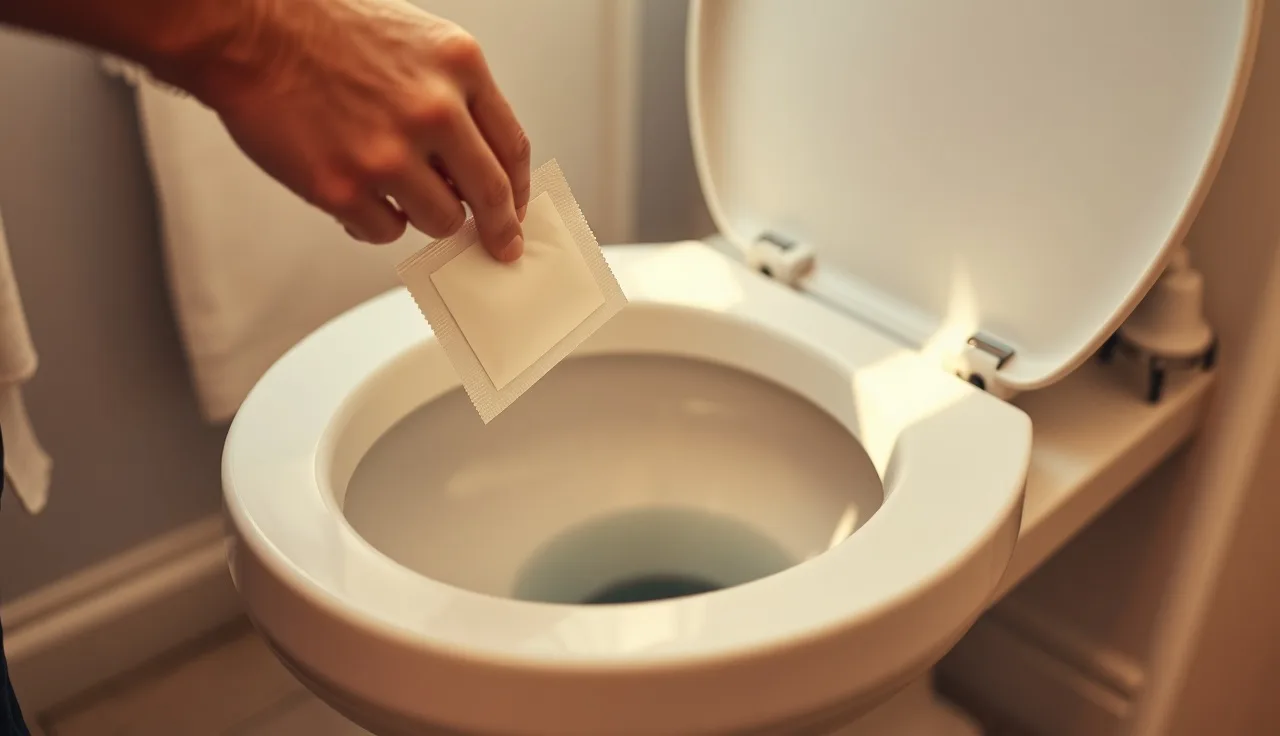
Flush or pour it directly into the toilet. The toilet is the most direct route to the tank, and the water volume from a flush helps distribute the dose. Some packets are designed to be dropped in. Some liquid formulas pour directly into the bowl.
Time it for a low-use period. Apply it at night or before a day when the household won't be running dishwashers, washing machines, or multiple showers. Heavy water flow right after application dilutes the dose and flushes the bacteria through before they can establish.
Don't use bleach-based cleaners for 48 to 72 hours after application. This is the most commonly violated instruction. If you pour bleach down any drain while the shock dose is trying to establish, you're working against yourself.
One application is usually enough. If the problem persists after two to three weeks, a second dose is reasonable. Beyond that, you're probably dealing with something shock treatment can't fix, and you need a septic tank inspection or a septic tank cleaning.
Follow the specific product's directions for dose size. Shock products vary widely in concentration, and using a maintenance-sized dose as a shock (or vice versa) changes the expected result. Eco strong septic tank treatment packets, for instance, are pre-measured, which removes the guesswork.
Are septic tank shock treatments safe for pipes, the tank, and the environment?
Biological shock treatments (bacteria plus enzymes) are generally safe for plumbing, concrete and fiberglass tanks, PVC distribution lines, and the drain field. The organisms in commercial formulas are naturally occurring soil and gut bacteria. They don't corrode materials or produce harmful byproducts under normal conditions.
The environmental picture takes a little more thought. Bacteria and enzymes that exit the drain field do end up in groundwater and soil. University extension research has not identified this as a meaningful contamination pathway for biological additives, but chemical additives are a different story. Several states, including Massachusetts and Washington, have banned certain chemical septic additives by regulation precisely because of groundwater contamination concerns [4].
If you're on a well, the standard precautions apply: keep the septic system properly maintained and at the code-required setback distance from your well (typically 50 to 100 feet depending on state code [5]). Shock treatment doesn't change that math. A properly functioning tank with good biological activity is the safest scenario for groundwater regardless.
For households in sensitive areas (near surface water, on fractured bedrock, or in coastal setback zones), check your state's onsite wastewater regulations before adding any product to your tank. Most state environmental agencies keep lists of approved or prohibited additives.
What do eco strong septic tank shock treatment packets actually contain?
Eco strong septic tank shock treatment packets are among the more concentrated consumer products on the market. The formula centers on multiple Bacillus strains (including B. subtilis, B. licheniformis, and B. amyloliquefaciens), the same genera used in industrial bioaugmentation. These strains are spore-forming, meaning they survive storage and the harsh conditions near the tank inlet before germinating and becoming active.
The enzyme component typically includes amylase (starch), protease (protein), lipase (fats), and cellulase (plant fiber and toilet paper). That mix covers the four main organic categories in residential wastewater.
Packet format matters. Single-dose, water-soluble packets like these reduce measurement error and accidental overdose compared to liquids. The water-soluble film dissolves in the toilet bowl before flushing, so the dose reaches the tank intact.
One practical note: store these packets in a cool, dry place. Bacillus spores are hardy, but high humidity speeds up degradation of the water-soluble casing, and extreme heat can cut viable CFU counts before application.
For those comparing products: eco strong septic tank treatment packets and similar high-dose formats suit true shock scenarios better than Ridex-style monthly products. If you're doing routine maintenance on a healthy system, a lower-dose monthly product is enough and cheaper annually.
Can shock treatment fix a failing drain field?
No. This deserves a direct answer, because this is where homeowners spend money and time hoping to dodge a much larger bill.
A failing leach field fails for structural reasons: the soil is biomat-clogged, hydraulically saturated, crushed by vehicle traffic, or undersized for the load. Bacteria cannot unclog soil pores that are physically sealed with the grease-and-biofilm layer called biomat. Enzymes can help digest some of the organic biomat, but only on a surface-area basis and only with adequate resting time. The fix for a saturated drain field is resting the field (if you have a two-field system with a diverter valve), aerating it, or replacing it.
If you're seeing sewage surfacing in your yard, sewage backing up through floor drains, or persistent wet spots over the drain field lines, the problem is system failure, not bacterial deficiency. Get a septic tank inspection and a septic system repair assessment. The cost to repair or replace a drain field runs $3,000 to $15,000 or more depending on soil conditions and local regulations [6]. Spending $30 on shock treatment first is understandable. Spending $300 on repeated shock treatments while avoiding the diagnosis is not.
Operators who use SepticMind to track service history can flag systems with recurring shock-treatment calls at the same address, which is often an early signal that a field inspection is overdue rather than a bacterial issue.
How often should you use septic tank shock treatment?
For most households on a normal-use system with no disruptions, the honest answer is: rarely or never.
If your system is pumped on schedule (every three to five years for a typical family of four [7]), you're not pouring large amounts of bleach or harsh chemicals down the drain, and the household isn't on heavy antibiotics constantly, your tank keeps a healthy bacterial population on its own. The EPA SepticSmart program does not recommend routine additive use for functioning systems [1].
For disruption scenarios described earlier (post-antibiotic, post-chemical accident, seasonal startup), once is typically enough. If you feel better doing a twice-yearly shock application on a cabin system, that's reasonable and harmless.
Monthly maintenance products like Ridex are designed for monthly use, but that's a marketing cadence as much as a biological one. If you're going to use a monthly product, understand that you're paying for peace of mind, not for a proven performance improvement in a healthy system. That's a personal call.
For the record: a septic tank cleaning and pump-out on schedule does more for your system's bacterial health than any additive regimen. Physical removal of excess scum and sludge gives the remaining bacteria better working conditions and more hydraulic capacity.
What does septic tank shock treatment cost?
Shock treatment is one of the cheapest interventions in the septic world.
Single-dose shock packets or bottles run $15 to $45 at most hardware stores and online retailers. Multi-pack options (three to six doses) run $40 to $80 and make sense for vacation properties where you'd do a seasonal startup dose each year.
Monthly maintenance products like Ridex cost roughly $10 to $15 per month dose, or $120 to $180 per year if used as directed, which adds up to more than most one-time shock treatments.
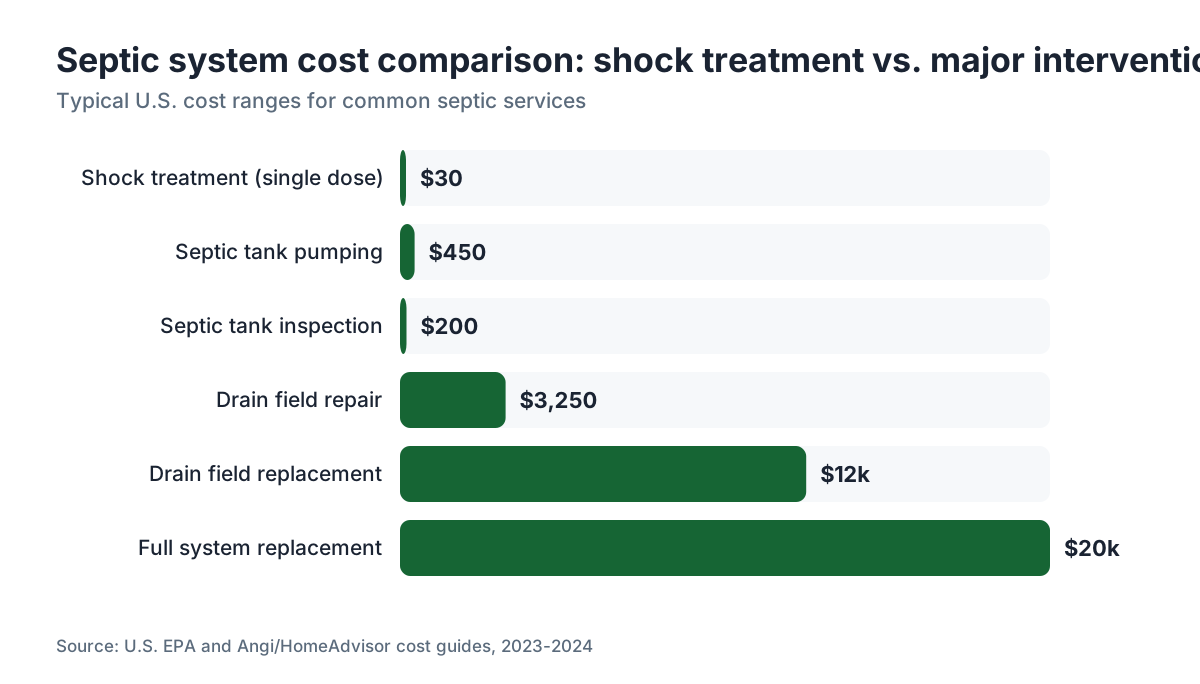
Compare that to the cost of the services shock treatment is sometimes used to avoid:
| Service | Typical cost range | Frequency |
|---|---|---|
| Septic tank shock treatment | $15 to $45 | As needed |
| Septic tank pumping | $300 to $600 | Every 3-5 years |
| Septic tank inspection | $100 to $300 | Every 1-3 years |
| Drain field repair | $1,500 to $5,000 | As needed |
| Drain field replacement | $5,000 to $20,000+ | Once (hopefully) |
| Full system replacement | $10,000 to $30,000+ | Once (hopefully) |
Shock treatment is cheap enough that trying it for an appropriate scenario costs little. The risk is using it as a reason to delay a needed pump-out or inspection. A full tank that isn't pumped will push solids into the drain field no matter how many bacteria you add [8].
If you're a service operator tracking additive use across your customer base, tools like SepticMind can help you spot which accounts keep buying shock products between service calls, which is often a sign those accounts need a proactive service visit.
What are the state and EPA regulations on septic additives?
Federal regulation of septic additives is limited. The EPA does not register or require pre-market testing of biological septic additives (bacteria and enzymes) under FIFRA because they aren't pesticides. Chemical additives that kill organisms, however, may fall under FIFRA registration requirements [9].
State regulation varies a lot. Some states are permissive. Others are strict.
Massachusetts Title 5 (310 CMR 15.000) prohibits the use of septic system additives that contain any acid, base, or organic solvent unless specifically approved by the state [10]. Biological additives are not prohibited but are not required.
Washington State prohibits chemical additives that can contaminate groundwater. The state Department of Health keeps guidance on approved products.
California does not specifically prohibit biological additives but requires that all products used in septic systems not impair the system's function or threaten water quality under the Porter-Cologne Water Quality Control Act [11].
The practical upshot: biological shock treatments (Bacillus-based, enzyme-based) are not prohibited in any state I'm aware of. Chemical solvent-based products are banned or restricted in many states. Check your state's department of environmental quality or health website before using any product if you're in a sensitive watershed or if you have a permit condition on your system.
The EPA SepticSmart program's published guidance states that "a properly functioning septic system does not need additives" and recommends focusing on proper maintenance and pumping schedules as the primary management tool [1].
What's the honest bottom line on septic shock treatment?
Shock treatment fills a narrow, real niche. It's not snake oil for every situation, and it's not the maintenance substitute that marketing language sometimes implies.
Use it when there's a genuine reason to think your tank's bacterial population has been disrupted. Don't use it as a substitute for pumping a full tank. Don't use it to avoid diagnosing a slow drain or surfacing sewage. And don't pay for monthly additive programs on a healthy, normally used system if you're already on a proper pumping schedule.
If you're unsure whether your system needs shock treatment, a pump-out, or something more serious, start with a septic tank inspection. A technician who opens the lid and checks the scum and sludge layers can tell you in five minutes whether the tank is full, whether the baffles are intact, and whether the system has biological activity. That information is worth more than any additive.
For homeowners who want to track septic maintenance dates, upcoming pumping schedules, and system history in one place, the how often to pump septic tank guide is a good next read.
Frequently asked questions
Can I use septic tank shock treatment if my tank hasn't been pumped in years?
No. If your tank is overdue for pumping, the scum and sludge layers are likely too thick for bacteria to make any meaningful difference. Adding shock treatment to an overfull tank doesn't remove solids. It just adds organisms to an already overloaded environment. Get the tank pumped first, then consider a shock dose afterward if you want to help reestablish the bacterial culture.
How long does it take for septic shock treatment to work?
Most biological shock treatments begin to show results within one to two weeks if the underlying problem is bacterial depletion. Bacillus spores germinate within 24 to 48 hours under favorable conditions, and population growth is rapid after that. If your drains aren't improving after two to three weeks, the problem isn't bacterial. At that point, a physical inspection is the right next step.
Is Ridex the same as a shock treatment?
Not exactly. Ridex septic tank treatment is formulated as a monthly maintenance dose, delivering about 135 million CFUs per application. True shock treatments deliver 10 billion to 200 billion CFUs in a single dose. The bacterial strains are similar, but the concentration and intent differ. Ridex is for routine top-up. Shock treatment is for post-disruption recovery. You can use Ridex in a higher dose as a rough shock equivalent, but single-packet shock products are more cost-effective for that purpose.
What happens if I use too much shock treatment?
Using more bacterial shock treatment than directed is unlikely to cause harm. Excess bacteria either die off as food sources run out or wash through to the drain field, where they become part of the normal soil microbial population. There's no known case of a biological septic additive damaging a system through overdose. The risk is wasting money, not damaging the system.
Can septic shock treatment help with bad odors?
Sometimes, yes. Sulfur and sewage odors inside the house often point to a venting problem or a dry p-trap, neither of which shock treatment addresses. But if odors come from the tank vent and the system has been recently disrupted, restoring bacterial activity can reduce hydrogen sulfide production and improve odors within one to three weeks. If odors persist, check the vent stack and baffle condition before spending more on additives.
Do I need to be home or avoid using water after applying shock treatment?
You don't need to be home, but you should minimize water use for six to eight hours after application. Heavy water flow from laundry or long showers dilutes the dose and cuts the time bacteria have to establish before being pushed through the tank. Applying the treatment at bedtime is the simplest strategy for most households.
Is eco strong septic tank shock treatment better than other brands?
Eco strong septic tank shock treatment packets use a high-CFU, multi-strain Bacillus formula with a full enzyme blend in a pre-measured water-soluble packet format. The packet format reduces dosing errors compared to liquid or powder products poured manually. Whether it outperforms other high-CFU shock products is hard to say definitively. No independent comparative study exists. The category (concentrated Bacillus plus enzymes, single dose) matters more than the brand.
Can I use septic shock treatment in an aerobic treatment unit (ATU)?
Check the manufacturer's guidance for your specific ATU before adding any biological additive. Aerobic systems use air injection to promote aerobic bacterial populations, which differ from the anaerobic and facultative bacteria in shock treatment formulas. Adding large quantities of anaerobic bacteria to an aerobic unit may temporarily disrupt the microbial balance. Most ATU manufacturers recommend against third-party biological additives unless explicitly approved.
How soon after using bleach can I apply septic shock treatment?
Wait at least 48 to 72 hours after a significant bleach event before applying shock treatment. Normal household bleach use (laundry, occasional toilet bowl cleaning) is unlikely to crash a healthy tank, but a large direct pour into a drain needs more recovery time. After the waiting period, running extra water through the system for a day helps dilute remaining bleach residue before you add the bacterial dose.
Will shock treatment help after a septic system backup?
It depends on the cause of the backup. If a full tank caused it, shock treatment won't help until the tank is pumped. If a clogged inlet baffle caused it, that needs physical clearing. If the backup followed a known chemical disruption and the tank isn't full, a shock treatment after resolving the immediate blockage is reasonable. Most backups need a service visit first, then additives as a follow-up if appropriate.
Do septic shock treatments work in cold weather?
Bacterial activity slows significantly below 50°F and nearly stops below 40°F in a septic tank. In very cold climates, applying shock treatment in late fall or winter may produce little benefit because the organisms go dormant rather than establishing. Spring application, when soil and tank temperatures rise above 50°F, works better for seasonal systems. Buried tanks in most climates stay warmer than ambient air, so this is more of a concern for shallow systems or very cold regions.
Are there any septic additives that are actually banned?
Yes. Chemical solvent additives, including trichloroethylene and methylene chloride, are banned or restricted in most U.S. states for septic use because they liquefy solids and can contaminate groundwater. Massachusetts Title 5, Washington State, and several other states explicitly prohibit organic solvent-based additives. Biological additives (bacteria and enzymes) are generally permitted everywhere, though some states require that any additive not impair system function or water quality.
How does shock treatment compare to having the tank professionally cleaned?
They address completely different problems. Professional septic tank cleaning physically removes accumulated scum and sludge through pumping and high-pressure rinsing, cutting the physical load on the system. Shock treatment adds biology. A tank that's physically full needs cleaning first. No amount of added bacteria changes the hydraulic volume. After a thorough cleaning, a shock dose can help reestablish the bacterial culture, making the two approaches complementary rather than competing.
Sources
- U.S. EPA, SepticSmart Program: EPA SepticSmart states that a properly functioning septic system produces enough naturally occurring bacteria and does not need additives to work correctly.
- South Carolina DHEC, Evaluation of Septic Tank Additives (referenced via Clemson University Extension): A review of biological and chemical septic additives found no consistent peer-reviewed evidence that commercial bacterial additives improved system performance or reduced pumping frequency.
- U.S. Geological Survey, Water Resources Mission Area: Active antibiotic metabolites from human use are excreted and pass into wastewater, where they can suppress microbial populations in treatment systems.
- Massachusetts Department of Environmental Protection, Title 5 Septic Regulations (310 CMR 15.000): Massachusetts Title 5 prohibits the use of septic system additives containing acids, bases, or organic solvents unless specifically approved by the state.
- U.S. EPA, Septic Systems (Onsite Wastewater Treatment Systems): Standard setback distance between a septic system and a drinking water well is typically 50 to 100 feet depending on state code.
- Angi, Septic System Repair Cost Guide: The cost to repair or replace a drain field runs $3,000 to $15,000 or more depending on soil conditions and local regulations.
- U.S. EPA, How Your Septic System Works: EPA recommends pumping a typical household septic tank every three to five years.
- U.S. EPA, How to Care for Your Septic System: A full septic tank that is not pumped pushes solids into the drain field, which can cause clogging and system failure.
- U.S. EPA, Summary of the Federal Insecticide, Fungicide, and Rodenticide Act: The EPA does not require pre-market registration of biological septic additives (bacteria and enzymes) under FIFRA because they are not classified as pesticides.
- Massachusetts Department of Environmental Protection, Title 5 Official Inspection of On-Site Sewage Treatment and Disposal Systems: Massachusetts 310 CMR 15.000 prohibits chemical septic additives containing acids, bases, or organic solvents.
- California State Water Resources Control Board, Laws and Regulations: California requires that products used in septic systems not impair the system's function or threaten water quality under the Porter-Cologne Act.
Last updated 2026-07-09