Septic tank covers: types, sizes, costs, and safety rules
By the SepticMind Editorial Team
TL;DR
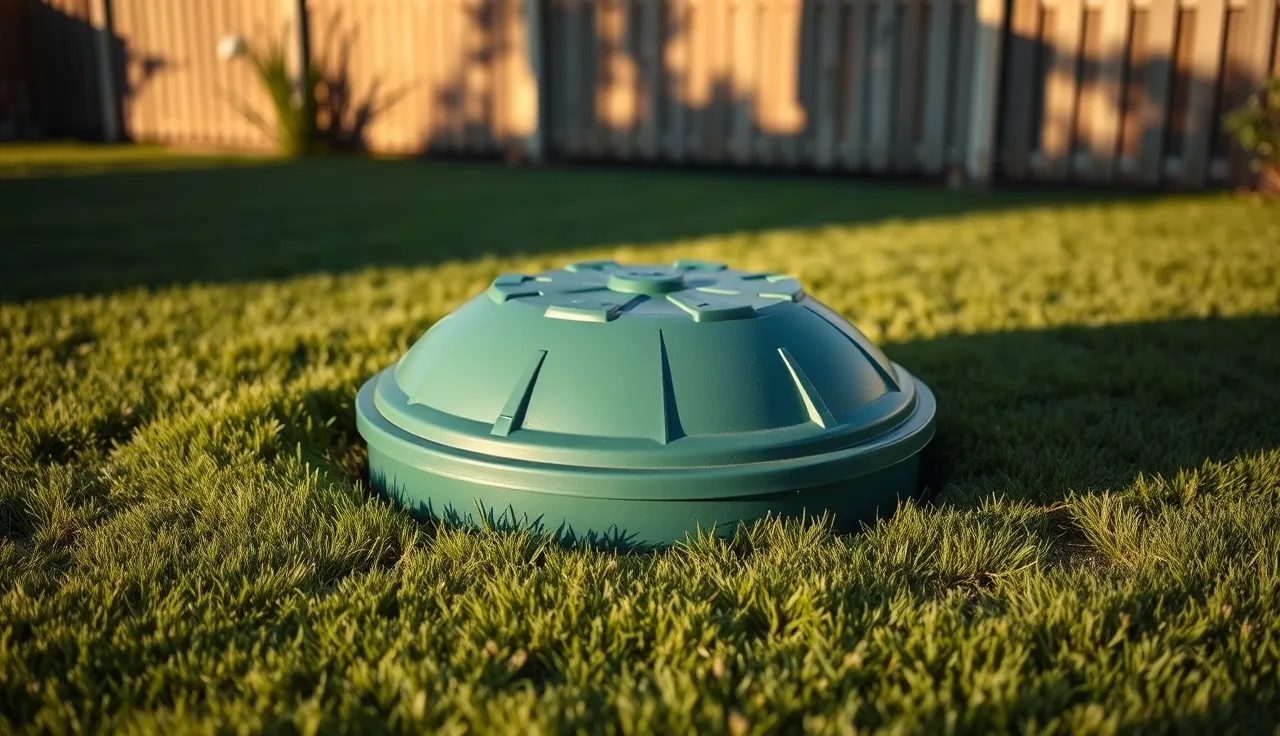
- A septic tank cover seals the access opening on your tank, keeping out children, pets, groundwater, and odors.
- Covers come in concrete, polyethylene, or cast iron and run from $30 for a basic plastic lid to $600 or more for a locking concrete riser-cap combo.
- The right one depends on your tank material, burial depth, and local code.
What is a septic tank cover and what does it actually do?
A septic tank cover is the lid that closes the access opening at the top of your tank. That sounds simple. It's not.
The cover does several jobs at once. It keeps children and animals from falling into what is, frankly, a lethal confined space. It blocks surface water and runoff from diluting the tank and overwhelming your drain field. It traps gases, mainly hydrogen sulfide and methane, that would otherwise vent at ground level. And it gives the pumper a way to open the tank for septic tank pumping without digging up the whole yard.
Most residential tanks have at least two access openings: one over the inlet baffle (the end where waste enters from the house) and one over the outlet baffle (the end where clarified liquid exits toward the drain field). Larger tanks and some two-compartment tanks have three. Each opening needs its own cover.
The EPA SepticSmart program lists keeping the tank covered and accessible as a baseline maintenance practice, and flags an unsecured or damaged lid as a direct safety hazard [1]. That's not bureaucratic boilerplate. People have died falling into uncovered septic tanks, and it happens more often than most homeowners realize.
What are the different types of septic tank covers?
There are four materials you'll actually meet in the field. Each has real tradeoffs.
Concrete covers came standard on nearly every tank installed before the 1990s and still ship on new poured-concrete tanks. They're heavy (a 24-inch round concrete lid weighs 60 to 100 pounds), they last decades if the concrete is sound, and they don't degrade in sunlight. The downside: they crack. Once a hairline crack lets in soil moisture, freeze-thaw cycles widen it fast, and hydrogen sulfide corrodes concrete from the underside out. A corroded or cracked concrete cover can fail without warning. Tap yours with a hammer every couple of years. A hollow sound means the underside is going.
Polyethylene (plastic) covers are the current standard for new installs and for retrofitting older tanks. High-density polyethylene doesn't corrode, doesn't absorb gases, and weighs far less than concrete, which matters when a pumper lifts a cover 10 or 20 times a day. Most plastic covers are molded with ribbing for rigidity and have a center bolt or locking tab. They range from thin, cheap lids meant to sit flush with a riser to heavy-duty locking versions rated for foot traffic or light vehicle loads.
Cast iron covers turn up mostly on older commercial or municipal installations and on some pre-1970s residential tanks in the Northeast and Midwest. They're durable, heavy, and expensive to source today. They rust where the coating is damaged, and the fit loosens as the iron corrodes. If you have one that still fits well and isn't rusted through, leave it alone.
Fiberglass covers ship standard with fiberglass tanks. They're UV-stable, light, and chemical-resistant. Their weak spot is impact: a heavy object dropped on a fiberglass lid can crack or shatter it.
One more category worth knowing: risers with integrated lids. A septic tank riser is a pipe extension that brings the access opening up to or near the surface, so you don't dig every time you need service. The cap on a riser is still a septic tank cover, but it's sized to the riser rather than the raw tank opening. If your tank is buried more than 12 inches deep and you haven't installed risers, that's the single best maintenance upgrade you can make.
What sizes do septic tank covers come in?
This is where people get tripped up. Septic tank access openings are not standardized across manufacturers or eras.
Common sizes for residential tanks run from 12 inches to 36 inches in diameter for round openings, with 20-inch, 24-inch, and 30-inch being most common. Square openings are rarer but exist, mostly on older precast concrete tanks, and typically measure 18x18 inches to 24x24 inches.
Before you order a replacement cover, measure the opening, not the old lid. Concrete lids often overhang the opening by 2 to 4 inches, so a 24-inch opening might have a 28-inch lid sitting on it. You need the opening diameter to match the new cover's seating dimension.
Riser lids are sized to the riser ID (inside diameter). The two most common riser diameters in residential use are 20 inches and 24 inches, though 12-inch risers show up on some older single-access tanks. Riser brands (Polylok, Tuf-Tite, Infiltrator, and others) are not always cross-compatible, so a Polylok lid may not seal properly on a Tuf-Tite riser even when the nominal diameter matches. Verify the brand before you buy.
If you genuinely can't figure out your tank's manufacturer or opening size, a licensed pumper can identify it during a septic tank pump out.
How much does a septic tank cover cost?
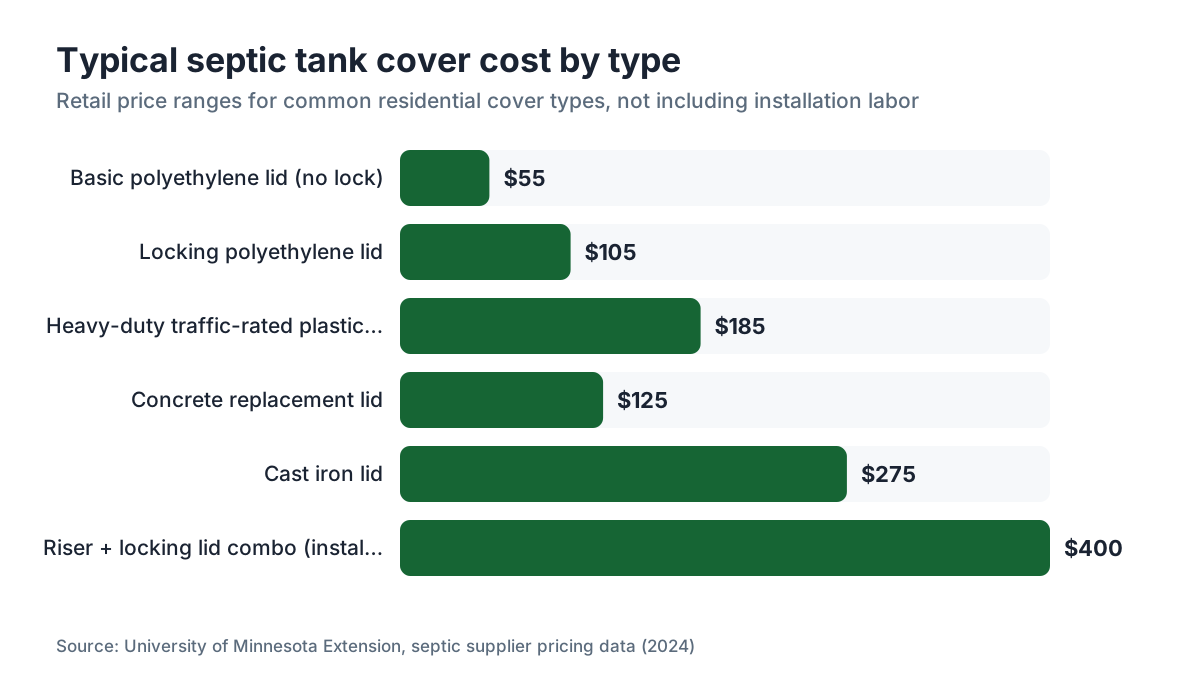
A cover runs anywhere from $30 to $600 installed, and the price swings on material, size, and whether you need a lock.
| Cover type | Size | Typical price range | Notes |
|---|---|---|---|
| Basic polyethylene lid (no lock) | 20 to 24 in | $30, $80 | Fits riser or shallow tank opening |
| Locking polyethylene lid | 20 to 24 in | $60, $150 | Required in many states |
| Heavy-duty traffic-rated plastic lid | 24 in | $120, $250 | For driveways or high-foot-traffic areas |
| Concrete replacement lid | 24 to 30 in | $50, $200 | Plus $50, $150 labor to place it |
| Cast iron lid | 24 in | $150, $400 | Hard to source; specialty suppliers |
| Decorative landscape cover (fake rock) | 18 to 30 in | $40, $180 | Aesthetic cover over an existing lid |
| Riser + locking lid combo (installed) | 20 to 24 in | $200, $600 | Most cost-effective long-term upgrade |
Labor adds $50 to $200 for a straightforward lid swap if a pro does it. If the tank has to be located and dug up first, that's another $100 to $400 depending on burial depth and soil conditions.
For context on overall tank costs, see septic tank installation and cost to put in a septic tank.
Nobody has great national data on cover replacement costs specifically. The ranges above come from supplier pricing and contractor estimates compiled by university extension programs, not a single study [2].
Are locking septic tank covers required by code?
In most U.S. states, yes, though the exact wording varies. The rules live in state onsite wastewater codes, not federal law, so what you owe depends on where you live.
The model materials standard many states reference is NSF/ANSI Standard 61 for components in contact with treated water, plus ASTM International standards for tank access covers [8]. For locking requirements specifically, look to your state code.
As of 2024, at least 30 states explicitly require child-resistant or locking covers on all new installations and replacements. Several states, including Florida, Texas, and Wisconsin, require that any cover be secured so it can't be removed without a tool [3][7]. Florida's Chapter 64E-6 FAC requires that access covers be of sufficient strength to withstand anticipated loads and be secured against unauthorized access [4]. Texas's 30 TAC Chapter 285 uses similar language [7].
For older tanks whose original install predates these rules, many states have a trigger provision: if you permit a repair, modification, or change of ownership that requires a permit or inspection, you have to bring the access covers up to current code at the same time.
The practical upshot: if you have an unlocked concrete lid sitting over an opening, check your state's onsite wastewater regulations. A locking lid costs $60 to $150 and takes 20 minutes to install. The liability exposure of an unlocked tank is not worth the savings.
How do you find your septic tank cover if it's buried?
Most tanks are buried 4 inches to 4 feet deep, with the cover somewhere in that range. If you don't know where yours is, run these steps in order.
First, check your county health department or permitting office. In most counties, the septic permit on file includes an as-built drawing showing the tank location, the number of access points, and sometimes burial depth. Fastest path, and it's free.
Second, look for clues on the surface. The inspection port (a 4-inch green or white pipe) often sits directly over or near one access point. Lush grass in a rough rectangle during dry spells can mark the tank. A slight depression in the soil is a warning sign (see the safety section below).
Third, use a soil probe. A metal rod pushed into soft soil hits a concrete or plastic lid with a distinctive thud. Start where the main sewer line exits the house, then probe in a grid.
Fourth, call a pumper. Most experienced pumpers can find a tank in a few minutes with a probe or a small locating transmitter flushed down the toilet. Some charge a small fee; many fold it into the service call.
Once you find it and get it pumped, add a septic tank riser. It turns every future service call from a $150 to $200 dig into a 2-minute lid lift.
What are the signs that a septic tank cover needs to be replaced?
Covers fail slowly and then all at once. Here's what to watch for.
Visible cracking in a concrete lid is the obvious one. Hairline cracks on the top surface might be cosmetic, but cracks that run edge to edge, or that show rust staining from rebar corroding inside, mean the structure is compromised. Don't put weight on a cracked concrete lid.
For plastic covers, check the locking tabs and the seating lip. UV exposure makes plastic brittle over 10 to 15 years. If the cover flexes noticeably when you press it, or if any part of the rim is chalky and white, replace it. A cover that no longer snaps or bolts closed is a code violation in most states and a safety hazard everywhere.
Settling or sinking around the cover is a serious warning. If the soil around the lid has dropped an inch or more, a void may be forming underneath, maybe from a cracked tank wall or a deteriorating baffle. Don't stand on or near the cover. Call a pro and treat it as a septic tank repair until confirmed otherwise.
Odor at the surface is another tell. A properly fitted cover holds gases inside. If you smell hydrogen sulfide (rotten egg) near the lid on a calm day, the cover isn't sealing.
For any cover older than 20 years that hasn't been professionally inspected, the conservative move is replacement during your next septic tank cleaning service. A new polyethylene lid costs less than the service call.
How do you safely open and close a septic tank cover?
The air above an active septic tank holds hydrogen sulfide and methane at levels that can drop a person within seconds of opening. OSHA classifies septic tanks as permit-required confined spaces under 29 CFR 1910.146 [5].
For homeowners doing a quick visual check or letting a pumper in, the risks are manageable with basic precautions. Never stand directly over an open tank. Position yourself upwind. Don't lean in. If you feel dizzy or catch a strong odor, step away right away. No lighter, no cigarette near an open tank.
For professional techs, OSHA's confined space rules require atmospheric testing before entry, a trained attendant outside the space, and rescue equipment on site. Pumpers usually don't enter the tank, but installers and repair techs who do must follow those protocols.
To open a locking polyethylene cover: insert a lid key or flathead screwdriver into the lock tab, rotate, and lift. The cover may suction slightly on a warm day. Lift from the side, not the center, to avoid an awkward drop. Concrete lids need a pick hook or pry bar seated in the edge notch. Never use a shovel blade. It cracks the concrete.
Close the cover fully after every access. Confirm the lock engages. A cover left almost closed is the same as an open tank from a safety and odor standpoint.
Can you put a decorative cover over your septic tank lid?
Yes, with some real limits.
Decorative covers, sold as fake rocks or landscape boulders, are hollow plastic shells sized to fit over a flush-mounted or slightly raised riser lid. They hide the utilitarian look of a tank lid and are fine as long as they don't make the real lid inaccessible.
The practical rules: the decorative cover must lift off by hand so the pumper can reach the real lid without tools. Don't bury it or plant around it in a way that hides it. Don't use a heavy ornamental boulder a pumper has to wrestle off. Techs run 8 to 12 stops a day, and a heavy rock creates friction, literally and professionally.
Don't plant trees, shrubs, or deep-rooted perennials over or within 10 feet of the tank covers. Root intrusion is a leading cause of tank damage. The EPA SepticSmart guidelines recommend keeping trees and shrubs away from the septic system [1]. Grass is fine and is the recommended ground cover over a septic tank and drain field [10].
Decking, concrete patios, and permanent structures over tank covers break code in nearly every jurisdiction and create serious access problems. If you're planning any hardscaping near the tank, locate your access points first and design around them.
What should operators know about managing septic tank cover inspections at scale?
For septic service companies, cover condition is one of the most undertracked data points in field operations. A tech who notes a cracked lid at pump-out is doing the homeowner a favor, but if that note lives on a paper form or a photo on a personal phone, it never turns into a follow-up job or a preventive maintenance reminder.
The highest-value habit is standardizing cover condition as a line item on every service record: material, size, lock status, and condition (good/cracked/failing/missing). That data set becomes your upsell pipeline and your liability protection. If a homeowner later claims the tank was dangerous, your documented recommendation protects you.
Some operators are moving this documentation into field service software. SepticMind, for example, is built for septic service operations and tracks per-tank asset data including cover type and condition across a customer's whole service history, so a tech on a return visit sees what got noted two years ago without digging through paper.
On the regulatory side, several states require inspectors to report missing or failed covers to the county health department. In Florida, systems that fail a required inspection must be repaired within 30 days or the homeowner faces escalating fines [4]. Knowing which counties in your service area enforce that, and flagging open cover issues accordingly, keeps customers compliant and builds trust.
For operators eyeing broader septic system repair service lines, cover replacement is a natural entry point: low labor, visible value, and a clear safety story.
How long do septic tank covers last?
Material matters more than anything else here.
A well-made polyethylene cover in a mild climate with reasonable sun exposure should last 20 to 30 years. In places with intense sun (Arizona, South Florida), UV breakdown can cut that to 10 to 15 years. Heavy-duty covers with UV stabilizers in the resin hold up better. Budget lids do not.
Concrete covers last 20 to 50 years in good conditions, but the spread is wide. A cover over a tank that sees a lot of hydrogen sulfide (a full household with a tank that rarely gets pumped) corrodes faster from below than one on a well-maintained system. The rebar inside a concrete lid is the failure point: once moisture reaches it, corrosion swells and spalls the concrete quickly [9].
Cast iron, properly coated, lasts 50 years or more. Uncoated or chipped cast iron rusts into a pitted, loose-fitting hazard in 15 to 20 years.
The maintenance strategy is simple. Every time the tank gets pumped (the EPA recommends inspecting every three years and pumping every three to five years for a typical household [1]), have the pumper check the cover and note it on the record. How often you pump your septic tank directly sets how often this inspection happens.
What happens if a septic tank cover fails or goes missing?
A failed or missing cover is an emergency, not a deferred maintenance item.
The immediate risk is physical. An open or structurally compromised tank opening is a fall hazard for children and animals. The EPA and CPSC have documented multiple fatalities from septic tank falls, with children heavily represented [6]. A 24-inch opening leads to a tank that may be 5 to 8 feet deep, filled with liquid, and saturated with toxic gas. Survival after falling in isn't guaranteed even for adults.
The secondary risks are regulatory and environmental. An open tank lets surface water in, diluting the tank and pushing incompletely treated wastewater into the drain field or causing a surface breakout. Most state codes treat a missing or broken cover as a system malfunction requiring immediate correction. Florida and several other states require notification to the county within 24 hours of discovering a failed tank component [4].
If you find a missing or clearly failed cover, barricade the area right away (sawhorses, orange cones, whatever you have), keep people and animals away, and call a licensed septic contractor the same day. A replacement plastic lid is a same-day fix. If the concrete collar around the opening has degraded, or the tank body shows damage, you're looking at a bigger septic tank repair or a full system evaluation.
Don't cover the hole with plywood and call it handled. Plywood does not lock, does not seal gases, and is not a code-compliant cover.
Frequently asked questions
How do I know what size cover my septic tank needs?
Measure the opening in the top of the tank, not the old lid. Common residential openings are 20, 24, or 30 inches in diameter. If you have a riser installed, measure the riser's inside diameter instead. When in doubt, a licensed pumper can identify the opening size during a routine service call. Always confirm the brand if replacing a riser lid, since dimensions vary between manufacturers.
Can I replace a septic tank cover myself?
For a direct lid swap on a tank with an accessible opening, yes. Polyethylene lids on risers are made to be homeowner-replaceable: pull the old lid, clean the seating surface, press or bolt the new lid on. If the tank is buried and you need to excavate, or if the concrete collar around the opening is damaged, hire a pro. Never attempt DIY access if you see ground subsidence or structural damage near the opening.
What is the difference between a septic tank cover and a septic tank riser?
A riser is the pipe extension that brings the tank's access opening up to near ground level. The cover (or lid) is what seals the top of that riser. You can have a cover without a riser on a shallow tank, but a riser always has a cover. Adding a riser ends the digging at every service visit and is the most cost-effective access improvement most homeowners can make.
Are there septic tank covers rated for vehicle traffic?
Yes. Traffic-rated covers (sometimes called H-10 or H-20, referencing AASHTO load ratings) are made from heavy polyethylene or cast iron and can withstand 10,000 to 32,000 pounds per axle depending on the rating. If your tank access sits in a driveway or anywhere a vehicle might park or drive over it, you need a traffic-rated cover. Standard residential covers aren't built for that load and can fail catastrophically.
How do I stop my septic tank cover from smelling?
A properly seated cover should hold all odors inside. If you smell hydrogen sulfide at the lid, the cover isn't seating right, the gasket (if present) is degraded, or the opening collar has cracked and left gaps. Inspect the seating surface for debris or damage, clean it, and reseat the cover. If odor sticks around after reseating, replace the cover. Persistent odor can also mean a full tank or a failing system, so time the next pump-out accordingly.
Do septic tank covers need to be at ground level?
Not necessarily, but they should be within a few inches of grade. If the cover is buried more than 12 inches deep, a riser to bring it near the surface makes every future service call faster and cheaper. Some local codes require access covers at or near grade on new installations. Very old installs with deeply buried concrete lids can be retrofitted with risers without replacing the tank.
What does a green or white pipe sticking out of my yard near the septic tank mean?
That's a cleanout or inspection port, usually a 4-inch PVC pipe. It gives pumpers a way to probe or inspect near the tank access point and sometimes acts as a vent. It is not the primary access cover. Your actual tank covers are usually at the top of the tank, which may be several feet from the inspection port depending on tank size.
Is it safe to walk or drive over a septic tank cover?
Walking over an intact standard residential plastic or concrete cover is generally safe. Driving over one is not, unless the cover is specifically rated for vehicle loads (traffic-rated, H-10 or H-20). Beyond cover integrity, driving over the tank itself can damage the tank body or the inlet and outlet pipes. Keep vehicles off the septic system area entirely if you can.
How often should a septic tank cover be inspected?
At every pump-out, which the EPA recommends every three to five years for a typical household. Your pumper should check cover condition as part of the service and note it on the report. If you notice cracking, odor at ground level, or ground settling near the cover between visits, inspect it immediately rather than waiting for the scheduled pump-out.
What are the rules about locking septic tank covers for rental properties?
Rules vary by state, but most states that require locking covers apply the rule to all installations, including rentals. Some states also require landlords to document septic maintenance as part of habitability standards. Check your state's onsite wastewater regulations and your county health department's requirements. As a baseline, any rental property with an unlocked septic tank cover is a liability exposure worth fixing immediately.
Can tree roots damage a septic tank cover?
Roots rarely damage the cover itself, but they can crack the concrete riser collar or the tank body near the access opening, which then wrecks the cover's seal and load-bearing surface. The EPA SepticSmart guidelines recommend keeping trees at least 10 feet from the tank. Willow, poplar, and silver maple are the most aggressive species and should go even further away.
How do I find a replacement cover for an old or unusual tank?
Start by identifying the tank manufacturer and model from your permit records or the as-built drawing on file at your county health department. Many older concrete tank covers can be replaced with universal-fit polyethylene lids sized to the opening diameter. For unusual shapes or sizes, septic supply distributors (not big-box stores) carry a wider range and can order custom sizes. Your local pumper likely knows the right supplier for your area.
Sources
- U.S. EPA, SepticSmart Program: EPA SepticSmart recommends inspecting septic systems every three years, pumping every three to five years, and keeping tanks covered and trees away from the system.
- University of Minnesota Extension (Onsite Sewage Treatment Program): Extension programs compile contractor and supplier pricing data for septic system components including access covers and risers.
- Wisconsin Department of Safety and Professional Services (Chapter SPS 383, Private Onsite Wastewater Treatment Systems): Wisconsin state code requires septic tank access covers to be secured to prevent unauthorized access.
- Florida Department of Health, Onsite Sewage Program (Chapter 64E-6 FAC): Florida 64E-6 FAC requires access covers to be of sufficient strength to withstand anticipated loads and secured to prevent unauthorized access; failed systems must be repaired within 30 days.
- U.S. Occupational Safety and Health Administration, 29 CFR 1910.146, Permit-Required Confined Spaces: OSHA classifies septic tanks as permit-required confined spaces requiring atmospheric testing, an outside attendant, and rescue equipment before entry.
- U.S. Consumer Product Safety Commission: CPSC has documented multiple fatalities from falls into uncovered or inadequately covered septic tank openings, with children disproportionately represented.
- Texas Commission on Environmental Quality (30 TAC Chapter 285, On-Site Sewage Facilities): Texas 30 TAC Chapter 285 requires septic tank access covers to be secured so they cannot be removed without a tool.
- NSF International, NSF/ANSI 61 Drinking Water System Components: NSF/ANSI Standard 61 governs materials used in water system components; state codes reference this standard for septic system cover materials in contact with treated water.
- Penn State Extension: Penn State Extension documents that freeze-thaw cycles accelerate cracking in concrete septic tank lids, and hydrogen sulfide corrodes concrete covers from the interior.
- University of Florida IFAS Extension (EDIS), Homeowner's Guide to Septic Systems: UF IFAS Extension recommends grass as the preferred ground cover over septic tanks and drain fields, and advises against planting trees within 10 feet of the tank.
Last updated 2026-07-09