Septic tank contractors: how to find, vet, and hire the right one
By the SepticMind Editorial Team
TL;DR
- Septic tank contractors install, repair, pump, and inspect onsite wastewater systems.
- Nearly every state requires a separate onsite wastewater or septic license beyond a general contractor's license.
- Installation runs $3,000 to $15,000 depending on system type and soil.
- Verify the license on your state board's website, confirm the permit is in your name, and get three site-based bids before you sign.
What does a septic tank contractor actually do?
A septic tank contractor designs, installs, repairs, pumps, and inspects onsite wastewater systems. The work covers everything from the pipe leaving your house to the far end of the drain field. Some contractors do all of it. Most specialize. Pumpers handle routine cleanouts, installers build new systems, and a smaller group focuses on inspections and certifications for real estate deals.
Scope matters because hiring the wrong type wastes your money. If your tank is backing up, you probably need a pumper first, not an installer. If a real estate agent asks for a "septic inspection," you need someone certified to write that specific report, which in many states is a separate credential from the installation license.
On new construction the job gets bigger. The contractor reads the soil evaluation (perc test), designs or reviews the system layout, pulls the septic tank installation permit, coordinates the site work, installs the tank and distribution lines, and schedules the county inspection before backfilling. Miss any step and the county won't sign off. See our full guide to septic tank installation for the end-to-end process.
For existing homeowners, the contractor you call most is a pumper. The EPA's SepticSmart program recommends pumping every three to five years for a typical household [1]. That's routine maintenance, not a project. But if the pumper finds cracked baffles, a failing septic drain field, or a flooded distribution box, the job jumps straight into septic system repair territory.
What licenses and certifications should a septic contractor have?
Licensing is where most homeowners get burned. A general contractor's license does not authorize someone to install or service a septic system in most states. Nearly every state issues a separate onsite wastewater or liquid-waste contractor license, and many counties stack their own local registration on top [2].
Here's what to ask for before you sign anything:
- State septic/onsite wastewater license: The number should be verifiable on your state's licensing board website. In California it's a C-42 (Sanitation Systems) specialty license under the CSLB [3]. In Texas the TCEQ issues an Installer or Maintenance Provider license [4]. In Florida the Department of Health regulates septic contractors under Chapter 489, Part III [5]. Look up your state's specific issuing agency.
- Local or county registration: Many counties require contractors to register separately, especially in areas with sensitive groundwater.
- Insurance: At minimum, general liability ($1 million per occurrence is a reasonable floor) and workers' compensation if they have employees.
- Pumper certification: If you're hiring for a septic tank pump out, your state may require a separate liquid waste hauler permit that names approved disposal sites.
Don't take the contractor's word on any of this. Spend five minutes on your state licensing board's website and verify the number yourself. An expired license is a real problem. If something goes wrong and the contractor wasn't properly licensed, your homeowner's insurance may deny the claim.
Groups like the National Onsite Wastewater Recycling Association (NOWRA) offer voluntary professional credentials, but those are supplements to state licensing, never a replacement for it [6].
How much does hiring a septic tank contractor cost?
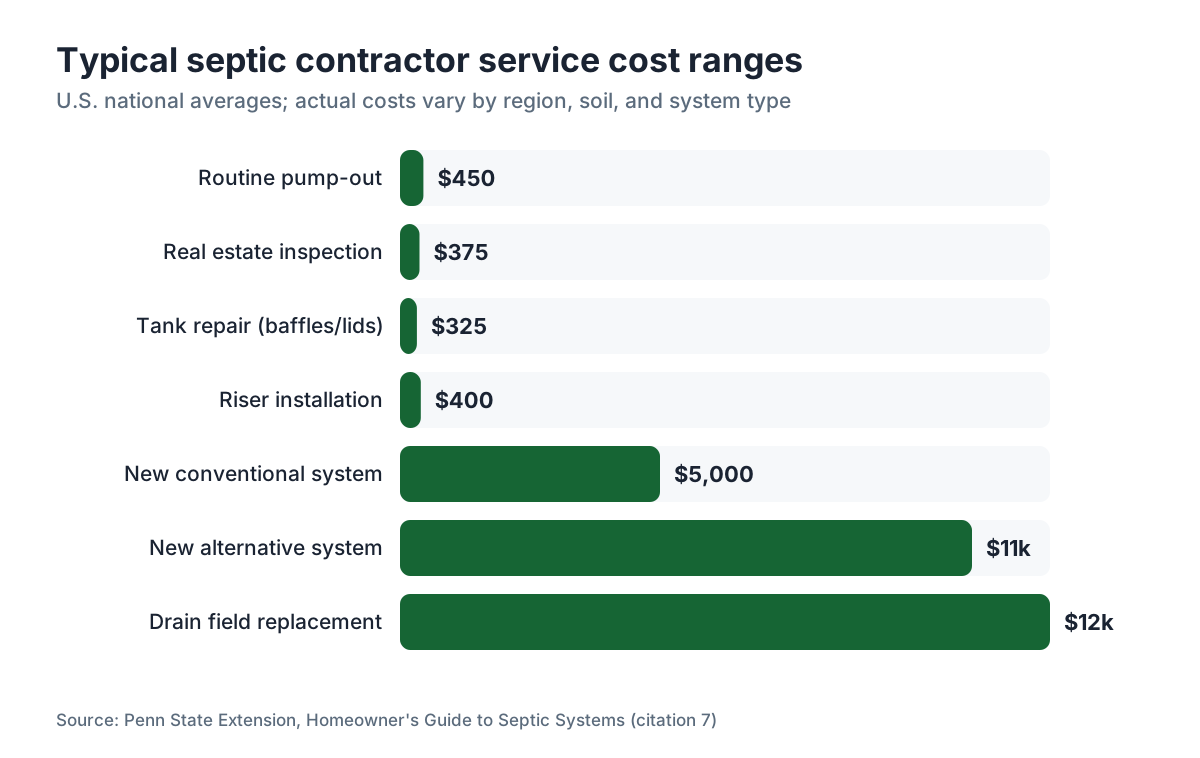
Cost depends almost entirely on what you're hiring them for. Routine pumping is cheap. Full system replacement is not.
| Service | Typical Cost Range | Notes |
|---|---|---|
| Routine pump-out (every 3 to 5 yrs) | $300 to $600 | Higher in rural areas with long drive times |
| Inspection (real estate) | $250 to $500 | Separate from pumping; requires certified inspector |
| Tank repair (baffles, lids) | $150 to $500 | Simple repairs; more for inlet/outlet work |
| New conventional system (installation) | $3,000 to $7,000 | Gravity-fed, favorable soil, average lot |
| Advanced/alternative system | $7,000 to $15,000+ | Mound, drip, aerobic treatment unit |
| Drain field replacement | $5,000 to $20,000 | Highly site-dependent |
| Septic tank riser installation | $200 to $600 | Reduces future access costs |
These ranges reflect U.S. averages compiled from contractor surveys and extension service cost guides [7]. Your number will shift based on soil, system type, local labor rates, and how far the contractor has to haul waste or materials.
The biggest cost driver on a new install is the soil. A conventional gravity-fed system needs soil that percolates well. Poor soil means an engineered alternative system, which can triple the price. The perc test itself runs $250 to $1,000 depending on the state and how many test holes the code requires.
For a detailed breakdown of new system costs, see our guides to cost to put in a septic tank and cost to install septic system.
Do you need a permit to hire a septic contractor for installation?
Yes. A septic tank installation permit is required in every U.S. state, and in most cases it's site-specific, tied to the soil evaluation and approved design for your exact lot [8]. You can't grab a permit from one address and use it somewhere else.
Who pulls the permit varies. On most jobs the installer pulls it on your behalf, but the permit is issued in your name as the property owner. Understand that distinction. If a contractor says he'll handle it "under his license" and you shouldn't worry about it, that's not automatically a red flag, but ask to see the permit before any soil is disturbed. The county should have a copy on file.
Typical permit process on a new installation:
- Soil evaluation (perc test or soil profile) by a licensed evaluator.
- System design submitted to the local health department or environmental agency.
- Permit issued after design approval (days to weeks depending on county backlog).
- Installation with at least one mid-job inspection before backfilling.
- Final inspection and sign-off.
Skipping the permit is a serious mistake. EPA SepticSmart guidance warns that unpermitted systems can lead to "costly repairs and potential legal liability" [1]. Many states tie permit history to title records, so an unpermitted system can kill a home sale or shave value off the appraisal.
Replacement and repair permits are usually required too, though some states let minor repairs (swapping a lid, for example) go without one. Call your county health department before any work starts. They'll tell you exactly what triggers a permit.
How do you find qualified septic tank contractors in your area?
The best sources aren't the obvious ones.
Your county health department is underrated. They approve permits, so they see who does good work and whose installations flunk inspection over and over. A quick call asking "who are the active licensed installers in this county?" often gets you a list. Some counties publish it online.
Your state licensing board database is the authoritative list of licensed contractors. Filter by license type (onsite wastewater, liquid waste hauler, and so on) and zip code. It's more reliable than Angi, HomeAdvisor, or Yelp for this work because it starts with the license, not the marketing profile.
Neighbors on septic are gold in rural and suburban areas where septic is common. Facebook neighborhood groups and Nextdoor produce real referrals with real experiences attached.
Real estate agents in septic-heavy areas often keep a short list of inspectors and contractors they've watched perform on transactions. It's an imperfect source (some relationships are cozy) but it's a start.
Once you have names, get three bids. Not because you'll always take the cheapest, but because the bids themselves tell you things. A contractor who shows up, walks the property, and asks your household size before quoting is doing the job right. One who quotes over the phone without seeing the site is guessing, and that number will drift once the work starts.
Ask each one for the license number upfront, proof of insurance, and at least two references from jobs in the last 12 months. Then actually call those references.
What questions should you ask a septic contractor before hiring?
These questions separate the good contractors from the risky ones:
"What is your state license number and can I verify it online?" Hesitation or a vague answer is a red flag. The number should be ready.
"Will you pull the permit, and can I see it before work starts?" Confirms they know the permit is required and aren't planning to skip it.
"Who does the actual digging, you or a subcontractor?" Many contractors sell the job and hand it to an uncredentialed sub. Nothing wrong with subs, but you want to know who's on your property and whether they carry insurance.
"Have you installed systems in this county recently?" Local experience matters. Soil conditions, code interpretations, and inspector preferences vary by county line.
"What happens if the inspection fails?" You want a clear answer about who pays for rework. Get it in writing.
"What does your warranty cover and for how long?" Industry standard is one to two years on workmanship. Some states mandate a minimum period. Manufacturer warranties on tanks and components are separate.
"How do you handle unexpected soil conditions?" This happens. If they hit rock or saturated ground, the design may change and the cost will climb. How they talk through that scenario tells you plenty.
For routine maintenance the questions are simpler. On a pump-out, ask where they haul the waste (it should go to an approved treatment facility), whether they inspect the baffles during the job, and whether they leave a written service report. That report matters for your records and for future buyers.
What are the red flags that a septic contractor isn't trustworthy?
The septic trade has good operators and bad ones. The bad ones cluster where enforcement is lax, demand spikes after storms, and homeowners don't know what to ask.
No license or an expired license. Non-negotiable. Walk away.
Pressure to skip the permit. A contractor who says "we don't need a permit for this" or "permits just slow things down" is either wrong or dodging scrutiny. Either way the legal liability lands on you as the property owner.
Cash-only, no written contract. Some legitimate contractors prefer cash, but no written contract is always a problem. The contract should spell out scope, materials, system type, permit responsibility, payment schedule, and warranty terms.
Won't provide proof of insurance. Ask for a certificate of insurance naming you as certificate holder. If they can't produce it in 24 hours, they probably don't carry enough coverage.
A quote far below the other two. Sometimes that's efficiency. More often it signals cut corners, cheap materials, or a plan to upsell once the hole is open.
Scare tactics about your current system. "Your entire drain field needs immediate replacement" after a routine pump-out, with no evidence, is a classic upsell. Get a second opinion before you authorize major work.
For septic tank repair specifically, ask to see what they found before they fix it. A photo or video of the cracked baffle, the damaged outlet tee, or the flooded distribution box takes 30 seconds and gives you something to verify against.
What's the difference between a septic installer and a septic pumper?
These are often two different license types issued by the same state agency.
An installer (sometimes called an onsite wastewater system contractor or OWTS contractor) is licensed to design and build new systems, replace failing ones, and perform major repairs that change the system's configuration. This work almost always requires a permit.
A pumper (sometimes called a liquid waste hauler or septage hauler) is licensed to remove the accumulated solids and liquids from a tank and haul them to an approved disposal facility. That's maintenance, not construction. Most states require a separate vehicle permit tied to the truck, and approved disposal sites are logged by state environmental agencies.
Many larger companies hold both licenses and offer both services. Smaller shops usually specialize. If you're scheduling a routine septic tank pumping or septic tank cleaning, you're calling a pumper. If you're building new or replacing a failed system, you need an installer.
Some states add a third category: the inspector or evaluator, licensed to assess system condition for real estate deals or compliance cases but not necessarily licensed to do the work. In a home sale, make sure the person writing the inspection report holds the correct credential for that specific function in your state.
How do septic contractors handle new installations vs. repairs?
New installation and repair work run on different regulatory tracks, even when the same person does both.
A new installation is tightly controlled. Soil work first, then design, then permit, then installation, then inspection, then backfill. The sequence is rigid because the county inspector has to see the system before it's buried. Rush a step and you risk a failed inspection and expensive digging to redo buried work.
Repairs vary more. Minor fixes like replacing an inlet baffle, patching a cracked lid, or installing a septic tank riser for easier future access may need only a simple permit or none, depending on your state. Major repairs like replacing a distribution box, rerouting a leach line, or adding a new drain field section almost always require a permit and inspection.
Alternative system repairs are the trickiest. Aerobic treatment units, drip irrigation systems, and mound systems use proprietary components and often require manufacturer-certified service providers on top of the state license. If your alternative system is under a maintenance contract (many states require one), the contractor servicing it should already be on the approved provider list.
For anything past a baffle swap or lid replacement, get the scope in writing before work starts. "We'll fix the problem" is not a scope. "We will replace the outlet baffle tee, install a 4-inch access riser, and restore grade over the tank lid, with all materials specified by brand and model" is a scope.
SepticMind's service tracking tools let operators log repair details, attach photos, and generate service reports that protect both the contractor and the homeowner in exactly these situations.
How do state regulations affect which contractors you can hire?
State rules shape everything from who can legally do the work to which system types get approved. The EPA sets broad guidance through programs like SepticSmart, but the real regulatory authority sits with states and, below them, counties [1].
A few examples of how much the rules swing:
- In Texas, the TCEQ regulates installers, maintenance providers, and designated representatives under Title 30, Texas Administrative Code, Chapter 30 [4]. Counties can be stricter, never looser.
- In California, the CSLB C-42 license covers sanitation systems, but many counties add Environmental Health permitting the contractor has to work through separately [3].
- In Florida, Chapter 64E-6 of the Florida Administrative Code governs onsite sewage treatment and disposal systems. The state requires a licensed contractor for any system installation, repair, modification, or abandonment [5].
- In North Carolina, the Onsite Water Protection program under DHHS regulates installer credentials and requires a site evaluation by a registered soil scientist or licensed soil evaluator before a permit is issued [9].
The practical takeaway: a contractor licensed in one state cannot legally work across the line in the next state without holding that state's separate license. This bites people in rural areas near state borders. Always confirm the license is current in the state where your property actually sits.
Land-grant university extension services publish state-specific homeowner guides on onsite wastewater. NC State Extension, Penn State Extension, and the University of Minnesota Extension all have solid material [10].
When should you get a second opinion before authorizing major work?
Get a second opinion any time a contractor recommends work over roughly $1,500 based on a visual look alone, or any time the recommendation involves replacing major components: the tank, the drain field, or an alternative treatment unit.
Drain field failure is the most expensive diagnosis and the one most worth verifying. A saturated field looks like a failing field, but the cause decides the fix. If it's saturated because the tank hasn't been pumped in 15 years and is pushing solids into the field, pumping and resting the field may bring it back. If the soil is biologically clogged after decades of use, replacement may genuinely be the answer. Same symptom, different problems, very different price tags.
A legitimate contractor walks you through the evidence. They show you the water table level, the condition of the distribution box, the flow test results, or camera footage of the outlet pipe. "Trust me, it needs to be replaced" from someone who spent 20 minutes on your lot doesn't cut it.
For septic tank emptying or routine maintenance, second opinions are rarely worth the trouble. For anything involving field work, excavation, or system redesign, they're worth the cost of a second service call.
How often should you be calling a septic contractor for routine maintenance?
EPA SepticSmart recommends a professional inspection every three years and pumping every three to five years, depending on household size and tank volume [1]. Your real interval hangs on tank size and how many people use it.
A 1,000-gallon tank serving four people fills faster than a 1,500-gallon tank serving two. A common rule contractors use is to pump when the scum and sludge layers together fill more than one-third of the tank's working volume. For most households that lands at every three to five years.
Our guide to how often to pump septic tank goes deeper. The short version: pumping on schedule costs far less than the emergency call when the system backs up.
Beyond pumping, a contractor should inspect the inlet and outlet baffles, the tank's structural condition, and the distribution box at each visit. Some include this automatically. Others charge extra. Ask before you schedule.
Alternative systems with mechanical parts (aerobic treatment units, pump chambers, float switches) need more attention, usually annually. Many states require an annual maintenance contract with a licensed service provider as a condition of the operating permit. If you have an alternative system and you're not sure whether you're under contract, call your county health department and ask.
Frequently asked questions
Do I need a licensed septic contractor or can a general contractor do the work?
In almost every state, a general contractor's license does not cover septic installation or repair. You need a contractor holding a state-issued onsite wastewater or septic license. Verify the number on your state's licensing board website before signing anything. Hiring an unlicensed person creates legal and financial exposure for you as the property owner, including possible denial of an insurance claim.
How do I verify a septic contractor's license?
Go to your state's licensing board or department of environmental quality website and search by the contractor's name or the license number they give you. Every state with a licensing requirement keeps a public lookup tool. Check that the license type matches the work (installer vs. pumper vs. inspector) and that it isn't expired or suspended before you commit.
Who is responsible for pulling the septic installation permit, me or the contractor?
Usually the contractor pulls it on your behalf, but the permit is issued to you as the property owner. You have the right to see it before work starts. Some jurisdictions let owners pull their own permit on owner-occupied residential property, though that's less common for septic than for other trades. Ask your county health department what their policy is.
How many bids should I get for a septic installation?
Three is the practical minimum. The first bid gives you a number, the second tells you whether it was reasonable, the third reveals the range. Bids should be based on a site visit, not a phone estimate. Contracts should specify materials, system type, permit responsibility, inspection schedule, payment terms, and warranty. A quote missing those details isn't a real bid.
Can a septic contractor also do the soil evaluation (perc test)?
It depends on the state. Some allow licensed installers to perform soil evaluations. Others require a separate licensed soil evaluator or registered soil scientist. A few require the evaluation to be done by someone with no financial interest in the installation, to avoid conflicts. Check your state's rule before assuming the contractor who does the soil work can also do the install.
What does a septic system inspection for a home purchase involve?
A real estate septic inspection usually includes pumping the tank, inspecting the tank's structure and baffles, locating and examining the distribution box, and assessing the drain field. Some inspectors run a hydraulic load test. The inspector should provide a written report. In many states this inspection must be done by someone holding a specific inspector credential, separate from the installation license.
How long does a septic system installation take from permit to completion?
On a straightforward conventional system with good soil, the physical install takes one to two days once the permit clears. The permit process (soil evaluation, design review, county approval) takes anywhere from a week to several months depending on backlog. In high-demand rural counties, permit waits of four to eight weeks are common.
What questions should I ask about a contractor's insurance?
Ask for a certificate of insurance naming you as a certificate holder on their general liability policy. Confirm workers' compensation is current if they have employees. General liability of at least $1 million per occurrence is a reasonable minimum for installation work. Don't accept a verbal assurance; the certificate should come straight from their insurance carrier.
What happens if the septic installation fails the county inspection?
The contractor must correct the deficiency before backfilling and request a re-inspection. Who pays depends on the cause. If the failure is contractor error (wrong pipe depth, bad slope, missing component), the contractor should cover rework at no cost to you. Get language in your contract stating that inspection-failure rework is included in the price when caused by installation error.
Is septic system work covered by homeowner's insurance?
Standard homeowner's policies typically exclude damage from gradual leakage, seepage, or neglect, which covers most septic failures. Some insurers offer home warranty add-ons or riders that cover septic components. Hiring an unlicensed contractor can void a policy that might otherwise apply. Check your specific policy language before you assume anything is covered.
How do I find septic contractors who work on alternative systems like aerobic treatment units?
Start with the manufacturer's website for your specific ATU brand. Most manufacturers keep a directory of certified service providers by state. Some states also publish lists of contractors trained on alternative system types. Your county environmental health office can usually point you to providers approved to service the specific technology in your area.
Can I do any septic work myself without hiring a contractor?
Some states let owner-operators do limited work on their own primary residence, such as pumping or minor repairs, without a license. Most prohibit it for installation and major repair. Even where it's allowed, you still need the permit, and the work must pass inspection. The risk of doing it wrong and contaminating your groundwater or wrecking a field that costs $15,000 to replace is real.
What is the typical warranty on a new septic system installation?
Workmanship warranties from contractors usually run one to two years. Tank manufacturer warranties vary: concrete tanks may carry a structural warranty of 10 to 20 years, while plastic and fiberglass tanks often have limited lifetime warranties on the vessel itself. Mechanical components like pumps usually carry one to two year manufacturer warranties. Get all warranty terms in writing before signing the installation contract.
Sources
- U.S. EPA, SepticSmart homeowner guidance: EPA SepticSmart recommends professional inspection every three years and pumping every three to five years, and warns that unpermitted systems can lead to costly repairs and potential legal liability.
- U.S. EPA, Overview of Onsite Wastewater Treatment Systems: Nearly every state requires a separate onsite wastewater or septic contractor license beyond a general contractor's license, with counties often adding local registration requirements.
- California Contractors State License Board, C-42 Sanitation Systems license: California requires a C-42 Sanitation Systems specialty license under the CSLB for septic system installation.
- Texas Commission on Environmental Quality, On-Site Sewage Facilities licensing: Texas TCEQ regulates septic installers and maintenance providers under Title 30, Texas Administrative Code, Chapter 30.
- Florida Department of Health, Onsite Sewage Programs: Florida Chapter 64E-6 of the Florida Administrative Code requires a licensed contractor for any septic system installation, repair, modification, or abandonment.
- National Onsite Wastewater Recycling Association (NOWRA): NOWRA offers voluntary professional credentials that supplement but do not substitute for state licensing requirements.
- Penn State Extension, Homeowner's Guide to Septic Systems: Cost ranges for septic installation and pumping compiled from contractor surveys and extension service cost guides; conventional systems $3,000 to $7,000, alternative systems $7,000 to $15,000+.
- U.S. EPA, Septic System Installation and Permitting: A septic tank installation permit is required in every U.S. state and is site-specific, tied to the soil evaluation and approved design for the specific lot.
- North Carolina DHHS, Onsite Water Protection: North Carolina requires site evaluations by a registered soil scientist or licensed soil evaluator before a septic permit is issued.
- University of Minnesota Extension, Septic Systems: Land-grant university extension services publish state-specific homeowner guides on onsite wastewater system maintenance and contractor selection.
- U.S. EPA SepticSmart, Septic System Maintenance Frequency: EPA recommends pumping a septic tank every three to five years for a typical household; the actual interval depends on tank size and number of occupants.
Last updated 2026-07-09