Septic inspection in Oak Harbor: what to expect and what it costs
By the SepticMind Editorial Team
TL;DR
- A septic inspection in Oak Harbor, WA runs $200 to $600 and takes two to four hours.
- It has to be done by a licensed O&M specialist or certified inspector under Island County and Washington State Department of Health rules.
- Inspectors check the tank, lids, baffles, the pump if there is one, and the drainfield.
- Home sales trigger a mandatory inspection under WAC 246-272A.
What is a septic inspection in Oak Harbor and why does it matter?
A septic inspection is a physical exam of every accessible part of your onsite sewage system. The tank, the inlet and outlet baffles, the distribution box or pump chamber, the effluent levels, and the drainfield surface. In Oak Harbor you're on Whidbey Island in Island County, and the local ground raises the stakes. Shallow soils over glacial till, closeness to Penn Cove and Puget Sound, and a lot of older systems built in the 1970s and 1980s all mean a failing system here doesn't just soak your yard. It reaches the water fast.
Washington's main rule for residential septic systems is WAC 246-272A, run by the Washington State Department of Health (DOH). Island County's Environmental Health division enforces those rules locally and keeps its own permit and inspection records. If you're buying or selling, refinancing, or just checking a system that hasn't been touched in years, an inspection is how you learn what you own before you learn it the hard way, with a backup in the basement or a drainfield gone to mush.
The EPA's SepticSmart program says it plainly: "Regular inspections and pumping every three to five years help ensure that the septic system works properly" [1]. That's a national floor. Island County's mix of thin soils, shellfish beds, and water quality worries pushes local practice stricter than that floor in a lot of cases.
What does Washington State law require for septic inspections?
Washington requires that every onsite sewage system (OSS) be run and maintained in a way that protects public health. WAC 246-272A is the controlling rule. It defines system types, sets design standards, and lays out operation and maintenance (O&M) program requirements [2].
For most conventional gravity systems in Island County, there's no mandatory annual inspection unless the county has enrolled the system in an O&M program. The real trigger is a sale. Island County Environmental Health requires a septic inspection as part of any real estate transfer for a property served by an OSS [3]. A licensed inspector has to do it, and the results go to both the buyer and the county.
Systems with pressure distribution, mounds, drip irrigation, or other "alternative" designs live under stricter rules. They usually must carry a maintenance contract with a certified O&M provider, and annual or biannual inspections come with that contract. WAC 246-272A-270 states that owners of alternative systems "shall maintain a current operation and maintenance contract with a certified O&M specialist" [2]. If you have a pressure-dosed system on Whidbey and no active O&M contract, you're out of compliance, whether anyone has told you or not.
Here's the practical move. Even if you're not selling, call Island County Environmental Health and confirm what your specific system type requires. The county keeps records of approved designs and can tell you which maintenance tier you fall into.
What does a septic inspector actually check in Oak Harbor?
A real inspection covers a lot more than pumping the tank and heading out. Here's what a qualified inspector actually looks at.
Tank condition. The inspector opens all access lids (one over the inlet compartment and one over the outlet, or a single lid on older one-compartment tanks), measures liquid levels, checks for cracks or structural damage, and looks at the inlet and outlet baffles. Baffles keep scum from floating out into the drainfield. A cracked or missing outlet baffle is a leading cause of early drainfield failure.
Effluent levels. If the liquid in the tank sits higher than the outlet pipe, water is backing up from the drainfield. That's a red flag. On complex systems the inspector may pull an effluent sample, though that isn't standard for conventional gravity setups.
Distribution system. On systems with a D-box (distribution box), the inspector checks that flow spreads evenly to all drainfield lines. Uneven flow kills sections of the field early.
Pump chamber and pump. Pressure-dosed systems have a pump chamber separate from or downstream of the septic tank. The inspector checks pump operation, float switches, and the high-water alarm. Plenty of Oak Harbor homes run pressure-dosed systems, especially on lots with shallow soil.
Drainfield surface. The inspector walks the field looking for wet spots, lush green stripes of grass, odor, or sewage surfacing above grade. Any of those points to drainfield stress or failure. Soil probing or a dye test may follow if failure looks likely.
Records review. A good inspector checks the county permit records against what's actually in the ground. Systems modified without permits, or tanks that sit somewhere other than the permit shows, cause headaches at closing.
What the inspection skips: a camera run of the drain lines from the house to the tank (that's a separate sewer scope, usually a plumber's job) and digging up drainfield trenches. Those are add-ons if the inspector smells a buried problem.
How much does a septic inspection cost in Oak Harbor?
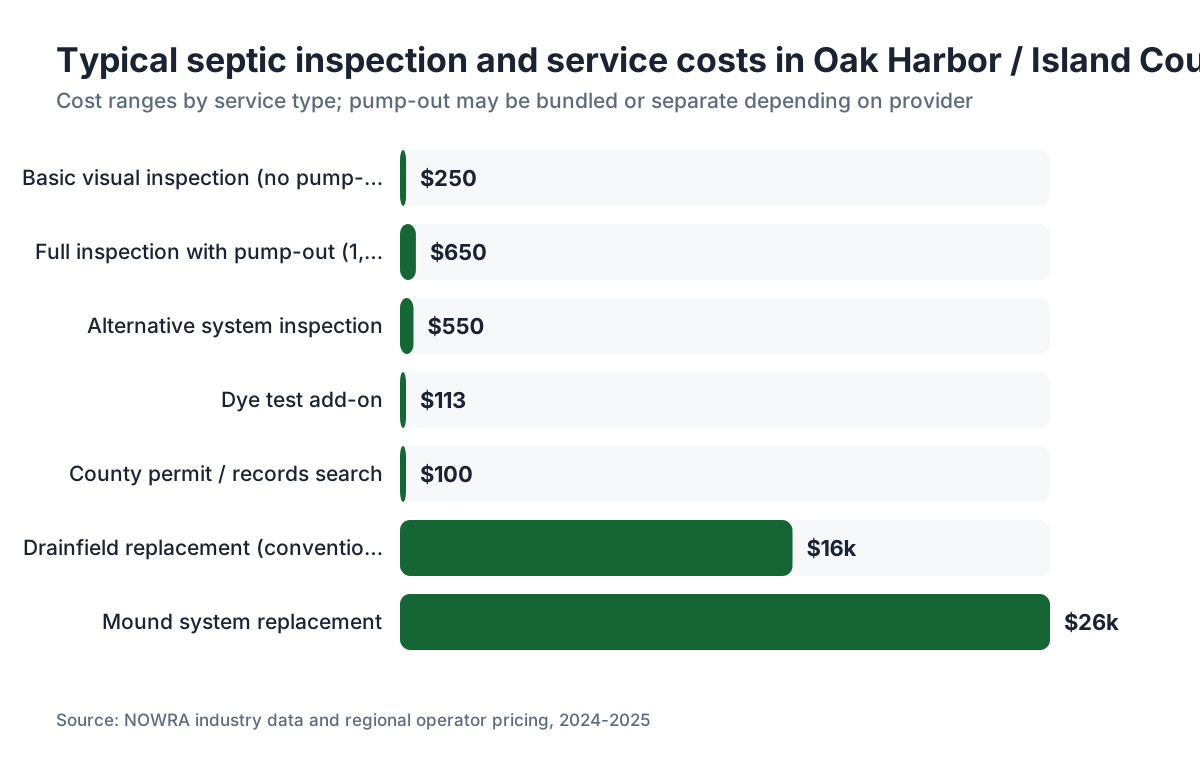
Plan on $200 to $600 for a standard inspection in Oak Harbor, WA. The range is wide because cost tracks system complexity, whether the tank gets pumped during the inspection, and whether any add-on tests come into play.
A basic visual inspection with a records review and no pump-out runs $200 to $350. If the inspector needs to pump the tank to see the interior properly (often required for real estate inspections), add $300 to $500 for a 1,000-gallon pump-out from a local pumper. Some inspectors fold the pump-out into a package price. Others subcontract it. Ask upfront what's included.
Alternative and pressure-dosed systems cost more because there's more to check. Figure $400 to $600 or higher if the system has a pump chamber, a media filter, or a drip network. Dye testing adds roughly $75 to $150.
Island County doesn't set a fixed fee for the inspection itself. The county charges permit and record-search fees separately, usually $50 to $150 depending on what's involved. On a sale, the buyer usually pays for the inspection and the seller handles any required repairs.
The table below shows wider ranges across Washington.
| Inspection type | Typical cost range (WA state) | Notes |
|---|---|---|
| Basic visual inspection | $150, $350 | No pump-out included |
| Full inspection with pump-out | $450, $850 | Tank pump-out billed separately or bundled |
| Alternative system inspection | $400, $700 | Pressure dose, mound, drip systems |
| Dye test add-on | $75, $150 | Used when drainfield failure is suspected |
| County permit/records search | $50, $150 | Island County Environmental Health |
These ranges come from published Washington OSS service provider data and regional operator pricing as of 2024 to 2025. Costs vary by provider and shift over time, so get two or three quotes.
Here's the number that should focus your attention. Drainfield repair or replacement in Island County can run $8,000 to $25,000 or more depending on soil, system type, and lot constraints. That's the real reason you want a thorough inspection before you close on a property.
Who is qualified to perform a septic inspection in Island County?
Washington licenses two kinds of people who matter for septic inspections. Licensed O&M specialists are certified under WAC 246-272A to operate and maintain onsite sewage systems, especially alternative and complex ones. They're the right call for pressure-dosed, mound, or media-filter systems. Licensed pumpers can also inspect conventional gravity systems, though their scope is narrower [2].
For real estate inspections, Island County Environmental Health requires a Washington licensed O&M specialist or a certified inspector the county recognizes. A general home inspector who isn't separately licensed for OSS work cannot satisfy the county's real estate inspection requirement. That trips up a lot of buyers coming from states where home inspectors routinely sign off on septic.
Verify a provider's license through the Washington State Department of Health's professions licensing lookup. DOH keeps that database online, and it's worth a two-minute check before you hire anyone [4].
Local providers around Oak Harbor and Whidbey Island include several licensed pumping and O&M firms. The Island County Environmental Health office can hand you a list of active licensed providers, which is a good starting point if you don't already have a service company you trust.
How do real estate septic inspections work in Oak Harbor?
A home sale is the most common reason Oak Harbor owners get a septic inspection, and the process runs on specific steps.
First, Island County Environmental Health requires an inspection report on file before the property transfers. The county's OSS inspection form asks for tank condition, effluent levels, baffle condition, pump operation if applicable, and drainfield observations. The inspector signs it and submits it to the county, which keeps it on record [3].
The inspection usually gets ordered during the due diligence window after an offer is accepted. Buyers should schedule it early. Licensed inspectors in Island County can be booked two to three weeks out, especially in the spring and summer selling season.
If the inspection finds problems, what happens next depends on how bad they are. A failed or failing drainfield is a major defect that requires repair or replacement before the county approves the transfer. Minor issues like a cracked lid or a baffle that needs replacing usually get sorted by negotiation between buyer and seller. Some lenders, particularly on FHA or VA loans, require documented repair of any noted deficiency before they fund.
The report stays in Island County's records permanently and becomes part of the property's OSS history. Future buyers and inspectors can pull that history, so repairs need to be properly permitted and documented. Unpermitted work shows up as a gap in the record and creates trouble at the next sale.
Buying a home with an existing system? Read the septic tank inspection guide alongside this one. And if the inspection shows the tank hasn't been pumped in a while, the how often to pump a septic tank guide helps you set a schedule going forward.
What are the most common problems found during Oak Harbor septic inspections?
Given the older system stock and the local soils, inspectors around Oak Harbor keep running into the same handful of problems.
Missing or deteriorated baffles. Older tanks, especially concrete ones from the 1970s and 1980s, often have concrete baffles that crumbled over the decades. When the outlet baffle goes, solids escape into the drainfield and clog the soil. This is the single most common road to drainfield failure.
Tanks nobody ever pumped. Systems that were never on a schedule pack up sludge and scum until the working volume of the tank shrinks to almost nothing. The EPA recommends pumping every three to five years for a typical household [1]. A tank that hasn't been pumped in fifteen years is a gamble.
Drainfield stress from high groundwater. Whidbey Island has areas with seasonally high water tables, mostly in low-lying spots and near wetlands. In a wet winter the water table can climb to within a foot of the drainfield trenches, backing up effluent and cutting field life short.
Pump failures in pressure-dosed systems. Effluent pumps last seven to fifteen years, give or take. A pump nobody's checked can quit without tripping an alarm if the float switches have gone bad too.
Permit records that don't match reality. Older properties sometimes show a tank in one spot on county records while the real tank sits somewhere else, because it got replaced without a full permit. Or the permitted drainfield area now has a shed or driveway on top of it, compacting the soil and killing the field.
Root intrusion. Trees planted near the drain lines over the years push roots into the perforated pipes and choke off flow to parts of the field.
None of these are unique to Oak Harbor. But the mix of old housing stock and sensitive receiving waters makes a thorough inspection matter more here than in a lot of other places.
What happens if a septic inspection finds a failure?
A failed septic system in Oak Harbor has to be repaired or replaced before Island County approves a property transfer. When the failure poses an immediate public health hazard, the county can order action even on an occupied home that isn't for sale.
The repair path depends on what broke. A failed outlet baffle or a cracked lid is minor, usually a few hundred dollars, and a licensed pumper or contractor can knock it out fast. A failed drainfield is a different animal. Replacing one in Island County means a new permit application, a site evaluation (soil testing, a percolation test or soil morphology review), a system design by a licensed OSS designer, and installation by a licensed contractor. The county reviews and approves the design before anyone digs [3].
A full drainfield replacement typically runs four to twelve weeks from permit application to final inspection, assuming nothing snags. Cost lands somewhere from roughly $8,000 for a simple replacement on a cooperative site to $25,000 or more for a mound, a drip system, or a lot with bad soils or no room.
Facing repairs? The septic system repair guide walks through the decision points and cost factors. For problems inside the tank itself, septic tank repair breaks down what's fixable versus what needs full replacement.
Operators juggling service jobs across Island County, tracking inspection findings, repair permits, and O&M schedules across a client base, tend to find that job management software like SepticMind (septicmind.com) cuts the paperwork load, especially for keeping O&M contract records and inspection histories straight.
One thing worth knowing. If a real estate inspection turns up a failure and the sale falls apart, the county still has a record that the failure was found. The seller now carries a duty to disclose that on future deals.
How do I find and prepare for a septic inspection in Oak Harbor?
Start with Island County Environmental Health. The division can hand you names of licensed O&M specialists and pumping firms working the Oak Harbor area [3]. The Washington DOH licensing database is your other tool for checking credentials [4].
When you call to schedule, ask these five questions:
- Are you licensed as an O&M specialist under WAC 246-272A?
- Does your inspection satisfy Island County's real estate transfer requirement?
- Is the pump-out included in your price, or billed separately?
- Do you pull county records as part of the inspection, or is that on me?
- What's in your written report?
To prep, dig out your septic records if you have them. The as-built drawing (the diagram showing tank and field locations, tank size, and system type) is the single most useful thing you can put in an inspector's hands. No copy? Island County Environmental Health keeps permit records and may be able to pull one.
Clear access to the tank lids before the inspector shows up. Inspectors bill for the time it takes to find and uncover buried lids, and on older properties it's not unusual to find lids under eight inches of soil. If you don't know where they are, the inspector can locate them (sometimes with a probe or the records), but give yourself extra room in the appointment window.
Go easy on water the morning of the inspection. No big laundry runs, no long showers. You want the system in a normal, representative state, not flooded with fresh water that hides the true effluent level.
After the inspection, file the written report with your home records and keep it. It becomes part of the history the next buyer's inspector will want to see.
How often should you get a septic inspection in Oak Harbor even if you're not selling?
Not selling doesn't get you off the hook. Conventional gravity systems in Island County should be inspected at every pump-out, which the EPA recommends every three to five years for a typical household [1]. Heavy use or a smaller tank shortens that. The how often to pump a septic tank guide breaks the interval down by household size and tank volume.
Alternative systems with O&M requirements under WAC 246-272A usually need inspection every one to two years as part of the active maintenance contract. If your system has a pump, a timer, a media filter, or anything beyond a simple tank and gravity-fed drainfield, assume annual inspection is the minimum.
Island County sits inside Puget Sound's watershed, and the shellfish beds around the island mean water quality agencies watch OSS performance. The Puget Sound Partnership coordinates monitoring and recovery work that ties system compliance to shellfish bed status [5]. That's not a threat hanging over most homeowners, but it's worth knowing your system's performance plugs into a much bigger picture.
The practical rule: full inspection every three to five years, every time you pump. It adds maybe $100 to $200 to a pump-out (if the pumper isn't already doing one), and it catches the baffle rot, pump wear, or high-water signals that turn into expensive failures when ignored.
Between inspections, the basics carry a lot of weight. Flush nothing but toilet paper, keep grease out of the drains, and spread laundry loads across the week instead of running five in a row. Washington State University Extension offers homeowner guidance on the same practices for Pacific Northwest conditions [9]. None of it is hard, and it adds years of life to the system.
What should Oak Harbor homeowners know about replacing a failed system?
If an inspection decides repair won't cut it and the system needs replacing, the process in Island County follows Washington's permitting structure under WAC 246-272A plus the county's local OSS ordinance.
Step one is a site evaluation. A licensed OSS designer or county environmental health staff assesses your soil, lot layout, setbacks from property lines and wells, and the area available for a new drainfield. In Island County, minimum setbacks from surface water, wells, and property lines come from state rule and can be tightened by local amendment.
From the site evaluation, the designer prepares a system design. That goes to Island County Environmental Health for review and a permit. A licensed OSS contractor installs it, and the county inspects the work before burial. The final as-built drawing gets filed with the county.
Cost context: a standard gravity system with a new concrete tank and drainfield typically runs $12,000 to $20,000 in the Pacific Northwest. A mound system (required when soil depth or permeability is limited) runs $18,000 to $35,000. Drip irrigation or recirculating media filter systems can top $30,000 depending on complexity. These are rough. Get a written estimate from a licensed contractor for your actual site.
The cost to install a septic system article goes deeper on the numbers, and the leach field article explains how drainfields work before you sit down with a designer.
SepticMind (septicmind.com) gives service operators tools to track permit timelines, installation milestones, and O&M contracts, which earns its keep when you're running several replacement projects across Island County at once.
Frequently asked questions
Does Island County require a septic inspection before selling a home?
Yes. Island County Environmental Health requires an OSS inspection as part of any real estate transfer where the property is served by a septic system. A Washington State licensed O&M specialist or certified inspector has to perform it, and the report gets filed with the county. This is required under Island County's OSS regulations, which align with WAC 246-272A.
How long does a septic inspection take in Oak Harbor?
A full inspection on a conventional gravity system usually takes two to three hours. Systems with a pump chamber, pressure distribution, or a media filter take three to four hours. Add time if the tank lids are buried and need locating. If a pump-out happens during the inspection, budget a full half-day to be safe.
Can a regular home inspector do a septic inspection in Washington State?
No, not for satisfying Island County's real estate transfer requirement. Washington and Island County require OSS inspections by a licensed O&M specialist under WAC 246-272A. A general home inspector without that specific license cannot sign off on the inspection for county purposes, even if they note septic observations in their home inspection report.
What happens if the septic system fails inspection before closing?
The county requires repair or replacement before approving the transfer. Buyer and seller negotiate who pays. For a minor defect like a cracked baffle, the cost is modest and repairs happen fast. For drainfield failure, the process involves a new permit, site evaluation, and installation, which takes weeks and costs thousands. Some deals fall through. Others adjust the sale price.
How do I find my septic system records in Island County?
Island County Environmental Health keeps permit and as-built records for OSS installations. Contact the county's Environmental Health division directly or check their online permit portal. Records usually include the original permit, the system design drawing, inspection reports, and any repair or modification permits. Older systems from the 1970s may have incomplete records.
How often should I pump my septic tank in Oak Harbor?
The EPA recommends pumping every three to five years for a typical household. A smaller tank, a bigger household, or garbage disposal use all shorten that. In Island County, where groundwater and surface water are sensitive, staying on the shorter end is smart. A licensed pumper can measure sludge depth and tell you how close you actually are to needing service.
What is a Washington State O&M specialist and why do I need one?
An O&M (Operation and Maintenance) specialist is licensed under WAC 246-272A to inspect, operate, and maintain onsite sewage systems, especially alternative and complex designs like pressure-dosed, mound, and drip systems. If your system has a pump or any engineered component beyond a simple gravity tank and drainfield, state rules likely require an active O&M contract with a licensed specialist.
How much does drainfield repair or replacement cost in Island County?
Costs vary widely by failure type. Replacing a failed drainfield in Island County typically runs $8,000 to $25,000 for a conventional gravity system. Mound systems, required when soil is poor or shallow, run $18,000 to $35,000 or higher. These figures depend on lot conditions, setback constraints, and current contractor pricing. Get written estimates from at least two licensed contractors.
Does a septic inspection include a camera inspection of drain lines?
No, not as a standard part of an OSS inspection. A septic inspection covers the tank, baffles, pump chamber if present, and drainfield observations. A camera inspection of the house drain line from the building to the tank is a separate service, usually done by a plumber with a drain camera. If the inspector suspects pipe damage between house and tank, they may recommend adding it.
What's the difference between a septic inspection and a septic pump-out?
A pump-out removes the liquid, sludge, and scum from the tank. An inspection evaluates the condition of all system components: tank structure, baffles, distribution, pump, and drainfield. A good inspection includes a pump-out because you can't fully evaluate the tank interior when it's full. But a pump-out alone, without checking baffles and the drainfield, misses the most important diagnostic information.
Can I do a septic inspection myself in Oak Harbor?
You can watch your drainfield for surface wetness, odor, or unusually lush grass, and you can check that your access lids are present and secured. But a meaningful inspection of tank internals, baffles, and pump function means opening the tank, measuring effluent levels, and evaluating components, which requires a licensed professional under Island County rules. Self-inspection satisfies no county or real estate requirement.
Are there any grants or assistance programs for septic repair in Island County?
Washington State has historically offered low-interest loan programs through DOH for OSS repair and replacement in areas affecting shellfish growing waters, run through local public health districts. Island County sits in a shellfish-sensitive area, which has made some properties eligible in past funding cycles. Contact Island County Environmental Health or the DOH shellfish program for current availability, since funding cycles change.
What setback distances apply to septic systems in Island County?
Washington setback minimums under WAC 246-272A include 100 feet from a well, 5 feet from a property line, and specific distances from surface water depending on system type. Island County may apply stricter local standards in sensitive areas. Your OSS permit or as-built drawing should show the setbacks used on your system. A licensed OSS designer reviews setbacks as part of any repair or replacement permit.
Sources
- U.S. EPA, SepticSmart Program: EPA recommends regular inspections and pumping every three to five years to ensure septic systems work properly.
- Washington State Legislature, WAC 246-272A (Onsite Sewage Systems): WAC 246-272A governs residential OSS in Washington, including O&M specialist licensing and requirements for owners of alternative systems to maintain current O&M contracts.
- Washington State Department of Health, Licenses, Permits and Certificates: The DOH maintains the licensing database for O&M specialists and other OSS professionals in Washington State.
- Puget Sound Partnership: The Puget Sound Partnership coordinates monitoring and recovery efforts including onsite sewage system compliance in shellfish-growing areas around Whidbey Island.
- U.S. EPA, How Your Septic System Works: EPA describes standard septic system components including tank, drainfield, and the role of baffles in preventing solids from reaching the drainfield.
- Washington State Department of Ecology, Puget Sound: Washington DOE tracks water quality in Puget Sound including the relationship between onsite sewage system performance and shellfish bed closures.
- Washington State University Extension: WSU Extension provides homeowner guidance on septic maintenance, inspection intervals, and practices that extend drainfield life in Pacific Northwest conditions.
- National Onsite Wastewater Recycling Association (NOWRA): NOWRA provides industry data on OSS inspection practices, system types, and typical service cost ranges used to contextualize regional pricing.
Last updated 2026-07-09