Septic inspection in Orlando FL: what to expect and what it costs
By the SepticMind Editorial Team
TL;DR
- A septic inspection in Orlando costs $150 to $500, depending on system size and inspection type.
- Florida law doesn't force one at every home sale, but FHA and VA lenders almost always do.
- Inspectors check the tank, baffles, distribution box, and drain field for code compliance.
- Plan two to four hours for a full inspection with pumping.
What does a septic inspection in Orlando actually involve?
A septic inspection is a component-by-component look at your onsite wastewater treatment system. It goes well past someone glancing at the lid. A licensed inspector checks the tank, the inlet and outlet baffles, the distribution box or manifold, the drain field (also called a leach field), and any pumps or dosing controls. Most Orlando homes run either a conventional gravity system or a performance-based treatment system (PBTS), which shows up more often on smaller or wetter lots near the chain of lakes.
Here is what a full inspection covers:
- Tank condition. The inspector opens both the inlet and outlet access ports, checks for cracks, root intrusion, and corrosion, and measures the scum and sludge layers. If sludge is within six inches of the outlet baffle, the tank needs pumping before the drain field can be judged fairly.
- Baffles. Inlet and outlet baffles keep solids out of the drain field. Corroded or missing baffles are the most common near-term repair inspectors find in older Central Florida systems.
- Distribution box. The D-box splits effluent evenly across the drain field trenches. Tilting or standing water inside it means one or more laterals is already overloaded.
- Drain field. The inspector probes the soil above the trenches, looks for surface breakout (sewage visible at grade), and feels for spongy or saturated ground. In Orange County's sandy soils, drain fields can fail faster than the national average because sand filters pathogens less effectively than loamy soil [1].
- Pump and controls (if present). Pumped systems get a run-cycle test. The inspector checks float switches, alarm function, and the pump chamber for solids buildup.
A visual inspection without pumping takes one to two hours. A full inspection with septic tank pumping runs two to four hours. That's the one any buyer or seller should insist on.
What does a septic inspection cost in Orlando?
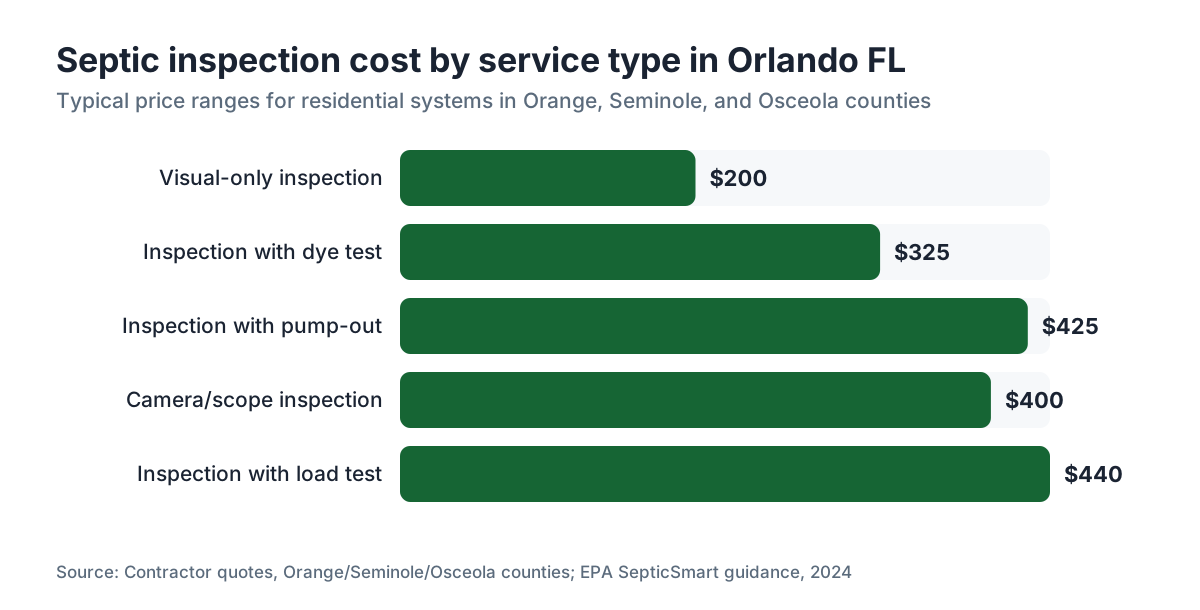
Prices in the Orlando area sort into a few tiers based on what you're buying. A visual-only inspection runs $150 to $250. A full inspection with pump-out and a written report runs $350 to $500.
| Inspection type | Typical cost | What's included |
|---|---|---|
| Visual-only inspection | $150, $250 | Lid-off look, baffle check, no pumping |
| Full inspection with pump-out | $350, $500 | Pump-out, probe, D-box check, written report |
| Inspection with dye test | $275, $375 | Visual plus dye flush to confirm drain field absorption |
| Camera/scope inspection | $300, $500 | Tank interior and outlet pipe video, useful for older tanks |
| Inspection with load test | $375, $500 | Flood test to stress the drain field capacity |
Those ranges come from contractor quotes across Orange, Seminole, and Osceola counties. The spread is real. A small 900-gallon tank on a flat, dry lot costs less to pump and inspect than a 1,500-gallon tank with a pump chamber buried six feet down.
Here's what surprises homeowners: pumping is often mandatory before the drain field can be inspected properly, so bundling the septic tank pump out with the inspection saves money versus scheduling them apart. On its own, pumping a standard residential tank in Orlando runs $300 to $500 [2].
Some Orlando companies charge a flat "real estate inspection" fee that includes the written report a lender wants. That fee usually lands between $350 and $475.
Does Florida law require a septic inspection when you buy or sell a home?
Florida has no blanket statewide law requiring a septic inspection at every closing. The real answer is more layered than that.
Florida Statute 381.0065 governs onsite sewage treatment and disposal systems (OSTDS) statewide [3]. It requires that any "construction, repair, modification, abandonment, or operation" of an OSTDS be permitted and inspected by the county health department. So any system alteration triggers an official inspection. A plain home sale does not.
The practical side is different. Most mortgage lenders and nearly every buyer's agent in Orlando now treat a septic inspection as a standard contract contingency on any home with a private system. FHA and VA loans carry their own rules, and both routinely flag septic systems before approval. FHA guidance in Handbook 4000.1 states that the well and septic system must be located and tested and must meet local standards [4].
Orange County's Environmental Health office (part of the Florida Department of Health in Orange County) handles permits, repairs, and complaints for residential OSTDS. Buying a home built before 1980? That system likely predates modern setback and sizing rules, which makes an independent inspection more useful, not less.
The law doesn't force the inspection. Your lender and your own wallet almost certainly will.
Who is licensed to do septic inspections in Orlando FL?
Florida requires anyone inspecting a septic system for a fee to hold a Septic Tank Contractor license through the Florida Department of Health, or an equivalent OSTDS authorization [5]. Verify the license before you write a check.
Three types of providers work the Orlando market:
- Licensed septic contractors. These are the pumping and repair companies, and most offer inspections as part of the core business. They hold a Septic Tank Contractor license from the Florida DOH. They can pump, inspect, repair, and recommend.
- Licensed home inspectors with OSTDS training. Florida home inspectors are licensed under Chapter 468 of the Florida Statutes. Some add septic training, but unless they also hold a septic contractor license, they cannot open tanks or run a hands-on mechanical evaluation. In a real estate deal, a home inspector's septic check is a screening tool, not a replacement for a full contractor inspection.
- Florida DOH Environmental Health inspectors. County health department inspectors review permits and run compliance inspections. They don't do private pre-purchase inspections for homeowners.
The Florida DOH runs a public license lookup through its MQA online services portal [5]. Look up the number before you hire. Unlicensed septic work in Florida carries civil penalties and can wreck your liability protection if something goes sideways.
When you call, ask flat out: "Do you hold a Florida Septic Tank Contractor license, and what's the number?" Any legitimate Orlando septic inspection company answers without hesitation.
How do I find a reliable septic inspection company in Orlando?
Word of mouth from neighbors is still the best filter in this business. A company that's pumped and inspected systems in one neighborhood for ten years knows the soil, knows how the county health department operates, and has a track record you can check.
Beyond referrals, look for this:
- Verifiable DOH license. Check the Florida DOH MQA online services portal [5]. The license should be active, not expired or suspended.
- A physical base in Central Florida. Some outfits dispatch from Tampa or Jacksonville and bill travel time. An Orlando-based crew knows local soil and knows the county health department staff by name, which matters when a permit question comes up.
- Straight talk about the drain field. Any inspector who can't or won't tell you what they found in the field isn't giving you a full inspection.
- A written report. You should get a document listing every component inspected, its condition, and any recommended repairs. A verbal "looks fine" is worth nothing.
- Inspection separated from the sales pitch. Some companies inspect cheap, then upsell hard. Ask upfront: if they find a problem, do they quote repairs on the spot, or hand you the report and let you decide?
For homeowners juggling multiple properties, or service businesses tracking inspections across a fleet of accounts, SepticMind offers operator software that logs inspection records, pump-out history, and maintenance schedules in one place. That cuts the paper chase that comes with running several systems.
Get at least two quotes for a pre-purchase inspection. Prices vary for real reasons, and a much lower quote often means a visual-only job where a full one is warranted.
What are the most common septic problems found during Orlando inspections?
Orlando's geology creates a specific set of failures inspectors see over and over. The area sits on the Florida Plateau, mostly sandy and porous, with a high water table in many neighborhoods, especially those near lakes, wetlands, or the Wekiva River basin.
High water table flooding the drain field. When the seasonal water table climbs in summer, it can saturate the trenches from below. The system isn't clogged. It's hydraulically overwhelmed. Inspectors find standing water in the D-box or soft, spongy soil over the laterals. The fix is often a mound or engineered alternative system, not a quick repair [6].
Missing or degraded outlet baffles. Older Orlando tanks often have concrete baffles that corroded away over twenty years of hydrogen sulfide exposure. Without the outlet baffle, solids run straight into the drain field and kill it early. A baffle replacement runs $150 to $400 and can save a $10,000 to $30,000 drain field replacement.
Roots from live oaks and cypress. Central Florida's native trees are hard on septic systems. Roots find hairline cracks in concrete tanks and crush plastic distribution pipe. A camera inspection catches this before it turns into a disaster.
Undersized systems on renovated homes. Florida issues permits for system expansions when homes add bedrooms, but some additions got built without permits. A two-bedroom system now serves a four-bedroom house, and the field stays overloaded.
Pumps that have never been tested. Dosing pump systems are common in Orange County because of the soil. Inspectors regularly find pumps that have never been serviced, running intermittently or dead.
The EPA's SepticSmart program states that poorly maintained systems can contaminate nearby water bodies with pathogens and nutrients [7]. In a lake-dense county like Orange, that's no small thing.
How often should Orlando homeowners get a septic inspection?
Every three to five years. That's the Florida Department of Health recommendation, and it lines up with EPA SepticSmart guidance that conventional systems be inspected at least every three years [7].
That's the baseline. A few Orlando-specific factors push you toward the three-year end:
- High water tables near lakes. Homes near Butler Chain, East Lake Toho, or the Wekiva basin deal with seasonal saturation that stresses systems harder than the statewide average.
- Older systems. Anything installed before 1990 belongs on a three-year cycle at most. The drain field is near or past its design life, and catching failure early costs a fraction of an emergency replacement.
- Heavy use. A four-bedroom home with six people generates far more flow than the two-person household the system may have been sized for.
For how often to pump septic tank, the standard is every three to five years for a 1,000-gallon tank with an average household. In Orange County, many inspectors suggest matching your pump-out cycle to your inspection cycle so you only book one site visit.
Don't wait for trouble. Wet spots in the yard and slow drains usually appear only after the system has been failing quietly for months. By then the repair bill is much bigger.
What happens if the inspection finds a problem?
What the inspector finds sets the path forward. Not every finding is a crisis.
Minor findings (a missing baffle, a dead pump alarm, risers needed) usually get fixed by the same contractor for a few hundred dollars. These rarely hold up a real estate deal if the seller agrees to fix them before closing.
Moderate findings (partial drain field failure, distribution box damage, a cracked tank) need licensed septic tank repair work, often with a county permit. In Orange County, any repair touching the drain field or tank structure needs a permit from the Florida DOH [3]. Budget $1,500 to $8,000 for a partial field repair or tank replacement.
Major findings (full drain field failure, a system that fails current setback rules, a system serving more bedrooms than permitted) can force a full septic system repair or replacement. A new system or major modification in Orange County needs a site evaluation, new permits, and a licensed installer. Replacement costs swing wide. See our guide to cost to install septic system for current figures.
In a home purchase, a failed inspection gives the buyer three moves: negotiate a price cut, require the seller to repair before closing, or walk under the inspection contingency. Sellers who order an inspection before listing negotiate from a stronger spot.
If the inspector finds a failing system on a home you're buying, don't take the seller's word that "it's always been fine." Get a repair estimate from a second licensed contractor before you decide.
What are Orange County's specific rules for septic systems?
Orange County follows Florida's statewide OSTDS rules under Chapter 64E-6 of the Florida Administrative Code [8], administered locally by the Florida Department of Health in Orange County (DOH-Orange). No separate county code overrides the state rules, but the local DOH office has discretion on site evaluations and can add conditions based on local soil and water table data.
Key rules that surface during inspections:
- Setbacks. Tanks must sit at least five feet from property lines and structures, 75 feet from surface water bodies, and 200 feet from public water supply wells. In a county this full of lakes, the 75-foot surface water setback is often the binding constraint.
- System sizing. Florida requires a minimum 900-gallon tank for a two-bedroom home, plus 250 gallons per additional bedroom [8]. A three-bedroom home needs at least a 1,050-gallon tank.
- Abandonment. When a home connects to central sewer, the septic tank must be properly abandoned (pumped, then crushed or filled with sand or grout) under a DOH permit. Uninspected abandoned tanks can collapse and open a sinkhole.
- Permit records. DOH-Orange keeps permit records on file. Before an inspection, request the original permit to confirm system size and approved layout. This sometimes reveals additions built without permits, which changes the inspection scope.
Osceola and Seminole counties, both common in Orlando metro searches, follow the same state code through their own DOH offices.
The Florida Administrative Code, Chapter 64E-6, is public through the state rules portal and is the primary document any inspector or contractor works from [8].
What questions should I ask before hiring an Orlando septic inspection company?
Hiring the wrong company is worse than it sounds. A sloppy inspection before a home purchase can leave you holding a $20,000 drain field bill three months after closing.
Ask these before you book:
"What's your Florida Septic Tank Contractor license number?" Then look it up. It should be active, current, and clean of disciplinary history.
"Does your inspection include pumping, or is that separate?" If separate, understand what the inspection can and can't determine without emptying the tank. A visual on a full tank misses baffle condition, tank integrity, and accurate sludge depth.
"Will you probe the drain field soil and check the distribution box?" A partial inspection that skips the D-box and skips probing the field is not a real septic inspection.
"Do you provide a written report, and how fast?" For a real estate inspection, you usually need the report in 24 to 48 hours. Some companies take a week.
"If you find a problem, do you give me the report first or quote repairs on the spot?" Nothing wrong with a company that also does repairs, but you want the report in hand before any sales talk starts.
"Are you familiar with the DOH-Orange permitting process?" A good inspector knows what triggers a permit and can tell you whether a repair pulls the county in.
If a company can't answer these cleanly, move to the next name on your list. The Orlando area has enough licensed operators that you never need to work with anyone dodgy about credentials.
How does a septic inspection differ from a septic cleaning or pumping?
Homeowners use these terms as if they mean the same thing. They don't.
Septic tank cleaning and septic tank emptying both mean removing accumulated sludge and scum from the tank with a vacuum truck. The tank gets emptied, hosed down, and the waste hauled to a licensed treatment facility. This is maintenance. You schedule it every three to five years whether or not anything seems wrong.
An inspection adds judgment on top. The inspector isn't just emptying the tank. They're reading what's inside, checking the tank's condition, watching how the components perform, and confirming the drain field accepts effluent. An inspection produces a verdict and, in most cases, a written report.
You can pump without inspecting. You should not inspect without pumping if you want an honest read on the drain field, because a full tank creates back-pressure that hides how the field really performs.
For a home sale or any system evaluation, you want an inspection. For routine upkeep on a healthy system, a pump-out is the core task. The two best ways to spend money on your septic system are risers (so you stop paying to dig up the lid every visit) and pump-outs on a set schedule.
SepticMind's operator tools let service companies log pump-outs and inspection records on the same account, which keeps the paper trail clean when the health department starts asking questions.
What does a failing drain field look like, and can it be repaired?
A failing drain field in Orange County's sandy soil often fails differently than in clay-heavy states. You may not see the classic sewage breakout at the surface right away. The early signs are slow-draining fixtures inside (especially on the lowest floor), gurgling drains, a persistently wet or spongy patch in the yard over the field, and odors at grade.
An inspector confirms field failure by probing the soil above the laterals, measuring depth to saturation, checking the D-box for standing effluent, and sometimes running a dye test. A failed field fails this test cleanly.
Can it be repaired? Sometimes. Options:
- Resting the field. If a pump failure flooded one area, rotating to an alternate field or cutting water use hard for 30 to 60 days can let the field recover. This only works if the soil hasn't been permanently biomat-clogged.
- Aeration or soil fracturing. Some contractors offer to break up the biomat and aerate the soil. Results are mixed. It's no guaranteed fix, and it doesn't suit every soil type.
- Expanding the field. If the lot has room and the soil evaluation supports it, adding lateral capacity under a new DOH permit is sometimes possible. See our guide on leach field issues for more.
- Full replacement with an alternative system. Mound systems, drip systems, and aerobic treatment units (ATUs) are all permitted in Orange County and are sometimes the only path on a small or high-water-table lot.
Replacing a drain field in Orlando typically runs $5,000 to $20,000, depending on system type and lot conditions. A full system replacement including the tank runs higher. See cost to put in a septic tank for a current breakdown.
Frequently asked questions
How much does a septic inspection cost in Orlando FL?
A basic visual inspection in Orlando costs $150 to $250. A full inspection with tank pumping, a written report, and drain field evaluation runs $350 to $500. Dye tests and camera scoping add $50 to $150. These prices apply across Orange, Seminole, and Osceola counties. Bundle the inspection with your pump-out to save compared to scheduling them separately.
Is a septic inspection required when buying a house in Florida?
Florida state law does not mandate a septic inspection at every home sale, but FHA and VA loans typically require one before approval. Most buyer's agents in Orlando include it as a contract contingency. With drain field replacement running $10,000 to $30,000, skipping the inspection on a home with a private system is a serious financial risk.
How long does a septic inspection take in Orlando?
A visual-only inspection takes one to two hours. A full inspection with tank pumping, baffle and D-box evaluation, drain field probing, and report writing takes two to four hours. Larger tanks, buried risers that need digging, or multi-chamber pump systems add time. Book a morning slot so the inspector has daylight for the yard walk.
Who can legally perform a septic inspection in Orlando?
Florida requires a licensed Septic Tank Contractor (licensed through the Florida Department of Health) to open tanks, evaluate components, and issue an official inspection report. Home inspectors can run a visual screening but cannot do a full hands-on mechanical inspection unless they also hold a septic contractor license. Verify any contractor's license at the Florida DOH MQA portal before hiring.
What does an inspector look for in the drain field during an Orlando inspection?
The inspector probes the soil above the laterals for saturation, looks for surface sewage breakout, checks the distribution box for standing effluent, and gauges depth to the water table. In Orange County's sandy soil, saturated conditions during the rainy season can mimic field failure, so a good inspector notes the date and seasonal context in the report.
How do I find a licensed septic inspection company near Orlando?
Start with the Florida DOH MQA license lookup to confirm the company holds an active Septic Tank Contractor license. Ask neighbors for referrals, get quotes from at least two companies, and confirm the inspection includes a written report. Companies based in Orange County know local soil conditions and the DOH-Orange permit process, which matters if repairs come up.
What happens if a septic inspection fails in Florida?
A failed inspection in a home purchase lets the buyer negotiate a price cut, require repairs before closing, or exit under the inspection contingency. Minor repairs (baffles, risers) cost a few hundred dollars. Drain field failure or tank replacement can cost $5,000 to $30,000. Any structural repair to the system requires a permit from the Florida DOH in the applicable county.
Does Orange County FL require a septic inspection permit?
A pre-purchase inspection itself needs no permit. But any repair, modification, or abandonment of the system requires a permit from the Florida Department of Health in Orange County, under Florida Statute 381.0065. This covers drain field repairs, tank replacements, and abandonment when a home connects to central sewer. Pull the permit before any work starts.
How often should I get a septic inspection in Orlando?
Every three to five years is the Florida DOH and EPA recommendation for conventional systems. In Orlando, homes near lakes or with high seasonal water tables should lean toward the three-year end. Match your inspection to your pump-out cycle to cut down on site visits. Systems installed before 1990 warrant a three-year maximum interval.
What is the difference between a septic inspection and a septic pump-out?
A pump-out removes accumulated sludge and scum from the tank. It's maintenance. An inspection evaluates the condition of every component: tank, baffles, distribution box, and drain field. You can pump without inspecting. For a home sale or any system evaluation, you need both. A tank usually must be pumped before the drain field can be assessed accurately.
Can a septic system be repaired instead of replaced in Florida?
Yes, in many cases. Baffles, distribution boxes, pump chambers, and risers are all repairable. Partial drain field failure sometimes responds to resting the field or adding lateral capacity under a new permit. Full drain field replacement or a switch to an alternative system (mound, drip, ATU) is required when the soil is permanently biomat-clogged or the lot can't support a conventional field.
What are the setback rules for septic systems in Orange County FL?
Florida's Chapter 64E-6 rules, applied by DOH-Orange, require tanks at least five feet from property lines and structures, 75 feet from surface water bodies, and 200 feet from public water supply wells. With so many lakes in Orange County, the 75-foot water setback is the constraint inspectors flag most when evaluating placement or a proposed addition.
Does Florida require a septic inspection for FHA loans?
FHA guidance requires that any home with a private well and septic system have both located and tested before loan approval, with results meeting local standards. In practice, most FHA lenders in Orlando require a full inspection by a licensed septic contractor, more than a home inspector's visual check. VA loans carry similar requirements. Confirm the exact requirement with your lender early.
Sources
- EPA, Septic Systems (SepticSmart): Sandy soils in certain regions have lower pathogen filtration capacity than loamy soils, affecting drain field performance.
- EPA SepticSmart, homeowner maintenance guidance: EPA SepticSmart provides guidance on pump-out costs and inspection frequency for residential onsite systems.
- Florida Legislature, Florida Statute 381.0065: Florida Statute 381.0065 requires permits for construction, repair, modification, or abandonment of OSTDS statewide.
- HUD, FHA Single Family Housing Policy Handbook 4000.1: FHA guidelines require that the well and septic system be located and tested and meet local health standards before loan approval.
- University of Florida IFAS Extension (EDIS): High seasonal water tables in Central Florida can cause drain field hydraulic failure by saturating the absorption zone from below.
- EPA SepticSmart, inspection frequency and water quality guidance: EPA SepticSmart states systems should be inspected at least every three years and notes poorly maintained systems can contaminate nearby water bodies with pathogens and nutrients.
- Florida Administrative Code, Chapter 64E-6, Standards for Onsite Sewage Treatment and Disposal Systems: Chapter 64E-6 sets minimum tank sizes (900 gallons for two-bedroom homes plus 250 gallons per additional bedroom), setbacks, and permitting requirements statewide.
- USDA Rural Development, Single Family Housing Programs: USDA rural loan programs require septic system inspections meeting local standards before loan approval on rural properties.
Last updated 2026-07-09