Leach field supplies: what to buy, what to skip, and why it matters
By the SepticMind Editorial Team
TL;DR
- A conventional leach field needs perforated drain pipe (4-inch SDR 35 or corrugated HDPE), aggregate or chambers, a distribution box, end caps, inspection ports, and geotextile fabric.
- Materials for a typical 3-bedroom system run $1,200 to $2,400.
- Skip any product that claims to 'restore' a failed field without soil testing first.
- Buy from a plumbing supply house, not a big-box store.
What supplies does a leach field actually need?
A leach field (also called a drain field or soil absorption system) is a set of perforated pipes or open-bottom chambers buried in gravel-filled trenches that let treated wastewater soak into the soil. The parts list looks simple. Get one component wrong and you're staring at a $5,000 to $30,000 repair or full replacement [1].
Here's the core supply list for a conventional trench system:
- Perforated distribution pipe (4-inch, SDR 35 PVC or corrugated HDPE)
- Aggregate (clean, washed 3/4-inch to 2.5-inch stone) or a chamber alternative
- Distribution box (D-box) or flow splitter
- Solid header pipe from the septic tank to the D-box
- End caps for each lateral
- Inspection ports or cleanout risers at pipe ends
- Geotextile filter fabric over the stone bed
- Approved backfill soil
Chamber systems (Infiltrator, Cultec) replace the pipe-and-gravel combination with a single molded unit, which reshapes the list. You still need solid pipe, D-boxes, and inspection ports, but the aggregate goes away. More on that tradeoff below.
State onsite wastewater codes set minimum pipe diameters, trench widths, depths, and separation distances from wells and property lines. The EPA's SepticSmart program is a decent starting reference, but your state environmental or health department writes the rules that actually govern your installation [2]. Pull your permit before you buy a single fitting.
What type of pipe should you use for a leach field?
Two pipe types run residential leach fields: rigid PVC (SDR 35) and corrugated HDPE (often called ADS pipe after the big manufacturer). Both pass code in most states, but not all. Check your local rules before you commit.
Rigid PVC SDR 35 is the traditional choice. It holds its shape, joins with rubber gaskets or solvent cement, and inspects cleanly with a camera. Four-inch perforated SDR 35 runs about $0.50 to $0.90 per linear foot at plumbing supply houses, more at big-box stores. It ships in 10- and 20-foot lengths, which matters for your layout math.
Corrugated HDPE (dual-wall, not the flimsy single-wall stuff) is lighter, ships in coils, and rides out ground movement better in frost or expansive soils. It costs roughly $0.40 to $0.75 per linear foot. The downsides: the ribbed interior makes camera inspection harder, and the flex lets joints shift if the trench isn't well supported.
For the solid header (the run from the tank outlet to the distribution box) you want solid-wall PVC, not perforated. That piece carries full flow and can't leak effluent before it reaches the box. SDR 35 or Schedule 40 both work here. Schedule 40 is more pipe than a house needs, but it costs only a few cents more per foot and earns its keep under driveways or anywhere a truck might roll.
Never use Orangeburg pipe (a 1940s-1970s fiber-and-bitumen product) or old cast iron for laterals. If you're repairing an older system and find either, replace the whole run. See septic system repair for what that looks like.
Do you need gravel, and how much?
Conventional systems need clean, washed aggregate around and below the perforated pipe. The stone creates void space where effluent pools briefly before soaking into native soil, and it keeps the pipe from sinking or getting pinched.
Specs vary by state but usually call for:
- Stone size: 3/4 inch to 2.5 inches (double-washed, no fines)
- Depth below pipe: 6 inches minimum in most codes
- Cover above pipe: 2 inches minimum before fabric goes down
- Trench width: typically 24 to 36 inches for a single 4-inch lateral
A three-bedroom home with 300 linear feet of lateral needs roughly 35 to 55 tons of aggregate. At $20 to $35 per ton delivered (regional prices swing hard), that's $800 to $1,900 in stone alone [3]. Order from a certified aggregate supplier and ask for a gradation report. Using the wrong stone is a common DIY mistake, and inspectors catch it.
Chamber systems (Infiltrator EZflow, Cultec Contactor, and similar) skip the aggregate entirely. The plastic arch chambers sit right on native soil and hold the void space themselves. Installation goes faster, freight is cheaper, and the systems pass code in most states under ASTM F2418 [11]. The catch: the plastic takes traffic loading worse than a full stone bed, and some installers don't trust chambers in heavy clay with poor perc rates.
Want maximum absorption per trench foot? Chambers usually win on paper. Replacing a failed conventional field and matching what's already there? Stick with the original design.
What is a distribution box and do you always need one?
A distribution box (D-box) is a small concrete, plastic, or fiberglass box that takes effluent from the septic tank and splits it evenly among the field laterals. Nearly every conventional residential system has one.
The D-box matters because uneven flow overloads some laterals and starves others, which shortens field life. A level box with equal-length outlet pipes is the standard fix. Concrete boxes are cheap ($30 to $80) but crack and let soil migrate in. Plastic boxes (Polylok, Tuf-Tite) cost $40 to $120, resist cracking, and set level more easily [10]. Go plastic if you have the choice.
Serial distribution (no box, just running one lateral end into the next) is legal in some states on sloped lots. Flow splitters handle systems with exactly two laterals. Neither replaces a D-box once you have three or more laterals, because flow gets too hard to balance.
For repair and replacement calls, the leach field overview covers how to tell a D-box failure from a field that's actually spent.
What are inspection ports and why do experienced installers always add them?
An inspection port is a capped riser pipe standing vertically at the end of each lateral, running from pipe depth to a few inches above grade. You drop a camera or a probe down it to check effluent levels without digging.
Many states now require them. Where they don't, any installer with a decade under their belt adds them anyway. They cost almost nothing: a few feet of 4-inch PVC, a 90-degree elbow, and a threaded plug, maybe $8 to $15 per lateral. Skip them to save $40 and you'll regret it the day you're paying $150 an hour for a crew to dig up a perfectly good lateral just to confirm it's fine.
End caps are the other small piece. Open pipe ends invite rodents and let backfill soil creep in. Cap and glue or gasket-seal the far end of every lateral, every time.
What is geotextile fabric used for in a leach field?
Geotextile filter fabric (also called filter sock, drain wrap, or non-woven geotextile) lays over the stone bed, between the aggregate and the native backfill. Its one job is keeping fine soil particles from washing down into the stone and clogging the void space.
This is not a place to cut corners. The fabric needs to be non-woven polypropylene, minimum weight around 4 ounces per square yard. Woven geotextile lets fines through and is the wrong product. Many codes call for 6 oz/sq yd.
A 300-linear-foot system with 3-foot-wide trenches covers roughly 900 square feet of stone. Non-woven fabric in that spec runs about $0.15 to $0.35 per square foot in bulk (12-foot-wide rolls are common), so $135 to $315 for the job. Don't double up to stretch coverage. Use one layer of correctly specified fabric per your code.
Chamber systems handle this differently. Most chambers ship with a filter sock pre-attached or specify a particular wrap around the chamber ends. Follow the manufacturer's instructions to the letter, because chamber approvals often hinge on those installation details [6].
How much do leach field supplies cost in total?
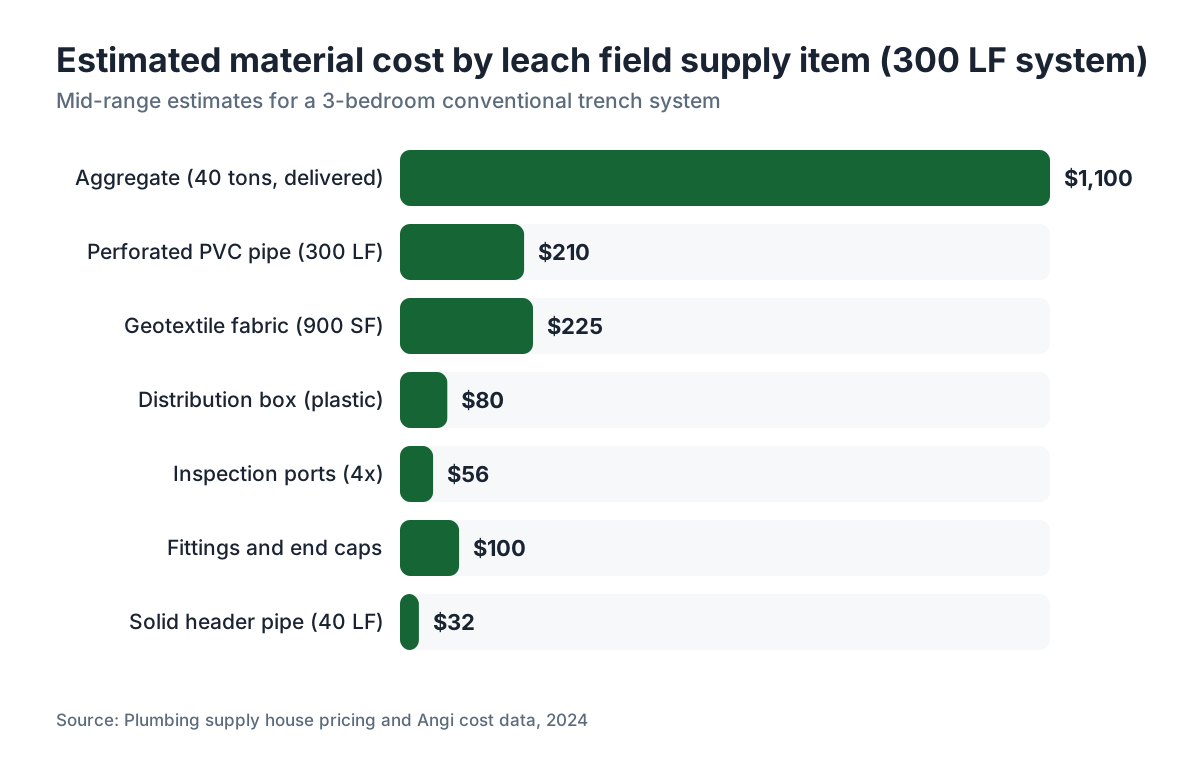
Material cost tracks system size (driven by bedroom count, soil perc rate, and local code), system type (conventional vs. chamber), and your region. The table below gives realistic ranges for a three-bedroom home, which usually needs 300 to 500 linear feet of lateral.
| Supply item | Unit | Qty (300 LF system) | Unit cost | Total range |
|---|---|---|---|---|
| Perforated PVC pipe (4-in SDR 35) | LF | 300 | $0.50-$0.90 | $150-$270 |
| Aggregate (washed 3/4-2.5 in stone) | Ton | 40 | $20-$35 | $800-$1,400 |
| Solid header pipe (4-in SDR 35) | LF | 40 | $0.60-$1.00 | $24-$40 |
| Distribution box (plastic) | Each | 1 | $40-$120 | $40-$120 |
| End caps (4-in) | Each | 4 | $2-$5 | $8-$20 |
| Inspection ports (riser + plug) | Each | 4 | $8-$20 | $32-$80 |
| Geotextile fabric (non-woven, 6 oz) | SF | 900 | $0.15-$0.35 | $135-$315 |
| Fittings (elbows, couplings, gaskets) | Lot | - | - | $50-$150 |
| Total materials | | | | $1,239-$2,395 |
Switch to a chamber system and you drop the pipe and aggregate lines, then add chambers. Infiltrator Quick4 chambers run about $12 to $18 each, and a 300-LF equivalent takes roughly 75 to 100 of them, so $900 to $1,800 [6]. The net total lands in a similar place but skips the aggregate delivery headache.
Labor is separate. Full installation by a licensed contractor adds $3,000 to $15,000 depending on site conditions, digging difficulty, and local labor rates [4]. For total installed cost, see the cost to install septic system breakdown.
Homeowners cleared to do their own work (rules vary sharply by state) save on labor but still have to pass inspection at each phase.
Where do you buy leach field supplies?
Short answer: not at a big-box home improvement store, if you can help it.
Big-box stores stock SDR 35 pipe and some fittings, but the selection is thin, lengths often top out at 10-foot sticks, and aggregate is either missing or overpriced. Fine for a quick repair fitting. Not for a full build.
For a real job, buy from:
Plumbing supply houses. Ferguson, Consolidated Supply, and regional independents carry full SDR 35 runs, D-boxes, inspection risers, and fittings in contractor quantities. Prices beat big-box, service is quicker, and the counter staff actually know what SDR 35 means.
Aggregate quarries and landscape supply yards. Call local quarries direct for delivered stone. Ask by name for double-washed drain stone or septic stone meeting your state spec. Get the gradation report in writing; some inspectors require it.
Chamber system distributors. Infiltrator Water Technologies and Cultec both run dealer locators on their sites. A regional distributor gets you the full accessory line (end plates, inspection port adapters, flow splitters) that big-box won't touch.
Online. HDPE corrugated pipe and geotextile fabric make sense to order online for rural sites where local stock is thin. Watch the freight weight. Aggregate is never worth shipping.
Operators running installs across multiple sites can track supply orders, job schedules, and permit status in one place. SepticMind's operations software is built for that workflow, worth a look if you're juggling more than a handful of jobs.
One practical note: buy 10% extra pipe and fabric. Trench runs never measure out to the plan, and returning PVC is a chore.
What supplies do you need to repair a failing leach field?
It depends entirely on what failed. The four common failure modes are biomat clogging, crushed or root-invaded pipe, saturated soil, and hydraulic overloading from a neglected tank.
Biomat clogging is the classic. A black anaerobic layer builds at the soil interface and chokes off absorption. If the soil is still viable, the fix is aeration equipment: a Terralift machine (a contractor service, not DIY) or passive aeration ports drilled into existing pipe. You can also rest the field by diverting flow to an alternate area, if your system has one.
Crushed or root-invaded pipe means digging up the affected lateral and replacing the run. The supply list matches new installation for that section: pipe, couplings, end cap, and new geotextile if the old fabric got compromised.
Saturated soil (high water table) may push you toward a mound system or at-grade alternative. That reshapes the whole list: fill sand, a pressure distribution manifold, a pump chamber, and a submersible effluent pump.
Hydraulic overloading from a full tank isn't a field supply problem at all. It's a tank problem. Get the tank pumped first, before you buy anything. The septic tank pumping guide covers what to expect. If pumping dries up the soggy yard, you dodged a repair that could have run tens of thousands of dollars.
Before you buy any repair supplies, get a real diagnosis. A field that just needs a D-box leveled or a single lateral swapped is a completely different bill than one that needs full replacement. The septic tank inspection process sorts out which one you have.
Are leach field restoration products worth buying?
Walk any farm supply or hardware store and you'll find septic additives, enzyme packets, and bacterial inoculants promising to bring a failing field back to life. The honest answer: most are money you'll never see again.
The EPA's SepticSmart program states that additives are "not necessary for a well-maintained septic system" and that no additive has been shown to reduce the need for regular pumping [2]. The research on drain field biomat remediation is thin and mostly discouraging for off-the-shelf products.
There's one partial exception. Controlled aeration (injecting air into failed trenches with a compressor and distribution manifold) has a reasonable evidence base for breaking up biomat when the underlying soil hasn't been permanently damaged. That's a professional service with real equipment, not a $29 bottle from the shelf.
Chemical drain field cleaners (sodium hydroxide, sulfuric acid) can open flow for a while, but they wreck soil structure and kill the bacteria doing the actual treatment. Don't use them.
Here's the tell: if someone sells you a restoration product that supposedly works with no site assessment, no perc test, and no idea why your field failed, keep your wallet closed. Spend the money on a proper diagnosis.
For routine tank maintenance that protects field life, see how often to pump septic tank and septic tank cleaning.
What permits and code requirements affect which supplies you buy?
This is where homeowners trip most often. You can buy perfect materials and still fail inspection because a fitting type, pipe spec, or aggregate gradation doesn't match your state's onsite wastewater code.
Most states adopted rules based on the EPA's design guidance or the NSF/ANSI 40 and 61 standards, then added their own wrinkles [5][7]. Common variations:
- Minimum trench depth (often 12 to 36 inches below grade, depending on frost depth)
- Required separation from wells, streams, and property lines (typically 50 to 100 feet from wells)
- Whether corrugated HDPE is an approved alternative to PVC
- Whether chamber systems need site-by-site approval
- Geotextile weight (4 oz, 6 oz, or heavier)
- Inspection port requirements (mandatory in some states, optional in others)
Pull your permit before you finalize the supply list. The application triggers a plan review, and the reviewer tells you exactly which materials and specs are required. Most jurisdictions also run a mid-project inspection (usually with pipe in place, before aggregate goes down) and a final inspection after backfill.
Failing inspection over a non-conforming material is expensive. You may have to dig up and redo work you already paid for. An hour with your county health department's onsite wastewater program before you buy anything pays for itself.
If you're a contractor running multiple permitted jobs, tracking per-jurisdiction requirements is one of the genuine headaches of the trade. That's the kind of operational detail SepticMind's software is built to track across job sites.
How long do leach field materials last?
A properly installed field with the right materials and steady tank pumping should last 20 to 30 years, sometimes longer [1]. The limiting factor is almost never the pipe. It's the soil's absorption capacity.
PVC pipe in a well-built trench can outlast the house. Corrugated HDPE has a shorter track record over decades but holds up well in most residential settings. Concrete D-boxes tend to crack after 15 to 20 years in freeze-thaw climates, which is exactly why swapping them for plastic at the first repair visit makes sense.
Geotextile fabric is generally rated for 50-plus years buried, so it's not the failure point. Aggregate doesn't degrade, but it can load up with fines if the fabric above it fails or was never installed.
The tank above the field decides everything. A tank that isn't pumped on schedule pushes solids and grease into the laterals, which speeds biomat formation and cuts field life hard. The septic tank pump out schedule is the single highest-leverage move a homeowner can make to protect materials they already paid for.
Frequently asked questions
Can I buy leach field supplies at Home Depot or Lowe's?
You'll find some basics: SDR 35 pipe sections, fittings, and cleanout plugs. Selection is limited, aggregate isn't stocked, and specialty items like D-boxes and inspection risers are hit or miss. For a full installation or major repair, a plumbing supply house or septic materials distributor gives you better pricing, the right spec products, and staff who understand what you're building.
What size pipe does a leach field use?
Most residential leach fields use 4-inch perforated pipe for the laterals. The solid header from the tank to the distribution box is also typically 4-inch. Some commercial or high-flow systems use 6-inch laterals, but 4-inch SDR 35 PVC or 4-inch dual-wall corrugated HDPE covers nearly every single-family home. Always confirm with your local code.
How many feet of drain pipe do I need for a leach field?
Required footage depends on your soil's percolation rate, household size, and state design standards. A common starting point is 150 to 200 linear feet per bedroom, but fast-perc sandy soil may need less and clay soil may need more or be unsuitable for a conventional system at all. Your county health department or a licensed designer calculates the exact number from a perc test.
What is the difference between SDR 35 and Schedule 40 PVC for drain fields?
SDR 35 has a thinner wall tuned for gravity sewer and drain field use. It flexes enough to absorb minor ground movement and is the standard for laterals. Schedule 40 has a thicker wall and higher pressure rating, which a gravity field doesn't need but which makes sense under driveways or where point loads are possible. Both are PVC; SDR 35 is cheaper at the same diameter.
Do leach field chambers replace all the other supplies?
Chambers replace the perforated pipe and aggregate, the two biggest line items. You still need solid header pipe, a distribution box, end plates (chamber-specific caps), inspection ports, and geotextile fabric at the chamber ends per manufacturer specs. Total material cost is similar to a conventional system. The advantages are lighter delivery, faster installation, and no aggregate to source.
What kind of gravel goes in a leach field?
You want clean, double-washed crushed stone, typically 3/4-inch to 2.5-inch with no fines. 'Septic stone' or 'drain stone' are the trade names. Avoid limestone in low-pH soil, pea gravel (too small), and any unwashed stone. Ask your supplier for a gradation certificate; some inspectors require it at the mid-installation inspection.
How do I know if my leach field needs repair or full replacement?
Repair signs: slow drains or a wet spot in one area of the yard, a problem that showed up right after a skipped pump-out, or a failed D-box. Replacement signs: sewage surfacing across the full field, permanently saturated soil, or a 25-plus-year-old field failing percolation. A camera inspection of the laterals plus a site assessment by a licensed designer tells you which situation you're in.
Can I install a leach field myself?
In some states, homeowners can pull an owner-builder permit and install their own system. In others, installation requires a licensed contractor. Even where DIY is legal, you still need a permit, a designer-stamped plan, and inspections. That process protects you: an inspected, code-compliant field is also easier to sell the house with. Check your state's onsite wastewater regulations before buying anything.
What's the cheapest way to replace a leach field?
Chamber systems usually cut labor time and drop the aggregate delivery cost, which makes them the cheaper installed option in many markets. Getting multiple contractor bids matters more than material brand choice; labor between contractors on the same job can vary $3,000 to $5,000. If your soil is suitable, a simple gravity-fed conventional trench with no pump is always cheaper than an engineered alternative like a mound or drip system.
How long does it take to install a leach field?
A typical single-family field takes one to three days of installation once the permit is issued and materials are on site. Permit processing adds weeks to months depending on jurisdiction and backlog. If a perc test or soil evaluation comes first, add another scheduling delay. Total calendar time from permit application to a working system commonly runs six weeks to four months in permit-heavy counties.
What maintenance supplies does a leach field need after installation?
Almost none, if the system is designed right and the tank gets pumped on schedule. Field-side maintenance is keeping inspection port caps in place (replace cracked ones for under $5) and keeping heavy vehicles and deep-rooted trees off the field. The tank is the maintenance point: pumping every 3 to 5 years keeps solids out of the field and is the best investment you can make in field longevity.
Are septic additives and leach field restorer products worth buying?
Almost certainly not. The EPA's SepticSmart program says biological additives aren't necessary for a well-maintained system, and no additive has been shown to eliminate the need for regular pumping. There's no credible peer-reviewed evidence that off-the-shelf restorers reverse a failed biomat. Save your money, get a site diagnosis, and pay for the physical repair or tank pump-out the situation actually needs.
What geotextile fabric weight is required for a leach field?
Most state codes specify non-woven polypropylene geotextile at 4 to 6 ounces per square yard minimum. Woven fabric is not acceptable because it lets fine soil particles migrate through. Your local onsite wastewater code specifies the exact weight. When in doubt, use 6 oz/sq yd non-woven; it meets nearly every code and costs only marginally more than lighter fabric.
How do inspection ports help with leach field maintenance?
Inspection ports give you, your contractor, or your inspector direct access to the end of each lateral without digging. You can drop a probe to check standing effluent, run a camera for roots or crushing, or confirm a lateral is even getting flow. They cost $8 to $15 per port to install and save hundreds in diagnostic excavation over the system's life. Add them even if your code doesn't require them.
Sources
- U.S. EPA, Septic Systems Overview: Properly installed and maintained septic systems (including leach fields) can last 20 to 30 years or more; failure often results from neglected maintenance.
- U.S. EPA, SepticSmart program: Biological additives are not necessary for a well-maintained septic system, and no additive has been shown to reduce the need for regular pumping.
- Penn State Extension, Onsite Sewage Disposal: Aggregate specifications for leach field trenches, including stone sizing and depth requirements for conventional absorption systems.
- Angi, Septic System Installation Cost Data: Contractor labor for leach field installation typically adds $3,000 to $15,000 to material costs depending on site conditions and region.
- U.S. EPA, Onsite Wastewater Treatment Systems Manual: Design guidance for soil absorption systems including pipe sizing, trench dimensions, separation distances, and aggregate specifications.
- Infiltrator Water Technologies, Quick4 Chamber Installation Guide: Chamber systems meeting ASTM F2418 replace conventional pipe-and-gravel laterals; Quick4 chambers approved in most states for residential drain fields.
- NSF International, NSF/ANSI 40 Standard for Residential Wastewater Treatment Systems: NSF/ANSI 40 sets performance standards that most state onsite wastewater codes reference for system design and component certification.
- University of Minnesota Extension, Septic System Owner's Guide: Percolation test results and soil evaluation determine the required linear footage of leach field per bedroom; design standards vary by soil type.
- North Carolina Department of Environmental Quality, Wastewater Section: State-level variation in onsite wastewater codes including pipe material approvals, trench depth, and separation distance requirements.
- Tuf-Tite, Distribution Box Product Specifications: Plastic distribution boxes cost $40 to $120 and resist cracking compared to concrete alternatives; available in configurations for 2 to 6 laterals.
- ASTM International, ASTM F2418 Standard for Polypropylene Corrugated Wall Stormwater Collection Chambers: ASTM F2418 is the standard under which plastic chamber systems are evaluated and approved for soil absorption applications.
Last updated 2026-07-09