Leach field failure symptoms: what to look for and what to do
By the SepticMind Editorial Team

TL;DR
- A failing leach field shows up as soggy or spongy ground over the drain field, sewage odors in the yard or house, slow or gurgling drains, backing-up toilets, and unusually lush grass above the field.
- Any one of these warrants a call to a licensed septic pro.
- Catch them early and you might spend $500 instead of $20,000.
Why leach fields fail in the first place
The leach field (also called a drain field) is where treated wastewater from your septic tank soaks into the soil and gets filtered by soil bacteria. It's the part of the system most homeowners never think about until it stops working.
Failure almost always traces back to a handful of root causes. The most common is biomat formation: a thick, dark, gelatinous layer of anaerobic bacteria and organic solids that coats the soil at the bottom of the trenches. Once that layer gets thick enough, water can't drain through. It builds gradually over years, usually sped up by an overloaded or under-pumped tank sending too many solids into the field [2].
Other causes show up too. Hydraulic overload (too much water entering too fast), root intrusion from nearby trees, physical damage to distribution pipes, soil compaction from driving or parking over the field, and soil that was never suitable for absorption in the first place. Older systems often have undersized fields by today's standards because codes tightened after the 1970s and 1980s.
Age matters. Most leach fields are designed for a 20-to-30-year service life under normal use, though some run much longer with good maintenance. The EPA notes that "most septic system problems are related to improper maintenance" [1]. That's a warning and a reason for optimism at the same time. Many early-stage failures are reversible if you catch them in time.
See the leach field guide for a deeper look at how these systems are built and sized.
What are the most obvious leach field failure symptoms?
There are eight warning signs worth knowing. Some show up outside, some inside your house, and a couple show up on your water test before you ever smell anything.
1. Wet or soggy ground directly over the drain field
This is the one most people notice first. You walk out back and the ground squishes underfoot even after a dry week. Or you see standing water pooling in a low spot that sits right over where the field runs. That water is treated (or partially treated) effluent the soil can no longer absorb fast enough. On a sunny day you might even see steam rising from the warm wastewater.
2. Sewage odors in the yard
A healthy leach field has almost no odor at the surface. Catch a sharp, sulfurous sewage smell near the field, or a rotten-egg hydrogen sulfide odor, and effluent is surfacing or the system is venting through the soil instead of the vent stack.
3. Sewage odors inside the house
Smells in the bathroom or basement that don't trace to a dried-out P-trap can mean the field is backing up and gases are working their way back through the plumbing. This one often shows up alongside slow drains.
4. Slow drains and gurgling sounds
When the field can't accept effluent, liquid backs up toward the tank and then toward your house. Drains run slow, especially after heavy use (morning showers, laundry, dishwasher). Toilets gurgle after flushing. Multiple slow fixtures at once points to the field or the tank, not a simple clog in one pipe [2].
5. Sewage backup in the house
This is the unmistakable one. Raw sewage coming up through the lowest drain in the house, usually a basement floor drain or a ground-floor toilet. By the time you have actual sewage indoors, the field has been failing for a while.
6. Unusually green or lush grass over the field
Effluent is nutrient-rich. A rectangle of deep-green grass that's always taller and thicker than the rest of the lawn, especially during dry spells when nothing else grows, is a textbook drain field failure symptom. The field is irrigating and fertilizing from below.
7. High nitrate levels in well water
If you have a private well within a few hundred feet of the drain field, an elevated nitrate test (above 10 mg/L, the EPA Maximum Contaminant Level) can be your earliest warning that the field isn't treating wastewater before it reaches groundwater [3]. You won't see or smell a thing. A lab test catches it.
8. Alarm activation or pump failure (for systems with pumps)
Pressure-dosed and mound systems have float switches that trip an alarm when effluent in the pump chamber gets too high. A blaring control panel alarm is the system telling you something's wrong on the delivery or absorption side of the field.
How quickly do leach field failure symptoms progress?
Slowly, and that's the problem. Failure usually creeps along quietly enough that homeowners talk themselves out of each symptom. The grass gets greener and they figure they finally found the right fertilizer. One drain runs slow and they pour in a bottle of Drano. By the time the soggy ground is obvious, the biomat may have been building for two to five years.
Acute failures move faster. A tank that hasn't been pumped in 15 years can dump a slug of sludge into the field during heavy water use, and you go from fine to flooded in weeks. A broken distribution pipe, a crushed chamber, or tree roots can do the same.
Here's the takeaway. Notice even one symptom, get a licensed professional to inspect the system within a few weeks, not months. A dye test, a soil probe over the trenches, or a camera run through the distribution pipes can confirm or rule out failure at low cost before you're staring at a full replacement.
Can symptoms inside the house tell you it's the leach field specifically?
Not with certainty on their own, but the pattern tells you a lot. A slow drain in a single fixture almost always means a local clog in that branch line. Slow drains in several fixtures at once, plus gurgling toilets when you run water elsewhere, points hard at a system-level problem: a full tank, a blocked outlet baffle, or a failing field.
Ask yourself one question. Did the symptoms get worse after heavy water use (guests over, a laundry marathon, back-to-back dishwasher cycles)? If yes, you're watching a system that can't keep up with the load. That leans toward the field, not a simple clog.
A licensed inspector checks the tank first. If solids and scum sit in normal ranges and the outlet is clear, the field is next in line. See septic tank inspection for what that process involves and what it costs.
What causes false positives: things that look like failure but aren't
A few situations mimic drain field failure closely enough to trigger unnecessary panic.
Heavy rainfall. When the soil is already soaked, the field genuinely can't absorb effluent at its normal rate. Surface ponding can show up for a day or two after a big storm even on a perfectly healthy system. If it clears on its own within 48 to 72 hours of dry weather, the field is probably fine.
Seasonal high water table. In some regions the water table rises in spring to within a foot or two of the trenches. That cuts the effective soil depth and causes temporary wet-field symptoms. If it clears seasonally, it isn't field failure exactly, though it may mean the system is borderline for the site.
A single plugged distribution pipe. Sometimes one lateral blocks and its section of the field saturates while the rest stays fine. A camera inspection or a dye test isolates this fast, and it's a much cheaper fix than replacing the whole field.
Surface runoff from elsewhere. If your yard drains toward the field, an upslope wet spot or a leaking outdoor spigot can pool water over the field that has nothing to do with the septic system.
The only reliable way to tell the difference is a real inspection. Don't let a contractor sell you a field replacement off surface symptoms alone without at least a soil probe and a tank check first.
How serious is a failing drain field, and is it a health risk?
Yes, a failing leach field is a genuine public health problem. Partially treated sewage surfacing in a yard carries pathogens: bacteria, viruses, and parasites. The CDC warns that contact with surfacing sewage from a failing septic system can spread disease [9]. Children and pets who play in a yard with surfacing effluent face real exposure.
Groundwater contamination from nitrates and pathogens can reach neighboring wells, not only your own. Most states classify a surfacing, actively failing septic system as a public health violation that requires mandatory repair on a set timeline, often 30 to 90 days depending on the state.
In Texas, for example, the Texas Commission on Environmental Quality (TCEQ) treats a system with effluent surfacing on the ground as a malfunctioning system that must be repaired or replaced [4]. Similar language runs through regulations in most states. Ignoring the symptoms risks more than a bigger repair bill. It can bring fines or an order to vacate the property.
For groundwater contamination, the concern is highest when your well sits within 50 to 100 feet of the drain field (setbacks vary by state, but most require at least 50 to 100 feet between a well and a septic system). Seeing field failure symptoms and drinking from a well? Test your water for nitrates and coliform bacteria before you assume it's safe.
What does leach field inspection actually involve?
A proper field inspection by a licensed professional runs through several steps, well past a glance at the yard.
First, the inspector checks the septic tank: liquid level, solids depth, condition of the inlet and outlet baffles. If the tank is overdue for pumping, that gets handled before anyone judges the field, because a full tank mimics field failure symptoms.
Next, the inspector finds the distribution box (d-box) or manifold and checks that flow splits evenly across the laterals. A cracked or shifted d-box is a common, cheap fix that can clear up what looked like field failure.
Soil probing means pushing a thin steel rod into the ground above each lateral to check for saturation and biomat. A healthy field probes dry or moist. A failing one probes saturated, sometimes with a putrid smell, dark and greasy at depth.
Sometimes a camera goes through the distribution pipes to look for root intrusion, collapsed pipe, or broken joints. Some inspectors also run a dye test: non-toxic dye flushed into the system, then a watch for it to surface or show up in nearby water.
The whole thing usually takes one to three hours on-site. Septic tank inspection costs commonly run $200 to $600 depending on system complexity and your region, though a full inspection with camera work runs higher.
If you manage multiple properties or run a septic service business tracking inspection schedules across a customer base, tools like SepticMind keep field inspection history, alert schedules, and service records in one place instead of scattered across paper forms.
How much does it cost to repair or replace a failing leach field?
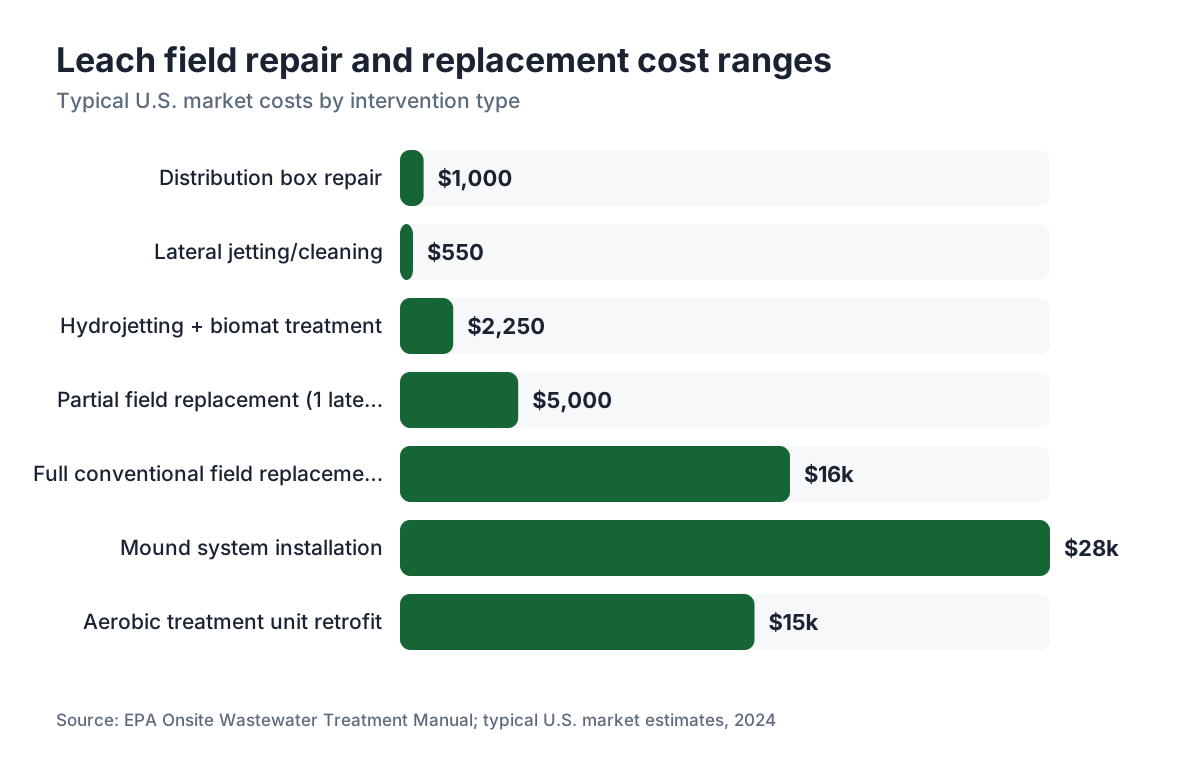
Cost swings hard depending on what's wrong, your soil, and your location. The table below gives honest ranges based on typical market data.
| Repair or replacement type | Typical cost range | Notes |
|---|---|---|
| Distribution box repair or replacement | $500 to $1,500 | Often cheap, big impact |
| Lateral jetting or cleaning | $300 to $800 | Worth trying on early biomat |
| Hydrojetting + biomat treatment | $1,000 to $3,500 | Outcomes variable |
| Partial field replacement (one lateral) | $3,000 to $7,000 | If one arm failed, others okay |
| Full conventional field replacement | $8,000 to $25,000 | Soil, size, and access dependent |
| Mound system installation | $15,000 to $40,000 | Required on poorly draining sites |
| Aerobic treatment unit (ATU) retrofit | $10,000 to $20,000 | Often required when space is tight |
These are rough ranges. The cost to install a septic system in your area depends heavily on local permit fees, soil percolation rates, required system type, and contractor pricing. Get at least three quotes before you commit to anything over $2,000.
One thing worth knowing. Some states run financial assistance programs for homeowners who can't cover mandatory repairs on failing systems. Check with your state environmental or health agency. The EPA's SepticSmart program keeps a list of state contacts [1].
If it's time for a full replacement, the cost to put in a septic tank guide breaks down what drives pricing.
Can a failing leach field be repaired, or does it always need replacement?
Real repair is possible, but it hangs on how far gone the field is and what caused the failure.
If the trouble is mechanical (broken pipe, shifted d-box, root intrusion in one lateral), repair can be simple and cheap. Fix the pipe, clear the roots, rebalance the distribution, and the field may bounce back fully.
Biomat failure is trickier. In early to moderate stages, resting the field (cutting water use to the minimum for two to four weeks in warm weather) plus soil aeration or biomat-treating additives can partially restore absorption. The science on commercial bacterial additives is mixed. The EPA has generally found that biological additives don't improve a properly functioning system, and their use in a failing one has not been proven effective [1]. Some field practitioners still report real improvement from aggressive aeration and rest cycles on systems that haven't fully collapsed.
For a field saturated and biomatted for years, replacement is often the only realistic call. The soil structure may be permanently changed. The good news: modern alternatives like drip irrigation, mound systems, and chambered beds can sometimes go in on the same footprint where a conventional field failed, or in a different part of the yard. A septic system repair specialist can tell you what your site supports.
Never let a contractor push you into field replacement without checking the distribution box first. That's a $500 fix that gets missed more often than it should.
How do you prevent leach field failure?
Most field failure is preventable with plain, unglamorous maintenance.
Pump the tank on schedule. The single biggest thing you can do for the field is keep sludge and scum out of it. For a typical 3-bedroom home with a 1,000-gallon tank and four people, that means pumping roughly every three to five years, though the math depends on household size and tank volume [5]. The how often to pump septic tank guide walks through the full calculation. A tank pumped on schedule almost never sends solids to the field.
Cut the hydraulic load. Spread laundry across the week instead of five loads on Saturday and the field gets recovery time between slugs of water. Fix leaking toilets and dripping faucets. A running toilet can add 200-plus gallons a day to a system built for maybe 300 total [7].
Protect the field physically. Don't drive or park over it. Don't plant trees or shrubs within 20 to 30 feet of the laterals (exact distances vary by species and root aggressiveness). Don't cap the field with concrete, asphalt, or thick mulch.
Watch what goes down the drain. Flushing anything besides toilet paper and human waste is a direct threat to the field. Wipes (even the "flushable" ones), feminine hygiene products, medications, grease, and heavy garbage disposal use all speed up biomat formation or dump chemicals that wreck the bacterial balance in both the tank and the field.
Get the tank inspected every three to five years even when everything seems fine. An inspector catches early warning signs (a cracked baffle, solids creeping toward the outlet, a d-box starting to shift) before they turn into field problems. See septic tank pumping for what a standard pump-out includes.
What should you do right now if you suspect leach field failure?
Move fast and skip the panic. Here's the sequence.
First, cut water use to the bare minimum right now. No extra laundry, no long showers, fix any running toilets. Every gallon you send in is a gallon trying to exit through a field that can't handle it. This buys time and can keep a slow failure from turning into an acute backup.
Second, call a licensed septic professional, not a plumber and not a general contractor. You want someone who does drain field work. Ask them to inspect the tank and distribution box before they pronounce the field dead. Verify their license with your state board.
Third, keep everyone off the wet area of the yard, and keep kids and pets away. This isn't overreacting. Partially treated sewage carries real pathogens [9].
Fourth, if you have a private well anywhere near the field, get a water test in the mail today. Nitrates and coliform bacteria are the two tests that matter most [3]. Labs typically turn results in 5 to 10 business days.
Fifth, find out whether your state has a mandatory repair timeline for failing systems and whether any financial assistance exists. Your county health department is the right first call for local rules.
For septic service operators managing customer systems, SepticMind's workflow tools let you flag a system as malfunctioning, schedule follow-up inspections, and track repair completion across your whole customer list without losing anything in a paper stack.
For more on repair paths, see septic system repair and septic tank repair.
Frequently asked questions
How do I know if my leach field is failing or just temporarily wet from rain?
Give it 48 to 72 hours of dry weather. A healthy field that got overwhelmed by soaked soil will dry out and stop showing symptoms. If wet ground, odors, or slow drains hang on more than three days after the rain stops, the field is the likelier culprit. A licensed septic professional can probe the soil above the trenches to confirm saturation and check whether it smells like sewage.
What does a failing drain field smell like?
Surfacing sewage has a sharp, distinctly fecal odor, often mixed with a hydrogen sulfide (rotten-egg) smell from anaerobic decomposition. You'll catch it outdoors near the field or downwind, and sometimes inside near drains. The smell is strongest on warm days when gas production in the soil climbs. Catch this smell in your yard on a dry day and you shouldn't ignore it.
Can I use my septic system while the leach field is failing?
You can, but minimize use immediately. Every gallon you send into a failing system makes things worse and speeds up the slide toward a full backup into your house. Go essential-only: minimal flushing, no extra laundry, short showers. Don't touch the garbage disposal. This isn't a long-term fix, but it buys days or weeks while you line up a professional inspection.
How long does a leach field last before it needs replacement?
A well-maintained field on suitable soil commonly lasts 25 to 40 years, and some run longer. Poorly maintained fields on marginal soil can fail in under 10. The single biggest predictor of field life is whether the tank got pumped on schedule. Tanks pumped every three to five years send clean effluent; unpumped tanks send solids that clog the soil interface and build biomat within a few years.
Does homeowner's insurance cover leach field failure?
Standard homeowner's policies almost never cover leach field failure caused by wear, age, or lack of maintenance, which describes the vast majority of failures. Some policies cover sudden and accidental damage (a pipe crushed by a fallen tree, say), but they exclude gradual deterioration. A handful of insurers offer riders or specialty septic policies. Read your policy and call your agent before you assume you're covered.
Is lush grass over the septic field always a sign of failure?
Not always. Grass over the tank lid or inspection risers is sometimes greener because the soil got disturbed and reseeded during installation, or because the tank walls insulate the soil slightly in cool weather. But a broad strip or rectangle of grass that stays darker and grows faster than the rest of the lawn, especially in dry spells, strongly suggests effluent is reaching the root zone. Have it inspected.
Can tree roots really destroy a leach field?
Yes. Roots follow moisture, and a leach field is a reliable moisture source. Once roots enter a distribution pipe or perforated lateral, they grow fast and can fully block flow within one or two growing seasons [8]. Species with aggressive lateral roots (willows, poplars, silver maples, some oaks) are the worst offenders. Most guidance says keep large trees at least 30 feet from a drain field, though county health departments set their own distances.
What happens if I ignore leach field failure symptoms?
Ignoring early symptoms nearly guarantees a more expensive ending. A field with soggy ground that gets no attention progresses to sewage backup in the house, possible groundwater contamination, and regulatory enforcement. Most states require repair of a malfunctioning system within 30 to 90 days of identification. Non-compliance brings fines and sometimes orders restricting occupancy. The repair cost grows over time; a $3,000 fix today can become a $20,000 replacement in two years.
Can I add chemicals or additives to fix a failing leach field?
The evidence is weak. The EPA has stated biological and chemical additives aren't proven effective for restoring a failing system, and some chemical additives can damage soil structure or harm groundwater [1]. A few controlled studies show modest improvement from field resting plus aeration. Don't spend money on bottled products first. Spend it on a proper inspection. If the cause is mechanical, no additive helps. If it's early biomat, rest and aeration are your best tools.
How much does it cost to replace a leach field?
Full leach field replacement typically runs $8,000 to $25,000 for a conventional system, depending on site conditions, size, soil type, and local permit costs. Mound and alternative systems on difficult sites can hit $15,000 to $40,000 or more. Partial repairs (one lateral, a distribution box, pipe clearing) run $500 to $7,000. Get three quotes, and make sure the contractor pulls a permit. Unpermitted field work causes serious problems when you sell.
What's the difference between a septic tank problem and a leach field problem?
A tank problem usually means the tank is full of solids, a baffle broke, or the tank itself is damaged. A field problem means the soil can no longer accept liquid effluent. Both throw similar symptoms (slow drains, odors, backups), but the distinction matters enormously for cost. A tank pump-out costs $300 to $600 and often fixes tank-side problems on the spot. Field failure can cost 10 to 100 times more. A proper inspection tells you which one you're facing before you spend a dime.
Do I need a permit to repair a failing leach field?
In almost every jurisdiction, yes. Any repair that opens, extends, or replaces drain field components requires a permit from your county health department or local environmental authority, even a partial repair. The permit process makes sure the work meets current setback and sizing requirements. Unpermitted septic work becomes a disclosure issue when you sell and can void any seller warranty. Check with your county health department before a contractor starts digging.
Can a leach field recover on its own if I stop using it?
Occasionally. Mild hydraulic overload with minimal biomat can recover if the household cuts water use hard for several weeks during warm, dry weather. The aerobic soil bacteria need time and oxygen to break down the organic layer at the soil interface. But true biomat failure with years of buildup rarely reverses on its own. If resting the field with an alternative toilet or extremely minimal water for 30 days shows no improvement, you need professional intervention.
Sources
- U.S. EPA, SepticSmart program: Most septic system problems are related to improper maintenance; biological additives are not proven effective for restoring a failing system; a properly functioning septic system protects public health and the environment.
- U.S. EPA, Onsite Wastewater Treatment Systems Manual (EPA/625/R-00/008): Multiple slow drains simultaneously indicate a system-level problem rather than a localized pipe clog; biomat formation is the primary mechanism of leach field failure.
- U.S. EPA, National Primary Drinking Water Regulations: The EPA Maximum Contaminant Level for nitrates in drinking water is 10 mg/L; elevated nitrate in a private well near a drain field can indicate system failure affecting groundwater.
- Texas Commission on Environmental Quality (TCEQ), On-Site Sewage Facilities: TCEQ classifies a system with effluent surfacing on the ground as a malfunctioning system requiring mandatory repair or replacement.
- U.S. EPA, How Your Septic System Works: A typical household septic tank should be pumped every three to five years depending on household size and tank volume.
- Penn State Extension, Septic Systems: Most leach fields are designed for a 20-to-30-year service life under normal conditions; field longevity is heavily dependent on tank pumping frequency.
- University of Minnesota Extension, Septic Systems: Running toilets can add 200 or more gallons per day to a septic system; laundry should be spread across multiple days to avoid hydraulic overload.
- National Environmental Services Center (NESC), West Virginia University: Root intrusion from trees with aggressive lateral root systems can completely block distribution pipes within one to two growing seasons.
- U.S. Centers for Disease Control and Prevention (CDC), Septic Systems: Surfacing effluent from a failing septic system contains pathogens including bacteria, viruses, and parasites posing direct exposure risk.
- University of Georgia Extension, Septic Tank Systems: Soil probing above laterals to check for saturation and biomat presence is a standard diagnostic step in drain field inspection.
- U.S. EPA, Types of Septic Systems: Full conventional leach field replacement varies widely by site conditions, soil type, and system size; alternative systems cost more where soils are unsuitable.
Last updated 2026-07-09