How to fix a leach field: every real option explained
By the SepticMind Editorial Team
TL;DR
- A saturated leach field can sometimes recover from pumping the tank, resting the field, and cutting water use.
- When biomat or soil compaction is bad, aeration or fracturing may buy years.
- Full replacement costs $5,000 to $12,000 for conventional, more for mounds.
- The right fix depends entirely on why the field failed, so diagnosis comes first.
What is a leach field and how does it work?
A leach field (also called a drain field or soil absorption system) takes the clarified liquid leaving your septic tank and spreads it into the soil, where bacteria and natural filtration clean it before it rejoins groundwater. Most conventional systems run perforated pipes through gravel-filled trenches. Effluent seeps out of the pipes, moves down through the gravel, passes through a thin bioactive layer just below, and then travels through native soil before reaching the water table.
The EPA calls the soil absorption component the heart of a septic system because the soil does the actual treatment work. [1] Sand, silt, and clay particles filter pathogens. Soil microbes eat the organic matter. Distance from the water table gives that process time to finish. When the soil can no longer soak up liquid as fast as your household makes it, the system is failing.
For a deeper look at what these systems are made of, see the full guide on leach fields.
Leach fields fail for a short list of reasons. A clogged or damaged septic tank sending solids downstream is the most common. Biomat, the dense mat of anaerobic bacteria and grease that forms at the soil interface, is second. Soil compaction from vehicles, root intrusion, and an undersized original design fill out the list. Fix the wrong thing and the problem comes back in a season.
How do you know your leach field is failing?
The earliest sign is wet, spongy ground over the trenches that won't dry out even in dry weather. Sewage smell in the yard, especially above the field lines, confirms it. Inside the house, slow drains and gurgling toilets show up next. The last stage is sewage backing into the lowest fixtures, usually a basement floor drain or a first-floor toilet.
Wet ground over the field doesn't always mean an emergency. A week of heavy rain can saturate soil that normally handles the load fine. Let it dry out, cut household water use for a week, and check again. If the wet area survives a dry stretch, you have a real failure.
A few things look like leach field failure but aren't. A cracked distribution box can flood one section of the field while the rest stays dry, so the whole field looks dead when only the D-box needs replacing. A failed baffle in the tank dumps grease and solids into the field early. A septic tank inspection before any field work can keep you from spending money on the wrong component.
Why does a leach field get saturated or clogged?
Biomat is the usual culprit. Every leach field grows some biomat at the pipe-to-soil interface, and that's normal. Trouble starts when the tank isn't pumped on schedule and partly digested solids drift into the field. Those solids feed the biomat bacteria faster than soil air can oxidize the mat, and the mat thickens until it blocks water entirely. The EPA's SepticSmart program names failing to pump the tank on schedule as one of the leading causes of premature drain field failure. [1]
Soil compaction physically closes the macropores that carry water. Parking a car on the field once probably won't hurt. Doing it over and over, or letting heavy machinery cross the area during construction, wrecks soil structure that takes years to rebuild. Plenty of homeowners don't know where their field is and compact it by accident.
High water table is a different animal. A field designed for an average wet season can drown in a wet year when groundwater rises near the trench bottom and effluent has nowhere to go. It looks like biomat failure and gets misdiagnosed as one.
Overuse from too much household water is underrated. A family of four at 70 gallons per person per day, the US average, pushes about 280 gallons into the system daily. [2] One leaky toilet flapper adds 200 gallons a day by itself. [12] High-efficiency toilets and fixing leaks sometimes buy years of field life with no mechanical work at all.
Can you fix a saturated leach field yourself without replacing it?
Sometimes, yes. Pump the septic tank first if it's overdue. Septic tank pumping removes the solids that feed the biomat and gives the system a reset. A 1,000-gallon tank serving a family of four should be pumped every 3 to 5 years, though the right interval depends on household and tank size. [3]
Then rest the field. Stop sending water to it, ideally by leaving that section of the system alone for 2 to 4 weeks. Aerobic conditions in the trench let naturally occurring bacteria oxidize the biomat. Some contractors call this resting and starving the field. It won't touch a fully clogged system, but it works on early-to-mid-stage biomat more often than people expect.
Cut water use hard during and after the rest. Spread laundry across the week instead of six loads on Saturday. Skip the garbage disposal, which adds fine organic particles that feed biomat. Don't run hot tubs or dump additives that flush the tank contents into the field all at once.
Resting costs almost nothing. Try it before spending thousands on mechanical remediation. The honest limit: if the field has been failing for years and the biomat is thick and mineralized, resting alone won't save it.
What professional repair methods actually work to fix a leach field?
Mechanical aeration (AeroStream and similar systems). These use perforated pipes or probes driven into the soil above and between the trenches to add oxygen. Aerobic bacteria colonize the biomat zone and eat the mat from the outside in. Manufacturers claim restoration rates above 70% in suitable soils, but independent peer-reviewed data is thin. University extension research found aeration effective in mildly to moderately clogged fields and unreliable in clay-heavy soils. [4] Cost runs roughly $1,500 to $4,000 for a typical residential system.
Hydro-jetting the laterals. A technician runs a high-pressure water line through the perforated pipes to break up blockages inside them. This helps when the pipe orifices are clogged, not when the surrounding soil is shot. It's no fix for biomat in the soil, but it's cheap (often $300 to $700) and worth doing before anything invasive.
Terralift and pneumatic fracturing. A probe goes into the soil around the trenches and injects high-pressure air in short bursts, fracturing compacted soil and opening new channels for liquid. Polystyrene beads sometimes go in to hold those fractures open. Cost runs $1,000 to $3,000. Results swing hard with soil type and are better documented in sandy loam than in clay.
Bio-additive injection. Bacterial and enzymatic products injected in high concentrations aim to speed up biomat digestion. The research is mixed. A review in the Journal of Environmental Quality found some formulations cut biomat thickness in the lab, but field performance was inconsistent and no product carries EPA certification as a field restoration agent. [5] Some state programs, including North Carolina's, warn homeowners outright that additives are no substitute for pumping and maintenance. Spending $200 on a quality additive during early biomat trouble is a reasonable low-risk bet. Spending $2,000 on a proprietary injection service with guaranteed results is not something I'd do.
Replacing the distribution box and end caps. When the D-box is cracked or the lateral end caps are missing, effluent floods the nearest section and starves the rest. A new D-box runs $50 to $300 in parts, plus $200 to $500 labor. It's a cheap, common fix, and a surprising number of field failures turn out to be exactly this.
SepticMind's maintenance tracking lets operators log and schedule these jobs by system, which heads off the deferred pumping that causes most field failures.
How much does it cost to fix a leach field?
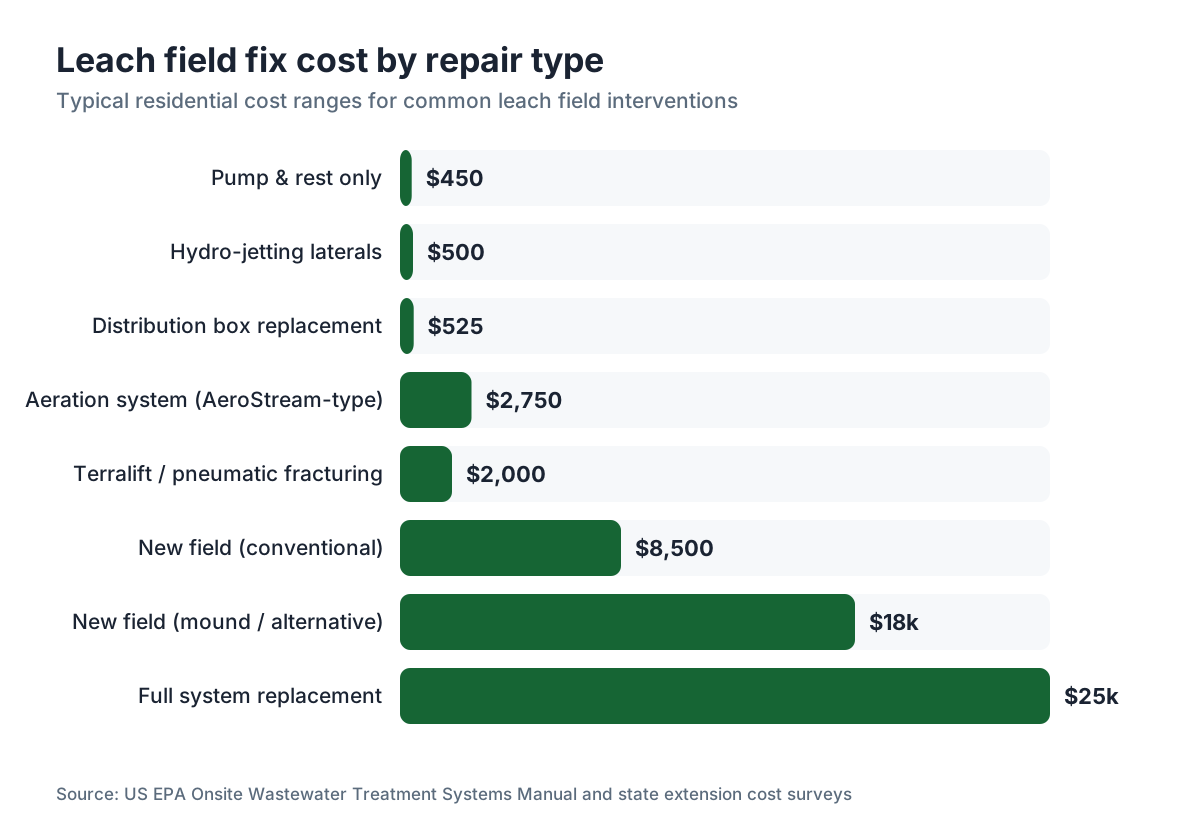
Repair costs span a huge range because the fix depends entirely on what's wrong. Here's a realistic breakdown from contractor pricing and published cost surveys.
| Fix type | Typical cost range | Best suited for |
|---|---|---|
| Pump and rest only | $300 to $600 | Early biomat, overloaded system |
| Hydro-jetting laterals | $300 to $700 | Blocked pipe orifices |
| Distribution box replacement | $250 to $800 | Cracked or missing D-box |
| Aeration system (AeroStream-type) | $1,500 to $4,000 | Moderate biomat, aeratable soils |
| Terralift / pneumatic fracturing | $1,000 to $3,000 | Compacted soil |
| New leach field (conventional) | $5,000 to $12,000 | Failed field, adequate space |
| New leach field (mound or alternative) | $10,000 to $25,000+ | Poor soil, high water table |
| Full system replacement | $15,000 to $35,000+ | Failed tank + field |
Costs move with region, soil, permit fees, and whether a perc test is required before installation. Northeastern states with rocky soil and strict setbacks sit at the top of these ranges. [6] Some states make a licensed engineer sign off on replacement designs, which adds $500 to $2,000 in design fees.
Don't ignore the permit. Most states require one for any field replacement, and some require one for major repairs. Unpermitted work can void insurance and stall a home sale. Check your state's onsite wastewater code before you start.
When does a leach field need full replacement vs. repair?
Repair is worth a shot when the failure is under three years old, the tank was pumped on schedule, and the soil is sandy or sandy loam. Full replacement is likely when the field has been failing for years untouched, when a dye test or camera inspection shows collapsed laterals or total saturation with no drainage, or when the original system was undersized for the current household.
Here's the honest part: the break-even between repair and replacement isn't a formula. A $2,500 aeration job that buys five more years on a field that would cost $12,000 to replace is a smart gamble. The same $2,500 spent on a field that needs replacing is money gone. Get a camera inspection of the laterals and a soil percolation check before you commit to any mid-range remediation.
Age matters too. A conventional leach field built to spec lasts 25 to 30 years with decent maintenance. [7] A 30-year-old field that's failing has probably just reached the end. Some last 50 years in ideal soil with careful use; others die at 10 from neglect. An aging field on a house you're about to sell is a different math problem than one you'll live with for two more decades.
For full system cost context, see cost to install septic system and cost to put in a septic tank.
What are the alternative leach field options when a conventional replacement won't work?
Some properties can't take a conventional trench-and-gravel field on the replacement site. The soil percolates too slowly, the water table sits too high, there isn't enough setback from wells or property lines, or the lot is just too small. Those sites need an alternative system.
Mound systems raise the drain field above native soil on a sand fill mound 2 to 4 feet high. A pump lifts effluent to the mound, and it filters down through engineered sand into native soil. Mounds work where the seasonal high water table sits within 18 to 24 inches of the surface. They cost more ($10,000 to $25,000) and need a pump and controls, which means more machinery and more upkeep.
Drip irrigation systems dose small amounts of effluent through pressure-compensating emitters buried a few inches down. They cover more area than trenches and do well in tight lots and slow-perc soils. They need reliable power and a maintenance contract.
Aerobic treatment units (ATUs) clean the effluent before it ever hits the field, producing water good enough for drip or spray dispersal. They're standard in Texas, Louisiana, and parts of Florida where lots are small and setbacks tight. Operating costs run about $100 to $300 a year for electricity and an annual service contract.
Constructed wetlands and sand filters are less common for single homes but show up in rural jurisdictions where conventional options are exhausted.
Any alternative system needs a site evaluation, engineer-stamped plans in most states, and a permit. Call your county health department or state environmental agency for what's allowed where you are. [8]
How do you fix a saturated drain field in the short term while planning repairs?
The immediate goal with a saturated field is to stop making it worse. Cut water input as much as you can. Short showers, dishwasher every other day, staggered laundry, fix any leaking toilets or faucets, and tell everyone in the house what's going on. One leaky toilet flapper adds 200 gallons a day to the system. [12]
If sewage is surfacing, you have a possible public health problem. Keep kids and pets off the wet area. Many states require you to report a surfacing failure to the county health department, and some treat it as a public health emergency with hard repair deadlines. [9] Check your state's onsite wastewater rules. The EPA's SepticSmart resources list state contacts. [1]
Pump the tank even if you pumped it recently. A pumped tank gives the field a short break and lets a technician inspect the baffles and confirm the tank itself is sound. See the guide on septic tank pump out for what that involves.
Portable toilets are miserable but legal as a stopgap in most areas, and cheaper than letting the problem run. If the property is a rental, you have disclosure and habitability duties that vary by state but are uniformly strict about working sanitation.
What should you not do when trying to fix a leach field?
Don't drive over it. Not once. Not to get that load of mulch to the back yard. Vehicle weight compacts soil faster than almost anything else, and the damage doesn't reverse without mechanical work.
Don't use septic additives instead of pumping. No product you pour down a drain reliably restores a failing field. Some additives, especially harsh solvents sold as root killers or clog removers, kill the good bacteria in the tank and make effluent quality worse for a while, which speeds up field damage.
Don't plant trees or big shrubs over or near the field. Willow, maple, and other aggressive roots can break into pipe within a few years. Keep the field planted with shallow-rooted grass, nothing else.
Don't add a garbage disposal to a septic system if you can help it. Finely ground food waste slips past tank baffles more easily than whole solids, feeds biomat, and noticeably speeds solids buildup in the tank. If you already have one, use it rarely.
Don't hire a contractor who promises a full field restoration before diagnosing why the field failed. Guaranteed restoration claims for additive injection are almost always misleading. A good contractor inspects the tank, checks the D-box, cameras the laterals, and tells you what's actually wrong before pitching a fix.
For maintenance timing, the guide on how often to pump septic tank covers the evidence behind pumping schedules.
How do you prevent leach field failure from happening again?
The single best preventive move is pumping the tank on schedule. The EPA and most state agencies say every 3 to 5 years for a typical household, but the right interval depends on tank size and household size. A 1,500-gallon tank serving two people might safely go 7 to 10 years. A 1,000-gallon tank with five residents might need pumping every 18 months. [3]
An effluent filter on the tank's outlet baffle costs $50 to $150 in parts and keeps the fine particles that build biomat from reaching the field. Most licensed installers add one during a routine pump-out. Clean it once a year.
Keep a record of where your field is. Mark it on a plot map and make sure everyone in the house knows not to drive or park there. Add a riser and lid on the tank access port so the next pump-out doesn't mean digging.
Consider a septic tank inspection every few years even when you're not due for a pump-out. A technician can catch a failing baffle, a cracked D-box, or early ponding in the field before it turns into a $15,000 problem.
Operators running multiple systems need to track pump dates, filter cleanings, and field notes across a whole portfolio. That's where software like SepticMind earns its keep, turning scattered service records into a searchable history that supports better scheduling and earlier calls.
See the guide on septic tank cleaning for what a full service visit should include.
What do state and federal rules say about leach field repair and replacement?
The EPA sets general guidance through SepticSmart and the Clean Water Act framework, but permitting and construction standards are entirely state and county controlled. [1] There is no single federal leach field replacement standard.
State onsite wastewater regulations are the binding rules. Most states publish their standards through the department of environmental quality or department of health. Common requirements: a licensed septic contractor or engineer for any new field, a percolation test or soil morphology evaluation before design, setbacks from wells (typically 50 to 100 feet), surface water (typically 50 to 200 feet), and property lines (typically 5 to 10 feet), and a county or state permit before any soil disturbance.
The EPA's 2002 Onsite Wastewater Treatment Systems Manual is still the most complete federal technical reference, stating that "proper siting, design, installation, and maintenance are all required for long-term satisfactory performance of onsite systems." [10] That document runs over 300 pages and speaks more to designers than homeowners, but your state's code almost certainly traces its standards back to it.
Some states have programs that help low-income homeowners pay for repairs. USDA Rural Development, for example, offers loans and grants for rural wastewater system repair under Section 504 and the Household Water Well System Grant Program. [11] Worth a look if the cost is a strain.
Always contact your county health department or state environmental agency before starting any leach field repair beyond a minor component swap. Unpermitted work creates liability, complicates real estate deals, and in some states carries fines.
Frequently asked questions
Can a leach field be repaired without full replacement?
Yes, in many cases. Early-to-moderate biomat buildup can respond to tank pumping, field resting, and reduced water use. Mechanical options like aeration probes and hydro-jetting work in suitable soils. Distribution box replacement fixes a specific class of failures cheaply. Full replacement is needed when the soil is permanently compromised, the field is completely saturated with no drainage, or the original system was badly undersized.
How long does a leach field last?
A well-maintained conventional leach field typically lasts 25 to 30 years. With ideal sandy soil, regular tank pumping, and controlled water use, some fields last 40 to 50 years. Poor maintenance, oversaturation, vehicle traffic, or an undersized design can shorten that to 10 years or less. There is no fixed expiration; condition matters more than age.
What kills a leach field fastest?
Not pumping the septic tank is the leading cause of premature leach field failure, according to EPA SepticSmart guidance. Solids that leave the tank feed biomat in the field and eventually seal the soil. A close second is excessive water use, particularly from leaking toilets and running multiple heavy-use appliances at once. Vehicle traffic compacting the soil is a third common cause.
How do I know if my leach field is failing or just temporarily saturated?
Temporary saturation after heavy rain usually clears within a few days of dry weather. A failing field stays wet even during dry periods and often smells of sewage. Inside, slow drains and gurgling toilets that persist after the rain has passed point to a real failure. A dye test, where a contractor puts tracer dye in the system and checks the field for it, confirms the diagnosis.
How much does a new leach field cost?
A conventional replacement leach field costs roughly $5,000 to $12,000 for a typical residential lot in moderate-soil conditions. Mound systems or alternative designs required by poor soil or high water tables run $10,000 to $25,000 or more. Permit fees, design engineering, and perc testing add $500 to $2,000 on top of installation. Costs are highest in the Northeast and Pacific Coast states.
Can I use additives to restore a failing leach field?
Bacterial additives can support a healthy system and may help in very early biomat situations, but there is no EPA-certified product proven to restore a failing field. Published research shows inconsistent results, and some state programs explicitly warn that additives are not a substitute for pumping and repair. Spending $100 to $200 on a quality additive is low-risk; spending thousands on guaranteed restoration injection services is not backed by evidence.
Does homeowners insurance cover leach field repair or replacement?
Standard homeowners policies almost universally exclude leach field failure from gradual deterioration, neglect, or normal wear. Some policies cover sudden and accidental damage, such as a pipe crushed by a tree root or collapsed by a sinkhole. A few specialty riders or service line endorsements cover septic components, but they vary widely. Read your policy carefully and ask your agent specifically about underground components before assuming you're covered.
How long does it take to replace a leach field?
Physical installation of a new conventional leach field typically takes one to three days of excavation and pipe-laying. The process is slower once you add permit approval, which takes two to six weeks in most counties, soil evaluation, and any design engineering. Complex alternative systems like mounds or drip fields take longer to install. Plan for a total timeline of four to ten weeks from first call to operational system.
Can tree roots fix themselves or do I need to remove them from the leach field?
Tree roots in a leach field do not go away on their own. If roots have entered laterals, hydro-jetting can clear them temporarily, but as long as the tree stays, roots regrow, often within one growing season. The permanent fix is removing the tree and its stump, then inspecting and replacing any pipes the roots damaged. Copper sulfate treatments slow regrowth but do not eliminate it and should be used carefully near sensitive soils.
Is it safe to sell a house with a failed leach field?
Legally, yes, but disclosure rules in most states require you to disclose known defects including a failing septic system. Buyers' lenders and inspectors will likely flag it, and repair or replacement becomes a negotiation point. An FHA or USDA loan typically will not close on a property with a documented failing septic system without repair. Fixing the problem before listing is almost always cheaper than a price cut negotiated under pressure.
How do I find where my leach field is located?
Start with the county health department or your state environmental agency; most states keep records of permitted septic systems with an as-built diagram. Your home's original septic permit file should also be in the county records. As-built drawings were often required at installation and show field dimensions and locations. A licensed septic inspector with a locating probe can trace the lateral pipes without digging.
Can a leach field freeze in cold climates?
Yes. Shallow lateral pipes, reduced winter water use (such as a seasonal home), and thin snow cover over poorly insulated soil can let leach field pipes freeze. A frozen field looks like a saturated one because liquid can't infiltrate. Fixes include pumping the tank, adding insulating mulch or foam boards over the field, and running warm water intermittently to thaw pipes. A small trickle of running water in an empty seasonal home helps prevent it.
What's the difference between a mound system and a conventional leach field?
A conventional leach field uses native soil for treatment, with trenches at or slightly below grade. A mound system builds an elevated sand bed above native soil, required when the water table or bedrock sits too close to the surface. A pump lifts effluent to the mound, and it percolates through engineered sand before reaching native soil. Mounds cost more to install and maintain because they need a pump, controls, and periodic inspection of the distribution system.
Sources
- US EPA, SepticSmart Program: EPA describes the soil absorption component as the heart of a septic system and names skipping pump-outs as a leading cause of drain field failure
- US EPA, WaterSense Program, average household water use: Average US household uses approximately 70 gallons per person per day
- US EPA, How Your Septic System Works: EPA recommends pumping the septic tank every 3 to 5 years for typical households
- US EPA, Types of Septic Systems: Aeration and add-on treatment components are recognized options with performance that varies by soil condition
- Journal of Environmental Quality (Wiley Online Library): Review found some bacterial formulations reduced biomat thickness in lab conditions but field performance was inconsistent and no additive carries EPA certification as a field restoration agent
- US EPA, Septic Systems Overview: Installation and replacement costs vary widely by region, soil condition, and local permitting requirements
- US EPA, Onsite Wastewater Treatment Systems Manual (EPA/625/R-00/008): Median life of a properly designed and maintained conventional leach field is approximately 25 to 30 years
- US EPA, Types of Septic Systems: Alternative systems including mound, drip irrigation, and aerobic treatment units are approved options where conventional systems cannot be sited
- US EPA, Septic Systems Overview: Surfacing sewage from a failing system is a public health concern, and reporting and repair requirements are set at the state and county level
- US EPA, Onsite Wastewater Treatment Systems Manual (EPA/625/R-00/008): EPA states that proper siting, design, installation, and maintenance are all required for long-term satisfactory performance of onsite systems
- USDA Rural Development, Single Family Housing Programs: USDA Rural Development offers loans and grants for rural wastewater and sanitation system repair under Section 504 and related programs
- US EPA, WaterSense: Fix a Leak: A leaking toilet flapper can add 200 or more gallons per day to household water use, overloading septic systems
Last updated 2026-07-09