How to maintain a septic system: the complete homeowner guide
By the SepticMind Editorial Team
TL;DR
- Septic maintenance comes down to four habits: pump the tank every 3 to 5 years, never flush grease, wipes, or harsh chemicals, keep heavy vehicles and deep-rooted trees off the drain field, and have a licensed inspector check the system every 1 to 3 years.
- Do those four things and most systems last 25 to 40 years.
Why septic maintenance actually matters (and what failure looks like)
About 21 million U.S. households run on septic systems, and the EPA estimates that 10 to 20 percent of them are failing at any given moment [8]. Failure is not abstract. It means raw sewage backing up into your house, surfacing in your yard, or leaking into the groundwater your neighbors drink.
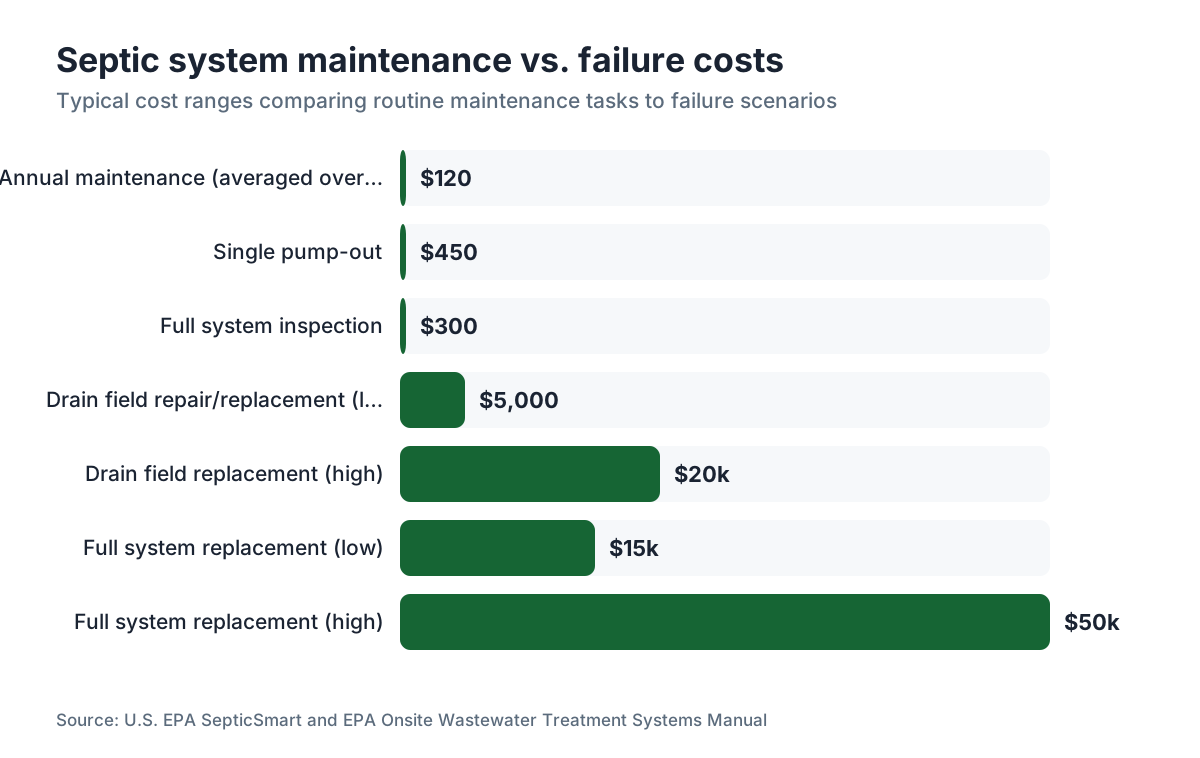
Replacing a failed system runs $15,000 to $50,000 or more depending on your state and soil [2]. A routine pump-out runs $300 to $600. The math is not subtle.
Failure also carries legal weight. Most states require a working onsite wastewater system as a condition of occupancy. In many places a failed system is a code violation and something you must disclose when you sell. Maintenance is not optional.
Here is the reassuring part. Septic systems are not fragile. A well-designed, correctly installed system that gets routine care will run for decades with no drama. The problems that bring the emergency pump truck are almost always slow-moving and preventable.
How does a septic system actually work?
A septic system has two stages: a buried tank that separates and partly digests waste, and a drain field where soil finishes the treatment. Wastewater flows from the house to the tank, solids settle out, and clear liquid moves on to the field. Understanding that chain makes every maintenance rule make sense.
Wastewater leaves your house through one outlet pipe and enters the septic tank, a buried concrete, fiberglass, or polyethylene container that holds 1,000 to 1,500 gallons for a three- to four-bedroom home [3]. Inside, solids sink to form sludge on the bottom, grease and oils float to form scum on top, and clearer liquid (called effluent) sits in the middle. Anaerobic bacteria digest a portion of those solids continuously.
Effluent exits through an outlet baffle and flows to the drain field (also called a leach field or absorption field). Perforated pipes spread the liquid through gravel trenches into the surrounding soil. The soil does the final treatment, filtering out pathogens and nutrients before the water reaches groundwater.
That chain has two weak points. The tank fills with sludge and scum faster than bacteria can eat them, so it needs mechanical pumping on a schedule. And the drain field can be crushed, rooted into, or flooded, which fails it in ways that are expensive to reverse. Every rule below protects one of those two things.
How often should you pump your septic tank?
Every 3 to 5 years for a typical household. That is the EPA's SepticSmart recommendation [1], and it is the right starting point. The honest answer is that your real interval depends on tank size, how many people live in the house, and how much of what goes down the drain is actual waste versus junk that cannot decompose.
The most-cited interval table in the industry comes from USDA and state extension research. A 1,000-gallon tank serving four people should be pumped about every 2.6 years to keep the combined sludge and scum below one-third of tank volume, which is the threshold most engineers use [4]. Bump the tank to 1,500 gallons and the same household stretches to roughly 4.2 years. A two-person household with a 1,500-gallon tank can go about 9 years. Real numbers, not marketing estimates.
Here is the move that pays off. At your first pump-out, have the pumper measure sludge and scum depths before pumping and tell you what they found. That reading calibrates your personal schedule. If the combined layers already passed a third of tank depth by year three, shorten the interval. If it was still 20 percent at year five, you can stretch.
A few things shorten your interval no matter your household size:
- A garbage disposal. The EPA notes that a disposal can sharply raise the solids load entering the tank and may require more frequent pumping [1]. Some state codes suggest doubling pump frequency if you run one regularly.
- Guests or short-term rentals. A vacation home hosting ten people for two months behaves like a full-time household during those weeks.
- A home business that makes laundry or food-prep waste.
For more on timing, see our guide on how often to pump septic tank.
What should you never flush or pour down the drain?
If it did not come out of a human body and it is not single-ply toilet paper, keep it out of the drain. The tank works because bacteria digest waste. Anything that kills those bacteria, jams the outlet baffle, or refuses to break down will cause trouble.
Things that kill the bacterial ecosystem:
Antibiotics flushed in quantity, paint, solvents, and heavy doses of bleach all damage the anaerobic microbes in the tank. One bleach-based cleaner used normally is fine. Dumping a half-gallon of straight bleach is not. Same story for chemical drain openers like sulfuric acid products. One emergency use probably will not sterilize the tank, but regular use degrades the biology that makes it work.
Things that physically pile up:
Flushable wipes are not flushable. Multiple wastewater utilities and the Federal Trade Commission have documented that most wipes labeled flushable do not break down in septic tanks within any practical timeframe [5]. Paper towels, feminine hygiene products, dental floss, cotton swabs, and cat litter all belong in the same bucket. They collect in the tank, jam baffles, and can ride into the drain field.
Grease and cooking oil harden in the scum layer and coat the drain-field soil over time, choking its ability to absorb water in a way that is very hard to undo.
Things people forget about:
Pharmaceuticals pass through the tank largely intact and reach the drain field. That is mainly a groundwater concern, but worth knowing. Water softener backwash dumps large salt and brine loads that some research links to reduced soil permeability in the field, and several states have restricted or banned softener discharge to septic systems on that basis [3].
How do you protect your drain field?
Keep weight, roots, pavement, and stormwater off it. The drain field is the part most people ignore until it dies, and it is usually the priciest to replace. A new field costs $5,000 to $20,000 depending on size and soil [2]. Protecting the one you have costs nothing.
Keep vehicles off it. Driving or parking on the field compacts the soil and can crush the perforated pipes. The soil needs air pockets so it can treat the effluent aerobically. One heavy vehicle crossing once is probably fine. Months of repeated traffic is not.
Keep deep-rooted plants off it. Tree roots hunt for moisture and nutrients, and they will find your perforated pipes and grow right into them. The University of Minnesota Extension recommends keeping trees at least 20 to 30 feet from the field, with aggressive rooters like willows, poplars, and silver maples needing more room [4]. Grass is the right cover. It holds soil, pulls out moisture, and leaves the pipes alone.
Do not pave over it. Concrete or asphalt blocks the evaporation and oxygen exchange the field depends on.
Manage surface water. Route roof gutters and yard drainage away from the field. It already handles a daily load from your house. Pile stormwater on top and you can saturate the soil and trigger temporary or permanent failure.
Do not build over it. Sheds, patios, decks, and above-ground pools block maintenance access and add load over the pipes. Most state codes ban construction over a leach field, and it makes future inspection and repair a headache.
For a closer look at how drain fields work and what to do when they fail, see our leach field guide.
How do you conserve water to protect your septic system?
Send less water through the system, and spread it out over the day. A septic system is sized for a hydraulic load based on the number of bedrooms. Overload it and effluent races through the tank with too little treatment time, then floods the drain field before it can absorb the day's flow.
Fix leaky toilets and faucets first. A single leaking toilet flapper can waste 200 gallons a day, a big slice of a typical household's design load of 50 to 100 gallons per person [3].
Spread laundry across the week instead of running eight loads on Saturday. Most design flows assume water use spreads across 24 hours. Eight loads in four hours shoves a surge through the system that the soil cannot keep up with.
High-efficiency toilets (1.28 gallons per flush versus 3.5 for an older model) and low-flow showerheads cut real gallons off your daily load. These are not gimmicks.
When you have a full house or you have already run heavy loads, do not run the dishwasher and a laundry cycle at the same time. Give the field a chance to catch up.
Should you use septic tank additives?
Skip them. Most additives are a waste of money, and some do harm. That is my direct opinion, and the EPA backs it.
The market is stuffed with bacterial additives, enzyme products, and chemical treatments that claim to boost tank performance, cut pumping frequency, or rescue a dying drain field. The EPA's guidance is blunt: there is no scientific evidence that biological additives improve tank performance, and chemical additives can harm the system and the environment [1]. The EPA SepticSmart program states: "Avoid using septic tank additives. Research shows that these products generally do not help, and some contain chemicals that are harmful to your system."
A healthy tank already holds billions of naturally occurring anaerobic bacteria doing exactly what the bottle claims to add. You cannot re-seed a tank that is already working, and no additive fixes a tank that needs pumping or a field that needs replacing.
One narrow exception. If you just dosed the tank with a big slug of antibiotics or chemical cleaner and want to help the biology bounce back, a one-time commercial bacterial product is probably harmless and might help a little. It is still no substitute for pumping on schedule.
The pricier the additive and the bolder the claim, the more skeptical you should be.
How often should you have your septic system inspected?
At least every 3 years for the full system, and every year for mechanical parts like pumps, floats, and alarms. That is the EPA's recommendation [1]. Pumping and inspecting are related but not the same. A pump-out clears the tank. An inspection is a thorough look at every component.
Some state codes require an inspection at the time of a real estate sale, which is often how homeowners discover problems they let slide for years.
A proper inspection includes:
- Locating and opening every access lid
- Measuring sludge and scum layers
- Checking inlet and outlet baffles for integrity
- Inspecting the distribution box (if present) for cracks and even flow
- Walking the drain field for surface saturation or odors
- Testing pumps and alarms
For systems with pumps, dosing chambers, or pressure distribution, annual inspection of the mechanical parts is mandatory in practice. Those components fail quietly, and a dead pump can flood the system fast.
If you do not know where your tank is, your county health department or environmental office should have the original permit and site plan on file. That document also tells you the design capacity and drain-field location. Get a copy.
For a detailed breakdown of what inspectors look for and what it costs, see our septic tank inspection guide.
What are the warning signs that your septic system needs attention?
Slow drains across the house, gurgling pipes, sewage odors, wet or oddly green grass over the drain field, and backups into the lowest fixtures. Those are the five signs that your system needs help. Catch them early and the fix is cheap. Most septic failures give weeks or months of warning before they turn catastrophic.
Slow drains throughout the house. One slow drain usually means a clog in that pipe. Slow drains at several fixtures at once point to the tank or the line between the house and the tank.
Gurgling sounds in the plumbing. Air moving backward through the system means the drain line or tank is under pressure it should not be.
Sewage odors inside or outside. The system is sealed. Odor means gas is escaping through a crack, a broken vent, a dry trap, or a saturated field.
Wet or unusually green grass over the drain field. Effluent surfacing in the yard looks like a lush patch in an otherwise ordinary lawn. It means the field is overloaded or failing.
Sewage backing up into the lowest fixtures. This is late-stage failure. Call a pumper now.
Do not wait any of these out. A tank that needs pumping costs a few hundred dollars today. A failed drain field costs tens of thousands. See our guides on septic tank repair and septic system repair if an inspection turns up something beyond routine maintenance.
What does a complete septic maintenance schedule look like?
Here is a practical schedule for a typical three- to four-bedroom home on a conventional gravity-fed system. The homeowner tasks take about 20 minutes a year. The licensed-service tasks handle everything you cannot do from the surface.
| Task | Frequency | Who does it | Approximate cost |
|---|---|---|---|
| Pump and inspect tank | Every 3-5 years | Licensed pumper | $300-$600 [2] |
| Full system inspection | Every 3 years | Licensed inspector | $100-$500 [2] |
| Mechanical components (pumps, alarms) | Annually | Licensed technician | $75-$200 |
| Check tank lids and risers | Annually | Homeowner | Free |
| Walk the drain field for odors or wet spots | Twice per year | Homeowner | Free |
| Confirm no new trees or structures near field | Annually | Homeowner | Free |
| Review water use habits and fix leaks | Ongoing | Homeowner | Varies |
Those homeowner walk-throughs catch most problems before they get expensive. A wet patch or a faint odor in spring gives you months of lead time.
Operators who manage service routes or multiple properties have a different problem: tracking inspection intervals, pump-out history, and reminders across dozens of accounts. That record-keeping is what SepticMind was built for, keeping operator teams organized so nothing slips between service visits.
For the full story on what a pump-out involves and how to pick a pumper, see our guides on septic tank pumping and septic tank pump out.
How do you maintain your septic system records and who do you call for help?
Keep a folder, paper or digital, with your permit, pump-out history, inspection reports, and repair invoices. That file is worth real money at resale, and it tells you how your system actually behaves over time.
Specifically, hold onto:
- The original permit and site plan from your county health department
- A record of every pump-out (date, company, sludge and scum depths measured, any notes)
- Inspection reports
- Repair invoices
A buyer's inspector who sees a documented 20-year maintenance history has a very different conversation with the buyer than one staring at a blank record. Some buyers walk away from homes with an undocumented septic past. Do not be that seller.
To find a qualified pumper or inspector, start with your state department of health or environmental quality, which keeps a list of licensed onsite wastewater professionals. The National Onsite Wastewater Recycling Association (NOWRA) and the National Association of Wastewater Technicians (NAWT) both run member directories organized by state [6][7]. Ask specifically for licensure. Credentials vary by state but usually require passing an exam and carrying liability insurance.
If your system is older than 20 to 25 years, ask your inspector whether the design meets current code. Plenty of older systems have cesspools, steel tanks, or undersized fields that would never be permitted today. Some states run mandatory upgrade programs for failing older systems [10]. Knowing where you stand before a problem hits gives you options. Finding out during a home sale does not.
Frequently asked questions
How do you maintain a septic system?
Pump the tank every 3 to 5 years, protect the drain field from vehicles and deep-rooted trees, conserve water by fixing leaks and spreading laundry loads, avoid flushing wipes, grease, or harsh chemicals, and have a licensed pro inspect the full system every 3 years. Keep maintenance records too, both for resale and for tracking what your system actually needs over time.
What is the most important thing you can do to maintain a septic system?
Pump the tank on schedule. Everything else matters, but an unpumped tank is the most common cause of drain-field failure. Once sludge and scum pass one-third of tank capacity, solids escape into the drain field and clog the soil in ways that often cannot be reversed without full field replacement at $5,000 to $20,000 or more.
How often does a septic tank need to be pumped?
The EPA recommends every 3 to 5 years for a typical household. The real interval depends on tank size and household size. A 1,000-gallon tank serving four people should be pumped roughly every 2.6 years to stay within safe limits; a 1,500-gallon tank for the same household can go about 4.2 years. Have the pumper measure sludge depth at your first service call to calibrate your own schedule.
What should you never put in a septic system?
Never flush wipes (including flushable ones), feminine hygiene products, paper towels, cotton swabs, medications, or cat litter. Never pour grease, paint, solvents, or large amounts of bleach or chemical drain cleaners down any drain. These either pile up in the tank, kill the bacteria that treat waste, or coat the drain-field soil. Single-ply toilet paper and human waste are the only things the system is built to handle.
Do septic additives actually work?
The EPA's position is that most additives do not improve performance and some chemical additives cause harm. A healthy tank already holds the bacteria needed for digestion. Biological additives are harmless but generally pointless. No additive can replace pumping on schedule or repair a failing drain field. Save the money.
How do you know if your septic system is failing?
Watch for slow drains at several fixtures at once, gurgling in the plumbing, sewage odors inside or outside, unusually lush or wet grass over the drain field, or sewage backing up into the lowest drains. Any of those signs warrant an immediate inspection. Early intervention usually costs hundreds of dollars; waiting until the system fails can cost tens of thousands.
Can you flush 'flushable' wipes if you have a septic system?
No. Wipes marketed as flushable do not break down in septic tanks within any practical timeframe, as documented by multiple municipal utilities and confirmed by the Federal Trade Commission's investigations into flushable-wipe labeling. They collect in the tank, jam baffles, and can migrate into the drain field. No wipe of any kind should go into a septic system.
How do you protect a septic drain field?
Keep vehicles and heavy equipment off the field, keep trees at least 20 to 30 feet away (more for willows and poplars), never pave or build over it, and route roof gutters and surface drainage away from the area. Plant grass over the field rather than shrubs or garden beds. The field needs open soil and air to function, and physical damage or waterlogging can cause permanent failure.
Is a garbage disposal bad for a septic system?
A garbage disposal sharply raises the solids load entering the tank, which speeds up sludge buildup and can shorten pump-out intervals. The EPA notes this and says households with disposals may need more frequent pumping. If you already have one, factor it into your schedule. If you are deciding whether to install one, a compost bin is the better choice for a septic household.
How much does it cost to maintain a septic system per year?
Averaged over five years, routine maintenance runs roughly $60 to $120 per year once you account for a $300 to $600 pump-out every 3 to 5 years plus occasional inspections. That figure excludes repairs. Compare it to drain-field replacement at $5,000 to $20,000 or full system replacement at $15,000 to $50,000. Routine maintenance is by far the cheapest path.
Does heavy rain or flooding affect a septic system?
Yes. Saturated soil cannot absorb effluent from the drain field, so heavy rain can temporarily push the system to back up or surface in the yard. This is usually temporary, but repeated flooding of the field can cause permanent soil damage. Divert gutters and surface drainage away from the field. If your system backs up during rain, cut water use inside until the soil drains, and have a pro investigate any long-term drainage pattern.
How long does a septic system last if properly maintained?
A well-designed and properly maintained conventional gravity-fed system can last 25 to 40 years or more. The tank itself, concrete or fiberglass, often outlasts the drain field. The field is the part most likely to limit system life, and its longevity depends on consistent pumping to prevent solids carryover and on protecting it from physical damage, hydraulic overload, and root intrusion.
What records should you keep about your septic system?
Keep the original permit and site plan (available from your county health or environmental department if you do not have it), a log of every pump-out with the date, company, and measured sludge and scum depths, all inspection reports, and any repair invoices. This documentation matters at resale, helps you track your system's real pumping needs, and is required in some states before you can transfer title.
How do you find a licensed septic professional?
Your state department of health or environmental quality keeps a list of licensed onsite wastewater professionals. NOWRA and NAWT both run searchable member directories. Always ask specifically for licensure; credentials vary by state but generally require passing a technical exam and carrying liability insurance. Avoid anyone who cannot produce a license number on request.
Sources
- U.S. EPA, SepticSmart homeowner guidance: EPA recommends pumping every 3-5 years, advises against additives, notes garbage disposals increase pump frequency, and recommends inspection every 3 years with mechanical components checked annually.
- U.S. EPA, Septic System Costs and Financing: Pump-out costs $300-$600; drain field replacement $5,000-$20,000; full system replacement $15,000-$50,000+.
- U.S. EPA, Onsite Wastewater Treatment Systems Manual (EPA/625/R-00/008): Typical household septic tanks are 1,000-1,500 gallons; design flow is 50-100 gallons per person per day; water softener brine discharge can affect soil permeability.
- University of Minnesota Extension, Septic System Owner's Guide: Pump frequency table by tank size and household size; recommends trees at least 20-30 feet from drain field.
- Federal Trade Commission, enforcement actions on flushable wipe labeling: FTC documented that most wipes marketed as flushable do not break down in septic systems within practical timeframes.
- National Onsite Wastewater Recycling Association (NOWRA), member directory: NOWRA maintains a searchable directory of licensed onsite wastewater professionals organized by state.
- National Association of Wastewater Technicians (NAWT): NAWT maintains a directory of certified septic inspection and pumping professionals.
- U.S. EPA, Decentralized Wastewater Treatment Systems: A Program Strategy: Approximately 21 million households in the U.S. rely on septic systems; an estimated 10-20 percent are failing at any given time.
- Penn State Extension, Septic System Maintenance for Homeowners: Confirms EPA pump-frequency guidance and notes that spreading laundry loads across the week reduces hydraulic surge to the septic system.
- Wisconsin Department of Natural Resources, Private Onsite Wastewater Treatment Systems: State code requirements for onsite wastewater system maintenance, inspection, and upgrade programs for older systems.
Last updated 2026-07-09