How to maintain a septic tank: a complete homeowner guide
By the SepticMind Editorial Team
TL;DR
- Pump your tank every 3 to 5 years, never flush non-biodegradable materials, keep vehicles and deep-rooted plants off the drain field, and get a professional inspection every 1 to 3 years.
- The EPA estimates 1 in 5 U.S.
- homes uses an onsite septic system, and routine maintenance costs a fraction of the $3,000 to $10,000+ repair bill a neglected system can produce.
Why does septic tank maintenance matter so much?
About 21 percent of U.S. households rely on onsite septic systems, according to the EPA [1]. When those systems fail, the damage shows up fast and it hurts: sewage backs up into the house, contaminates groundwater, and can trigger regulatory action that forces a full system replacement.
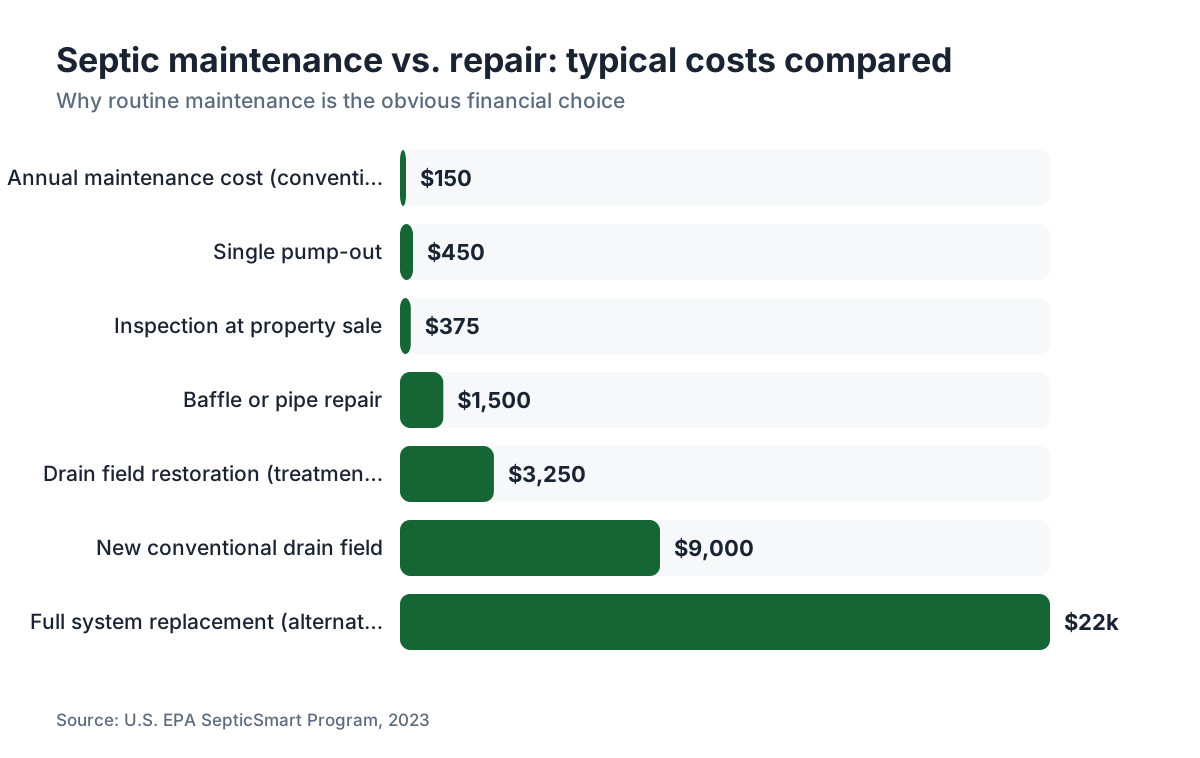
The math is simple. A routine pump-out costs $300 to $600 in most markets [2]. A new drain field runs $3,000 to $15,000 depending on soil conditions and state permitting [3]. Skipping one pump-out to save $400 and ending up needing a new leach field is the worst trade in home ownership.
Most septic problems move slowly, and they're preventable. The system warns you, usually years ahead, if you know what to look for. This guide covers what to do and when to do it.
How does a septic system actually work?
A septic system settles solids in a buried tank, then lets the liquid soak into the ground through a drain field where soil bacteria finish treating it. Understanding those mechanics makes every maintenance decision easier.
Wastewater from your house flows into the septic tank, a buried watertight container usually made of concrete, fiberglass, or polyethylene. Inside, solids settle to the bottom and form a layer called sludge. Grease and lighter materials float to the top as scum. The liquid in the middle, called effluent, exits through an outlet baffle and flows to the drain field (also called a leach field or absorption field).
The drain field is a network of perforated pipes buried in gravel-filled trenches. Effluent percolates through the gravel into the surrounding soil, where bacteria and natural filtration remove pathogens before the water reaches groundwater. The biological process in that soil is what makes the whole thing work. Anything that stops the soil from absorbing liquid, or kills the bacteria doing the work, breaks the system.
Conventional gravity systems are the most common. Pressure distribution systems, mound systems, and aerobic treatment units (ATUs) follow different maintenance schedules, so check your permit documents or call your local health department to confirm what you have [12].
How often should you pump a septic tank?
Pump a typical household tank every 3 to 5 years. The EPA and most state health departments use that range, but treat it as a starting point, not a rule [1]. The real interval depends on four things: tank size, number of people in the house, volume of solids you generate, and whether you run a garbage disposal.
The EPA's SepticSmart program publishes a sizing table based on household size and tank capacity [1]. A 1,000-gallon tank serving two people might go 5 to 6 years between pumps. The same tank serving five people should get pumped every 2 to 3 years.
A licensed pumper measures sludge and scum depth with a "sludge judge" (a clear tube that shows the layers) during a service visit. Here's the threshold most state programs use: pump when the scum layer is within 3 inches of the outlet baffle, or when the sludge layer fills more than one-third of the tank's liquid volume [4].
Got a garbage disposal? Plan to pump more often. Garbage disposals roughly double the volume of solids entering the tank, according to University of Minnesota Extension [4]. Some county health codes flat-out prohibit disposals on septic properties for that reason.
For a full breakdown of pumping intervals by tank size and household size, see how often to pump septic tank.
What should you never flush or drain into a septic system?
The only things that belong in a septic-connected toilet are human waste and single-ply toilet paper. Everything else is a gamble. The tank runs on a living bacterial community, so kill those bacteria or bury them under material that won't break down, and the system fails.
Never flush or drain any of these:
- Wipes of any kind, including ones labeled "flushable" (they don't disintegrate fast enough and clog baffles and pipes) [5]
- Feminine hygiene products, cotton balls, dental floss, condoms
- Medications, prescription or over-the-counter (they kill the bacteria in the tank and leach field)
- Cooking grease and oil (grease piles up in the scum layer faster than bacteria break it down and eventually blocks the outlet baffle)
- Household chemicals: paint, paint thinner, solvents, pesticides, motor oil
- Large volumes of bleach or antibacterial cleaner (small amounts from normal use are fine; don't dump a full bottle down the drain)
- Coffee grounds (fine-grained solids that pile up and don't decompose quickly)
- Cat litter, even brands labeled "flushable"
The EPA's SepticSmart campaign puts it plainly: "What you put down your drains has a major impact on how well your septic system works" [1].
How do you protect the drain field from damage?
Keep weight, roots, and extra water off the drain field. It's the most expensive and most fragile part of the system, and once it fails you're usually looking at a full replacement. Protecting it costs nothing.
Keep vehicles and heavy equipment off the drain field. The weight compacts the soil and can crush the perforated pipes. That means cars, riding mowers, RVs, and delivery trucks. One pass from a loaded concrete mixer can wreck a drain field for good.
Don't plant trees or large shrubs near it. Roots from willows, maples, and other aggressive species will find and invade the pipes within a few years. Grass is fine. Shallow-rooted perennials are generally fine. Anything with a serious root system is a problem [9].
Divert surface water away from the field. If rain runoff, roof gutter discharge, or irrigation saturates the soil over the drain field, the effluent from your tank has nowhere to go and the system backs up. Grade the area so water runs away, and keep sump pumps and French drains from discharging toward it [9].
Don't cover the field with anything impermeable: asphalt, concrete, decking, or big tarps. The soil needs oxygen and the room to drain.
For more on leach field care and what happens when one fails, that guide covers warning signs and repair options.
How much water use affects your septic system?
Every gallon that goes into the house eventually reaches the septic system. Dump too much water in too short a time and you push barely-treated effluent into the drain field before the solids have settled. Over time that clogs the soil and kills the field.
The typical U.S. household uses 70 gallons per person per day indoors, according to EPA WaterSense [6]. A 1,000-gallon tank is sized to handle roughly that load from a two to three person household.
Practical ways to keep water from stressing the system:
- Spread laundry across the week instead of running five loads on Saturday. A standard washer uses 15 to 30 gallons per cycle [6].
- Fix leaking toilets right away. A running toilet can waste 200 gallons a day, enough to hydraulically overload a system on its own [6].
- Install low-flow showerheads and faucet aerators if you haven't already.
- Keep sump pump discharge, roof drainage, and French drain outflow away from the septic system. That's groundwater, not sewage, and the tank isn't sized for it.
A weekend of guests won't hurt. Weeks of above-normal use, like a long-term houseguest, can build up faster than the drain field recovers.
What regular maintenance tasks should you do yourself?
Most septic maintenance is genuinely low-effort. Here's what you can and should handle without calling anyone.
Monthly
Walk the area over the tank and drain field. Look for wet spots, lush grass patches, or odors. Those are early warnings. A stripe of bright green grass directly over a drain field trench in dry weather almost always means effluent is surfacing.
Every 6 months
Confirm the risers and access lids are intact, secure, and haven't shifted. Damaged lids are a drowning and injury hazard, especially with kids around. If you have an effluent filter (mounted on the outlet baffle), clean it on the manufacturer's schedule, usually once or twice a year [10].
Annually
Find your system records: the as-built drawing, permit, and last pump-out receipt. Put them somewhere you'll actually find them again. No records? Your county health department may have them on file. Knowing your tank size and field location before an emergency saves real time.
Also confirm the inspection port caps on distribution boxes (d-boxes) are in place. A missing cap invites rodents, debris, and roots.
Every 3 to 5 years
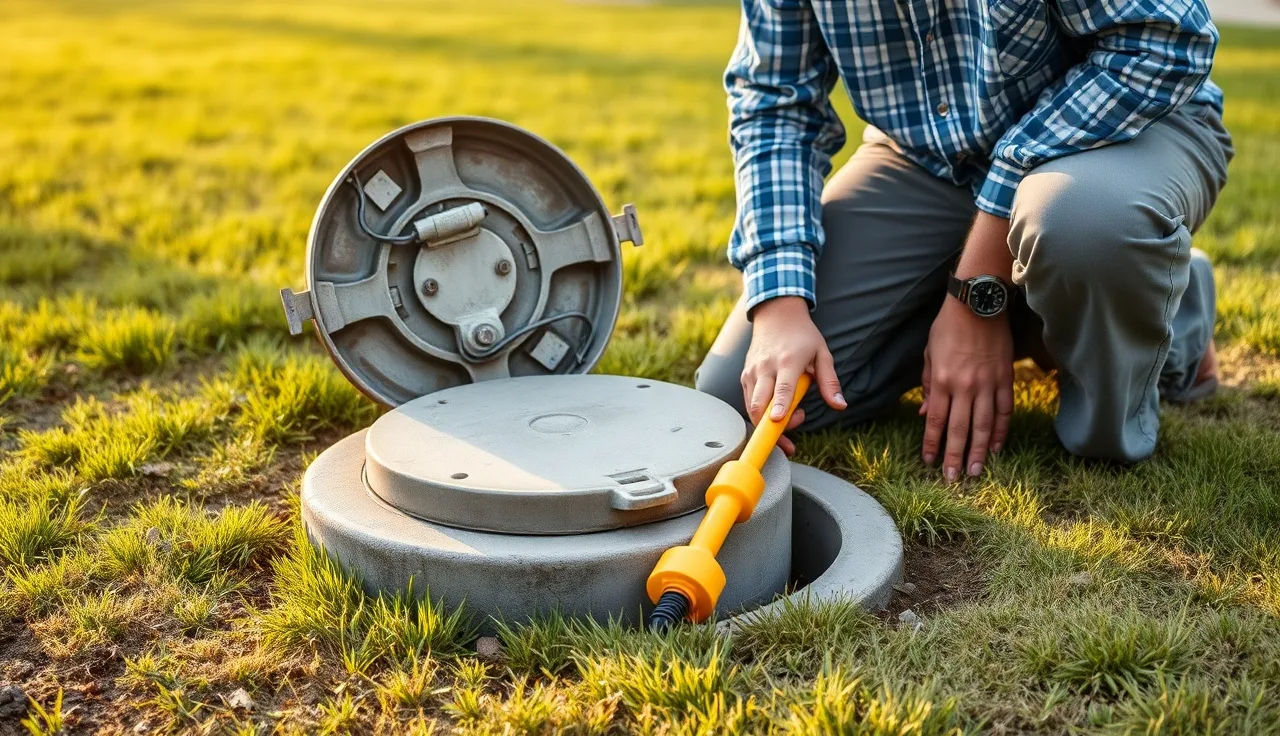
Schedule a professional septic tank pump out. Have the pumper inspect the baffles, check for cracks or corrosion, and record the sludge and scum depths. Get a written service report every time.
If you want one place to track pump-out dates, service records, and reminders, tools like SepticMind help operators and property managers stay on schedule without relying on memory or paper logs.
Do septic additives actually help maintain your tank?
Probably not, and sometimes they do harm. That's the honest answer about the septic product market.
The EPA is direct: "Most experts and regulatory agencies recommend against using septic system additives" [1]. A healthy tank already holds billions of bacteria, introduced naturally through human waste. No commercial additive has been shown in peer-reviewed research to meaningfully stretch the interval between pump-outs [11].
Biological additives (products with bacteria or enzymes) are mostly harmless but pointless. Chemical additives are a different animal. Some solvents sold as drain openers or "system cleaners" can mobilize fats and solids that then migrate to the drain field and clog it, or they can contaminate groundwater.
The one case where an additive might make sense is restarting a system after a long vacancy, like an unoccupied vacation home where the bacteria have died back. Even then, a few weeks of normal use does the same job.
Save your money. Put it toward the pump-out.
How often should you get a professional septic inspection?
Get a professional septic tank inspection every 1 to 3 years. Many state codes require one at the time of property sale, and some require periodic inspections for every system.
A thorough inspection goes further than a pump-out. The inspector checks the structural condition of the tank, the inlet and outlet baffles, the distribution box, and the drain field. They should probe the soil in the field for signs of saturation or biomat buildup. Some inspectors use dye testing or video scoping.
For a system that's been neglected or is aging (most concrete tanks last 25 to 40 years, though well-maintained ones often go longer), an inspection is worth the cost before a problem forces the issue. Inspections typically run $150 to $450 depending on system type and what's included [2].
Buying a house with a septic system? Always get an independent inspection. A closing that goes through without one is a real risk.
What are the warning signs that your septic system needs attention?
Septic systems give you plenty of warning before a full failure. You just have to know the signs.
Slow drains across the house, more than one fixture, point to a full tank or a saturated drain field. A single slow drain is more likely a clog in that one line.
Gurgling in the pipes after you flush or drain means air is getting pushed back into the plumbing, which happens when the outlet path is restricted.
Sewage odors inside the house, near the tank, or over the drain field mean something is wrong. Outdoor odors near the field can mean effluent is surfacing.
Lush green grass or soggy soil over the drain field, especially in dry weather, means effluent isn't being absorbed.
Sewage backing up into the lowest fixtures (basement toilets or floor drains usually go first) means the tank is likely full or there's a blockage.
Any of these warrant a service call before you spend money on expensive septic tank repair. Often a simple pump-out clears the immediate problem and buys time to diagnose the real cause.
For bigger drain field trouble, septic system repair covers the remediation options and what they cost.
What does a proper septic maintenance schedule look like?
Here's a practical schedule that matches EPA guidance and standard industry practice.
| Task | Frequency | Who Does It | Typical Cost |
|---|---|---|---|
| Visual check of tank area and drain field | Monthly | Homeowner | Free |
| Inspect/clean effluent filter (if present) | Every 6 months | Homeowner or tech | Free to $50 |
| Check access lids and risers | Every 6 months | Homeowner | Free |
| Full pump-out with baffle inspection | Every 3 to 5 years | Licensed pumper | $300 to $600 [2] |
| Professional inspection (mechanical/ATU systems) | Annually | Licensed inspector | $100 to $300 [2] |
| Professional inspection (conventional systems) | Every 1 to 3 years | Licensed inspector | $150 to $450 [2] |
| Full system inspection at property sale | At sale | Licensed inspector | $250 to $500 [2] |
Mechanical systems (aerobic treatment units, pump systems, drip irrigation) have more parts and need more frequent professional attention. Most state codes require annual service contracts for ATUs. Check your state's onsite wastewater code or call your local health department for the rules where you live [7].
Managing multiple properties or rental units on septic? Keeping this schedule by hand gets unwieldy fast. That's where SepticMind's service scheduling tools earn their keep for operators tracking dozens of systems.
How do you find and keep your septic system records?
This part is unglamorous and genuinely important. The as-built drawing (sometimes called a "septic plan" or "installation diagram") shows exactly where the tank, distribution box, and drain field lines are buried. Without it, locating the tank for a pump-out can mean probing the yard or renting a locator, which adds cost and time.
Where to find records if you don't have them:
- Your county or local health department. Most jurisdictions have required permits and as-built drawings since the 1970s or earlier, and many have digitized them.
- The previous owner's documents from closing.
- Your title company's closing package, which sometimes includes septic records.
- A licensed inspector who can do a physical locate.
Once you have the records, store them somewhere permanent: a home files folder, a PDF in cloud storage, and a copy at the health department if they keep one. When you sell, hand copies to the buyer. It's good practice and required in some states.
Keep a log of every service visit: date, company name, what was done, sludge and scum depths, and any recommendations. That history pays off when you're diagnosing a future problem or selling the house.
What does septic tank maintenance cost over time?
Maintenance is cheap and predictable next to repair or replacement. Here's the realistic picture.
A pump-out every 3 to 5 years at $300 to $600 works out to roughly $60 to $200 a year [2]. Add a periodic inspection at $150 to $450 every few years and you're up about $50 to $150 a year on average. Total routine maintenance for a conventional system: roughly $100 to $350 a year.
Compare that to a septic tank repair ($500 to $3,000 for common jobs like baffle replacement or pipe repair) or a full cost to install septic system replacement ($10,000 to $30,000 depending on system type, site conditions, and state permitting) [3].
The drain field is the single most expensive component to replace. Restoration techniques (fracturing, biomat treatment) run $1,500 to $5,000 with mixed results. A new conventional drain field runs $3,000 to $15,000 [3]. A mound system or alternative system forced by difficult soils can hit $15,000 to $30,000.
For a closer look at where the money goes, septic tank pumping breaks down pump-out pricing, and cost to put in a septic tank covers replacement costs by system type and region.
Frequently asked questions
How often should a septic tank be pumped?
The EPA recommends pumping every 3 to 5 years for a typical household, but the right interval depends on tank size and number of occupants. A 1,000-gallon tank serving 4 or 5 people should be pumped every 2 to 3 years. A pumper can measure sludge depth to tell you exactly where you stand. Garbage disposal use shortens the interval significantly.
What happens if you never pump your septic tank?
The sludge and scum layers build up until they reach the outlet baffle. Solids then flow into the drain field, clog the soil pores, and cause the field to fail. You get sewage surfacing in the yard or backing up into the house. Drain field replacement costs $3,000 to $15,000 or more, compared to a $300 to $600 pump-out that prevents the problem.
Can you use bleach and household cleaners with a septic tank?
Normal household quantities of bleach and standard cleaners are fine. The bacterial population in a healthy tank is large enough to tolerate routine cleaning products. The problem is pouring large volumes down the drain: a full bottle of bleach, disinfectant, or septic system "treatment" at once can kill a significant portion of the bacterial community. Use normal amounts and you won't have a problem.
Are septic tank additives worth buying?
No, with very few exceptions. The EPA explicitly recommends against most additives. A working septic system already has billions of bacteria introduced naturally through use. No commercial biological or enzyme additive has been shown in controlled research to extend pump-out intervals. Some chemical additives can actually damage the drain field. Skip them and put that money toward a pump-out.
What are the signs that a septic tank is full or failing?
Slow drains throughout the house (more than one fixture), gurgling pipes, sewage odors indoors or near the drain field, lush green grass or wet spots over the drain field during dry weather, and sewage backing up into the lowest fixtures. Any combination of these is a reason to call a licensed pumper or inspector immediately. Catching it early usually means a pump-out fixes it.
How do you find out where your septic tank is buried?
Start with your county or local health department, which should have the as-built drawing on file. If records are unavailable, a licensed septic contractor can locate the tank with a metal rod or electronic locator. The tank is typically 5 to 25 feet from the house foundation, following the main sewer line out. Some inspectors use a small camera or ground-penetrating radar for difficult cases.
Does a garbage disposal hurt a septic system?
Yes, noticeably. University of Minnesota Extension guidance notes that garbage disposals roughly double the volume of solids entering the tank. This shortens the pump-out interval and accelerates the risk of solids reaching the drain field. Some county health codes prohibit garbage disposals on properties served by septic systems. If you have one, plan to pump more frequently and consider a larger tank or eliminating the disposal.
How do you protect a drain field from damage?
Keep all vehicles and heavy equipment off the drain field, including cars, riding mowers, and delivery trucks. Don't plant trees or large shrubs near it; aggressive roots find and infiltrate the pipes. Divert surface water, roof drainage, and sump pump discharge away from the field. Don't cover it with pavement or decking. Grass is fine. These steps cost nothing and prevent the most expensive type of septic failure.
Can too much water use damage a septic system?
Yes. Overloading the tank with water pushes partially treated effluent into the drain field before solids settle out, which clogs the soil over time. Fix leaky toilets immediately (a running toilet can waste 200 gallons per day), spread laundry loads across the week, and don't direct non-sewage water sources into the system. Normal household use is fine; sustained above-normal use is what causes problems.
How do you maintain a septic system at a vacation or seasonal home?
Before closing the property for the season, have the tank pumped if it's approaching the end of its normal interval. Shut off the water supply to avoid leaks that could run unnoticed all winter. When reopening, run water briefly to flush pipes before heavy use. Consider an inspection every 2 to 3 years even if occupancy is low, since infrequent use can let the bacterial population decline and baffles to go uninspected.
What regular inspections does a septic system need?
Conventional gravity systems should be professionally inspected every 1 to 3 years and pumped every 3 to 5 years. Mechanical systems like aerobic treatment units (ATUs) typically require annual professional service under most state codes. Always get an inspection at the time of property purchase. A full inspection checks tank condition, baffles, distribution box, and drain field absorption, more than whether the tank is full.
How long does a septic system last?
A well-maintained concrete tank typically lasts 25 to 40 years; some exceed that. Drain fields have a similar or longer lifespan if they're not overloaded with solids or hydraulically overwhelmed. Plastic and fiberglass tanks can last as long or longer. The components that fail earliest are usually baffles (often made of concrete that degrades, or older tar-paper materials) and distribution boxes, both of which are repairable for a few hundred to a couple thousand dollars.
Do you need a permit for septic tank maintenance or cleaning?
In most states, routine pumping and cleaning don't require a permit, but the pumper must be a licensed septic professional who disposes of the waste at an approved facility. Any repairs, modifications, or replacements typically do require permits and inspections by the local health department. Check your state's onsite wastewater regulations or your county health department for what applies locally.
What should a septic tank maintenance record include?
Date of service, name and license number of the service company, what was done (pump-out, inspection, repair), sludge depth and scum depth measurements, baffle condition, any issues noted, and recommendations for future service. Keep the as-built drawing with these records. This documentation is often required at property sale and is essential for diagnosing recurring problems or planning system replacements.
Sources
- U.S. EPA, SepticSmart Homeowner Resources: About 21 percent of U.S. households use onsite septic systems; EPA recommends pumping every 3 to 5 years and advises against most additives; water use guidance.
- U.S. EPA, Septic System Costs and Maintenance: Pump-out costs $300 to $600; inspection costs $150 to $450; these ranges reflect typical national pricing cited in EPA SepticSmart materials.
- U.S. EPA, Decentralized Wastewater Treatment Systems: Drain field replacement and full system installation costs ranging $3,000 to $30,000 depending on system type and site conditions.
- University of Minnesota Extension, Septic System Owner's Guide: Garbage disposals roughly double solids entering the tank; sludge and scum depth thresholds for pumping (one-third tank volume or within 3 inches of outlet baffle).
- U.S. EPA, What Not to Flush: Wipes, feminine hygiene products, medications, and household chemicals should not be flushed into septic systems.
- U.S. EPA WaterSense, Indoor Water Use: Average U.S. household uses 70 gallons per person per day indoors; washing machines use 15 to 30 gallons per cycle; a running toilet can waste 200 gallons per day.
- U.S. EPA, Onsite Wastewater Treatment Systems Manual: State codes typically require annual service contracts for aerobic treatment units and other mechanical onsite systems.
- National Environmental Services Center (NESC), West Virginia University, Septic System Owner's Manual: Standard guidance on conventional septic system components, drain field protection, and maintenance intervals.
- University of Florida IFAS Extension, Septic Tank Maintenance: Guidance on protecting drain fields from vehicle traffic, root intrusion, and surface water saturation.
- Penn State Extension, Septic System Maintenance: Effluent filter cleaning schedules and homeowner inspection checklist guidance.
- North Carolina State University Extension, Septic System Additives: Review of research on septic additives finding no peer-reviewed evidence that biological or chemical additives meaningfully extend pump-out intervals.
- U.S. EPA, How Your Septic System Works: Description of conventional septic system components: tank, outlet baffle, effluent, drain field, and soil treatment process.
Last updated 2026-07-09